
Úvod: Otázka kompatibility
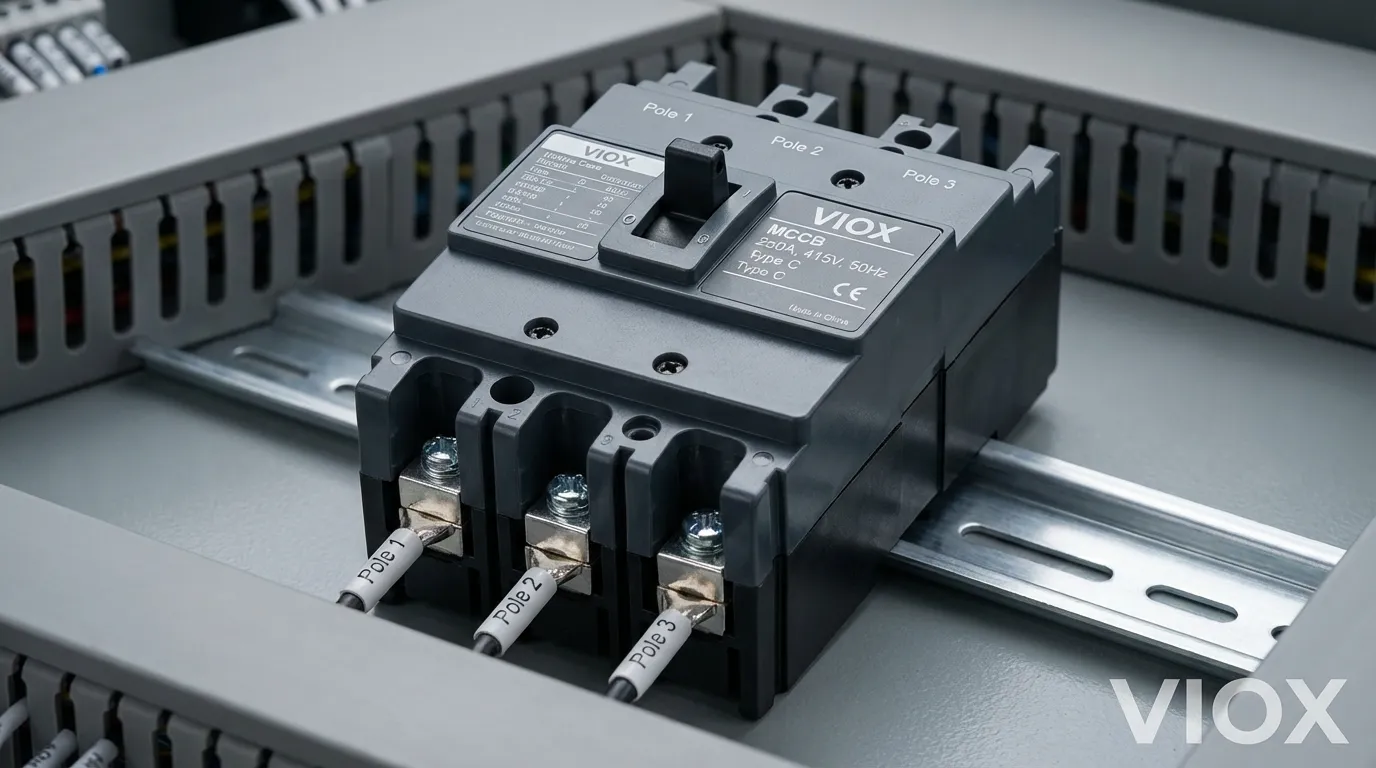
Specifikujete ochranu pro 50kW jednofázový průmyslový ohřívač v novém výrobním závodě. Váš distributor nabízí standardní jednopólový MCB za $120 – nebo můžete znovu použít 3pólový MCCB z vašeho boxu s náhradními díly, který nestojí nic. To pokušení je skutečné. Ale otázka, na kterou potřebujete nejprve odpovědět, je zásadní: Můžete to vlastně udělat bezpečně? A jaké skryté komplikace číhají pod povrchem?
Krátká odpověď: Ano, můžete použít 3pólový MCCB pro jednofázové aplikace – ale pouze pokud rozumíte konfiguraci zapojení, chování spouštěcí jednotky a regulačním požadavkům. Pokud nezohledníte kterýkoli z těchto faktorů, riskujete rušivé vypínání, zdánlivé poruchy nebo ještě hůře: nebezpečí požáru, pokud tepelná ochrana nefunguje správně.
Tato příručka vás provede kompletním technickým prostředím, vysvětlí metody zapojení, které fungují, identifikuje “záludnosti”, které trápí inženýry, a poskytuje rozhodovací rámec, který technici VIOX Electric používají při poradenství klientům v podobných situacích.
Může 3pólový MCCB fungovat na jednofázové napětí? Základní odpověď
Mechanický verdikt: Ano. 3pólový MCCB (jistič v lisovaném pouzdře) má fyzickou schopnost přerušit jednofázový proud. Jeho kontakty, zhášecí komory a přerušovací mechanismus jsou dimenzovány na velikost proudu bez ohledu na to, kolik fází je připojeno.
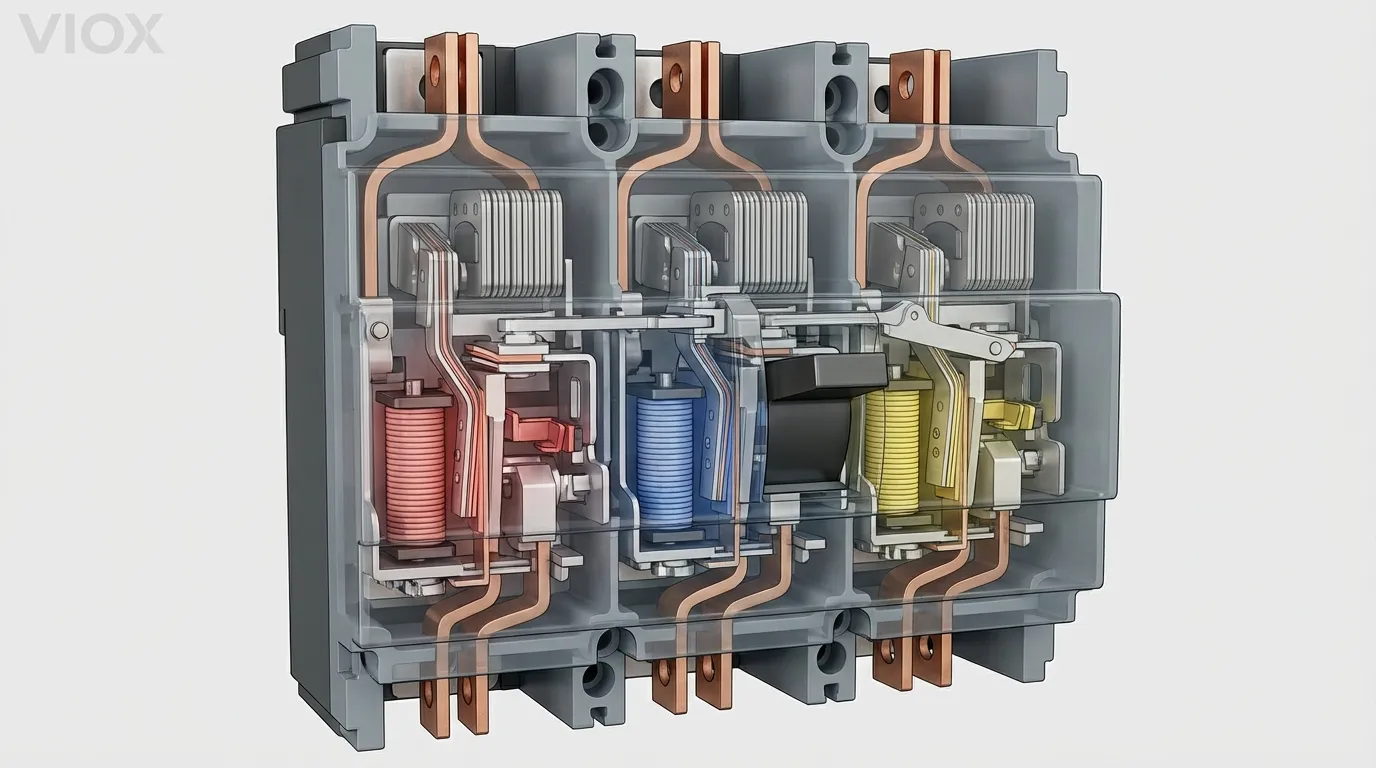
Praktický verdikt: Podmíněný. Moderní MCCB – zejména ty s elektronickými spouštěcími jednotkami – mají vestavěné ochrany, které aktivně detekují chybějící fáze a okamžitě vypnou jistič, pokud zaznamenají nevyváženost proudu. Jedná se o bezpečnostní prvek, který má zabránit poškození motoru v důsledku jednofázového provozu. Ale stává se zátěží, když jistič záměrně používáte na jednofázové napětí.
Rozdíl mezi úspěchem a opakovaným rušivým vypínáním spočívá v jednom kritickém detailu: jak vedete proud jističem.
Tři hlavní problémy: Ochrana proti ztrátě fáze, jmenovité napětí a regulační značení
Problém #1: Detekce ztráty fáze (problém rušivého vypínání)
Mnoho komerčních MCCB, zejména modely určené pro ochranu motorů, zahrnuje citlivost na ztrátu fáze. Funguje to takto:
Elektronická spouštěcí jednotka monitoruje proud na všech třech pólech. Pokud zjistí významný rozdíl mezi póly – což naznačuje, že jedna nebo více fází chybí nebo selhalo – jistič se okamžitě vypne jako bezpečnostní opatření. Tím se zabrání chodu motorů na jednofázové napětí, což během několika sekund způsobí katastrofální poškození vinutí motoru.
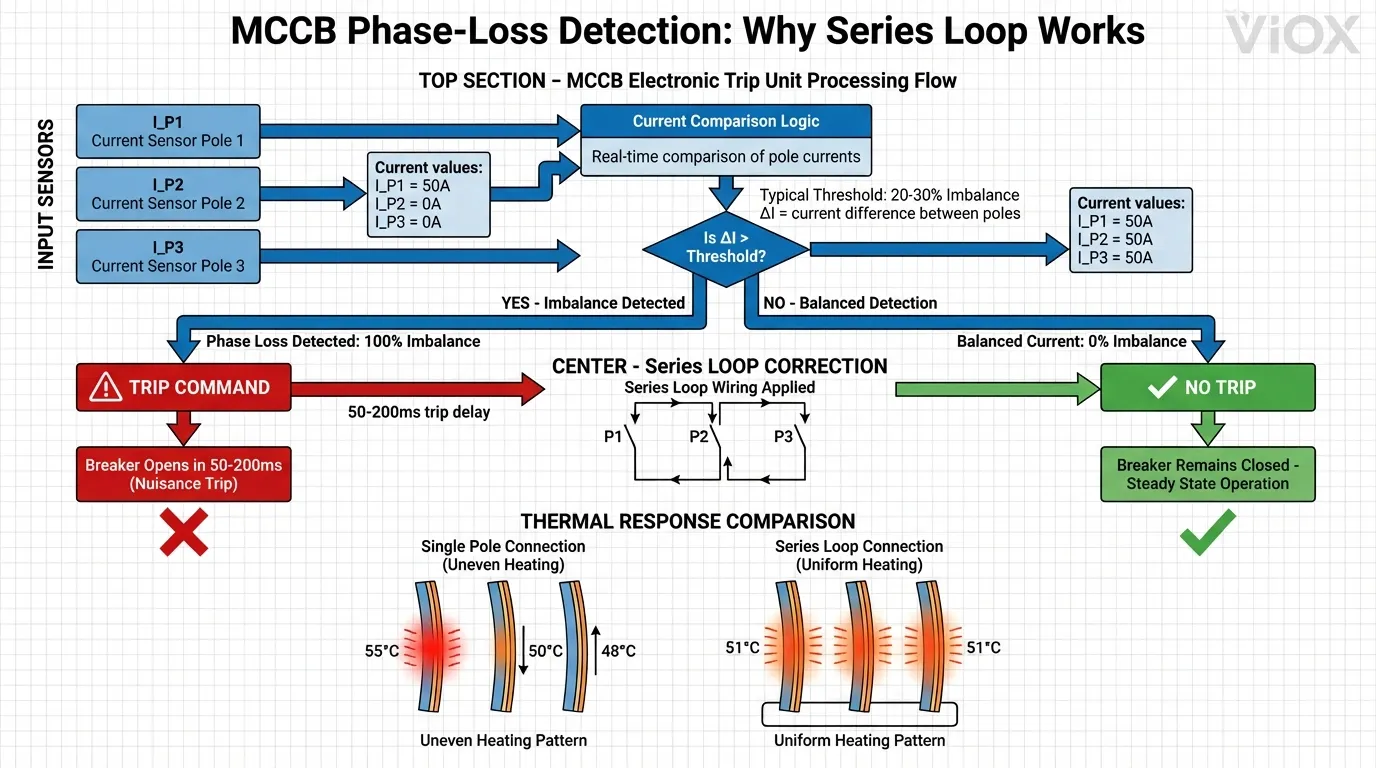
Problém: Pokud připojíte 3pólový MCCB k jednofázové zátěži pouze pomocí dvou pólů (ignorujete třetí), spouštěcí jednotka vidí nulový proud na nepoužitém pólu a interpretuje to jako výpadek fáze. Jistič se okamžitě vypne – i když je proud zátěže hluboko v mezích jmenovitého proudu jističe.
Řešení: Veďte proud smyčkou přes všechny tři póly
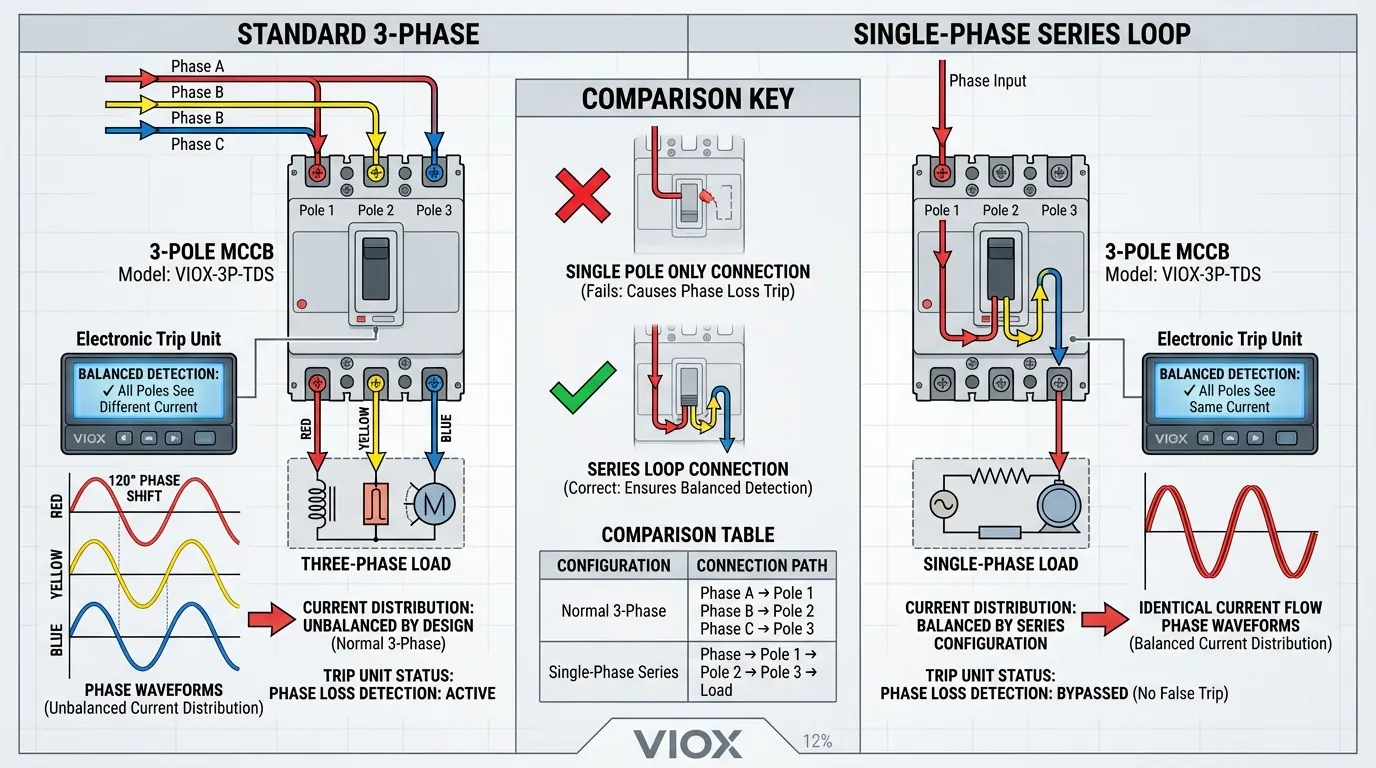
Chcete-li bezpečně používat 3pólový MCCB na jednofázové napětí, musíte zapojit všechny tři póly do série:
- Připojte svůj příchozí Fázový (horký) vodič ke vstupní svorce Pól 1
- Veďte propojovací vodič z výstupní svorky Pól 1 na vstup Pól 2
- Veďte propojovací vodič z výstupu Pól 2 na vstup Pól 3
- Připojte zátěž z výstupu Pól 3 zpět do vašeho Neutrální
Tím se vytvoří souvislá proudová cesta přes všechny tři tepelné prvky a všechny tři spouštěcí jednotky. Z pohledu jističe vidí identický proud na všech pólech, což zabraňuje falešným vypnutím v důsledku ztráty fáze.
Proč to funguje: Všechny tři bimetalové tepelné pásky se zahřívají rovnoměrně. Všechny tři spouštěcí cívky snímají stejné magnetické pole. Elektronická spouštěcí jednotka vidí vyvážený proud na všech pólech. Žádná vnímaná ztráta fáze. Žádné rušivé vypnutí.
Problém #2: Typ spouštěcí jednotky má zásadní význam
Termomagnetické jističe (starší provedení):
- Používají pouze bimetalový pásek pro přetížení a elektromagnetickou cívku pro detekci zkratu
- V spouštěcí jednotce neexistuje žádná logika ztráty fáze
- Jednopólový nebo dvoupólový provoz by pravděpodobně fungoval bez problémů
- Použití pouze jednoho nebo dvou pólů však vytváří nerovnoměrné rozložení tepla v krytu, což může způsobit předčasné tepelné vypnutí nebo zpožděnou odezvu
Elektronické Výlet Jednotek (moderní ochrana LSIG):
- Zahrnují sofistikované algoritmy detekce ztráty fáze
- Mnoho modelů má nastavitelné úrovně citlivosti
- Některé prémiové jednotky umožňují deaktivaci ochrana proti ztrátě fáze prostřednictvím programování
- Pokud nelze ochranu proti ztrátě fáze deaktivovat, je povinné sériové zapojení přes všechny póly
MCCB specifické pro motory (např. MPCB s integrovanou tepelnou ochranou proti přetížení):
- Tyto stránky vyžadují aby byly všechny tři póly napájeny během provozu motoru
- Použití motorového MCCB na jednofázové napětí se nedoporučuje ani při sériovém zapojení, protože funkce ochrany motoru proti přetížení se stává nespolehlivou
Best Practice: Zkontrolujte datový list výrobce pro váš konkrétní model MCCB. Hledejte “ochrana proti ztrátě fáze” nebo “jednofázový provoz”. Pokud datový list výslovně uvádí “vhodné pro jednofázové aplikace” nebo poskytuje schéma jednofázového zapojení, můžete pokračovat. Pokud mlčí nebo nedoporučuje jednofázové použití, berte to jako varovný signál.
Problém #3: Jmenovité napětí (přímé vs. lomítkové jmenovité hodnoty)
Jmenovité napětí MCCB spadá do dvou kategorií:
Přímé jmenovité hodnoty (např. 480 V, 690 V):
- Jistič lze použít v jakémkoli systému, kde fázové napětí nepřekračuje jmenovité napětí
- Pro jednofázové: Používejte na jednofázové při jmenovitém napětí nebo pod ním
- Příklad: MCCB se jmenovitým napětím 480 V může bez problémů chránit jednofázové obvody 480 V
Lomítkové hodnocení (např. 480Y/277V, 690Y/400V):
- Lomítko označuje uzemněný systém Wye
- První číslo (480 V) je fázové napětí
- Druhé číslo (277 V) je fázové napětí vůči neutrálu na uzemněném Wye
- Tyto jističe mají snížené jmenovité izolační napětí vůči neutrálu (v tomto příkladu 277 V), protože systémový neutrál je uzemněn
- Tyto NEJSOU vhodné pro neuzemněné jednofázové systémy nebo systémy 480V Delta pro jednofázové zátěže
Praktická kontrola: Pokud štítek vašeho MCCB zobrazuje lomítkové hodnocení, ověřte, zda váš jednofázový systém odpovídá specifikaci nižšího napětí a je uzemněn. Pokud máte neuzemněný jednofázový systém 480 V a MCCB 480Y/277 V, izolace na kontaktech a spouštěcí jednotce je testována pouze na 277 V fáze-zem. Aplikace 480 V na kontakty představuje riziko selhání izolace a potenciálních obloukových poruch.
Správný způsob zapojení: Schéma sériové smyčky
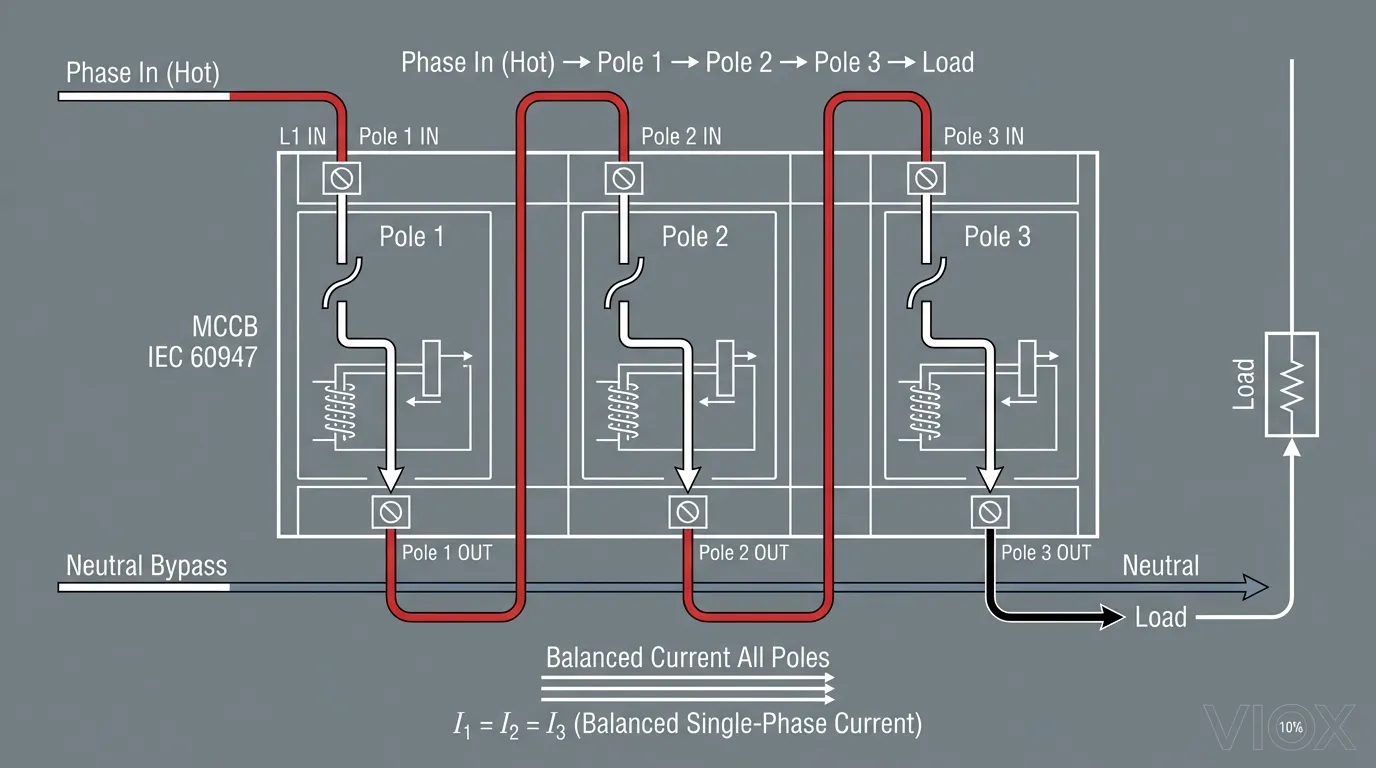
Obrázek výše ukazuje správné sériové zapojení pro použití 3pólového MCCB na jednofázové. Poznámka:
- Jednofázový vstup (fáze/horký) vstupuje na pól 1
- Proud je veden postupně přes póly 1 → 2 → 3
- Zátěž je odebírána z výstupu pólu 3
- Všechny tři tepelné pásky a spouštěcí cívky jsou vystaveny identickému proudu
- Neutrální vodič ne prochází póly jističe (pokud místní předpisy nevyžadují spínání neutrálu)
Výsledek: Vyvážený signál spouštěcí jednotky. Žádné falešné spuštění při ztrátě fáze. Správná tepelná odezva. Bezpečný provoz v souladu s předpisy.
Třífázové vs. Jednofázové: Technická srovnávací tabulka
| Funkce | 3fázový MCCB (standardní použití) | 3pólový MCCB na jednofázové | Jednofázový MCB (nativní) |
|---|---|---|---|
| Připojené póly | Všechny 3 póly aktivní se 3 samostatnými fázemi | Všechny 3 póly v sérii s jednou fází ve smyčce | 1-2 póly podle návrhu |
| Ochrana proti ztrátě fáze | Aktivní, vypne při nevyváženosti | Přemostěno (zjištěn vyvážený proud) | N/A (nelze použít) |
| Preferovaný typ spouštěcí jednotky | Elektronický LSIG | Preferovaný termomagnetický; LSIG vyžaduje ověření v datovém listu | Termomagnetické nebo základní elektronické |
| Aktuální cesta | Fáze A → Pól 1, Fáze B → Pól 2, Fáze C → Pól 3 | Fáze → Pól 1 → Pól 2 → Pól 3 (série) | Fáze → Pól 1; Zátěž |
| Distribuce tepla | Vyvážené napříč třemi póly (normální 3f) | Vyvážené napříč třemi póly (všechny vidí stejný proud) | Koncentrováno v jednom pólu |
| Soulad s předpisy (UL/NEC) | Standardní shoda | Vyžaduje schválení výrobce nebo odchylku od předpisů | Nativní shoda |
| Soulad s NEC 240.85 | Ano, pokud je označeno jako 3fázové | Rizikové, pokud není výslovně označeno “Vhodné pro jednofázové libovolné 2-3 póly” | Ano, nativní jednopólové MCB jsou v souladu s NEC |
| Náklady | $300–$800 (rozsah 60A–125A) | Stejné jako 3fázové, ale méně praktické | $40–$120 (stejné hodnocení) |
| Spolehlivost | Vynikající | Dobré, pokud je správně zapojeno; vysoké riziko při nesprávném použití | Vynikající |
Kdy se nesprávné použití stává nebezpečným: Reálné režimy selhání
Scénář 1: Vypnutí při ztrátě fáze na jednopólovém připojení
Technik připojí pouze pól 1 a pól 2 třípólového MCCB k jednofázovému napětí 208 V:
- Vypínací jednotka detekuje proud na 2 pólech, nulový proud na pólu 3
- Elektronický algoritmus určí výpadek fáze
- Jistič vypne za 50-200 ms
- Výsledek: Opakované rušivé vypínání, stížnosti zákazníků, nouzové servisní zásahy
Scénář 2: Nerovnoměrná tepelná odezva (termomagnetický jistič, pouze jeden pól)
Použití pouze jednoho pólu velkého MCCB na jednofázovém ohřívači:
- Vytvořené teplo se koncentruje v jednom bimetalovém prvku
- Zbývající prvky nezaznamenávají žádné teplo
- Při 50 A jednofázově: Aktivní pól dosáhne prahové hodnoty vypnutí mnohem rychleji, než bylo navrženo
- Jistič rušivě vypíná při 45 A namísto jmenovitého proudu 50 A
- Při 40 A v ustáleném stavu: Jeden pól odvádí teplo nerovnoměrně; chlazení je asymetrické
- Během měsíců: Opotřebení kontaktů se liší; doba vypnutí se nepředvídatelně mění
- Výsledek: Nespolehlivá ochrana, potenciální nezjištěné přetížení
Scénář 3: Selhání izolace (MCCB s lomítkovým jmenovitým napětím v neuzemněném systému)
Výrobce rozvaděče specifikuje MCCB s jmenovitým napětím 480Y/277V pro 480V neuzemněnou jednofázovou zátěž:
- Izolace kontaktů jističe testována na 277 V
- Plných 480 V se objeví na otevřených kontaktech během přerušení
- Riziko opětovného zapálení oblouku; namáhání izolace
- Po 50-100 operacích: Degradace izolace
- Výsledek: Porucha s vysokou impedancí, potenciální nebezpečí požáru
FAQ: Praktické otázky od výrobců rozvaděčů
Q1: Můj MCCB je dimenzován na 100 A třífázově. Mohu jej použít na 100 A jednofázovou zátěž?
A: Pouze pokud zapojíte metodu sériové smyčky a ověříte, že váš model MCCB nevyžaduje ochranu proti ztrátě fáze na všech třech pólech. Toto se však nedoporučuje pro trvalou 100 A jednofázovou zátěž. Většina zařízení specifikuje vyhrazenou jednofázovou MCB nebo menší MCCB speciálně schválený pro jednofázový provoz. Míchání typů zařízení ve výrobě vytváří zmatek v údržbě a otázky souladu s předpisy.
Q2: Co když se moje příručka MCCB nezmiňuje o jednofázovém provozu?
A: Berte mlčení jako “neschváleno”. Zavolejte technickou podporu výrobce. Uveďte konkrétní číslo modelu a zeptejte se: “Je tento MCCB vhodný pro jednofázový provoz? Poskytujete schéma zapojení pro jednofázový provoz? Je přítomna ochrana proti ztrátě fáze?” Zaznamenejte jejich odpověď písemně. Pokud odmítnou doporučit jednofázové použití, respektujte toto doporučení – znají svůj návrh lépe než kdokoli jiný.
Q3: Mohu použít MCCB pro jednofázový motor?
A: Obecně ne. MCCB dimenzované pro motory zahrnují tepelnou ochranu proti přetížení kalibrovanou pro třífázové motory. Zapojení pro jednofázový provoz zruší výpočet přetížení. Jednofázové motory vyžadují vyhrazenou jednofázovou ochranu (jako je vyhrazená MCB) nebo MCCB ověřený výrobcem pro jednofázový motorový provoz. Toto je otázka bezpečnosti, nejen technické preference.
Q4: Mění metoda sériové smyčky jmenovitou vypínací schopnost?
A: Ne. Jmenovité hodnoty Icu (mezní vypínací schopnost) a Ics (provozní vypínací schopnost) zůstávají nezměněny. Stále používáte stejný jistič. Co se mění, je to, jak interní vypínací jednotka vidí proud – jako vyvážený versus nevyvážený. To ovlivňuje spolehlivost (méně rušivých vypnutí), ale ne vypínací schopnost.
Q5: Mohu použít pouze dva póly v sérii (ne všechny tři)?
A: Nedoporučuje se pro elektronické vypínací jednotky. Dvoupólový sériový provoz může stále spustit detekci ztráty fáze u některých modelů (třetí pól vidí nulový proud, což spustí algoritmus). Termomagnetické jističe mohou akceptovat dvoupólový sériový provoz, ale toto je nestandardní a ruší mnoho záruk výrobce. Držte se plné třípólové smyčky nebo specifikujte nativní jednofázový MCB.
Klíčové poznatky
- 3-pólové MCCB lze použít v jednofázových aplikacích – ale pouze pokud jsou správně zapojeny do série přes všechny tři póly aby se zabránilo falešným vypnutím při ztrátě fáze a zajistila se vyvážená tepelná odezva.
- Jmenovité napětí je důležité: Jističe s přímým jmenovitým napětím (480 V) fungují na jednofázový provoz; jističe s lomítkovým jmenovitým napětím (480Y/277V) vyžadují ověření kompatibility s vaší konkrétní konfigurací uzemnění jednofázového systému.
- Typ vypínací jednotky je kritický: Termomagnetické jističe jsou tolerantnější; elektronické vypínací jednotky LSIG s ochranou proti ztrátě fáze mohou odmítnout jednofázový provoz i při sériovém zapojení, pokud nejsou výslovně navrženy tak, aby to umožňovaly.
- Před pokusem o jednofázovou instalaci vždy nahlédněte do datového listu výrobce pro váš konkrétní model MCCB. Pokud datový list mlčí, kontaktujte technickou podporu, abyste si písemně zdokumentovali jejich schválení (nebo odmítnutí).
- Soulad s předpisy (NEC 240.85, IEC 60947-2) obvykle vyžaduje, aby byly MCCB označeny pro aplikaci, ve které se používají. Použití 3-pólového MCCB na jednofázový provoz bez výslovného schválení výrobce může porušovat místní elektrotechnické předpisy. Nechte svůj plán před instalací zkontrolovat elektrikářem.
- Pro prostředí s nepřetržitou výrobou specifikujte nativní jednofázové MCB spíše než přeměňovat 3-pólové MCCB. Úspory nákladů ($60–$100) zřídka ospravedlňují problémy se spolehlivostí, údržbou a souladem s předpisy.
- Ochrana motoru je odlišná: MCCB specifické pro motory jsou navrženy pro třífázový provoz. Použití na jednofázové motorové zátěže ruší ochranu a vytváří bezpečnostní rizika. Místo toho specifikujte vyhrazenou jednofázovou ochranu motoru.
Závěr: Správný nástroj pro danou práci
Otázka “Mohu použít 3-fázový MCCB na jednofázový provoz?” má nuancovanou odpověď, která odděluje zkušené elektroprojektanty od začátečníků, kteří šetří náklady.
Technicky: Ano. Vnitřní komponenty jističe zvládnou jednofázový proud.
Prakticky: Pouze pokud jsou splněny podmínky. Správné zapojení (sériová smyčka), kompatibilní vypínací jednotka, odpovídající jmenovité napětí a schválení výrobce.
Profesionálně: Obvykle ne. Pro kritické obvody a výrobní zařízení poskytují nativní jednofázové MCB ($40–$150) vyšší spolehlivost, soulad s předpisy a jednoduchost údržby ve srovnání s přeměněnými 3-pólovými MCCB.
VIOX Electric doporučuje tento rozhodovací rámec:
- Prostředí s vysokou spolehlivostí (datová centra, nemocnice, kontinuální proces): Specifikujte nativní jednofázové MCB nebo ověřené jednofázové MCCB
- Modernizace nebo nouzové opravy: 3-pólový MCCB na jednofázový provoz je přijatelný, pokud je zapojen do série a schválen výrobcem
- Výrobní panely: Vždy používejte zařízení odpovídající zamýšlenému použití
- Projekty s omezenými náklady, kde je doba provozuschopnosti druhořadá: Použití 3pólového MCCB pro jednofázové aplikace je technicky proveditelné, pokud je provedeno správně, ale zdokumentujte rozhodnutí a stanovte jasné protokoly údržby
$80, které ušetříte opětovným použitím jističe, stojí $8 000, když tento jistič selže během víkendu a nejsou k dispozici žádné náhradní díly.
Investujte do správného nástroje. Spolehlivost vašeho zařízení na tom závisí.
Doporučená četba pro další technické znalosti
Pokud navrhujete elektrické systémy, kde je výběr MCCB kritický, tyto doplňkové články prohloubí vaše porozumění:
- Jak vybrat správný MCCB pro panel – Seznamte se s kompletním procesem výběru nad rámec jmenovitého napětí a proudu, včetně tepelných aspektů a optimalizace uspořádání panelu.
- Komplexní příručka MCCB vs ICCB – Pochopte, proč hlavní příchozí jističe často vyžadují technologii ICCB (Insulated Case Circuit Breaker) s vynikající hodnotou Icw (zkratový výdržný proud) pro skutečnou selektivitu a prevenci kaskádového selhání.
- Kompletní průvodce vzduchovými jističi (ACB) – Pro průmyslová zařízení se zkratovými proudy přesahujícími 2500 A poskytují ACBs maximální míru přizpůsobení a údržby v terénu.
Komplexní produktová řada VIOX Electric pokrývá všechny tři technologie jističů a zajišťuje, že máte přesný nástroj pro vaši konkrétní aplikaci – ať už se jedná o jednoduchou jednofázovou modernizaci nebo složitý průmyslový distribuční systém.