Pochopení regulace napětí: Rychlá odpověď
Jak AVR (automatický regulátor napětí), tak AVS (automatický stabilizátor napětí) slouží stejnému základnímu účelu – ochraně elektrických zařízení před kolísáním napětí – liší se však primárně v kontextu použití a terminologii spíše než v základní funkčnosti. AVR se obvykle vztahuje k zařízením používaným v generátorových systémech k regulaci buzení a udržování konstantního výstupního napětí, zatímco AVS běžně popisuje ochranná zařízení na straně zátěže instalovaná mezi síťovým napájením a citlivým zařízením. V průmyslové praxi se tyto termíny často používají zaměnitelně, ačkoli pochopení jejich specifických kontextů pomáhá inženýrům vybrat správné řešení pro jejich aplikaci.
Klíčové poznatky
- AVR a AVS jsou funkčně podobná zařízení, která stabilizují napětí, s terminologickými rozdíly založenými na kontextu aplikace
- AVR se používají primárně v generátorech k řízení buzení a udržování konstantního výstupního napětí bez ohledu na změny zátěže
- Zařízení AVS chrání zařízení na straně zátěže před kolísáním napětí v síti, poklesy napětí a napěťovými špičkami
- Doba odezvy se liší podle technologie: Statické stabilizátory reagují za 20-30 ms, zatímco servo systémy potřebují 50 ms-5 sekund
- Servo stabilizátory lépe zvládají vysoké náběhové proudy a vyhovují 95% aplikací, zatímco statické typy nabízejí rychlejší odezvu s minimální údržbou
- Správný výběr závisí na typu zátěže, rozsahu kolísání napětí, požadavcích na dobu odezvy a možnostech údržby
Co je automatický regulátor napětí (AVR)?
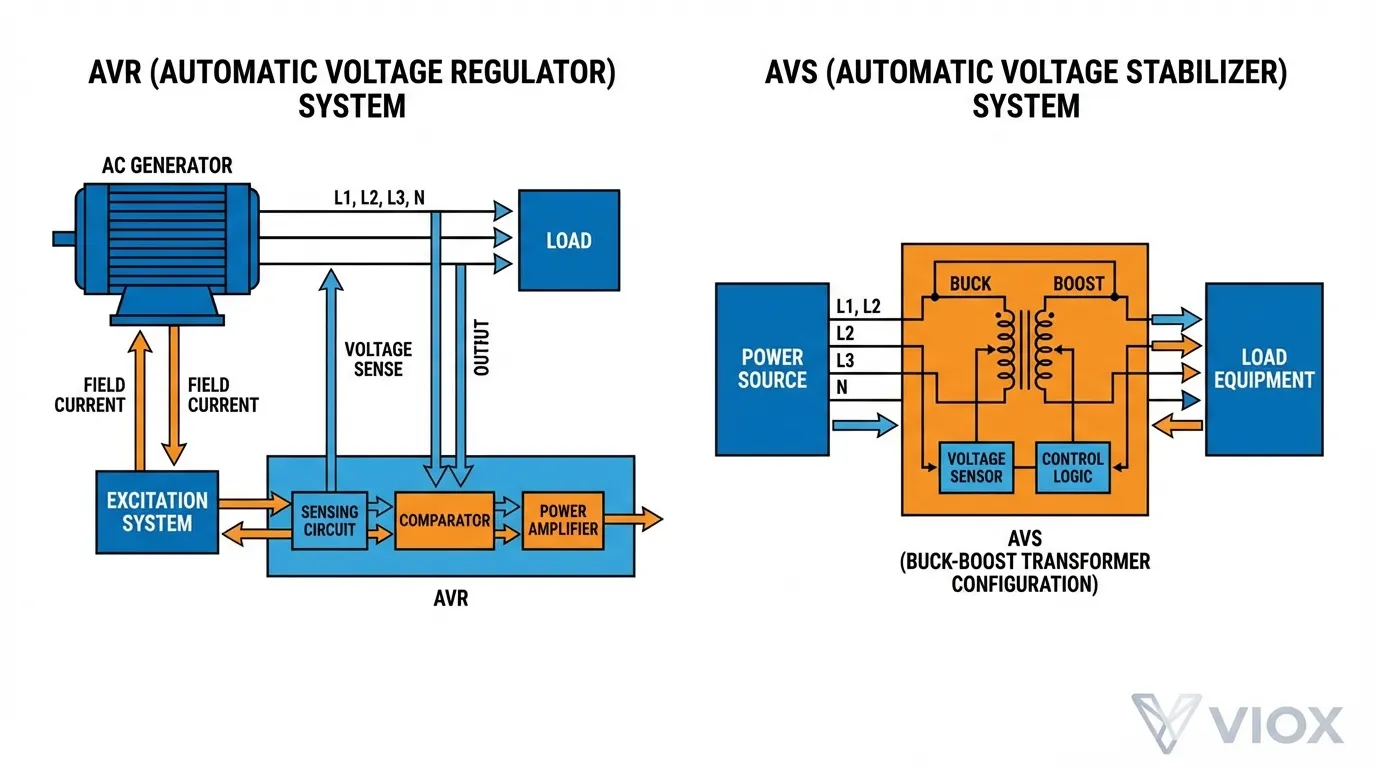
Automatický regulátor napětí (AVR) je elektronické zařízení navržené k automatickému udržování konstantní úrovně napětí v elektrických systémech, zejména v generátorových aplikacích. AVR fungují tak, že nepřetržitě monitorují výstupní napětí generátoru a upravují budicí proud, aby kompenzovaly změny zátěže, a zajišťují stabilní dodávku energie bez ohledu na kolísání poptávky.
Základní funkce systémů AVR
Moderní AVR plní několik kritických funkcí nad rámec základní regulace napětí:
- Stabilizace napětí: Udržuje výstupní napětí v rozmezí ±1% přesnosti i přes změny zátěže
- Dělení jalové zátěže: Rozděluje jalový výkon mezi paralelně zapojené generátory
- Ochrana proti přepětí: Zabraňuje napěťovým špičkám při náhlém odpojení zátěže
- Řízení účiníku: Zajišťuje, že generátory pracují s optimálním účiníkem při připojení k síti
- Přepěťová ochrana: Chrání před elektrickými rázy a přetížením generátoru
Co je automatický stabilizátor napětí (AVS)?
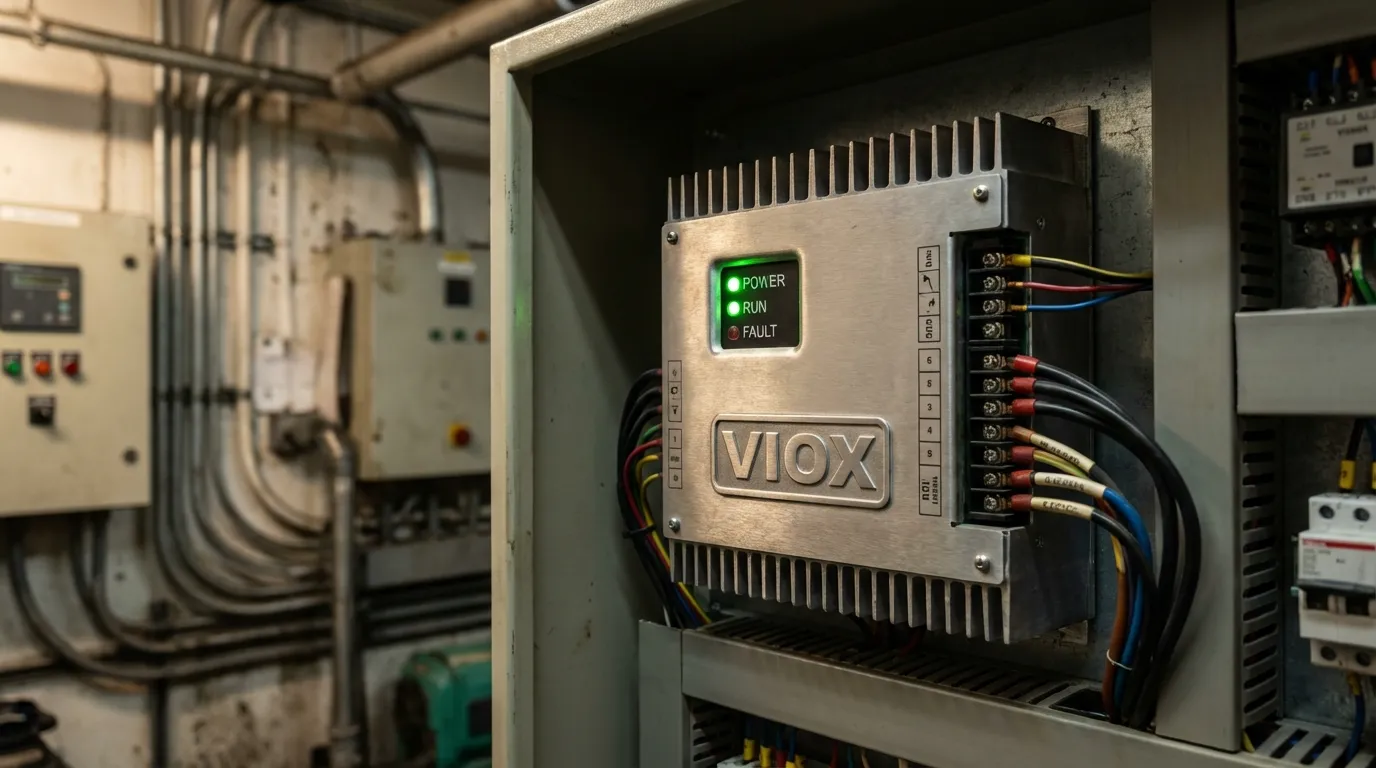
Automatický stabilizátor napětí (AVS) je elektrické zařízení instalované na stranu zátěže k ochraně zařízení před kolísáním napětí v síťovém napájení. Na rozdíl od AVR, které regulují výstup generátoru, jednotky AVS sedí mezi rozvodnou sítí a citlivými zátěžemi a automaticky upravují vstupní napětí tak, aby dodávaly stabilní výstup v bezpečných provozních rozsazích.
Jak funguje technologie AVS
Zařízení AVS používají technologii buck-boost transformátoru ke korekci odchylek napětí:
- Provoz Boost: Když vstupní napětí klesne pod požadované úrovně (pokles napětí), stabilizátor přidá napětí, aby dosáhl cílového výstupu
- Provoz Buck: Když napětí stoupne nad bezpečné úrovně (přepětí), sníží napětí, aby se zabránilo poškození zařízení
- Režim Bypass: Během normálních napěťových podmínek některé jednotky AVS umožňují přímý tok energie bez regulace, aby se maximalizovala účinnost
AVR vs AVS: Komplexní srovnávací tabulka
| Aspekt | AVR (automatický regulátor napětí) | AVS (automatický stabilizátor napětí) |
|---|---|---|
| Primární aplikace | Generátorové systémy (strana napájení) | Ochrana zátěže (strana spotřeby) |
| Místo instalace | Integrováno do systému řízení generátoru | Mezi síťovým napájením a zařízením |
| Metoda kontroly | Upravuje budicí proud generátoru | Přepínání odboček buck-boost transformátoru |
| Rozsah napětí | Udržuje výstup generátoru na jmenovitém napětí | Zvládá kolísání vstupního napětí ±25% až ±50% |
| Doba odezvy | Liší se podle typu (50 ms-5 sekund) | 20-30 ms (statické) až 50 ms-5 s (servo) |
| Manipulace s nákladem | Řídí jalový výkon generátoru | Chrání zařízení na výstupu |
| Paralelní provoz | Koordinuje více generátorů | Nezávislá ochrana zátěže |
| Typická kapacita | Odpovídá jmenovitému výkonu generátoru (kVA) | Dimenzováno podle požadavků připojené zátěže |
| Potřeby údržby | Střední (servo typy vyžadují více) | Nízká (statická) až střední (servo) |
| Náklady Rozsah | Integrovány do nákladů generátoru | Samostatný nákup v závislosti na kapacitě |
Typy technologií regulace napětí
Stabilizátory řízené servomotorem
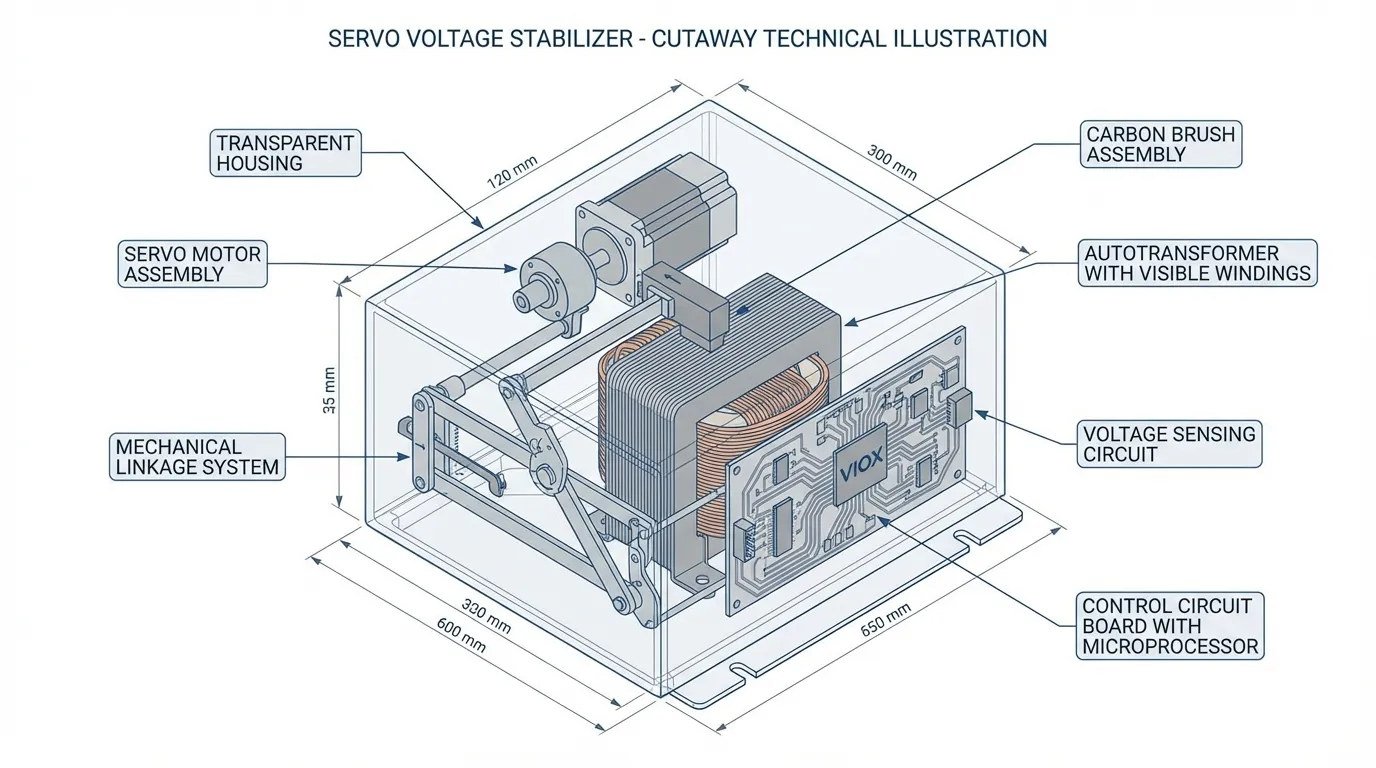
Servo stabilizátory napětí používají elektromechanický servomotor k pohonu variabilního autotransformátoru, který zajišťuje přesnou korekci napětí prostřednictvím fyzického pohybu uhlíkového kartáče po vinutí transformátoru. Tato osvědčená technologie výborně zvládá vysoké náběhové proudy a hodí se pro přibližně 95 % průmyslových aplikací, i když doba odezvy je pomalejší (50 ms - 5 sekund) kvůli mechanickým součástem.
Výhody:
- Vynikající pro indukční zátěže (motory, transformátory)
- Zvládá kolísání napětí až ±50 %
- Vysoká přesnost (regulace ±1 %)
- Osvědčená spolehlivost v náročných prostředích
Omezení:
- Pomalejší doba odezvy kvůli mechanickému pohybu
- Pravidelná údržba nutná pro servomotor a kartáče
- Slyšitelný hluk během provozu
Statické stabilizátory napětí
Statické stabilizátory využívají polovodičové elektronické součástky (IGBT, SCR) bez pohyblivých částí, což umožňuje téměř okamžitou korekci napětí během 20-30 milisekund. Tato technologie nabízí vynikající rychlost odezvy a minimální nároky na údržbu, takže je ideální pro citlivá elektronická zařízení a aplikace vyžadující rychlé nastavení napětí.
Výhody:
- Ultra rychlá odezva (20-30 ms)
- Žádné pohyblivé části – minimální údržba
- Tichý provoz
- Kompaktní design
Omezení:
- Vyšší počáteční náklady
- Může mít problémy s extrémními náběhovými proudy
- Typicky zvládá ±25 % kolísání napětí
Srovnání aplikací: Kdy použít AVR vs. AVS
Aplikace AVR (generátorové systémy)
| Aplikace | Proč je AVR nezbytné |
|---|---|
| Záložní generátory | Udržuje stabilní napětí během výpadků sítě bez ohledu na změny zatížení budovy |
| Průmyslová výroba energie | Koordinuje paralelní generátory a řídí distribuci jalového výkonu |
| Námořní elektrické systémy | Reguluje výkon lodního generátoru navzdory různým pohonným a pomocným zátěžím |
| Záložní napájení datového centra | Zajišťuje, aby systémy UPS dostávaly konzistentní napětí během provozu generátoru |
| Staveniště | Stabilizuje výstup přenosného generátoru pro citlivé elektrické nářadí a zařízení |
Aplikace AVS (ochrana zátěže)
| Aplikace | Proč je AVS nezbytné |
|---|---|
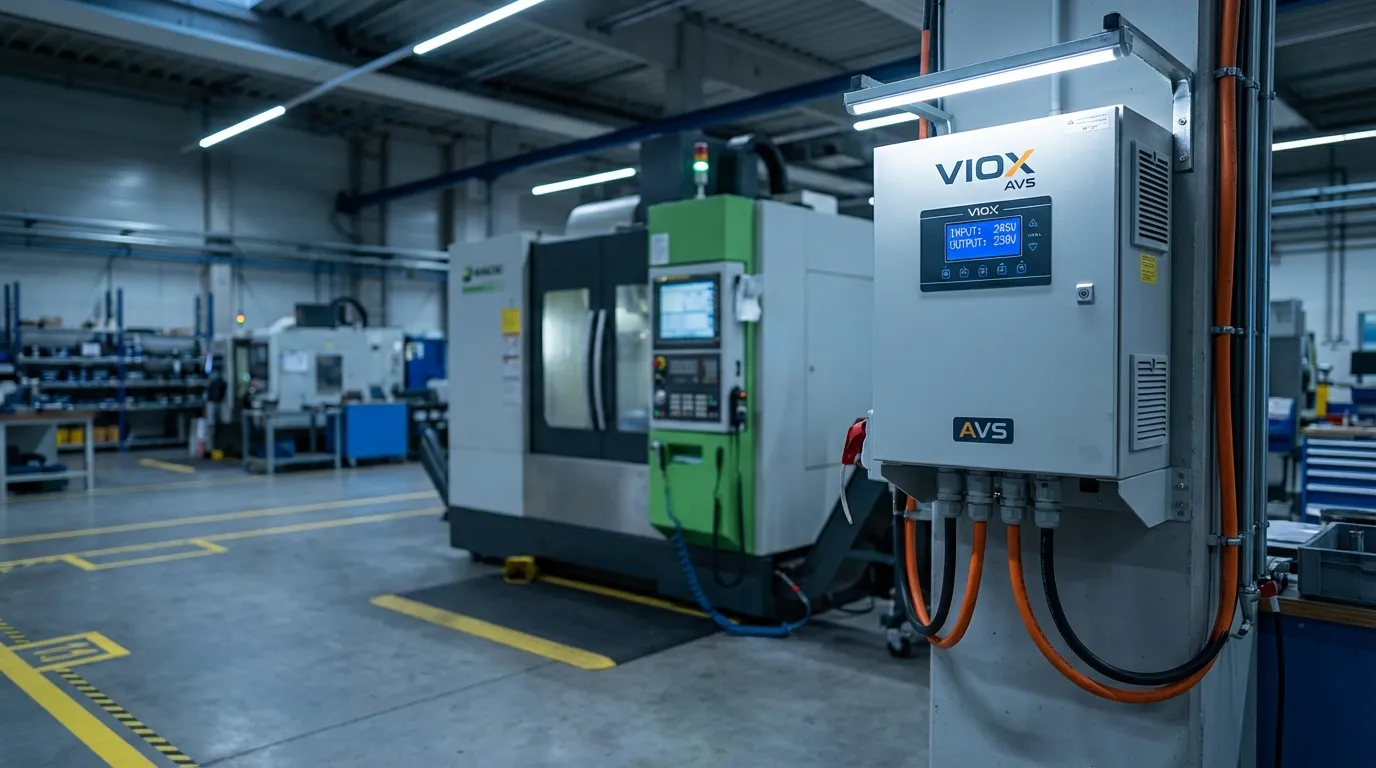
| CNC obráběcí stroje | Chrání přesné zařízení před kolísáním napětí v síti, které ovlivňuje přesnost obrábění |
| Zdravotnické vybavení | Zajišťuje, aby diagnostické a život podporující systémy dostávaly stabilní napájení |
| IT infrastruktura | Chrání servery a síťová zařízení před poklesy napětí a podpětím |
| Systémy HVAC | Zabraňuje poškození kompresoru v důsledku nízkého napětí během špičkové poptávky |
| Automatizované výrobní linky | Udržuje konzistentní napětí pro PLC a řídicí systémy, čímž předchází výrobním chybám |
Komplexní pokyny pro ochranu průmyslových řídicích systémů naleznete v našem článku o komponenty průmyslových řídicích panelů.
Porovnání technických specifikací
Výkon regulace napětí
| Parametr | Servo AVR/AVS | Statické AVR/AVS |
|---|---|---|
| Rozsah vstupního napětí | 150-270V (±50 %) | 170-270V (±25 %) |
| Přesnost výstupního napětí | ±1 % | ±1 % |
| Rychlost korekce | 100V/sekundu | Okamžitá (20-30 ms) |
| Doba odezvy | 50 ms – 5 sekund | 20-30 milisekund |
| Účinnost | 95-98% | 96-99% |
| Zkreslení vlnového průběhu | <3 % THD | <2 % THD |
| Kapacita přetížení | 150 % po dobu 60 sekund | 120 % po dobu 30 sekund |
| Provozní teplota | -10 °C až 50 °C | -10 °C až 40 °C |
Požadavky na údržbu
Systémy založené na servopohonech:
- Kontrola uhlíkových kartáčů: Každých 6 měsíců
- Mazání servomotoru: Ročně
- Kontrola vinutí transformátoru: Každé 2 roky
- Čištění kontaktů: Každých 12 měsíců
Statické systémy:
- Termální kontrola IGBT/SCR: Ročně
- Testování kondenzátorů: Každé 2 roky
- Výměna chladicího ventilátoru: Každé 3-5 let
- Aktualizace firmwaru: Podle dostupnosti
Pochopení správného výběrem ochrany obvodů zajišťuje, že se váš systém regulace napětí správně integruje do celkové elektrické bezpečnosti.
Kritéria výběru: Volba mezi technologiemi AVR a AVS
Aspekty typu zátěže
Zvolte servo technologii, když:
- Provozujete induktivní zátěže (motory, transformátory, svařovací zařízení)
- Zvládáte vysoké zapínací proudy během spouštění zařízení
- Rozpočtová omezení upřednostňují nižší počáteční investici
- Prioritou je ověřená spolehlivost v náročných prostředích
- Kolísání napětí pravidelně překračuje ±25 %
Zvolte statickou technologii, když:
- Chráníte citlivá elektronická zařízení (počítače, PLC, lékařské přístroje)
- Kritická je doba odezvy v řádu milisekund
- Přístup k údržbě je omezený nebo nákladný
- Je vyžadován tichý provoz (kanceláře, nemocniční prostředí)
- Prostorová omezení vyžadují kompaktní řešení
Pro aplikace ochrany motoru si prostudujte našeho průvodce o rozdílech mezi tepelnou nadproudovou ochranou a MPCB.
Faktory prostředí
| Životní prostředí | Doporučená technologie | Zdůvodnění |
|---|---|---|
| Prašné/špinavé průmyslové prostředí | Servo (uzavřený typ) | Méně exponovaná citlivá elektronika |
| Čisté prostory/laboratoře | Statické | Nevznikají žádné mechanické částice opotřebení |
| Oblasti s vysokými vibracemi | Statické | Žádné pohyblivé části, které by se mohly rozladit |
| Extrémní teploty | Servo | Lepší rozsah tepelné tolerance |
| Námořní/pobřežní prostředí | Statické (krytí IP65+) | Konstrukce z polovodičů odolná proti korozi |
Běžné mylné představy o AVR a AVS
Mýtus 1: “AVR a AVS jsou zcela odlišná zařízení”
Realita: Tyto termíny se v průmyslu často používají zaměnitelně. Obě zařízení provádějí regulaci napětí, přičemž hlavním rozdílem je aplikační kontext – AVR pro řízení generátoru, AVS pro ochranu zátěže. Mnoho výrobců používá oba termíny k popisu stejné produktové řady.
Mýtus 2: “Statické stabilizátory jsou vždy lepší než servo”
Realita: Zatímco statické stabilizátory nabízejí rychlejší odezvu, servo stabilizátory vynikají ve zvládání vysokých zapínacích proudů a extrémních kolísání napětí. Pro zátěže poháněné motory a těžké průmyslové aplikace zůstává servo technologie v 95 % případů lepší volbou.
Mýtus 3: “Stabilizátory napětí eliminují potřebu přepěťové ochrany”
Realita: Zatímco zařízení AVS poskytují určitou ochranu proti kolísání napětí, nenahrazují vyhrazené přepěťové ochrany (SPD). Komplexní strategie ochrany vyžaduje jak stabilizaci napětí, tak potlačení přepětí, zejména v oblastech s častou bleskovou aktivitou.
Mýtus 4: “Větší kapacita je vždy lepší”
Realita: Předimenzování regulátorů napětí plýtvá penězi a snižuje účinnost. Správné dimenzování vyžaduje výpočet skutečných požadavků na zátěž plus bezpečnostní rezervu 20-30 %. Poddimenzování způsobuje vypínání při přetížení, zatímco předimenzování zvyšuje ztráty naprázdno a počáteční náklady.
Pro správné metody výpočtu elektrické zátěže si prostudujte našeho průvodce o stanovení elektrické zátěže vašeho domu.
Integrace se systémy elektrické ochrany
Koordinace AVR/AVS s ochranou obvodů
Zařízení pro regulaci napětí musí být správně integrována s ochranou proti proudu a po proudu:
- Nadřazená ochrana: Nainstalujte vhodně dimenzované MCCB nebo MCB k ochraně samotného stabilizátoru
- Ochrana po proudu: Dimenzujte jističe na základě stabilizovaného výstupního napětí a připojené zátěže
- Ochrana proti zemnímu spojení: Integrujte RCCB pro bezpečnost personálu
- Koordinační studie: Zajistěte správné selektivitu mezi ochrannými zařízeními
Integrace automatického přepínače (ATS)
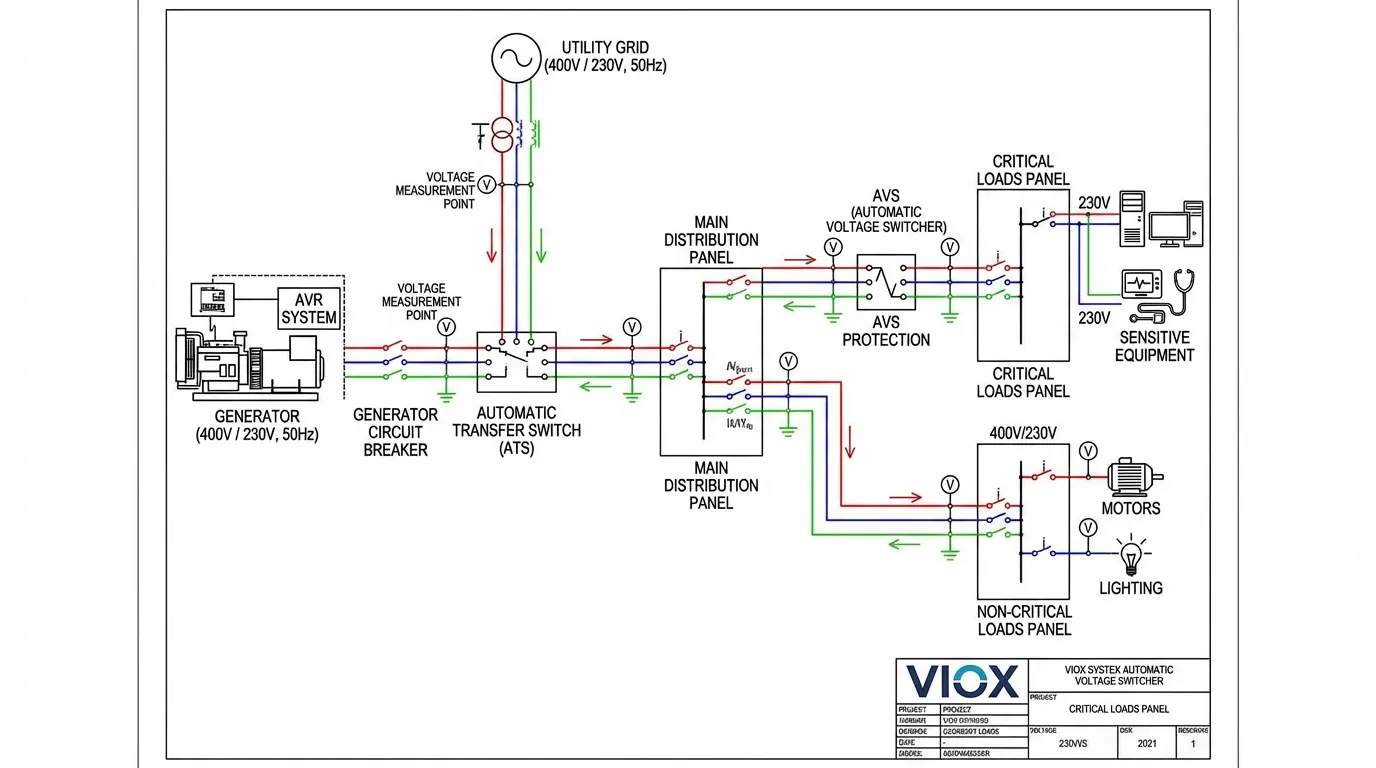
Při kombinaci systémů AVR generátoru s ochranou AVS sítě je nutné správné konfigurace ATS zajišťuje plynulé přechody:
- Režim generátoru: AVR udržuje stabilní napětí během výpadků sítě
- Režim sítě: AVS chrání zátěže před kolísáním sítě
- Časování přepínání: Koordinujte přepínání ATS s dobou odezvy stabilizátoru
- Správa neutrálu: Zajistěte správné uzemnění neutrálu v obou provozních režimech
Osvědčené postupy při instalaci
Pokyny pro dimenzování
Krok 1: Vypočítejte celkový připojený výkon
Celkový výkon (VA) = Součet jmenovitých výkonů všech zařízení × Koeficient soudobosti
Krok 2: Zohledněte účiník
Zdánlivý výkon (VA) = Činný výkon (W) ÷ Účiník
Krok 3: Přidejte bezpečnostní rezervu
Požadovaný výkon stabilizátoru = Celkový výkon × 1,25 (25% rezerva)
Požadavky na umístění instalace
| Požadavek | Specifikace | Důvod |
|---|---|---|
| Okolní teplota | 0 °C až 40 °C | Zajišťuje optimální provoz komponent |
| Větrací mezera | 300 mm ze všech stran | Zabraňuje tepelnému přetížení |
| Vlhkost | <90% nekondenzující | Chrání elektrické komponenty |
| Montážní výška | 1,5-2,0 m od podlahy | Usnadňuje přístup pro údržbu |
| Kabelový vstup | Spodní nebo boční (v závislosti na stupni krytí IP) | Zabraňuje vniknutí vody |
Pro správný výběr skříně si prostudujte našeho průvodce výběr materiálu elektrického krytu.
Řešení běžných problémů
AVR/AVS nereguluje správně
Příznaky: Výstupní napětí kolísá mimo přijatelný rozsah
Možné příčiny:
- Porucha snímacího obvodu – ověřte připojení vstupního napětí
- Opotřebené uhlíky (servo typy) – zkontrolujte a vyměňte, pokud zbývá <5 mm
- Vadný IGBT/SCR (statické typy) – otestujte termokamerou
- Nesprávné nastavení napětí – rekalibrujte referenční napětí
- Stav přetížení – ověřte skutečné zatížení vs. jmenovitá kapacita
Pomalá doba odezvy
Příznaky: Zařízení zaznamenává poklesy napětí předtím, než stabilizátor provede korekci
Možné příčiny:
- Mechanické vázání servomotoru – promažte a zkontrolujte, zda nejsou přítomny překážky
- Nastavení zpoždění řídicího obvodu – upravte parametry odezvy
- Poddimenzovaná jednotka pro zapínací proud zátěže – upgradujte na vyšší kapacitu
- Slabé vstupní napětí – ověřte, zda napájení ze sítě splňuje minimální požadavky
Časté vypínání při přetížení
Příznaky: Stabilizátor se vypne během normálního provozu
Možné příčiny:
- Poddimenzovaný pro skutečné zatížení – přepočtěte požadavky na zatížení
- Vysoký zapínací proud při spouštění motoru – přidejte softstartéry nebo upgradujte kapacitu
- Tepelné přetížení v důsledku špatného větrání – zlepšete proudění chladicího vzduchu
- Vadné relé přetížení – otestujte a v případě potřeby vyměňte
Pro komplexní řešení problémů s jističi si přečtěte náš článek o proč jističe vypínají.
Analýza nákladů a přínosů
Porovnání počátečních investic
| Technologie | Cena za kVA | Náklady na instalaci | Celkový systém 10 kVA |
|---|---|---|---|
| Servo AVR/AVS | $80-150 | $200-400 | $1,000-1,900 |
| Statické AVR/AVS | $150-250 | $150-300 | $1,650-2,800 |
| Digitální AVR/AVS | $200-350 | $150-300 | $2,150-3,800 |
Celkové provozní náklady (10leté období)
| Nákladový faktor | Servo | Statické |
|---|---|---|
| Údržba | $800-1,200 | $200-400 |
| Ztráta energie (2% rozdíl v účinnosti) | $1,500 | $1,000 |
| Výměna komponent | $600-900 | $300-500 |
| Náklady na prostoje | $500-1,000 | $200-400 |
| Celkové provozní náklady za 10 let | $3,400-4,600 | $1,700-2,300 |
Výpočet návratnosti investic
Hodnota ochrany zařízení:
- Průměrné náklady na selhání zařízení v důsledku napětí: 5 000–50 000 $
- Pravděpodobnost selhání bez ochrany: 15–25 % během 10 let
- Očekávané úspory: 750–12 500 $ na chráněné zařízení
Doba návratnosti:
- Typická návratnost: 6–18 měsíců pro kritická zařízení
- ROI: 200–500 % během 10leté životnosti
Budoucí trendy v technologii regulace napětí
Chytré systémy AVR/AVS
Moderní regulátory napětí stále více integrují konektivitu IoT a pokročilé monitorování:
- Vzdálené sledování: Data o napětí, proudu a teplotě v reálném čase přístupná prostřednictvím cloudových platforem
- Prediktivní údržba: AI algoritmy analyzují trendy výkonu a předpovídají selhání komponent
- Automatické hlášení: E-mailová/SMS upozornění na události napětí a požadavky na údržbu
- Energetická analýza: Sledování metrik kvality energie a identifikace příležitostí ke zlepšení efektivity
Integrace s obnovitelnou energií
S tím, jak se šíří solární a bateriové systémy, se vyvíjí i regulace napětí:
- Obousměrná regulace: Zvládání toků energie ze sítě do zátěže i ze solárních panelů do sítě
- Koordinace MPPT: Spolupráce se sledováním bodu maximálního výkonu solárního invertoru
- Správa baterií: Integrace s systémy BESS pro bezproblémové řízení napětí
- Podpora mikrosítí: Umožnění stabilního provozu v ostrovním režimu
Pro specifické aspekty napětí u solárních systémů si prostudujte našeho průvodce jmenovitými hodnotami napětí solárních slučovacích skříní.
Často kladené otázky (FAQ)
Otázka: Mohu použít stejné zařízení jako AVR i AVS?
Odpověď: Technicky ano – základní technologie je podobná. AVR navržené pro generátory však obsahují specifické funkce pro řízení buzení a paralelní provoz, které jednotky AVS na straně zátěže nevyžadují. Vždy vybírejte zařízení navržená pro vaši konkrétní aplikaci.
Otázka: Jak poznám, zda potřebuji AVR nebo AVS?
Odpověď: Pokud regulujete výstupní napětí generátoru, potřebujete AVR (obvykle integrovaný do generátoru). Pokud chráníte zařízení před kolísáním v rozvodné síti, potřebujete AVS instalovaný mezi napájením a vašimi zátěžemi.
Otázka: Jaký je rozdíl mezi AVR a UPS?
Odpověď: AVR/AVS regulují napětí, ale neposkytují záložní napájení během výpadků. UPS obsahuje záložní baterii pro nepřetržitý provoz během výpadků napájení a také regulaci napětí. Pro kritické zátěže použijte obojí: AVS pro nepřetržitou úpravu napětí a UPS pro záložní napájení.
Otázka: Zvyšují stabilizátory napětí účty za elektřinu?
Odpověď: Kvalitní stabilizátory pracují s účinností 95–98 %, což má za následek minimální ztráty energie (2–5 %). Náklady na tuto ztrátu jsou výrazně nižší než náklady na zabránění poškození zařízení a prodloužení životnosti spotřebičů.
Otázka: Mohu si AVS nainstalovat sám?
Odpověď: Zatímco u malých zásuvných jednotek je to technicky možné, správná instalace průmyslových systémů AVS vyžaduje kvalifikované elektrikáře, aby zajistili správné dimenzování, zapojení, uzemnění a koordinaci ochrany. Nesprávná instalace ruší záruky a vytváří bezpečnostní rizika.
Otázka: Jak dlouho vydrží zařízení AVR/AVS?
Odpověď: Servo typy obvykle vydrží 10–15 let při správné údržbě. Statické typy mohou překročit 15–20 let díky menšímu počtu opotřebitelných součástí. Životnost silně závisí na provozních podmínkách, charakteristikách zátěže a kvalitě údržby.
Závěr: Správná volba pro vaši aplikaci
Pochopení rozdílu mezi AVR a AVS spočívá v rozpoznání jejich aplikačních kontextů: AVR regulují výstup generátoru na straně napájení, zatímco zařízení AVS chrání zátěže na straně spotřeby. Oba využívají podobné principy regulace napětí, ale slouží odlišným rolím v komplexních strategiích elektrické ochrany.
Při výběru technologie regulace napětí upřednostňujte tyto faktory:
- Typ Aplikace: Řízení generátoru (AVR) vs. ochrana zátěže (AVS)
- Charakteristiky zatížení: Indukční zátěže preferují servo; citlivá elektronika preferuje statické
- Požadavky na odezvu: Kritické aplikace vyžadují statické; obecné použití akceptuje servo
- Schopnost údržby: Omezený přístup naznačuje statické; běžná údržba umožňuje servo
- Rozpočtová omezení: Vyvažte počáteční náklady s celoživotními provozními náklady
Ve společnosti VIOX Electric vyrábíme servo i statická řešení regulace napětí navržená podle norem IEC a UL, která poskytují spolehlivou ochranu pro průmyslové, komerční a rezidenční aplikace po celém světě. Náš technický tým vám může pomoci vybrat optimální strategii regulace napětí pro vaše specifické požadavky.
Pro odborné poradenství v oblasti návrhu a výběru systému regulace napětí kontaktujte tým technické podpory společnosti VIOX Electric nebo prozkoumejte naši komplexní nabídku komponent elektrické ochrany.