Skryté nebezpečí za vaším snem o rekonstrukci
Obvykle se to stane v “Den demolice”.”
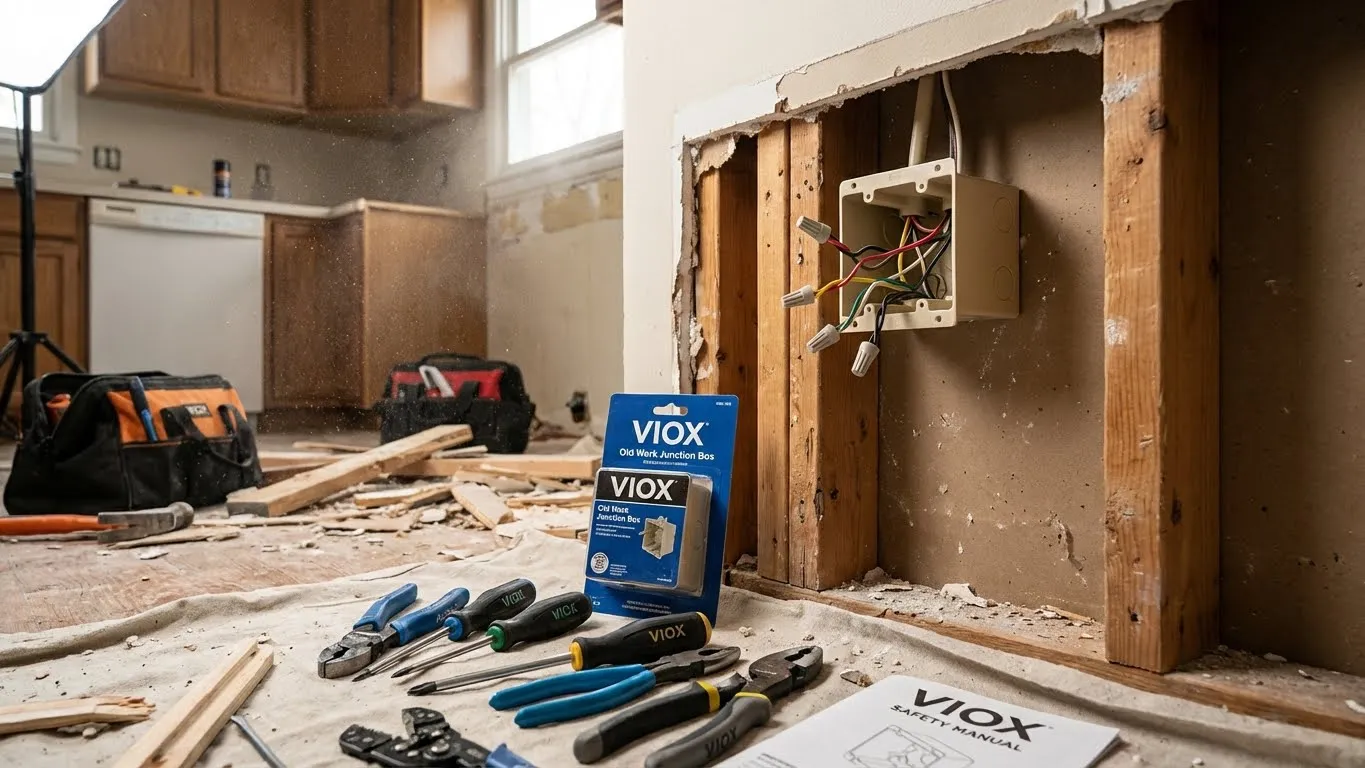
Strhli jste ty mastné staré kuchyňské skříňky. Prostor vypadá otevřený, čistý a připravený pro vaši moderní designovou vizi. Ale tam, uprostřed toho, co by měla být hladká stěna, na vás zírá zaprášená béžová elektrická zásuvka.
Je na špatném místě. Je ošklivá. A blokuje nové uspořádání skříněk.
Nutkání je ohromné: “Prostě odpojím zásuvku, zalepím dráty, nacpu je do díry a zakryju sádrokartonem. Sejde z očí, sejde z mysli.”
Stop. Odložte špachtli.
To, co se chystáte udělat, není jen porušení předpisů – je to potenciální riziko požáru, které může zůstat skryté po celá léta. V elektrotechnice je “pohřbívání” spojovací krabice kardinální hřích, který porušuje NEC 314.29 a vážně ohrožuje váš domov. Zde je důvod, proč je toto skryté drátové spojení nebezpečné, a jak nechat tuto nechtěnou zásuvku zmizet správnou způsobem.
Proč pohřbívání spojovacích krabic porušuje NEC a vytváří riziko požáru
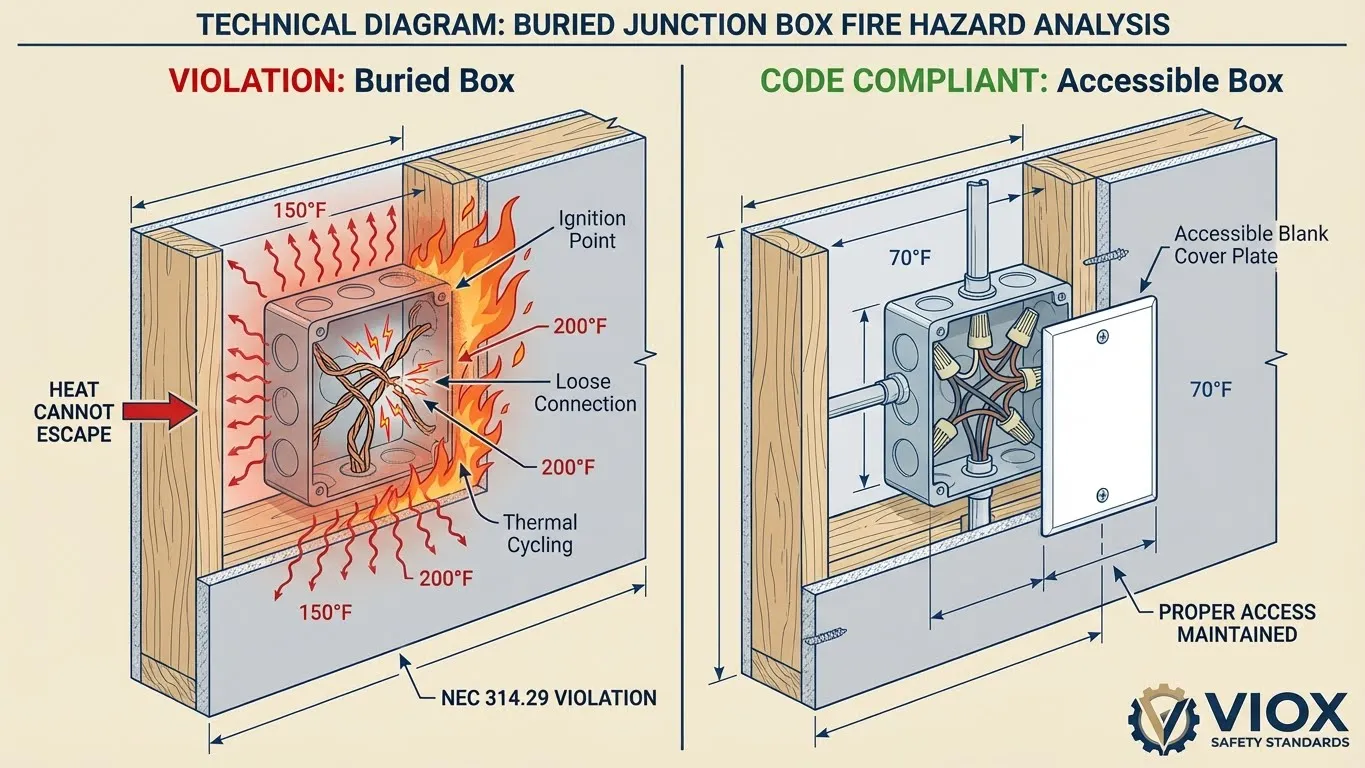
Národní elektrotechnický předpis (NEC) Oddíl 314.29 stanoví základní bezpečnostní požadavek: Všechny spojovací krabice, tělesa trubek a šachty musí být instalovány tak, aby kabeláž v nich obsažená mohla být zpřístupněna bez odstranění jakékoli části budovy.
Nejedná se o byrokratickou zátěž – je to protipožární ochrana založená na fyzice.
Tepelná cyklická časovaná bomba
Elektrické spoje – ať už se jedná o kroucené drátové matice nebo šroubové svorky – nejsou statické. Existují v neustálém cyklu rozpínání a smršťování:
- Proudové toky → Drát se mírně zahřeje
- Proud se zastaví → Drát vychladne
- Výsledek → Mikroskopické uvolňování v průběhu měsíců a let
Toto tepelné cyklování působí jako neviditelné prsty, které pomalu uvolňují vaše spojení. Když se spojení uvolní, elektrický odpor se zvýší. Vyšší odpor generuje více tepla. Nakonec elektřina začne přeskakovat mezeru.
V přístupné zásuvce ucítíte zápach spáleného plastu nebo uvidíte zbarvenou čelní desku. V pohřbené spojovací krabici? Přeskakování pokračuje tiše za vaší stěnou a zahřívá suché dřevěné sloupky zevnitř, dokud nedojde k zapálení.
Statistiky požárů z reálného světa
Podle Národní asociace požární ochrany jsou elektrické poruchy a závady příčinou odhadem 13 % požárů obytných budov ročně. Skryté spojovací krabice představují významnou část těchto incidentů, protože eliminují včasné varovné signály, které by vedly k opravě před katastrofálním selháním.
Pochopení topologie obvodu: Konec běhu vs. řetězové zapojení
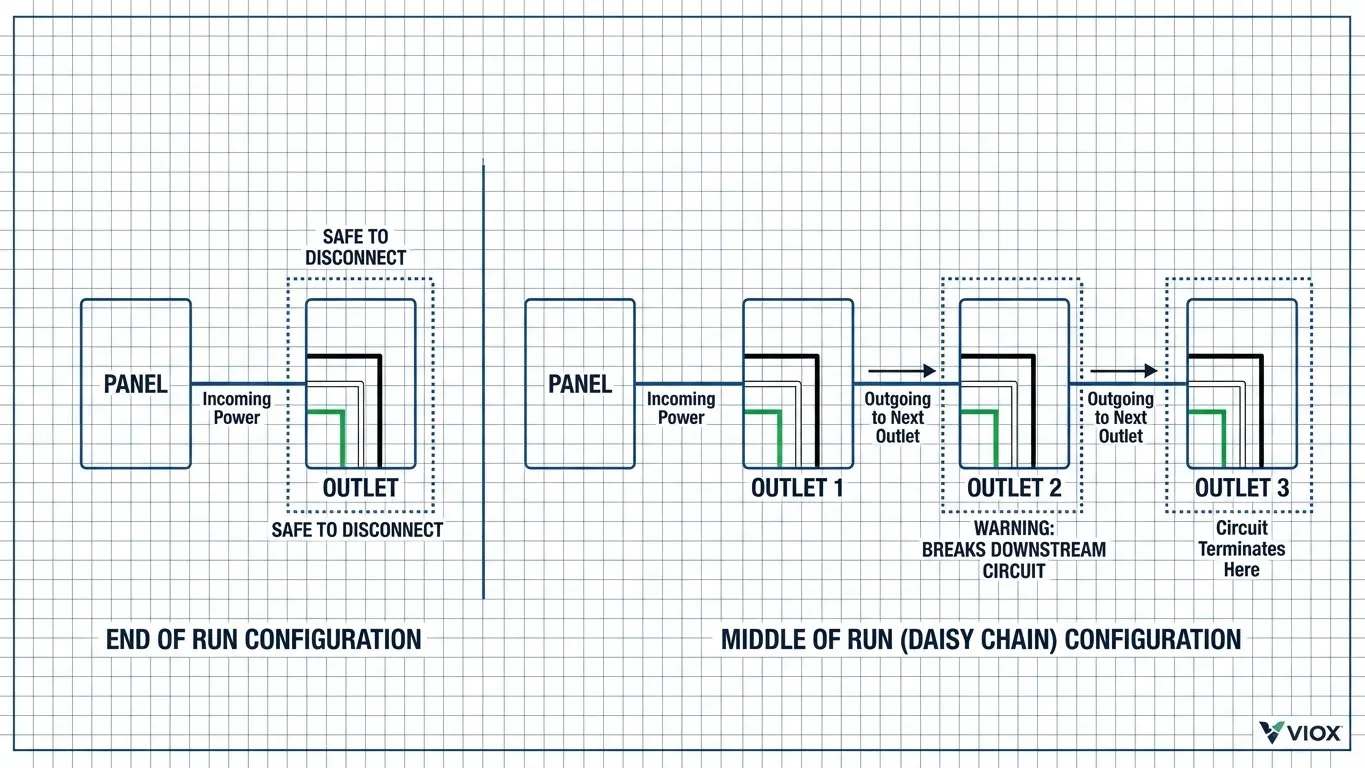
Před stříháním jakýchkoli drátů musíte odpovědět na zásadní otázku: Je tato zásuvka slepá nebo je součástí většího obvodu?
Typy konfigurace obvodu
| Typ konfigurace | Počet vodičů v krabici | Charakteristika | Bezpečné odpojení? |
|---|---|---|---|
| Konec běhu | Jeden kabel (2-3 vodiče) | Napájení končí v této zásuvce | Ano, ovlivňuje pouze tuto zásuvku |
| Střed běhu (řetězové zapojení) | Dva nebo více kabelů | Napájení prochází do navazujících zásuvek | Ne, přeruší celý obvod |
| Spojovací/spojovací bod | Více kabelů | Žádná zásuvka, pouze drátové spoje | Nikdy – musí zůstat přístupné |
Většina kuchyňských a obývacích pokojových zásuvek používá řetězové zapojení, kde napájení proudí skrz každá krabice do další zásuvky. Pokud se ke krabici uprostřed běhu chováte jako ke slepé – přestřihnete dráty a pohřbíte je – přerušíte napájení všech navazujících zařízení.
Najednou zhasne vaše lednička. Selžou světla na chodbě. Nepohřbili jste jen krabici; zničili jste elektrickou síť svého domova.
Tři řešení pro opuštěné zásuvky, která jsou v souladu s předpisy
Vzhledem k tomu, že NEC 314.29 zakazuje pohřbívání spojů, máte tři legální možnosti. Zde je srovnání:
| Řešení | Obtížnost | Náklady | Estetika | Nejlepší pro |
|---|---|---|---|---|
| Kompletní přepojení | 9/10 | $$$ | 10/10 | Pouze zásuvky na konci běhu |
| Přemístění na přístupné místo | 6/10 | $$ | 8/10 | Střed běhu s nedalekou skříňkou |
| Instalace krycí desky | 2/10 | $ | 5/10 | Jakékoli přístupné místo |
Řešení 1: Kompletní přepojení obvodu (Profesionální metoda)
Obtížnost: 9/10 | Estetika: 10/10 | Trvalé: Ano
Toto je jediná metoda, která zcela eliminuje nechtěnou spojovací krabici. Proces vyžaduje:
- Přístup do podkroví, suterénu nebo prolézacího prostoru
- Sledování kabelu zpět k předřazené spojovací krabici
- Odpojte nechtěný obvod zásuvky
- Pokud je součástí řetězového zapojení, veďte nový kabel z krabice proti proudu do krabice po proudu, čímž obejdete nechtěné místo
- Vyspravte a opravte opuštěný otvor
Výsledek: Nechtěné umístění zásuvky je zcela nefunkční. Můžete vyspravit, natřít a instalovat skříňky bez jakýchkoli omezení.
Kdy použít: Praktické pouze pro zásuvky na konci vedení nebo když máte jasný přístup do dutin stropu/podlahy. Nedoporučuje se pro zásuvky uprostřed vedení, pokud vám nevadí vést nový kabel přes hotové stěny.
Řešení 2: Přemístění na přístupné místo (Metoda staré práce)
Obtížnost: 6/10 | Estetika: 8/10 | V souladu s předpisy: Ano
Pokud krabice musí zůstat funkční, ale její současné umístění je problematické, přemístění nabízí kompromis:
- Vypněte napájení na panel jističů
- Odpojte zásuvku a odstraňte ji
- Opatrně vytáhněte kabel na nedaleké přístupné místo (uvnitř skříňky, v oblasti soklu nebo v přilehlé části stěny)
- Vyřízněte nový otvor a nainstalujte VIOX pro starou práci Junction Box
Klíčová výhoda krabic VIOX pro starou práci: Tyto krabice pro rekonstrukce mají nastavitelné montážní úchyty, které se vyklopí za sádrokarton a pevně drží bez nutnosti přístupu ke sloupkům. Instalace je minimálně náročná na nástroje a funguje v hotových stěnách, kde nelze instalovat tradiční krabice pro novou práci.
| Typ spojovací krabice | Způsob montáže | Časování instalace | Nejlepší případ použití |
|---|---|---|---|
| Nová práce | Přibito ke sloupku | Před sádrokartonem | Nová konstrukce |
| Stará práce (Rekonstrukce) | Pružinové svorky nebo úchyty | Po sádrokartonu | Stávající stěny |
| Krabice pro stropní ventilátor | Upevněno výztuhou | Buď | Podpora těžkého svítidla |
| Odolnost proti povětrnostním vlivům | Povrchová montáž | Buď | Venkovní aplikace |
Výsledek: Spoj zůstává v souladu s předpisy a je přístupný, ale je přesunut z cesty vašemu designu – obvykle uvnitř skříňky nebo blízko podlahy, kde je prázdná krycí deska méně nápadná.
Řešení 3: Instalace prázdné krycí desky (Poctivá metoda)
Obtížnost: 2/10 | Estetika: 5/10 | V souladu s předpisy: Ano
Toto je nejběžnější řešení pro zásuvky uprostřed vedení, které nelze snadno přemístit:
- Vypněte napájení na jističi
- Odstraňte zásuvku
- Připojte vstupní a výstupní vodiče uvnitř krabice (při zachování řetězového zapojení)
- Nainstalujte Prázdnou krycí desku VIOX přes krabici
Zásadní pravidlo: Prázdná deska musí zůstat viditelná a přístupná. Nesmíte:
- Obložit ji dlaždicemi
- Instalovat přes ni trvalé skříňky
- Natřít ji stejnou barvou jako stěnu, abyste ji skryli (nedoporučuje se, ale není výslovně zakázáno)
Deska musí být odnímatelná šroubovákem pro budoucí údržbu nebo kontrolu.
Výhody prázdné desky VIOX:
- Nižší profil než standardní desky pro dodavatele
- Montážní šrouby s barevným sladěním
- Matný povrch, který spíše splývá, než vyčnívá
- Materiál odolný vůči UV záření, který nežloutne
Výsledek: Připojení zůstává bezpečné a v souladu s předpisy. I když není neviditelná, kvalitní prázdná deska se stává spíše přístupovým bodem pro údržbu než ošklivou skvrnou.
Technologie připojení vodičů: Proč záleží na vaší volbě pro dlouhodobou bezpečnost
Když vytváříte nebo udržujete spoj, který nemusí být otevřen více než 20 let, kvalita připojení se stává prvořadou. Zde se mnoho renovací svépomocí dopouští kritických chyb.
Tradiční drátové matice vs. pružinové svorky
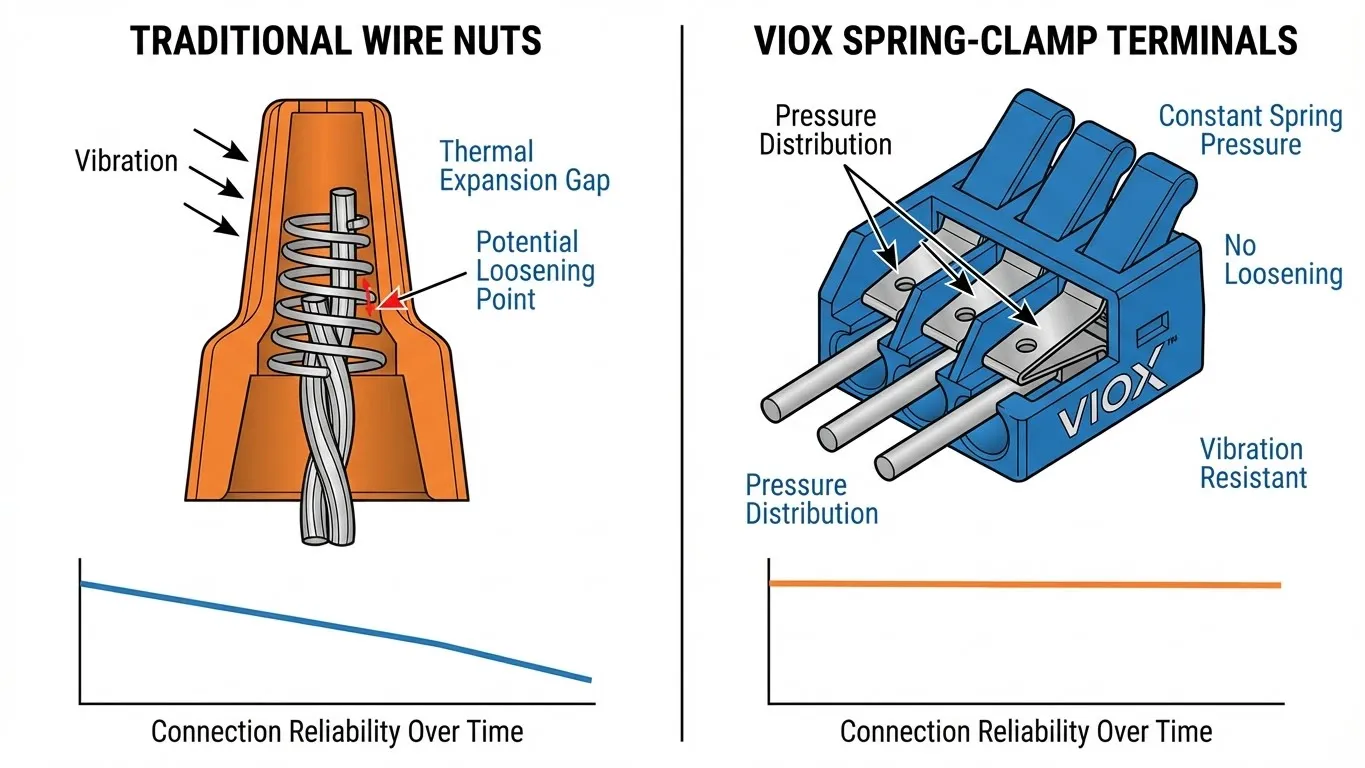
| Funkce | Tradiční drátové matice | Pružinové svorky VIOX |
|---|---|---|
| Instalace | Zatočte vodiče, našroubujte matici | Vložte vodič, zavřete páčku |
| Mechanismus uchopení | Kuželová pružinová cívka | Plochá pružinová svorka |
| Tepelný výkon | Může se časem uvolnit | Udržován konstantní tlak |
| Odolnost proti vibracím | Mírná | Vynikající |
| Znovupoužitelnost | Doporučeno pro jednorázové použití | Plně opakovaně použitelné |
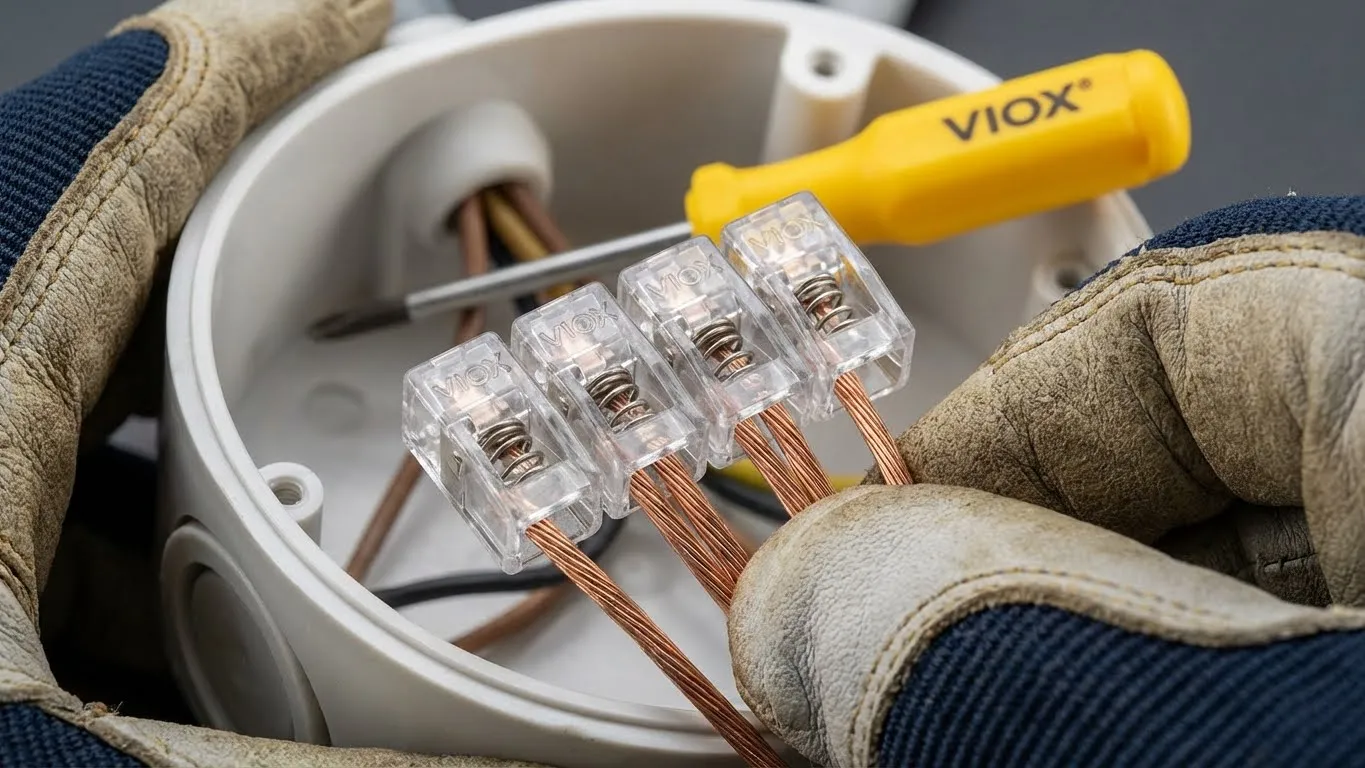
| Vizuální ověření | Neprůhledné – nelze ověřit připojení | Průhledné pouzdro ukazuje zasunutí vodiče |
| Kód Souladu | Ano (UL Listed) | Ano (UL Listed) |
Proč pružinové svorky vynikají v aplikacích typu “nastav a zapomeň”
Pro instalační krabice umístěné za skříněmi nebo na jiných trvalých místech, Pružinové svorky VIOX (podobné pákovým konektorům Wago) nabízejí zřetelné výhody:
Technologie konstantního tlaku: Vnitřní plochá pružina vyvíjí trvalou sílu na vodič. Pokud se měď smršťuje během poklesu teplot v zimě, pružina automaticky kompenzuje tím, že se svorka utáhne. Neexistuje žádný uvolňovací mechanismus.
Odolnost proti vibracím: V kuchyních s bouchajícími zásuvkami, drtiči odpadu nebo myčkami nádobí, které vytvářejí neustálé vibrace, pružinové svorky udržují úchop tam, kde se drátové matice mohou postupně uvolňovat.
Nulový potenciál pro vznik oblouku: Udržováním konstantního kontaktního tlaku po celé ploše vodiče eliminují pružinové svorky mikro-mezery, které vedou ke vzniku oblouku a hromadění tepla – primárnímu zdroji vznícení ve skrytých instalačních krabicích.
Osvědčené postupy při instalaci
Bez ohledu na typ konektoru dodržujte tyto kritické kroky:
- Správně odizolujte vodič: 1/2 palce pro drátové matice, dodržujte značení svorek pro pružinové svorky
- Žádná odkrytá měď: Veškerý holý vodič musí být uvnitř konektoru
- Tahová zkouška: Každý vodič by měl odolat tažné síle 10-15 liber bez pohybu
- Správné zaplnění krabice: NEC 314.16 omezuje počet vodičů na objem krabice – přeplnění způsobuje hromadění tepla
- Vše označte: Poznamenejte si podrobnosti o obvodu na krabici nebo uvnitř krytu pro budoucí použití
| Měřidlo drátu | Požadovaný objem (kubické palce) | Typická kapacita krabice |
|---|---|---|
| 14 AWG | 2.0 | 6-8 vodičů v krabici o objemu 18 kubických palců |
| 12 AWG | 2.25 | 5-7 vodičů v krabici o objemu 18 kubických palců |
| 10 AWG | 2.5 | 4-5 vodičů v krabici o objemu 18 kubických palců |
Poznámka: Počty zahrnují zemnící vodiče, kabelové svorky a zařízení podle NEC 314.16(B)
Zvláštní aspekty pro venkovní a vysoce vlhké lokality
Pokud je vaše opuštěná zásuvka umístěna v koupelně, vnější stěně nebo venkovní kuchyni, platí další požadavky předpisů:
NEMA Hodnocení pro instalační krabice
| Stupeň krytí NEMA | Úroveň ochrany | Aplikace |
|---|---|---|
| NEMA 1 | Vnitřní, suché | Standardní interiér |
| NEMA 3R | Venkovní, odolné proti dešti | Kryté venkovní lokality |
| NEMA 4X | Vodotěsné, odolné proti korozi | Přímé vystavení povětrnostním vlivům |
Pro jakoukoli venkovní instalaci instalační krabice vyžaduje NEC 300.5 dodatečnou ochranu, včetně správné hloubky uložení (minimálně 18 palců pro tuhé potrubí) a použití vodotěsných konektorů vodičů s teplem smrštitelnou bužírkou.
Kritické porušení předpisů: Instalační krabici nemůžete zakopat pod zem, a to ani ve vodotěsném pouzdře, protože to porušuje požadavek přístupnosti NEC 314.29. Všechny body spojení musí být v nadzemních přístupných pouzdrech.
Rozhodovací rámec: Výběr metody řešení
Použijte tuto logiku vývojového diagramu k určení nejlepšího přístupu:
- Je zásuvka na konci běhu (do krabice vstupuje pouze jeden kabel)?
- Ano: Zvažte úplné odstranění (řešení 1)
- Ne: Přejděte k další otázce
- Máte přístup do stropní/podlahové dutiny nad/pod?
- Ano: Přemístění může být praktické (řešení 2)
- Ne: Přejděte k další otázce
- Existuje přilehlé přístupné místo (uvnitř skříně, poblíž podlahové lišty)?
- Ano: Použijte přemístění pomocí instalační krabice VIOX Old Work Box (řešení 2)
- Ne: Nainstalujte prázdnou krycí desku (řešení 3)
- Bude prázdná deska viditelná ve vašem konečném návrhu?
- Ano: Zvažte dekorativní prázdné desky VIOX v barevně sladěném provedení
- Ne: Standardní prázdná deska je přijatelná, pokud je skutečně skrytá nábytkem (ale musí zůstat přístupná)
Shrnutí: Zahrnutí bezpečnosti do vaší rekonstrukce
Když během demolice objevíte problematickou zásuvku:
- Nikdy ji nezakopávejte: Porušení NEC 314.29 vytváří požární nebezpečí a neprojde kontrolou
- Ověřte topologii obvodu: Nepřerušujte řetězové zapojení, pokud nejste připraveni přepojit zásuvky za ním
- Vyberte kvalitní spojovací materiál: Pro trvalé instalace poskytují pružinové svorky VIOX vynikající dlouhodobou spolehlivost oproti tradičním šroubovacím spojkám
- Dokumentujte svou práci: Pořizujte fotografie, označujte obvody a zanechávejte poznámky pro budoucí elektrikáře nebo majitele domů
- V případě pochybností si najměte licencovaného elektrikáře: Složité přepojování vyžaduje odborné znalosti, aby se předešlo vzniku nových rizik
Rekonstrukce je o transformaci estetiky a funkčnosti vašeho domova. Skutečné řemeslné zpracování ale znamená nikdy neobětovat bezpečnost vzhledu. Patnáct minut, které investujete do správného provedení práce s instalační krabicí, by mohlo zabránit katastrofálnímu požáru v budoucnu.
Správné řešení není vždy to nejrychlejší – je to to, které chrání vaši rodinu a splňuje profesionální elektrotechnické normy. Ať už si vyberete kompletní přepojení, přemístění s komponenty VIOX Old Work nebo instalaci přístupné záslepky, zvolte možnost, která udrží váš elektrický systém bezpečný, přístupný a v souladu s předpisy.
Nechte dráty dýchat. Vaše budoucí já vám poděkuje.