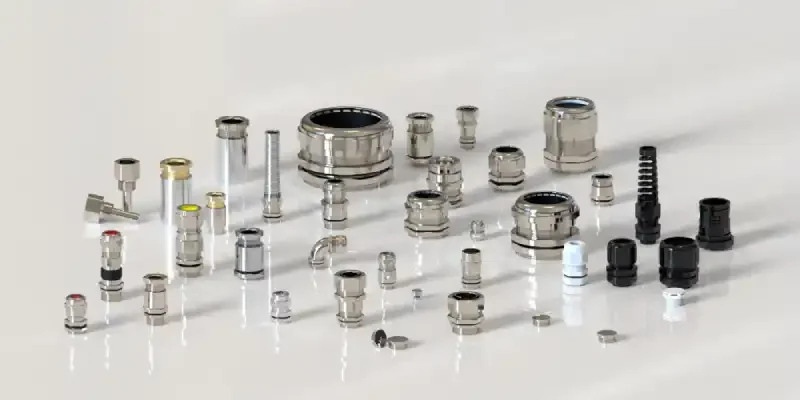
A kabelová vývodka is a cable entry device used to secure, seal, and protect a cable where it passes into electrical equipment, enclosures, junction boxes, control panels, or machines. In practical terms, a cable gland helps keep the cable in place, reduces strain on the conductors, and protects the entry point against dust, water, vibration, or environmental exposure.
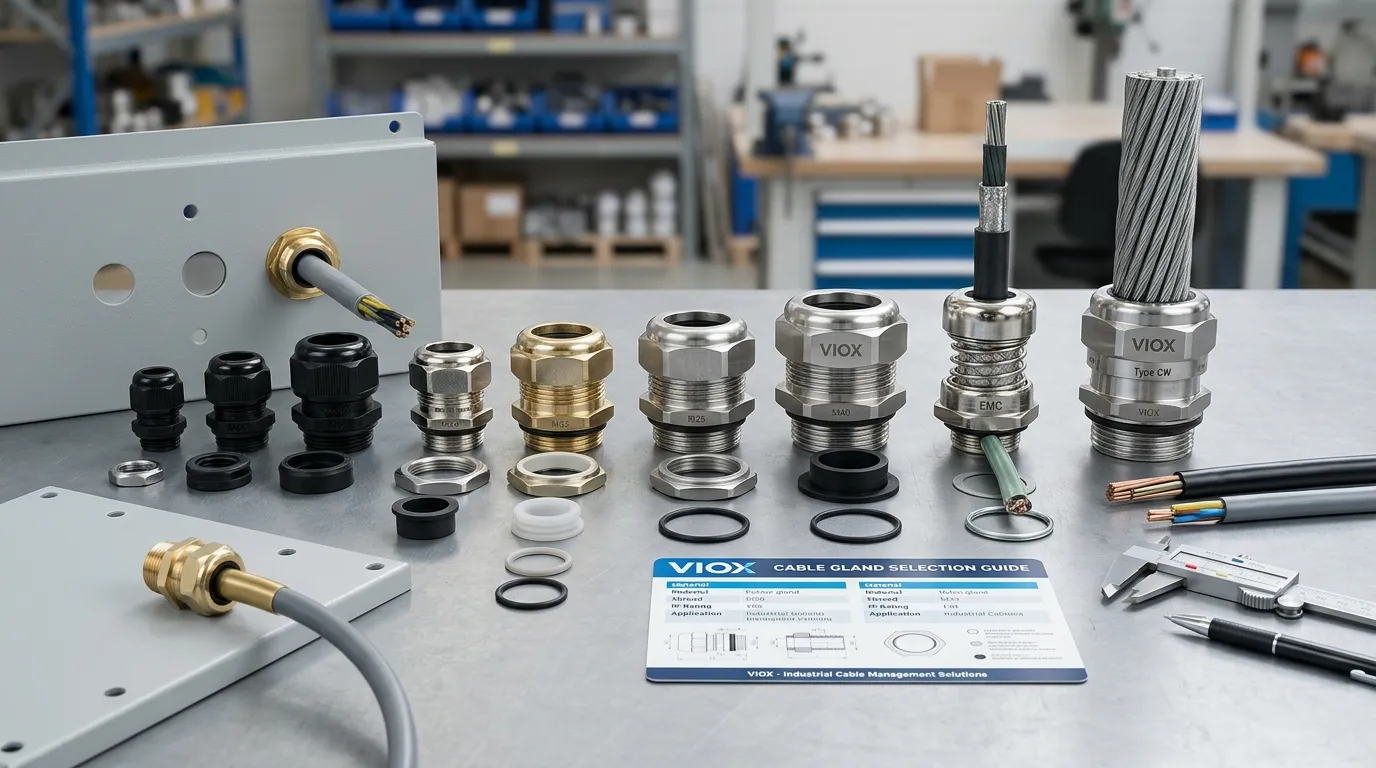
Cable glands are used across residential, commercial, industrial, marine, and hazardous-area installations. The right gland depends on more than cable size alone. Material, sealing performance, thread type, cable construction, environment, and application all affect the selection.
If you want the short answer, that is it: a cable gland is the mechanical and environmental interface between the cable and the equipment it enters.
Klíčové poznatky
- A cable gland secures a cable and seals the enclosure entry point.
- It is selected based on cable type, size, environment, material, and application.
- Different cable gland types are used for standard, EMC, armoured, breathable, waterproof, and hazardous-area requirements.
- Choosing the wrong gland can lead to poor sealing, cable damage, installation difficulty, or reduced reliability.
- For general sourcing and product options, the main Kabelové Průchodky page is the commercial landing page, while this article is the technical overview.
What Does a Cable Gland Do?
At a basic level, a cable gland does four jobs:
1. Secures the cable mechanically
It holds the cable at the entry point so movement, vibration, or pull does not transfer directly into the enclosure or terminal connection.
2. Seals the cable entry
It helps maintain the enclosure’s environmental protection against:
- prach
- voda
- oil
- humidity
- contaminants
In many industrial specifications, that sealing role is tied to ingress-protection performance such as IP68 / IP69K, and in North American enclosure practice buyers may also look for alignment with NEMA 4X or similar environmental expectations depending on the installation.
3. Provides strain relief
It reduces mechanical stress on the conductors and terminations, especially in vibrating or mobile equipment.
4. Supports safety and long-term reliability
In the right application, a correctly selected gland contributes to safer cable routing, better enclosure integrity, and longer system life.
Some gland types also add specialized functions such as:
- shield termination in EMC cable glands
- armour retention and bonding in armoured cable glands
- pressure equalization in breathable cable glands
Main Parts of a Cable Gland
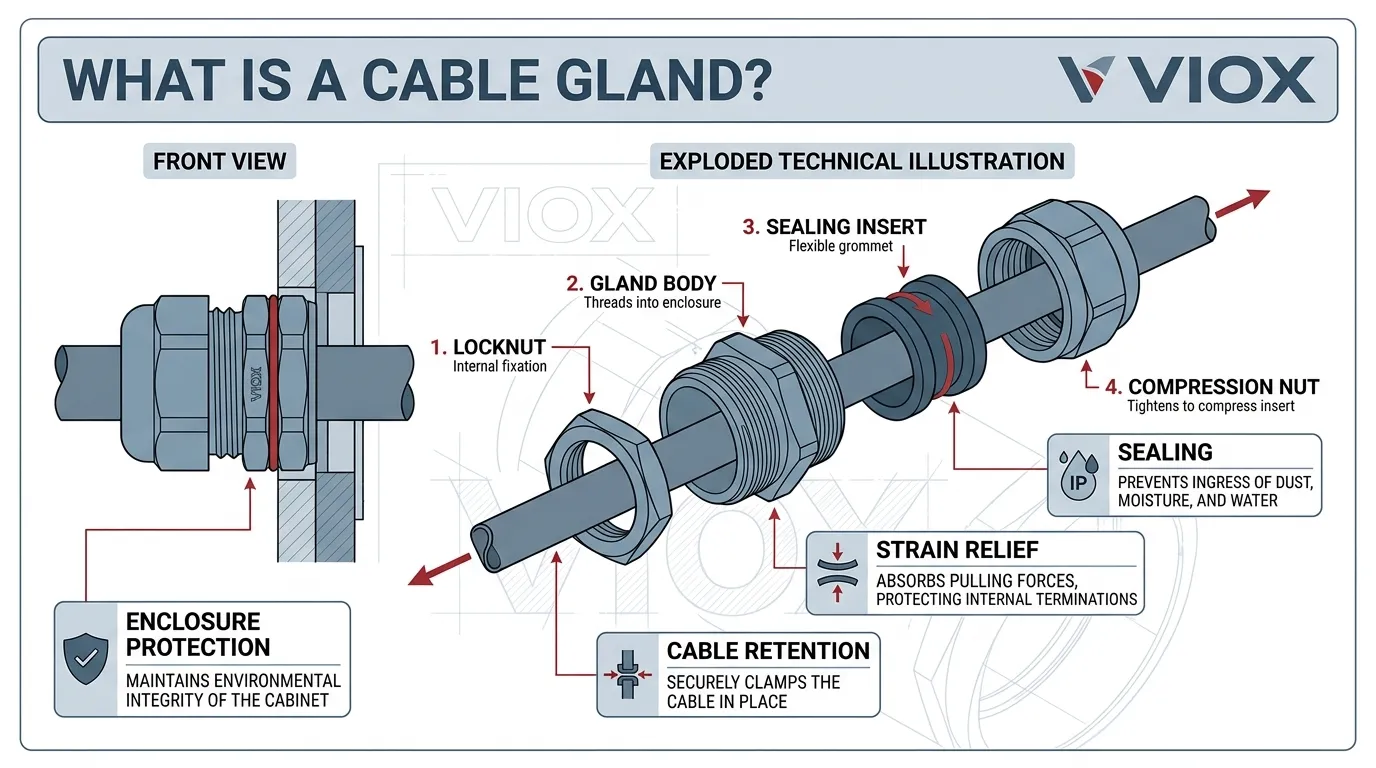
While designs vary by type, most cable glands include the same basic functional elements:
- gland body
- sealing insert or sealing ring
- clamping component
- locknut or mounting thread
- compression nut
- optional washer or shroud depending on the design
The exact arrangement depends on whether the gland is nylon, brass, stainless steel, EMC, armoured, or explosion-proof.
Main Types of Cable Glands
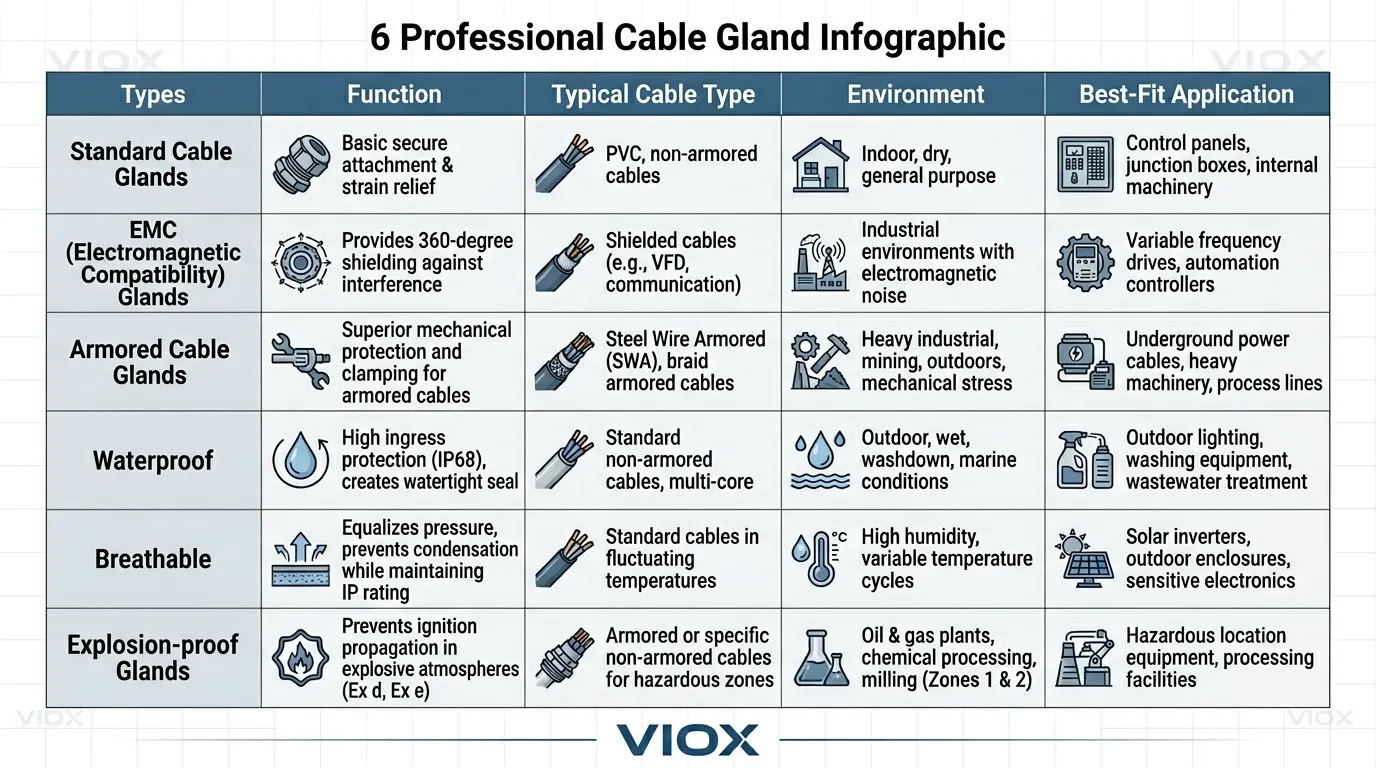
One reason this topic gets fragmented in search results is that “cable gland” is not a single product. It is a family of cable-entry devices for different environments and cable constructions.
Standardní kabelové vývodky
These are the general-purpose glands used for common cable entry, retention, and sealing where no specialized EMC, armour, or hazardous-area function is required.
Kabelové vývodky EMC
These are used with shielded cables where the cable screen or braid needs a controlled conductive termination path. In higher-noise systems, that termination quality affects shielding effectiveness, which is why EMC cable glands are often discussed in relation to low transfer impedance and the test framework of IEC 62444. A deeper technical comparison is covered in Co jsou kabelové vývodky EMC? a Jak vybrat správnou kabelovou průchodku EMC.
Armoured cable glands
These are used where the cable has armour that must be mechanically secured and, in many systems, electrically bonded. For that topic, see Co je pancéřová kabelová vývodka?.
Waterproof cable glands
These focus on environmental sealing where exposure to water, weather, washdown, or moisture ingress is a primary concern. For application-specific use cases, see Použití vodotěsných kabelových vývodek.
Prodyšné kabelové vývodky
These are used where condensation control and pressure equalization matter in addition to cable entry. For more on that category, see Co je prodyšná kabelová průchodka?.
Explosion-proof or hazardous-area cable glands
These are used where enclosure integrity and ignition-control requirements must align with hazardous-location standards. In many global projects, that means evaluating gland selection in the context of ATEX nebo IECEx requirements rather than treating it as an ordinary cable-entry decision. The hazardous-area version is explored in more detail in Úplný průvodce kabelovými vývodkami odolnými proti výbuchu.
Cable Gland Materials
Cable glands are not selected only by type. Material matters because many real failures are driven less by catalog classification than by environmental mismatch. In practice, two of the most common long-term material threats are galvanic corrosion in mixed-metal or wet installations and UV degradace in outdoor polymer applications.
Nylon cable glands
Nylon glands are widely used where corrosion resistance, low weight, electrical insulation, and cost-effectiveness are important.
Nickel-plated brass cable glands
These are common in industrial environments where stronger mechanical performance and broader environmental durability are needed.
Stainless steel cable glands
These are often selected for corrosive, hygienic, marine, or chemically aggressive environments.
For projects where material tradeoffs are a major part of the decision, 10 Differences Between Nylon and Nickel-Plated Brass Cable Glands a Choosing the Right Material for Your Cable Glands go deeper into corrosion resistance, conductivity, and mechanical durability.
Where Cable Glands Are Used
Cable glands are used anywhere a cable must enter equipment in a controlled, sealed, and mechanically secure way.
Typické aplikace zahrnují:
- electrical panels
- propojovací krabice
- switchgear and control cabinets
- motors and machinery
- outdoor lighting systems
- instrumentation enclosures
- telecom equipment
- marine systems
- industrial automation equipment
The cable gland may look like a small accessory, but it has a direct effect on enclosure integrity, cable life, and maintenance reliability.
How to Choose the Right Cable Gland
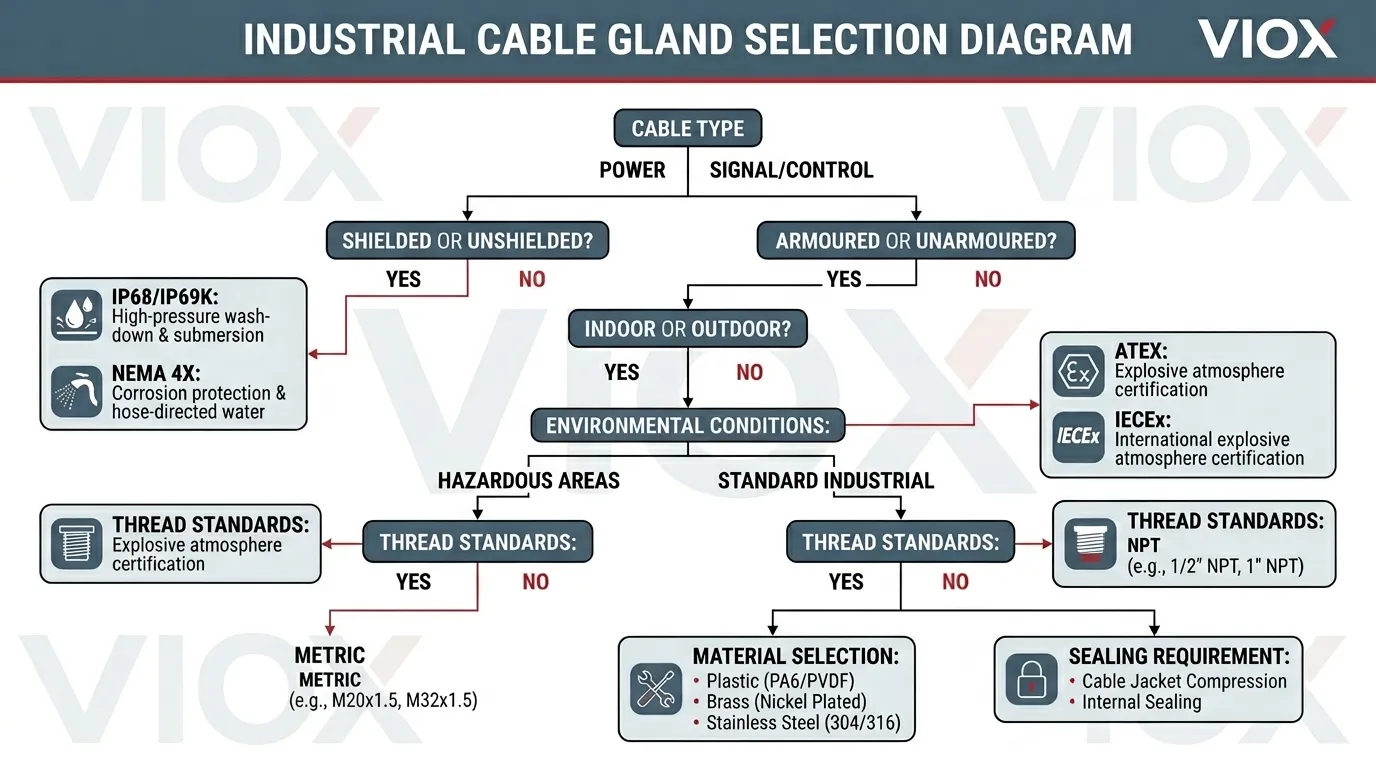
This is where many older “full guide” pages become too general. The best selection process starts with the cable and the installation, not with the product catalog.
1. Identify the cable type
Ask:
- Is the cable unarmoured or armoured?
- Is it shielded?
- Is it flexible or fixed?
- What is the outer diameter?
- What is the sheath material?
2. Check the environment
The correct gland depends heavily on the installation conditions:
- indoor or outdoor
- dust or water exposure
- chemical exposure
- vibrace
- UV záření
- temperature extremes
- corrosion risk
3. Match the gland material
Material should match both the environment and the mechanical demands of the installation.
4. Confirm the thread type
Cable gland thread compatibility is often overlooked. Common thread systems include:
- metric
- PG
- NPT
- G / BSP
In practical terms, metric threads are the most common choice in modern industrial machinery and panel building, while NPT is more common where North American conduit practices dominate. PG threads are still found in older equipment, and G / BSP threads appear in some international legacy or utility-oriented installations. If thread identification is slowing down a replacement project, Jak rozpoznat závity kabelových vývodek covers the details.
5. Confirm the sealing range
A gland must match the actual cable diameter range, not just the nominal cable name.
6. Check whether a specialized gland is needed
Například:
- EMC cable for shield continuity
- armoured gland for armoured cable
- breathable gland for condensation-prone enclosure design
- hazardous-area gland for explosion-risk environments
A Practical Selection Example
Two panels can use the same cable diameter and still need different cable glands.
In a basic indoor junction box with unshielded cable and low environmental stress, a standard nylon or nickel-plated brass gland may be completely adequate. The priorities are simple: seal the entry, hold the cable securely, and keep installation practical and economical.
Now compare that with a drive cabinet in a dusty industrial plant. The cable may be shielded, vibration may be higher, the enclosure may face more contamination, and the gland body may need stronger mechanical durability and better EMC behavior. In that environment, the correct answer may shift toward a brass EMC gland or another more specialized design, even if the cable size itself looks similar on paper.
That is why cable gland selection should not be reduced to thread size and diameter alone.
Common Mistakes When Choosing a Cable Gland
Choosing only by cable diameter
Diameter matters, but it is only one part of the selection.
Ignoring thread compatibility
Many installation problems come from mismatch between gland thread and enclosure entry thread.
Using a standard gland where a specialized gland is required
Examples include EMC, armoured, or hazardous-area applications.
Overlooking material compatibility
The wrong gland material can create corrosion, durability, or mechanical problems over time.
Treating cable glands as generic accessories
In reality, they are part of the enclosure’s protection and cable-management system.
Many of the failures people blame on “bad glands” are actually installation errors, which is why Běžné problémy s instalací kabelových vývodek is often more useful than just comparing catalog features.
Cable Gland vs Cable Connector
This is a common point of confusion. A cable gland is mainly a cable-entry and sealing device, while a cable connector is generally used to make an electrical connection between conductors or devices.
That distinction becomes important during sourcing because a project may need both parts, but they do not solve the same problem. The boundary is explained more directly in Cable Gland vs Cable Connector: Difference.
Často Kladené Otázky
What is a cable gland used for?
A cable gland is used to secure and seal a cable where it enters an enclosure, machine, panel, or junction box.
What is the difference between a cable gland and a connector?
A cable gland mainly provides sealing, retention, and strain relief at the cable entry point. A connector is primarily used to create an electrical connection.
Are cable glands always IP68?
No. Many cable glands are marketed with IP68 or higher sealing claims, but the actual protection level depends on the product design, cable fit, installation quality, and enclosure interface. The rating should be checked on the specific gland rather than assumed from appearance alone.
When should I choose NPT instead of metric cable gland threads?
NPT is generally chosen where the enclosure or conduit system follows North American thread practice. Metric threads are more common in modern industrial machinery and international panel-building work. The right answer depends on the enclosure entry and site standard, not just user preference.
Do hazardous-area cable glands need ATEX or IECEx approval?
For hazardous-area applications, gland selection is usually tied to the certification framework required by the project, commonly ATEX, IECEx, or another regional system. A standard industrial gland should not be assumed acceptable in that environment.
Can the same cable gland type be used for both shielded and unshielded cable?
Sometimes the same general family can be offered in different constructions, but the correct selection depends on whether the cable needs EMC termination, armour handling, or only standard sealing and retention.
Závěrečné doporučení
If your goal is to understand what a cable gland is and how to choose one, think of cable glands as a practical interface between the cable and the equipment entry point. Their job is not only to hold the cable, but also to protect the enclosure, support the cable mechanically, and match the application environment.
For most projects, the right workflow is:
- identify the cable
- identify the environment
- confirm the thread and sealing range
- decide whether a specialized gland type is required
If you are ready to move from general understanding to product evaluation, continue to the main Kabelové Průchodky page.