Trên trang này
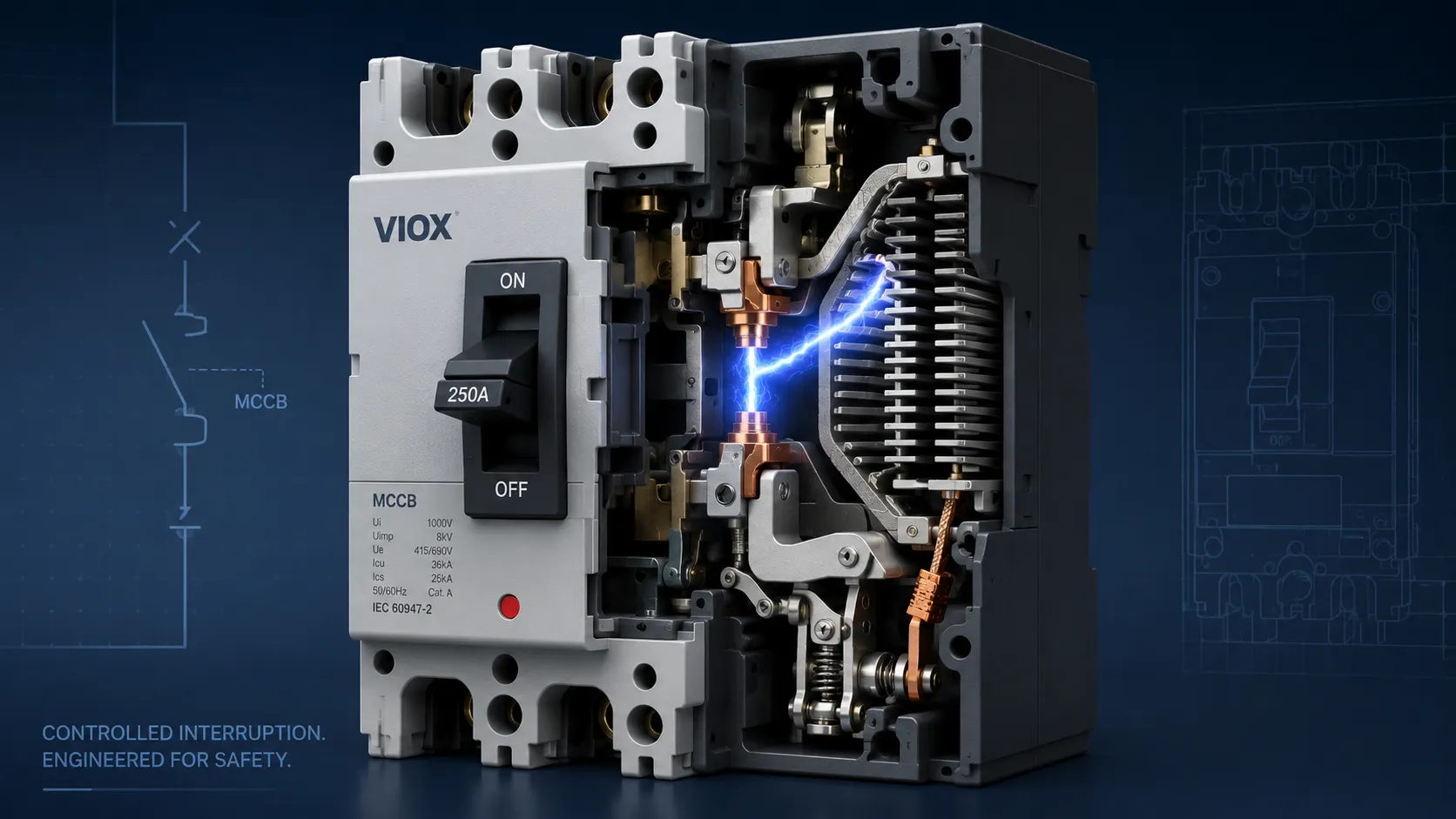
Một hồ quang trong aptomat là một sự phóng điện phát sáng hình thành giữa các tiếp điểm khi aptomat ngắt mạch điện đang mang tải. Hồ quang cho phép dòng điện tiếp tục chạy trong thời gian ngắn qua không khí hoặc khí bị ion hóa cho đến khi aptomat buộc hồ quang phải nguội đi, kéo dài, chia nhỏ và dập tắt.
Aptomat không ngắt dòng điện ngay lập tức khi các tiếp điểm tách rời. Trước tiên, nó phải kiểm soát hồ quang được tạo ra trong quá trình ngắt, sau đó dập tắt hồ quang đó để mạch điện có thể mở một cách an toàn.
Đây là lý do tại sao việc kiểm soát hồ quang là một trong những phần quan trọng nhất trong thiết kế aptomat. Một aptomat có khả năng dập hồ quang kém có thể bị ăn mòn tiếp điểm, quá nhiệt, hư hỏng cách điện hoặc không thể ngắt sự cố một cách an toàn.
Các thuật ngữ chính về hồ quang trong nháy mắt
| Hạn | Ý nghĩa | Vai trò trong aptomat |
|---|---|---|
| Hồ quang | Sự phóng điện phát sáng dẫn điện qua khe hở tiếp điểm đang mở | Cho phép dòng điện tiếp tục chạy trong thời gian ngắn sau khi các tiếp điểm tách rời |
| Sự hình thành hồ quang | Quá trình khí bị ion hóa hình thành giữa các tiếp điểm | Xảy ra trong quá trình đóng cắt hoặc ngắt mạch sự cố |
| Điện áp hồ quang | Điện áp trên hồ quang trong quá trình ngắt | Giúp chống lại dòng điện mạch và hỗ trợ dập tắt hồ quang |
| Thanh dẫn hồ quang | Đường dẫn điện giúp dẫn hồ quang ra xa khỏi các tiếp điểm | Di chuyển hồ quang vào buồng dập hồ quang |
| máng trượt hình vòng cung | Cụm chi tiết giúp chia nhỏ và làm nguội hồ quang | Hỗ trợ dập tắt hồ quang một cách an toàn |
| Tấm chia hồ quang | Tấm kim loại bên trong buồng dập hồ quang | Chia hồ quang thành các đoạn nhỏ hơn |
| Buồng dập hồ quang | Không gian hoặc cấu trúc nơi diễn ra quá trình dập tắt hồ quang | Chứa và kiểm soát năng lượng hồ quang |
| Dập tắt hồ quang | Quá trình dập tắt hồ quang | Cần thiết để ngắt mạch an toàn |
Cách thức hình thành hồ quang trong bộ ngắt mạch
Hồ quang bắt đầu hình thành khi các tiếp điểm của bộ ngắt mạch mở ra trong khi dòng điện vẫn đang chạy.
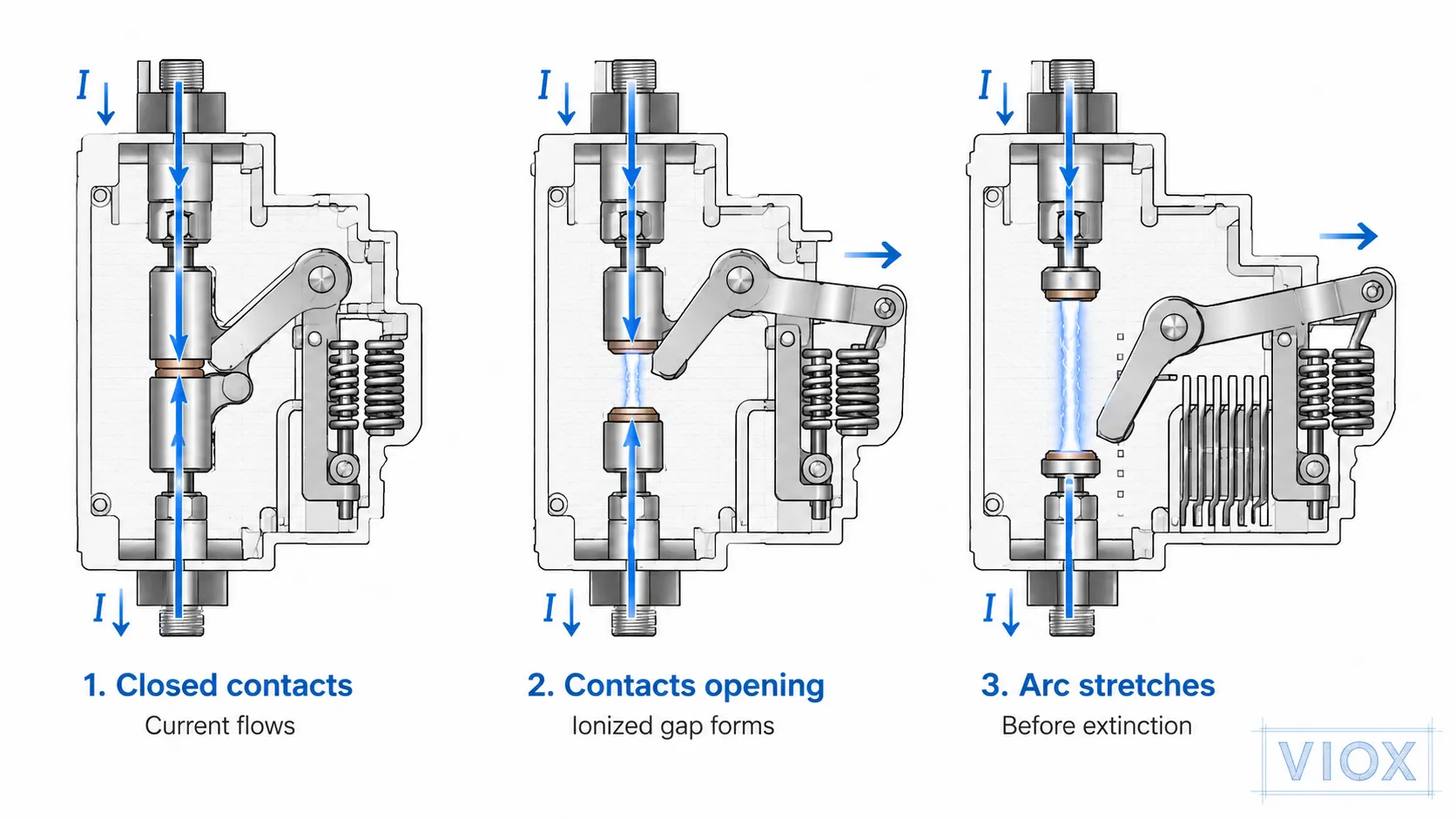
Trình tự ngắt mạch thường diễn ra như sau:
- Aptomat phát hiện tình trạng quá tải, ngắn mạch hoặc thao tác đóng cắt thủ công.
- Cơ cấu vận hành tách các tiếp điểm ra.
- Dòng điện cố gắng tiếp tục chạy qua khe hở nhỏ giữa các tiếp điểm.
- Không khí hoặc khí giữa các tiếp điểm bị ion hóa.
- Một hồ quang dẫn điện được hình thành.
- Aptomat đẩy hồ quang vào hệ thống dập hồ quang.
- Hồ quang bị kéo dài, chia nhỏ, làm nguội và dập tắt.
Bản thân hồ quang không phải là một lỗi. Đó là một hiện tượng vật lý bình thường trong quá trình ngắt dòng điện. Thách thức về mặt kỹ thuật là kiểm soát nó một cách nhanh chóng và an toàn.
Tại sao hồ quang hình thành khi các tiếp điểm mở ra
Khi các tiếp điểm đóng, dòng điện chạy qua đường dẫn kim loại. Khi chúng bắt đầu tách rời, diện tích tiếp xúc trở nên nhỏ hơn, điện trở tăng lên và nhiệt độ tăng cao. Đồng thời, điện trường qua khe hở đang mở có thể ion hóa môi trường xung quanh.
Khi môi trường trở nên dẫn điện, dòng điện có thể tiếp tục chạy qua plasma hồ quang ngay cả khi các tiếp điểm kim loại không còn chạm nhau.
Đó là lý do tại sao các thiết bị đóng cắt cần nhiều hơn là một công tắc cơ học đơn giản. Chúng cần các cấu trúc dập hồ quang có khả năng xử lý năng lượng giải phóng trong quá trình ngắt mạch.
Tiếp điểm chính và tiếp điểm hồ quang
Trong các thiết bị đóng cắt hạ thế lớn hơn, đặc biệt là nhiều loại MCCB và ACB, đường dẫn dòng điện có thể bao gồm tiếp điểm chính và tiếp điểm hồ quang.
| Liên Hệ Với Loại | Vai trò chính | Tại sao nó quan trọng |
|---|---|---|
| Tiếp điểm chính | Mang dòng điện với điện trở thấp trong quá trình vận hành bình thường | Được thiết kế để đảm bảo tính dẫn điện và ít sinh nhiệt |
| Tiếp điểm hồ quang | Dập hồ quang trong quá trình đóng và cắt | Bảo vệ các tiếp điểm chính khỏi sự ăn mòn nghiêm trọng do hồ quang |
Trình tự điển hình là cắt trước / đóng sau đối với các tiếp điểm hồ quang so với hệ thống tiếp điểm chính, tùy thuộc vào thiết kế của máy cắt. Trong quá trình cắt, các tiếp điểm chính tách ra trước để hồ quang chuyển sang các tiếp điểm hồ quang. Trong quá trình đóng, các tiếp điểm hồ quang tiếp xúc trước để các tiếp điểm chính không bị hư hại bởi ứng suất điện ban đầu.
Thời điểm tiếp xúc này là một lý do khiến máy cắt phức tạp hơn một công tắc đơn giản. Nó phải dẫn dòng điện hiệu quả trong quá trình vận hành bình thường và chịu được các sự kiện ngắt lặp đi lặp lại trong các sự cố.
Thanh dẫn hồ quang trong máy cắt
Một thanh dẫn hồ quang là một bộ phận dẫn điện giúp di chuyển hồ quang ra khỏi các tiếp điểm chính và hướng về phía buồng dập hồ quang.
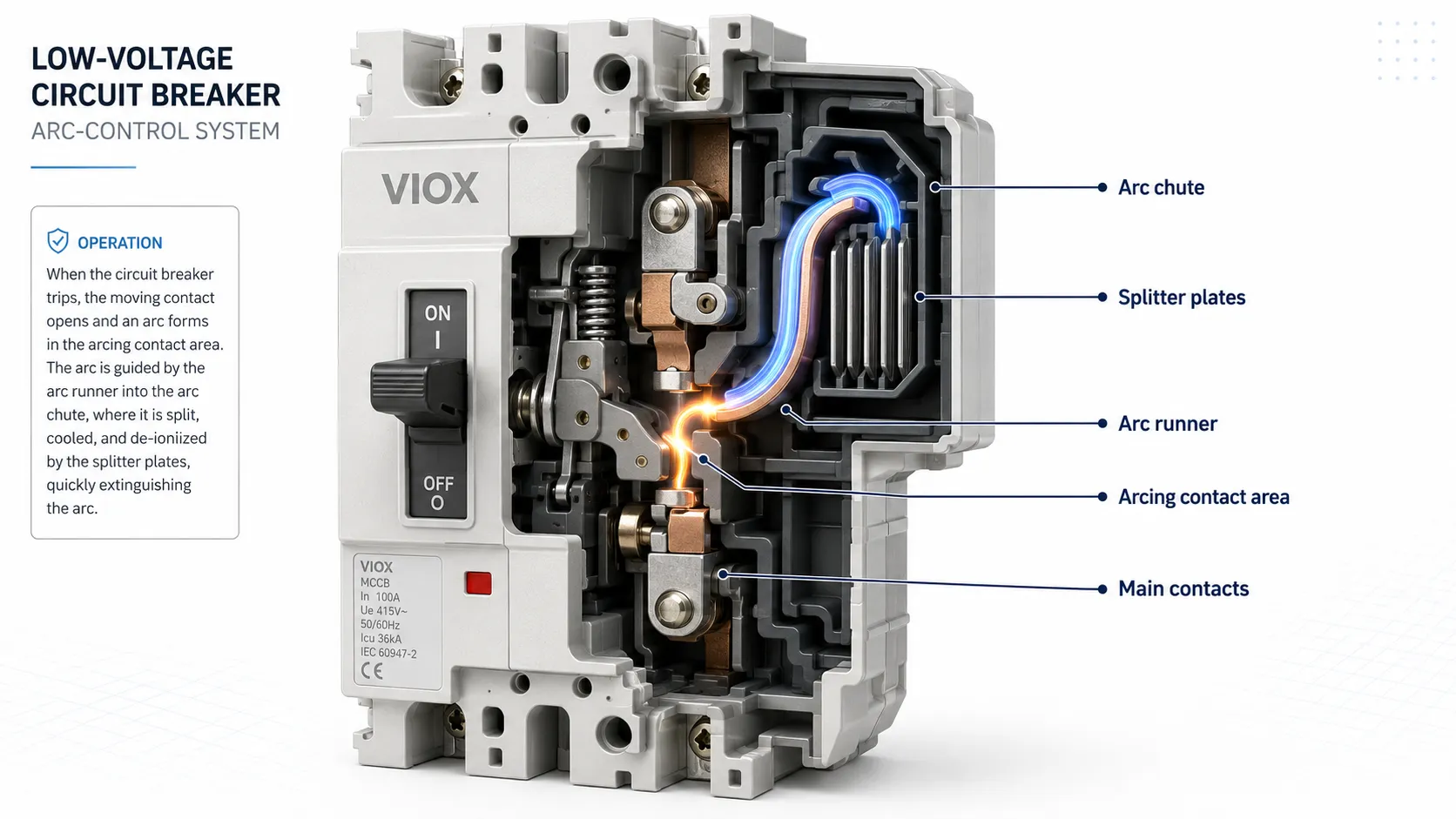
Chức năng của nó rất thiết thực:
- giảm hư hỏng tiếp điểm;
- dẫn hồ quang đi đúng hướng;
- hỗ trợ chuyển hồ quang từ khu vực tiếp điểm sang buồng dập hồ quang;
- hỗ trợ dập tắt hồ quang nhanh hơn và có kiểm soát hơn.
Trong nhiều thiết kế bộ ngắt mạch, thanh dẫn hồ quang hoạt động cùng với lực từ trường được tạo ra bởi dòng sự cố. Một cách đơn giản để biểu thị lực đẩy này là F = I × L × B, Ở đâu F là lực tác động lên hồ quang, Tôi là dòng điện hồ quang, L là chiều dài hồ quang hiệu dụng trong từ trường, và B là mật độ từ thông. Trong thiết kế bộ ngắt mạch thực tế, dòng điện ngắn mạch lớn hơn có thể tạo ra lực đẩy từ trường mạnh hơn, giúp đẩy hồ quang dọc theo đường dẫn vào buồng dập hồ quang, nơi nó có thể bị chia nhỏ và làm nguội.
F = I × L × BLực từ trường di chuyển hồ quang vào buồng dập hồ quang như thế nào
Khi dòng điện cao chạy qua bộ ngắt mạch, đường dẫn dòng điện tạo ra một từ trường. Bản thân hồ quang cũng mang dòng điện. Sự tương tác giữa hồ quang mang dòng điện và từ trường tạo ra một lực có thể đẩy hồ quang ra xa các tiếp điểm.
Chuyển động từ trường này rất hữu ích vì nó:
- kéo hồ quang ra khỏi bề mặt tiếp điểm;
- chuyển hồ quang về phía thanh dẫn hồ quang;
- đẩy hồ quang vào các tấm dập hồ quang;
- giảm thời gian hồ quang lưu lại trên vùng tiếp điểm chính.
Trong các bộ ngắt mạch DC, việc kiểm soát hồ quang bằng từ tính trở nên quan trọng hơn nữa vì không có điểm không của dòng điện tự nhiên. Đây cũng là lý do tại sao cực tính có thể quan trọng trong một số thiết kế bộ ngắt mạch DC.
Từ góc độ thiết kế sản phẩm, chỉ riêng sự hiện diện của buồng dập hồ quang là chưa đủ. Hình dạng thanh dẫn hồ quang, tốc độ mở tiếp điểm, sự căn chỉnh của các tấm dập, đường thoát khí và vật liệu cách điện xung quanh buồng đều ảnh hưởng đến việc hồ quang có di chuyển sạch vào vùng dập thay vì lưu lại gần các tiếp điểm hay không.
Buồng dập hồ quang và buồng triệt tiêu hồ quang
Một ống dập hồ quang là cấu trúc giúp dập tắt hồ quang sau khi nó rời khỏi vùng tiếp điểm. Nó thường được tạo thành từ nhiều tấm dập hoặc tấm hồ quang được sắp xếp bên trong một buồng cách điện.
Buồng dập hồ quang hoạt động bằng cách:
- kéo dài đường đi của hồ quang;
- chia một hồ quang lớn thành các đoạn hồ quang nhỏ hơn;
- làm mát khí ion hóa nóng;
- tăng điện áp hồ quang;
- hỗ trợ khử ion hóa đường đi của hồ quang;
- giữ khí nóng và các hạt bên trong thiết kế của aptomat.
Cụm từ buồng dập hồ quang thường đề cập đến không gian hoặc cụm lắp ráp nơi xảy ra quá trình dập hồ quang này.
Vật liệu tiếp điểm: Tại sao hợp kim Vonfram-Đồng và Bạc lại được sử dụng
Tiếp điểm của thiết bị đóng cắt phải dẫn điện trong quá trình vận hành bình thường và chịu được nhiệt độ hồ quang trong quá trình ngắt mạch. Điều đó tạo ra sự đánh đổi về vật liệu.
Các chiến lược vật liệu tiếp điểm phổ biến bao gồm hợp kim gốc bạc để đảm bảo độ dẫn điện và khả năng chống hồ quang, và các vật liệu kiểu Vonfram-Đồng khi cần khả năng chống xói mòn do hồ quang mạnh hơn. Vật liệu chính xác phụ thuộc vào loại thiết bị đóng cắt, định mức dòng điện, ứng dụng và thiết kế của nhà sản xuất.
Ý tưởng kỹ thuật chính là: Vonfram cung cấp khả năng chống xói mòn do hồ quang nhờ điểm nóng chảy cao, trong khi đồng cải thiện độ dẫn điện và khả năng truyền nhiệt. Mục tiêu là giữ cho cấu trúc tiếp điểm ổn định dưới tác động nhiệt của hồ quang lặp đi lặp lại trong khi vẫn duy trì điện trở tiếp xúc ở mức chấp nhận được.
Điều này chính xác hơn so với việc nói rằng Vonfram-Đồng chỉ được sử dụng để giảm phát xạ điện tử. Trong tiếp điểm của thiết bị đóng cắt, điểm nóng chảy, khả năng chống xói mòn, đặc tính nhiệt, độ dẫn điện và độ bền cơ học đều quan trọng.
Dập hồ quang là gì?
Dập tắt hồ quang là quá trình dập tắt hồ quang để dòng điện ngừng chạy.
Các thiết bị đóng cắt có thể sử dụng những phương pháp dập hồ quang khác nhau tùy thuộc vào loại và cấp điện áp:
| Loại máy cắt | Phương pháp dập hồ quang phổ biến |
|---|---|
| MCB | Buồng dập hồ quang với các tấm ngăn |
| MCCB | Buồng dập hồ quang, thanh dẫn hồ quang, tấm ngăn, vật liệu cách điện đúc |
| Ngân hàng | Ngắt hồ quang trong không khí với buồng dập hồ quang lớn hơn |
| Bộ ngắt mạch DC | Buồng dập hồ quang kết hợp thổi từ tính hoặc thiết kế nối tiếp đa cực |
| Máy cắt điện áp cao | Các phương pháp ngắt bằng chân không, SF6, khí nén hoặc các phương pháp chuyên dụng khác |
Đối với MCB và MCCB hạ thế, buồng dập hồ quang và các tấm chia hồ quang là những thành phần quen thuộc nhất.
Điện áp hồ quang là gì?
Điện áp hồ quang là điện áp trên hồ quang trong quá trình ngắt. Khi máy cắt kéo dài, chia nhỏ và làm mát hồ quang, điện áp hồ quang sẽ tăng lên. Khi điện áp hồ quang đủ cao so với các điều kiện của mạch điện, dòng điện có thể bị cưỡng bức giảm xuống và hồ quang có thể bị dập tắt.
Trên thực tế, một hệ thống kiểm soát hồ quang tốt sẽ làm tăng điện trở và khả năng làm mát của hồ quang để dòng điện không thể tiếp tục chạy qua đường dẫn bị ion hóa.
Điện áp hồ quang không phải là một giá trị cố định trong danh mục. Nó bao gồm độ sụt áp gần vùng cực âm và cực dương, cộng với gradient điện áp dọc theo cột hồ quang. Trong thiết kế máy cắt hạ thế, câu hỏi quan trọng là liệu hình học tiếp điểm, đường dẫn hồ quang, chồng tấm chia hồ quang, luồng khí và cách điện buồng dập có thể làm tăng điện áp hồ quang đủ nhanh trong điều kiện ngắn mạch đã thử nghiệm hay không.
Đây là một lý do tại sao hình học của các tiếp điểm, đường dẫn hồ quang, tấm chia, hình dạng buồng dập và luồng khí lại quan trọng trong thiết kế máy cắt.
Hồ quang AC so với hồ quang DC trong thiết bị đóng cắt
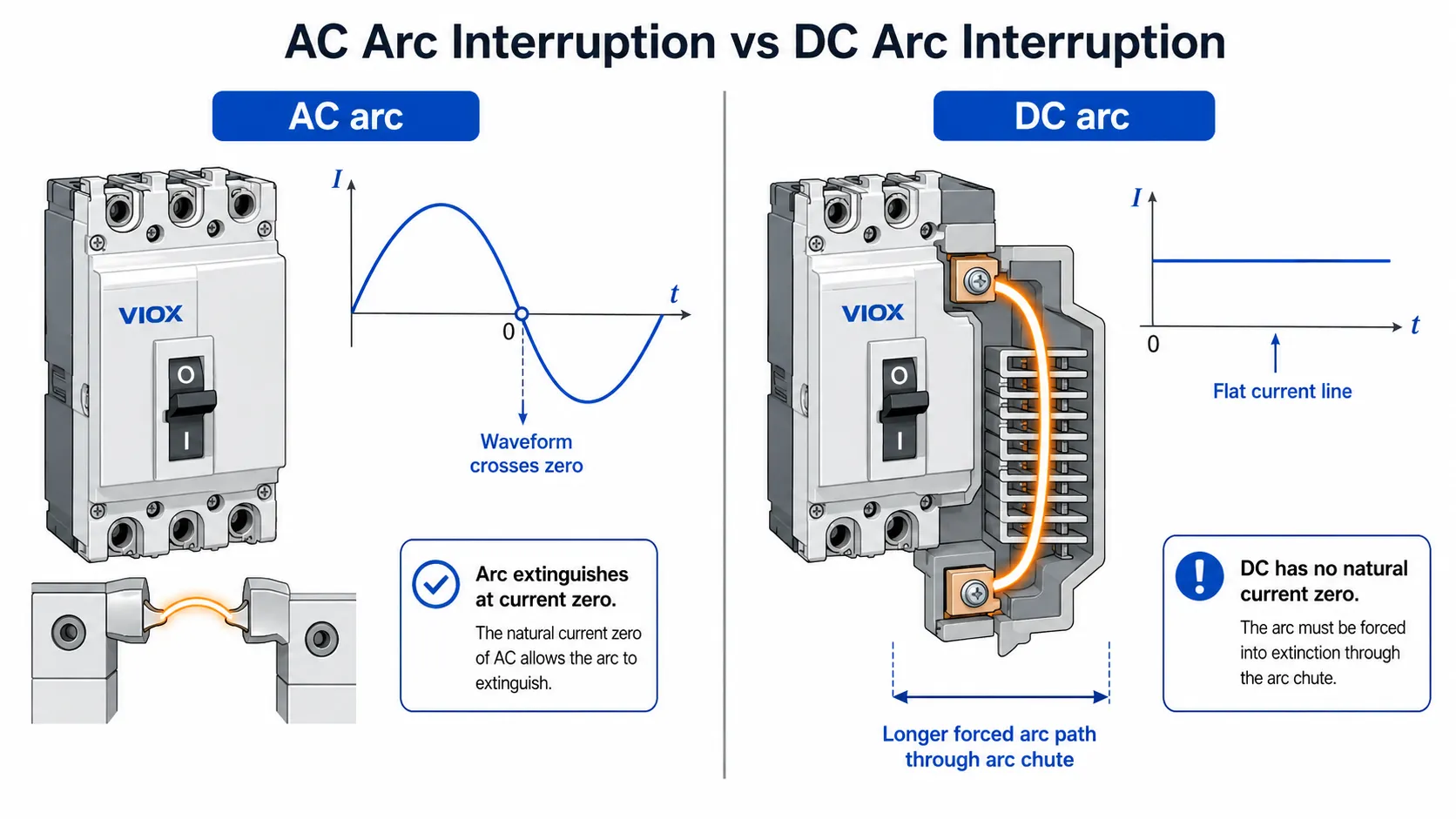
Hồ quang AC và DC có đặc tính hoạt động khác nhau.
| Năng | Hồ quang AC | Hồ Quang DC |
|---|---|---|
| Điểm không của dòng điện | Điểm cắt dòng tự nhiên sau mỗi nửa chu kỳ | Không có điểm không tự nhiên |
| Arc tuyệt chủng | Được hỗ trợ bởi điểm không của dòng điện | Phải được thực hiện cưỡng bức nhờ thiết kế của thiết bị đóng cắt |
| Thiết kế bộ ngắt mạch (aptomat) | Buồng dập hồ quang định mức AC có thể là đủ cho định mức của nó | Yêu cầu thiết kế dập hồ quang định mức cho dòng điện một chiều (DC) |
| Vấn đề về cực tính | Thường ít quan trọng hơn trong các bộ ngắt mạch xoay chiều (AC) hạ thế | Quan trọng trong nhiều bộ ngắt mạch một chiều (DC) có phân cực |
Đây là lý do tại sao bộ ngắt mạch AC không nên được sử dụng tự động trong mạch DC. Hồ quang DC có thể duy trì trừ khi bộ ngắt mạch được thiết kế và định mức cụ thể cho việc ngắt dòng DC.
Để biết chi tiết về bộ ngắt mạch DC, xem Cầu dao DC là gì?.
Hồ quang trong MCB so với MCCB so với ACB
| Loại máy cắt | Nơi xảy ra kiểm soát hồ quang | Sự khác biệt thực tế |
|---|---|---|
| MCB | Buồng dập hồ quang nhỏ gọn gần hệ thống tiếp điểm | Không gian nhỏ, dập hồ quang nhanh, kích thước khung giới hạn |
| MCCB | Buồng dập hồ quang đúc lớn hơn và các thanh dẫn hồ quang | Kích thước khung lớn hơn và cấu trúc ngắt mạnh mẽ hơn |
| Ngân hàng | Buồng dập hồ quang bằng không khí lớn hơn | Được sử dụng trong thiết bị đóng cắt hạ thế dòng điện cao hơn |
Nguyên lý cơ bản tương tự nhau: máy cắt mở các tiếp điểm, tạo ra hồ quang, dẫn hồ quang vào buồng, chia nhỏ và làm mát nó, sau đó ngắt dòng điện. Kích thước vật lý và khả năng ngắt thay đổi tùy theo loại máy cắt.
Đối với các bộ phận bên trong MCCB, xem Cấu trúc bên trong và các thành phần của MCCB.
IEC 60947-2, UL 489 và các định mức dập tắt hồ quang
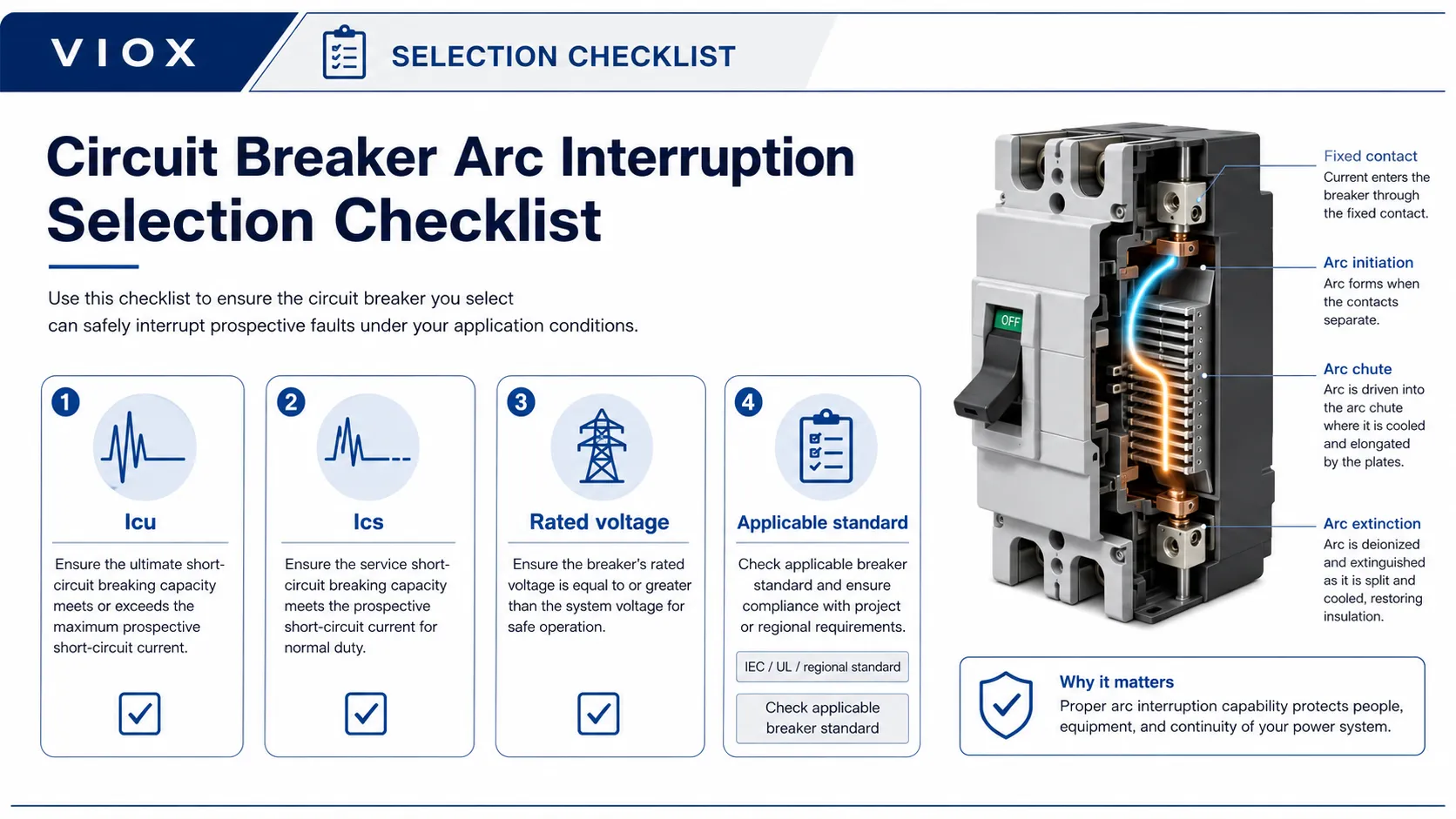
Việc dập tắt hồ quang không chỉ được đánh giá qua thiết kế trực quan. Các aptomat được thử nghiệm theo các khung tiêu chuẩn quy định cách thức xác minh hiệu suất dập tắt.
Đối với các aptomat công nghiệp hạ thế, TRUYỀN thông 60947-2 là một bối cảnh tiêu chuẩn quan trọng. Tại thị trường aptomat nhánh và aptomat vỏ đúc ở Bắc Mỹ, UL 489 là một tài liệu tham khảo chính. Tiêu chuẩn áp dụng phụ thuộc vào loại sản phẩm, thị trường và việc lắp đặt.
Các định mức quan trọng liên quan đến dập tắt hồ quang bao gồm:
| Xếp hạng | Ý nghĩa | Tại sao nó liên quan đến việc kiểm soát hồ quang |
|---|---|---|
| Icu | Khả năng cắt dòng ngắn mạch cực đại | Xác minh aptomat có thể ngắt dòng sự cố nghiêm trọng trong các điều kiện thử nghiệm được xác định |
| Ics | Khả năng cắt dòng ngắn mạch vận hành | Chỉ ra hiệu suất sau khi ngắt dưới các điều kiện thử nghiệm liên quan đến vận hành |
| Icw | Dòng chịu đựng ngắn hạn | Quan trọng đối với tính chọn lọc và khả năng chịu đựng ở một số loại aptomat |
| Bình áp | Điện áp mà tại đó quá trình ngắt được thử nghiệm | Điện áp cao hơn thường làm cho việc dập tắt hồ quang trở nên khó khăn hơn |
Các thông số định mức này cần được đọc từ bảng dữ liệu và bối cảnh tiêu chuẩn. Một aptomat có buồng dập hồ quang trông có vẻ chắc chắn vẫn cần có khả năng cắt đã được kiểm nghiệm phù hợp với mạch điện thực tế.
Đối với hướng dẫn lựa chọn sản phẩm VIOX, câu hỏi thực tế không phải là liệu aptomat có buồng dập hồ quang có thể nhìn thấy được hay không. Hầu như mọi aptomat hạ thế đều có một dạng cấu trúc kiểm soát hồ quang nào đó. Câu hỏi hữu ích hơn là liệu hệ thống tiếp điểm, thanh dẫn hồ quang, bộ dập hồ quang, lớp cách điện đúc, đường thoát khí và cấu trúc đầu cực có được kiểm chứng cùng nhau dưới các điều kiện thử nghiệm khả năng cắt yêu cầu hay không. Đây là nơi mà Icu, Ics, điện áp định mức và tiêu chuẩn áp dụng quan trọng hơn vẻ bề ngoài.
Hồ quang trong aptomat (CB) so với aptomat chống hồ quang (AFCI)
Từ “hồ quang” (arc) xuất hiện trong hai chủ đề aptomat khác nhau, nhưng ý nghĩa lại khác biệt.
| Hạn | Ý nghĩa |
|---|---|
| Hồ quang trong aptomat | Hồ quang nội bộ hình thành khi các tiếp điểm của aptomat mở ra trong quá trình ngắt mạch |
| Hồ quang điện | Hiện tượng phóng hồ quang không mong muốn trong hệ thống dây dẫn, dây nguồn, đầu nối hoặc thiết bị |
| Aptomat chống hồ quang / AFCI | Một loại aptomat được thiết kế để phát hiện các đặc tính hồ quang nguy hiểm trong mạch điện |
Hồ quang bình thường của aptomat xảy ra bên trong thiết bị trong quá trình đóng cắt hoặc ngắt sự cố. Hồ quang lỗi xảy ra bên ngoài hệ thống tiếp điểm dự kiến và có thể là dấu hiệu của dây dẫn bị hỏng, kết nối lỏng lẻo hoặc hỏng lớp cách điện.
Các dấu hiệu cho thấy có thể xảy ra sự cố phóng điện hồ quang ở aptomat
Hiện tượng phóng điện hồ quang bên trong thiết bị là bình thường trong quá trình ngắt mạch, nhưng không nên bỏ qua các triệu chứng bất thường bên ngoài.
Hãy gọi cho thợ điện hoặc kỹ thuật viên có chuyên môn nếu bạn nhận thấy:
- mùi khét gần tủ điện;
- tiếng kêu vo ve, xèo xèo hoặc lách tách phát ra từ aptomat;
- hư hỏng do nhiệt hoặc đổi màu;
- lớp cách điện bị nóng chảy gần các đầu cực;
- aptomat bị nhảy liên tục;
- tia lửa điện nhìn thấy được bên ngoài aptomat;
- các đầu cực bị lỏng hoặc hư hỏng.
Không được mở hoặc kiểm tra bên trong aptomat khi đang có điện. Aptomat là các thiết bị an toàn được niêm phong hoặc lắp ráp sẵn, không phải là buồng dập hồ quang có thể sửa chữa tại hiện trường.
Xói mòn do hồ quang, rỗ bề mặt tiếp điểm và khi nào hồ quang aptomat trở thành vấn đề
Mỗi sự kiện ngắt mạch đều có thể gây áp lực lên các tiếp điểm của aptomat. Trong điều kiện vận hành bình thường, điều này là dự kiến, nhưng các lỗi nghiêm trọng lặp đi lặp lại hoặc tình trạng đầu cực kém có thể đẩy nhanh quá trình mài mòn.
Các dấu hiệu có thể xảy ra của ứng suất quá mức liên quan đến hồ quang bao gồm:
- các tiếp điểm bị rỗ hoặc xói mòn trong thiết bị công nghiệp có thể bảo dưỡng;
- đổi màu xung quanh các đầu cực hoặc lỗ thông hơi;
- có mùi lạ sau khi vận hành;
- vỏ bộ ngắt mạch bị hư hỏng;
- nhảy aptomat lặp đi lặp lại trong các điều kiện tải tương tự;
- điện trở tiếp điểm tăng cao trong các thiết bị mà việc đo lường là một phần của quy trình bảo trì.
Đối với các bộ ngắt mạch thu nhỏ được niêm phong, việc kiểm tra tiếp điểm bên trong thường không khả thi. Đối với các thiết bị đóng cắt lớn hơn có thể bảo dưỡng, việc kiểm tra và bảo trì phải tuân theo hướng dẫn của nhà sản xuất và quy trình an toàn tại công trường.
Những hiểu lầm phổ biến về hồ quang của bộ ngắt mạch
Sai lầm 1: Nghĩ rằng bất kỳ hồ quang nào cũng có nghĩa là bộ ngắt mạch bị lỗi
Hồ quang bên trong trong quá trình ngắt là bình thường. Bộ ngắt mạch được thiết kế để kiểm soát nó.
Sai lầm 2: Nghĩ rằng buồng dập hồ quang ngăn chặn mọi hư hỏng của aptomat
Buồng dập hồ quang giúp giảm và kiểm soát năng lượng hồ quang, nhưng việc ngắt dòng sự cố cao lặp đi lặp lại vẫn có thể gây áp lực lên các tiếp điểm và linh kiện bên trong.
Sai lầm 3: Nhầm lẫn giữa hồ quang của aptomat với bảo vệ lỗi hồ quang
Việc kiểm soát hồ quang bên trong aptomat và phát hiện lỗi hồ quang AFCI là hai vấn đề khác nhau.
Sai lầm 4: Áp dụng giả định về hồ quang AC cho aptomat DC
Hồ quang DC khó dập tắt hơn vì không có điểm không (zero crossing) tự nhiên. Hãy sử dụng aptomat được định mức cho dòng DC đối với các mạch điện DC.
Sai lầm 5: Bỏ qua tình trạng của đầu cực
Các đầu cực lỏng lẻo có thể gây ra hiện tượng nóng và phóng hồ quang bên ngoài. Điều này khác với hồ quang bên trong bình thường hình thành trong quá trình aptomat ngắt mạch.
Câu hỏi thường gặp
Buồng dập hồ quang AC có thể dập tắt hồ quang DC không?
Không tự động. Việc ngắt mạch AC tận dụng điểm không của dòng điện tự nhiên, trong khi việc ngắt mạch DC phải buộc hồ quang kéo dài, làm mát và dập tắt mà không có sự hỗ trợ đó. Aptomat sử dụng cho mạch DC phải được định mức cụ thể cho điện áp, dòng điện, điều kiện cực tính và ứng dụng DC.
Sự khác biệt giữa tiếp điểm hồ quang và tiếp điểm chính là gì?
Tiếp điểm chính được tối ưu hóa để dẫn dòng điện với điện trở thấp trong quá trình vận hành bình thường. Tiếp điểm hồ quang được thiết kế để chịu ứng suất điện trong quá trình đóng và ngắt, nhờ đó tiếp điểm chính không bị ảnh hưởng bởi sự ăn mòn hồ quang nghiêm trọng.
Tần suất kiểm tra tiếp điểm hồ quang trong các aptomat công nghiệp là bao nhiêu?
Tuân thủ hướng dẫn bảo trì của nhà sản xuất aptomat và quy trình an toàn điện tại cơ sở. Tần suất kiểm tra phụ thuộc vào loại aptomat, lịch sử sự cố, tần suất đóng cắt, môi trường và khả năng sửa chữa của thiết bị. Các loại MCB kín và nhiều loại MCCB thường được thay thế thay vì mở ra để kiểm tra tiếp điểm.
Tại sao aptomat lại có mùi khét sau khi nhảy (trip)?
Mùi nhẹ sau khi ngắt sự cố nghiêm trọng có thể xuất phát từ khí nóng và các sản phẩm phụ của hồ quang bên trong aptomat. Mùi khét kéo dài, đổi màu, lớp cách điện bị chảy, đầu cực bị nóng hoặc tình trạng nhảy aptomat lặp đi lặp lại là không bình thường và cần được kiểm tra trước khi cấp điện trở lại cho mạch.
Chỉ số Icu cao hơn có nghĩa là buồng dập hồ quang tốt hơn phải không?
Không hẳn là vậy. Icu là khả năng cắt ngắn mạch cực hạn đã được kiểm nghiệm trong các điều kiện xác định. Thiết kế buồng dập hồ quang rất quan trọng, nhưng tốc độ tiếp điểm, hình học đường dẫn hồ quang, vật liệu cách điện đúc, thiết kế đầu cực, điện áp định mức và toàn bộ trình tự thử nghiệm cũng quan trọng không kém. Ics cũng rất quan trọng vì nó chỉ ra hiệu suất cắt ngắn mạch vận hành theo tiêu chuẩn áp dụng.
Hồ quang trong aptomat có thể sửa chữa được không?
Đối với các loại MCB kín và nhiều loại MCCB, hư hỏng do hồ quang bên trong không thể sửa chữa tại hiện trường. Hãy thay thế thiết bị nếu việc kiểm tra hoặc hướng dẫn của nhà sản xuất cho thấy có hư hỏng. Các loại máy cắt lớn hơn có thể bảo trì được có thể có các quy trình bảo dưỡng được nhà sản xuất phê duyệt, nhưng việc sửa chữa chỉ nên được thực hiện bởi nhân viên có chuyên môn sử dụng các bộ phận và phương pháp thử nghiệm được phê duyệt.
Tài nguyên VIOX liên quan
Kết luận
Hồ quang trong máy cắt là một hiện tượng điện bình thường nhưng cường độ cao, được tạo ra khi các tiếp điểm mở ra dưới dòng điện. Máy cắt phải di chuyển hồ quang đó vào hệ thống kiểm soát hồ quang, chia nhỏ, làm mát, tăng điện áp hồ quang và dập tắt nó.
Các bộ phận quan trọng nhất cần hiểu là thanh dẫn hồ quang, ống dập hồ quang, Các tấm dập hồ quang, Và buồng dập hồ quang. Đây là những thành phần cho phép máy cắt ngắt dòng điện một cách an toàn thay vì chỉ hoạt động như một công tắc đơn giản.