

اس صفحے پر
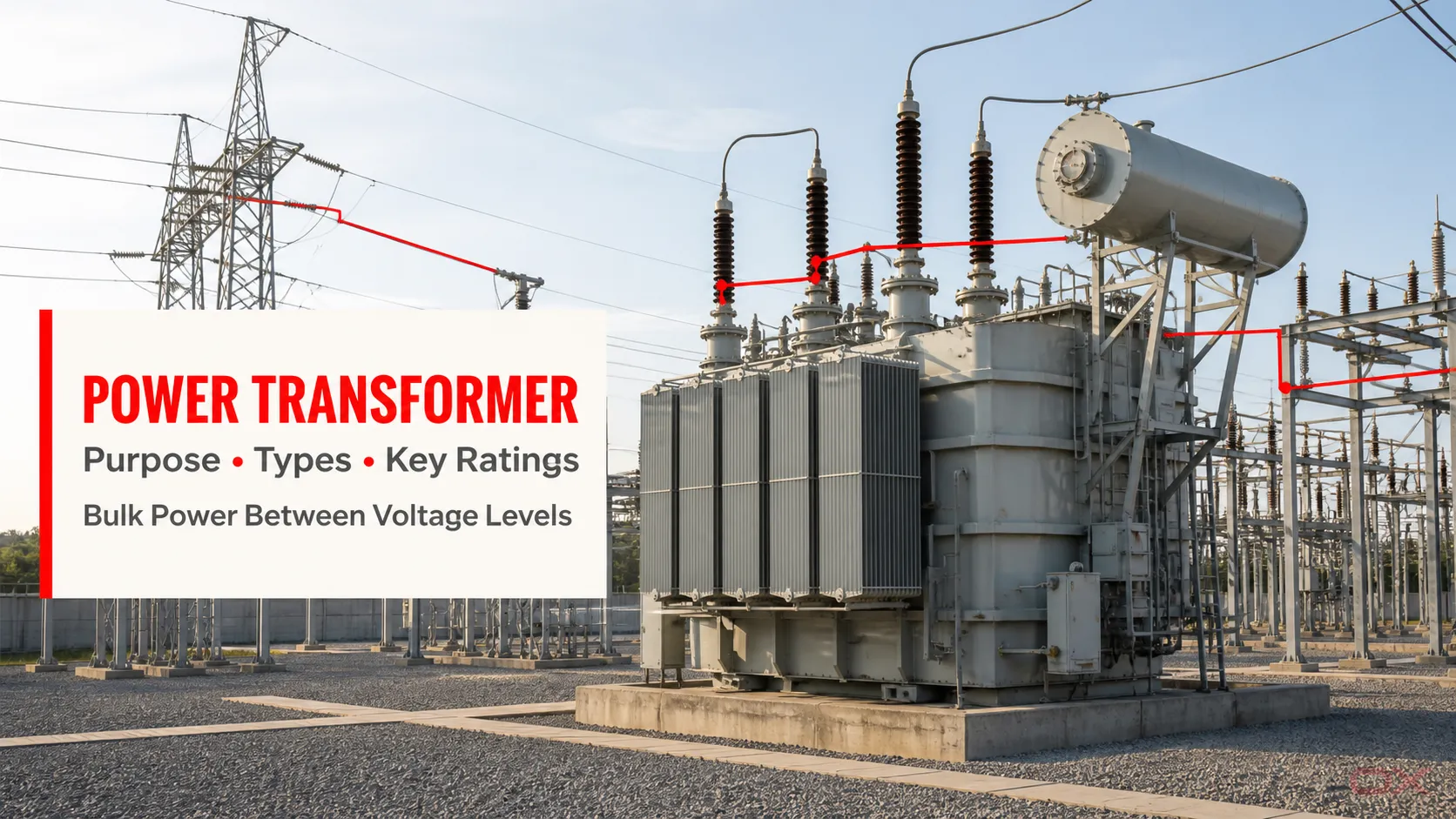
اے پاور ٹرانسفارمر ایک ساکن برقی آلہ ہے جو برقی مقناطیسی انڈکشن کے ذریعے سرکٹس کے درمیان AC پاور منتقل کرتا ہے، اور عام طور پر فریکوئنسی کو تبدیل کیے بغیر وولٹیج اور کرنٹ کی سطحوں کو تبدیل کرتا ہے۔ اس کا مرکزی مقصد بلک پاور کی منتقلی ہے: جنریشن اور ٹرانسمیشن کے درمیان وولٹیج کو بڑھانا، نیٹ ورک کی سطحوں کے درمیان اسے کم کرنا، یا کسی بڑے صنعتی برقی نظام کو سپلائی فراہم کرنا۔.
ایک روایتی پاور ٹرانسفارمر ضروری نہیں AC کو DC میں تبدیل نہیں کرتا۔ ریکٹیفائرز اور پاور الیکٹرانک کنورٹرز یہ کام انجام دیتے ہیں۔ یہ برقی توانائی پیدا بھی نہیں کرتا؛ نقصانات کے علاوہ، اس کی وائنڈنگز کے ذریعے منتقل ہونے والی ظاہری پاور دونوں اطراف میں وولٹیج-کرنٹ کے اسی تعلق کے تابع رہتی ہے۔.
پاور ٹرانسفارمر کا کردار ایک نظر میں
| سوال | عملی جواب |
|---|---|
| پاور ٹرانسفارمر کیا تبدیل کرتا ہے؟ | AC وولٹیج اور کرنٹ کی سطحیں، اس کی وائنڈنگ ریشو اور آپریٹنگ حالات کے مطابق |
| عام طور پر کیا چیز یکساں رہتی ہے؟ | فریکوئنسی؛ فیز ڈسپلیسمنٹ وائنڈنگ کنکشن اور ویکٹر گروپ کے مطابق تبدیل ہو سکتا ہے |
| یہ کہاں استعمال ہوتا ہے؟ | جنریٹنگ اسٹیشنز، ٹرانسمیشن سب اسٹیشنز، گرڈ انٹرکنکشنز، بڑے ڈسٹری بیوشن سب اسٹیشنز، اور بڑے صنعتی برقی نظام |
| کیا یہ وولٹیج کو بڑھا اور گھٹا سکتا ہے؟ | جی ہاں۔ اس کا کام اس بات پر منحصر ہے کہ کون سی وائنڈنگ کو انرجائز کیا گیا ہے اور ٹرانسفارمر کو کیسے ڈیزائن اور استعمال کیا گیا ہے |
| کیا ہر ٹرانسفارمر ایک پاور ٹرانسفارمر ہوتا ہے؟ | نہیں۔ ڈسٹری بیوشن، انسٹرومنٹ، آئسولیشن، کنٹرول، کنورٹر، ٹریکشن، فرنس، اور دیگر ٹرانسفارمرز کے الگ الگ فرائض اور قابل اطلاق تقاضے ہوتے ہیں |
| کیا کوئی ایک عالمی MVA کٹ آف موجود ہے؟ | اسٹینڈرڈز، یوٹیلیٹیز، مینوفیکچررز، اور پروجیکٹس آلات کو ان کے دائرہ کار، ڈیوٹی اور ریٹنگ کے لحاظ سے درجہ بندی کرتے ہیں۔ |
| قابل استعمال تفصیلات (specification) کا تعین کیا چیز کرتی ہے؟ | ریٹڈ پاور، وولٹیج کا تناسب، فریکوئنسی، فیز، کنکشن، امپیڈنس، ٹیپس، کولنگ، انسولیشن، نقصانات، درجہ حرارت میں اضافہ، فالٹ ڈیوٹی، لوازمات، اور قابل اطلاق اسٹینڈرڈز |
جملہ پاور ٹرانسفارمر اس لیے سب سے زیادہ مفید تب ہوتی ہے جب یہ ٹرانسفارمر کی سسٹم ڈیوٹی اور تفصیلات کے سیاق و سباق کو بیان کرتی ہے, ، نہ کہ صرف ایک بڑی نظر آنے والی ٹینک یا ایک واحد صلاحیت کی حد۔.
پاور ٹرانسفارمر برقی نظام میں کہاں واقع ہوتا ہے؟
پاور سسٹمز کئی ٹرانسفارمیشن مراحل استعمال کرتے ہیں کیونکہ جنریشن، طویل فاصلے تک ٹرانسمیشن، علاقائی تقسیم، اور حتمی استعمال ایک مشترکہ وولٹیج پر سب سے زیادہ مؤثر طریقے سے کام نہیں کرتے۔.
جنریٹنگ پلانٹ
      ↓
جنریٹر سٹیپ-اپ ٹرانسفارمر
      ↓
ہائی وولٹیج ٹرانسمیشن نیٹ ورک
      ↓
ٹرانسمیشن یا انٹرکنیکٹنگ سب سٹیشن ٹرانسفارمر
      ↓
سب ٹرانسمیشن / میڈیم وولٹیج نیٹ ورک
      ↓
ڈسٹری بیوشن ٹرانسفارمر
      ↓
لو-وولٹیج صارفین اور آلات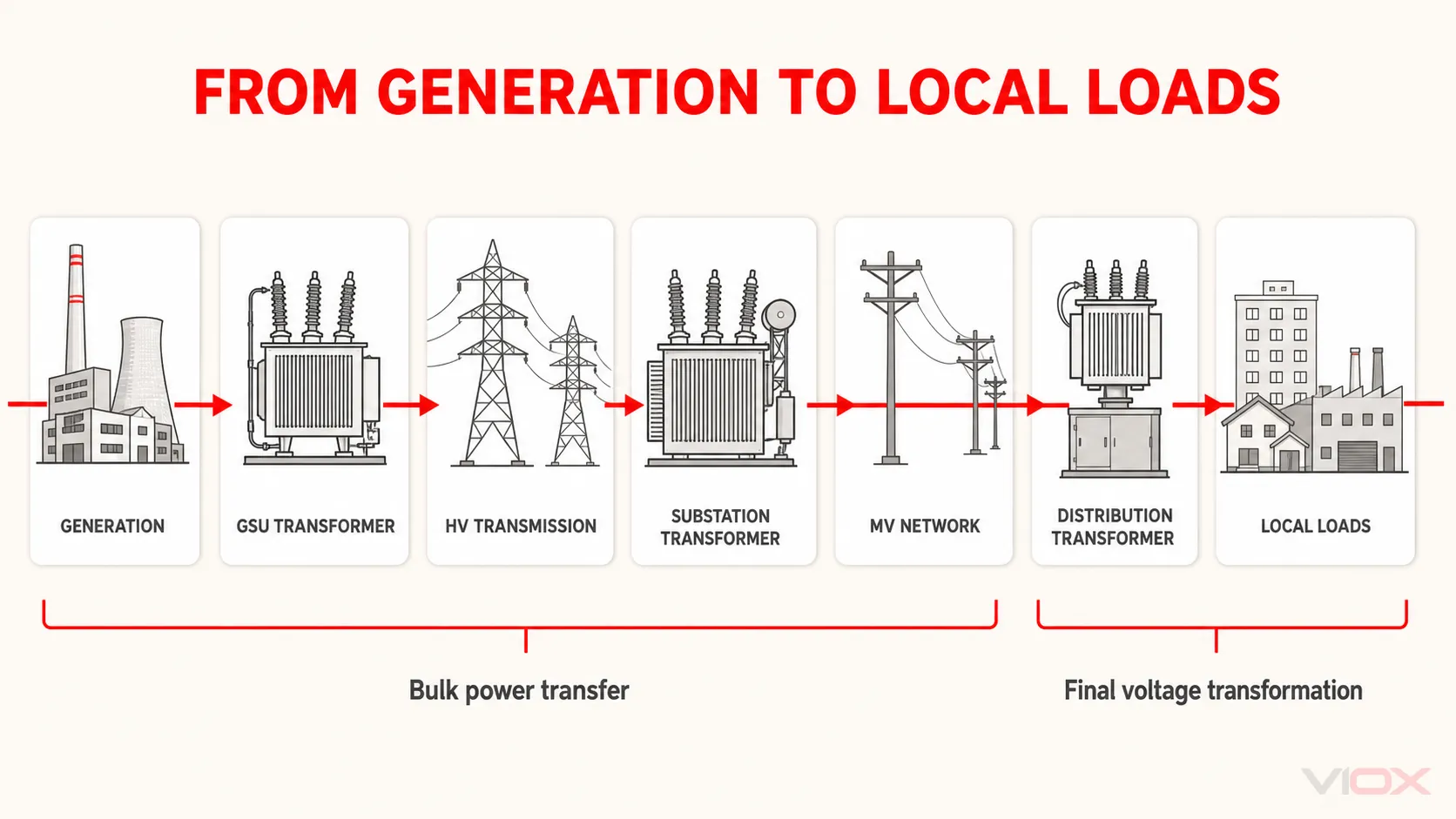
وولٹیج کی درست سطحیں اور مراحل کی تعداد ملک، یوٹیلیٹی، سائٹ اور لوڈ کے لحاظ سے مختلف ہوتی ہے۔ اہم نکتہ اس کا درجہ بندی کا نظام ہے: پاور ٹرانسفارمرز بڑے نیٹ ورک کی سطحوں کو آپس میں جوڑتے ہیں، جبکہ ڈسٹری بیوشن ٹرانسفارمرز عام طور پر آخری وولٹیج ٹرانسفارمیشن کے ساتھ منسلک ہوتے ہیں جو صارفین کے قریب ہوتی ہے۔.
بڑی صنعتی تنصیبات میں بھی اسی طرح کی اندرونی درجہ بندی ہو سکتی ہے۔ ایک سائٹ ٹرانسفارمر یوٹیلیٹی ہائی یا میڈیم وولٹیج وصول کر سکتا ہے اور پلانٹ سوئچ گیئر، بڑی ڈرائیوز، فرنس، ڈیٹا سینٹر انفراسٹرکچر، یا متعدد لو-وولٹیج سب سٹیشنز کو سپلائی فراہم کر سکتا ہے۔ لہذا ٹرانسفارمر کو اپ اسٹریم سوئچنگ اور سرج پروٹیکشن، اس کے سیکنڈری سوئچ گیئر، کیبلز یا بس ڈکٹس، ارتھنگ سسٹم، اور پروٹیکشن ریلے کے ساتھ مربوط ہونا چاہیے۔.
پاور ٹرانسفارمر کا مقصد کیا ہے؟
بنیادی کام برقی طاقت کو سسٹم کے اگلے حصے کے لیے درکار وولٹیج کی سطح پر لانا ہے۔ یہ چار متعلقہ انجینئرنگ مقاصد کی حمایت کرتا ہے۔.
موثر بلک ٹرانسمیشن کے لیے وولٹیج بڑھانا
دی گئی رئیل پاور اور پاور فیکٹر کے لیے، تھری-فیز لائن وولٹیج میں اضافہ اس طاقت کو منتقل کرنے کے لیے درکار کرنٹ کو کم کرتا ہے۔ کم کرنٹ کنڈکٹر کی حرارت کو کم کرتا ہے کیونکہ مزاحمتی لائن کا نقصان کرنٹ کے مربع کے ساتھ تبدیل ہوتا ہے۔ یہی وجہ ہے کہ جنریٹر سٹیپ-اپ ٹرانسفارمرز جنریٹنگ یونٹس کو ہائی-وولٹیج ٹرانسمیشن نیٹ ورکس سے جوڑتے ہیں۔.
ٹرانسفارمر میں خود بھی نقصانات ہوتے ہیں، اور نیٹ ورک کا فیصلہ انسولیشن، کلیئرنس، سوئچ گیئر، کنڈکٹر، استحکام، اور اقتصادی ضروریات پر بھی منحصر ہوتا ہے۔ VIOX گائیڈ برائے وولٹیج، کرنٹ، اور لائن لاس کرنٹ اور نقصان کے تعلق کو الگ الگ بیان کرتا ہے۔.
نیٹ ورک کی سطحوں کے درمیان کم وولٹیج
ٹرانسمیشن وولٹیج کو براہ راست ڈسٹری بیوشن فیڈرز یا استعمال کرنے والے آلات پر لاگو نہیں کیا جا سکتا۔ سب اسٹیشن ٹرانسفارمرز وولٹیج کو مراحل میں کم کرتے ہیں تاکہ نیٹ ورک کا ہر حصہ مناسب انسولیشن لیولز، فالٹ ڈیوٹیز، کنڈکٹر کے سائز، اور آپریٹنگ کلیئرنس والے آلات استعمال کر سکے۔.
ایک متعین وائنڈنگ کنکشن اور سسٹم ریفرنس فراہم کریں
ایک تھری فیز ٹرانسفارمر صرف وولٹیج کی مقدار کو تبدیل کرنے سے زیادہ کام کرتا ہے۔ اس کے وائنڈنگ کنکشنز فیز ڈسپلیسمنٹ، نیوٹرل کی دستیابی، زیرو-سیکوینس رویے، اور اس بات کا تعین کرتے ہیں کہ ٹرانسفارمر ارتھنگ اور پروٹیکشن اسکیموں کے ساتھ کیسے انٹرفیس کرتا ہے۔ لہذا ویکٹر گروپ ایک سسٹم پیرامیٹر ہے، نہ کہ کیٹلاگ کی کوئی ایسی تفصیل جسے الگ تھلگ منتخب کیا جائے۔.
وولٹیج کنٹرول اور نیٹ ورک آپریشن میں معاونت
ٹیپڈ وائنڈنگز مؤثر ٹرنز ریشو کو ایڈجسٹ کرنے کی اجازت دیتی ہیں۔ آف-سرکٹ ٹیپ کے انتظام کے لیے ضروری ہے کہ پوزیشن تبدیل کرنے سے پہلے ٹرانسفارمر کو ڈی-انرجائز کیا جائے۔ آن-لوڈ ٹیپ چینجر، جہاں فراہم کیا گیا ہو، اپنے آپریٹنگ ڈیزائن کے اندر لوڈ اٹھائے ہوئے ٹیپس کو تبدیل کرتا ہے۔ ٹیپ رینج، اسٹیپ سائز، کنٹرول کا طریقہ، اور سسٹم کوآرڈینیشن پروجیکٹ کے لحاظ سے مخصوص ہوتے ہیں۔.
پاور ٹرانسفارمر کیسے کام کرتا ہے؟
جب پرائمری وائنڈنگ پر متبادل وولٹیج لاگو کیا جاتا ہے، تو نتیجے میں پیدا ہونے والا کرنٹ کور میں متبادل مقناطیسی فلکس قائم کرتا ہے۔ وہ تبدیل ہوتا ہوا فلکس سیکنڈری وائنڈنگ سے جڑتا ہے اور وولٹیج پیدا کرتا ہے۔ ایک مثالی ٹرانسفارمر کے لیے، وولٹیج کا تناسب ٹرنز کے تناسب کی پیروی کرتا ہے:
V₁ / V₂ ≈ N₁ / N₂تاریں کہاں وی وائنڈنگ وولٹیج کی نمائندگی کرتا ہے اور ن ٹرنز کی نمائندگی کرتا ہے۔ کرنٹ تقریباً الٹ سمت میں تبدیل ہوتا ہے تاکہ پاور منتقل ہو سکے نہ کہ ضرب کھائے۔ ایک حقیقی ٹرانسفارمر میں وائنڈنگ ریزسٹنس، لیکیج ری ایکٹنس، ایکسائٹنگ کرنٹ، کور لاس، اسٹری لاس، اور تھرمل حدود بھی ہوتی ہیں۔.
یہ واقفیت ہب کے لیے کافی ہے۔ فلکس، انڈیوسڈ وولٹیج، ٹرنز ریشو، نقصانات، اور کور اور وائنڈنگز کے جسمانی کردار کے لیے، مخصوص گائیڈ استعمال کریں: الیکٹریکل ٹرانسفارمر کیسے کام کرتا ہے؟.
پاور ٹرانسفارمر بمقابلہ ڈسٹری بیوشن ٹرانسفارمر بمقابلہ انسٹرومنٹ ٹرانسفارمر
یہ اصطلاحات روزمرہ کی گفتگو میں ایک دوسرے کے ساتھ مل جاتی ہیں، لیکن یہ ایک ہی انجینئرنگ ڈیوٹی کو بیان نہیں کرتیں۔.
| باؤنڈری | پاور ٹرانسفارمر | ڈسٹری بیوشن ٹرانسفارمر | انسٹرومنٹ ٹرانسفارمر |
|---|---|---|---|
| بنیادی کام | بڑے برقی نظام کے وولٹیج لیولز کے درمیان بڑی مقدار میں پاور منتقل کرنا | ڈسٹری بیوشن سرکٹ اور مقامی لوڈز کے لیے حتمی یا تقریباً حتمی ٹرانسفارمیشن فراہم کرنا | میٹرنگ اور پروٹیکشن کے لیے کرنٹ یا وولٹیج کو ایک پیمانے کے مطابق، متعین قدر پر دوبارہ تیار کرنا |
| پوزیشن | جنریشن، ٹرانسمیشن، بڑا سب اسٹیشن، یا بڑا صنعتی نیٹ ورک | یوٹیلیٹی ڈسٹری بیوشن سسٹم، مقامی سب اسٹیشن، پول، پیڈ، عمارت، یا صنعتی ڈسٹری بیوشن پوائنٹ | پیمائش شدہ پاور سرکٹ اور ثانوی آلات یا ریلے سے منسلک |
| آؤٹ پٹ کا مقصد | برقی نظام کا ایک اور سیکشن یا بڑا لوڈ سسٹم | مقامی ڈسٹری بیوشن نیٹ ورک یا یوٹیلائزیشن لوڈز | میٹرنگ، مانیٹرنگ، کنٹرول، اور پروٹیکشن سرکٹس |
| لوڈنگ کا مرکز | بلک سسٹم ڈیوٹی، نیٹ ورک ڈسپیچ، ریلائبلٹی، فالٹ ڈیوٹی، ریگولیشن، اور نقصانات | سارا دن لوڈنگ پروفائل، نو-لوڈ نقصان، مقامی وولٹیج ریگولیشن، تنصیب، اور لائف سائیکل کی کارکردگی | درستگی کی کلاس، تناسب، بوجھ، انسولیشن، ٹرانزینٹ یا پروٹیکشن کی کارکردگی |
| عام ریٹنگ کا اظہار | kVA یا MVA، نیز وولٹیج اور سسٹم کی ریٹنگز | kVA یا MVA، نیز وولٹیج اور تنصیب کی ریٹنگز | CT ریشو اور VA برڈن؛ VT/PT ریشو اور برڈن، نیز درستگی/تحفظ کا ڈیٹا |
| کیا صرف ریٹنگ اسے درجہ بندی کر سکتی ہے؟ | کوئی | کوئی | نہیں—پیمائش کا فنکشن فیصلہ کن ہے |
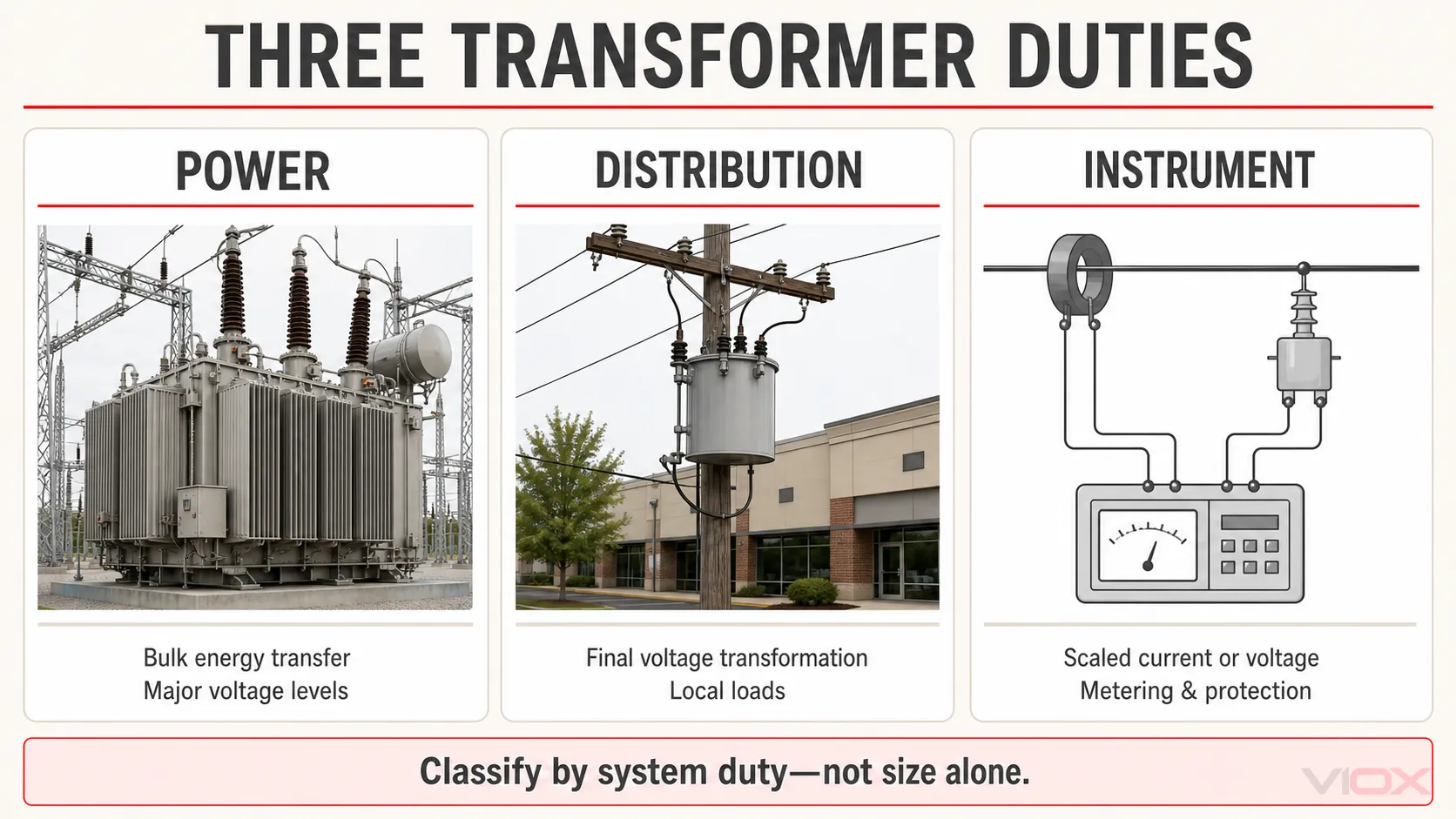
کوئی ایک عالمی صلاحیت کا نمبر نہیں ہے جو ہر پاور ٹرانسفارمر کو ہر ڈسٹری بیوشن ٹرانسفارمر سے واضح طور پر الگ کر سکے۔ مخصوص پروڈکٹ اسٹینڈرڈز ریٹنگ کے دائرہ کار کی وضاحت کر سکتے ہیں—مثال کے طور پر، مخصوص IEEE اسٹینڈرڈز مائع میں ڈوبے ہوئے پاور ٹرانسفارمر کی متعین رینجز پر لاگو ہوتے ہیں—لیکن ان دائرہ کار کو ایک آفاقی اصطلاحی اصول میں تبدیل نہیں کیا جانا چاہیے۔ IEEE پاور اور ڈسٹری بیوشن ٹرانسفارمرز کے لیے ایک مخصوص اصطلاحی معیار برقرار رکھتا ہے،, IEEE C57.12.80-2024.
ڈسٹری بیوشن کی اصطلاحات کے لیے، ملاحظہ کریں برقی نظام میں DTR کا مکمل مطلب. کرنٹ ٹرانسفارمرز اور وولٹیج یا پوٹینشل ٹرانسفارمرز بڑی مقدار میں توانائی کی ترسیل کے بجائے پیمائش اور تحفظ کا کام انجام دیتے ہیں؛ ان کا انٹرفیس اس میں شامل ہے CT بمقابلہ PT.
پاور ٹرانسفارمرز کی اہم اقسام
ایک ٹرانسفارمر ایک ہی وقت میں کئی زمروں سے تعلق رکھ سکتا ہے۔ ایک تھری فیز جنریٹر سٹیپ-اپ ٹرانسفارمر مائع میں ڈوبا ہوا، دو وائنڈنگ والا، اور فورسڈ کولنگ سے لیس بھی ہو سکتا ہے۔ اس کی درجہ بندی اس پہلو کے لحاظ سے کریں جو کیے جانے والے فیصلے پر اثر انداز ہوتا ہے۔.
برقی نظام کی ڈیوٹی کے لحاظ سے
| قسم | نظام میں کردار | یہ جس اہم سوال کا جواب دیتا ہے |
|---|---|---|
| جنریٹر سٹیپ-اپ ٹرانسفارمر | ٹرانسمیشن نیٹ ورک سے کنکشن کے لیے جنریٹر ٹرمینل وولٹیج کو بڑھاتا ہے | جنریٹنگ یونٹ کی پاور گرڈ میں کیسے داخل ہوگی؟ |
| انٹرکنیکٹنگ یا آٹو ٹرانسفارمر یونٹ | دو نیٹ ورک وولٹیج لیولز کو جوڑتا ہے، اکثر وائنڈنگ کے ایک حصے کے ساتھ جو برقی طور پر مشترک ہوتا ہے | ملحقہ ٹرانسمیشن یا سب ٹرانسمیشن سسٹمز پاور کا تبادلہ کیسے کریں گے؟ |
| سب سٹیشن سٹیپ-ڈاؤن ٹرانسفارمر | اگلے نیٹ ورک لیول کے لیے ٹرانسمیشن یا سب ٹرانسمیشن وولٹیج کو کم کرتا ہے | ڈاؤن اسٹریم بس کو کیسے سپلائی اور ریگولیٹ کیا جائے گا؟ |
| صنعتی پاور ٹرانسفارمر | ایک بڑے پلانٹ سسٹم، بڑے پروسیس لوڈ، یا سائٹ ڈسٹری بیوشن نیٹ ورک کو سپلائی فراہم کرتا ہے | ٹرانسفارمر فیسیلیٹی لوڈ اور پروٹیکشن آرکیٹیکچر کے ساتھ کیسے انٹرفیس کرے گا؟ |
وائنڈنگ کے تعلق کے لحاظ سے
ایک روایتی دو وائنڈنگ والا ٹرانسفارمر الگ الگ پرائمری اور سیکنڈری وائنڈنگز فراہم کرتا ہے جو مقناطیسی طور پر جڑی ہوتی ہیں۔ آٹو ٹرانسفارمر دونوں اطراف کے لیے مشترکہ وائنڈنگ کا حصہ استعمال کرتا ہے۔ آٹو ٹرانسفارمر کا انتظام مناسب وولٹیج کے تناسب کے لیے مادی اور کارکردگی کے فوائد پیش کر سکتا ہے، لیکن یہ الگ وائنڈنگز کی طرح گالوانک علیحدگی فراہم نہیں کرتا ہے۔ سسٹم ارتھنگ، فالٹ ٹرانسفر، انسولیشن کوآرڈینیشن، اور پروٹیکشن کا اسی کے مطابق جائزہ لیا جانا چاہیے۔.
تین وائنڈنگ والے ٹرانسفارمرز ایک اور برقی نظام کا کنکشن شامل کرتے ہیں، جیسے کہ اسٹیشن سروس، ری ایکٹو آلات، یا سسٹم کو مستحکم کرنے کے لیے ٹرشری وائنڈنگ۔ اس کی ریٹنگ اور شارٹ سرکٹ کے تعلقات کا اندازہ صرف مین دو وائنڈنگ کے تناسب سے نہیں لگایا جا سکتا۔.
فیز کنفیگریشن کے لحاظ سے
پاور ٹرانسفارمر سنگل فیز یا تھری فیز ہو سکتے ہیں۔ نیٹ ورک کے ڈیزائن، نقل و حمل کی رکاوٹوں، ریڈنڈنسی کے فلسفے، اسپیئرز کی حکمت عملی، اور سائٹ کی ضروریات کے لحاظ سے، ایک تھری فیز بینک ایک تھری فیز ٹرانسفارمر یا تین سنگل فیز یونٹس کا استعمال کر سکتا ہے۔ اس کا انتخاب ایک عالمی ترجیح کے بجائے سسٹم انجینئرنگ کا فیصلہ ہوتا ہے۔.
انسولیشن اور کولنگ کی ساخت کے لحاظ سے
لیکویڈ ایمرسڈ (مائع میں ڈوبے ہوئے) ٹرانسفارمر ڈائی الیکٹرک کارکردگی اور حرارت کی منتقلی کے لیے ایک انسولیٹنگ مائع کا استعمال کرتے ہیں۔ ڈرائی ٹائپ ٹرانسفارمر ٹھوس انسولیشن اور ہوا یا اپنے معیاری دائرہ کار میں کسی اور مخصوص کولنگ کے انتظام کا استعمال کرتے ہیں۔ تنصیب کا ماحول، آگ سے بچاؤ کی حکمت عملی، ماحولیاتی کنٹینمنٹ، ریٹنگ، انکلوژر، وینٹیلیشن، دیکھ بھال کا منصوبہ، اور پروجیکٹ کا معیار، سب اس انتخاب پر اثر انداز ہوتے ہیں۔.
اس فیصلے کو صرف “بیرونی تنصیب کے لیے تیل، اندرونی تنصیب کے لیے ڈرائی” تک محدود نہ رکھیں۔ دونوں زمروں میں متعدد ساختیں اور تنصیب کے اختیارات شامل ہیں۔ الگ الگ استعمال کریں ڈرائی ٹائپ بمقابلہ آئل فلڈ ٹرانسفارمر کا موازنہ جب تعمیراتی انتخاب اصل کام ہو۔.
پاور ٹرانسفارمر کی اہم ریٹنگز
ایک درست تفصیلات برقی، تھرمل، ڈائی الیکٹرک، مکینیکل، اور انٹرفیس کی ضروریات کا ایک مربوط مجموعہ ہوتی ہے۔ درج ذیل نقشہ یہ ظاہر کرتا ہے کہ اہم فیلڈز کن چیزوں کو کنٹرول کرتی ہیں اور گہرائی سے تجزیہ کہاں درکار ہوتا ہے۔.
| ریٹنگ یا فیلڈ | یہ کیا کنٹرول کرتا ہے | اس کی اہمیت |
|---|---|---|
| ریٹڈ پاور، kVA یا MVA | مقررہ حالات کے تحت ظاہری پاور کی صلاحیت | وولٹیج-کرنٹ ڈیوٹی کا تعین کرتا ہے لیکن صرف اس کی بنیاد پر اوورلوڈ کی صلاحیت یا اطلاق کی مناسبت کا تعین نہیں ہوتا |
| ریٹڈ وائنڈنگ وولٹیجز | ہر وائنڈنگ کے لیے تفویض کردہ برائے نام وولٹیج | سسٹم کی آپریٹنگ رینجز، انسولیشن کوآرڈینیشن، اور ٹیپ کی ضروریات سے مطابقت رکھنی چاہیے |
| تعدد | ڈیزائن کردہ آپریٹنگ فریکوئنسی | کور فلکس اور نقصانات وولٹیج سے فریکوئنسی کے حالات پر منحصر ہوتے ہیں؛ انجینئرنگ جائزے کے بغیر اعلان کردہ بنیاد سے باہر آپریٹ نہ کریں |
| فیز اور ویکٹر گروپ | وائنڈنگ کنکشن اور کونیی نقل مکانی (angular displacement) | نیوٹرل کی دستیابی، پیرلنگ، ارتھنگ، زیرو-سیکوینس رویے، اور تحفظ کو متاثر کرتا ہے |
| فیصد امپیڈینس | وولٹیج ڈراپ اور شارٹ سرکٹ کرنٹ کا تعلق | ریگولیشن، فالٹ لیول، متوازی لوڈ شیئرنگ، اور پروٹیکشن کوآرڈینیشن پر اثر انداز ہوتا ہے |
| ٹیپ رینج اور ٹیپ چینجر | دستیاب تناسب کی ایڈجسٹمنٹ | مخصوص طریقہ کار اور آپریٹنگ حدود کے اندر کمیشننگ یا وولٹیج ریگولیشن کو سپورٹ کرتا ہے |
| کولنگ کا عہدہ | حرارت کی منتقلی کا انتظام | ٹرانسفارمر کی ریٹنگ کو دستیاب کولنگ آلات اور آپریٹنگ حالت سے جوڑتا ہے |
| درجہ حرارت میں اضافے اور انسولیشن کا ڈیٹا | تھرمل کارکردگی اور انسولیشن سسٹم | اس کی تشریح محیطی درجہ حرارت، بلندی، لوڈنگ، کولنگ، اور قابل اطلاق معیار کے ساتھ کی جانی چاہیے |
| انسولیشن کی سطح اور ڈائی الیکٹرک ٹیسٹ کا ڈیٹا | مخصوص برقی دباؤ کو برداشت کرنے کی صلاحیت | نظام کے وولٹیج، ارتھنگ، سرج کے ماحول، کلیئرنس، اور تحفظ کے ساتھ ہم آہنگ ہونا ضروری ہے |
| نقصان کا ڈیٹا | نو-لوڈ، لوڈ، اور دیگر ظاہر کردہ نقصانات | کارکردگی، تھرمل کارکردگی، آپریٹنگ لاگت، اور خریداری کے جائزے کو متاثر کرتا ہے |
| شارٹ سرکٹ برداشت کرنے کی صلاحیت | بیرونی فالٹس کے لیے تھرمل اور مکینیکل ردعمل | فالٹ کی شدت، دورانیہ، سسٹم امپیڈنس، وائنڈنگ فورسز، اور تصدیقی تقاضوں پر منحصر ہے |
| ٹرمینلز، بشنگز، اور لوازمات | طبیعی اور مانیٹرنگ انٹرفیس | کنڈکٹرز، سوئچ گیئر، سرج پروٹیکشن، CTs، مانیٹرنگ اور سائٹ کے لے آؤٹ سے مطابقت لازمی ہے |
ٹرانسفارمر کی صلاحیت کا اظہار ظاہری پاور (apparent power) میں کیا جاتا ہے کیونکہ وائنڈنگز اور تھرمل سسٹم کو کرنٹ برداشت کرنا ہوتا ہے جبکہ انسولیشن سسٹم وولٹیج کو برداشت کرتا ہے؛ منسلک لوڈ کا پاور فیکٹر ٹرانسفارمر بنانے والے کے کنٹرول میں نہیں ہوتا۔ مختص ٹرانسفارمر kVA ریٹنگ گائیڈ kVA، kW، کرنٹ کے فارمولوں، اور سائزنگ کی حدود کا احاطہ کرتی ہے۔.
بشنگز گراؤنڈڈ ٹینک یا انکلوژر کے ذریعے انسولیٹڈ کنڈکٹر انٹرفیس بناتی ہیں۔ ان کی وولٹیج کلاس، کرنٹ، انسولیشن، ماؤنٹنگ، اور کنکشن کی ضروریات ٹرانسفارمر کی بنیادی MVA ریٹنگ سے الگ ہوتی ہیں۔ ملاحظہ کریں ٹرانسفارمر بشنگ کیا ہے؟ اس جزو کی حدود کے لیے۔.
ایمپڈینس، ٹیپس، کولنگ، اور نقصانات پر الگ الگ توجہ دینے کی ضرورت کیوں ہے
نیم پلیٹ کے چار شعبوں کو اکثر ایک سادہ وولٹیج اور MVA موازنہ میں سمیٹ دیا جاتا ہے، حالانکہ یہ مختلف برقی نظام کے نتائج کو متاثر کرتے ہیں۔.
ایمپڈینس ٹرانسفارمر کو فالٹ اسٹڈی سے جوڑتی ہے
ٹرانسفارمر ایمپڈینس وولٹیج ریگولیشن میں حصہ ڈالتی ہے اور ممکنہ شارٹ سرکٹ کرنٹ کو محدود کرتی ہے۔ کم ایمپڈینس ریگولیشن کو بہتر بنا سکتی ہے لیکن ڈاؤن اسٹریم فالٹ کرنٹ کو بڑھا سکتی ہے؛ زیادہ ایمپڈینس فالٹ لیول کو کم کر سکتی ہے لیکن وولٹیج ڈراپ میں اضافہ کر سکتی ہے۔ متوازی ٹرانسفارمرز کے لیے بھی ہم آہنگ ریشوز، ویکٹر گروپس، ایمپڈینسز، اور ٹیپ پوزیشنز کی ضرورت ہوتی ہے۔ حتمی ڈیزائن پروجیکٹ کے لوڈ-فلو، شارٹ سرکٹ، اور پروٹیکشن-کوآرڈینیشن اسٹڈیز کا حصہ ہوتا ہے۔.
ٹیپس ریشو کو تبدیل کرتے ہیں، نہ کہ مفروضے کے مطابق ٹرانسفارمر کی صلاحیت کو
ٹیپ پوزیشن مؤثر وائنڈنگ ریشو کو تبدیل کرتی ہے۔ یہ فرض نہیں کیا جانا چاہیے کہ یہ ٹرانسفارمر کی تھرمل صلاحیت میں اضافہ کرتی ہے یا ٹیپ چینجر کی مطلوبہ رینج سے باہر کسی برقی نظام کے مسئلے کو درست کرتی ہے۔ تفصیلات میں یہ واضح ہونا چاہیے کہ ایڈجسٹمنٹ آف-سرکٹ ہے یا آن-لوڈ، اور اسے کیسے کنٹرول کیا جاتا ہے۔.
کولنگ ڈیزائن ریٹنگ کا حصہ ہے
قدرتی اور جبری کولنگ کی حالتوں کی مختلف ڈکلیئرڈ ریٹنگز ہو سکتی ہیں۔ پنکھے، پمپس، ریڈی ایٹرز، ہیٹ ایکسچینجرز، کنٹرولز، الارمز، اور معاون سپلائیز جہاں نصب ہوں، آپریٹنگ صلاحیت کا حصہ بن جاتے ہیں۔ ٹرانسفارمر کو جبری کولنگ ریٹنگ نہیں دی جانی چاہیے جب تک کہ اس ریٹنگ کے لیے درکار مکمل کولنگ سسٹم اور کنٹرول اسٹیٹ دستیاب نہ ہو۔.
نقصانات مختلف آپریٹنگ رویوں میں تقسیم ہوتے ہیں
نو-لوڈ نقصان تب ہوتا ہے جب ایک انرجائزڈ ٹرانسفارمر وولٹیج سے منسلک ہو، جبکہ لوڈ کا نقصان کرنٹ کے ساتھ نمایاں طور پر تبدیل ہوتا ہے۔ معاون کولنگ اپنی کھپت کا اضافہ کر سکتی ہے۔ لہذا، خریداری کے موازنہ میں بغیر شرائط کے ایک ہی کارکردگی کی قدر کے بجائے متوقع لوڈنگ پروفائل اور اعلان کردہ ٹیسٹ کی بنیاد کا استعمال کیا جانا چاہیے۔.
معیارات اور تصدیقی حدود
قابل اطلاق ٹرانسفارمر کا معیار مارکیٹ، تعمیر، ریٹنگ، اطلاق اور معاہدے پر منحصر ہوتا ہے۔ معیارات کے کسی خاندان کا حوالہ دینا یہ ثابت نہیں کرتا کہ کوئی خاص ٹرانسفارمر اس کے ہر حصے کی تعمیل کرتا ہے۔.
- IEC 60076-1:2011 تھری فیز اور سنگل فیز پاور ٹرانسفارمرز کے لیے عمومی تقاضے فراہم کرتا ہے، بشمول آٹو ٹرانسفارمرز، جو بیان کردہ استثنیٰ کے تابع ہیں۔.
- IEC 60076-2:2011 مائع میں ڈوبے ہوئے ٹرانسفارمرز کے لیے کولنگ کی شناخت، درجہ حرارت میں اضافے کی حدود، اور درجہ حرارت میں اضافے کے ٹیسٹ کے طریقوں سے متعلق ہے۔.
- IEC 60076-5:2006 پاور ٹرانسفارمرز کی بیرونی شارٹ سرکٹ کے تھرمل اور ڈائنامک اثرات کو برداشت کرنے کی صلاحیت سے متعلق ہے۔.
- IEC 60076-11:2018 اپنے بیان کردہ وولٹیج اور سائز کے دائرہ کار اور استثنیٰ کے اندر متعین ڈرائی ٹائپ پاور ٹرانسفارمرز پر لاگو ہوتا ہے۔.
- IEEE پریکٹس میں،, IEEE C57.12.00-2021 متعین مائع میں ڈوبے ہوئے ڈسٹری بیوشن، پاور، اور ریگولیٹنگ ٹرانسفارمرز کے لیے عمومی تقاضوں کا احاطہ کرتا ہے، جبکہ IEEE C57.12.01-2020 خشک قسم کے ڈسٹری بیوشن اور پاور ٹرانسفارمرز کی وضاحت کرتا ہے۔.
ایک پروجیکٹ کے لیے یوٹیلیٹی کی تفصیلات، کارکردگی کے ضوابط، ماحولیاتی قواعد، زلزلے سے متعلق اہلیت، آگ سے تحفظ کے انتظامات، شور کی حدود، نقل و حمل کی رکاوٹیں، اور سائٹ کے لیے مخصوص ٹیسٹ کی بھی ضرورت ہو سکتی ہے۔ خریداری کی تفصیلات میں “IEC ٹرانسفارمر” یا “IEEE ٹرانسفارمر” کے جملے پر انحصار کرنے کے بجائے درست ایڈیشنز اور درکار شواہد کی نشاندہی ہونی چاہیے۔”
پاور ٹرانسفارمر کے سوال سے درست اگلے گائیڈ تک
ہر ٹرانسفارمر کے سوال کو ایک ہی صفحے پر زبردستی لانے کے بجائے اس روٹنگ ٹیبل کا استعمال کریں۔.
| آپ کا اگلا سوال | بہترین اگلا وسیلہ |
|---|---|
| فلکس، ٹرنز ریشو، اور انڈیوسڈ وولٹیج کیسے کام کرتے ہیں؟ | الیکٹریکل ٹرانسفارمر کیسے کام کرتا ہے؟ |
| ریٹنگ kVA میں کیوں ہوتی ہے، اور کرنٹ کا حساب کیسے لگایا جاتا ہے؟ | ٹرانسفارمر kVA ریٹنگ کی وضاحت |
| کیا تنصیب میں ڈرائی ٹائپ (dry-type) یا مائع میں ڈوبی ہوئی (liquid-immersed) ساخت کا استعمال ہونا چاہیے؟ | ڈرائی ٹائپ بمقابلہ آئل فلڈ ٹرانسفارمر |
| DTR کا کیا مطلب ہے، اور ڈسٹری بیوشن ٹرانسفارمر کہاں استعمال ہوتا ہے؟ | برقی نظام میں DTR کا مکمل مطلب |
| ٹرانسفارمر بشنگ کیا کام کرتے ہیں؟ | ٹرانسفارمر بشنگ کیا ہے؟ |
| کرنٹ اور پوٹینشل ٹرانسفارمرز میں کیا فرق ہے؟ | CT بمقابلہ PT |
| اعلیٰ ٹرانسمیشن وولٹیج لائن کے نقصانات کو کیوں کم کرتا ہے؟ | وولٹیج بمقابلہ کرنٹ لائن لاس |
ٹرانسفارمر کی تجویز طلب کرنے سے پہلے، کم از کم سسٹم وولٹیجز، فریکوئنسی، فیز، مطلوبہ ظاہری پاور (apparent power)، لوڈ پروفائل، ویکٹر گروپ یا سسٹم کنکشن، امپیڈنس ٹارگٹ، ٹیپ کی ضروریات، تنصیبی ماحول، کولنگ کی توقعات، فالٹ اسٹڈی ان پٹس، انسولیشن کوآرڈینیشن، ٹرمینلز، مانیٹرنگ، قابل اطلاق معیارات، اور مطلوبہ دستاویزات اکٹھا کریں۔ یہ ان پٹس وسیع جملے کو بدل دیتے ہیں پاور ٹرانسفارمر انجینئرنگ کی تفصیلات میں۔.
اکثر پوچھے گئے سوالات
کیا پاور ٹرانسفارمر AC کو DC میں تبدیل کرتا ہے؟
نہیں۔ ایک روایتی پاور ٹرانسفارمر برقی مقناطیسی انڈکشن کے ذریعے AC پاور منتقل کرتا ہے اور عام طور پر فریکوئنسی کو تبدیل کیے بغیر وولٹیج اور کرنٹ کی سطح کو تبدیل کرتا ہے۔ AC سے DC میں تبدیلی کے لیے ریکٹیفائر یا پاور الیکٹرانک کنورٹر کی ضرورت ہوتی ہے، اگرچہ ٹرانسفارمر ایک بڑے کنورٹر سسٹم کا ایک جزو ہو سکتا ہے۔.
کیا پاور ٹرانسفارمر فریکوئنسی تبدیل کرتا ہے؟
عام ٹرانسفارمر آپریشن میں ایسا نہیں ہوتا۔ انڈیوسڈ سیکنڈری وولٹیج کی فریکوئنسی وہی ہوتی ہے جو پرائمری سپلائی سے پیدا ہونے والے الٹرنیٹنگ فلکس کی ہوتی ہے۔ فریکوئنسی کی تبدیلی کے لیے گھومنے والی مشینری یا اس فنکشن کے لیے ڈیزائن کردہ پاور الیکٹرانکس کی ضرورت ہوتی ہے۔.
کیا ایک ہی ٹرانسفارمر وولٹیج کو بڑھا یا گھٹا سکتا ہے؟
وولٹیج کا تناسب انرجائزڈ وائنڈنگ اور ٹرنز ریشو پر منحصر ہوتا ہے، لیکن ٹرانسفارمر کو صرف تب ہی الٹ (reverse) استعمال کیا جا سکتا ہے جب اس کا ڈیزائن، انسولیشن، ٹیپس، گراؤنڈنگ، پروٹیکشن، کولنگ، اور مینوفیکچرر کی ہدایات اس کی اجازت دیں۔ صرف تناسب کی بنیاد پر الٹ استعمال کا فرض نہیں کیا جانا چاہیے۔.
پاور ٹرانسفارمر اور ڈسٹری بیوشن ٹرانسفارمر کے درمیان کیا فرق ہے؟
ایک پاور ٹرانسفارمر عام طور پر بڑے نیٹ ورک لیولز کے درمیان بلک ٹرانسفر سے منسلک ہوتا ہے، جبکہ ڈسٹری بیوشن ٹرانسفارمر مقامی لوڈز کے قریب حتمی یا تقریباً حتمی ٹرانسفارمیشن انجام دیتا ہے۔ اس کی حد کا انحصار سسٹم کی ڈیوٹی، پروجیکٹ کی اصطلاحات، اور قابل اطلاق معیار پر ہوتا ہے؛ صرف صلاحیت ہی واحد عالمی درجہ بندی کا معیار نہیں ہے۔.
پاور ٹرانسفارمرز کی ریٹنگ MW کے بجائے MVA یا kVA میں کیوں ہوتی ہے؟
ٹرانسفارمر کی ہیٹنگ اور انسولیشن کے فرائض بنیادی طور پر کرنٹ اور وولٹیج سے چلتے ہیں۔ منسلک لوڈ کا پاور فیکٹر یہ طے کرتا ہے کہ ظاہری پاور کا کتنا حصہ MW یا kW میں حقیقی پاور بنتا ہے، اس لیے ٹرانسفارمرز عام طور پر VA، kVA، یا MVA میں ریٹ کیے جاتے ہیں۔.
کیا آٹو ٹرانسفارمر ایک پاور ٹرانسفارمر ہے؟
یہ ہو سکتا ہے۔ نیٹ ورک وولٹیج لیولز کے درمیان بلک ٹرانسفر کے لیے استعمال ہونے والا آٹو ٹرانسفارمر سسٹم ڈیوٹی کے لحاظ سے ایک پاور ٹرانسفارمر ہے۔ چونکہ اس کی وائنڈنگ کا کچھ حصہ دونوں اطراف کے لیے برقی طور پر مشترک ہوتا ہے، اس لیے اس کی آئسولیشن، ارتھنگ، فالٹ ٹرانسفر، اور پروٹیکشن کے مضمرات دو وائنڈنگ والے ٹرانسفارمر سے مختلف ہوتے ہیں۔.
سب سے پہلے کون سی ریٹنگ چیک کرنی چاہیے؟
کسی ایک نمبر کے بجائے مکمل سسٹم ڈیوٹی سے شروعات کریں: پرائمری اور سیکنڈری وولٹیج کی رینجز، فریکوئنسی، فیز، مطلوبہ kVA یا MVA، لوڈ پروفائل، کنکشن اور ویکٹر گروپ، امپیڈنس، ٹیپس، کولنگ، تنصیب کا ماحول، اور فالٹ کے حالات۔ ان شرائط کے بغیر صلاحیت کی قدر ایک مکمل انتخاب نہیں ہے۔.
بنیادی حوالہ جات
- IEC 60076-1:2011 — پاور ٹرانسفارمرز، حصہ 1: عمومی
- IEC 60076-2:2011 — مائع میں ڈوبے ہوئے ٹرانسفارمرز کے لیے درجہ حرارت میں اضافہ
- IEC 60076-5:2006 — شارٹ سرکٹ کو برداشت کرنے کی صلاحیت
- IEC 60076-11:2018 — ڈرائی ٹائپ ٹرانسفارمرز
- IEEE C57.12.80-2024 — پاور اور ڈسٹری بیوشن ٹرانسفارمرز کے لیے اصطلاحات
- IEEE C57.12.00-2021 — مائع میں ڈوبے ہوئے ڈسٹری بیوشن، پاور، اور ریگولیٹنگ ٹرانسفارمرز کے لیے عمومی تقاضے
- IEEE C57.12.01-2020 — ڈرائی ٹائپ ڈسٹری بیوشن اور پاور ٹرانسفارمرز کے لیے عمومی تقاضے