Sa pahinang ito
A lightning protection system (LPS) ay isang pinag-ugnay na hanay ng mga hakbang na namamahala sa apat na magkakaibang problema: kung saan tumatama ang kidlat, kung paano dinadala ang kuryente ng kidlat patungo sa lupa, kung paano nililimitahan ang mapanganib na pagkakaiba sa boltahe, at kung paano inilalayo ang mga conducted o induced surge mula sa mga kagamitang elektrikal at elektroniko.
Ang mga air terminal, down conductor, earth-termination system, bonding measure, at surge protective device (SPD) ay may iba't ibang ginagampanang trabaho. Ang air terminal ay hindi isang kumpletong LPS. Ang earth electrode ay hindi isang kumpletong LPS. Ang SPD ay hindi rin kapalit para sa structural lightning protection.
Ang praktikal na tanong ay hindi “Aling iisang device ang humaharang sa kidlat?” Ito ay:
Ang bawat landas ba mula sa nakalantad na istruktura patungo sa interface ng kagamitan ay nabigyan ng hakbang sa proteksiyon at na-verify sa ilalim ng mga naaangkop na panuntunan sa disenyo?
Ano ang Lightning Protection System?
Binibigyang-kahulugan ng International Electrotechnical Vocabulary ang LPS bilang ang kumpletong sistema na ginagamit upang protektahan ang isang istruktura at ang mga nilalaman nito laban sa mga epekto ng kidlat. Sa praktikal na aplikasyon, ang kumpletong sistemang iyon ay maaaring magsama ng mga structural at internal na hakbang na pinili sa pamamagitan ng risk assessment na partikular sa proyekto.
IEC 62305-1:2024 ay nagtatakda ng mga pangkalahatang prinsipyo para sa pagprotekta sa mga istruktura, kanilang mga instalasyon at nilalaman, at mga tao. Inihihiwalay nito ang mga hakbang na tumutugon sa pisikal na pinsala at panganib sa buhay mula sa mga hakbang na tumutugon sa mga pagkabigo ng mga elektrikal at elektronikong sistemang elektrikal. Ang pagkakaibang ito ay mahalaga dahil ang ligtas na pagdaloy ng pangunahing strike current sa paligid ng isang gusali ay hindi awtomatikong naglalayo ng transient voltage mula sa isang control panel, data port, o inverter.
| Function ng proteksyon | Mga karaniwang hakbang | Pangunahing problemang tinutugunan | Hindi nito pinapatunayan |
|---|---|---|---|
| Pagkontrol sa pagtama ng kidlat (Strike attachment control) | Mga air-termination rod, conductor, mesh, o mast na pinili ng disenyo ng LPS | Nagbibigay ng mga nilalayong punto ng pagtama para sa isang kidlat | Ligtas na daluyan ng kuryente, bonding, o proteksiyon ng kagamitan |
| Pagdaloy ng lightning current | Mga down conductor at ang kanilang mga koneksiyon | Nagdadala ng lightning current patungo sa earth-termination system | Katanggap-tanggap na kondisyon ng touch/step o mababang boltahe ng kagamitan |
| Earth termination | Mga electrode at magkakaugnay na earthing arrangement | Nagkakalat ng kuryente at nag-aambag sa isang karaniwang reference | Na ang bawat metal service ay naka-bond o ang bawat cable ay may surge protection |
| Kontrol sa potential-difference | Equipotential bonding, paghihiwalay, at angkop na mga interface | Binabawasan ang mapanganib na sparking at panganib ng side-flash | Na ang mga papasok na linya ng kuryente at signal ay may sapat na limitasyon sa transient |
| Mga hakbang sa surge protection | Mga coordinated na SPD, shielding, routing, bonding, at disenyo ng protected-zone | Binabawasan ang conducted at induced stress na umaabot sa mga panloob na sistema | Na ang istruktura ay protektado mula sa pisikal na epekto ng direktang pagtama ng kidlat |
Ang limang row ay isang kapaki-pakinabang na engineering map, hindi limang produktong maaaring pagpalitin o kapalit ng disenyong nakabatay sa mga pamantayan.
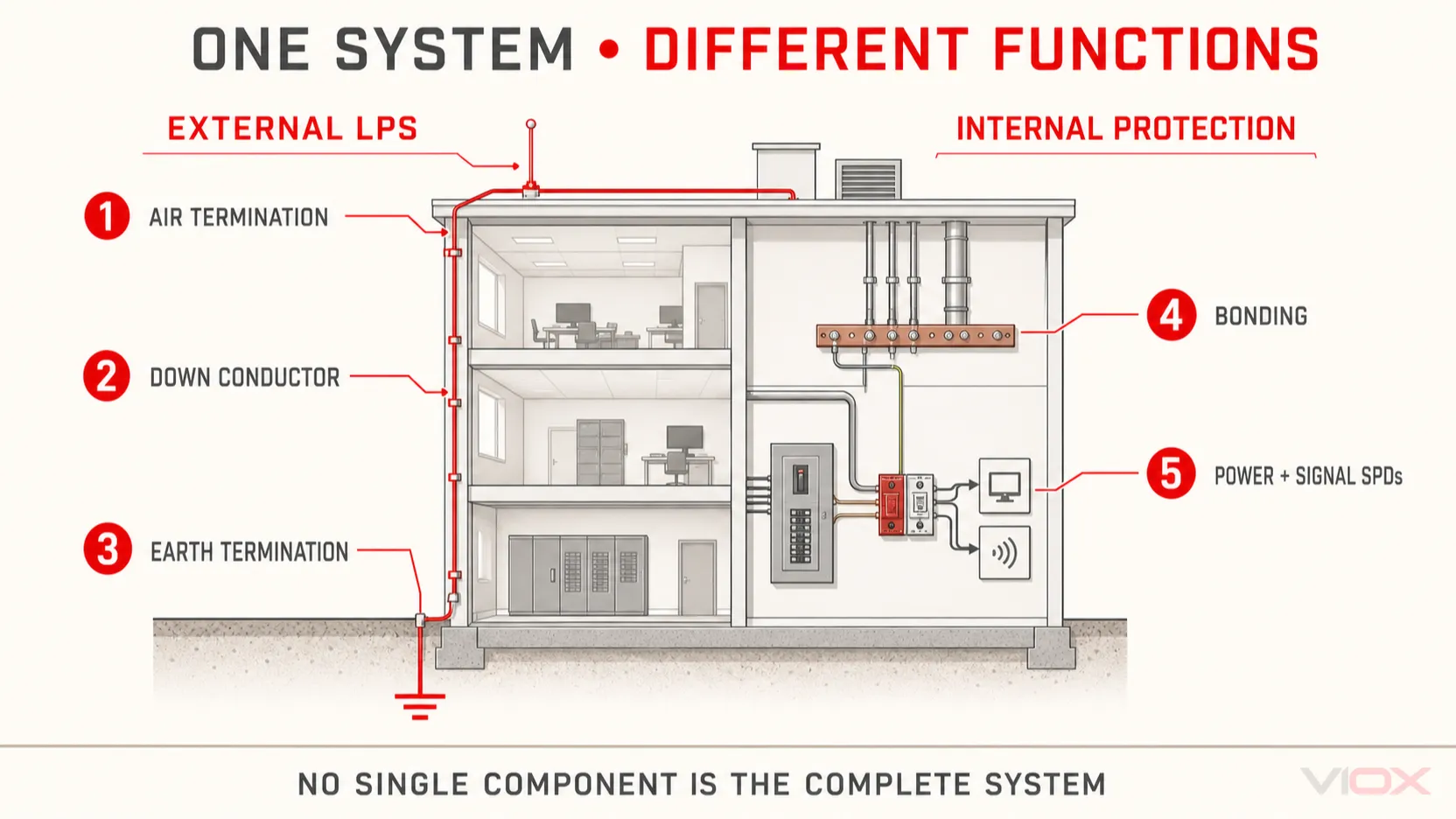
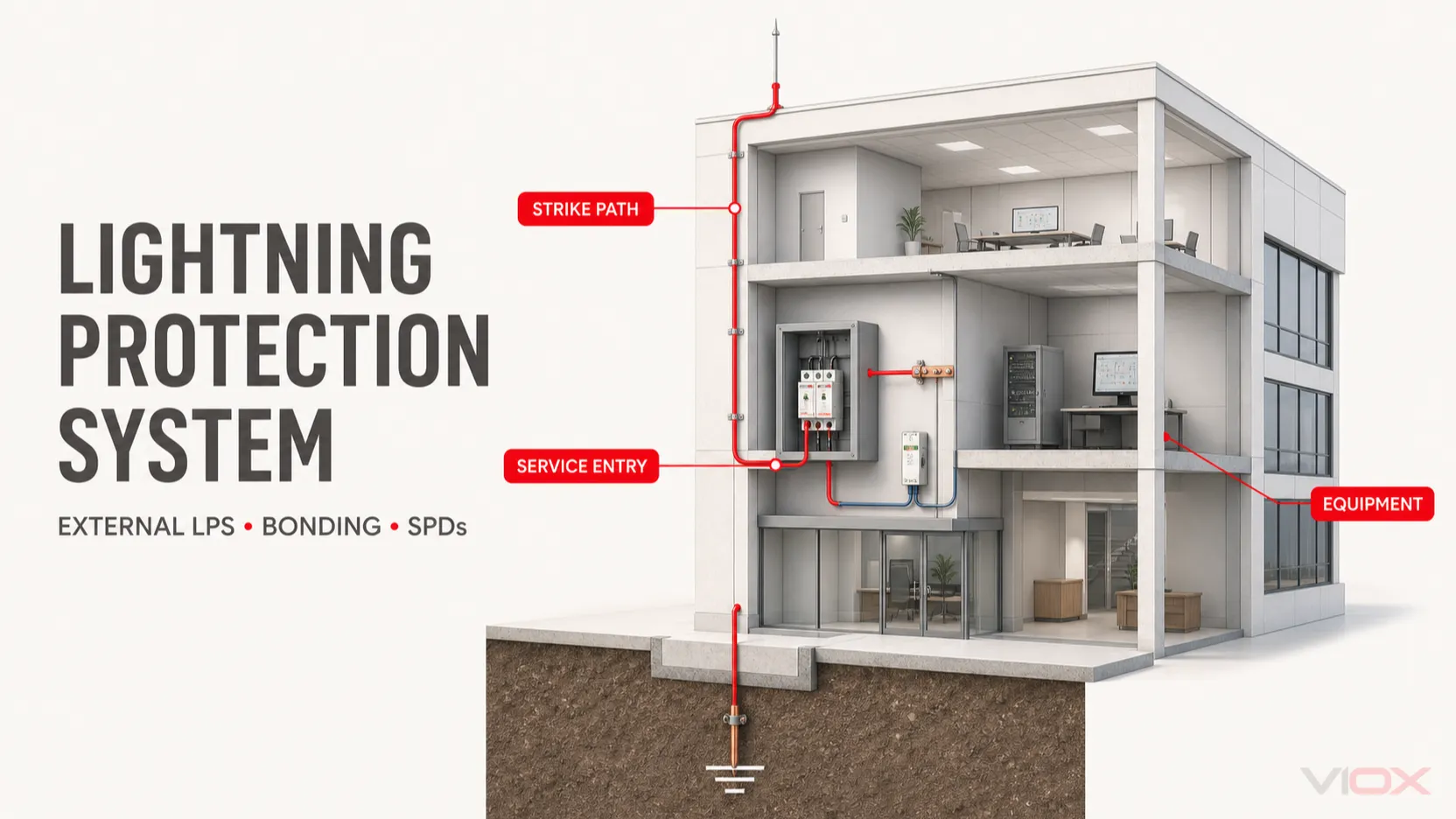
Ang isang kumpletong konsepto ng proteksiyon ay nag-uugnay sa panlabas na landas ng pagtama sa bonding at sa mga electrical interface na pumapasok sa mga protektadong zone.
Gumagana ang Proteksiyon sa Kidlat sa Limang Boundary
Nagiging mas malinaw ang pagsusuri sa antas ng gusali kapag hinati ito sa limang boundary. Ang bawat boundary ay may magkakaibang failure mode, pinagmumulan ng ebidensya, at responsableng disiplina.
| Hangganan | Tanong sa disenyo | Karaniwang ebidensya | Kondisyon sa paghinto |
|---|---|---|---|
| 1. Pagdapo ng kidlat | Saan maaaring dumapo ang kidlat, at paano sasaklawin ng nakalaang interception system ang istruktura? | Heometriya ng gusali, exposure, pagtatasa ng panganib, mga drawing ng disenyo ng LPS | Walang karampatang disenyo ng estruktural na LPS para sa natukoy na panganib ng direktang pagtama ng kidlat |
| 2. Landas ng lightning-current | Maaari bang dumaan ang kuryente mula sa interception system patungo sa lupa sa pamamagitan ng tuloy-tuloy at angkop na mga landas? | Mga ruta ng conductor, mga detalye ng koneksyon, dokumentasyon ng component, mga rekord ng inspeksyon | Hindi tuloy-tuloy, sira, o hindi beripikadong landas ng kuryente |
| 3. Bonding at separation | Maaari bang magkaroon ng mapanganib na potential difference sa pagitan ng LPS at mga metalwork o serbisyo? | Bonding plan, pagtatasa ng paghihiwalay, mga drawing ng service-entry | Hindi nalutas na side-flash o panganib sa paghawak/paghakbang |
| 4. Service entry | Maaari bang pumasok ang surge energy sa mga linya ng kuryente, data, control, antenna, o iba pang conductive line? | Kumpletong service inventory, kaayusan ng earthing, mga hangganan ng zone, plano ng SPD | Isang conductive entry path ang nakaligtaan sa konsepto ng proteksiyon |
| 5. Equipment interface | Ang natitirang stress ba ay compatible sa nakakonektang kagamitan? | Impormasyon sa withstand ng kagamitan, data ng proteksiyon ng SPD, mga landas ng nakabiting konduktor, ebidensya ng koordinasyon | Ang antas ng proteksiyon o koordinasyon ay hindi maipakita sa mga terminal ng kagamitan |
Ang modelong may limang hangganan na ito ay pumipigil sa karaniwang pagkakamali sa saklaw. Ang isang proyekto ay maaaring may nakikitang mga air terminal sa bubong ngunit nakakaligtaang lagyan ng proteksiyon ang signal-line. Ang isa naman ay maaaring may malaking SPD sa main board ngunit walang panlabas na LPS kahit na kinakailangan ito ng risk assessment. Ang pangatlo ay maaaring mayroon ng pareho, ngunit ang mahinang bonding o isang hindi protektadong conductive service ay maaaring magsilbing tulay sa dalawang sistema.
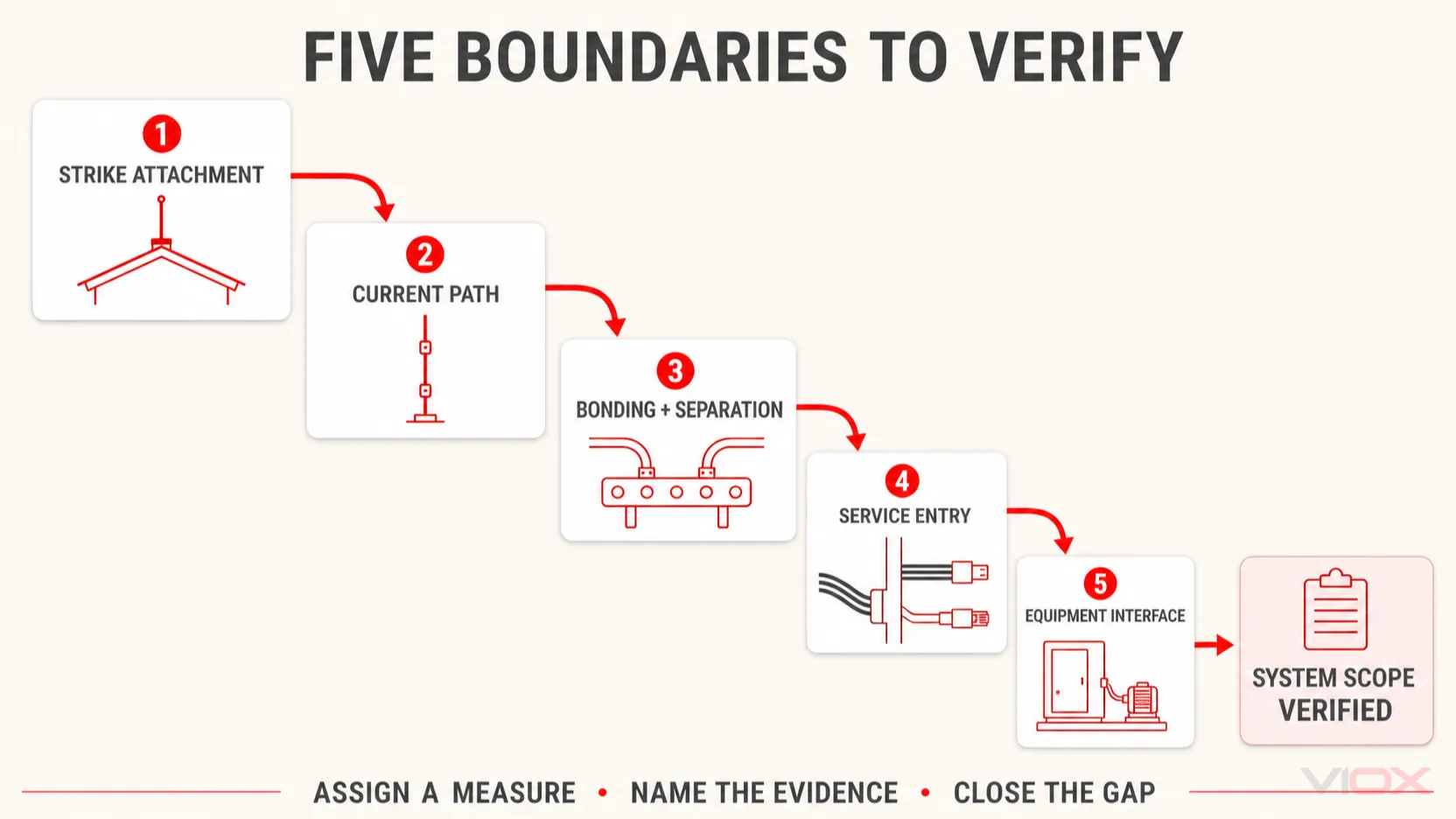
Ang sistema ay kumpleto lamang kapag ang bawat hangganan ay may nakatalagang hakbang, may-ari ng ebidensya, at rekord ng beripikasyon.
Ang Panlabas na LPS at Panloob na Proteksiyon ay May Magkaibang Tungkulin
Panlabas na LPS: harangin at daluyan
Ang panlabas na LPS ay tumutugon sa pisikal na interaksyon sa pagitan ng kidlat at ng istruktura. Ang air-termination system nito ay ipinoposisyon gamit ang isang tinatanggap na paraan ng disenyo para sa heometriya ng gusali at kinakailangang klase ng proteksiyon. Ang mga down conductor ay nagkokonekta sa interception network na iyon patungo sa earth-termination system sa pamamagitan ng mga sadyang landas ng kuryente.
IEC 62305-3:2024 sumasaklaw sa proteksiyon ng mga istruktura laban sa pisikal na pinsala sa pamamagitan ng isang LPS at proteksiyon ng mga tao laban sa touch at step voltage malapit sa isang LPS. Saklaw din nito ang mga hangganan ng disenyo, instalasyon, inspeksiyon, at maintenance. Ang eksaktong layout ng air-termination, mga dimensyon ng conductor, spacing, separation distance, at disenyo ng earth-termination ay nananatiling gawaing engineering na partikular sa proyekto; hindi ang mga ito dapat kunin mula sa isang generic na diagram sa blog.
Internal na proteksiyon laban sa kidlat: kontrolin ang mga potential difference
Kapag dumadaloy ang lightning current, ang iba't ibang bahagi ng gusali ay maaaring magkaroon ng magkakaibang potential. Maaaring magkaroon ng mapanganib na pagkurap (sparking) sa pagitan ng LPS at structural steel, mga tubo, cable tray, mga serbisyong elektrikal, o iba pang conductive system.
Gumagamit ang internal na proteksiyon laban sa kidlat ng equipotential bonding at, kung kinakailangan ng disenyo, electrical separation o iba pang angkop na interface. Ang earthing at bonding ay magkaugnay ngunit hindi magkasingkahulugan: ang earth electrode lamang ay hindi garantiya na ang lahat ng kaugnay na conductive part ay mananatili sa maayos na coordinated na potential sa panahon ng isang impulse.
Mga hakbang sa surge protection: protektahan ang mga internal na sistema
Ang mga sistemang elektrikal at elektroniko ay maaaring ma-stress kahit na gumagana nang tama ang external current path. Ang lightning electromagnetic impulse (LEMP), conducted current sa mga papasok na serbisyo, at electromagnetic coupling ay lahat maaaring makalikha ng transient voltage sa loob ng isang istruktura.
IEC 62305-4:2024 sumasaklaw sa mga hakbang sa surge protection para sa mga sistemang elektrikal at elektroniko sa loob ng mga istruktura. Ang mga hakbang na ito ay maaaring kabilang ang mga coordinated na SPD, bonding, shielding, line routing, at mga konsepto ng protection-zone. Ang tamang kombinasyon ay nakadepende sa risk assessment, electromagnetic environment, instalasyon, at kagamitang poprotektahan.
Paano Naaabot ng mga Epekto ng Kidlat ang mga Kagamitang Elektrikal
Dapat panatilihing magkakahiwalay ang tatlong landas sa panahon ng pagsusuri ng disenyo:
- Landas ng direct current: ang kidlat ay tumatama sa istruktura o panlabas na LPS at ang kuryente ay dumadaloy sa mga idinisenyong konduktor at sistemang earthing.
- Landas ng conducted surge: ang transient ay pumapasok o lumalabas sa pamamagitan ng power, telecommunications, antenna, control, o iba pang mga serbisyong metaliko.
- Landas ng induced o coupled: ang mabilis na nagbabagong electromagnetic field ay lumilikha ng boltahe sa mga kalapit na wiring loop, cable system, o interface ng kagamitan.
Ang pagkakaroon ng underground power ay hindi awtomatikong nag-aalis sa lahat ng exposure na may kaugnayan sa kidlat. Hindi rin inaalis ng panlabas na LPS ang pangangailangang suriin ang mga papasok na linya. Sa kabaligtaran, ang isang SPD na nakakonekta sa isang distribution board ay hindi kayang humarang sa tama ng kidlat sa bubong o pumalit sa landas ng kuryente ng istruktura.
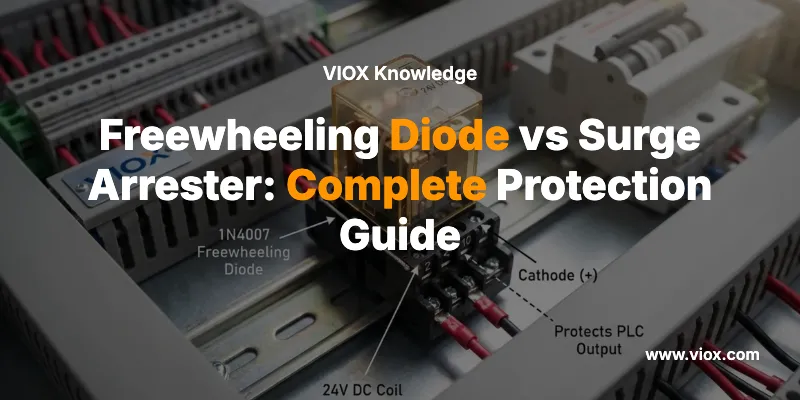
Para sa mas tiyak na tanong kung ano ang kaya at hindi kayang gawin ng isang SPD, gamitin ang gabay ng VIOX Pinoprotektahan ba ng mga Surge Protector Laban sa Kidlat?.
Ang Pagtatasa ng Panganib ay Nauuna sa Pagpili ng Component
Hindi lahat ng gusali ay nangangailangan ng parehong mga hakbang sa proteksiyon o Lightning Protection Level. Ang desisyon ay nakadepende sa istruktura, lokasyon, occupancy, mga serbisyo, mga nilalaman, mga kahihinatnan ng pinsala, at mga naaangkop na regulasyon.
IEC 62305-2:2024 ay nagbibigay ng pamamaraan para sa pagtatasa ng panganib sa kidlat at pagpili ng mga hakbang na nagpapababa sa tinasang panganib hanggang sa o mas mababa sa katanggap-tanggap na antas. Ang isang generic na listahan ng produkto ay hindi makakapagpalit sa prosesong iyon.
Bago mag-specify ng mga component, kolektahin ang kahit man lang:
- mga plano ng gusali, elevation, mga materyales sa konstruksiyon, at kagamitan sa rooftop;
- impormasyon tungkol sa heograpikal at pangkapaligirang exposure na ginagamit ng naaangkop na pamamaraan;
- mga input para sa occupancy, life-safety, continuity, sunog, at bunga sa asset;
- lahat ng papasok at papalabas na metallic services;
- mga kasalukuyang drawing ng LPS, earthing, at equipotential-bonding;
- impormasyon tungkol sa boltahe ng sistemang elektrikal, kaayusan ng earthing, at prospective fault-current;
- mga lokasyon ng sensitibong kagamitan at impormasyon tungkol sa available impulse-withstand;
- naaangkop na pambansang pagpapatibay ng IEC 62305, NFPA 780, UL 96A, o iba pang lokal na tuntunin;
- mga kasalukuyang rekord ng inspeksyon, modipikasyon, at maintenance.
Kung kulang ang mga input na ito, ang pagpili ng kaayusan ng air terminal o SPD base lamang sa mga halaga sa catalogue ay hindi pa napapanahon.
Ipinaliliwanag ng LPZ kung saan nagbabago ang gawain ng proteksiyon
Ang konsepto ng Lightning Protection Zone (LPZ) ay itinuturing ang gusali bilang serye ng mga electromagnetic environment sa halip na isang unipormeng protektadong espasyo. Nagbabago ang exposure habang tumatawid ang isang linya o bagay mula sa labas na zone patungo sa mga panloob na zone na lalong pinoprotektahan.
Sa hangganan ng zone, nagtatanong ang mga designer:
- Maaari bang tumawid ang direktang lightning current o bahagi nito sa hangganang ito?
- Aling mga linya ng power, data, signal, antenna, o control ang tumatawid dito?
- Paano ibinabound ang mga conductive service sa hangganan?
- Anong surge current at boltahe ang maaaring manatili?
- Anong withstand level ang kinakailangan ng kagamitan sa susunod na zone?
Ang isang SPD ay pipiliin para sa tungkuling itinakda sa boundary na iyon at iko-coordinate sa mga upstream at downstream na hakbang. Ang diagram ay isang konseptwal na arkitektura, hindi isang unibersal na tagubilin na ang bawat proyekto ay nangangailangan ng eksaktong tatlong device.
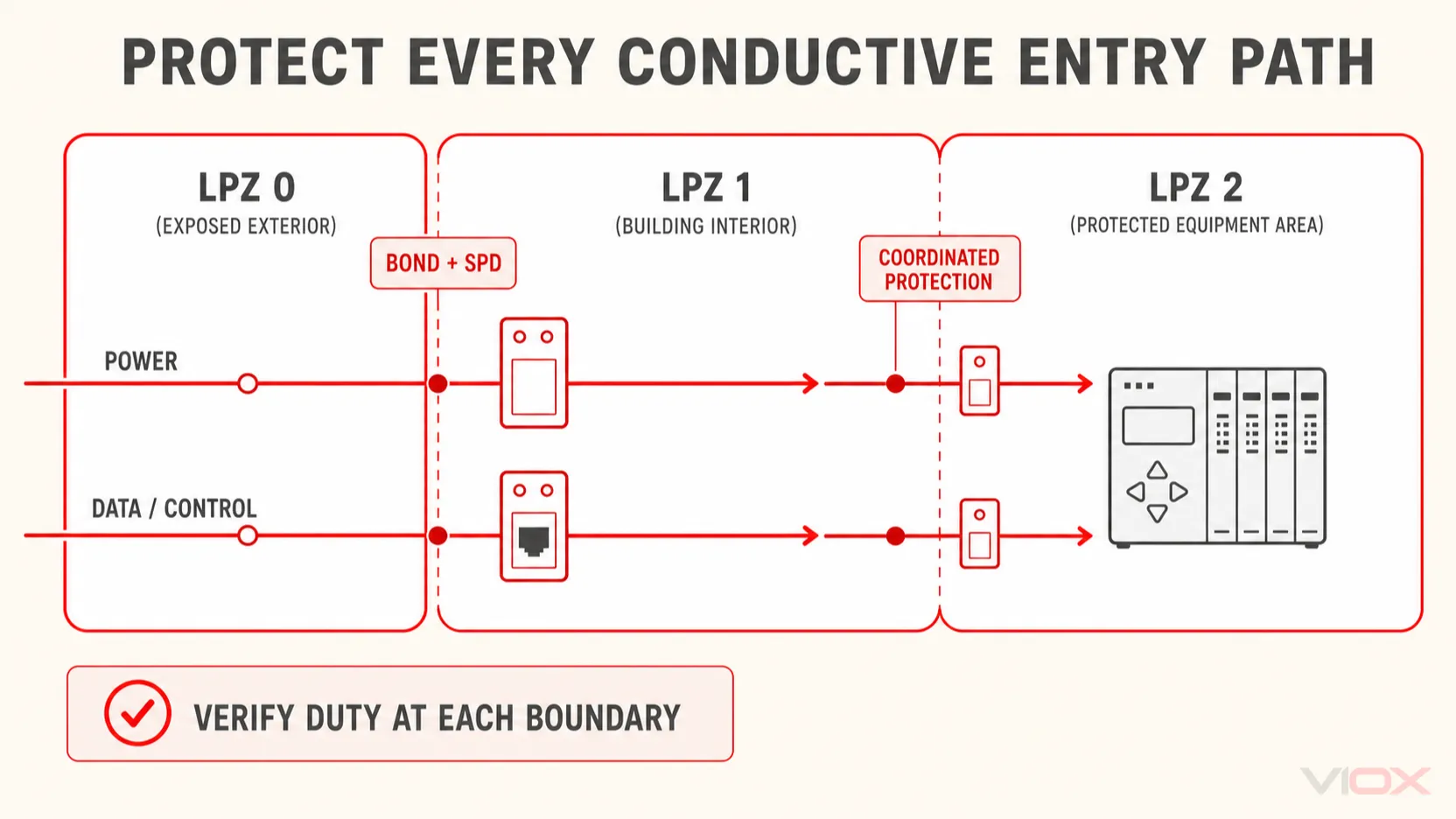
Ang bawat conductive service na tumatawid sa boundary ng protected-zone ay dapat isaalang-alang; ang pagprotekta lamang sa mga power conductor ay maaaring mag-iwan ng isa pang bukas na entry path.
Ang gabay ng VIOX para sa Type 1, Type 2, at Type 3 SPD ipinaliliwanag ang kanilang iba't ibang test duty. Ang hiwalay na gabay sa koordinasyon ng SPD ipinaliliwanag kung bakit ang paglalagay ng ilang Uri nang sunod-sunod ay hindi sa sarili nito nagpapatunay ng boltahe, enerhiya, distansya, o fault coordination.
Kung Saan Angkop ang mga SPD—at Kung Saan Hindi
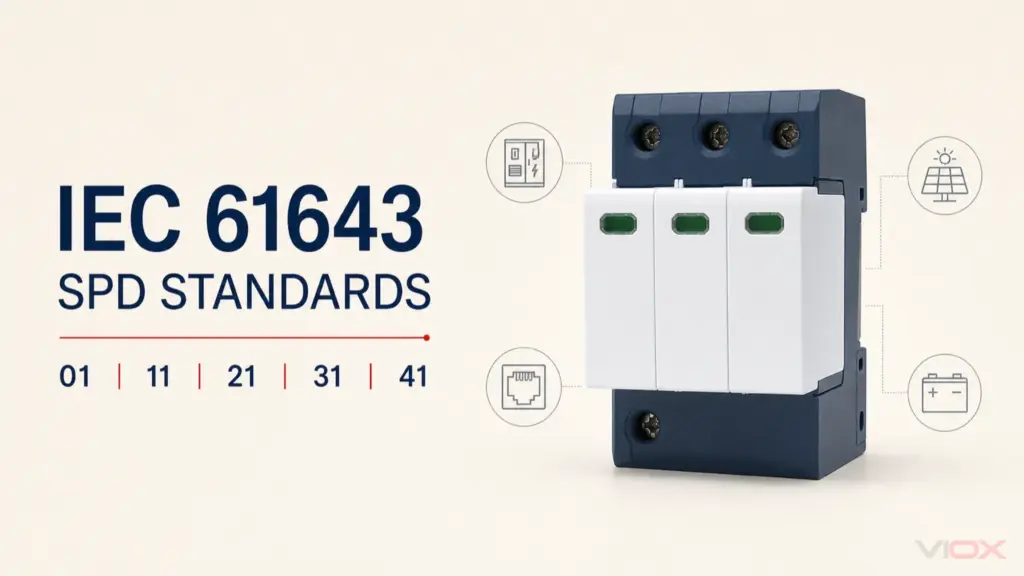
Nililimitahan ng mga SPD ang transient voltage at inililihis ang surge current sa ilalim ng kanilang idineklarang mga kondisyon. Sa framework ng IEC, ang mga kinakailangan sa produkto at paraan ng pagsubok para sa AC low-voltage SPD ay sakop ng IEC 61643-11:2025, habang IEC 61643-12:2020 tinatalakay ang mga prinsipyo ng pagpili at aplikasyon, kabilang ang lokasyon at koordinasyon.
Ang espesipikasyon ng SPD ay dapat pa ring tumugma sa:
- aplikasyon ng AC, DC, photovoltaic, o signal-line;
- boltahe ng sistemang elektrikal at mga kondisyon ng maximum continuous operating;
- arrangement ng earthing at mga kinakailangang mode ng proteksiyon;
- inaasahang impulse duty sa hangganan ng instalasyon;
- layunin ng proteksiyon sa boltahe sa kagamitan;
- mga kondisyon ng short circuit at kinakailangang backup-protection;
- pagruruta ng conductor at haba ng koneksiyon;
- ebidensya ng koordinasyon sa upstream/downstream;
- mga pambansang tuntunin at eksaktong tagubilin ng tagagawa.
Ang mga SPD ay hindi nagtatama ng nawawalang structural LPS, hindi sapat na bonding network, matagal na overvoltage, ordinaryong sobrang karga, o short circuit. Hindi rin nila ginagarantiya ang kaligtasan ng kagamitan sa bawat pangyayari ng kidlat.
Ang proteksiyon sa kuryente lamang ay maaaring hindi kumpleto kapag ang mga linya ng data o control ay pumasok sa parehong kagamitan. Ang gabay sa pagpili ng signal surge protector ay sumasaklaw sa interface, signal, grounding, at mga input ng instalasyon para sa mga circuit na iyon.
Mapa ng mga Pamantayan: Mga Tuntunin ng Sistema at Mga Tuntunin ng Produkto
| Dokumento | Pangunahing saklaw sa desisyong ito | Huwag itong gamitin bilang |
|---|---|---|
| IEC 62305-1:2024 | Mga pangkalahatang prinsipyo at kabuuang balangkas ng proteksiyon laban sa kidlat | Isang sertipikasyon ng produkto para sa isang bahagi ng SPD o LPS |
| IEC 62305-2:2024 | Pamamahala ng panganib sa kidlat na partikular sa istruktura | Isang pangkalahatang pahayag na ang bawat gusali ay nangangailangan ng parehong LPS |
| IEC 62305-3:2024 | Pisikal na pinsala, panganib sa buhay, at mga hakbang sa istruktural na LPS | Isang pamantayan sa pagsubok ng produkto para sa low-voltage SPD |
| IEC 62305-4:2024 | Mga hakbang sa proteksiyon laban sa surge para sa mga panloob na sistemang elektrikal/elektroniko | Isang stand-alone na datasheet ng SPD o pangkalahatang diagram ng paglalagay |
| IEC 61643-11:2025 | Mga kinakailangan at pamamaraan ng pagsubok para sa mga AC low-voltage SPD | Patunay na ang isang kumpletong nakakabit na LPS ay tama ang pagkaka-disenyo |
| IEC 61643-12:2020 | Mga prinsipyo sa pagpili at aplikasyon ng AC low-voltage SPD | Sertipikasyon ng isang eksaktong modelo ng produkto |
| NFPA 780 / UL 96A | Mga framework sa pag-install ng structural LPS sa North America, na nakadepende sa pag-adopt at konteksto ng proyekto | Isang kapalit para sa naaangkop na electrical code o ebidensya ng listahan ng produkto |
Ang Gabay sa mga pamantayan ng VIOX IEC 61643 ay nagbibigay ng mas malalim na mapa ng pamantayan ng produkto. Sa mga gawaing North American, ang naaangkop na edisyon, in-adopt na code, mga kinakailangan sa listahan, at ang authority having jurisdiction ay dapat kumpirmahin. Ang UL Lightning Protection Application Guide gayundin ang pagbibigay-diin sa kumpletong disenyo ng sistemang elektrikal, bonding, mga naaangkop na pamantayan, at inspeksyon sa halip na ituring ang isang component bilang isang kumpletong instalasyon.
Project Handoff Checklist
Gamitin ang checklist na ito upang panatilihing malinaw ang mga responsibilidad at ebidensya.
Para sa designer o espesyalista ng LPS
- pagtatasa ng panganib at mga kinakailangang hakbang sa proteksyon;
- saklaw ng air-termination at paraan ng pagkakabit sa istruktura;
- mga landas ng lightning-current at disenyo ng earth-termination;
- pagtatasa ng bonding at paghihiwalay;
- mga konsiderasyon sa touch, step, at mapanganib na pagkislap;
- koordinasyon sa kagamitan sa rooftop at mga papasok na serbisyo;
- mga kinakailangan sa inspeksyon at pagpapanatili sa ilalim ng pinagtibay na pamantayan.
Para sa electrical designer o panel builder
- single-line diagram at kaayusan ng earthing;
- lahat ng entry para sa power, data, control, antenna, at komunikasyon;
- LPZ o katumbas na mga hangganan ng proteksiyon;
- mga layunin sa withstand ng kagamitan;
- mga kondisyon ng prospective short-circuit sa mga lokasyon ng SPD;
- mga ruta ng naka-install na conductor at mga limitasyon sa koneksyon;
- koordinasyon sa pagitan ng mga path ng proteksyon ng kuryente at signal.
Para sa supplier ng SPD
- uri ng sistemang elektrikal at nominal/maximum continuous voltage;
- kinakailangang test class o Type ng SPD at impulse duty;
- mga mode ng proteksyon at pagsasaayos ng earthing;
- kinakailangang voltage protection level o layunin ng kagamitan;
- mga deklarasyon ng discharge-current na kailangan para sa boundary;
- mga kinakailangan para sa short circuit at backup-protection;
- indikasyon ng status, remote signaling, enclosure, at mga pangangailangan sa pagpapalit;
- kinakailangan ang eksaktong dokumentasyon para sa destinasyong merkado.
Ang VIOX ang nagbibigay ng bahagi ng SPD para sa disenyo ng proteksiyon laban sa kidlat at surge. Maaaring suriin ng mga inhinyero at teknikal na mamimili ang VIOX SPD range pagkatapos matukoy ang mga hangganan ng sistemang elektrikal at ang mga kinakailangang ebidensya, o makipag-ugnayan [email protected] kasama ang mga electrical input sa itaas. Ang disenyo, pag-install, at beripikasyon ng Structural LPS ay dapat manatili sa mga karampatang espesyalista na nagtatrabaho ayon sa mga naaangkop na pamantayan ng proyekto at mga lokal na tuntunin.
Mga Sanggunian
- IEC 62305-1:2024 — Pangkalahatang prinsipyo
- IEC 62305-2:2024 — Pamamahala ng panganib
- IEC 62305-3:2024 — Pisikal na pinsala sa mga istruktura at panganib sa buhay
- IEC 62305-4:2024 — Mga sistemang elektrikal at elektroniko sa loob ng mga istruktura
- IEC 61643-11:2025 — Mga kinakailangan at paraan ng pagsubok para sa AC low-voltage SPD
- IEC 61643-12:2020 — Mga prinsipyo sa pagpili at aplikasyon ng AC low-voltage SPD
- UL Lightning Protection Application Guide