Что нужно знать об электрических щитах управления
Электрические щиты управления являются центральной нервной системой промышленных предприятий, в которых размещены важнейшие компоненты, распределяющие электроэнергию, защищающие оборудование и автоматизирующие процессы. От центров управления двигателями (MCC), управляющих десятками двигателей, до сложных шкафов ПЛК, организующих сложные последовательности автоматизации, выбор правильного типа панели напрямую влияет на эффективность работы, соблюдение требований безопасности и долгосрочные затраты на техническое обслуживание. В этом руководстве рассматриваются семь основных типов панелей управления — MCC, PCC, PLC, VFD, распределительные панели, заказные панели управления и интеллектуальные интегрированные системы — с техническими характеристиками, критериями применения и схемами выбора на основе стандартов IEC 60947, UL 508A и NEC Article 409.
Основные выводы
- Центры управления двигателями (ЦУД) централизованное управление несколькими двигателями с помощью модульных конструкций, идеально подходящих для предприятий с 10 и более двигателями, требующими скоординированной работы
- Центры управления питанием (PCC) обрабатывают распределение больших токов (800A-6300A) и служат основным интерфейсом питания между электросетью и нагрузками предприятия
- Панели управления ПЛК содержат программируемые логические контроллеры и модули ввода-вывода для автоматизации процессов, требующие тщательного учета экологических показателей и протоколов связи
- Панели VFD обеспечивают энергоэффективное управление скоростью двигателя с потенциальной экономией энергии в размере 20-50% в приложениях с переменным крутящим моментом
- Критерии выбора должны обеспечивать баланс между электрическими характеристиками (напряжение, ток, SCCR), факторами окружающей среды (степень защиты IP, температура), требованиями автоматизации и соответствием стандартам UL 508A или IEC 61439
- Интеллектуальные панели управления интегрируют возможности подключения IoT и предиктивного обслуживания, представляя собой эволюцию в сторону производственной среды Industry 4.0
Понимание основ электрических щитов управления
Электрический щит управления — это спроектированный узел, в котором размещены электрические компоненты —автоматические выключатели, контакторы, реле, ПЛК и устройства мониторинга — внутри защитного корпуса. Эти панели выполняют три основные функции: распределение электроэнергии на подключенные нагрузки, защита оборудования посредством обнаружения перегрузки по току и неисправностей, а также управление процессами посредством ручной или автоматизированной логики переключения.
Современные промышленные предприятия обычно используют несколько типов панелей в иерархической архитектуре. Центр управления питанием получает электроэнергию от электросети и распределяет ее по подчиненным центрам управления двигателями, которые, в свою очередь, питают отдельные машины или технологические зоны. Панели ПЛК взаимодействуют с этими системами питания для обеспечения диспетчерского управления и сбора данных (SCADA). цитата
На практике различие между типами панелей часто стирается. В одном корпусе можно объединить функциональность MCC со встроенными VFD и управлением ПЛК, создавая гибридную систему, оптимизированную для конкретных приложений. Понимание основных характеристик каждого типа панели позволяет инженерам определять системы, которые обеспечивают баланс между функциональностью, стоимостью и возможностью расширения в будущем.
Центры управления двигателями (MCC): централизованное управление двигателями
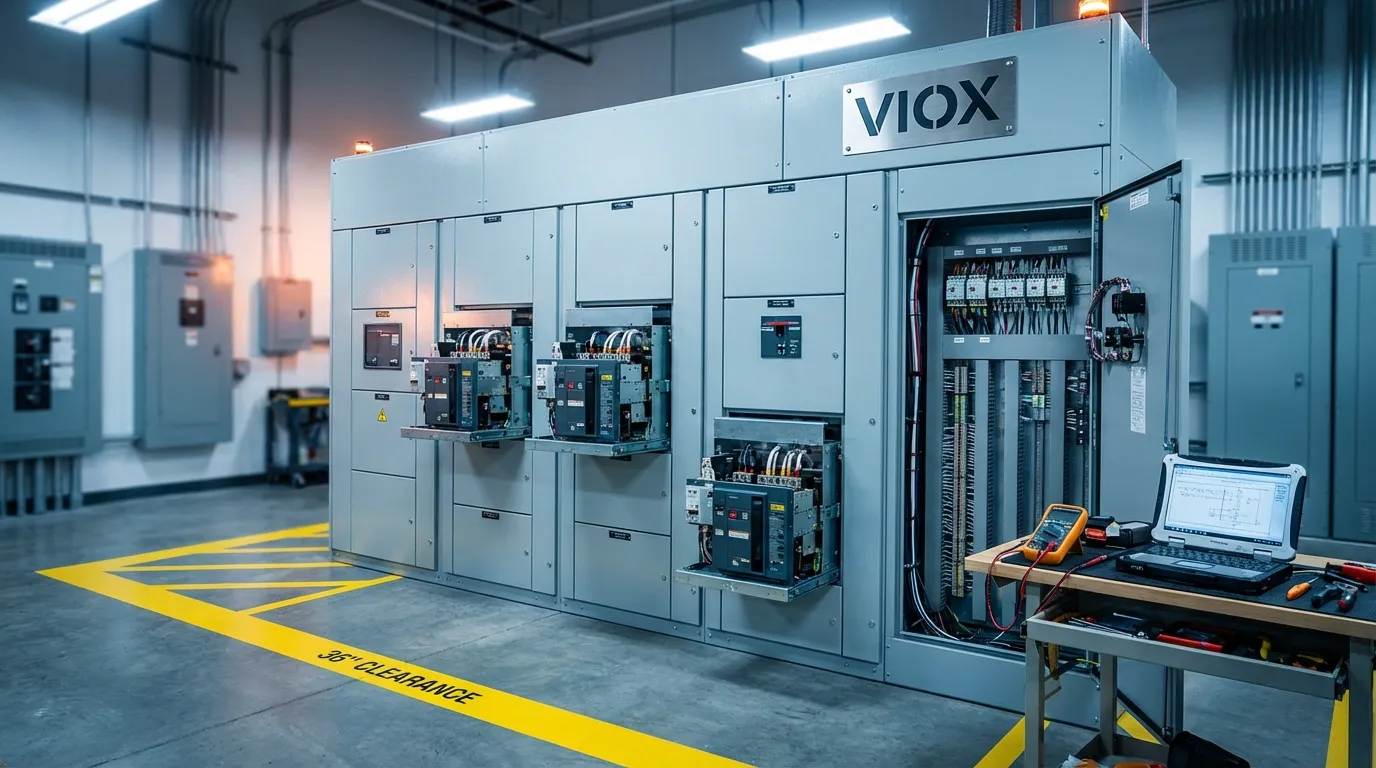
Центры управления двигателями представляют собой наиболее распространенное решение для предприятий, эксплуатирующих несколько электродвигателей. MCC состоит из вертикальной сборки с общей горизонтальной шиной питания, питающей отдельные блоки управления двигателями, размещенные в съемных “корзинах” или фиксированных отсеках. Эта модульная архитектура позволяет независимо управлять, защищать и изолировать каждую цепь двигателя, сохраняя при этом централизованное распределение электроэнергии.
Архитектура и компоненты MCC
Типовая структура MCC включает в себя вертикальную шину питания с номинальным током от 600A до 6000A, с горизонтальными отводами, питающими отдельные пускатели двигателей. Каждый блок управления двигателем содержит комбинированный узел пускателя: контактор для переключения, тепловое реле перегрузки для защиты двигателя, средство отключения для изоляции и схема управления для локальной или удаленной работы. Современные MCC обычно интегрируют преобразователи частоты, устройства плавного пуска и твердотельные реле защиты двигателя в ту же структуру корзины.
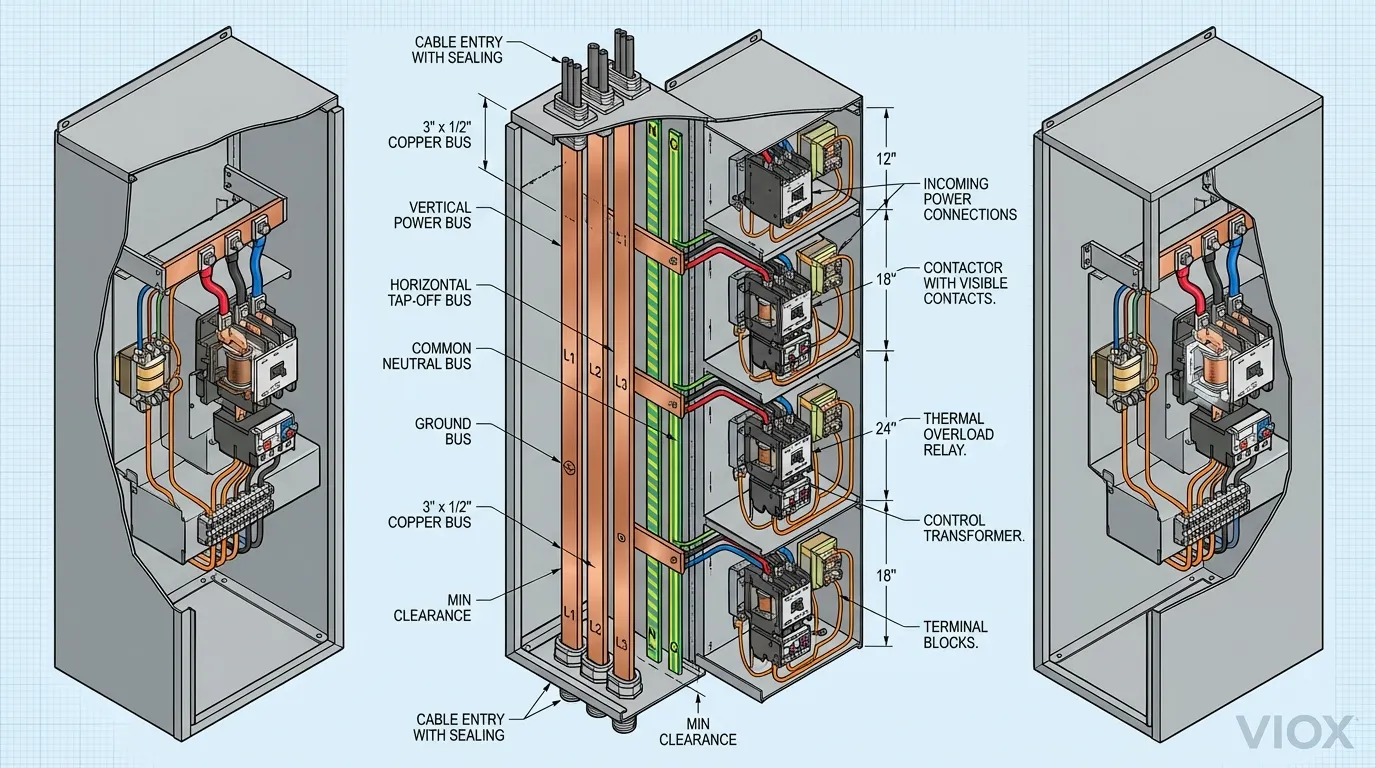
Конструкции MCC соответствуют стандартам IEC 61439 или UL 845 в зависимости от региональных требований. Выбор между конструкциями с фиксированным креплением и выдвижной корзиной влияет на доступность технического обслуживания и затраты на замену. Выдвижные конструкции позволяют заменять блоки управления двигателем в горячем режиме, не отключая соседние цепи, но требуют на 30-40% больше затрат по сравнению с фиксированными установками.
Критерии применения MCC
MCC превосходно подходят для приложений, требующих централизованного управления 10 или более двигателями, особенно когда двигатели работают независимо, а не как скоординированные последовательности машин. Типичные установки включают водоочистные сооружения с несколькими насосными двигателями, системы HVAC, обслуживающие крупные коммерческие здания, системы транспортировки материалов с распределенными конвейерными приводами и производственные предприятия с многочисленными технологическими машинами.
Решение об определении MCC по сравнению с отдельными панелями управления двигателями зависит от нескольких факторов. MCC обеспечивают превосходную эффективность использования пространства — одна секция высотой 90 дюймов может вместить 6-12 пускателей двигателей по сравнению с эквивалентными настенными отдельными панелями. Централизованная установка упрощает распределение электроэнергии и снижает трудозатраты на установку на 40-60% по сравнению с распределенными панелями. Однако MCC требуют выделенных электрощитовых с соответствующими зазорами в соответствии с NEC 110.26, что делает их менее подходящими для предприятий с распределенной компоновкой оборудования.
Спецификации выбора MCC
| Спецификация | Типичный диапазон | Критерии отбора |
|---|---|---|
| Номинальный ток шины | 600A – 6000A | Размер на основе суммы FLA двигателя плюс 25% запаса на рост |
| Номинальное напряжение | Номинальное напряжение | 208V – 690V AC |
| Соответствует напряжению распределения предприятия | Номинальный ток короткого замыкания | Должна превышать доступный ток короткого замыкания в точке установки |
| 35kA – 100kA | Размер корзины | NEMA Размер 1-5 |
| Определяется самым большим требуемым пускателем двигателя | Тип корпуса | NEMA 1, 3R, 12 |
| Напряжение управления | На основе условий окружающей среды | Напряжение управления |
120V AC, 24V DC. цитата
Стандартизируйте на всем предприятии для повышения эффективности обслуживания
При определении MCC инженеры должны рассчитать номинальный ток короткого замыкания (SCCR) с использованием методологий с последовательным или полным номиналом. SCCR представляет собой максимальный ток короткого замыкания, который MCC может безопасно прервать без катастрофического отказа. Занижение SCCR создает угрозу для жизни и нарушает требования статьи 409 NEC.
Центры управления питанием (PCC): узлы распределения больших токов
Центры управления питанием функционируют как основной интерфейс распределения электроэнергии между электросетью и электрическими системами предприятия. В то время как MCC фокусируются на управлении двигателями, PCC делают упор на распределении электроэнергии, измерении и основной защите цепей. Типовой PCC получает электроэнергию от трансформатора электросети или от источника генерации на месте и распределяет ее по нескольким подчиненным панелям — MCC, распределительным щитам и крупным отдельным нагрузкам.
Характеристики конструкции PCC. цитата
PCC обычно имеют номинальный ток шины от 800A до 6300A с главными автоматическими выключателями или плавкими разъединителями, обеспечивающими защиту от перегрузки по току. Внутренняя архитектура включает в себя секции измерения с трансформаторами тока и трансформаторами напряжения для мониторинга электроэнергии, основные секции распределения с автоматическими выключателями большой емкости и секции фидеров, распределяющие электроэнергию по подчиненным панелям.
Современные PCC все чаще включают в себя оборудование для мониторинга качества электроэнергии, фильтрации гармоник и коррекции коэффициента мощности. Эти интегрированные системы решают проблемы качества электроэнергии у источника, а не требуют распределенного оборудования для коррекции по всему предприятию. Усовершенствованные PCC могут включать в себя функциональность автоматического переключателя (ATS) для предприятий с резервным питанием, плавно переключая нагрузки между электросетью и источниками питания генератора.
| Характеристика | PCC против MCC: функциональное различие | Центр управления двигателем (MCC) |
|---|---|---|
| Основная функция | Основное различие между PCC и MCC заключается в их функциональном назначении и внутренних компонентах. PCC распределяют основную электроэнергию и обеспечивают основную защиту цепей, но обычно не включают отдельные устройства управления двигателями. MCC получают электроэнергию от PCC и обеспечивают выделенный запуск и защиту двигателей для нескольких двигателей. На предприятии может быть один или два PCC, питающих от пяти до десяти MCC, распределенных по всему заводу. | Управление и защита двигателя |
| Номинальный ток шины | MCCB в сравнении с другими автоматическими выключателями: Полное сравнение | 600A – 6000A |
| Центр управления питанием (PCC) | Распределение и измерение электроэнергии | Основные компоненты |
| Главные выключатели, фидеры, измерительные приборы | 2-6 вертикальных секций | 4-20 вертикальных секций |
| Подчиненные нагрузки | MCC, распределительные панели, крупное оборудование | Отдельные двигатели (0,5-500 л.с.) |
| Сложность управления | Минимальный (только переключение) | От умеренного до высокого (логика пуска/останова) |
Панели управления ПЛК: Мозг автоматизированных систем
Панели программируемых логических контроллеров (ПЛК) содержат промышленные компьютеры, которые выполняют логику автоматизации, обрабатывают входные данные датчиков и управляют выходными устройствами. В отличие от MCC, которые обеспечивают переключение питания для двигателей, панели ПЛК фокусируются на логике управления, обработке данных и связи с полевыми устройствами и системами управления верхнего уровня.
Архитектура панели ПЛК
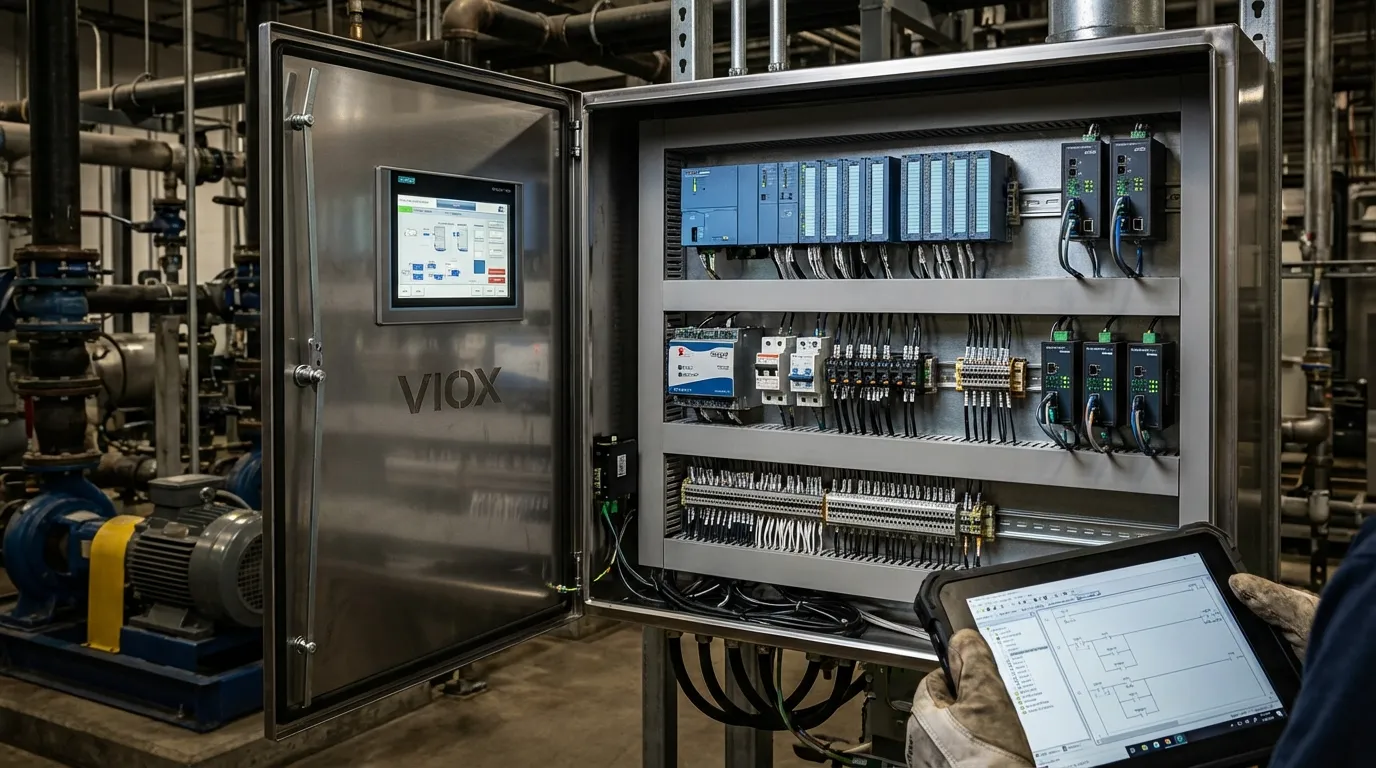
Типичная панель ПЛК содержит модуль процессора ПЛК, модули ввода/вывода (I/O) для связи с полевыми устройствами, источники питания, обеспечивающие напряжение управления 24 В постоянного тока, коммуникационные модули для работы в сети и человеко-машинный интерфейс (HMI) для взаимодействия с оператором. Панель также включает в себя защиту цепей для системы ПЛК, обычно миниатюрных автоматических выключателей номиналом 2-10А, и устройства защиты от перенапряжения для защиты от переходных перенапряжений.
Современные панели ПЛК все чаще используют распределенные архитектуры ввода/вывода с использованием промышленных протоколов Ethernet — EtherNet/IP, PROFINET или Modbus TCP. Этот подход снижает сложность проводки панели за счет размещения модулей ввода/вывода рядом с полевыми устройствами, а не централизации всех вводов/выводов в главной панели управления. В этом случае панель ПЛК служит в основном процессором и коммуникационным центром, а не точкой подключения проводки.
Интеграция панели ПЛК и MCC
Панели ПЛК и MCC выполняют взаимодополняющие функции в промышленной автоматизации. Панель ПЛК содержит интеллект — выполняет программы логики релейной схемы, которые определяют, когда двигатели должны запускаться или останавливаться в зависимости от условий процесса. MCC обеспечивает возможность переключения питания — контакторы и пускатели двигателей, которые фактически подают питание на двигатели. Две системы соединяются посредством управляющей проводки, при этом ПЛК предоставляет команды пуска/останова пускателям двигателей MCC и получает обратную связь о состоянии (работает, отключен, условия неисправности).
Многие современные установки интегрируют функциональность ПЛК непосредственно в структуры MCC, создавая “интеллектуальные MCC”, которые объединяют распределение питания и логику управления в едином узле. Эта интеграция снижает затраты на установку и улучшает время отклика за счет устранения управляющей проводки между отдельными панелями. Однако это также увеличивает сложность и может затруднить поиск и устранение неисправностей, когда электрические проблемы и проблемы управления возникают одновременно.
Стандарты проектирования панелей ПЛК
Панели ПЛК должны соответствовать стандартам UL 508A (Северная Америка) или IEC 61439-1 (международный) для промышленных панелей управления. Эти стандарты определяют требования к размеру проводников, защите от перегрузки по току, заземлению и экологическим характеристикам. Кроме того, панели ПЛК часто должны соответствовать стандартам функциональной безопасности — IEC 61508 или ISO 13849 — при управлении процессами, критичными с точки зрения безопасности.
Экологический рейтинг существенно влияет на конструкцию панели ПЛК. Стандартных корпусов NEMA 1 или IP20 достаточно для помещений с контролируемым климатом. Для суровых условий требуются корпуса NEMA 4X или IP66 с герметичными кабельными вводами, внутренним климат-контролем и коррозионностойкими материалами. Сами компоненты ПЛК обычно работают при температуре окружающей среды 0-55°C, что требует активного охлаждения в жарких условиях или обогреваемых корпусов в холодном климате.
Панели частотно-регулируемого привода (VFD): Энергоэффективное управление двигателем
Панели частотно-регулируемого привода содержат силовую электронику, которая управляет скоростью двигателя переменного тока, изменяя частоту и напряжение, подаваемые на двигатель. VFD обеспечивают точное управление скоростью, плавный пуск для снижения механической нагрузки и значительную экономию энергии в приложениях с переменным крутящим моментом, таких как насосы и вентиляторы.
Компоненты и соображения панели VFD
Панель VFD содержит сам VFD (секции выпрямителя, шины постоянного тока и инвертора), защиту входной цепи (автоматические выключатели или предохранители), выходные контакторы для изоляции двигателя и фильтрацию EMI/RFI для уменьшения электромагнитных помех. VFD генерируют значительное тепло — обычно 3-5% от номинальной мощности рассеивается в виде тепла внутри привода — что требует тщательного управления температурным режимом посредством вентиляции, радиаторов или активного охлаждения.
Установки VFD должны учитывать гармонические искажения, вносимые в электрическую систему. Шестипульсные VFD (наиболее распространенный тип) генерируют значительные гармонические токи 5-й и 7-й гармоник, которые могут вызвать перегрев трансформатора, перегрузку нейтрального проводника и помехи для чувствительного электронного оборудования. Решения включают линейные реакторы, дроссели шины постоянного тока или активные гармонические фильтры. Предприятия с несколькими VFD должны проводить гармонический анализ, чтобы убедиться, что общие гармонические искажения остаются ниже 5% в соответствии с рекомендациями IEEE 519.
Преимущества применения панели VFD
VFD обеспечивают убедительные преимущества в соответствующих приложениях. Центробежные насосы и вентиляторы демонстрируют кубическую зависимость между скоростью и потребляемой мощностью — снижение скорости на 20% снижает потребление энергии примерно на 50%. Эта характеристика обеспечивает значительную экономию энергии в приложениях с переменным расходом. Кроме того, VFD устраняют механическую нагрузку при запуске, продлевая срок службы двигателя и приводимого в действие оборудования на 30-50% по сравнению с прямым пуском.
Однако VFD не являются универсально полезными. Приложения с постоянной скоростью не получают экономии энергии от управления VFD. Сам VFD потребляет 2-3% от номинальной мощности даже на полной скорости, что создает чистую потерю энергии по сравнению с прямым подключением двигателя. VFD также вносят токи подшипников двигателя, которые могут вызвать преждевременный выход из строя подшипников, если не принять меры по их снижению с помощью изолированных подшипников, заземления вала или фильтрованных выходных реакторов. цитата
| Тип приложения | Преимущества VFD | Потенциал экономии энергии |
|---|---|---|
| Переменный крутящий момент (насосы, вентиляторы) | Высокий | Обычно 20-50% |
| Постоянный крутящий момент (конвейеры, экструдеры) | Умеренный | Обычно 5-15% |
| Постоянная скорость (процессы с фиксированной скоростью) | Низкий | 0-5% (может быть отрицательным) |
| Нагрузки с высокой инерцией (маховики, дробилки) | Умеренный | Обычно 10-25% |
Распределительные панели: Распределение питания на уровне цепей
Распределительные панели — также называемые щитами или центрами нагрузки — обеспечивают последний уровень распределения питания, разделяя основное питание на отдельные ответвленные цепи, питающие освещение, розетки и небольшое оборудование. В то время как MCC и PCC обрабатывают распределение питания высокой мощности, распределительные панели фокусируются на защите цепей и распределении для нагрузок меньшей мощности.
Структура распределительной панели
Типичная распределительная панель содержит главный автоматический выключатель (или главные клеммы для сквозных применений), шину, распределяющую питание по ответвленным позициям, и автоматические выключатели ответвленных цепей, защищающие отдельные цепи. Номинальные значения панелей варьируются от 100 А до 600 А, при этом трехфазные конфигурации 120/208 В или 277/480 В наиболее распространены в коммерческих и промышленных приложениях.
Современные распределительные панели все чаще включают в себя устройства защиты от перенапряжения для защиты от переходных перенапряжений от молнии или коммутационных событий. Устройства защиты от импульсных перенапряжений типа 2, установленные на распределительных панелях, обеспечивают вторичную защиту для чувствительных электронных нагрузок, дополняя СПД типа 1 установленные на вводном оборудовании.
Применение распределительных панелей и MCC
Распределительные панели и MCC обслуживают разные профили нагрузки. MCC превосходно справляются с управлением двигателями — запуском, остановкой и защитой двигателей от перегрузки и неисправностей. Распределительные панели фокусируются на освещении, розетках, небольших двигателях (мощностью до 2 л.с.) и электронном оборудовании. На предприятии обычно гораздо больше распределительных панелей, чем MCC, при этом распределительные панели расположены по всему зданию рядом с обслуживаемыми ими нагрузками.
Выбор между распределительной панелью и MCC для моторных нагрузок зависит от размера двигателя и требований к управлению. Двигатели мощностью до 2 л.с. обычно подключаются к ответвленным цепям распределительной панели с ручными пускателями двигателей. Двигатели мощностью от 2 до 10 л.с. могут использовать любой из этих подходов в зависимости от сложности управления. Двигатели мощностью более 10 л.с. почти всегда оправдывают установку MCC из-за более высоких требований к току и необходимости скоординированного управления с другим оборудованием. цитата
Пользовательские панели управления: Решения для конкретных применений
Пользовательские панели управления решают уникальные требования, которые стандартные конфигурации MCC, ПЛК или распределительных панелей не могут эффективно удовлетворить. Эти спроектированные узлы объединяют распределение питания, управление двигателем, логику ПЛК, операторские интерфейсы и специализированное оборудование в корпуса, изготовленные по индивидуальному заказу и оптимизированные для конкретных машин или процессов.
Факторы, определяющие конструкцию пользовательской панели
Несколько факторов определяют спецификации пользовательской панели. Производителям машин часто требуются интегрированные панели управления, объединяющие управление двигателем, логику ПЛК, цепи безопасности и операторский интерфейс в компактном корпусе, установленном непосредственно на машине. Перерабатывающим отраслям могут потребоваться взрывозащищенные панели, соответствующие стандартам NFPA 496 или IEC 60079 для опасных зон. Для модернизации может потребоваться изготовление пользовательских панелей, соответствующих существующим интерфейсам и габаритам оборудования.
Пользовательские панели обеспечивают максимальную гибкость, но требуют тщательного проектирования для обеспечения соответствия стандартам UL 508A или IEC 61439. Разработчик панели должен рассчитать SCCR, проверить пропускную способность проводника, скоординировать защиту от перегрузки по току и задокументировать конструкцию с помощью подробных электрических схем. Многие юрисдикции требуют сторонней сертификации (UL, ETL, CSA) для пользовательских панелей управления, что увеличивает стоимость и время выполнения по сравнению со стандартными продуктами MCC или распределительными панелями.
Экономика пользовательской панели и стандартной MCC
Экономическая точка перегиба между пользовательскими панелями и стандартными MCC наступает примерно при 6-8 цепях управления двигателем. Ниже этого порога пользовательские панели часто оказываются более экономичными из-за уменьшенной занимаемой площади и устранения неиспользуемых позиций ячеек MCC. Выше этого порога модульность MCC и стандартизированные компоненты обычно предлагают лучшую ценность.
Однако только экономика не должна определять решение. Пользовательские панели превосходны, когда критически важна тесная интеграция между компонентами управления и питания, когда ограничения по пространству запрещают стандартные размеры MCC или когда специализированные экологические требования (промывка, коррозионная атмосфера, экстремальные температуры) требуют индивидуальной конструкции корпуса.
Интеллектуальные панели управления: Интеграция с Индустрией 4.0
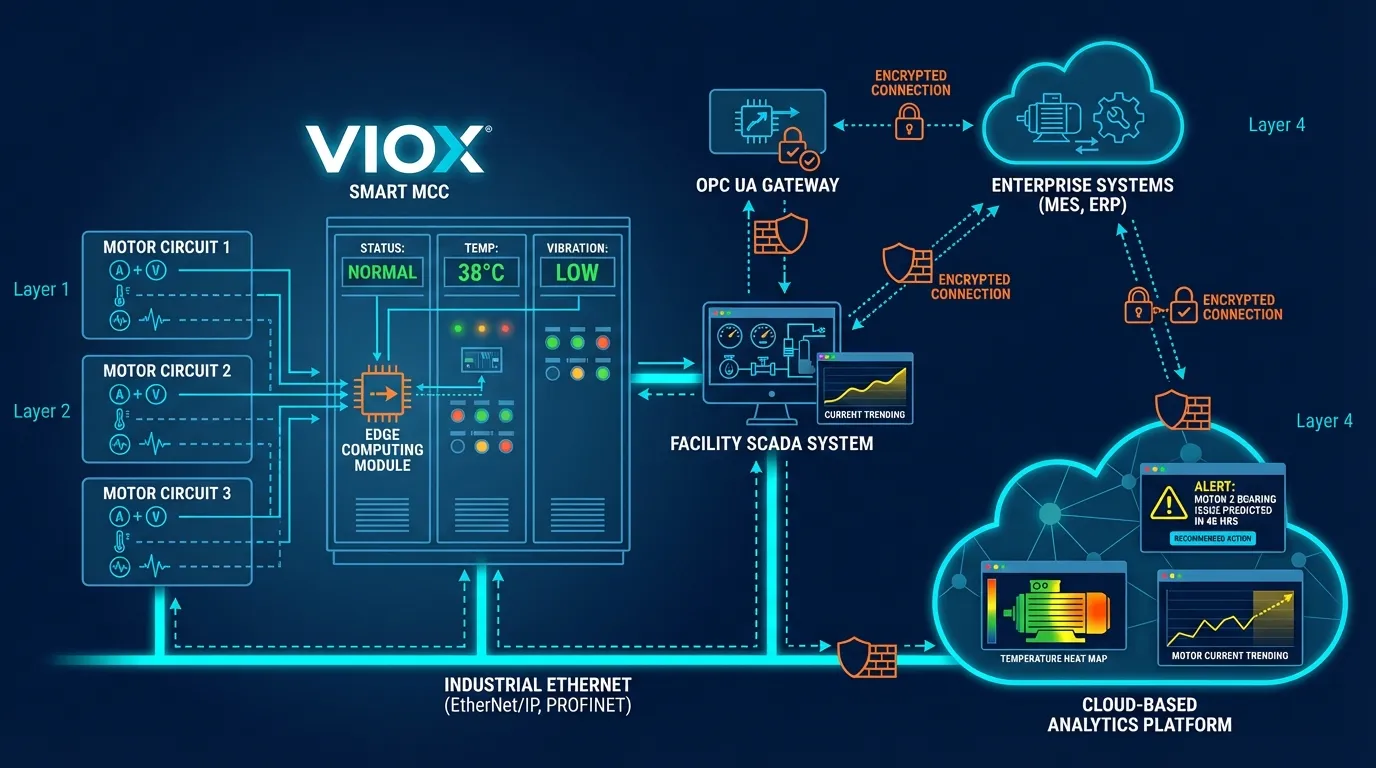
Интеллектуальные панели управления представляют собой эволюцию традиционных систем управления в направлении подключения к Индустрии 4.0 и профилактического обслуживания. Эти передовые панели объединяют датчики IoT, периферийные вычисления и облачное подключение для обеспечения мониторинга производительности в реальном времени, прогнозного анализа отказов и удаленной диагностики.
Возможности интеллектуальной панели
Современные интеллектуальные MCC и панели управления включают в себя мониторинг тока и напряжения в отдельных цепях двигателя, мониторинг температуры критических компонентов и анализ вибрации вращающегося оборудования. Эти данные поступают на аналитические платформы, которые обнаруживают аномалии, указывающие на надвигающиеся отказы — износ подшипников, ухудшение изоляции или механическую расцентровку — что позволяет проводить обслуживание на основе состояния, а не плановое профилактическое обслуживание.
Коммуникационные протоколы составляют основу функциональности интеллектуальной панели. Промышленные стандарты Ethernet (EtherNet/IP, PROFINET, Modbus TCP) обеспечивают высокоскоростную, детерминированную связь между компонентами панели и системами управления верхнего уровня. OPC UA (Open Platform Communications Unified Architecture) обеспечивает безопасный, стандартизированный обмен данными между системами управления и корпоративными ИТ-системами, преодолевая традиционный разрыв между операционными технологиями (OT) и информационными технологиями (IT).
Соображения по внедрению интеллектуальной панели
Внедрение интеллектуальных панелей управления требует тщательного планирования кибербезопасности. Подключенные панели создают потенциальные векторы атак для злоумышленников, стремящихся нарушить работу или украсть интеллектуальную собственность. Стратегии глубокой защиты — сегментация сети, аутентификация, шифрование и обнаружение вторжений — необходимы для защиты промышленных систем управления от киберугроз.
Объем данных, генерируемых интеллектуальными панелями, может перегрузить традиционные системы управления. Одна интеллектуальная MCC, контролирующая 50 двигателей, может генерировать 100 000 точек данных в минуту. Периферийные вычисления — обработка данных локально внутри панели, а не передача всего на центральные серверы — снижают требования к пропускной способности сети и обеспечивают реагирование в реальном времени на критические условия.
Структура выбора панели управления
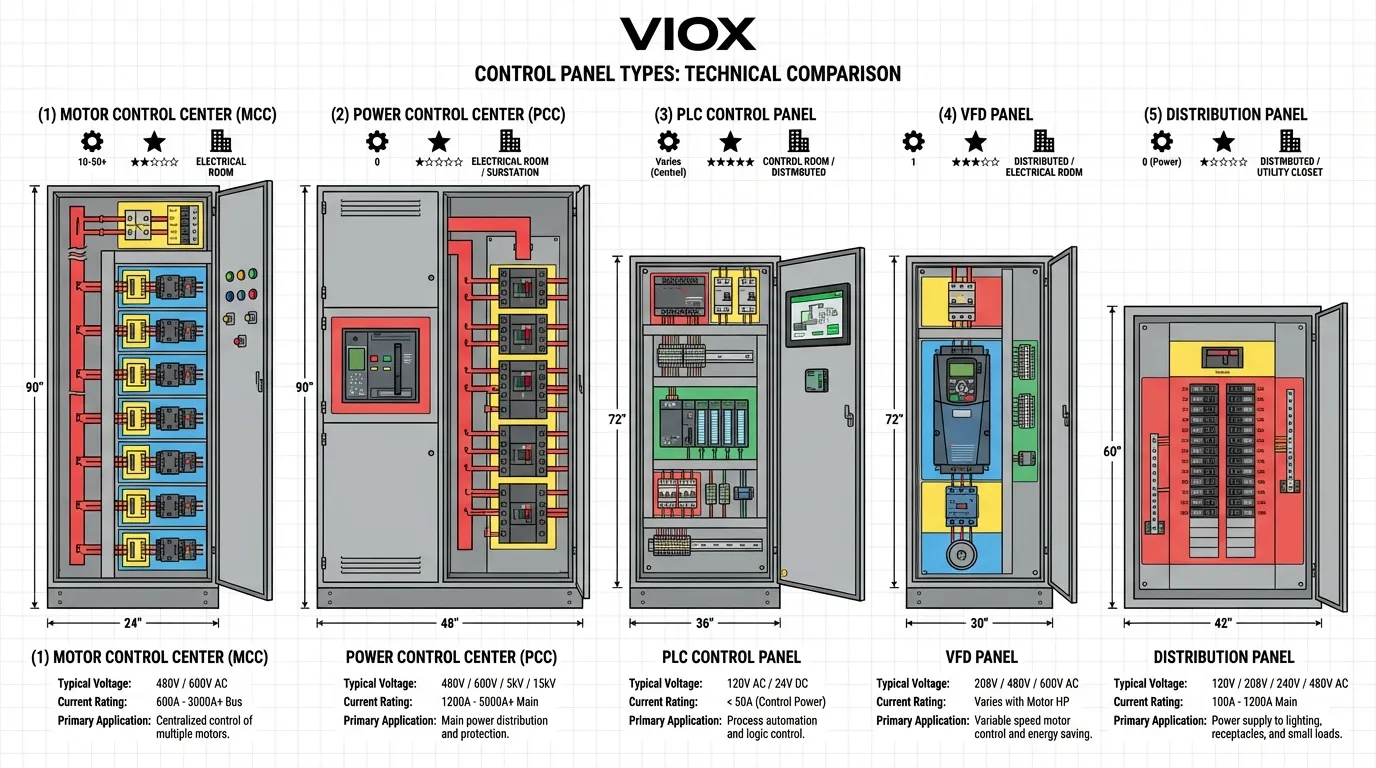
Выбор подходящего типа панели управления требует систематической оценки электрических требований, условий окружающей среды, сложности управления и будущих потребностей в расширении. Следующая структура направляет этот процесс принятия решений.
Анализ электрических спецификаций
Начните с документирования всех электрических нагрузок, которые должна обслуживать панель: мощность и напряжение двигателя, нагрузки освещения и розеток, требования к мощности управления и любое специализированное оборудование. Рассчитайте общую подключенную нагрузку, коэффициенты спроса в соответствии со статьей 220 NEC и требуемую пропускную способность шины с запасом на рост 25%. Определите доступный ток короткого замыкания в точке установки, чтобы указать соответствующие значения SCCR. цитата
Экологическая оценка
Оцените условия установки на соответствие требованиям NEMA или IP. Для внутренних, климатизированных электрощитовых обычно требуются только корпуса NEMA 1 (IP20). Для наружных установок требуется минимум NEMA 3R (IP24) для защиты от атмосферных воздействий. Для зон промывки, агрессивных сред или запыленных сред могут потребоваться корпуса из нержавеющей стали NEMA 4X (IP66) с герметичными кабельными вводами и внутренним климат-контролем. цитата
Оценка сложности управления
Оцените требования к управлению по спектру от простого ручного переключения до сложных автоматизированных последовательностей. Ручное управление двигателем с локальными станциями пуска/останова предполагает отдельные панели управления двигателем или базовые установки MCC. Скоординированные многодвигательные последовательности с блокировкой и обратной связью процесса указывают на требования к панели управления ПЛК. Критически важные для безопасности приложения, требующие резервированных систем управления и сертифицированных функций безопасности, требуют специализированных панелей безопасности ПЛК, соответствующих рейтингам IEC 61508 SIL.
Матрица выбора типа панели
| Профиль нагрузки | Сложность управления | Рекомендуемый тип панели | Ключевые соображения |
|---|---|---|---|
| 10+ двигателей, независимая работа | От ручного до умеренного | Центр управления двигателем (MCC) | Централизованное расположение, требуется выделенное электрощитовое помещение |
| Распределение высокого тока (>800A) | Минимум | PCC против MCC: функциональное различие | Место ввода в эксплуатацию, координация с коммунальными службами |
| Автоматизация процессов, несколько вводов-выводов | Высокий | Панель управления ПЛК | Сетевая архитектура, требования к HMI |
| Двигатели с регулируемой скоростью | Умеренный | Панель VFD | Снижение гармоник, управление температурным режимом |
| Освещение, розетки, небольшие двигатели | Низкий | Распределительная панель | Распределенные местоположения, защита от перенапряжений |
| Интеграция для конкретных машин | Переменная | Пользовательская панель управления | Ограничения по пространству, специальные требования |
| Прогнозное обслуживание, удаленный мониторинг | Высокий | Интеллектуальная панель управления | Кибербезопасность, инфраструктура данных |
Стандарты и требования соответствия
Проектирование и установка панели управления должны соответствовать множеству перекрывающихся стандартов в зависимости от юрисдикции, области применения и требований конечного пользователя. Понимание этих стандартов необходимо для спецификации совместимых систем.
Североамериканские стандарты
UL 508A — Стандарт для промышленных панелей управления — регулирует конструкцию панелей управления в Соединенных Штатах и Канаде. Этот стандарт определяет требования к размеру проводника, защите от перегрузки по току, заземлению, номинальному току короткого замыкания и целостности корпуса. Панели, имеющие маркировку UL 508A, были оценены Underwriters Laboratories и соответствуют этим требованиям.
Статья 409 NEC — Промышленные панели управления — устанавливает требования к установке, включая рабочие зазоры, средства отключения и требования к маркировке. Статья 430 охватывает цепи управления двигателем, а статья 440 — оборудование для кондиционирования воздуха и холодильное оборудование. Соблюдение NEC обеспечивается местными органами власти, имеющими юрисдикцию (AHJ), посредством процессов выдачи разрешений и инспекций.
Международные стандарты
IEC 61439-1 и -2 устанавливают требования к низковольтным комплектным устройствам распределения и управления в международных масштабах. Эти стандарты определяют типовые сборки (полностью протестированные первоначальным производителем) и частично типовые сборки (с использованием протестированных компонентов в новых конфигурациях). Стандарты серии IEC 60947 охватывают отдельные компоненты — автоматические выключатели, контакторы и пускатели двигателей — используемые в панелях управления.
IEC 60204-1 — Безопасность машин: Электрооборудование машин — применяется конкретно к панелям управления, интегрированным с машинами. Этот стандарт касается цепей аварийного останова, конструкции цепей управления и требований к интерфейсу оператора для обеспечения безопасности машины.
Гармонизация и переход
Недавние усилия были направлены на гармонизацию североамериканских и международных стандартов. UL 60947-4-1 заменяет более старый стандарт UL 508 для пускателей двигателей и контакторов, приводя его в соответствие с IEC 60947-4-1. Эта гармонизация упрощает глобальную разработку продуктов и снижает требования к тестированию для производителей, обслуживающих оба рынка. Однако различия сохраняются в практике установки, при этом стандарты NEC и IEC используют разные подходы к определению размера проводника, координации защиты от перегрузки по току и рейтингам корпусов.
Вопросы и ответы
В чем основное различие между панелью управления MCC и ПЛК?
Центр управления двигателями (MCC) обеспечивает коммутацию и защиту питания для нескольких двигателей с помощью контакторов и пускателей двигателей, в то время как панель управления ПЛК содержит программируемый логический контроллер, который выполняет логику автоматизации и командует MCC, когда запускать или останавливать двигатели. MCC управляет распределением питания; ПЛК управляет логикой управления. Многие современные установки интегрируют обе функции в интеллектуальные MCC, объединяя питание и управление в едином узле.
Как определить правильный номинал SCCR для моей панели управления?
Номинальный ток короткого замыкания (SCCR) должен быть равен или превышать доступный ток короткого замыкания в точке установки панели. Рассчитайте доступный ток короткого замыкания, используя данные об импедансе трансформатора энергоснабжающей организации и импедансе проводника от трансформатора до панели. SCCR может быть определен с помощью последовательно соединенных комбинаций (с использованием протестированных комбинаций вышестоящих и нижестоящих защитных устройств) или методов с полной номинальной мощностью (где каждое устройство может прервать полный ток короткого замыкания). Квалифицированный инженер-электрик должен выполнять эти расчеты, поскольку ошибки создают угрозу безопасности для жизни. цитата
Когда следует выбирать панель частотно-регулируемого привода (VFD) вместо стандартного пускателя двигателя MCC?
Выбирайте панели с частотно-регулируемым приводом (VFD) для применений, требующих регулирования скорости или когда двигатели работают на пониженных скоростях в течение длительного времени. Нагрузки с переменным крутящим моментом (насосы, вентиляторы) обеспечивают наибольшую экономию энергии — обычно 20-50% в приложениях с переменным расходом. Приложения с постоянной скоростью не получают никакой выгоды от VFD с точки зрения экономии энергии и могут испытывать чистые потери энергии из-за потерь при преобразовании в VFD. Также рассмотрите VFD для плавного пуска нагрузок с высокой инерцией, чтобы снизить механическое напряжение и продлить срок службы оборудования.
Какой класс защиты (NEMA/IP) необходим для моей панели управления?
Внутренние электрощитовые с контролируемым климатом обычно требуют панели NEMA 1 (IP20). Для наружных установок требуется минимум NEMA 3R (IP24) для защиты от атмосферных воздействий. Зоны промывки требуют NEMA 4X (IP66) с герметичными кабельными вводами. Для опасных зон требуются взрывозащищенные (Class I Division 1) или продуваемые/герметизированные корпуса в соответствии с NFPA 496. В коррозионных средах может потребоваться конструкция из нержавеющей стали независимо от рейтинга NEMA. Проконсультируйтесь с эксплуатационным персоналом объекта, чтобы понять процедуры очистки, условия окружающей среды и любое воздействие химических веществ.
Допустимо ли смешивать компоненты IEC и NEMA в одной и той же панели управления?
Да, но с тщательным вниманием к номинальным характеристикам и координации. Компоненты IEC и NEMA используют разные методологии определения номинальных характеристик — категории использования IEC (AC-3, AC-4) против размеров NEMA (1, 2, 3). Убедитесь, что все компоненты соответствуют требуемым электрическим характеристикам для вашего применения. Для панелей, сертифицированных по UL 508A, все компоненты должны быть признаны или сертифицированы UL. Разработчик панели должен проверить надлежащую координацию между защитными устройствами независимо от стандарта номинальных характеристик. Многие производители теперь предлагают продукты, соответствующие стандартам IEC и NEMA, что упрощает спецификацию.
Сколько места мне следует выделить для центра управления двигателями?
Физические размеры MCC (центра управления двигателями) варьируются в зависимости от производителя, но обычно составляют 50-75 см в глубину, 230 см в высоту и 50-60 см в ширину на вертикальную секцию. Типовая установка может потребовать 4-8 секций (200-480 см в ширину). Добавьте необходимые рабочие зазоры NEC (Национального электротехнического кодекса): минимум 90 см перед MCC, 75 см ширины по центру оборудования и 200 см высоты. Для MCC с напряжением свыше 600 В зазоры увеличиваются в зависимости от напряжения и доступного тока короткого замыкания согласно таблице 110.26(A)(1) NEC.
В чем разница между PCC и распределительной панелью?
Центры управления электропитанием (PCC) обрабатывают распределение высоких токов (800A-6300A) на уровне объекта, получая питание от трансформаторов энергосистемы и распределяя его по нескольким нижестоящим панелям. Распределительные панели обеспечивают распределение на уровне цепей (100A-600A) для освещения, розеток и небольшого оборудования. PCC обычно включают в себя расширенные измерительные приборы и основную защиту цепей; распределительные панели фокусируются на защите ответвлений цепей. Рассматривайте PCC как первичное распределение, а распределительные панели - как вторичное распределение в электрической иерархии.
Нужна ли мне специальная панель управления или подойдет стандартный MCC?
Стандартные MCC (комплектные устройства управления двигателями) хорошо подходят для объектов с несколькими двигателями, требующими независимого управления, где централизованная установка в электрощитовой возможна. Выбирайте заказные панели, когда: (1) ограничения по пространству не позволяют использовать стандартные размеры MCC, (2) тесная интеграция между компонентами питания и управления имеет решающее значение, (3) специальные требования к окружающей среде превышают стандартные рейтинги NEMA, или (4) приложение требует менее 6-8 цепей управления двигателем, где заказные панели оказываются более экономичными, чем частично заполненные MCC.
Какое техническое обслуживание требуется для панелей управления?
Ежегодное техническое обслуживание должно включать: визуальный осмотр на предмет ослабленных соединений и признаков перегрева, тепловизионное обследование для обнаружения горячих точек, указывающих на соединения с высоким сопротивлением, проверку надлежащей работы вентиляции и системы охлаждения, тестирование цепей аварийного останова и предохранительных блокировок, а также очистку от пыли и мусора. Ежеквартальных проверок достаточно для критически важных систем. Документируйте все действия по техническому обслуживанию и данные о тенденциях, чтобы обеспечить профилактическое обслуживание. Заменяйте компоненты, демонстрирующие признаки деградации, до возникновения отказа.
Как интеллектуальные панели управления улучшают работу?
Интеллектуальные панели обеспечивают мониторинг в реальном времени параметров тока, напряжения, мощности и состояния оборудования. Эти данные позволяют проводить профилактическое обслуживание, выявляя износ подшипников, ухудшение изоляции или механические проблемы до возникновения катастрофического отказа. Удаленная диагностика сокращает время поиска и устранения неисправностей на 40-60% по сравнению с традиционными панелями. Мониторинг энергопотребления выявляет неэффективное оборудование и подтверждает инициативы по энергосбережению. Однако для реализации этих преимуществ без создания операционных уязвимостей интеллектуальные панели требуют надежных мер кибербезопасности и инфраструктуры данных.