

Nesta página
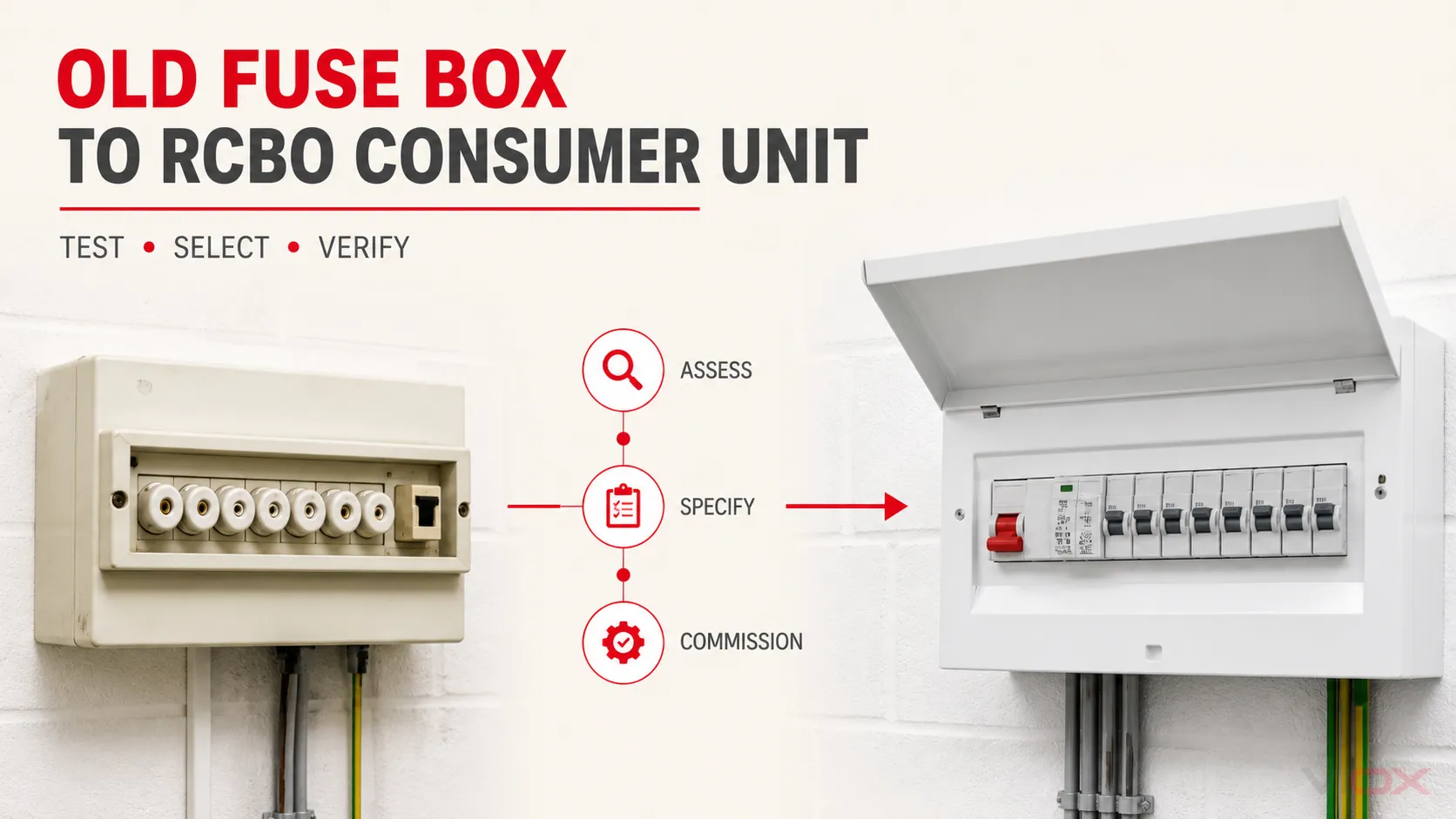
Substituir uma caixa de fusíveis antiga por um quadro de distribuição com RCBO não é uma simples troca de dispositivo por dispositivo. O novo quadro altera a forma como as falhas de corrente residual, sobrecarga e curto-circuito são detectadas, portanto, defeitos na fiação existente que permaneciam ocultos atrás dos fusíveis podem causar o disparo imediato do RCBO.
Uma atualização profissional, portanto, possui três etapas: avaliar a instalação existente, selecionar um conjunto de quadro de distribuição compatível e verificar o trabalho concluído. Se qualquer etapa for ignorada, o resultado pode ser disparos indesejados, proteção contra falhas inadequada, terminais superaquecidos ou uma instalação que não pode ser certificada.
Escopo de segurança: Este artigo destina-se a profissionais da área elétrica e equipes de compras. A substituição do quadro de distribuição envolve trabalho na origem de uma instalação e deve ser realizada, testada e certificada por uma pessoa competente, conforme as normas aplicáveis no país da instalação. Não é um guia de fiação para faça-você-mesmo.
Principais conclusões
- Uma caixa de fusíveis antiga não requer substituição apenas por conter fusíveis religáveis ou de cartucho. A condição, os resultados dos testes, a capacidade e a proteção exigida pelo trabalho proposto determinam se a substituição é justificada.
- Os testes pré-atualização devem identificar defeitos que possam tornar a instalação insegura ou causar o disparo do RCBO.
- Um RCBO protege um circuito contra corrente residual e sobrecorrente, reduzindo o número de circuitos perdidos quando ocorre uma falha.
- As especificações nominais, curva de disparo, tipo de corrente residual, capacidade de interrupção, disposição dos polos e compatibilidade de montagem do RCBO devem ser todas especificadas.
- O quadro de distribuição e seus dispositivos de proteção formam um conjunto verificado. Um disjuntor que se encaixe fisicamente, mas seja de outra família de produtos, não é automaticamente compatível.
- O comissionamento requer testes com instrumentos e documentação, não apenas pressionar o botão de teste de cada RCBO.
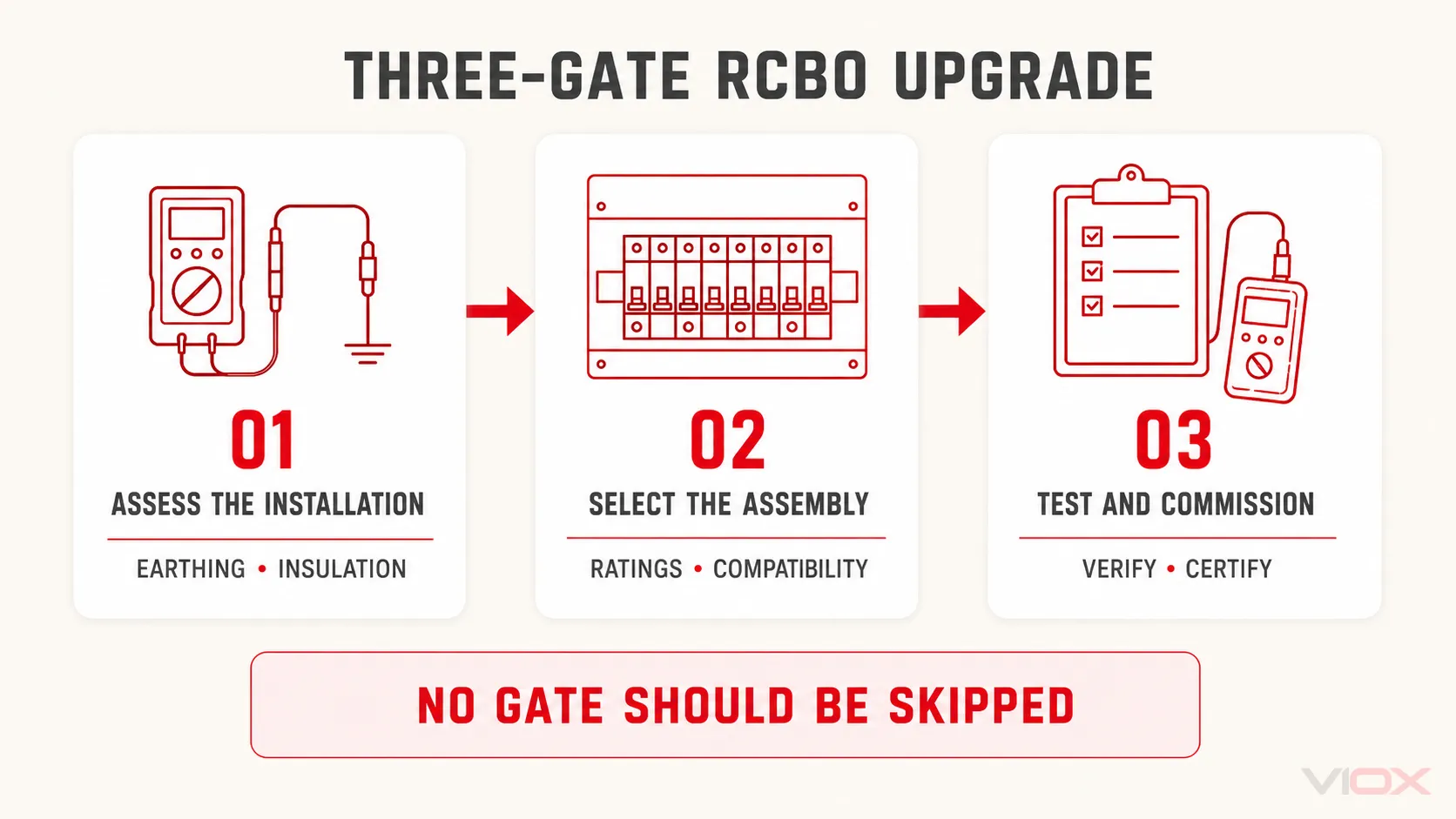
O que muda quando uma caixa de fusíveis é substituída por RCBOs?
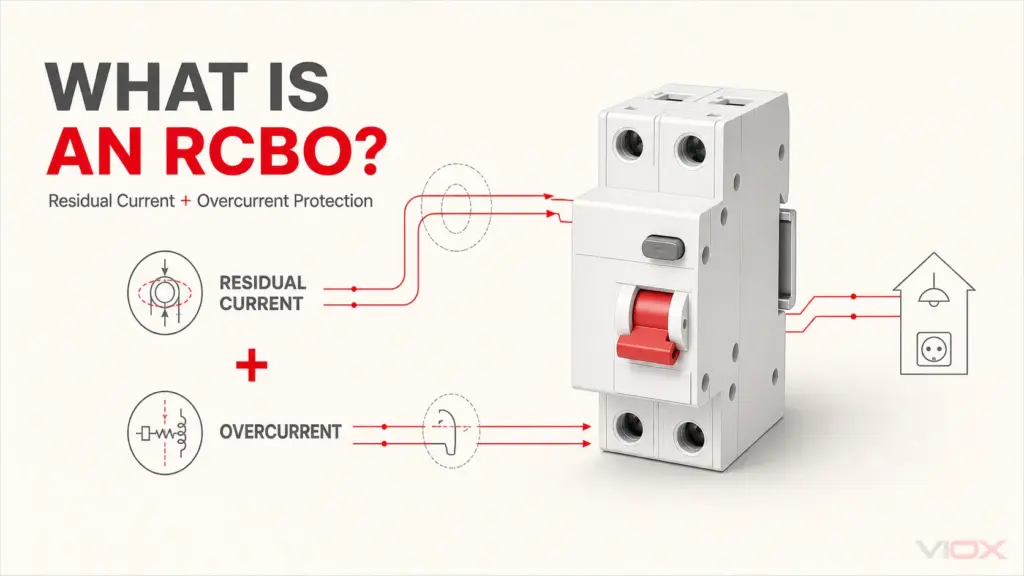
Um fusível fornece proteção contra sobrecorrente. Um RCBO combina duas funções em um único dispositivo:
- Proteção contra sobreintensidades para condições de sobrecarga e curto-circuito.
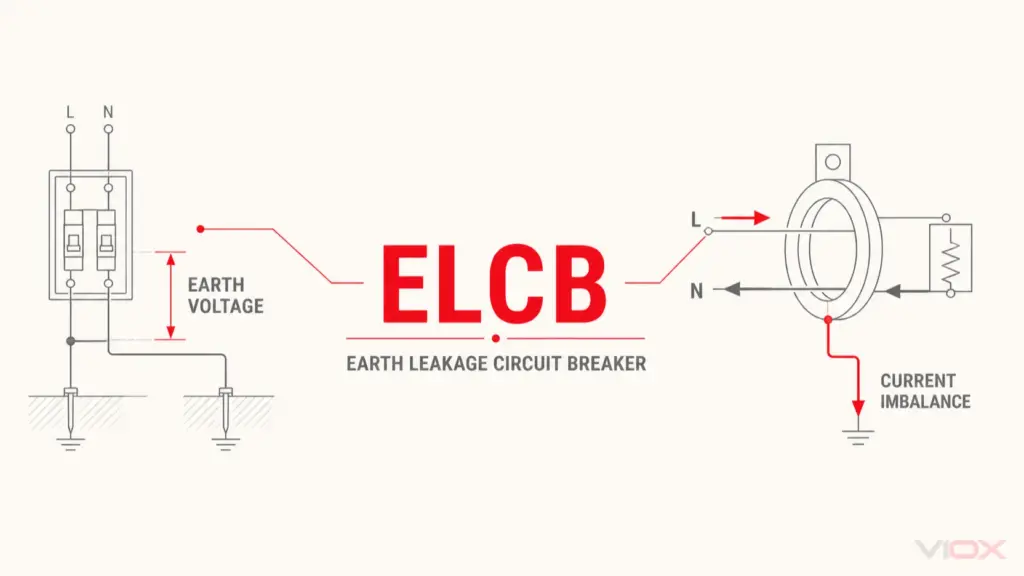
- Proteção contra corrente residual quando a corrente que sai pelo condutor fase não retorna pelo neutro monitorado.
O uso de um RCBO por circuito final melhora a separação de falhas: uma falha de fuga em um circuito não precisa desconectar circuitos não relacionados. Cada dispositivo ainda deve corresponder ao seu circuito, carga, esquema de aterramento, corrente de falta e normas aplicáveis.
Para a terminologia básica do dispositivo, consulte O que é um quadro de distribuição (Consumer Unit)?. Se a decisão de substituição ainda não tiver sido tomada, comece com Como saber se um quadro elétrico antigo precisa de atualização.
Portão 1: Avalie a instalação existente antes de selecionar o quadro
O primeiro erro é solicitar um quadro de distribuição antes de inspecionar os circuitos que serão conectados a ele. Um quadro moderno com RCBO pode expor defeitos que a antiga caixa de fusíveis não detectava.
O Guia de Melhores Práticas 1 da Electrical Safety First recomenda um EICR antes de uma substituição planejada. Onde isso não for aceito, uma inspeção prévia adequada ainda é necessária para identificar perigos imediatos ou potenciais e condições propensas a causar o disparo indesejado do RCD.
| Verificação pré-atualização | O que ela estabelece | Por que isso afeta a atualização do RCBO |
|---|---|---|
| Arranjo de alimentação e aterramento | TN-S, TN-C-S, TT, polaridade da alimentação, condição do condutor de aterramento | Determina os requisitos de proteção contra falhas e seccionamento |
| Equipotencialização principal e condutores de proteção | Presença, continuidade, condição e adequação | Defeitos podem impedir o seccionamento automático seguro |
| Continuidade do condutor de proteção do circuito | Se as partes condutoras expostas possuem um caminho de falha eficaz | Um quadro novo não pode compensar a falta de um CPC |
| Resistência de isolamento | Fuga de corrente em cabos ou equipamentos conectados e deterioração do isolamento | Baixa resistência de isolamento pode causar o disparo do RCBO |
| Continuidade do condutor do circuito em anel | Integridade dos anéis de fase, neutro e CPC | Condutores rompidos ou conectados incorretamente exigem correção |
| Polaridade | Corrigir as relações de fase, neutro e comutação | A polaridade incorreta pode criar riscos de choque e isolamento |
| Impedância do caminho de falha à terra externa | Condição do caminho de falha no lado da alimentação | Suporta a verificação do projeto de proteção |
| Corrente de curto-circuito presumida | Corrente de falta máxima esperada no quadro | Não deve exceder a capacidade do conjunto/dispositivo aplicável |
| Arranjo de neutro existente | Neutros emprestados, compartilhados ou interconectados | Um RCBO de circuito irá atuar se a sua corrente monitorada retornar por outro caminho |
| Carga e capacidade futura | Correntes de circuito, diversidade, circuitos de reserva, planos para VE/FV/bomba de calor | Determina a classificação do quadro, gerenciamento térmico e espaço para expansão |
Se a avaliação encontrar perigo imediato, corrija o defeito ou deixe o circuito afetado isolado. Descobertas comuns incluem isolamento quebradiço, falta de condutores de proteção (CPCs), equipotencialização inadequada, cabos de alimentação superaquecidos e falhas entre neutro e terra. Defeitos no lado da alimentação podem exigir a intervenção da rede de distribuição ou do operador do medidor.
Etapa 2: Especificar a unidade consumidora com RCBO como um conjunto completo
A segunda etapa é a seleção do produto. A norma IEC 61009-1:2024 cobre os requisitos gerais e testes para RCBOs domésticos e similares dentro dos seus limites declarados de tensão, corrente, frequência e capacidade de curto-circuito. A norma IEC 61439-3:2024 aborda quadros de distribuição destinados a serem operados por pessoas comuns.
Estas normas não tornam cada RCBO compatível intercambiável. Os dispositivos, barramento, terminais, invólucro, desempenho de elevação de temperatura e comportamento em falha formam um conjunto verificado, suportado pelas instruções do fabricante.
| Item de seleção | O que verificar |
|---|---|
| Chave geral e capacidade nominal do conjunto | Alimentação, demanda máxima, dispositivo de proteção a montante e limites do fabricante |
| Número de vias | Circuitos existentes mais capacidade de reserva realista sem sobrelotação |
| Corrente nominal do RCBO | Capacidade do cabo, corrente de projeto, método de instalação, condições ambientais e coordenação |
| Curva de sobrecorrente | Corrente de partida esperada e desempenho de desconexão exigido; não selecione B, C ou D por hábito |
| Capacidade de interrupção | Corrente de falta prospectiva e qualquer classificação condicional declarada pelo fabricante |
| Classificação de corrente residual | Requisito de proteção contra falhas/proteção adicional para o circuito específico, não uma suposição universal |
| Tipo de corrente residual | Forma de onda da carga e orientação do fabricante; o Tipo A, F ou B pode ser necessário para equipamentos eletrônicos específicos |
| Disposição dos polos | Comutação necessária e tratamento do neutro para o sistema e o circuito |
| Provisão de SPD | Avaliação de risco de surto aplicável, regras de instalação elétrica e exposição do sistema |
| Provisão de AFDD | Requisitos aplicáveis e avaliação de risco para o circuito e as instalações |
| Compatibilidade de barramentos e dispositivos | Série de RCBO aprovada, geometria do terminal, passo, direção de alimentação e acessórios |
| Invólucro e entradas de cabos | Acessibilidade, condições ambientais, contenção de incêndio, desempenho IP e espaço para cabeamento |
Não selecione apenas pelo encaixe físico
RCBOs com a mesma largura de módulo podem ter diferentes posições de barramento, profundidades de terminal e características térmicas. Utilize dispositivos aprovados e reserve espaço para condutores neutros, conexões de SPD, curvas de cabos, dissipação de calor, etiquetagem e circuitos futuros.
Fluxo de trabalho de substituição profissional
O método exato depende da instalação e das normas nacionais, mas a sequência profissional é consistente:
- Registre e identifique a instalação. Identifique cada circuito, condutor, dispositivo de proteção, carga conhecida e defeito existente antes da desconexão.
- Providencie o isolamento seguro e a notificação. Apenas pessoas autorizadas podem operar equipamentos da concessionária de energia. Na Inglaterra, a substituição de uma caixa de fusíveis ou quadro de distribuição é passível de notificação sob a Part P, a menos que seja utilizada a via de pessoa competente aplicável; outras jurisdições diferem.
- Instale o conjunto verificado. Siga os requisitos do fabricante quanto à orientação de montagem, direção de alimentação, disposição do neutro, entrada de cabos, segregação e invólucro.
- Inspecione e conecte os condutores aos terminais. Rejeite extremidades danificadas pelo calor ou defeituosas e siga a faixa de condutores, preparação, ferramenta e torque de aperto especificados. Não conecte dois cabos em um terminal, a menos que aprovado.
- Identifique o quadro concluído. Identifique as cargas reais do circuito e adicione os avisos necessários para RCBOs, SPDs, múltiplas fontes de alimentação, PV, baterias ou geradores.
Etapa 3: Verificar, testar e comissionar a atualização concluída
Pressionar o botão de teste de um RCBO confirma um caminho funcional interno; isso não comprova a continuidade do circuito, polaridade, condição de isolamento, desempenho do loop de falta ou operação do RCD medida por instrumento.
A sequência exata de teste deve seguir a edição aplicável das normas de instalação elétrica, as medidas de proteção utilizadas e as instruções do instrumento/fabricante. Um escopo típico de verificação inclui:
| Item de verificação | Propósito |
|---|---|
| Continuidade do condutor de proteção | Confirma caminhos de proteção eficazes para partes condutoras expostas |
| Continuidade de circuito em anel | Confirma a integridade do condutor e identifica conexões cruzadas |
| Resistência de isolamento | Detecta defeitos de isolamento e caminhos neutro-terra não intencionais |
| Polaridade | Confirma as conexões corretas e o seccionamento dos condutores fase |
| Polaridade da alimentação e impedância de malha externa | Confirma as características principais da fonte na origem |
| Confirmação da corrente de falta prospectiva | Verifica a base da classificação de falta do quadro e do dispositivo |
| Teste de instrumento do RCBO | Verifica a operação por corrente residual usando o método de teste exigido |
| Operação do botão de teste do RCBO | Confirma o mecanismo funcional integrado do dispositivo |
| Teste funcional | Verifica a comutação, isolamento, indicação de SPD, controles e identificação do circuito |
| Revisão de torque/terminação | Confirma as terminações concluídas em relação aos requisitos documentados |
O instalador deve emitir o certificado de instalação elétrica exigido, cronogramas de inspeção e resultados de testes, diagrama de circuitos e notificação de controle predial, quando aplicável. Quaisquer limitações, circuitos desconectados ou recomendações para trabalhos adicionais devem ser explícitos.
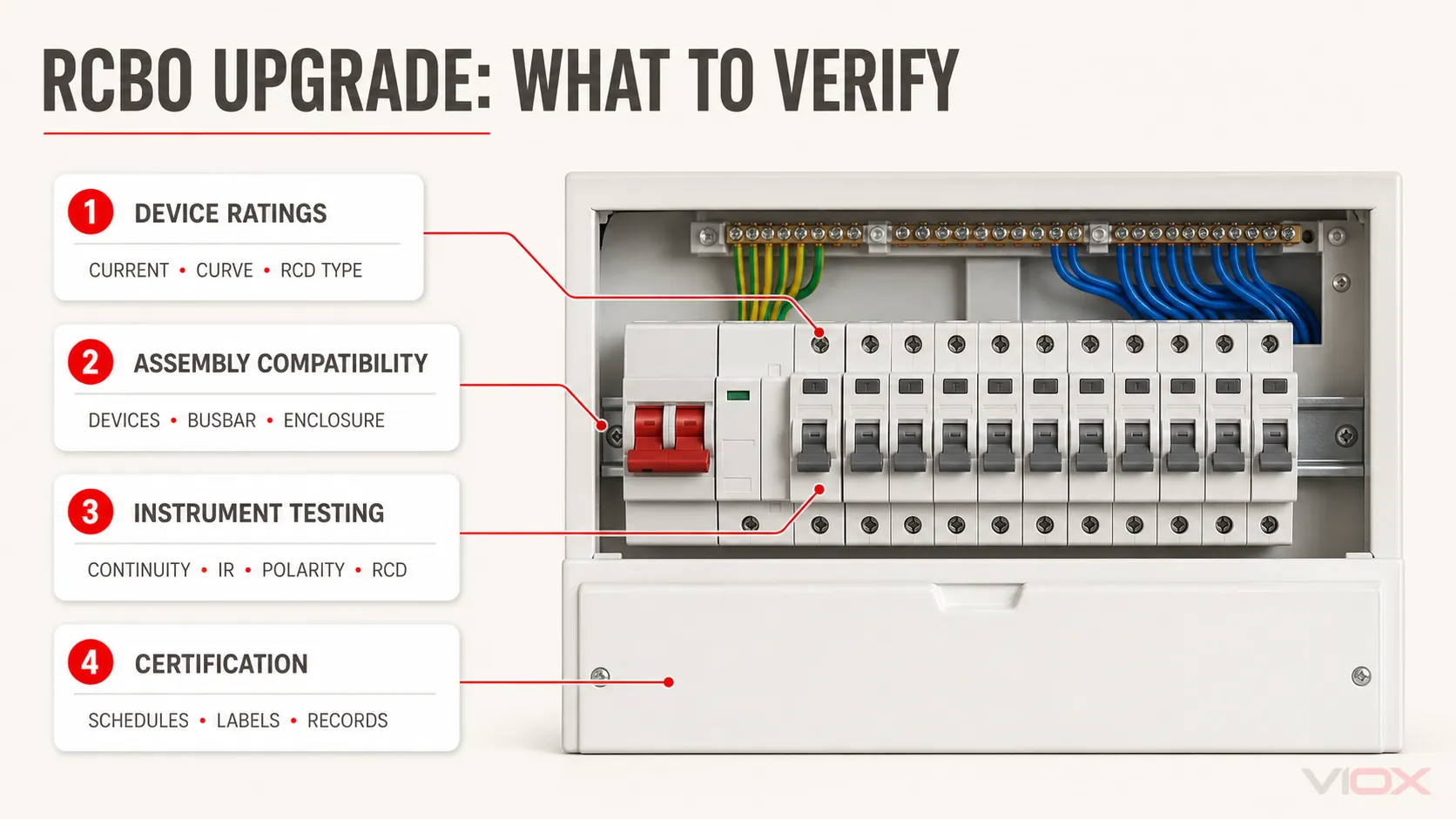
Por que os RCBOs desarmam após a atualização
O desarme imediato geralmente indica um problema de fiação existente em vez de um dispositivo defeituoso:
- Neutros compartilhados ou derivados: a corrente de linha passa por um RCBO, mas retorna por outro caminho de neutro.
- Falhas de neutro para terra: a corrente de retorno é desviada para fora do neutro monitorado.
- Fuga acumulada: várias cargas eletrônicas combinam-se para reduzir a margem de operação. Uma classificação de corrente residual mais alta não é uma solução automática.
- Isolamento danificado ou umidade: emendas antigas, fiação externa, aquecedores, bombas ou aparelhos revelam fuga de corrente quando a proteção contra corrente residual é introduzida.
Isole e diagnostique o circuito afetado em vez de rearme repetidamente o RCBO.
Atualização de RCBO ou religação completa?
A substituição de uma unidade consumidora não renova os cabos, acessórios, sistema de aterramento ou emendas ocultas. Se os testes identificarem deterioração generalizada do isolamento, condutores de proteção ausentes, alterações inseguras ou circuitos que não atendem às condições de proteção exigidas, uma religação parcial ou completa pode ser necessária.
Por outro lado, a fiação antiga não é automaticamente insegura devido à sua idade. A decisão deve ser baseada em evidências e documentada. O guia de avaliação de unidade consumidora antiga aborda esta decisão com mais detalhes.
Lista de verificação de RFQ para quadro de distribuição com RCBO
Para uma cotação precisa ou revisão técnica, forneça:
- país e norma de instalação aplicável;
- tensão de alimentação, frequência, disposição de fases e sistema de aterramento;
- dispositivo de proteção a montante e corrente de falta disponível;
- classificação da entrada e número necessário de saídas;
- cronograma de circuitos com bitola do cabo, corrente de projeto e tipo de carga;
- corrente, curva, classificação de corrente residual e tipo de corrente residual do RCBO necessários;
- Requisitos de SPD e AFDD;
- requisitos de invólucro/IP, restrições de montagem e entrada de cabos;
- condições ambientais, certificações, acessórios, circuitos de reserva e documentação.
Perguntas Frequentes
Todo quadro de distribuição antigo precisa ser substituído?
Não. Fusíveis religáveis ou de cartucho, a idade e um invólucro de plástico não provam, por si só, que a substituição imediata é necessária. A inspeção, os testes, a capacidade, a condição e a proteção necessária para alterações planejadas determinam a ação apropriada.
Um quadro de distribuição com RCBO é melhor do que um quadro com RCD de carga dividida?
Um quadro com RCBO geralmente oferece melhor separação de circuitos, pois uma falha de corrente residual desconecta apenas o circuito afetado. A escolha final também depende do custo, espaço, classificações de falha, projeto de montagem e requisitos do projeto.
Todo circuito deve usar um RCBO de 30 mA?
Não existe uma regra universal que se aplique a todos os circuitos e países. A corrente residual de operação nominal é selecionada de acordo com o objetivo da proteção, o circuito, o local, o esquema de aterramento e as normas aplicáveis. Muitos circuitos finais domésticos exigem proteção adicional de 30 mA, mas o projetista deve verificar cada caso.
Podem ser instalados RCBOs de outra marca se eles se encaixarem no barramento?
O encaixe físico não é evidência suficiente de compatibilidade de montagem. Utilize os dispositivos de proteção e acessórios especificados pelo fabricante do quadro de distribuição, a menos que uma aprovação documentada suporte a combinação alternativa.
Conclusão
A maneira correta de substituir uma caixa de fusíveis antiga por um quadro de distribuição com RCBO é tratar o projeto como uma atualização da instalação, não como uma simples troca de caixa. Teste os circuitos existentes antes da aquisição, selecione o quadro e os RCBOs como um conjunto verificado e conclua o comissionamento completo antes da entrega.
Este processo de três etapas evita as falhas mais comuns: reconectar circuitos inseguros, especificar dispositivos de proteção incompatíveis e energizar um quadro que não foi devidamente verificado.
Para suporte ao projeto, envie à VIOX os detalhes da alimentação, a base da corrente de falta, o cronograma do circuito, os requisitos de RCBO, as restrições do invólucro e os requisitos de certificação aplicáveis.
Fontes e Normas
- IEC 61009-1:2024: RCBOs para uso doméstico e análogo
- IEC 61439-3:2024: Quadros de distribuição destinados a serem operados por pessoas comuns
- Publicações IET: BS 7671:2018+A4:2026
- Electrical Safety First Best Practice Guide 1, Edição 5: Substituição de uma unidade consumidora
- GOV.UK Approved Document P: Segurança elétrica em habitações