သော့ထုတ်ယူမှုများ
- ကမ္ဘာလုံးဆိုင်ရာစံနှုန်း DIN ရထားလမ်းသည် ထိန်းချုပ်ဘောင်များတွင် လျှပ်စစ်အစိတ်အပိုင်းများကို တပ်ဆင်ရန်အတွက် စက်မှုလုပ်ငန်းဆိုင်ရာ စံနှုန်း (IEC 60715) ဖြစ်ပြီး အမှတ်တံဆိပ်အချင်းချင်း တွဲဖက်အသုံးပြုနိုင်ကြောင်း သေချာစေသည်။.
- အဓိက အမျိုးအစားများ အသုံးအများဆုံး ပုံစံမှာ TS35 (ထိပ်ခွ) ရထားလမ်းဖြစ်ပြီး TS15 (အသေးစား) နှင့် TS32 (G-Section) တို့သည် သီးခြားအသုံးချမှုများအတွက်ဖြစ်သည်။.
- ပစ္စည်းကိစ္စများ စံရထားလမ်းများသည် ခိုင်ခံ့မှုအတွက် သွပ်ရည်စိမ်ထားသော သံမဏိဖြစ်ပြီး အလူမီနီယမ်သည် ပေါ့ပါးသော ရွေးချယ်စရာများကို ပေးစွမ်းနိုင်ပြီး သံမဏိသည် သံချေးတက်ခြင်းကို ခံနိုင်ရည်ရှိသည်။.
- စွမ်းဆောင်ရည်- DIN ရထားလမ်းစနစ်များသည် panel တပ်ဆင်ခြင်းထက် တပ်ဆင်ချိန်ကို 50% အထိ လျှော့ချပေးပြီး သိပ်သည်းဆမြင့်မားသော အဖွဲ့အစည်းနှင့် modular လိုက်လျောညီထွေရှိမှုကို ပေးဆောင်ပါသည်။.
- အရေးကြီးသော အသေးစိတ်အချက်များ ရွေးချယ်မှုသည် ဝန်စွမ်းရည်၊ ပတ်ဝန်းကျင်အခြေအနေများနှင့် သင်၏အစိတ်အပိုင်းများ၏ သီးခြားအတိမ်အနက်လိုအပ်ချက်များ (7.5mm vs. 15mm) ပေါ်တွင်မူတည်ပါသည်။.
နိဒါန်း
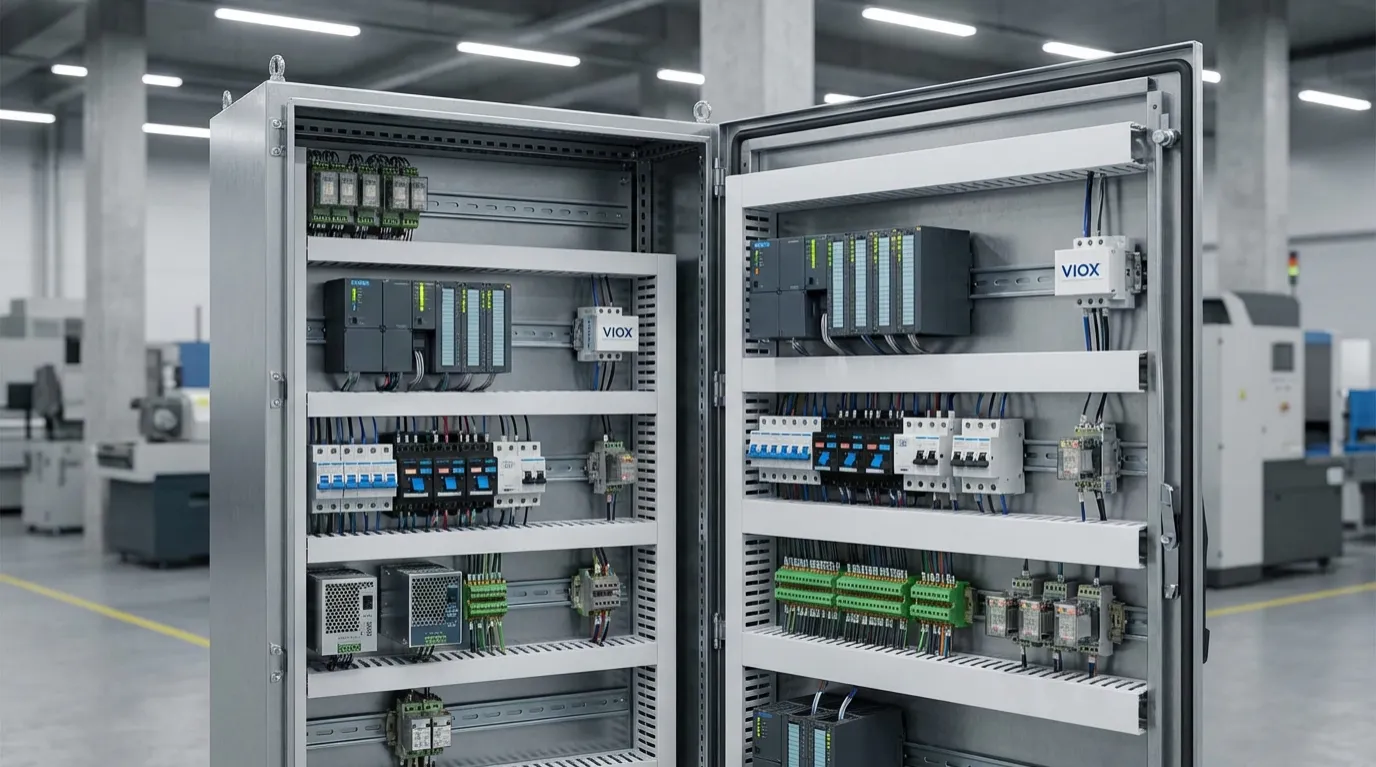
စက်မှုအလိုအလျောက်စနစ်နှင့် လျှပ်စစ်အင်ဂျင်နီယာလောကတွင်၊ အစိတ်အပိုင်းအနည်းငယ်သည် ကမ္ဘာတစ်ဝှမ်းတွင် အရေးပါသော်လည်း အရေးပါပါသည်။ DIN ရထားလမ်း. ကမ္ဘာပေါ်ရှိ မည်သည့်လျှပ်စစ်အိမ်ရာ၊ ထိန်းချုပ်ဘောင် သို့မဟုတ် ဖြန့်ဖြူးရေးသေတ္တာကိုမဆို သင်ဖွင့်ပါက၊ ဤစံပြုထားသော သတ္တုပြားသည် စနစ်၏ဖွဲ့စည်းတည်ဆောက်ပုံအဖြစ် ဆောင်ရွက်နေသည်ကို သင်တွေ့ရဖွယ်ရှိသည်။.
ဒါပေမယ့် DIN ရထားလမ်းဆိုတာ ဘာလဲ၊ ရိုးရှင်းတဲ့ သတ္တုပြားတစ်ခုက လျှပ်စစ်ပစ္စည်းတွေ တပ်ဆင်ဖို့အတွက် ကမ္ဘာလုံးဆိုင်ရာ စံနှုန်းဖြစ်လာတာ ဘယ်လိုလဲ။
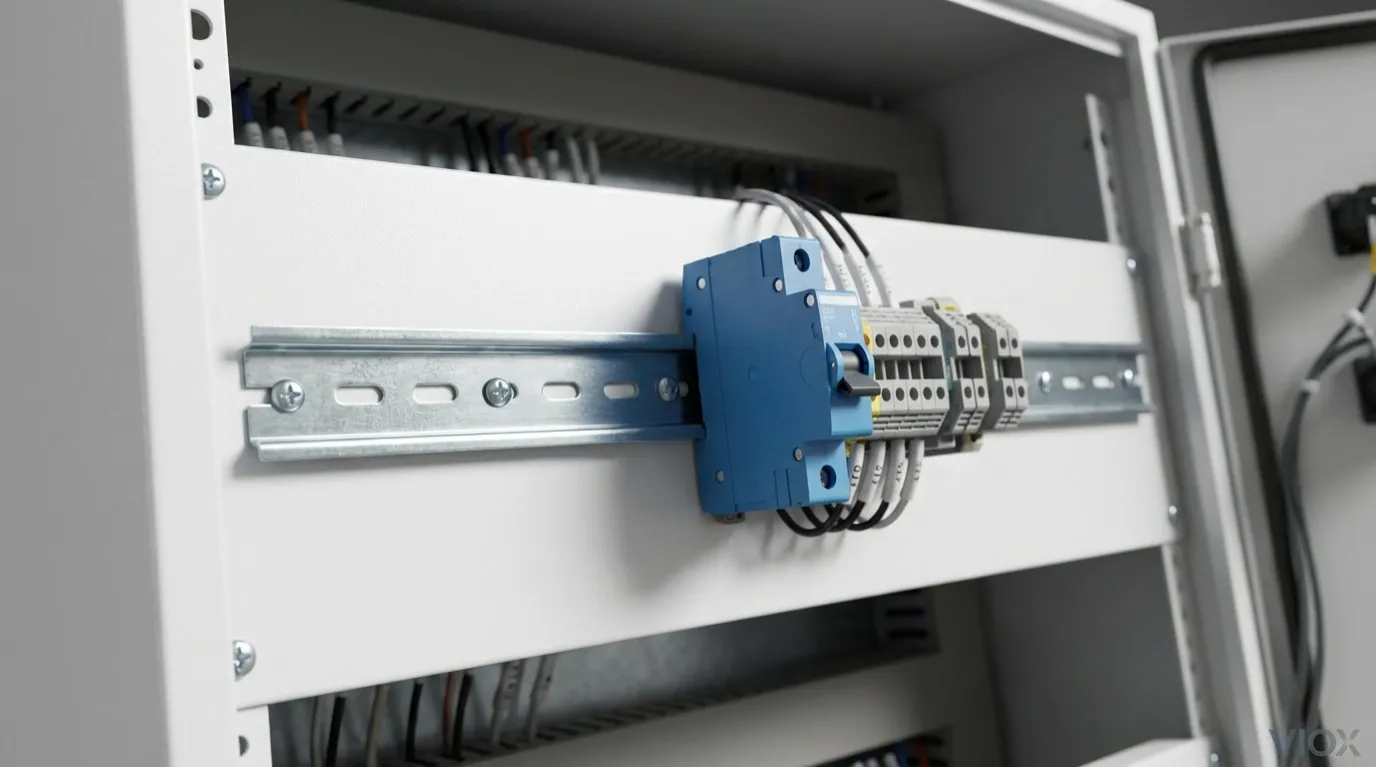
DIN ရထားလမ်းသည် circuit breaker များ၊ terminal block များ၊ programmable logic controllers (PLCs) နှင့် အခြားစက်မှုထိန်းချုပ်ရေးပစ္စည်းများကို စက်ပစ္စည်းထိန်များအတွင်း တပ်ဆင်ရန်အတွက် အသုံးပြုသည့် စံပြုထားသော သတ္တုရထားလမ်းဖြစ်သည်။ ကမ္ဘာလုံးဆိုင်ရာ တပ်ဆင်ပလက်ဖောင်းကို ပံ့ပိုးပေးခြင်းဖြင့် အင်ဂျင်နီယာများသည် မတူညီသော ထုတ်လုပ်သူများ—Siemens, ABB, Schneider သို့မဟုတ် VIOX—မှ အစိတ်အပိုင်းများကို စက်ပိုင်းဆိုင်ရာ တွဲဖက်အသုံးပြုနိုင်မှုအတွက် စိုးရိမ်စရာမလိုဘဲ ရောနှောပေါင်းစပ်နိုင်စေပါသည်။.
ဤလမ်းညွှန်သည် DIN ရထားလမ်းစနစ်များအတွက် နည်းပညာဆိုင်ရာ သတ်မှတ်ချက်များ၊ အမျိုးအစားများနှင့် အကောင်းဆုံးအလေ့အကျင့်များကို စူးစမ်းလေ့လာပြီး သင်၏လျှပ်စစ်ပရောဂျက်များအတွက် မှန်ကန်သောအခြေခံအဆောက်အအုံကို ရွေးချယ်တပ်ဆင်ရာတွင် ကူညီပေးပါသည်။.
DIN ရထားလမ်းဆိုတာဘာလဲ။ အဓိပ္ပါယ်နှင့် မူလအစ
အသုံးအနှုန်း “DIN” ၏ အတိုကောက်ဖြစ်သည်။ Deutsches Institut für Normung (ဂျာမန် စံချိန်စံညွှန်းအဖွဲ့)။ ယခုအခါ ကမ္ဘာလုံးဆိုင်ရာ စံနှုန်းဖြစ်သော်လည်း အယူအဆသည် ၁၉၂၀ ပြည့်လွန်နှစ်များနှောင်းပိုင်းတွင် ဂျာမနီနိုင်ငံ၌ စတင်ခဲ့သည်။.
သမိုင်းဆိုင်ရာအကြောင်းအရာ
ပထမဆုံး DIN ရထားလမ်း သတ်မှတ်ချက်များကို 1928 RWE (Rheinisch-Westfälisches Elektrizitätswerk) မှ ၎င်းတို့၏ အဆောက်အဦများတွင် လျှပ်စစ်အစိတ်အပိုင်းများ တပ်ဆင်ခြင်းကို စံပြုရန်အတွက် တီထွင်ခဲ့သည်။ ယခင်က အစိတ်အပိုင်းများကို panel backplate တွင် တိုက်ရိုက်တပ်ဆင်လေ့ရှိပြီး ပြုပြင်ထိန်းသိမ်းခြင်းနှင့် အစားထိုးခြင်းကို ခက်ခဲစေသည့် အချိန်ကုန်သော လုပ်ငန်းစဉ်ဖြစ်သည်။.
စနစ်သည် အလွန်ထိရောက်သောကြောင့် ဂျာမန်စံနှုန်း DIN 46277 မှ လက်ခံကျင့်သုံးခဲ့သည်။ ၁၉၅၀ နှင့် ၆၀ ပြည့်လွန်နှစ်များတွင် ဥရောပစက်မှုလုပ်ငန်းများ တိုးတက်လာသည်နှင့်အမျှ စံနှုန်းသည် တိုက်ကြီးတစ်ခုလုံးသို့ ပျံ့နှံ့သွားခဲ့ပြီး (EN 50022 ဖြစ်လာသည်) နောက်ဆုံးတွင် နိုင်ငံတကာစံနှုန်းဖြစ်လာခဲ့သည်။ IEC 60715.
ခေတ်မီစံနှုန်း- IEC 60715
ယနေ့ခေတ်တွင် DIN ရထားလမ်းများ ထုတ်လုပ်ခြင်းနှင့် အတိုင်းအတာများကို အဓိကအားဖြင့် အုပ်ချုပ်သည်။ IEC 60715 (ဗို့အားနည်းသော switchgear နှင့် controlgear ၏အတိုင်းအတာများ - ရထားလမ်းများပေါ်တွင် စံပြုတပ်ဆင်ခြင်း) ဤစံနှုန်းသည် ဂျပန်နိုင်ငံတွင် ဝယ်ယူထားသော 35mm breaker သည် ဂျာမနီ သို့မဟုတ် USA တွင် ထုတ်လုပ်ထားသော ရထားလမ်းပေါ်တွင် အံဝင်ခွင်ကျဖြစ်ကြောင်း သေချာစေသည်။.
DIN ရထားလမ်း အမျိုးအစားများနှင့် သတ်မှတ်ချက်များ
“DIN ရထားလမ်း” ကို အသုံးအနှုန်းတစ်ခုအဖြစ် အသုံးပြုလေ့ရှိသော်လည်း မတူညီသော ဝန်စွမ်းရည်များနှင့် အစိတ်အပိုင်းအရွယ်အစားများအတွက် ဒီဇိုင်းထုတ်ထားသော ကွဲပြားခြားနားသော ပုံစံများစွာရှိပါသည်။ မှားယွင်းသော ပုံစံကို ရွေးချယ်ခြင်းသည် စက်ပိုင်းဆိုင်ရာ ချို့ယွင်းမှု သို့မဟုတ် အံဝင်ခွင်ကျဖြစ်မှု ပြဿနာများ ဖြစ်ပေါ်စေနိုင်သည်။.
1. ထိပ်ခွရထားလမ်း (TS35)
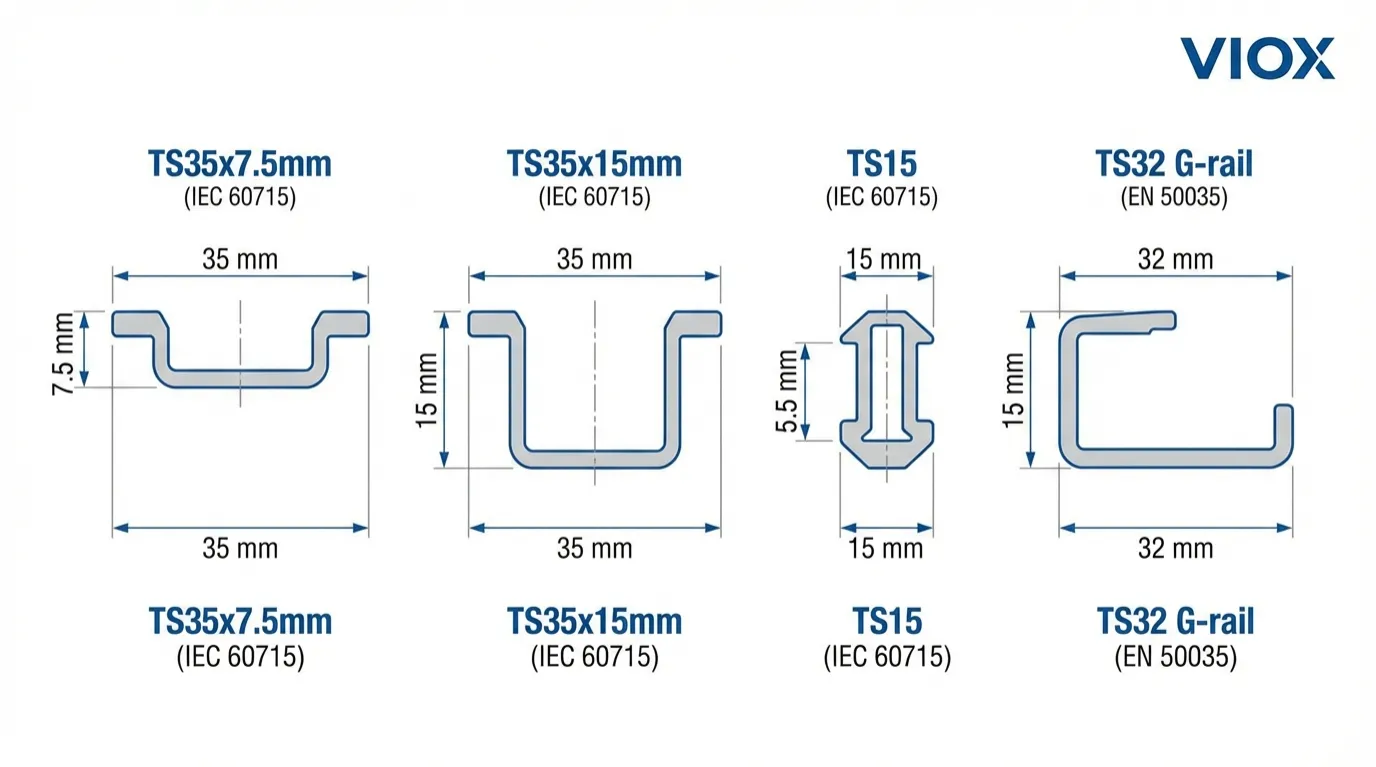
ဟိ TS35 သည် ခေတ်မီတပ်ဆင်မှုအများစုအတွက် စက်မှုလုပ်ငန်း၏ အဓိကအလုပ်ဖြစ်သည်။ ၎င်းတွင် ညီမျှသော ဦးထုပ်ပုံသဏ္ဍာန်ရှိသည်။.
- စံ- IEC 60715 / EN 50022
- အကျယ်- 35mm
- အတိမ်အနက်များ
- 7.5mm (TS35x7.5) အထွေထွေအသုံးချမှုများအတွက် စံအတိမ်အနက် (terminal block များ၊ အသေးစား circuit breaker များ)။.
- 15mm (TS35x15) အပိုခိုင်ခံ့မှုလိုအပ်သော လေးလံသောအစိတ်အပိုင်းများ (ကြီးမားသော PLCs၊ ထရန်စဖော်မာများ) အတွက် အသုံးပြုသည့် “နက်ရှိုင်းသော” ဗားရှင်း။.
- အသုံးပြုမှု- Circuit breaker များ၊ PLCs၊ မော်တာ soft starter များ၊ relay များ။.
2. အသေးစား ထိပ်ခွရထားလမ်း (TS15)
ဟိ TS15 သည် နေရာအလွန်အကန့်အသတ်ရှိသည့်နေရာတွင် အသုံးပြုသည့် ထိပ်ခွရထားလမ်း၏ သေးငယ်သောဗားရှင်းဖြစ်သည်။.
- စံ- IEC 60715 / EN 50045
- အကျယ်- 15mm
- အနက်: 5.5mm
- အသုံးပြုမှု- Junction box များ၊ ကျစ်လစ်သော terminal block များ၊ အသေးစား relay များ။.
3. G-Section ရထားလမ်း (TS32)
ဟိ TS32 သို့မဟုတ် “G-rail” တွင် မညီမျှသော G-ပုံသဏ္ဍာန်ရှိသည်။ TS35 မသိမ်းပိုက်မီ မူလစံနှုန်းဖြစ်သော်လည်း သီးခြားလေးလံသောအသုံးချမှုများအတွက် အသုံးပြုနေဆဲဖြစ်သည်။.
- စံ- EN 50035
- အကျယ်- 32mm
- အင်္ဂါရပ်များ: မညီမျှသောပုံသဏ္ဍာန်သည် အစိတ်အပိုင်းများကို နောက်ပြန်တပ်ဆင်ခြင်းမှ တားဆီးသည် (polarity protection)။ ကွေးသောနှုတ်ခမ်းသည် မြင့်မားသောဖွဲ့စည်းတည်ဆောက်ပုံကို ပေးစွမ်းသည်။.
- အသုံးပြုမှု- လေးလံသော contactor များ၊ ကြီးမားသော ထရန်စဖော်မာများ၊ အမွေအနှစ်ပစ္စည်းများ။.
4. C-Section ရထားလမ်း
C-section ရထားလမ်းများသည် C-ပုံသဏ္ဍာန်ရှိပြီး အီလက်ထရွန်းနစ်အစိတ်အပိုင်းများကို တွဲချိတ်ခြင်းထက် ရုပ်ပိုင်းဆိုင်ရာအထောက်အပံ့အတွက် အသုံးပြုလေ့ရှိသော်လည်း terminal block အချို့ကို ၎င်းတို့အတွက် ဒီဇိုင်းထုတ်ထားသည်။.
- အကျယ်များ 20mm, 30mm, 40mm, 50mm.
- အသုံးပြုမှု- Cable clamp များ၊ ရုပ်ပိုင်းဆိုင်ရာအထောက်အပံ့ဖွဲ့စည်းပုံများ၊ သီးခြား terminal block အမျိုးအစားများ။.
DIN ရထားလမ်း နှိုင်းယှဉ်ဇယား
| အမျိုးအစား | အစွမ်းကုန် | အကျယ် | အတိမ်အနက် | ခံနိုင်ရည် (IEC 60715) | စံ | ပုံမှန်လျှောက်လွှာ |
|---|---|---|---|---|---|---|
| ထိပ်ထုပ် | TS35x7.5 | 35mm | 7.5mm | အကျယ် ±0.2mm, အနက် ±0.15mm | IEC 60715 | MCBs, PLCs, Relays (စံ) |
| အပေါ်ပိုင်းနက်သောဦးထုပ် | TS35x15 | 35mm | 15mm | အကျယ် ±0.2mm, အနက် ±0.2mm | IEC 60715 | လေးလံသောအစိတ်အပိုင်းများ၊ တုန်ခါမှုပတ်ဝန်းကျင်များ |
| Miniature | TS15 | 15mm | 5.5mm | အကျယ် ±0.15mm, အနက် ±0.1mm | IEC 60715 | ကျစ်လစ်သော junction box များ၊ သေးငယ်သော terminals များ |
| G-အပိုင်း | TS32 | 32mm | 15mm | အကျယ် ±0.2mm, အနက် ±0.2mm | EN 50035 | ဝန်အားမြင့်၊ polarity ထိလွယ်သောကိရိယာများ |
သင်၏တိကျသောလိုအပ်ချက်များအတွက်မှန်ကန်သောရထားလမ်းကိုရွေးချယ်ခြင်းနှင့် ပတ်သက်၍ ပိုမိုနက်ရှိုင်းစွာလေ့လာရန်ကျွန်ုပ်တို့၏လမ်းညွှန်ကိုဖတ်ပါ မှန်ကန်သော DIN Rails ကိုဘယ်လိုရွေးချယ်မလဲ.
ပစ္စည်းအသေးစိတ်ဖော်ပြချက်များနှင့်ထုတ်လုပ်ခြင်း
DIN ရထားလမ်း၏ပစ္စည်းသည်၎င်း၏စက်ပိုင်းဆိုင်ရာခိုင်ခံ့မှု၊ သံချေးတက်ခြင်းကိုခံနိုင်ရည်နှင့်လျှပ်စစ်စီးကူးနိုင်စွမ်း (မြေစိုက်အတွက်) ကိုဆုံးဖြတ်သည်။.
၁။ အအေးခံထားသောကာဗွန်သံမဏိ
- အပြီးသတ်- ရှင်းလင်းသောသို့မဟုတ်အဝါရောင် chromate passivation ဖြင့်သွပ်ရည်စိမ်ထားသည်။.
- အကောင်းအဆိုး: ခိုင်ခံ့မှုမြင့်မားခြင်း၊ ကုန်ကျစရိတ်သက်သာခြင်း၊ သံလိုက်ဂုဏ်သတ္တိကောင်းမွန်ခြင်း။.
- အတွက် အကောင်းဆုံး ယေဘုယျစက်မှုအကန့်များ၊ ခြောက်သွေ့သောပတ်ဝန်းကျင်များ။.
၂။ အလူမီနီယမ်
- အပြီးသတ်- Anodized သို့မဟုတ်ရိုးရိုး။.
- အကောင်းအဆိုး: ပေါ့ပါးခြင်း၊ ဖြတ်ရန်လွယ်ကူခြင်း၊ သံလိုက်မပါခြင်း။.
- အတွက် အကောင်းဆုံး သယ်ယူပို့ဆောင်ရေးအသုံးချပရိုဂရမ်များ (ရထားများ၊ ရေကြောင်း)၊ အလေးချိန်ထိလွယ်သော enclosures များ။.
၃။ သံမဏိ (AISI 304/316)
- အပြီးသတ်- ပွတ်သို့မဟုတ်သဘာဝ။.
- အကောင်းအဆိုး: သာလွန်ကောင်းမွန်သောချေးခံနိုင်ရည်။
- အတွက် အကောင်းဆုံး ဓာတုစက်ရုံများ၊ ကမ်းလွန်ရေနံတူးစင်များ၊ အစားအစာထုတ်လုပ်ရေးစက်ရုံများ။.
၄။ ကြေးနီ
- အသုံးပြုမှု- အဓိကအားဖြင့်စက်ပိုင်းဆိုင်ရာအထောက်အပံ့အတွက်ထက်မြေစိုက် busbar (PE rail) အဖြစ်အသုံးပြုသည်။.
- အကောင်းအဆိုး: လျှပ်စစ်စီးကူးနိုင်စွမ်းမြင့်မားခြင်း။.
အပေါက်ပါသော vs. အပေါက်မပါသော
- အပေါက်ပါသော (Slotted): အလျားလိုက်အပေါက်များ / အပေါက်များပါရှိသည်။ တူးဖော်ရန်မလိုအပ်သောကြောင့်တပ်ဆင်ရန်ပိုမိုလွယ်ကူသည်။.
- အပေါက်မပါသော (Solid): တပ်ဆင်သူမှတူးရမည်။ အနည်းငယ်ပိုမိုမြင့်မားသောဖွဲ့စည်းတည်ဆောက်ပုံဆိုင်ရာတင်းကျပ်မှုကိုပေးစွမ်းပြီးရထားလမ်းသည် busbar အဖြစ်ဆောင်ရွက်သောနေရာတွင်အသုံးပြုနိုင်သည်။.
စက်မှုလုပ်ငန်းခွင်များတွင် အသုံးချမှုများ
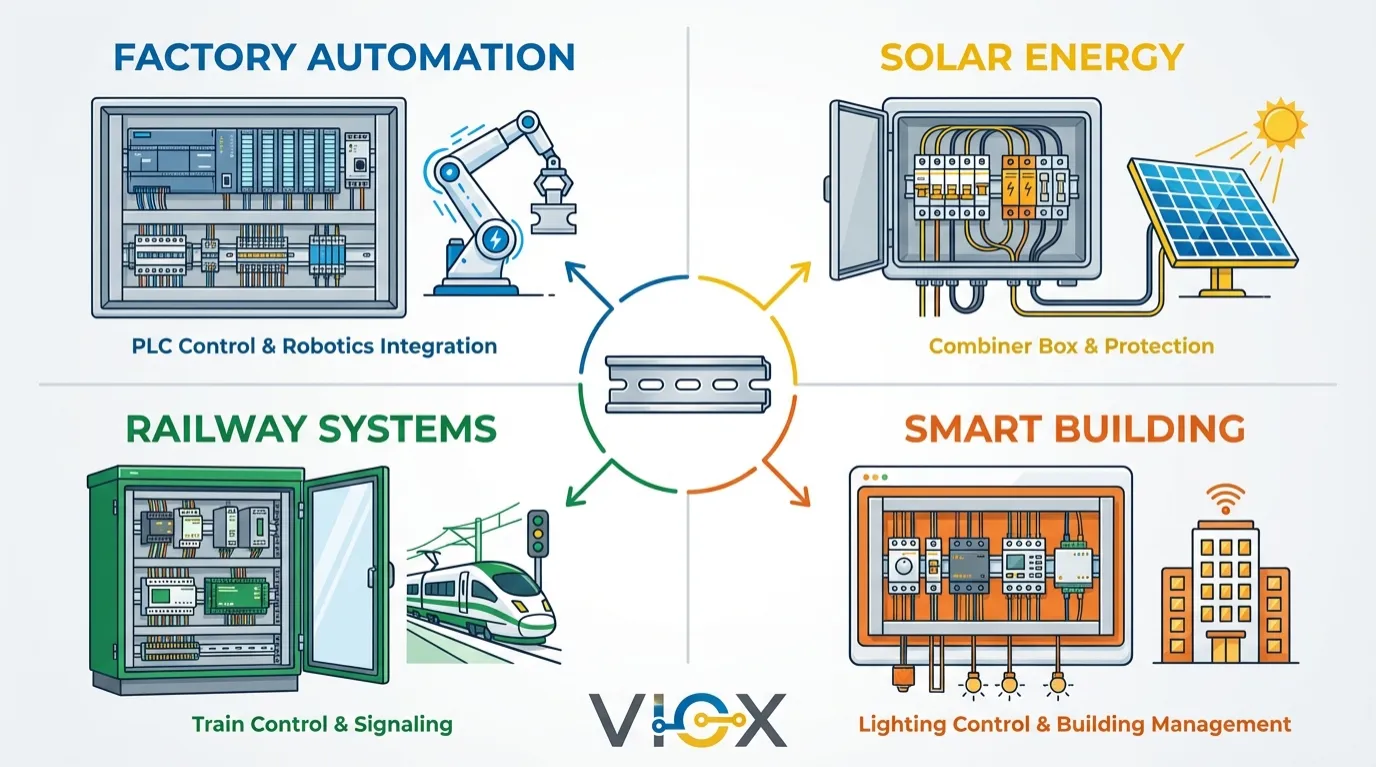
DIN ရထားလမ်းများသည်လျှပ်စစ်ဓာတ်အားကိုအသုံးပြုသောကဏ္ every တိုင်းတွင်မရှိမဖြစ်လိုအပ်လာစေရန်၎င်းတို့၏မူလအစကိုကျော်လွန်သွားခဲ့သည်။.
စက်မှုအလိုအလျောက်စနစ်
ထုတ်လုပ်ရေးစက်ရုံများတွင် DIN ရထားလမ်းများသည်လုပ်ငန်းလည်ပတ်မှု၏ “ဦး နှောက်” ကိုထားရှိသည်။ PLCs, I / O modules များနှင့် power supplies များကိုသိပ်သည်းဆမြင့်မားသောဖွဲ့စည်းပုံများတွင်ရထားလမ်းများပေါ်တွင်တင်ထားသည်။ modularity သည် panel တစ်ခုလုံးကိုအချိန်ကြာမြင့်စွာပိတ်စရာမလိုဘဲပျက်ကွက်သောအစိတ်အပိုင်းများကိုလွယ်ကူစွာအစားထိုးနိုင်သည်။.
ပြန်လည်ပြည့်ဖြိုးမြဲစွမ်းအင်
ဆိုလာပေါင်းစပ်များနှင့်လေတာဘိုင်ထိန်းချုပ်ရေးသေတ္တာများသည် DC disconnects, fuse holders များနှင့် surge protection devices (SPDs) ကိုတပ်ဆင်ရန် DIN ရထားလမ်းများကိုအားကိုးသည်။ TS35x15 ရထားလမ်းများ၏ခိုင်မာသောသဘောသဘာဝသည်လေတာဘိုင်များတွင်တုန်ခါမှုကိုခံနိုင်ရန်လိုအပ်သည်။.
အဆောက်အဦစီမံခန့်ခွဲမှုစနစ်များ (BMS)
ခေတ်မီစမတ်အဆောက်အအုံများသည်အလင်းရောင်ထိန်းချုပ်သူများ၊ HVAC actuators များနှင့်စွမ်းအင်မီတာများကိုတပ်ဆင်ရန် DIN ရထားလမ်းများကိုအသုံးပြုသည်။ DIN ရထားလမ်းတပ်ဆင်ခြင်း၏ကျစ်လစ်သိပ်သည်းသောသဘောသဘာဝသည်ဤရှုပ်ထွေးသောစနစ်များကိုစံလျှပ်စစ်ဗီရိုများတွင်တပ်ဆင်ရန်ခွင့်ပြုသည်။.
ဆက်သွယ်ရေး
၁၉ လက်မထိန်များသည်ဆာဗာများအတွက်စံဖြစ်သော်လည်းအထောက်အပံ့အခြေခံအဆောက်အအုံ - power distribution units (PDUs), fiber splice boxes များနှင့် media converters - များသောအားဖြင့်ထိန်အတွင်း၌ပြောင်းလွယ်ပြင်လွယ်ရှိစေရန် DIN ရထားလမ်းတပ်ဆင်ခြင်းကိုအသုံးပြုသည်။.
တပ်ဆင်ခြင်းလမ်းညွှန်: အဆင့်ဆင့်
စနစ်တကျတပ်ဆင်ခြင်းသည်လျှပ်စစ်စနစ်၏စက်ပိုင်းဆိုင်ရာတည်ငြိမ်မှုနှင့်လုံခြုံမှုအတွက်အရေးကြီးသည်။.
လိုအပ်သောကိရိယာများ
- DIN Rail Cutter (သို့မဟုတ် hacksaw / angle grinder နှင့် deburring tool)
- တိပ်တိုင်းတာခြင်း
- တူးဖော်ခြင်းနှင့်ထိပုတ်ခြင်းဝက်အူများ (အပေါက်မပါသောရထားလမ်းများသို့မဟုတ် panel တပ်ဆင်ခြင်းအတွက်)
- ဝိညာဉ်အဆင့်
- PPE (လက်အိတ်များ၊ ဘေးကင်းလုံခြုံရေးမျက်မှန်များ)
အဆင့် ၁: စီမံကိန်းနှင့်အပြင်အဆင်
သင်၏အစိတ်အပိုင်းများ၏အပြင်အဆင်ကိုဆုံးဖြတ်ပါ။ ကိရိယာများကိုယုတ္တိရှိရှိအုပ်စုဖွဲ့ပါ (ဥပမာ - power input -> protection -> control -> output) ။ ဝါယာကြိုးပြွန်များ (cable trunking) အတွက်အတန်းများအကြားလုံလောက်သောနေရာချန်ထားပါ။.
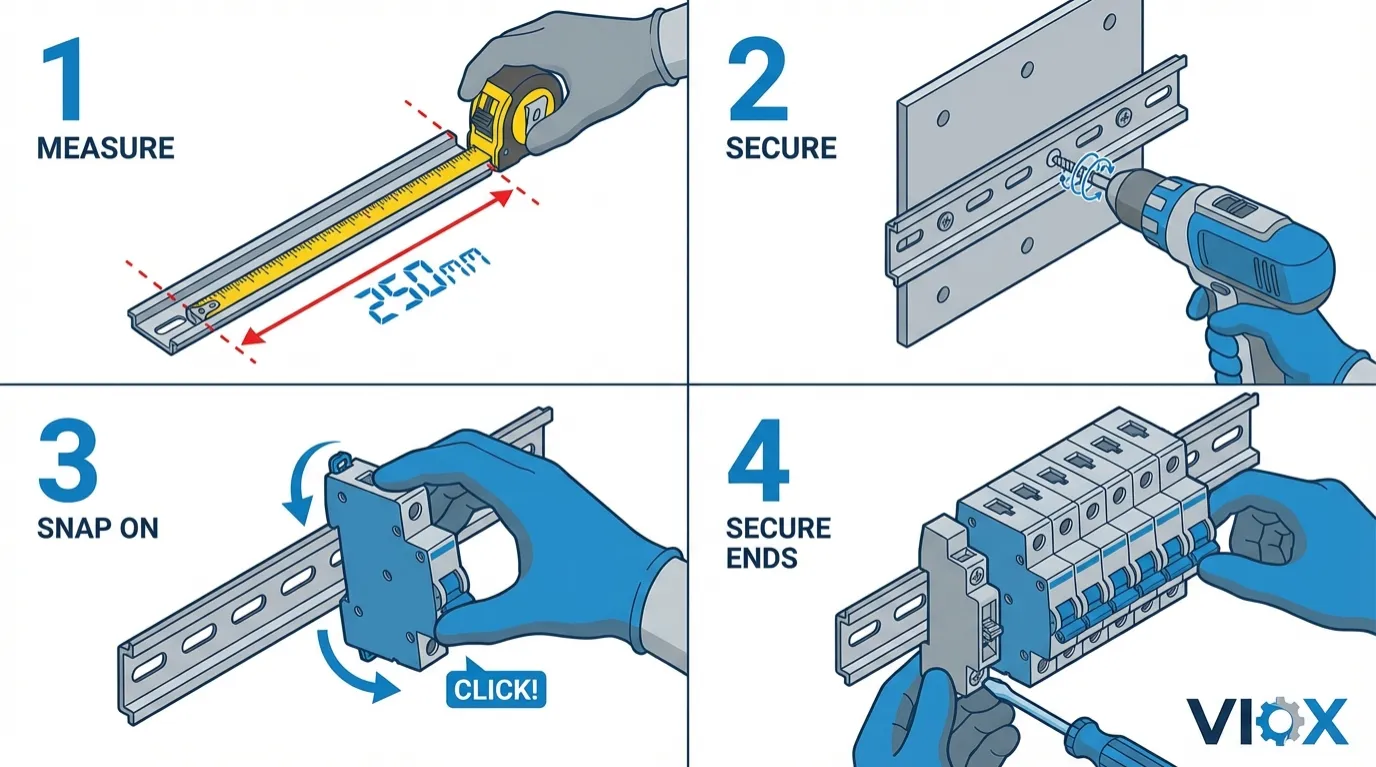
အဆင့် ၂: တိုင်းတာခြင်းနှင့်ဖြတ်တောက်ခြင်း
လိုအပ်သောအရှည်ကိုတိုင်းတာပါ။ လွှကိုအသုံးပြုပါကဖြတ်တောက်ခြင်းသည်စတုရန်းဖြစ်ကြောင်းသေချာပါစေ။. အရေးကြီး: ဖြတ်ထားသောအစွန်းများကိုအမြဲတမ်းဖယ်ရှားပါ။ ချွန်ထက်သောအစွန်းများသည်ဝါယာကြိုးလျှပ်ကာကိုပျက်စီးစေနိုင်သည်သို့မဟုတ်နည်းပညာရှင်များကိုထိခိုက်စေနိုင်သည်။.
အဆင့် ၃: ရထားလမ်းကိုတပ်ဆင်ခြင်း
ရထားလမ်းကို panel backplate သို့လုံခြုံအောင်ထားပါ။.
- အကွာအဝေး- စံ ၃၅ မီလီမီတာရထားလမ်းအတွက်တပ်ဆင်ထားသောဝက်အူများကိုဝန်အောက်တွင်ကွေးခြင်းကိုကာကွယ်ရန်ပုံမှန်အားဖြင့် ၂၀၀ မီလီမီတာမှ ၂၅၀ မီလီမီတာတိုင်းတွင်ထားရှိသည်။.
- ညှိခြင်း: ရထားလမ်းသည်အလျားလိုက်ဖြစ်ကြောင်းသေချာစေရန်စိတ်ဓာတ်အဆင့်ကိုသုံးပါ။.
အဆင့် ၄: မြေစိုက်ခြင်း
DIN ရထားလမ်းကိုမြေစိုက်လမ်းကြောင်း (protective earth) အဖြစ်အသုံးပြုပါကရထားလမ်းနှင့် backplate အကြားထိတွေ့မှုသည် conductive ဖြစ်ကြောင်းသေချာပါစေ (လိုအပ်ပါကဆေးသုတ်ခြင်းကိုဖယ်ရှားပါ) သို့မဟုတ်ရထားလမ်းသို့ညှပ်ထားသောမြေစိုက် terminal block ကိုအသုံးပြုပါ။.
⚠️ အရေးကြီးသောလုံခြုံရေးသတိပေးချက်: DIN ရထားလမ်းများသည် busbars မဟုတ်ပါ။ ၎င်းတို့သည်မြေပြင် (PE - Protective Earth) သို့လမ်းကြောင်းတစ်ခုပေးနိုင်သော်လည်းထုတ်လုပ်သူမှတိတိကျကျဖော်ပြထားခြင်းမရှိပါက၎င်းတို့သည်ဝန်အားစီးဆင်းမှုကိုသယ်ဆောင်ရန် (Neutral သို့မဟုတ် Phase conductors) အတွက်ဒီဇိုင်းပြုလုပ်ထားခြင်းမရှိပါ။ DIN ရထားလမ်းကိုလက်ရှိသယ်ဆောင်သော conductor အဖြစ်အသုံးပြုခြင်းသည်အပူလွန်ကဲခြင်း၊ မီးဘေးအန္တရာယ်နှင့်လျှပ်စစ်ရှော့ခ်ဖြစ်စေနိုင်သည်။ ထုတ်လုပ်သူ၏အသေးစိတ်ဖော်ပြချက်များနှင့်ဒေသဆိုင်ရာလျှပ်စစ်ကုဒ်များကိုအမြဲတမ်းတိုင်ပင်ပါ။.
အဆင့် ၅: အစိတ်အပိုင်းများကိုတပ်ဆင်ခြင်း
အစိတ်အပိုင်းများကိုရထားလမ်းပေါ်သို့တင်ပါ။.
- အပေါ်မှအောက်သို့: အစိတ်အပိုင်း၏အပေါ်ပိုင်းနှုတ်ခမ်းကိုရထားလမ်း၏အပေါ်ပိုင်းအစွန်းပေါ်သို့ချိတ်ပါ၊ ထို့နောက်အောက်ပိုင်းကလစ်သည်နေရာသို့ရောက်သည်အထိတွန်းချပါ။.
- End Stops: Always install end clamps (end stops) at both ends of a component row. This prevents devices from sliding laterally, which can loosen wire connections.
For a comparison of this method versus older techniques, see DIN ရထားလမ်းနှင့် ရိုးရာတပ်ဆင်ခြင်း.
ရွေးချယ်မှုစံနှုန်းများနှင့် အကောင်းဆုံးအလေ့အကျင့်များ
To ensure a long-lasting installation, consider these factors:
1. Load Capacity
For heavy components (transformers, large drives), use TS35x15 (15mm deep) rails or G-rails. Standard 7.5mm rails may twist or sag under heavy weight, potentially causing components to pop off.
2. ပတ်ဝန်းကျင်အခြေအနေများ
- High Humidity/Outdoor: Use Stainless Steel or Aluminum.
- Vibration (e.g., Railway, Marine): Use deep rails (TS35x15) and heavy-duty end stops. Ensure components are rated for vibration and securely locked.
3. Galvanic Compatibility
Avoid mixing dissimilar metals that can cause galvanic corrosion. For example, mounting an aluminum rail directly onto a bare copper surface in a humid environment can lead to corrosion.
DIN ရထားထုတ်လုပ်ရေးလုပ်ငန်းစဉ်
To better understand the precision and quality that goes into DIN rail production, watch this detailed manufacturing overview from VIOX.com:
This video demonstrates the complete manufacturing workflow—from raw material selection and cold rolling to zinc plating and quality inspection—showcasing the industrial processes that ensure DIN rails meet strict IEC 60715 tolerances.
Advantages of DIN Rail Systems
Why has this system dominated the industry for nearly a century?
- Modularity & Flexibility: Components can be added, removed, or rearranged without drilling new holes in the panel.
- အာကာသ စွမ်းဆောင်ရည်- DIN rail components are designed to be compact and mount vertically, maximizing the use of panel real estate.
- လျှော့ချထားသော အလုပ်သမားစရိတ်များ- “Snap-on” mounting is significantly faster than screw-mounting individual devices.
- Standardization: A single rail type supports thousands of products from hundreds of vendors.
- Wiring Organization: Works seamlessly with cable trunking systems for clean, traceable wiring.
For more on the benefits, read ခေတ်မီလျှပ်စစ်တပ်ဆင်မှုများတွင် DIN Rails သည် မရှိမဖြစ်လိုအပ်သော အကြောင်းရင်း ၅ ခု.
အမြဲမေးလေ့ရှိသောမေးခွန်းများ
Can I cut DIN rail to any length?
Yes, DIN rails are typically sold in 1-meter or 2-meter lengths and can be cut to size. It is recommended to use a specialized DIN rail cutter for a clean, burr-free cut, but a hacksaw or angle grinder works if the edges are filed smooth afterwards.
Does the DIN rail carry current?
Generally, no. The rail is for mechanical support. However, it can conduct fault currents if used as a grounding busbar (PE). Never use the rail as a neutral or phase conductor unless using specialized busbar systems designed for that purpose.
⚠️ဘေးကင်းလုံခြုံမှုသတိပေးခြင်း: DIN rails are NOT designed to carry load current. Using them as current-carrying conductors (Neutral/Phase) can cause overheating, fire hazards, and electrical shock. Only use DIN rails for grounding (PE) or mechanical support unless the manufacturer explicitly specifies current-carrying capability.
What is the weight limit of a DIN rail?
There is no single “weight limit” as it depends on the mounting screw spacing and the rail profile. A standard TS35x7.5 rail mounted every 200mm can typically support control components easily. For loads exceeding 5kg per device or high-vibration areas, upgrade to a TS35x15 rail and reduce mounting screw spacing.
Why are some DIN rails slotted?
Slotted (perforated) rails have pre-cut holes to make installation easier (no drilling required). Solid (unperforated) rails are stronger and preferred for heavy loads or where the rail is used for grounding continuity.
What is the difference between DIN rail and Unistrut?
DIN rail is for mounting small electrical components (breakers, relays). Unistrut (strut channel) is a much larger structural system used to support conduits, pipes, and heavy equipment frames.
နိဂုံး
The DIN rail is a testament to the power of standardization. From its humble beginnings in 1920s Germany to its status as the IEC 60715 global standard, it has streamlined the electrical industry, making control panels safer, more organized, and easier to maintain.
Whether you are designing a simple junction box or a complex industrial automation system, understanding the nuances of rail types—from the standard TS35 to the heavy-duty G-rail—is essential. By selecting the right material and profile for your application, you ensure a robust foundation for your electrical infrastructure.
For more insights on pricing and procurement, check out our analysis on Key Factors Influencing DIN Rail Prices.