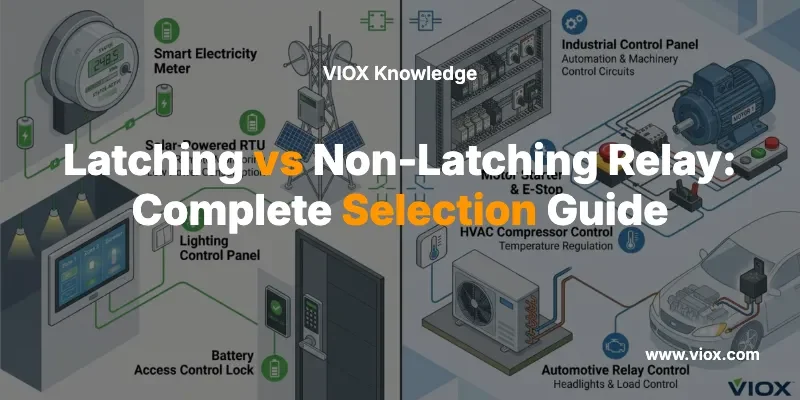
သင်သည် ရွေးချယ်နေပါက Latching Relay (မှတ်သားသော Relay) နှင့် Non-Latching Relay (မှတ်သားမထားသော Relay), တစ်ခုသော ကွာခြားချက်က ကျန်အရာအားလုံးကို ဆုံးဖြတ်ပေးသည်- Latching Relay သည် ထိန်းချုပ်အချက်ပြမှု ဖယ်ရှားပြီးနောက် နောက်ဆုံးထိတွေ့သည့် အနေအထားကို ထိန်းထားနိုင်ပြီး Non-Latching Relay သည် ကွိုင်ပါဝါ ပျောက်ကွယ်သွားသည်နှင့် ၎င်း၏ ပုံမှန်အခြေအနေသို့ ပြန်ရောက်သွားသည်။.
ထိုတစ်ခုတည်းသော အပြုအမူကွာခြားချက်သည် အခြားဒီဇိုင်းဆိုင်ရာ ထည့်သွင်းစဉ်းစားမှုများ — စွမ်းအင်သုံးစွဲမှု၊ ကွိုင်အပူချိန်၊ ပါဝါဆုံးရှုံးမှု တုံ့ပြန်မှု၊ ဝါယာကြိုးရှုပ်ထွေးမှု၊ Fail-Safe အတွေးအခေါ်နှင့် အသုံးချမှု အံဝင်ခွင်ကျဖြစ်မှုတို့အပေါ် သက်ရောက်မှုရှိသည်။ ဤ Relay အမျိုးအစားနှစ်ခု မည်သို့နှင့် အဘယ်ကြောင့် ကွဲပြားသည်ကို တိတိကျကျ နားလည်ခြင်းသည် မှန်ကန်သော ရွေးချယ်မှုအတွက် အမြန်ဆုံးနည်းလမ်းဖြစ်သည်။ နှိုင်းယှဉ်မှုထဲသို့ မ၀င်ရောက်မီ၊ contactors နှင့် relays Switching Applications (ပြောင်းလဲခြင်း အသုံးချမှုများ) တွင် ပိုမိုကျယ်ပြန့်သော အကြောင်းအရာကို နားလည်ရန် အထောက်အကူဖြစ်စေသည်။.
အချုပ်အားဖြင့်-
- ရွေးချယ်ပါ Latching Relay (မှတ်သားသော Relay) (Bistable Relay) ဆားကစ်သည် ကွိုင်ပါဝါ အဆက်မပြတ်မပေးဘဲ ၎င်း၏ နောက်ဆုံးအခြေအနေကို မှတ်သားထားရမည်ဆိုလျှင်.
- ရွေးချယ်ပါ Non-Latching Relay (မှတ်သားမထားသော Relay) (Monostable Relay) ဆားကစ်သည် ပါဝါဆုံးရှုံးသွားတိုင်း သတ်မှတ်ထားသော ပုံမှန်အခြေအနေသို့ ပြန်ရောက်ရမည်ဆိုလျှင်.
သော့ထုတ်ယူမှုများ
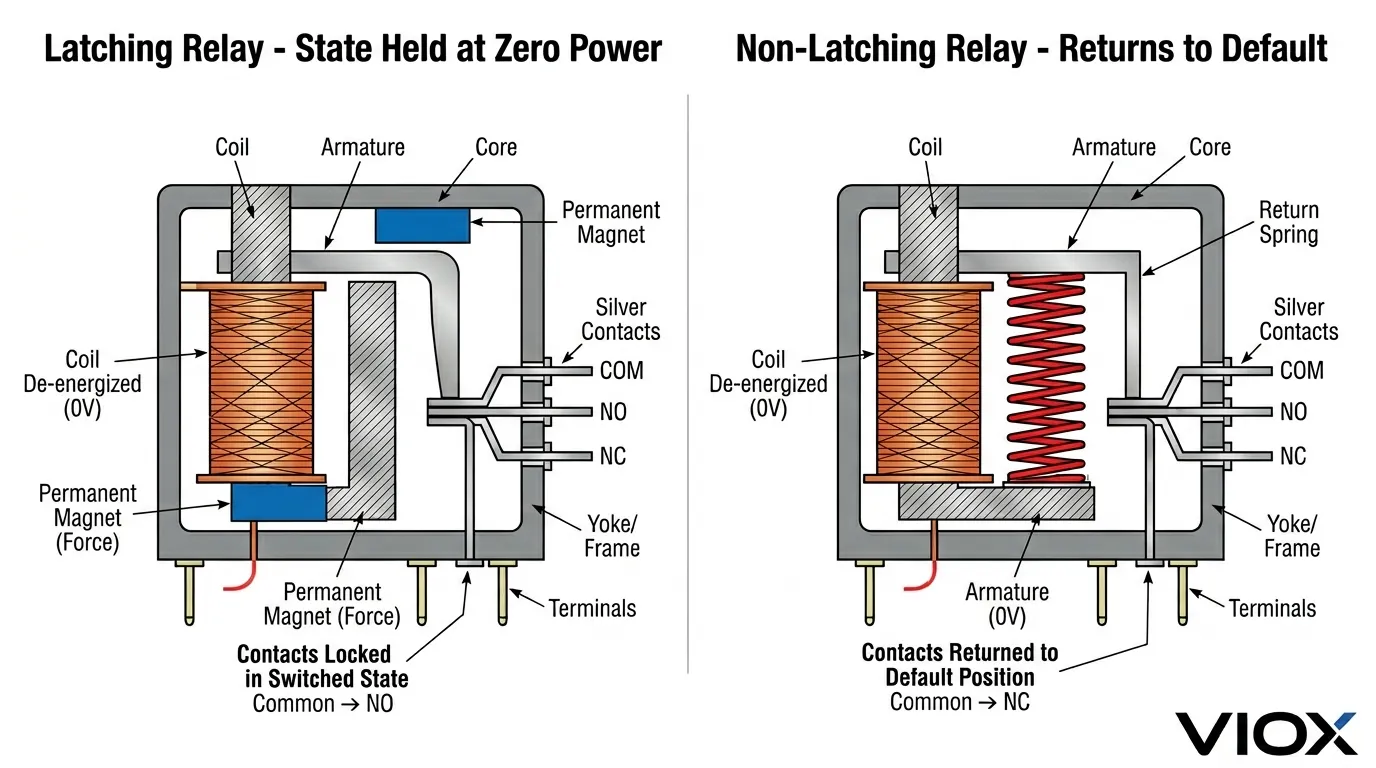
- တဲ့ Latching Relay (မှတ်သားသော Relay) ကွိုင် Pulse ပြီးဆုံးပြီးနောက်၌ပင် ၎င်း၏ နောက်ဆုံးပြောင်းလဲထားသော အနေအထားတွင် ရှိနေသည် — ထိန်းထားရန် ပါဝါမလိုအပ်ပါ။.
- တဲ့ Non-Latching Relay (မှတ်သားမထားသော Relay) ၎င်း၏ အသက်သွင်းထားသော အခြေအနေတွင် ဆက်လက်တည်ရှိရန် ကွိုင်အား အဆက်မပြတ် ပါဝါပေးထားရန် လိုအပ်သည်။.
- Latching Relay များသည် ပါဝါနည်းသော၊ ဘက်ထရီထိခိုက်လွယ်သော၊ အဝေးထိန်းစနစ်နှင့် အခြေအနေမှတ်ဉာဏ် အသုံးချမှုများတွင် ထူးချွန်သည်။.
- Non-Latching Relay များသည် ရိုးရှင်းသော ထိန်းချုပ်မှုယုတ္တိဗေဒ၊ Fail-Safe ပြန်လာသည့် အပြုအမူနှင့် သမားရိုးကျ စက်မှုအကန့်များတွင် ထူးချွန်သည်။.
- မှန်ကန်သော ရွေးချယ်မှုသည် ပါဝါဘတ်ဂျက်၊ အပူချိန်ကန့်သတ်ချက်များ၊ ပြန်လည်သတ်မှတ်သည့် အပြုအမူ၊ ထိန်းချုပ်မှု ဗိသုကာနှင့် ပါဝါဆုံးရှုံးမှုအပေါ် လိုအပ်သော တုံ့ပြန်မှုအပေါ် မူတည်သည်။.
Latching Relay နှင့် Non-Latching Relay- အမြန် နှိုင်းယှဉ်ဇယား
| ရွေးချယ်မှုအချက် | Latching Relay | Non-Latching Relay |
|---|---|---|
| အခြားအမည်များ | Bistable Relay, Keep Relay, Impulse Relay | Monostable Relay, Standard Relay |
| ထိန်းချုပ်ပါဝါ ဖယ်ရှားပြီးနောက် အခြေအနေ | နောက်ဆုံးပြောင်းလဲထားသော အနေအထားတွင် ဆက်လက်တည်ရှိသည်။ | ပုံမှန် (ပါဝါမပေးထားသော) အနေအထားသို့ ပြန်ရောက်သည်။ |
| ကွိုင်ပါဝါ လိုအပ်ချက် | သတ်မှတ်ရန် သို့မဟုတ် ပြန်လည်သတ်မှတ်ရန်အတွက် တိုတောင်းသော Pulse; ထိန်းထားရန် ပါဝါမလိုအပ်ပါ။ | အားဖြည့်ထားသော ကြာချိန်တစ်ခုလုံးအတွက် အဆက်မပြတ် ပါဝါလိုအပ်သည်။ |
| အပူမျိုးဆက် | နည်းသည် — ပြောင်းလဲခြင်း ဖြစ်ရပ်များကြားတွင် ကွိုင်ပိတ်ထားသည်။ | မြင့်သည် — ကွိုင်သည် အားဖြည့်ထားစဉ် အဆက်မပြတ် အပူထုတ်လွှတ်သည်။ |
| ထိန်းချုပ်မှုရှုပ်ထွေးခြင်း | မြင့်သည် — သတ်မှတ်/ပြန်လည်သတ်မှတ် Pulse ယုတ္တိဗေဒ သို့မဟုတ် ဝင်ရိုးပြောင်းပြန်လှန်ရန် လိုအပ်သည်။ | နည်းသည် — ရိုးရှင်းသော On/Off ဗို့အား အသုံးချမှု |
| စက်ပိုင်းဆိုင်ရာဘဝ | Latching ယန္တရား ဝတ်ဆင်မှုကြောင့် ပုံမှန်အားဖြင့် တိုတောင်းသည်။ | စံဒီဇိုင်းများတွင် ပုံမှန်အားဖြင့် ပိုရှည်သည်။ |
| ပါဝါဆုံးရှုံးမှု အပြုအမူ | နောက်ဆုံးအခြေအနေ (မှတ်ဉာဏ်) ကို ထိန်းသိမ်းထားသည်။ | ပုံမှန်အခြေအနေ (အလိုအလျောက် ပြန်လည်သတ်မှတ်ခြင်း) သို့ ကျဆင်းသွားသည်။ |
| အကောင်းဆုံးအံဝင်ခွင်ကျ | စွမ်းအင်ချွေတာသော၊ ဘက်ထရီစနစ်များ၊ Smart Metering၊ အဆောက်အဦ အလိုအလျောက်စနစ်၊ အဝေးမှ ပြောင်းလဲခြင်း | စက်မှုထိန်းချုပ်မှု အကန့်များ၊ ကြားခံဆားကစ်များ၊ အချက်ပေးယုတ္တိဗေဒ၊ မော်တာထိန်းချုပ်မှု အရန်ပစ္စည်းများ |
| ပုံမှန်ကုန်ကျစရိတ် | တစ်ယူနစ်လျှင် အနည်းငယ်ပိုမြင့်သည်။ | ယေဘုယျအားဖြင့် တစ်ယူနစ်လျှင် ပိုနည်းသည်။ |
Latching Relay ဆိုသည်မှာ အဘယ်နည်း။
တဲ့ Latching Relay (မှတ်သားသော Relay) ကွိုင်ပါဝါ လုံးဝဖယ်ရှားပြီးနောက်၌ပင် ၎င်း၏ နောက်ဆုံးပြောင်းလဲထားသော အနေအထားတွင် ဆက်လက်တည်ရှိနေသော လျှပ်စစ်စက်ကိရိယာ ပြောင်းလဲခလုတ်တစ်ခုဖြစ်သည်။ ထိန်းချုပ် Pulse တစ်ခုသည် Contact များကို အနေအထားအသစ်သို့ ရွှေ့ပြီးသည်နှင့် ၎င်းတို့ကို ပြန်ရွှေ့ရန် ဒုတိယ Pulse က ညွှန်ကြားသည်အထိ အကန့်အသတ်မရှိ ထိုနေရာတွင် ရှိနေသည်။.
ဤ “အနေအထားမှတ်ဉာဏ်” သည် သတ်မှတ်အင်္ဂါရပ်ဖြစ်သည်။ Relay သည် ၎င်း၏ Contact များကို ထိန်းထားရန်အတွက် အဆက်မပြတ် လျှပ်စီးကြောင်း မလိုအပ်သောကြောင့် ၎င်းသည် Bistable Device (နှစ်ထပ်တည်ငြိမ်သော ကိရိယာ) သတ်မှတ်ထားသော အနေအထားနှင့် ပြန်လည်သတ်မှတ်ထားသော အနေအထားဟူ၍ တူညီသော တည်ငြိမ်အနားယူသည့် အနေအထားနှစ်ခုရှိသည်။.
Latching Relay မည်သို့အလုပ်လုပ်သနည်း။
လုပ်ဆောင်မှုနိယာမသည် Single-Coil နှင့် Two-Coil ဒီဇိုင်းများအကြား အနည်းငယ်ကွဲပြားသော်လည်း အဓိကအယူအဆမှာ အတူတူပင်ဖြစ်သည်- Permanent Magnet (သံလိုက်အမြဲတမ်း) သို့မဟုတ် Mechanical Latch (စက်ပိုင်းဆိုင်ရာသော့ခတ်) ကွိုင် Pulse ပြီးဆုံးပြီးနောက် Armature ကို နေရာတွင် ထိန်းထားသည်။.
- Pulse အသုံးချသည် — လျှပ်စီးကြောင်းသည် ကွိုင်မှတဆင့် စီးဆင်းပြီး လက်ရှိအခြေအနေ၏ ထိန်းထားနိုင်သောအားကို ကျော်လွှားကာ Armature ကို ရွှေ့ရန် လုံလောက်သော သံလိုက်စက်ကွင်းကို ထုတ်ပေးသည်။.
- Contact များ ပြောင်းလဲသည် — Armature ရွေ့လျားပြီး Contact Set ကို ဖွင့်ခြင်း သို့မဟုတ် ပိတ်ခြင်း ပြုလုပ်သည်။.
- Pulse ဖယ်ရှားသည် — ကွိုင်သည် ပါဝါမရှိတော့သော်လည်း သံလိုက်အမြဲတမ်း (Polarized ဒီဇိုင်းများတွင်) သို့မဟုတ် စက်ပိုင်းဆိုင်ရာသော့ခတ် (စက်ပိုင်းဆိုင်ရာ Latch ဒီဇိုင်းများတွင်) သည် Armature ကို ၎င်း၏ အနေအထားအသစ်တွင် သော့ခတ်ထားသည်။.
- ပါဝါမရှိသော အခြေအနေတွင် ထိန်းထားသည် — Relay သည် စွမ်းအင်သုံးစွဲမှု လုံးဝမရှိဘဲ ထိုအနေအထားတွင် ဆက်လက်တည်ရှိသည်။.
- ဆန့်ကျင်ဘက် Pulse အသုံးချသည် — A reverse-polarity pulse (single-coil) or a pulse on the second coil (two-coil) releases the latch and moves the armature back.
This is why a latching relay is also called a bistable relay, ၊ keep relay, or an impulse relay. It has two stable positions and toggles between them only when it receives an explicit command.
Latching Relay Types: Single-Coil vs Two-Coil
Not all latching relays use the same control method. The two most common architectures are single-coil and two-coil designs, and they have meaningful differences in wiring and control logic.
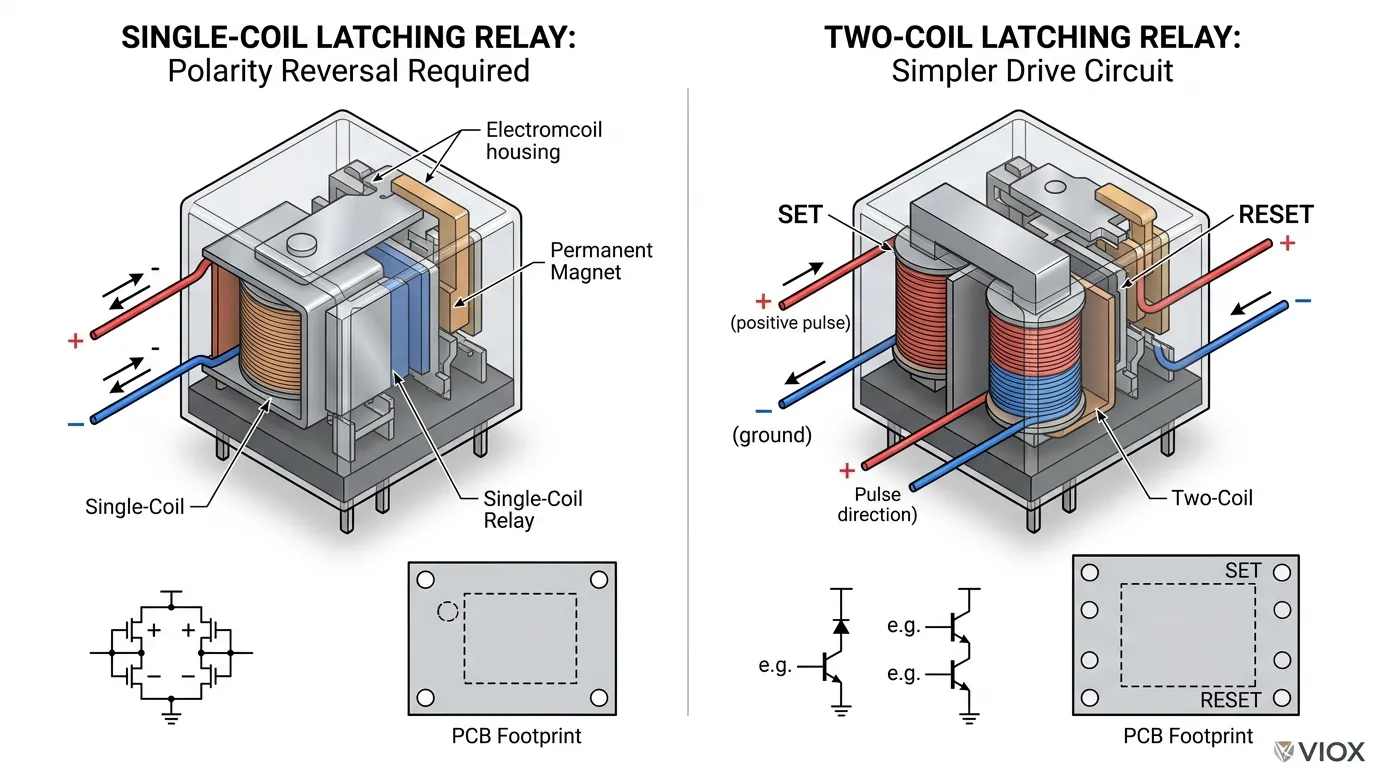
Single-Coil Latching Relay
တဲ့ single-coil latching relay uses one coil for both the set and reset operations. The direction of current through the coil determines which state the relay moves to.
- To set: Apply a positive-polarity pulse to the coil.
- To reset: Apply a reverse-polarity pulse to the same coil.
This design uses fewer pins and less board space, making it popular in compact PCB layouts and consumer electronics. However, the control circuit must be capable of reversing coil polarity — which typically requires an H-bridge driver or a microcontroller output stage with polarity-switching capability.
Two-Coil Latching Relay
တဲ့ two-coil latching relay has two physically separate coils: one dedicated to setting the contacts and one dedicated to resetting them.
- To set: Apply a pulse to the set coil.
- To reset: Apply a pulse to the reset coil.
This approach simplifies the drive circuit because no polarity reversal is needed — each coil only receives current in one direction. In PLC-controlled systems and industrial panel designs, two-coil latching relays are often easier to integrate because each coil can be driven by a separate discrete output.
Which Latching Relay Design Should You Choose?
| Design Factor | Single-Coil Latching Relay | Two-Coil Latching Relay |
|---|---|---|
| Pin count | Fewer (2 coil pins) | More (4 coil pins) |
| Drive circuit | Requires polarity reversal (H-bridge) | Simpler — one direction per coil |
| PCB space | Smaller footprint | Slightly larger |
| PLC integration | More complex output mapping | Easier — one output per coil |
| ကုန်ကျစရိတ် | Usually lower | Usually slightly higher |
ရေရေရာရာ coil suppression techniques are essential for protecting drive circuits from inductive kickback, regardless of which latching relay design you choose.
Why Engineers Choose Latching Relays
The primary motivation is almost always reduced energy consumption. Because the coil draws power only during the brief switching pulse — typically 10 to 100 milliseconds — the long-term power demand approaches zero while the relay holds its state.
Beyond energy savings, latching relays offer:
- Reduced coil heat — No sustained current means no sustained thermal dissipation, which matters in sealed enclosures and high-density layouts.
- State survival through power outages — The last contact position is preserved even during a complete loss of control power, which is critical in metering and safety-lockout applications.
- Lower demand on the power supply — Battery-powered and solar-powered systems benefit significantly from eliminating continuous coil current.
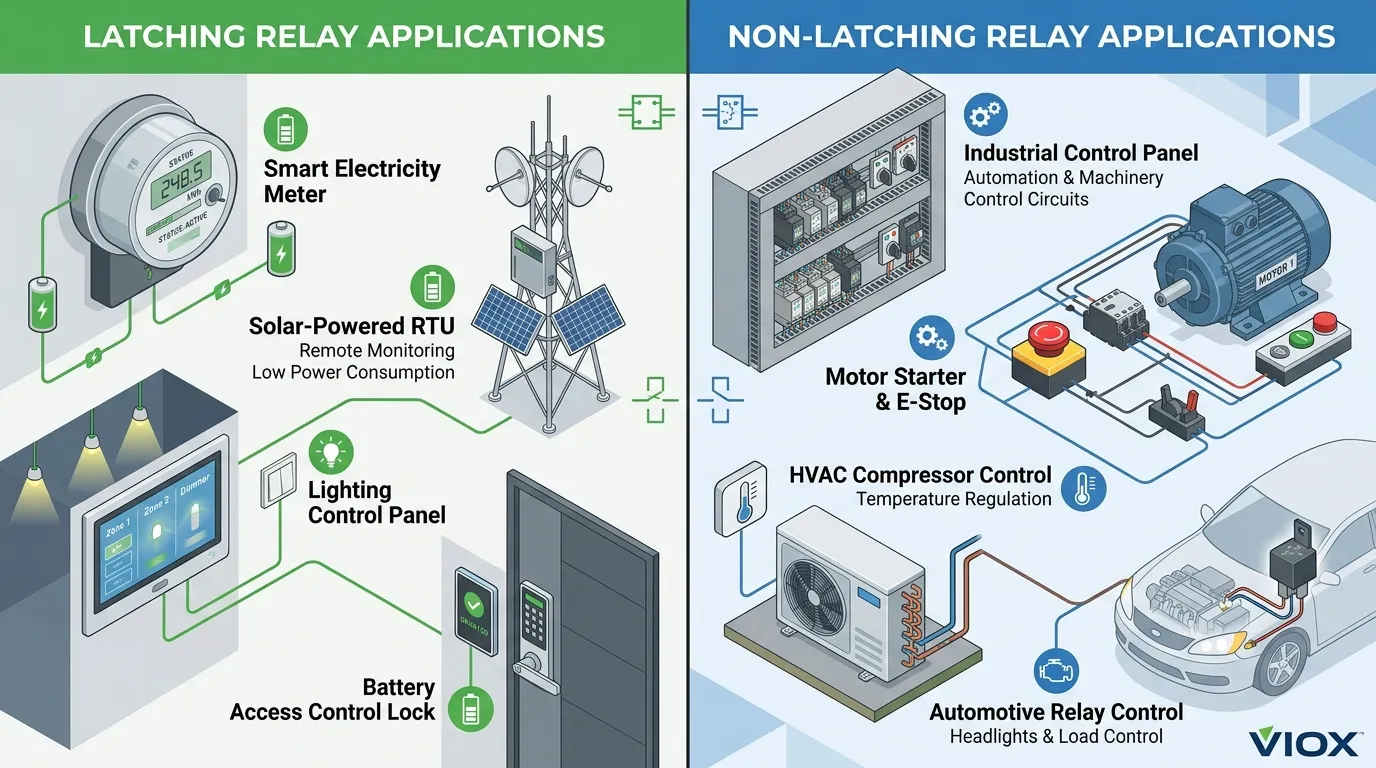
Typical latching relay applications include:
- Smart electricity, gas, and water metering
- Lighting control and dimming systems
- Building automation (HVAC valve control, motorized blinds)
- Remote power switching in telecom and utility infrastructure
- Battery-powered or energy-harvesting devices
- Security system door locks and access control
- Medical devices where state retention is required during battery changeover
For applications requiring timed switching operations in addition to state retention, consider exploring အချိန်နှောင့်နှေးလုပ္လွ်င္ which can complement latching relay functionality.
What Is a Non-Latching Relay?
တဲ့ Non-Latching Relay (မှတ်သားမထားသော Relay) is an electromechanical switch that changes state only while its coil remains energized. The instant coil power is removed, a return spring pushes the armature back to its default (de-energized) position.
This means a non-latching relay has only one stable state — its spring-return position. The energized state is maintained entirely by continuous current flow through the coil. Remove the current, and the contacts always return to the same known position.
This single-stable-state behavior is why non-latching relays are also called monostable relays.
How a Non-Latching Relay Works
The operating principle is straightforward:
- Coil energized — Applying voltage to the coil generates a magnetic field that attracts the armature, moving the contacts from their normal position (typically NC — normally closed) to their energized position (typically NO — normally open).
- State maintained by continuous power — As long as coil voltage is maintained, the magnetic force holds the armature against the spring force, keeping the contacts in the energized position.
- Coil de-energized — When coil voltage is removed, the magnetic field collapses and the return spring pushes the armature back to its resting position.
- Contacts return to default — The relay is now back in its normal state, exactly where it started.
There is no memory, no latch, and no ambiguity. The relay position is always a direct function of whether or not coil power is present.
Why Engineers Choose Non-Latching Relays
Non-latching relays remain the most widely used relay type across industrial, commercial, and consumer applications for several practical reasons:
- Simple control logic — One signal, one state. Apply voltage to energize; remove voltage to de-energize. No pulse timing, no polarity management, no set/reset sequencing.
- Predictable default behavior — On power loss, the relay always returns to the same known state. This inherent fail-safe characteristic is essential in many safety-critical applications.
- Straightforward wiring — A non-latching relay integrates directly with standard PLC outputs, timer contacts, pushbutton stations, and ladder logic without special driver circuits.
- Lower cost and wider availability — Non-latching relays are produced in vastly higher volumes, making them cheaper and available in more form factors, voltage ratings, and contact configurations.
- Longer mechanical life — Without a latching mechanism to wear, standard non-latching relays often achieve higher cycle counts.
Typical non-latching relay applications include:
- Interposing relays in industrial control panels
- Standard machine control logic (motor starters, solenoid drivers)
- Alarm and annunciation circuits
- Timer-controlled processes
- HVAC ဖိအားပေးစက်နှင့် ပန်ကာ ထိန်းချုပ်မှု
- Automotive accessories (headlights, wipers, horn)
- Any circuit where loss of control power should de-energize the output
In safety-critical applications like fire alarm systems, non-latching relays provide essential fail-safe behavior by automatically returning to their default state when control power is lost.
The Key Differences That Actually Affect Relay Selection
1. State Retention After Power Loss
This is the most consequential difference and should be the first question in any selection process.
တဲ့ Latching Relay (မှတ်သားသော Relay) retains its last contact position through a power interruption. When control power returns, the contacts are still in whatever position they were in before the outage. This makes latching relays the natural choice for applications that require non-volatile state memory — smart meters that must keep a disconnect switch open during outages, for example, or lighting scenes that should persist through momentary power flickers.
တဲ့ Non-Latching Relay (မှတ်သားမထားသော Relay) drops out immediately when control power disappears. Every power cycle starts from the same known default state. This is desirable in motor-control circuits, emergency shutdown systems, and any application where an uncontrolled or unknown state after power recovery could create a hazard.
Decision rule: If the answer to “What should happen to the output when control power is lost?” is “stay where it is,” lean toward a latching relay. If the answer is “return to a safe default,” lean toward a non-latching relay.
2. Power Consumption and Energy Efficiency
This difference becomes significant in applications with long hold times or constrained power budgets.
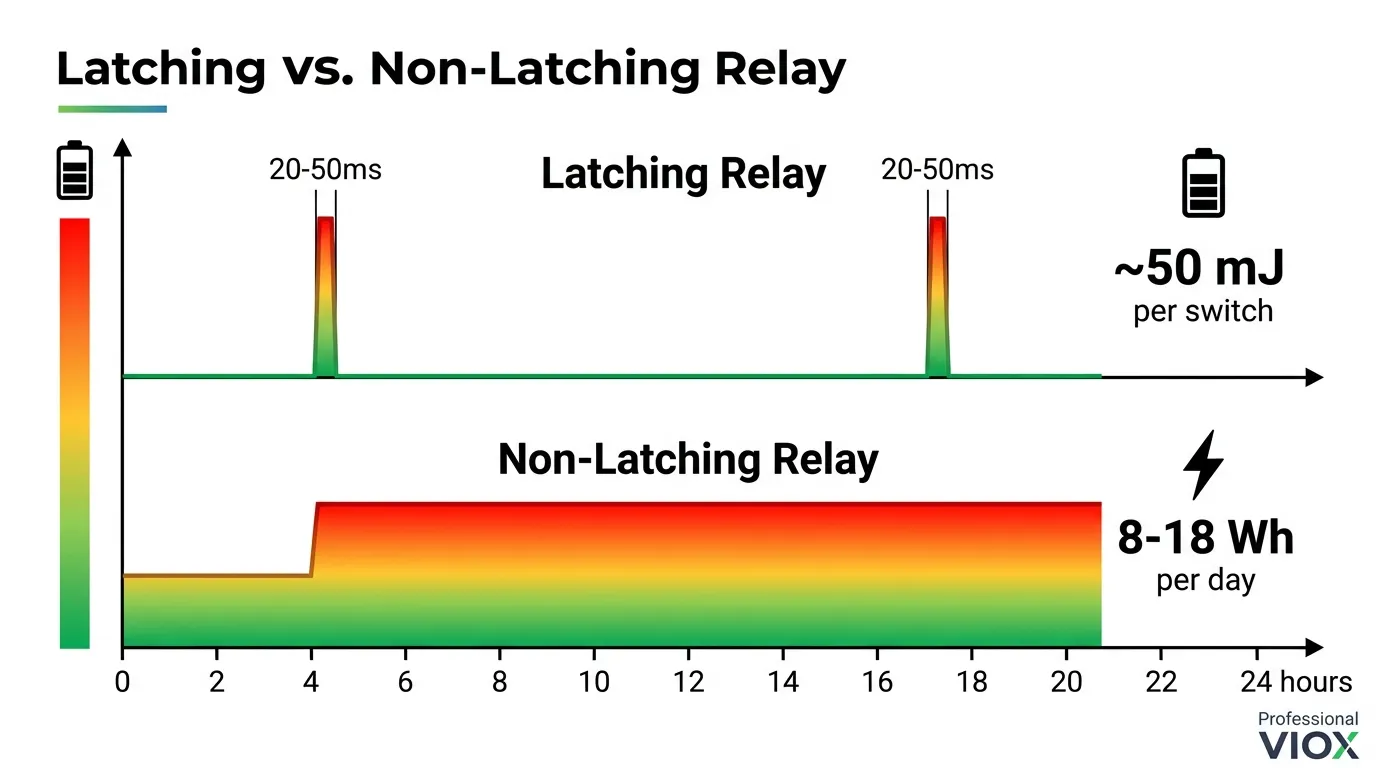
တဲ့ Latching Relay (မှတ်သားသော Relay) consumes coil power only during the switching pulse. For a typical 5V latching relay, the pulse might last 20–50 ms and draw 150–200 mA — a total energy expenditure of roughly 15–50 mJ per switching event. Between events, the coil power consumption is exactly zero.
တဲ့ Non-Latching Relay (မှတ်သားမထားသော Relay) consumes coil power continuously for the entire time it is held in the energized state. A typical 5V non-latching relay might draw 70–150 mA continuously. Over a 24-hour hold period, that amounts to roughly 8–18 Wh of energy — orders of magnitude more than a latching relay switching once per day.
For battery-powered systems, solar-powered remote installations, or energy-harvesting IoT devices, this difference can be the deciding factor in whether the system meets its operational lifetime target.
3. Coil Heat and Thermal Management
Non-latching relays generate continuous heat whenever they are energized. The power dissipated in the coil — typically calculated as $P = I^2 R$ or $P = V^2 / R$ — becomes thermal energy that must be managed.
In a sealed enclosure with limited airflow, multiple continuously energized non-latching relays can raise the internal temperature significantly. This is a real concern in outdoor cabinets, compact DIN-rail assemblies, and high-density PCB designs.
Latching relays largely eliminate this problem. Because the coil is de-energized between switching events, there is no sustained heat source. In thermally constrained designs, this advantage alone can justify the switch to a latching relay — even when power consumption is not a primary concern.
4. Fail-Safe and Safety Considerations
This is the selection factor where the most costly mistakes happen.
Non-latching relays are inherently fail-safe in the drop-out direction. If the coil circuit fails (broken wire, blown fuse, controller fault, power supply failure), the relay returns to its spring-loaded default position. Designers can arrange the circuit so that this default position is the safe condition — motor stopped, valve closed, heater off, alarm activated.
Latching relays do not have an inherent fail-safe direction. They stay wherever they are, regardless of what happens to the control system. If the relay was in the “output on” state when the controller failed, it remains in the “output on” state. This persistence can be valuable (smart meter disconnect) or dangerous (heater left on), depending on the application.
မည်သည့်ဘေးကင်းလုံခြုံရေးနှင့်ဆက်စပ်သည့်အသုံးချမှုအတွက်မဆို latching relay ကိုရွေးချယ်သည့်အခါ၊ ဒီဇိုင်းတွင် relay ကိုလုံခြုံသောအခြေအနေသို့ရောက်ရှိစေရန်လွတ်လပ်သောနည်းလမ်းတစ်ခုပါဝင်ရမည် — watchdog timer၊ hardware safety circuit သို့မဟုတ် redundant shutdown path။.
5. ထိန်းချုပ်နည်းလမ်း၊ ဝါယာကြိုးနှင့် Drive Circuits
Non-latching relay များသည်ဖြစ်နိုင်သမျှအလွယ်ကူဆုံးထိန်းချုပ်မှု interface လိုအပ်သည်- coil ကို switched voltage source သို့ချိတ်ဆက်ပါ။ PLC discrete output၊ transistor၊ mechanical switch သို့မဟုတ်ရိုးရှင်းသော timer contact ပင်လျှင် non-latching relay ကိုတိုက်ရိုက်မောင်းနှင်နိုင်သည်။ ထိန်းချုပ်မှုယုတ္တိသည် ladder logic ၏လိုင်းတစ်ခုသို့မဟုတ် GPIO pin တစ်ခုဖြစ်သည်။.
Latching relay များသည်ပိုမိုရည်ရွယ်သောထိန်းချုပ်မှုဒီဇိုင်းလိုအပ်သည်-
- Single-coil latching relay များ polarity reversal လိုအပ်သည်။ ၎င်းသည်ပုံမှန်အားဖြင့် H-bridge circuit၊ DPDT switch arrangement သို့မဟုတ် dual-output driver ပါသော microcontroller လိုအပ်သည်။ pulse ကြာချိန်ကိုလည်းထိန်းချုပ်ရမည် — တိုလွန်းပါက relay သည်စိတ်ချယုံကြည်စွာပြောင်းနိုင်မည်မဟုတ်ပါ။ ရှည်လွန်းပါက coil သည်အပူလွန်ကဲနိုင်သည်။.
- Two-coil latching relay များ သီးခြားထိန်းချုပ်မှုအချက်ပြနှစ်ခုလိုအပ်သည် — set coil အတွက်တစ်ခုနှင့် reset coil အတွက်တစ်ခု။ PLC စနစ်များတွင်၎င်းသည် relay တစ်ခုလျှင် discrete output နှစ်ခုအစားတစ်ခုခွဲဝေပေးသည်ဟုဆိုလိုသည်။ microcontroller ဒီဇိုင်းများတွင်၎င်းသည် GPIO pin နှစ်ခုနှင့် driver transistor များဟုဆိုလိုသည်။.
ထို့အပြင် power-up သို့မဟုတ် system initialization ပြီးနောက် controller သည် position feedback ယန္တရား (auxiliary contacts သို့မဟုတ် contact-position sensor) မရှိပါက latching relay ၏လက်ရှိအခြေအနေကိုမသိနိုင်ပါ။ ဤ state-uncertainty ပြဿနာသည် non-latching relay များတွင်မရှိပါ။ အဘယ်ကြောင့်ဆိုသော်၎င်းတို့၏အခြေအနေကို coil drive signal မှအမြဲသိသောကြောင့်ဖြစ်သည်။.
သင်၏ application အတွက် coil voltage ကိုရွေးချယ်သည့်အခါနားလည်ခြင်း 12V နှင့် 24V DC relay ထည့်သွင်းစဉ်းစားမှုများ ပါဝါထိရောက်မှုနှင့်ထိန်းချုပ်မှု circuit လိုက်ဖက်ညီမှုအတွက်သင်၏ဒီဇိုင်းကိုအကောင်းဆုံးဖြစ်အောင်ကူညီနိုင်သည်။.
6. စက်ပိုင်းဆိုင်ရာသက်တမ်းနှင့်ယုံကြည်စိတ်ချရမှု
Non-latching relay များတွင်ယေဘုယျအားဖြင့်ပိုမိုရိုးရှင်းသောအတွင်းပိုင်းယန္တရားရှိသည် — coil၊ armature၊ spring နှင့် contacts များ။ ရွေ့လျားနေသောအစိတ်အပိုင်းများနှင့်အမြဲတမ်းသံလိုက်များသို့မဟုတ်စက်ပိုင်းဆိုင်ရာဖမ်းယူမှုများမရှိခြင်းကြောင့်၎င်းတို့သည်စက်ပိုင်းဆိုင်ရာသက်တမ်းပိုမိုမြင့်မားသည်။ ပုံမှန် non-latching relay သတ်မှတ်ချက်များသည်စက်ပိုင်းဆိုင်ရာလုပ်ဆောင်မှု ၁၀ သန်းမှ ၁၀၀ သန်းအထိရှိသည်။.
Latching relay များတွင်နောက်ထပ်အစိတ်အပိုင်းများပါဝင်သည် — အမြဲတမ်းသံလိုက်များ (polarized ဒီဇိုင်းများတွင်) သို့မဟုတ်စက်ပိုင်းဆိုင်ရာ latch ယန္တရားများ — ရှုပ်ထွေးမှုနှင့်ဖြစ်နိုင်ချေရှိသော wear points များကိုထည့်သွင်းသည်။ ခေတ်မီ latching relay များသည်အလွန်ယုံကြည်စိတ်ချရသော်လည်း၎င်းတို့၏အဆင့်သတ်မှတ်ထားသောစက်ပိုင်းဆိုင်ရာသက်တမ်းသည်အထူးသဖြင့် high-cycle application များတွင်ညီမျှသော non-latching ဒီဇိုင်းများထက်အနည်းငယ်နိမ့်သည်။.
အလွန်မြင့်မားသော switching frequency (တစ်ရက်လျှင်ရာနှင့်ချီသောသို့မဟုတ်ထောင်နှင့်ချီသော cycles) ပါသောအသုံးချမှုများအတွက် non-latching relay သည်ပိုမိုကြာရှည်စွာအသုံးပြုနိုင်သည်။ မကြာခဏ switching (တစ်ရက်လျှင် cycles အနည်းငယ်သို့မဟုတ်ထိုထက်နည်း) ပါသောအသုံးချမှုများအတွက်ဤခြားနားချက်သည်များသောအားဖြင့်အရေးမပါပါ။.
7. ကုန်ကျစရိတ်နှင့်ရရှိနိုင်မှု
Non-latching relay များကိုအလွန်များပြားသောပမာဏများဖြင့်ထုတ်လုပ်ပြီးစျေးကွက်ပြိုင်ဆိုင်မှုပိုမိုကျယ်ပြန့်သည်။ ရလဒ်အနေဖြင့်၎င်းတို့သည်ယေဘုယျအားဖြင့်စျေးသက်သာပြီး form factors၊ contact configurations၊ coil voltages နှင့် package styles များတွင်ပိုမိုကျယ်ပြန့်စွာရရှိနိုင်သည်။.
Latching relay များသည်အဓိကထုတ်လုပ်သူများထံမှကျယ်ပြန့်စွာရရှိနိုင်သော်လည်းအနည်းငယ်စျေးနှုန်းမြင့်မားသည် — ပုံမှန်အားဖြင့်နှိုင်းယှဉ်နိုင်သော non-latching relay ထက် 20% မှ 50% ပိုများသည်။ high-volume consumer ထုတ်ကုန်များတွင်ဤကုန်ကျစရိတ်ကွာခြားချက်သည်အရေးကြီးသည်။ low-volume စက်မှုစနစ်များတွင်၎င်းသည်ပုံမှန်အားဖြင့်လုပ်ဆောင်နိုင်စွမ်းလိုအပ်ချက်များအတွက်ဒုတိယဖြစ်သည်။.
Latching Relay နှင့် Non-Latching Relay: အသေးစိတ်အပြုအမူနှိုင်းယှဉ်ခြင်း
| အပြုအမူအခြေအနေ | Latching Relay | Non-Latching Relay |
|---|---|---|
| Relay အားစွမ်းအင်ပေးနေစဉ်ထိန်းချုပ်မှုပါဝါဆုံးရှုံးသွားသည် | Contacts များသည်စွမ်းအင်ပေးထားသောအခြေအနေတွင်ရှိနေသည် | Contacts များသည်ပုံမှန်အနေအထားသို့ပြန်သွားသည် |
| Outage ပြီးနောက်ထိန်းချုပ်မှုပါဝါပြန်လည်ရရှိသည် | Contacts များသည် pre-outage အနေအထားတွင်ရှိနေသည် | Contacts များသည်ပုံမှန်အနေအထားတွင်စတင်သည်။ controller သည်ပြန်လည်စွမ်းအင်ပေးရမည် |
| Controller သည် reset သို့မဟုတ် reboot လုပ်သည် | Contacts များမပြောင်းလဲပါ — controller သည် query သို့မဟုတ် state ကိုယူဆရမည် | Contacts များသည်ပုံမှန်အနေအထားတွင်ရှိသည် — သိထားသောအစအခြေအနေ |
| Coil ဝါယာကြိုးပြတ်သည် | Contacts များသည်နောက်ဆုံးအနေအထားတွင်ရှိနေသည် (ပြောင်းလို့မရပါ) | Contacts များသည်ပုံမှန်အနေအထားသို့ပြန်သွားသည် (fail-safe drop-out) |
| ကြာရှည်စွာကိုင်ထားခြင်း (နာရီမှလအထိ) | Zero coil power၊ zero heat | Continuous coil power၊ continuous heat |
| Rapid cycling (တစ်နာရီလျှင်ထောင်နှင့်ချီသောလုပ်ဆောင်မှုများ) | Cycle တစ်ခုစီသည် ဦး တည်ချက်တစ်ခုစီတွင် pulse တစ်ခုလိုအပ်သည် | Coil voltage ကိုဖွင့်ပြီးပိတ်လိုက်ပါ |
| Battery-powered လုပ်ဆောင်ချက် | အလွန်ကောင်းမွန်သည် — အနည်းဆုံးစွမ်းအင်သုံးစွဲမှု | ညံ့ဖျင်းသည် — စွမ်းအင်ပေးထားသောအခြေအနေတွင်စဉ်ဆက်မပြတ်စုပ်ယူသည် |
Latching Relay ကိုသင်ရွေးချယ်သင့်သည့်အခါ
အသုံးချမှုသည်ဤအခြေအနေတစ်ခုသို့မဟုတ်တစ်ခုထက်ပိုသောအကျိုးကျေးဇူးများရရှိသောအခါ latching relay ကိုရွေးချယ်ပါ။
- Switched state ကိုစဉ်ဆက်မပြတ် coil power မပါဘဲထိန်းသိမ်းထားရမည်။. ဤသည်မှာအဓိကနှင့်အသုံးအများဆုံးအကြောင်းပြချက်ဖြစ်သည်။ relay သည်သတ်မှတ်ထားသောအခြေအနေတွင်ကြာရှည်စွာ (မိနစ်၊ နာရီ၊ ရက်သို့မဟုတ်အမြဲတမ်း) ရှိနေပါက latching relay သည် holding-power အလဟသများကိုဖယ်ရှားပေးသည်။.
- စွမ်းအင်သုံးစွဲမှုကိုအနည်းဆုံးဖြစ်အောင်ပြုလုပ်ရမည်။. Battery-operated devices၊ solar-powered remote telemetry units၊ energy-harvesting sensors နှင့် utility metering equipment အားလုံးသည် latching relay ၏ near-zero standby သုံးစွဲမှုမှအကျိုးကျေးဇူးရရှိသည်။.
- Coil heat သည်ဒီဇိုင်းကန့်သတ်ချက်တစ်ခုဖြစ်သည်။. တံဆိပ်ခတ်ထားသောအကာအရံများ၊ compact PCB assemblies သို့မဟုတ် relay ၏ thermal rating နှင့်နီးကပ်သောအပူချိန်ပတ်ဝန်းကျင်များတွင် sustained coil heating ကိုဖယ်ရှားခြင်းသည်ယုံကြည်စိတ်ချရသောဒီဇိုင်းနှင့် thermally marginal တစ်ခုအကြားခြားနားချက်ဖြစ်နိုင်သည်။.
- Contact state သည် power outages ကိုကျော်လွှားရမည်။. Smart meters၊ safety disconnects နှင့် lighting control systems များသည်ထိန်းချုပ်မှုပါဝါတွင်မည်သည့်အနှောက်အယှက်ကိုမဆိုနောက်ဆုံး command ပေးထားသောအခြေအနေကိုဆက်လက်ထိန်းသိမ်းထားရန်လိုအပ်သည်။.
- ထိန်းချုပ်မှုစနစ်သည် set/reset သို့မဟုတ် pulse-based logic ပတ်လည်တွင်ဒီဇိုင်းပြုလုပ်ထားသည်။. Controller architecture သည် pulse outputs သို့မဟုတ် event-driven switching ကိုထောက်ပံ့ထားပြီးဖြစ်ပါက latching relay များသည်သဘာဝကျကျပေါင်းစပ်ထားသည်။.
သီးခြား Latching Relay Application ဥပမာများ
- Smart metering (လျှပ်စစ်၊ ဓာတ်ငွေ့၊ ရေ): Smart meter အတွင်းရှိ disconnect relay သည် utility မှ command ပေးထားသည့်မည်သည့်အနေအထားတွင်မဆိုရှိနေရမည် — meter သည်ရက်ပေါင်းများစွာ power ဆုံးရှုံးသွားလျှင်ပင်။ latching relay သည်လက်တွေ့ကျသောရွေးချယ်မှုတစ်ခုသာဖြစ်သည်။.
- Lighting control နှင့် building automation: Scene controllers၊ occupancy-based systems နှင့် centralized lighting panels များသည်စွမ်းအင်ကိုအလဟသမဖြစ်စေဘဲထိန်းချုပ်မှု command များအကြား lighting state ကိုထိန်းသိမ်းရန် latching relay များကိုအသုံးပြုသည်။.
- Remote telecom နှင့် utility switching: Cell towers၊ pipeline monitoring stations သို့မဟုတ် electrical substations များတွင်တပ်ဆင်ထားသောပစ္စည်းများသည်မကြာခဏ switching command များဖြင့်ကန့်သတ်ထားသော power budgets တွင်လည်ပတ်သည်။.
- Battery-backed access control: Electronic door locks နှင့် security panels များသည် power transitions သို့မဟုတ် battery အစားထိုးနေစဉ် lock state ကိုထိန်းသိမ်းရန် latching relay များကိုအသုံးပြုသည်။.
- Medical devices: Infusion pumps, patient monitors, and other devices may use latching relays to preserve valve states during battery changeover or brief power interruptions.
When You Should Choose a Non-Latching Relay
Choose a non-latching relay when the application benefits from these conditions:
- The circuit should return to a defined safe state on power loss. If the design philosophy requires that loss of control power automatically de-energizes the output — stopping a motor, closing a valve, activating an alarm — a non-latching relay provides this behavior inherently.
- Simple control logic is a priority. If the system uses basic ladder logic, simple timer contacts, manual switches, or single-output PLCs, a non-latching relay requires the least complex control interface.
- The application follows conventional industrial control practice. Most industrial control panels, machine builders, and system integrators design around non-latching relay behavior. Using the same type reduces training costs, simplifies maintenance, and aligns with established wiring standards.
- The relay will cycle frequently. In applications with high switching rates, non-latching relays typically offer better mechanical endurance and simpler timing requirements.
- Cost is a significant constraint in high-volume production. For consumer products manufactured in tens of thousands of units, the lower per-unit cost of non-latching relays can meaningfully affect the bill of materials.
Specific Non-Latching Relay Application Examples
- Motor control auxiliaries: Interposing relays between a PLC and a motor contactor should drop out when the PLC loses power, ensuring the motor stops.
- Alarm and annunciation circuits: Audible and visual alarms that must activate (or de-activate) in direct response to a control signal, and must silence when the system is de-energized.
- HVAC compressor control: Compressor contactors and fan relays that must de-energize on controller failure to prevent equipment damage.
- Automotive lighting and accessories: Headlight relays, wiper relays, and horn relays all must de-energize when the driver turns off the switch.
- Safety interlock circuits: Emergency stop systems, guard-door interlocks, and light-curtain monitor relays that must force outputs off when the safety circuit is interrupted.
Which Relay Is Better for Industrial Control Panels?
In the majority of industrial control panels, non-latching relays remain the standard choice. The reasons are practical:
- Panel designers expect relays to drop out when control power is lost.
- Maintenance technicians can determine relay state by checking coil voltage.
- Ladder logic and hardwired control circuits are built around the assumption that relay state equals coil state.
- Safety standards (such as IEC 60204-1 for machinery safety) often require that loss of control power results in a safe machine state — which aligns naturally with non-latching behavior.
သို့သော်၊ latching relays are increasingly used in panel designs where:
- A memory function is required (maintaining a lighting scene, holding a process state through a brief power dip).
- Energy consumption in the panel must be reduced (large panels with dozens of continuously energized relays can generate significant heat).
- The panel serves a remote or battery-backed system where continuous coil power is impractical.
The better relay for any given panel is not the one with the more advanced mechanism — it is the one whose behavior aligns with the panel’s control philosophy and safety requirements. For panel installations, modular contactors offer similar space-saving benefits and can be selected based on similar criteria.
ရှောင်ရန်အဖြစ်များသော ရွေးချယ်မှုအမှားများ
Choosing a latching relay only to save power
Power savings are real and valuable, but they must not override the requirements for fail-safe behavior, state-determinism after power-up, or simplicity of maintenance. If the application needs guaranteed drop-out on power loss, a latching relay creates a safety problem that no amount of energy savings can justify.
Choosing a non-latching relay without evaluating long-term hold time
If the relay must remain energized for hours, days, or indefinitely, the continuous coil power and resulting heat may create thermal management problems. In high-ambient-temperature environments or sealed enclosures, this oversight can lead to premature relay failure or enclosure overheating.
Ignoring power-loss behavior during the design phase
Many relay selection mistakes stem from a simple omission: the design team never explicitly defined what should happen to each output when control power is lost and subsequently restored. This question should be answered for every relay output in the system before selecting relay types.
Forgetting the drive-circuit requirements of latching relays
A single-coil latching relay cannot be driven by a simple transistor switch — it needs polarity reversal. A two-coil latching relay needs two output channels per relay. If the controller hardware does not support these requirements, the latching relay selection creates a control-system problem that was entirely avoidable. Learn how to diagnose buzzing coils and other relay failures to avoid similar issues during installation and operation.
Assuming the controller knows the latching relay’s state after power-up
Unlike a non-latching relay (whose state is always “default” at power-up), a latching relay could be in either position after a restart. The control software must either read back the contact state via auxiliary contacts, command a known state during initialization, or be designed to operate correctly regardless of the relay’s starting position. If you suspect relay failure during operation, learn how to test a relay properly to diagnose issues accurately.
Treating all latching relays as interchangeable
Single-coil and two-coil latching relays have fundamentally different wiring requirements, drive circuits, and control-logic implications. Specifying “latching relay” on a bill of materials without specifying the coil configuration can lead to procurement errors and redesign delays.
Practical Selection Checklist
Use this decision framework to guide your relay type selection:
| Question | If Yes → Lean Toward |
|---|---|
| Must the relay keep its last state when control power is removed? | Latching relay |
| Must the circuit return to a default state when control power is lost? | Non-latching relay |
| Is low energy consumption a critical design requirement? | Latching relay |
| ရိုးရှင်းပြီး သမားရိုးကျ ထိန်းချုပ်ဝါယာကြိုးသည် စွမ်းအင်ချွေတာခြင်းထက် ပိုအရေးကြီးပါသလား။ | Non-latching relay |
| ကွိုင်အပူသည် တာဝန်ကြာရှည်သော သို့မဟုတ် အပူချိန်ကန့်သတ်ထားသော အသုံးချမှုတွင် စိုးရိမ်စရာဖြစ်ပါသလား။ | Latching relay |
| ဘေးကင်းလုံခြုံရေးဆိုင်ရာ ခွဲခြမ်းစိတ်ဖြာမှုအရ fail-safe drop-out အပြုအမူ လိုအပ်ပါသလား။ | Non-latching relay |
| စနစ်သည် ဘက်ထရီဖြင့် ပါဝါပေးထားခြင်း သို့မဟုတ် စွမ်းအင်စုဆောင်းခြင်းဖြစ်ပါသလား။ | Latching relay |
| ထိန်းချုပ်စနစ်တွင် ရိုးရှင်းသော on/off outputs များသာ ရရှိနိုင်ပါသလား။ | Non-latching relay |
| ပါဝါဖွင့်ပြီးပြီးချင်း relay state သည် သေချာပေါက်ဖြစ်ရမည်လား။ | Non-latching relay |
| အပလီကေးရှင်းသည် မကြာခဏပြောင်းသော်လည်း ကြာရှည်စွာ ကိုင်ထားရပါသလား။ | Latching relay |
နိဂုံး
တစ်ခုကြားရွေးချယ်မှု Latching Relay (မှတ်သားသော Relay) နှင့် Non-Latching Relay (မှတ်သားမထားသော Relay) နောက်ဆုံးတွင် မေးခွန်းတစ်ခုသို့ လျော့နည်းသွားသည်- ထိန်းချုပ်အချက်ပြမှု ပျောက်သွားသောအခါ relay သည် ဘာလုပ်သင့်သနည်း။
တဲ့ Latching Relay (မှတ်သားသော Relay) ၎င်း၏နောက်ဆုံးအခြေအနေကို ထိန်းသိမ်းထားသည်။ ၎င်းသည် စွမ်းအင်ကို ချွေတာသည်၊ ကြာရှည်စွာ ကိုင်ထားချိန်အတွင်း ကွိုင်အပူကို ဖယ်ရှားပေးပြီး ပါဝါပြတ်တောက်မှုများမှတစ်ဆင့် output အနေအထားကို ထိန်းသိမ်းပေးသည်။ ၎င်းသည် စွမ်းအင်ထိလွယ်သော စနစ်များ၊ state-memory အပလီကေးရှင်းများ၊ ဘက်ထရီဖြင့် ပါဝါပေးထားသော စက်ပစ္စည်းများနှင့် အဝေးထိန်းခလုတ်တပ်ဆင်မှုများအတွက် မှန်ကန်သော ရွေးချယ်မှုဖြစ်သည်။.
တဲ့ Non-Latching Relay (မှတ်သားမထားသော Relay) ၎င်းသည် ၎င်း၏မူလအခြေအနေသို့ ပြန်သွားသည်။ ၎င်းသည် ထိန်းချုပ်ယုတ္တိဗေဒကို ရိုးရှင်းစေသည်၊ မူလ fail-safe drop-out ကို ပေးသည်၊ သမားရိုးကျ စက်မှုလုပ်ငန်းအလေ့အကျင့်နှင့် ကိုက်ညီပြီး ပါဝါစက်ဝန်းတစ်ခုစီပြီးနောက် သိရှိထားသော စတင်အခြေအနေကို သေချာစေသည်။ ၎င်းသည် စံစက်မှုထိန်းချုပ်မှု၊ ဘေးကင်းလုံခြုံရေးအရေးကြီးသော ဆားကစ်များ၊ ရိုးရှင်းသော ခလုတ်အပလီကေးရှင်းများနှင့် ပါဝါဆုံးရှုံးမှု drop-out လိုအပ်ချက်ဖြစ်သည့် မည်သည့်စနစ်အတွက်မဆို မှန်ကန်သော ရွေးချယ်မှုဖြစ်သည်။.
မည်သည့်အမျိုးအစားမျှ တစ်ကမ္ဘာလုံးအတိုင်းအတာဖြင့် သာလွန်ကောင်းမွန်ခြင်းမရှိပါ။ ပိုကောင်းသော relay သည် သင့်တိကျသောအပလီကေးရှင်း၏ လုပ်ဆောင်နိုင်စွမ်းနှင့် ဘေးကင်းလုံခြုံရေးလိုအပ်ချက်များနှင့် ကိုက်ညီသော သဘာဝအပြုအမူရှိသော relay ဖြစ်သည်။ ပါဝါဆုံးရှုံးမှုတွင် ဘာဖြစ်သင့်သည်ကို ဦးစွာသတ်မှတ်ပါ — မှန်ကန်သော relay အမျိုးအစားသည် ထိုအဖြေမှ လိုက်ပါလာမည်ဖြစ်သည်။.
အမြဲမေးလေ့ရှိသောမေးခွန်းများ
latching relay နှင့် non-latching relay အကြား အဓိကကွာခြားချက်မှာ အဘယ်နည်း။
တဲ့ Latching Relay (မှတ်သားသော Relay) ထိန်းချုပ်အချက်ပြမှုကို ဖယ်ရှားပြီးနောက် ၎င်း၏နောက်ဆုံး contact အနေအထားကို ထိန်းသိမ်းထားသည် — ၎င်းကို set သို့မဟုတ် reset လုပ်ထားခြင်းရှိမရှိကို “မှတ်မိ” သည်။ တစ်ခု Non-Latching Relay (မှတ်သားမထားသော Relay) ကွိုင်ပါဝါကို ဖယ်ရှားလိုက်သည်နှင့်တစ်ပြိုင်နက် ၎င်း၏ spring-loaded မူလအနေအထားသို့ ပြန်သွားသည်။ ဤ state retention တွင် ကွာခြားချက်သည် အမျိုးအစားနှစ်ခုကြား အခြေခံခြားနားချက်ဖြစ်သည်။.
latching relay သည် bistable relay နှင့် အတူတူပင်လား။
ဟုတ်ကဲ့။ လက်တွေ့အင်ဂျင်နီယာအသုံးပြုမှုတွင်၊ အသုံးအနှုန်းများ Latching Relay (မှတ်သားသော Relay) နှင့် bistable relay တူညီသောကိရိယာကို ရည်ညွှန်းသည်။ ၎င်းကို “bistable” ဟုခေါ်သည်၊ အဘယ်ကြောင့်ဆိုသော် ၎င်းတွင် တည်ငြိမ်သောအနားယူသည့် states နှစ်ခု (set နှင့် reset) ရှိပြီး ပါဝါအဆက်မပြတ်မလိုအပ်ဘဲ နောက်ဆုံးအမိန့်ပေးထားသည့် မည်သည့် state တွင်မဆို ဆက်လက်တည်ရှိနေပါသည်။.
non-latching relay သည် monostable relay နှင့် အတူတူပင်လား။
ဟုတ်ကဲ့။ panel တွင် တပ်ဆင်ထားသော RCBO သည် Non-Latching Relay (မှတ်သားမထားသော Relay) အများအားဖြင့် တစ်ခုအဖြစ် ဖော်ပြလေ့ရှိသည်။ monostable relay အဘယ်ကြောင့်ဆိုသော် ၎င်းတွင် တည်ငြိမ်သော state တစ်ခုသာရှိသည် — ၎င်း၏ spring-return (de-energized) အနေအထားဖြစ်သည်။ Energized state ကို ကွိုင်လျှပ်စီးကြောင်း အဆက်မပြတ်ဖြင့်သာ ထိန်းသိမ်းထားပြီး လွတ်လပ်စွာ တည်ငြိမ်ခြင်းမရှိပါ။.
မည်သည့် relay အမျိုးအစားသည် ပါဝါနည်းနည်းသုံးသနည်း။
တဲ့ Latching Relay (မှတ်သားသော Relay) ပြောင်းထားသော state ကို အချိန်အတော်ကြာ ထိန်းသိမ်းထားရမည့် အပလီကေးရှင်းများတွင် ပါဝါကို သိသိသာသာ လျှော့သုံးသည်။ ၎င်းသည် ခဏတာပြောင်းသည့် pulse (ပုံမှန်အားဖြင့် 20–100 ms) အတွင်းသာ စွမ်းအင်သုံးစွဲပြီး non-latching relay သည် hold ကြာချိန်တစ်ခုလုံးအတွက် ကွိုင်ပါဝါကို အဆက်မပြတ်သုံးစွဲသည်။ 24 နာရီကြာ energized ထားသော relay အတွက် စွမ်းအင်ကွာခြားချက်သည် အရွယ်အစားအနည်းငယ် ကွာခြားနိုင်သည်။.
fail-safe အပြုအမူအတွက် မည်သည့် relay က ပိုကောင်းသနည်း။
တဲ့ Non-Latching Relay (မှတ်သားမထားသော Relay) ထိန်းချုပ်ပါဝါ ဆုံးရှုံးသွားသောအခါ ၎င်း၏မူလအခြေအနေသို့ မူလအတိုင်း ပြန်သွားသောကြောင့် fail-safe အပလီကေးရှင်းများအတွက် ယေဘုယျအားဖြင့် ပိုကောင်းပါသည်။ ဒီဇိုင်နာများသည် ဤမူလအခြေအနေသည် ဘေးကင်းသောအခြေအနေဖြစ်စေရန် ဆားကစ်ကို စီစဉ်နိုင်သည်။ latching relay သည် ထိန်းချုပ်စနစ်အခြေအနေ မည်သို့ပင်ရှိစေကာမူ ၎င်း၏နောက်ဆုံးအနေအထားတွင် ဆက်လက်တည်ရှိနေပြီး fail-safe အပြုအမူ လိုအပ်ပါက နောက်ထပ်ဘေးကင်းလုံခြုံရေးအစီအမံများ လိုအပ်ပါသည်။.
ဘက်ထရီဖြင့် ပါဝါပေးထားသော စက်ပစ္စည်းအတွက် မည်သည့် relay က ပိုကောင်းသနည်း။
Latching relays ဘက်ထရီဖြင့် ပါဝါပေးထားသော စနစ်များအတွက် အထူးနှစ်သက်သည်။ ၎င်းတို့သည် ပြောင်းလဲခြင်းဖြစ်ရပ်များကြားတွင် ပါဝါကိုင်ထားရန် မလိုအပ်သောကြောင့် ကွိုင်လျှပ်စီးကြောင်းကို အဆက်မပြတ်ဆွဲယူသည့် non-latching relay နှင့် နှိုင်းယှဉ်ပါက ဘက်ထရီသက်တမ်းကို အရွယ်အစားအနည်းငယ် တိုးမြှင့်နိုင်သည်။ ၎င်းသည် ၎င်းတို့ကို smart meters၊ သယ်ဆောင်ရလွယ်ကူသော တူရိယာများနှင့် အဝေးထိန်း telemetry စက်ပစ္စည်းများတွင် စံရွေးချယ်မှုဖြစ်စေသည်။.
latching relays များကို non-latching relays များထက် ထိန်းချုပ်ရန် ခက်ခဲပါသလား။
သူတို့ဖြစ်နိုင်တယ်။ တစ်ခု Non-Latching Relay (မှတ်သားမထားသော Relay) ရိုးရှင်းသော on/off ဗို့အားအချက်ပြမှုတစ်ခုသာ လိုအပ်သည်။ တစ်ခု single-coil latching relay polarity reversal (ပုံမှန်အားဖြင့် H-bridge driver) လိုအပ်ပြီး၊ တစ်ခု two-coil latching relay သီးခြားထိန်းချုပ်မှု outputs နှစ်ခု လိုအပ်သည်။ ထို့အပြင် ထိန်းချုပ်စနစ်သည် pulse ကြာချိန်ကို စီမံခန့်ခွဲပြီး relay ၏ လက်ရှိ state ကို ခြေရာခံရန် လိုအပ်နိုင်ပြီး ဆော့ဖ်ဝဲရှုပ်ထွေးမှုကို ထပ်တိုးစေသည်။.
single-coil နှင့် two-coil latching relay အကြား ကွာခြားချက်မှာ အဘယ်နည်း။
တဲ့ single-coil latching relay ကွိုင်တစ်ခုကို အသုံးပြုပြီး လျှပ်စီးကြောင်း pulse ၏ polarity ကို ပြောင်းပြန်လှန်ခြင်းဖြင့် set နှင့် reset states များကြား ပြောင်းသည်။ တစ်ခု two-coil latching relay သီးခြားကွိုင်နှစ်ခုကို အသုံးပြုသည် — set အတွက် တစ်ခု၊ reset အတွက် တစ်ခု — တစ်ခုစီကို single-polarity pulse ဖြင့် မောင်းနှင်သည်။ Two-coil ဒီဇိုင်းများသည် drive circuit ကို ရိုးရှင်းစေသော်လည်း ဝါယာကြိုးပိုမိုလိုအပ်ပြီး နောက်ထပ်ထိန်းချုပ်မှု output တစ်ခု လိုအပ်သည်။.
ဘေးကင်းလုံခြုံရေးအရေးကြီးသော ဆားကစ်တွင် latching relay ကို သုံးနိုင်ပါသလား။
ဟုတ်ကဲ့၊ သို့သော် နောက်ထပ်ဒီဇိုင်းသတိထားမှုများဖြင့်။ latching relay သည် ပါဝါဆုံးရှုံးမှုတွင် ဘေးကင်းသောအခြေအနေသို့ အလိုအလျောက် ပြန်မသွားသောကြောင့် ဘေးကင်းလုံခြုံရေးဒီဇိုင်းတွင် relay ကို ဘေးကင်းသောအနေအထားသို့ တွန်းပို့ရန် လွတ်လပ်သောယန္တရားတစ်ခု ပါဝင်ရမည် — ဥပမာ hardwired ဘေးကင်းလုံခြုံရေးဆားကစ်၊ watchdog timer သို့မဟုတ် စီးရီးတွင် ပိုလျှံသော non-latching relay။ ဘေးကင်းလုံခြုံရေးဆိုင်ရာ ခွဲခြမ်းစိတ်ဖြာမှုသည် latching relay ၏ state-persistence အပြုအမူအတွက် ရှင်းရှင်းလင်းလင်း ထည့်သွင်းစဉ်းစားရမည်ဖြစ်သည်။.
low-power ဒီဇိုင်းတိုင်းတွင် latching relay ကို သုံးသင့်ပါသလား။
မလိုအပ်ပါ။ စွမ်းအင်အကျိုးကျေးဇူးမှာ ရှင်းလင်းသော်လည်း လိုအပ်သော reset အပြုအမူ၊ ရရှိနိုင်သော drive-circuit စွမ်းရည်များ၊ ပါဝါဖွင့်ချိန်တွင် state determinism လိုအပ်မှုနှင့် ထိန်းချုပ်စနစ်ချို့ယွင်းမှုအတွင်း ဘာဖြစ်သင့်သည်ကိုလည်း အကဲဖြတ်ရမည်ဖြစ်သည်။ ဤအချက်များထဲမှ တစ်ခုခုသည် non-latching relay ကို နှစ်သက်ပါက စွမ်းအင်ချွေတာခြင်းတစ်ခုတည်းက ရှုပ်ထွေးမှုထပ်တိုးခြင်းကို မျှတစေမည်မဟုတ်ပါ။.
ပါဝါဖွင့်ပြီးနောက် latching relay ၏ state ကို မည်သို့သိနိုင်မည်နည်း။
non-latching relay (ပါဝါဖွင့်ချိန်တွင် ၎င်း၏မူလအနေအထားတွင် အမြဲရှိနေသည်) နှင့်မတူဘဲ latching relay သည် မည်သည့် state တွင်မဆို ရှိနိုင်သည်။ ၎င်း၏အနေအထားကို ဆုံးဖြတ်ရန် သင်သည် အသုံးပြုနိုင်သည်။ အရန်အဆက်အသွယ်များ controller သို့ feedback အချက်ပြမှုကို ပေးသော သို့မဟုတ် သင်လုပ်နိုင်သည်။ သိရှိထားသော state ကို အမိန့်ပေးပါ။ startup တွင် set သို့မဟုတ် reset pulse ကို ပေးပို့ခြင်းဖြင့် initialization sequence အတွင်း။.
latching relays များသည် non-latching relays များထက် ပိုကုန်ကျပါသလား။
ယေဘုယျအားဖြင့် ဟုတ်ပါသည်။ Latching relays များသည် နှိုင်းယှဉ်နိုင်သော non-latching relay ထက် အနည်းငယ်စျေးကြီးသည် — ပုံမှန်အားဖြင့် 20% မှ 50% ပိုများသည် — အပိုအမြဲတမ်းသံလိုက်များ သို့မဟုတ် စက်ပိုင်းဆိုင်ရာ latch အစိတ်အပိုင်းများနှင့် ထုတ်လုပ်မှုပမာဏနည်းပါးခြင်းကြောင့်ဖြစ်သည်။ စျေးနှုန်းထိလွယ်သော high-volume ထုတ်ကုန်များတွင် ဤစျေးနှုန်းသည် အရေးကြီးပါသည်။ အသံအတိုးအကျယ်နည်းသော စက်မှုအပလီကေးရှင်းများတွင် လုပ်ဆောင်နိုင်စွမ်းလိုအပ်ချက်များသည် ကုန်ကျစရိတ်ကွာခြားချက်ထက် များသောအားဖြင့် သာလွန်သည်။.