

ဤစာမျက်နှာတွင်
RCBO စံနှုန်း၏ အဓိပ္ပာယ်ဖွင့်ဆိုချက်
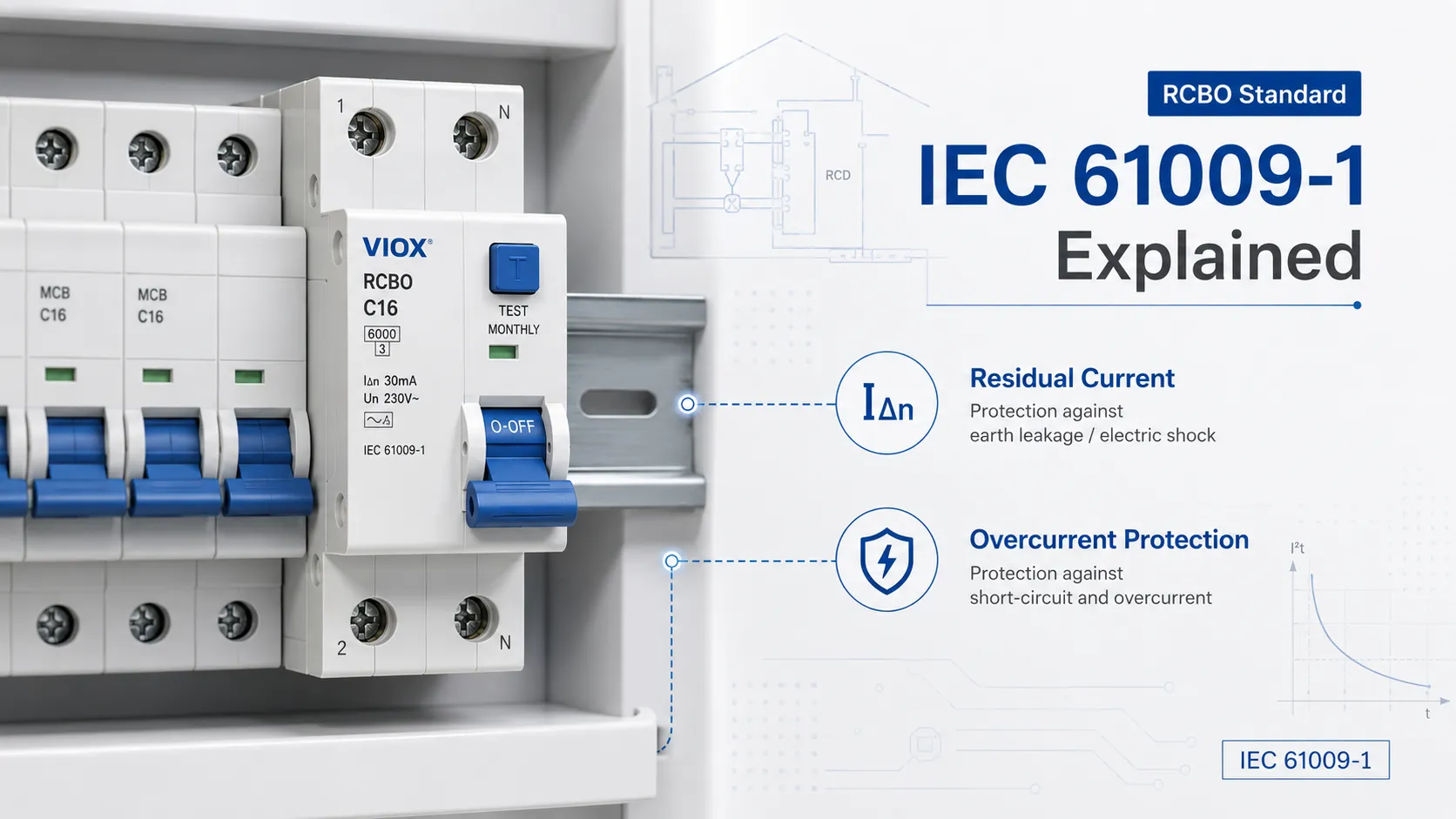
IEC 61009-1 သည် အိမ်သုံးနှင့် အလားတူအသုံးချမှုများအတွက် လျှပ်စီးကြောင်းယိုစိမ့်မှုနှင့် လျှပ်စီးကြောင်းလွန်ကာကွယ်မှုပါဝင်သော RCBO (residual current operated circuit-breakers with integral overcurrent protection) များအတွက် IEC စံနှုန်းဖြစ်သည်။ ၎င်းသည် မြေကြီးသို့ လျှပ်စီးကြောင်းယိုစိမ့်မှုကာကွယ်ခြင်း၊ ဝန်ပိုခြင်းကာကွယ်ခြင်းနှင့် ဝါယာရှော့ဖြစ်ခြင်းမှ ကာကွယ်ခြင်းတို့ကို တစ်ခုတည်းသော ကိရိယာတွင် ပေါင်းစပ်ထားသည့် စက်ပစ္စည်းများအတွက် အကျုံးဝင်သည်။.
လက်တွေ့တွင်၊ ဤစံနှုန်းသည် သီးခြား RCCB နှင့် MCB အစား RCBO ကို အသုံးပြုရန် စီမံကိန်းတစ်ခုတွင် တောင်းဆိုသည့်အခါ သင်စစ်ဆေးရမည့် စံနှုန်းဖြစ်သည်။ ၎င်းကို RCCB များအတွက် IEC 61008-1၊ MCB များအတွက် IEC 60898-1 သို့မဟုတ် စက်မှုလုပ်ငန်းသုံး ဗို့အားနိမ့် ဆားကစ်ဘရိတ်ကာများအတွက် IEC 60947-2 တို့နှင့် ရောထွေးမနေသင့်ပါ။.
ထုတ်ကုန်အကဲဖြတ်ခြင်းအတွက် VIOX ကို ကြည့်ရှုပါ။ RCBO ထုတ်ကုန်များ.
ဤစံနှုန်းသည် မည်သည့်စက်ပစ္စည်းများကို အကျုံးဝင်သနည်း။
ဤစံနှုန်းသည် အိမ်သုံးနှင့် အလားတူ တပ်ဆင်မှုများတွင် အသုံးပြုသော RCBO များကို အကျုံးဝင်သည်။ RCBO ဆိုသည်မှာ လျှပ်စီးကြောင်းလွန်ကာကွယ်မှုပါဝင်သော လျှပ်စီးကြောင်းယိုစိမ့်မှုထိန်းချုပ် ဆားကစ်ဘရိတ်ကာ ဖြစ်သည်။.
RCBO တစ်ခုသည် ကာကွယ်မှုလုပ်ဆောင်ချက်နှစ်ခုကို စက်ပစ္စည်းတစ်ခုတည်းတွင် ပေါင်းစပ်ထားသည်-
- မြေကြီးသို့ လျှပ်စီးယိုစိမ့်မှုနှင့် လျှပ်စစ်ရှော့ခ်ဖြစ်နိုင်ခြေကို ကာကွယ်ပေးသည့် Residual current protection
- ဝန်ပိုခြင်း (Overload) နှင့် ရှော့ခ်ဖြစ်ခြင်း (Short-circuit) တို့မှ ကာကွယ်ပေးသည့် Overcurrent protection
ထိုပေါင်းစပ်မှုသည် ၎င်း၏ အဓိကသတ်မှတ်ချက်ဖြစ်သည်။ RCCB သည် လျှပ်စီးယိုစိမ့်မှုကို ထောက်လှမ်းနိုင်သော်လည်း Overcurrent ကာကွယ်မှုကို မပေးနိုင်ပါ။ MCB သည် ဝန်ပိုခြင်းနှင့် ရှော့ခ်ဖြစ်ခြင်းတို့ကို ဖြေရှင်းပေးနိုင်သော်လည်း လျှပ်စီးယိုစိမ့်မှုကို မထောက်လှမ်းနိုင်ပါ။ RCBO သည် လုပ်ဆောင်ချက်နှစ်ခုလုံးကို ထုတ်ကုန်တစ်ခုတည်းတွင် ပေါင်းစပ်ထားသောကြောင့် သက်ဆိုင်သည့် စံနှုန်းမှာ ကွဲပြားခြားနားပါသည်။.
လက်တွေ့တွင် စံနှုန်းက ဘာကိုလိုအပ်သနည်း
ဤစံနှုန်းသည် Breaker ၏ အရှေ့ဘက်တွင် ရိုက်နှိပ်ထားသော တံဆိပ်တစ်ခုမျှသာ မဟုတ်ပါ။ ၎င်းသည် သတ်မှတ်ထားသော အခြေအနေများအောက်တွင် RCBO ၏ လုပ်ဆောင်ချက်များအတွက် ထုတ်ကုန်လိုအပ်ချက်များနှင့် စမ်းသပ်မှုနည်းလမ်းများနှင့် ဆက်စပ်နေသည်။.
ဝယ်ယူသူများ၊ Panel တည်ဆောက်သူများနှင့် ဖြန့်ဖြူးရောင်းချသူများအတွက်၊ အဆိုပါစံနှုန်းသည် အဓိကအားဖြင့် အောက်ပါနယ်ပယ်များနှင့် သက်ဆိုင်သည်-
| ဧရိယာ | RCBO တစ်ခုအတွက် ၎င်း၏ အဓိပ္ပာယ်မှာ အဘယ်နည်း |
|---|---|
| စက်ပစ္စည်း၏ လုပ်ဆောင်ချက် | ဤထုတ်ကုန်သည် ကျန်ရှိသောလျှပ်စီးကြောင်း (Residual current) ကာကွယ်မှုနှင့် လျှပ်စီးကြောင်းလွန် (Overcurrent) ကာကွယ်မှုတို့ကို ပေါင်းစပ်ထားသည် |
| ပန္လည္စစ္ေ | ဤထုတ်ကုန်တွင် မှန်ကန်စွာရွေးချယ်အသုံးပြုနိုင်ရန် လိုအပ်သော သတ်မှတ်ချက်များနှင့် အချက်အလက်များကို ဖော်ပြထားရမည် |
| ကျန်ရှိသောလျှပ်စီးကြောင်း (Residual current) အလုပ်လုပ်ပုံ | စက်ပစ္စည်းသည် ၎င်း၏အမျိုးအစားနှင့် သတ်မှတ်ထားသော ကျန်ရှိသောလျှပ်စီးကြောင်းပမာဏ (Rated residual operating current) အလိုက် တုံ့ပြန်ဆောင်ရွက်ရမည် |
| လျှပ်စီးကြောင်းလွန် (Overcurrent) အလုပ်လုပ်ပုံ | စက်ပစ္စည်းသည် ၎င်း၏သတ်မှတ်ထားသော စွမ်းဆောင်ရည်အလိုက် ဝန်ပိုခြင်း (Overload) နှင့် ဝါယာရှော့ဖြစ်ခြင်း (Short-circuit) တို့မှ ကာကွယ်ပေးရမည် |
| ချိုးဖျက်နိုင်စွမ်း | ဤထုတ်ကုန်သည် တပ်ဆင်မည့်နေရာတွင် ဖြစ်ပေါ်နိုင်သည့် ဝါယာရှော့လျှပ်စီးကြောင်း (Prospective short-circuit current) နှင့် ကိုက်ညီမှုရှိရမည် |
| လျှပ်ကာနှင့် လျှပ်စစ်ဓာတ်စီးကူးမှုဆိုင်ရာ စွမ်းဆောင်ရည် (Insulation and dielectric performance) | အတွင်းပိုင်း ကွာဟချက်များ၊ လျှပ်ကာနှင့် ခံနိုင်ရည်စွမ်းဆောင်ရည်တို့သည် ရည်ရွယ်ထားသည့် အသုံးပြုမှုနှင့် ကိုက်ညီရမည်။ |
| အပူချိန်တက်လာမှု (Temperature rise) | ထုတ်ကုန်သည် သတ်မှတ်ထားသော အခြေအနေများအောက်တွင် လက်ခံနိုင်သော အပူချိန်ကန့်သတ်ချက်အတွင်း ရှိနေရမည်။ |
| စက်မှုနှင့် လျှပ်စစ်ဆိုင်ရာ ကြံ့ခိုင်ခံ့မှု (Mechanical and electrical endurance) | ခလုတ်ဖွင့်ပိတ်ခြင်းနှင့် ဖြတ်တောက်ခြင်း ယန္တရားသည် သတ်မှတ်ထားသော လုပ်ဆောင်ချက်များတစ်လျှောက် ယုံကြည်စိတ်ချရမှု ရှိနေရမည်။ |
အခက်ခဲဆုံး အင်ဂျင်နီယာပိုင်းဆိုင်ရာ လုပ်ငန်းစဉ်မှာ အတွင်းပိုင်း ညှိနှိုင်းဆောင်ရွက်မှုဖြစ်သည်။ ပြင်းထန်သော ဝါယာရှော့ဖြစ်ပွားချိန်တွင် လျှပ်စီးကြောင်းလွန်အပိုင်းသည် ချို့ယွင်းချက်ကို ရှင်းလင်းပေးရမည်ဖြစ်ပြီး၊ တစ်ချိန်တည်းမှာပင် ကျန်ရှိသော လျှပ်စီးကြောင်းကို သိရှိနိုင်သည့်စနစ်၊ အီလက်ထရွန်နစ်ပစ္စည်းများ၊ ကြားခံလမ်းကြောင်း၊ လျှပ်ကာစနစ်နှင့် ဖြတ်တောက်သည့် ချိတ်ဆက်မှုစနစ်တို့သည် ထုတ်ကုန်ဒီဇိုင်းအတွင်း ဘေးကင်းစွာ ရှိနေရမည်။.
ထို့ကြောင့် RCBO တစ်ခုကို မော်ဂျူးအကျယ်၊ အမ်ပီယာသတ်မှတ်ချက် သို့မဟုတ် ဈေးနှုန်းဖြင့်သာ အကဲဖြတ်၍ မရပါ။.
ဤ RCBO စံနှုန်းကို မည်သည့်အချိန်တွင် အသုံးပြုရမည်နည်း
အဆိုပါကိရိယာသည် အိမ်သုံး သို့မဟုတ် အလားတူအသုံးချမှုများအတွက် RCBO ဖြစ်ပါက ဤစံနှုန်းကို ကိုးကားအသုံးပြုပါ။.
Common examples include:
- လူနေအိမ်သုံး လျှပ်စစ်ဖြန့်ဖြူးရေးပုံးများ
- တိုက်ခန်းသုံး ဖြန့်ဖြူးရေးဘုတ်များ
- လုပ်ငန်းငယ်များအတွက် နောက်ဆုံးအဆင့် ဖြန့်ဖြူးရေး ဆားကစ်များ
- ရုံးခန်းသုံး ပလပ်ပေါက်နှင့် မီးအလင်းရောင် ဆားကစ်များ
- RCBO ကာကွယ်မှု လိုအပ်သော အလုပ်ရုံနှင့် အသုံးချ ဆားကစ်များ
- ယိုစိမ့်မှု ကာကွယ်ခြင်းနှင့် လျှပ်စီးကြောင်းလွန် ကာကွယ်ခြင်းတို့ကို ကိရိယာတစ်ခုတည်းတွင် လိုအပ်သော နောက်ဆုံးအဆင့် ဆားကစ်များ
၎င်းသည် ထွက်ခွာသွားသော ဆားကစ်တစ်ခုချင်းစီအတွက် သီးခြားစီ ယိုစိမ့်မှု ကာကွယ်ခြင်း လိုအပ်သည့်အခါတွင် အထူးသက်ဆိုင်ပါသည်။ RCCB တစ်ခုတည်းကို MCB အများအပြားနှင့် တွဲသုံးခြင်းနှင့် နှိုင်းယှဉ်ပါက RCBO များသည် ချို့ယွင်းချက်ကို သီးခြားခွဲထုတ်ရာတွင် ပိုမိုကောင်းမွန်စေသည်၊ အကြောင်းမှာ ယိုစိမ့်မှု ချို့ယွင်းချက်တစ်ခု ဖြစ်ပေါ်ပါက ထိခိုက်သည့် ဆားကစ်တစ်ခုတည်းသာ ပြတ်တောက်သွားမည်ဖြစ်သောကြောင့် ဖြစ်သည်။.
ပိုမိုကျယ်ပြန့်သော ရွေးချယ်မှုဆိုင်ရာ ယုတ္တိဗေဒအတွက် ကြည့်ရှုပါ မှန်ကန်သော RCBO ကိုဘယ်လိုရွေးချယ်မလဲ။.
ဤသည်မှာ မှန်ကန်သော စံနှုန်းမဟုတ်သည့်အခါ
RCBO စံနှုန်းသည် ဗို့အားနိမ့်ကာကွယ်ရေးကိရိယာအားလုံးကို အလိုအလျောက် အကျုံးမဝင်ပါ။ မှားယွင်းသော စံနှုန်းကို ကိုးကားအသုံးပြုခြင်းသည် ခွင့်ပြုချက်ရယူခြင်း၊ ဈေးနှုန်းတင်ပြခြင်းနှင့် တပ်ဆင်ခြင်းဆိုင်ရာ ပြဿနာများကို ဖြစ်ပေါ်စေနိုင်သည်။.
| အခြေအနေ | ပိုမိုသက်ဆိုင်သော စံနှုန်း သို့မဟုတ် စစ်ဆေးရန်အချက်များ |
|---|---|
| လျှပ်စီးကြောင်းလွန်ကာကွယ်မှုမပါဝင်သော RCCB | IEC ၆၁၀၀၈-၁ |
| ကျန်ရှိလျှပ်စီးကြောင်း (Residual current) ကာကွယ်မှုမပါဝင်သော MCB | အိမ်သုံးနှင့် အလားတူ MCB အသုံးချမှုများအတွက် IEC 60898-1 |
| စက်မှုလုပ်ငန်းသုံး ဗို့အားနိမ့် ဆားကစ်ဘရိတ်ကာ သို့မဟုတ် MCCB | ကိရိယာအမျိုးအစားနှင့် အသုံးချမှုအပေါ် မူတည်၍ IEC 60947-2 သည် သက်ဆိုင်နိုင်သည် |
| စက်မှုလုပ်ငန်းသုံး လျှပ်စစ်ပန်နယ်အတွက် ပင်မဝင်ပေါက် (Main incomer) | ပရောဂျက်၏ သတ်မှတ်ချက်များ၊ Fault level၊ Selectivity နှင့် သက်ဆိုင်ရာနေရာများတွင် IEC 60947-2 လိုအပ်ချက်များကို စစ်ဆေးပါ။ |
| လျှပ်စစ်ကား (EV) အားသွင်းစနစ် ဆားကစ် | RCBO အမျိုးအစား၊ DC ယိုစိမ့်မှု (leakage) ရှာဖွေခြင်းဆိုင်ရာ လိုအပ်ချက်များနှင့် ဒေသတွင်း EV အားသွင်းခြင်းဆိုင်ရာ စည်းမျဉ်းများကို စစ်ဆေးပါ။ |
| PV၊ Inverter၊ VFD သို့မဟုတ် UPS ဆားကစ်များ။ | Residual current waveform လိုအပ်ချက်များနှင့် Type A၊ F၊ B သို့မဟုတ် အခြားသော ကာကွယ်မှုအမျိုးအစား လိုအပ်ခြင်း ရှိ၊ မရှိ စစ်ဆေးပါ။ |
အဖြစ်အများဆုံး အမှားမှာ RCBO စံနှုန်းနှင့် IEC 60947-2 ကို အစားထိုးသုံးစွဲနိုင်သည်ဟု ယူဆခြင်းဖြစ်သည်။ ၎င်းတို့သည် မတူညီပါ။ တစ်ခုမှာ အိမ်သုံးနှင့် အလားတူအသုံးချမှုများအတွက် RCBO များအပေါ် အဓိကထားပြီး၊ အခြားတစ်ခုမှာ စက်မှုလုပ်ငန်းသုံး ဗို့အားနိမ့် ဆားကစ်ဘရိတ်ကာများနှင့် ဆက်စပ်နေကာ အသုံးချသည့် အခြေအနေချင်း ကွဲပြားပါသည်။.
IEC 61009-1 နှင့် IEC 61008-1 နှင့် IEC 60898-1 နှင့် IEC 60947-2 တို့၏ နှိုင်းယှဉ်ချက်။
ကာကွယ်မှုလုပ်ဆောင်ချက်များကို ခွဲခြားသတ်မှတ်ခြင်းဖြင့် စံနှုန်းများကို နားလည်ရန် အလွယ်ကူဆုံးဖြစ်သည်။.
| စံ | စက်အမျိုးအစား | Main Function | ပုံမှန်အသုံးပြုသည့် အခြေအနေများ။ |
|---|---|---|---|
| IEC 61009-1 | RCBO | ကျန်ရှိသောလျှပ်စီးကြောင်း + ဝန်ပိုမှု + ဝါယာရှော့ကာကွယ်မှု | အိမ်သုံးနှင့် အလားတူ နောက်ဆုံးအဆင့် လျှပ်စစ်ပတ်လမ်းများ |
| IEC ၆၁၀၀၈-၁ | RCCB | ကျန်ရှိသောလျှပ်စီးကြောင်း ကာကွယ်မှုသက်သက် | ဝန်ပိုလျှပ်စီးကြောင်း ကာကွယ်မှုကို သီးခြားစီထားရှိသည့် အုပ်စုလိုက် ယိုစိမ့်မှုကာကွယ်ခြင်း |
| IEC 60898-1 | တက္ကို | ဝန်ပိုမှု + ဝါယာရှော့ကာကွယ်မှု | အိမ်သုံးနှင့် အလားတူ ဝန်ပိုလျှပ်စီးကြောင်း ကာကွယ်ခြင်း |
| IEC ၆၀၉၄၇-၂ | ဆားကစ်အနိုင်အထက် | စက်မှုလုပ်ငန်းသုံး ဗို့အားနိမ့် ဆားကစ်ဘရိတ်ကာ ကာကွယ်ခြင်း | MCCBs၊ စက်မှုလုပ်ငန်းသုံး ဘရိတ်ကာများ၊ ပိုမိုမြင့်မားသော ဗို့အားနိမ့် လျှပ်စစ်လုပ်ငန်းသုံးများ |
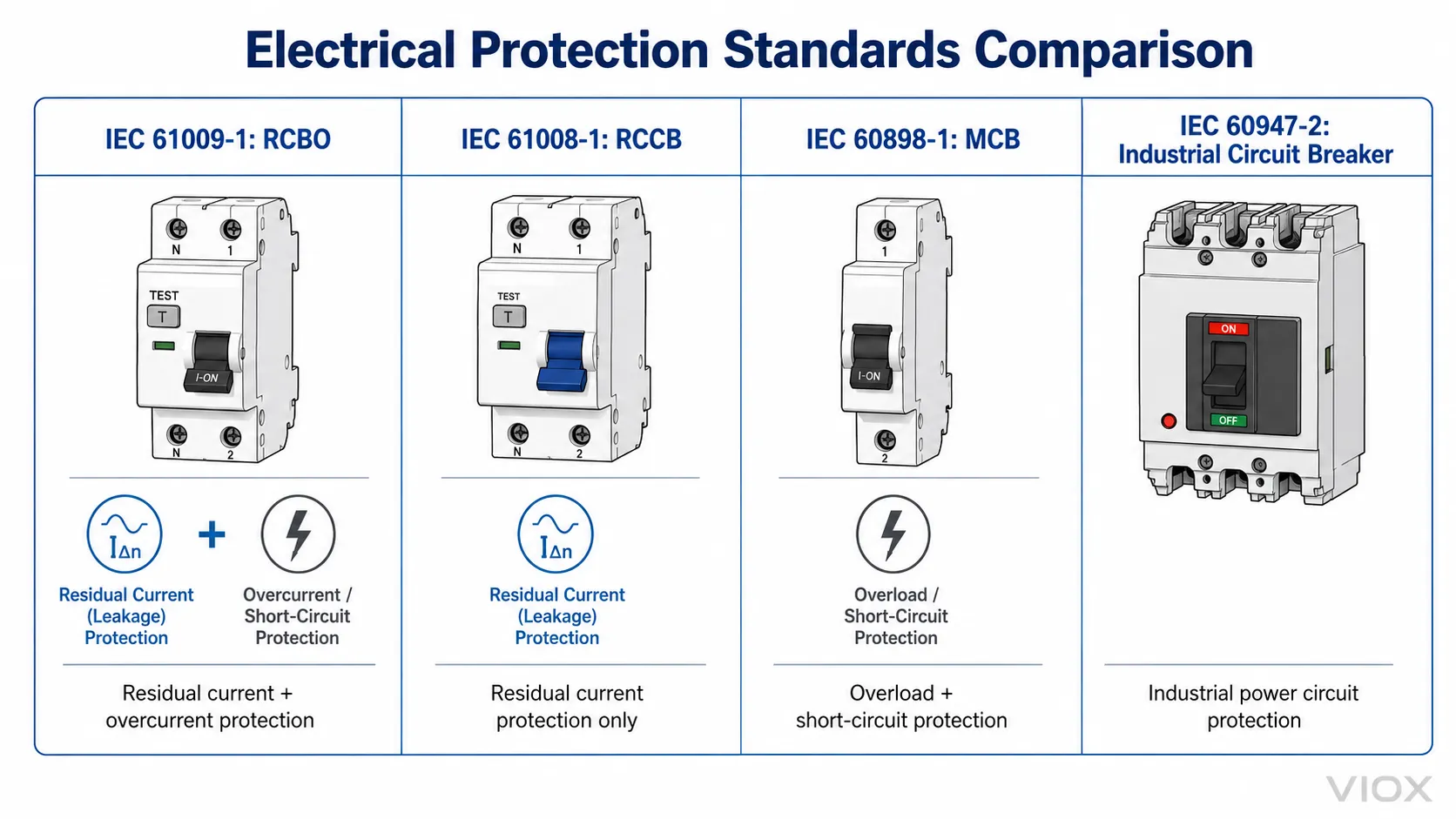
ဤကွဲပြားမှုသည် တင်ဒါခေါ်ယူမှုများတွင် အရေးကြီးပါသည်။ သတ်မှတ်ချက်တွင် RCBO ကို တောင်းဆိုပါက IEC 61009-1 သည် ပုံမှန်အားဖြင့် ရည်ညွှန်းသည့် စံသတ်မှတ်ချက်ဖြစ်သည်။ RCCB ကို တောင်းဆိုပါက IEC 61008-1 သည် ပိုမိုသင့်လျော်သည်။ စက်မှုသုံး ဆားကစ်ဘရိတ်ကာကို တောင်းဆိုပါက IEC 60947-2 သည် မှန်ကန်သော လမ်းကြောင်းဖြစ်နိုင်သည်။.
MCB စံသတ်မှတ်ချက် ကွဲပြားမှုများအတွက် အောက်ပါတို့ကို ကြည့်ရှုပါ။ IEC 60898-1 နှင့် IEC 60947-2.
စံသတ်မှတ်ချက်တစ်ခုတည်းက မသက်သေပြနိုင်သောအရာများ
စံသတ်မှတ်ချက်တစ်ခုကို ရည်ညွှန်းခြင်းသည် အသုံးချမှုဆိုင်ရာ စစ်ဆေးခြင်းကို အစားမထိုးနိုင်ပါ။ ၎င်းသည် ထုတ်ကုန်အမျိုးအစားနှင့် စမ်းသပ်မှုမူဘောင်ကို ခွဲခြားသတ်မှတ်ရန် ကူညီပေးသော်လည်း ဝယ်ယူသူအနေဖြင့် လက်တွေ့အသုံးပြုမည့် အဆင့်သတ်မှတ်ချက်များ (ratings) နှင့် တပ်ဆင်မည့် အခြေအနေများကို စစ်ဆေးရန် လိုအပ်ပါသည်။.
| အလွဲသုံးသပ်ခြင်း | မှန်ကန်စွာ အဓိပ္ပာယ်ဖွင့်ဆိုခြင်း |
|---|---|
| စံသတ်မှတ်ချက်ဆိုသည်မှာ ပန်နယ်လ်တိုင်းအတွက် သင့်လျော်သည်ဟု ဆိုလိုခြင်းဖြစ်သည် | ၎င်းသည် အိမ်သုံးနှင့် အလားတူအသုံးပြုမှုများအတွက် RCBO များတွင် အဓိကသက်ဆိုင်ပြီး စက်မှုလုပ်ငန်းသုံးအတွက်မူ သီးခြားအကဲဖြတ်ရန် လိုအပ်ပါသည်။ |
| စံသတ်မှတ်ချက်အရ ယိုစိမ့်မှုလှိုင်းပုံစံ (leakage waveform) မည်သည့်အမျိုးအစားကိုမဆို ထောက်လှမ်းနိုင်သည်ဟု ဆိုလိုသည်။ | ကျန်ရှိသောလျှပ်စီးကြောင်းအမျိုးအစား (Residual current type) သည် အရေးကြီးဆဲဖြစ်သည် - AC, A, F, B သို့မဟုတ် အခြားသတ်မှတ်ထားသော အမျိုးအစားများ။ |
| 30mA RCBO မည်သည့်အမျိုးအစားမဆို မှန်ကန်ပါသည်။ | IΔn သည် လူကိုယ်တိုင်ကာကွယ်မှု၊ မီးဘေးကာကွယ်မှု၊ ယိုစိမ့်လျှပ်စီးကြောင်း၊ ရွေးချယ်နိုင်မှု (selectivity) နှင့် ဒေသဆိုင်ရာ စည်းမျဉ်းများအပေါ် မူတည်ပါသည်။ |
| 6kA သို့မဟုတ် 10kA RCBO မည်သည့်အမျိုးအစားမဆို လုံလောက်ပါသည်။ | ဖြတ်တောက်နိုင်စွမ်း (Breaking capacity) သည် ဖြစ်နိုင်ခြေရှိသော ဝါယာရှော့လျှပ်စီးကြောင်း (prospective short-circuit current) နှင့် ကိုက်ညီရမည်။ |
| လျှပ်စီးကြောင်းပမာဏ (current rating) တူညီပါက အပြန်အလှန် အစားထိုးအသုံးပြုနိုင်ပါသည်။ | Pole ပုံစံ၊ Neutral ချိတ်ဆက်မှု၊ Terminal ဒီဇိုင်း၊ Trip curve နှင့် Residual current အမျိုးအစားတို့သည် ကွဲပြားနိုင်ပါသည်။ |
RCBO Datasheet တစ်ခုတွင် Standard (စံနှုန်း) ဆိုသည်မှာ အဘယ်နည်း
Standard အမျိုးအစား မှန်ကန်ကြောင်း အတည်ပြုပြီးနောက် နောက်တစ်ဆင့်မှာ Datasheet ကို ဖတ်ရှုခြင်းဖြစ်သည်။ ဤနေရာတွင် Standard သည် လက်တွေ့ဝယ်ယူခြင်းနှင့် အင်ဂျင်နီယာပိုင်းဆိုင်ရာ စစ်ဆေးခြင်းအတွက် အရေးပါလာပါသည်။.
| အချက်အလက်စာရွက်ပါ အကြောင်းအရာ | What to Check |
|---|---|
| လက်ရှိ အဆင့်သတ်မှတ်ထားသည်။ | Circuit load နှင့် Cable ကာကွယ်မှုတို့နှင့် ကိုက်ညီရမည် |
| Rated residual operating current IΔn | ယိုစိမ့်မှုကာကွယ်ခြင်း၏ အာရုံခံနိုင်စွမ်းကို သတ်မှတ်ရန် အသုံးများသည်။ |
| Residual current အမျိုးအစား | ယိုစိမ့်မှုလှိုင်းပုံစံ (Leakage waveform) ပေါ်မူတည်၍ Type AC, A, F သို့မဟုတ် B ဟူ၍ ခွဲခြားသည်။ |
| Trip curve | ဝန်အားဝင်ရောက်မှု (inrush) နှင့် ချို့ယွင်းချက်ဖြစ်ပေါ်သည့် လမ်းကြောင်းအခြေအနေများအပေါ် မူတည်၍ B, C သို့မဟုတ် D curve ကို ရွေးချယ်ရမည် |
| Icn, rated short-circuit capacity | တပ်ဆင်မည့်နေရာရှိ မျှော်မှန်းထားသော ဝါယာရှော့ဖြစ်စဉ် (prospective short-circuit current) ထက် ပိုမိုမြင့်မားရမည် |
| Ics (ဝန်ဆောင်မှုဆိုင်ရာ ဝါယာရှော့ခံနိုင်ရည်စွမ်းအား) ကို ဖော်ပြထားပါက ထည့်သွင်းစဉ်းစားရမည် | သတ်မှတ်ထားသော စမ်းသပ်မှုအခြေခံအပေါ်တွင် ဝန်ဆောင်မှုဆိုင်ရာ ဝါယာရှော့ဖြစ်စဉ်၏ စွမ်းဆောင်ရည်ကို ပြသသည် |
| IΔm (သတ်မှတ်ထားသော ကျန်ရှိလျှပ်စီးကြောင်းဆိုင်ရာ ချိတ်ဆက်ခြင်းနှင့် ဖြတ်တောက်ခြင်း စွမ်းရည်) | ကျန်ရှိလျှပ်စီးကြောင်း (residual-current) ချို့ယွင်းချက်ဖြစ်ပေါ်ချိန်တွင် ချိတ်ဆက်ခြင်းနှင့် ဖြတ်တောက်ခြင်း စွမ်းဆောင်ရည်အတွက် အရေးကြီးသည် |
| အဆင့်သတ်မှတ်ထားသော ဗို့အား | AC လျှပ်စစ်စနစ်၏ ဗို့အားနှင့် ဝိုင်ယာသွယ်တန်းမှုပုံစံတို့နှင့် ကိုက်ညီရမည် |
| တိုင်ပုံစံ | လိုအပ်ချက်အရ 1P+N, switched neutral, 2P, 3P+N သို့မဟုတ် 4P ကို ရွေးချယ်ရမည် |
| ဝါယာကြိုးချိတ်ဆက်မှု ပုံစံ (Wiring diagram) | Neutral စီစဉ်မှုနှင့် Busbar လိုက်ဖက်ညီမှုအတွက် မရှိမဖြစ်လိုအပ်သည် |
| Terminal စွမ်းရည် | လျှပ်ကူးပစ္စည်းအရွယ်အစားနှင့် တပ်ဆင်မှုနည်းလမ်းနှင့် ကိုက်ညီရမည် |
| စံသတ်မှတ်ချက်အမှတ်အသား | သက်ဆိုင်ရာ ထုတ်ကုန်စံနှုန်းနှင့် စာရွက်စာတမ်းလမ်းကြောင်းကို အတည်ပြုရန် ကူညီပေးသည် |
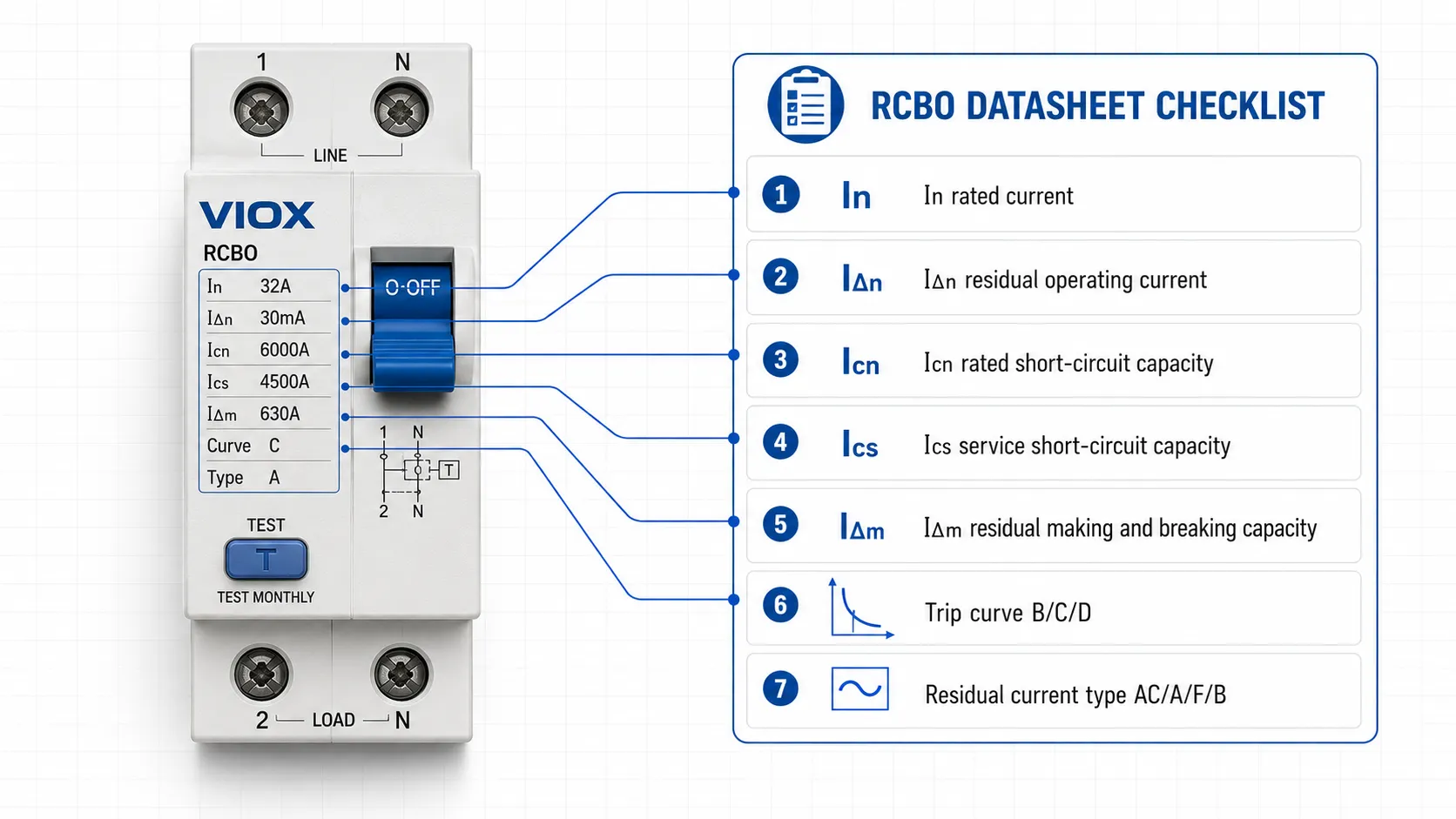
6kA, 10kA နှင့် 16kA ရွေးချယ်မှုအတွက် ကြည့်ရှုရန် RCBO Breaking Capacity ရွေးချယ်ခြင်း.
Icn, Ics နှင့် IΔm: Short-Circuit နှင့် Residual Fault ဆိုင်ရာ ဝေါဟာရများ
အင်ဂျင်နီယာဆိုင်ရာ သတ်မှတ်ချက်များအတွက် “breaking capacity” ဟူသော ယေဘုယျအသုံးအနှုန်းထက် သင်္ကေတသုံးခုကို ပိုမိုအာရုံစိုက်ရန် လိုအပ်ပါသည်။”
| သင်္ကေတ | အဓိပ္ပာယ် | ဘာကြောင့် အရေးကြီးတာလဲ။ |
|---|---|---|
| အိုင်ကွန် | သတ်မှတ်ထားသော ရှော့ဆားကစ်ခံနိုင်ရည်ပမာဏ (Rated short-circuit capacity) | သက်ဆိုင်ရာ စမ်းသပ်မှုအခြေအနေများအောက်တွင် RCBO တစ်ခုက ဖြတ်တောက်နိုင်ရန် သတ်မှတ်ထားသော အမြင့်ဆုံး short-circuit current ပမာဏ |
| Ics | Service short-circuit capacity (ကြေညာထားခြင်း သို့မဟုတ် သတ်မှတ်ထားခြင်းရှိပါက) | ကြေညာထားသော စမ်းသပ်မှုအခြေခံအရ ဖြတ်တောက်ပြီးနောက်ပိုင်း service short-circuit စွမ်းဆောင်ရည်ကို ဖော်ပြခြင်းဖြစ်သည်၊ datasheet တွင် ထိုမူဘောင်ကို အသုံးပြုထားခြင်းမရှိပါက IEC 60947-2 Icu/Ics အမှတ်အသားနှင့် ရောထွေးခြင်းမပြုပါနှင့်။ |
| IΔm | Rated residual making and breaking capacity | သတ်မှတ်ထားသော residual-fault အခြေအနေများအောက်တွင် RCBO ၏ residual current ကို စတင်ခြင်း၊ ခေတ္တသယ်ဆောင်ခြင်းနှင့် ဖြတ်တောက်ခြင်းစွမ်းရည်ကို ပြသခြင်း |
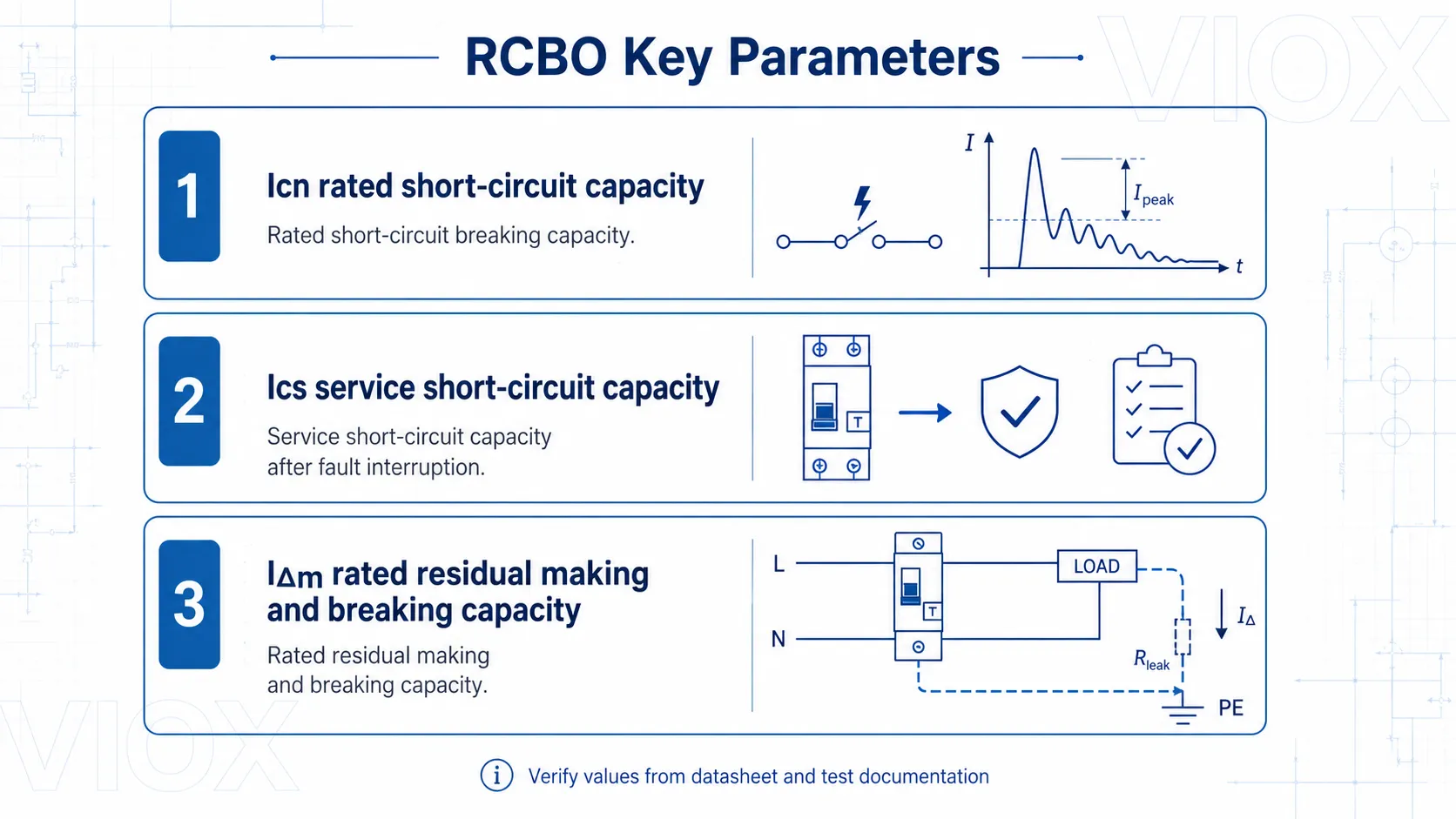
အိမ်သုံးလျှပ်စစ်ပစ္စည်း (Consumer-unit) အတွက် RCBO ဝယ်ယူရာတွင် ဝယ်ယူသူများသည် 6kA သို့မဟုတ် 10kA ကိုသာ အဓိကထားလေ့ရှိကြသည်။ သို့သော် OEM များ၊ Panel တပ်ဆင်သူများနှင့် အရည်အသွေးမြင့် စီမံကိန်းများအတွက်မူ ၎င်းသည် မလုံလောက်ပါ။ ၎င်းတို့အနေဖြင့် Short-circuit rating ကို မည်သို့ဖော်ပြထားသည်၊ Service capacity ပါဝင်ခြင်း ရှိမရှိ၊ နှင့် လက်မှတ် သို့မဟုတ် စမ်းသပ်မှုအစီရင်ခံစာသည် တိကျသော မော်ဒယ်နံပါတ်နှင့် ကိုက်ညီမှုရှိမရှိတို့ကို စစ်ဆေးသင့်သည်။.
စီမံကိန်းသတ်မှတ်ချက်တစ်ခုတွင် Ics = Icn ဟု လိုအပ်ပါက, ၎င်းသည် ကြေညာထားသော Rating အခြေခံအောက်တွင် ပိုမိုအားကောင်းသော Service short-circuit စွမ်းဆောင်ရည်ကို တောင်းဆိုခြင်းဖြစ်သည်။ အစားထိုးလဲလှယ်ရသည့် လုပ်အားခ၊ စက်ရပ်နားချိန် သို့မဟုတ် ချို့ယွင်းမှုဖြစ်ပွားပြီးနောက် စစ်ဆေးရသည့် ကုန်ကျစရိတ်များအတွက် ဤအချက်သည် အရေးကြီးသည်။ ၎င်းကို ရှေ့မျက်နှာစာတွင် ရေးသားထားသည့် အမှတ်အသားတစ်ခုတည်းကိုသာ ကြည့်၍ မဆုံးဖြတ်သင့်ဘဲ ထုတ်လုပ်သူ၏ Datasheet နှင့် စမ်းသပ်မှုဆိုင်ရာ စာရွက်စာတမ်းများမှတစ်ဆင့် အတည်ပြုရမည်ဖြစ်သည်။.
IΔm သည် အထူးအရေးကြီးပါသည်၊ အကြောင်းမှာ RCBO သည် Overcurrent ကိရိယာတစ်ခုသာ မဟုတ်သောကြောင့်ဖြစ်သည်။ ၎င်းသည် Residual-current protective device တစ်ခုအနေဖြင့်လည်း လုပ်ဆောင်ရမည်ဖြစ်သည်။ Ampere rating နှင့် Trip curve အရ သင့်လျော်သည်ဟု ထင်ရသော ထုတ်ကုန်တစ်ခုသည် ၎င်း၏ Residual making and breaking စွမ်းဆောင်ရည်၊ Leakage အမျိုးအစား သို့မဟုတ် အတွင်းပိုင်းချိတ်ဆက်မှုစနစ်သည် အဆိုပါလုပ်ငန်းစဉ်အတွက် မသင့်လျော်ပါက အသုံးမဝင်နိုင်ပါ။.
1P+N, 2P, Switched Neutral နှင့် Flying Lead RCBO များ
Pole ပုံစံသည် လက်တွေ့တွင် အဖြစ်အများဆုံး RCBO သတ်မှတ်ချက်ဆိုင်ရာ ပြဿနာများထဲမှ တစ်ခုဖြစ်သည်။ ဝယ်ယူသူတစ်ဦးသည် “16A 30mA Type A RCBO” ဟု တောင်းဆိုနိုင်သော်လည်း Distribution board က သီးခြား Neutral layout ကို အသုံးပြုနေပါက ၎င်းသည် မလုံလောက်ပါ။.
| RCBO ပုံစံ (Format) | ၎င်း၏ အဓိပ္ပာယ်မှာ အများအားဖြင့် အဘယ်နည်း | ဘာကြောင့် အရေးကြီးတာလဲ။ |
|---|---|---|
| 1P+N | Phase pole ကို ကာကွယ်ထားပြီး၊ Residual current ထောက်လှမ်းခြင်းနှင့် ဆားကစ်ချိတ်ဆက်မှုအတွက် Neutral လမ်းကြောင်း ပါဝင်သည် | ကျစ်လစ်သော နောက်ဆုံးဆားကစ်များတွင် အသုံးများသော်လည်း Neutral switching ကို အတည်ပြုရန် လိုအပ်သည် |
| 1P+N switched neutral | Phase ကို ကာကွယ်ထားပြီး Neutral ကိုလည်း စက်ယန္တရားဖြင့် ဖြတ်တောက်ထားသည် | ဒီဇိုင်း သို့မဟုတ် ဒေသဆိုင်ရာ ကျင့်စဉ်အရ Neutral ကို ဖြတ်တောက်ရန် လိုအပ်သည့်နေရာများတွင် အသုံးဝင်သည် |
| 2P RCBO | နှစ်ခုပါဝင်သော (Two-pole) switching စနစ်ဖြစ်ပြီး၊ Overcurrent ကာကွယ်မှု အသေးစိတ်မှာ ဒီဇိုင်းပေါ်တွင် မူတည်သည် | အပြည့်အဝ နှစ်ခုပါဝင်သော (Two-pole) ဖြတ်တောက်မှု လိုအပ်သည့်နေရာများတွင် မကြာခဏ အသုံးပြုသည် |
| Flying lead RCBO (အဝင်ကြိုးပါသော RCBO) | အချို့သော Consumer unit ဒီဇိုင်းများတွင် Neutral reference သို့မဟုတ် Neutral bar ချိတ်ဆက်မှုအတွက် သီးခြားကြိုးအသုံးပြုခြင်း | ဝိုင်ယာသွယ်တန်းခြင်းကို ထုတ်လုပ်သူ၏ ပုံစံပြဇယားအတိုင်း တိကျစွာ လိုက်နာရမည် |
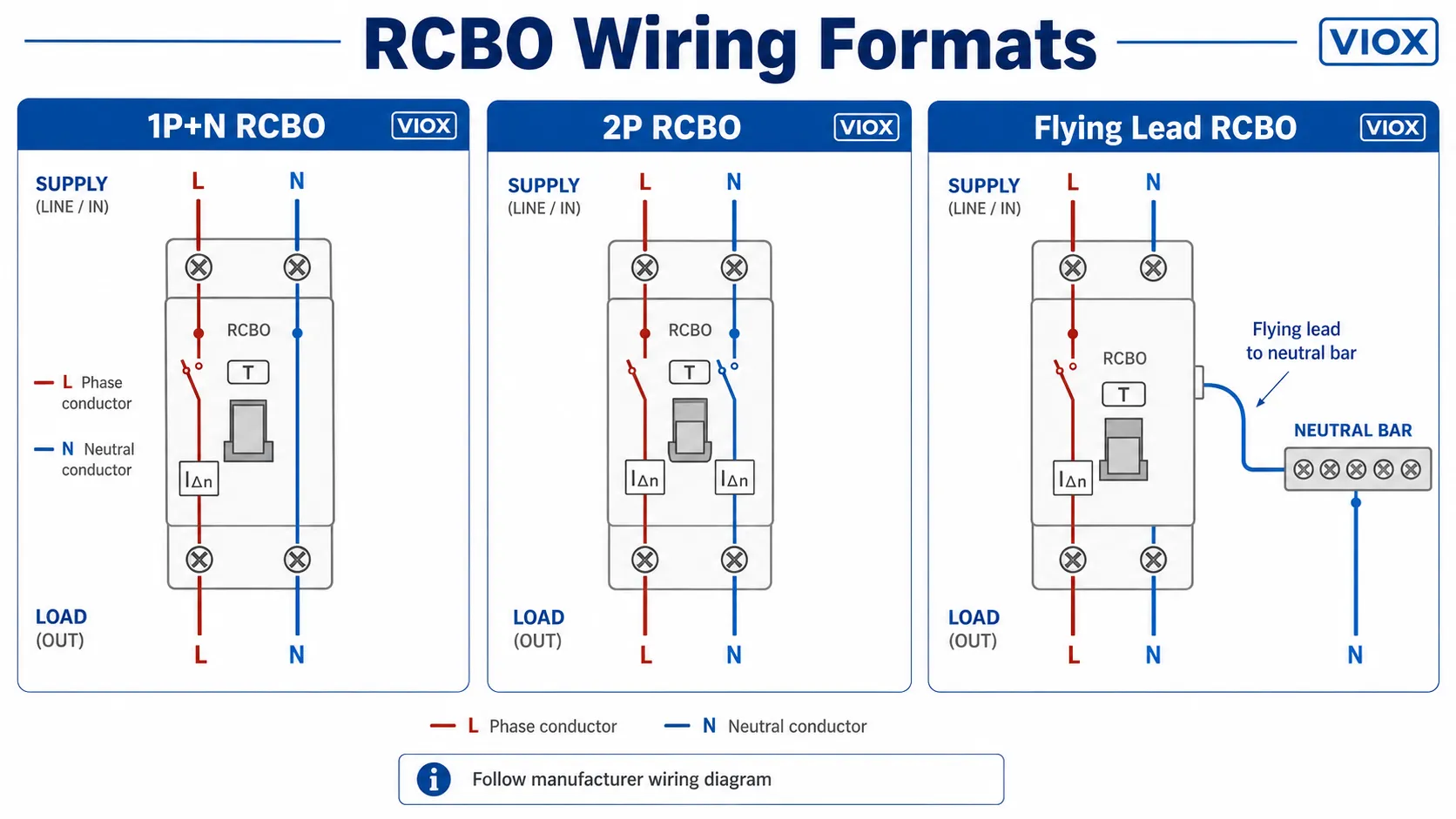
1P+N RCBO တိုင်းသည် Neutral ကို တူညီသောနည်းလမ်းဖြင့် ဖြတ်တောက်သည်ဟု မယူဆပါနှင့်။ အချို့သောဈေးကွက်များတွင် Flying neutral lead ပါသော Compact RCBO များသည် အသုံးများသည်။ အခြားနေရာများတွင် Plug-on neutral သို့မဟုတ် Two-pole အမျိုးအစားများကို ပိုမိုနှစ်သက်ကြသည်။ မှန်ကန်သောရွေးချယ်မှုသည် Board ဒီဇိုင်း၊ Neutral စီစဉ်ပုံ၊ Busbar စနစ်၊ ဒေသတွင်း ဝိုင်ယာသွယ်တန်းမှု စည်းမျဉ်းများနှင့် ထုတ်လုပ်သူ၏ ဝိုင်ယာသွယ်တန်းမှု ပုံစံပြဇယားတို့အပေါ် မူတည်သည်။.
RCBO ရွေးချယ်မှုအောက်ရှိ B၊ C နှင့် D Trip Curves များ
စံသတ်မှတ်ချက် ရှင်းလင်းချက်များတွင် ယိုစိမ့်မှုကာကွယ်ခြင်း (Leakage protection) ကို အဓိကထားလေ့ရှိသော်လည်း RCBO များတွင် လျှပ်စီးကြောင်းလွန်ကာကွယ်ခြင်း (Overcurrent protection) လည်း ပါဝင်သည်။ ဆိုလိုသည်မှာ Trip curve သည် အရေးကြီးဆဲဖြစ်သည်။.
| Curve (မျဉ်းကွေး) | ချက်ချင်းတုံ့ပြန်သော သံလိုက်ဖြတ်တောက်မှု အတိုင်းအတာ (Instantaneous Magnetic Trip Range) | ပုံမှန်အသုံးပြုမှု |
|---|---|---|
| B မျဉ်းကွေး | 3 မှ 5 ဆ In | လျှပ်စီးကြောင်းဝင်ရောက်မှုနည်းသော ဆားကစ်များ၊ မီးအလင်းရောင်စနစ်များနှင့် ချို့ယွင်းချက်ဖြစ်ပေါ်နိုင်သည့် လျှပ်စီးကြောင်း (fault current) ကန့်သတ်ချက်ရှိသော ရှည်လျားသည့် ကေဘယ်ကြိုးသွယ်တန်းမှုများ |
| C မျဉ်းကွေး | 5 မှ 10 ဆ In | လျှပ်စီးကြောင်းဝင်ရောက်မှု အသင့်အတင့်ရှိသော ယေဘုယျသုံး ပလပ်ပေါက်များနှင့် ဖြန့်ဖြူးရေးဆားကစ်များ |
| D မျဉ်းကွေး | 10 မှ 20 ဆ In | ထရန်စဖော်မာများ၊ မော်တာများနှင့် ဒီဇိုင်းအရ ခွင့်ပြုထားသော အချို့သော စက်မှုလုပ်ငန်းသုံး ဝန်အားများကဲ့သို့ လျှပ်စီးကြောင်းဝင်ရောက်မှု မြင့်မားသော ဝန်အားများ |
D-curve RCBO သည် လျှပ်စီးကြောင်းဝင်ရောက်မှုကို ပိုမိုခံနိုင်ရည်ရှိသော်လည်း ရှော့ဖြစ်သည့်အချိန်တွင် ချက်ချင်းဖြတ်တောက်နိုင်ရန် လုံလောက်သော fault current လိုအပ်ပါသည်။ နောက်ဆုံးရွေးချယ်မှုတွင် ဝန်အားအမျိုးအစား၊ ကေဘယ်ကြိုးကာကွယ်မှု၊ ဖြစ်ပေါ်နိုင်သည့် fault current၊ fault-loop အခြေအနေများနှင့် ဒေသဆိုင်ရာ စည်းမျဉ်းများကို ထည့်သွင်းစဉ်းစားရပါမည်။.
Residual Current အမျိုးအစားများ- AC, A, F နှင့် B
Residual current အမျိုးအစားသည် RCBO မှ မည်သည့် လျှပ်စီးယိုစိမ့်မှုပုံစံ (waveform) ကို ထောက်လှမ်းနိုင်သည်ကို သတ်မှတ်ပေးသည်။.
| အမျိုးအစား | ထောက်လှမ်းသည်။ | ပုံမှန်အသုံးပြုမှု |
|---|---|---|
| AC ရိုက်ပါ။ | ဆိုင်းနပ်စ်ပုံစံ (Sinusoidal) AC ကျန်ရှိသော လျှပ်စီးကြောင်း | ရိုးရှင်းသော လျှပ်ခံပါဝင်သည့် AC ဝန်များ (Simple resistive AC loads) |
| အမျိုးအစား A | AC နှင့် တုန်ခါမှုရှိသော DC လျှပ်စီးယိုစိမ့်မှု | ခေတ်မီလျှပ်စစ်ပစ္စည်းများ၊ LED မောင်းနှင်သည့်ကိရိယာများ (LED drivers) နှင့် အီလက်ထရောနစ်ပစ္စည်းများ |
| F ရိုက်ပါ။ | Type A နှင့် ရောနှောကြိမ်နှုန်းရှိသော လျှပ်စီးယိုစိမ့်မှု | တစ်ဖက်လှည့် အင်ဗာတာဝန်များ (Single-phase inverter loads)၊ အပူစုပ်စက်များ (heat pumps) နှင့် အဝတ်လျှော်စက်များ |
| B အမျိုးအစား | AC၊ တုန်ခါမှုရှိသော DC နှင့် ချောမွေ့သော DC လျှပ်စီးယိုစိမ့်မှု | လျှပ်စစ်ကားအားသွင်းစနစ်များ (EV charging)၊ နေရောင်ခြည်စွမ်းအင်သုံးစနစ်များ (PV)၊ VFD များ၊ UPS နှင့် စက်မှုအီလက်ထရောနစ်ပစ္စည်းများ |
မှားယွင်းသော Residual Current အမျိုးအစားကို အသုံးပြုခြင်းသည် မလိုအပ်ဘဲ လျှပ်စစ်ပြတ်တောက်ခြင်း (Nuisance tripping) သို့မဟုတ် လျှပ်စစ်ယိုစိမ့်မှုပုံစံအချို့ကို မဖော်ထုတ်နိုင်ခြင်းတို့ ဖြစ်ပေါ်စေနိုင်သည်။ Waveform အခြေခံလမ်းညွှန်ချက်အသေးစိတ်အတွက် ကြည့်ရှုပါ။ RCBO အမျိုးအစား AC နှင့် အမျိုးအစား A၊ အမျိုးအစား F၊ အမျိုးအစား B တို့၏ ကွာခြားချက်များ.
RCBO စံနှုန်းနှင့်ပတ်သက်၍ အဖြစ်များသော အထင်အမြင်လွဲမှားမှုများ
အမှား (၁) - RCCB ကို RCBO အဖြစ် မှားယွင်းသတ်မှတ်ခြင်း
RCCB တွင် Overcurrent (လျှပ်စီးကြောင်းလွန်ကဲမှု) ကာကွယ်ပေးသည့်စနစ် မပါဝင်ပါ။ အကယ်၍ စက်ပစ္စည်းတစ်ခုတည်းက လျှပ်စစ်ယိုစိမ့်မှု၊ ဝန်ပိုမှု (Overload) နှင့် ဝါယာရှော့ (Short-circuit) တို့ကို ကာကွယ်ပေးရန် လိုအပ်ပါက RCBO ကိုသာ အသုံးပြုရမည်ဖြစ်သည်။.
အမှား (၂) - RCBO စံနှုန်းကို ယေဘုယျ Circuit Breaker စံနှုန်းအဖြစ် အသုံးပြုခြင်း
၎င်းသည် ယေဘုယျ Circuit Breaker စံနှုန်းမဟုတ်ပါ။ RCBO များအတွက်သာ သက်ဆိုင်သည်။ စက်မှုလုပ်ငန်းသုံး Circuit Breaker များနှင့် MCCB များအတွက် IEC 60947-2 စံနှုန်းသည် ပိုမိုသက်ဆိုင်ပါသည်။.
အမှား (၃) - Ampere Rating (လျှပ်စီးကြောင်းပမာဏ) ကိုသာ စစ်ဆေးခြင်း
Ampere rating သည် ယိုစိမ့်မှုအာရုံခံနိုင်စွမ်း (leakage sensitivity)၊ ကျန်ရှိသောလျှပ်စီးကြောင်းအမျိုးအစား (residual current type)၊ ဖြတ်တောက်နိုင်စွမ်း (breaking capacity)၊ trip curve၊ pole ပုံစံ သို့မဟုတ် neutral ချိတ်ဆက်မှုတို့ကို ဖော်ပြခြင်းမရှိပါ။.
အမှား (၄) - Prospective Short-Circuit Current ကို လျစ်လျူရှုခြင်း
Breaking capacity ကို ရရှိနိုင်သော fault current နှင့် ကိုက်ညီမှုရှိမရှိ စစ်ဆေးရပါမည်။ 6kA သို့မဟုတ် 10kA ကဲ့သို့သော သာမန် rating များသည် တပ်ဆင်မှုတိုင်းအတွက် အလိုအလျောက် မှန်ကန်နေမည်မဟုတ်ပါ။.
အမှား (၅) - Board ကို စစ်ဆေးခြင်းမရှိဘဲ 1P+N ကို 2P ဖြင့် အစားထိုးခြင်း
Neutral တည်ဆောက်ပုံ၊ busbar လိုက်ဖက်ညီမှု၊ switched neutral လုပ်ဆောင်ချက်နှင့် flying lead လိုအပ်ချက်များသည် ထုတ်ကုန်အမျိုးအစားနှင့် ဈေးကွက်အပေါ်မူတည်၍ ကွဲပြားနိုင်သည်။ ဝိုင်ယာကြိုးသွယ်တန်းမှုပုံစံ (wiring diagram) နှင့် board လိုက်ဖက်ညီမှုဆိုင်ရာ အချက်အလက်များကို အမြဲတမ်း တိကျစွာ လိုက်နာပါ။.
အမှား (၆) - ခေတ်မီဝန်အားများအတွက် Type AC သည် လုံလောက်သည်ဟု ယူဆခြင်း
ခေတ်မီအီလက်ထရွန်နစ်ပစ္စည်းများ၊ LED driver များ၊ inverter များ၊ EV charger များ နှင့် UPS စက်ပစ္စည်းများသည် Type AC ကိရိယာများ ကောင်းစွာမသိရှိနိုင်သော ယိုစိမ့်မှုလှိုင်းပုံစံများကို ဖန်တီးနိုင်သည်။ Residual current အမျိုးအစားသည် ဝန်အား (load) နှင့် ကိုက်ညီရပါမည်။.
ပေးသွင်းသူအား စစ်ဆေးရန် စာရင်း (Supplier Verification Checklist)
RCBO မော်ဒယ်တစ်ခုကို အတည်မပြုမီ အောက်ပါတို့ကို တောင်းဆိုပါ -
- တိကျသော ထုတ်ကုန်အချက်အလက်စာရွက် (Datasheet)
- လိုအပ်သည့်နေရာများတွင် IEC 61009-1 အမှတ်အသား သို့မဟုတ် စာရွက်စာတမ်းများ
- လက်ရှိ အဆင့်သတ်မှတ်ထားသည်။
- Rated residual operating current IΔn
- Icn သတ်မှတ်ထားသော ရှော့ဆားကစ်ခံနိုင်ရည်ပမာဏ (Rated short-circuit capacity)
- ပရောဂျက်အတွက် လိုအပ်ပါက Ics ဝန်ဆောင်မှုဆိုင်ရာ ရှော့ဆားကစ်ခံနိုင်ရည်ပမာဏ (Service short-circuit capacity)
- IΔm သတ်မှတ်ထားသော ကျန်ရှိသည့် လျှပ်စီးကြောင်းဖြတ်တောက်နိုင်မှုနှင့် ချိတ်ဆက်နိုင်မှုစွမ်းရည် (Rated residual making and breaking capacity)
- Residual current အမျိုးအစား
- Trip curve
- အဆင့်သတ်မှတ်ထားသော ဗို့အား
- Pole configuration
- Neutral (ကြားခံ) လျှပ်စီးကြောင်းဖြတ်တောက်မှု သို့မဟုတ် Neutral ချိတ်ဆက်မှုဆိုင်ရာ အသေးစိတ်အချက်အလက်များ
- ဝါယာကြိုးချိတ်ဆက်မှု ပုံစံ (Wiring diagram)
- တိကျသော မော်ဒယ်နံပါတ်နှင့် ကိုက်ညီသည့် လက်မှတ် သို့မဟုတ် ကြေညာချက်
- အသုံးပြုနိုင်သည့် ကန့်သတ်ချက်များအား အတည်ပြုချက်
အကယ်၍ ပေးသွင်းသူတစ်ဦးသည် IEC 61009-1, IEC 60898-1, IEC 60898-1 နှင့် IEC 60947-2 တို့၏ ကွာခြားချက်ကို ရှင်းပြနိုင်ခြင်းမရှိပါက၊ ၎င်းတို့၏ ဈေးနှုန်းတင်ပြချက်ကို သတိထား၍ ကိုင်တွယ်ပါ။.
အမြဲမေးလေ့ရှိသောမေးခွန်းများ
1P+N နှင့် 2P RCBO တို့၏ ကွာခြားချက်မှာ အဘယ်နည်း။
1P+N RCBO သည် ပုံမှန်အားဖြင့် Residual-current ထောက်လှမ်းခြင်းနှင့် ဆားကစ်ချိတ်ဆက်ခြင်းအတွက် Neutral လမ်းကြောင်းနှင့်အတူ Phase pole တစ်ခုကို ပေါင်းစပ်ထားသည်။ 2P RCBO သည် နှစ်ခုလုံးကို ဖြတ်တောက်နိုင်သော (Two-pole switching) စနစ်ကို ပံ့ပိုးပေးသည်။ Neutral ကို ဖြတ်တောက်ခြင်း ရှိ၊ မရှိမှာ ထုတ်ကုန်ဒီဇိုင်းပေါ်တွင် မူတည်သဖြင့် Datasheet နှင့် ဝါယာကြိုးသွယ်တန်းမှုပုံစံ (Wiring diagram) ကို စစ်ဆေးရန် လိုအပ်သည်။.
RCBO သည် Neutral လျှပ်ကူးပစ္စည်းကို ဖြတ်တောက်သင့်ပါသလား။
၎င်းသည် စနစ်ဒီဇိုင်း၊ ထုတ်ကုန်တည်ဆောက်ပုံနှင့် ဒေသတွင်း ဝါယာကြိုးသွယ်တန်းမှု စည်းမျဉ်းများပေါ်တွင် မူတည်သည်။ အချို့သော RCBO များသည် Neutral ကို ဖြတ်တောက်ပေးနိုင်သော်လည်း အချို့မှာမူ Neutral လမ်းကြောင်းကို Residual-current ထောက်လှမ်းခြင်းနှင့် ဆားကစ်ချိတ်ဆက်ခြင်းအတွက်သာ အဓိကအသုံးပြုသည်။ ရှေ့ဘက်တံဆိပ်ကိုသာမက ဝါယာကြိုးသွယ်တန်းမှုပုံစံနှင့် Pole ဖော်ပြချက်ကိုပါ စစ်ဆေးပါ။.
RCBO ချိတ်ဆက်ထားသော ဆားကစ်တစ်ခုကို Insulation-test စစ်ဆေးနိုင်ပါသလား။
RCBO ထုတ်လုပ်သူ၏ ညွှန်ကြားချက်များနှင့် ဒေသတွင်း စမ်းသပ်မှုအလေ့အကျင့်များကို လိုက်နာပါ။ အချို့သော အီလက်ထရောနစ် RCBO ဒီဇိုင်းများသည် အတွင်းပိုင်းရှိ အထိခိုက်မခံသော အီလက်ထရောနစ်ပစ္စည်းများ သို့မဟုတ် Neutral ချိတ်ဆက်မှုများကို မှန်ကန်စွာ မဖြုတ်ဘဲ Insulation resistance စမ်းသပ်မှုပြုလုပ်ပါက ပျက်စီးနိုင်သည် သို့မဟုတ် မှားယွင်းသော ရလဒ်များ ထွက်ပေါ်လာနိုင်သည်။.
Flying lead RCBO ဆိုသည်မှာ အဘယ်နည်း။
Flying lead RCBO တစ်ခုတွင် neutral reference အတွက် သို့မဟုတ် အချို့သော consumer unit ဒီဇိုင်းများတွင် neutral bar နှင့် ချိတ်ဆက်ရန်အတွက် သီးခြား lead တစ်ခု ပါရှိသည်။ ၎င်းကို ထုတ်လုပ်သူမှ ပြသထားသည့်အတိုင်း တိကျစွာ ဝိုင်ယာသွယ်တန်းရမည်။.
RCBO တစ်ခုကို တပ်ဆင်ပြီးပြီးချင်း ချက်ချင်း trip ဖြစ်ရခြင်း အကြောင်းရင်းမှာ အဘယ်နည်း။
အဖြစ်များသော အကြောင်းရင်းများမှာ line-neutral ပြောင်းပြန်ဖြစ်ခြင်း၊ circuit များကြားတွင် neutral ကို မျှဝေသုံးစွဲခြင်း၊ neutral ကို မှားယွင်းသော bar တွင် ချိတ်ဆက်မိခြင်း၊ downstream တွင် neutral-earth fault ဖြစ်ခြင်း၊ load leakage သည် IΔn ထက် ကျော်လွန်ခြင်း သို့မဟုတ် flying lead RCBO ကို ဝိုင်ယာသွယ်တန်းရာတွင် မှားယွင်းခြင်းတို့ ဖြစ်သည်။ စက်ပစ္စည်းကို အကြိမ်ကြိမ် reset လုပ်မည့်အစား circuit ကို လျှပ်စစ်ဖြတ်တောက်ပြီး စနစ်တကျ စမ်းသပ်ပါ။.
MCB တစ်ခုကို RCBO နှင့် တိုက်ရိုက် အစားထိုးနိုင်ပါသလား။
board layout၊ neutral စီစဉ်ပုံ၊ busbar ချိတ်ဆက်မှု၊ pole ပုံစံ၊ rated current၊ trip curve၊ breaking capacity နှင့် residual current အမျိုးအစားတို့သည် တပ်ဆင်မှုနှင့် ကိုက်ညီမှသာ အစားထိုးနိုင်သည်။ panel အများစုတွင် MCB မှ RCBO ကာကွယ်မှုသို့ ပြောင်းလဲသည့်အခါ neutral ဝိုင်ယာသွယ်တန်းမှုကို ပြောင်းလဲရန် လိုအပ်သည်။.
နောက်ဆုံးအကြံပြုချက်
IEC 61009-1 ကို RCBO ဝယ်ယူမှုလမ်းညွှန်အဖြစ် မသတ်မှတ်ဘဲ RCBO စံနှုန်းအဖြစ် ဦးစွာ သတ်မှတ်ရမည်။ ၎င်းသည် overcurrent ကာကွယ်မှုပါဝင်သော residual current operated circuit-breaker များအတွက် စက်ပစ္စည်းအမျိုးအစား၊ ကာကွယ်မှုလုပ်ဆောင်ချက်များနှင့် ထုတ်ကုန်အကဲဖြတ်မှုမူဘောင်တို့ကို ဖော်ပြထားသည်။.
စံနှုန်းကို အတည်ပြုပြီးနောက် အမှန်တကယ် အင်ဂျင်နီယာပိုင်းဆိုင်ရာ လုပ်ဆောင်ချက်မှာ datasheet ကို စစ်ဆေးခြင်းဖြစ်သည် - rated current၊ IΔn၊ Icn၊ Ics (ဖော်ပြထားပါက)၊ IΔm၊ residual current အမျိုးအစား၊ trip curve၊ pole ပုံစံ၊ neutral switching၊ ဝိုင်ယာသွယ်တန်းမှုပုံစံနှင့် အသုံးပြုနိုင်သည့် ကန့်သတ်ချက်များတို့ ဖြစ်သည်။.
ဝယ်ယူသူများအတွက် အလုံခြုံဆုံးနည်းလမ်းမှာ စက်ပစ္စည်း၏ ဘက်နှစ်ဖက်စလုံးကို စစ်ဆေးရန်ဖြစ်သည် - RCD ကဲ့သို့သော leakage ကာကွယ်မှုနှင့် MCB ကဲ့သို့သော overcurrent ကာကွယ်မှုတို့ ဖြစ်သည်။ မည်သည့်ဘက်တွင်မဆို မှားယွင်းနေပါက RCBO ကို မှန်ကန်စွာ သတ်မှတ်ထားခြင်း မဟုတ်ပါ။.