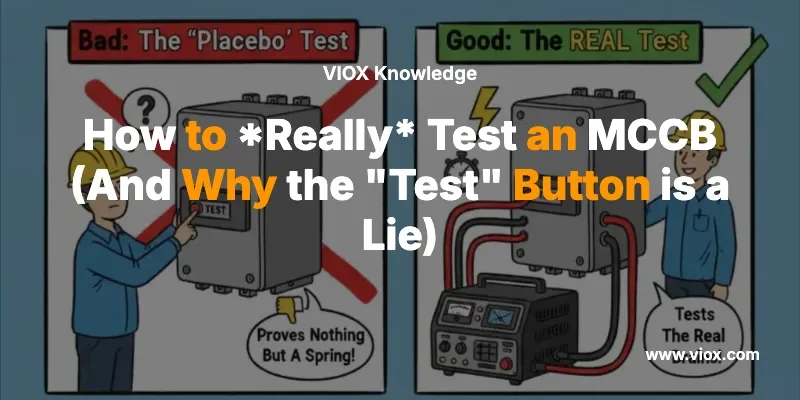
You’re on-site, in front of a giant 400A MCCB (Moulded Case Circuit Breaker) that acts as the “main gate” for a critical factory line.
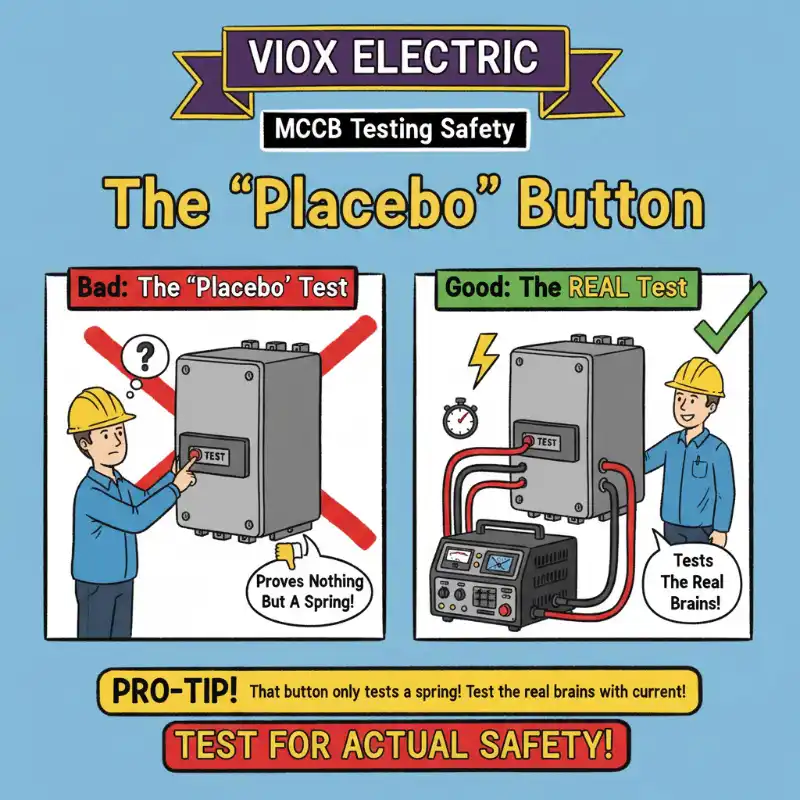
You need to “test” it. You see the little “Push-to-Trip” (PTT) button. You press it.
CLUNK.
The breaker trips.
Your job is done, right? You’ve “tested” the breaker?
No. You’ve done nothing but test a spring. You’ve just fallen for “The ‘Placebo’ Button.” Here’s the truth about that “test” and how to really know if your breaker is a “guardian” or just a “bomb.”
The “Smoke Alarm” Analogy: What That Button Actually Does

The biggest “Aha!” moment in electrical safety is this: Pressing that “Test” button is exactly like pressing the “Test” button on your home’s smoke alarm.
Think about it.
- What it proves: The horn beeps. The battery has power. The internal horn works.
- What it DOES NOT prove: That the “smoke sensor” (the အိမ် brains) can actually detect smoke.
That MCCB’s “Test” button is the same. It’s a mechanical test, not an လျှပ်စစ် သင်သည် ၁၀ မိနစ်အတွင်း သင်၏အိမ်တစ်ခုလုံးကို မြေပုံဆွဲပြီးပြီဖြစ်သည်။ အော်ဟစ်ခြင်းမရှိ၊ ပျက်စီးသွားသော ရေခဲသေတ္တာများမရှိ။.
The PTT button is just a small plastic rod that bypasses the real “brains” and mechanically “pokes” the final trip latch. You’ve confirmed the “firing pin” works, not that the “trigger” can actually be pulled by the sensors.
The “Two Brains” That “Placebo” Button Ignores
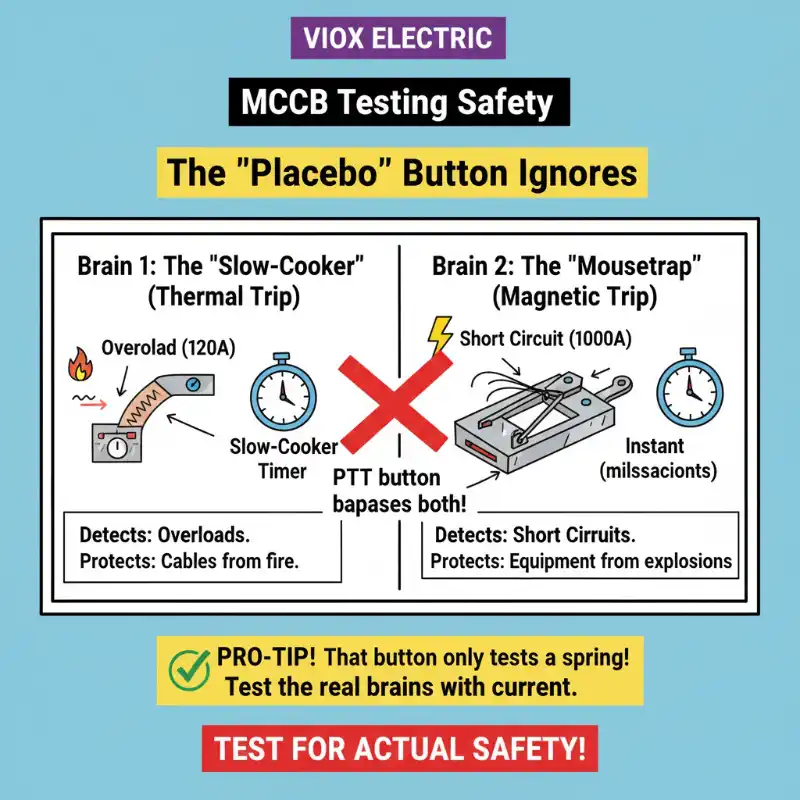
A breaker has two အိမ် “brains” (trip units) that are designed to save your equipment and your life. That “placebo” button tests neither of them.
Brain 1: The “Slow-Cooker” (Thermal Trip)
- Its Job: To detect ဝန်ပို (e.g., a 100A breaker running at 120A for 10 minutes).
- How it Works: A bimetallic strip (two metals) 缓慢地 heats up with the excess current. As it heats, it bends, and eventually—like a “slow-cooker” timer—it bends far enough to “poke” the trip latch.
- Why it Matters: This saves your cables from overheating in the wall, melting, and starting a fire.
Brain 2: The “Mousetrap” (Magnetic Trip)
- Its Job: To detect ဝါယာရှော့များ (e.g., a 1000A fault from a dead short).
- How it Works: An electromagnet ချက်ချင်း (in milliseconds) generates a powerful magnetic field from the massive surge of current. This field snaps a lever—like a “mousetrap”—to “poke” the trip latch.
- Why it Matters: This saves you from an arc flash explosion, equipment-destroying faults, and a very bad day.
The PTT button completely bypasses both of these life-saving “brains.”
The “800A Failure”: When a “Breaker” Becomes a “Switch”
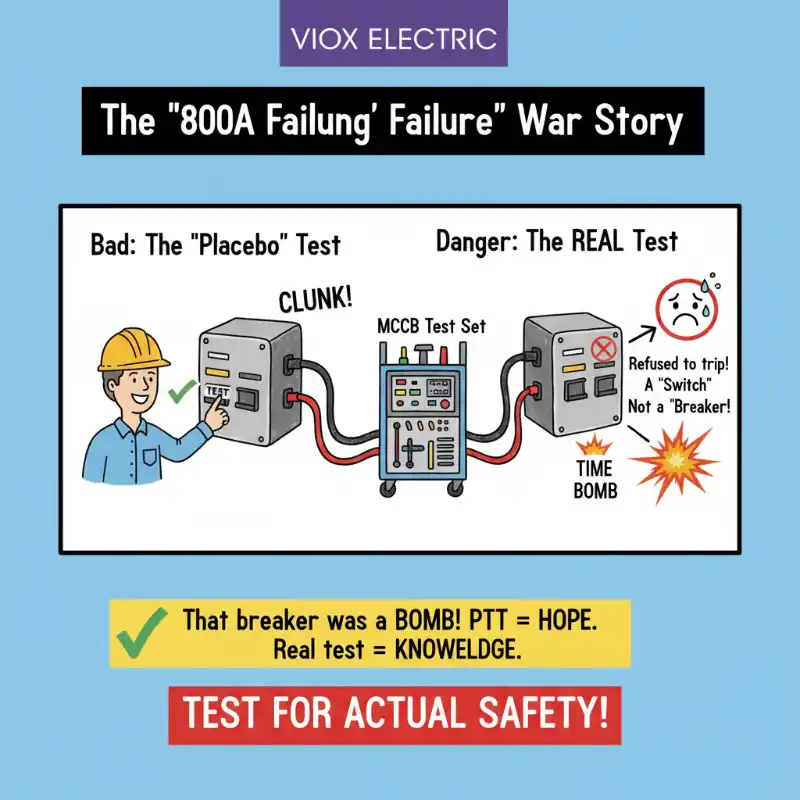
“So what?” you say. “If the spring works, the brains are probably fine.”
This is the exact thinking that leads to catastrophe. This is “The 800A Failure.”
ပါဝါစနစ်အင်ဂျင်နီယာအကြီးတန်းတစ်ဦး၏ “စစ်ပွဲဇာတ်လမ်း” တစ်ခု
“ကျွန်တော်တို့ကို စက်ရုံတစ်ခုမှာ နှစ်စဉ် PM (ကြိုတင်ကာကွယ်ထိန်းသိမ်းခြင်း) လုပ်ဖို့ ငှားရမ်းခဲ့ပါတယ်။ သူတို့မှာ main feeder ပေါ်မှာ 400A MCCB တစ်ခုရှိတယ်။ အဲဒါက အသက် ၂၀ ရှိပြီ။.
ကျွန်တော်တို့ ပထမဆုံးလုပ်ခဲ့တာက PTT ခလုတ်ကို နှိပ်လိုက်တာပဲ။. CLUNK. အဲဒါက အပြည့်အဝ အလုပ်လုပ်တယ်။ စက်ရုံမန်နေဂျာက ပြုံးတယ်။.
ပြီးတော့ ကျွန်တော်တို့က “The Beast” ကို ဆွဲထုတ်လိုက်တယ်။”
ကျွန်တော်တို့ရဲ့ ‘Primary Current Injection’ စမ်းသပ်ကိရိယာကို ချိတ်ဆက်လိုက်တယ်။ ဒီစက်က ခလုတ်ကို မထိုးဘူး။ အဲဒါက breaker ကို current “ကျွေး” တယ်။ အိမ် ကျွန်တော်တို့ ‘ကျွေး’ ဖို့ စတင်လိုက်တယ်။ 500 Amps… 600 Amps… 800 Amps….
ဘာမှ မဖြစ်ဘူး။
ခရီးထွက်ဖို့ ငြင်းဆန်တယ်။.
断路器会 နောက်ဆုံးမှာ မဖွင့်ခင်အထိ 1200A အထိ တွန်းပို့လိုက်တယ်။ အဲဒီ 400A.
“Breaker” က “လွန်ခဲ့တဲ့နှစ်တွေကတည်းက သေဆုံးသွားခဲ့တာ။ အဲဒါက 400A” “Switch” တစ်ခုပဲ။ “အဲဒီစက်ရုံလိုင်းတစ်ခုလုံးဟာ အနှစ် ၂၀ လုံးလုံး”
overload protection မရှိခဲ့ဘူး။ breaker ထဲက အဆီတွေ ခြောက်သွားတယ်။ စပရိန်တွေက အားနည်းတယ်။ “ဦးနှောက်” (thermal unit) က သေသွားတယ်။ သုည အဲဒါက နှစ်တိုင်း “placebo test” ကို အောင်မြင်ခဲ့တဲ့ “အချိန်မရွေး ပေါက်ကွဲနိုင်တဲ့ ဗုံး” တစ်လုံးပဲ။.
စမ်းသပ်မှု- “Feeding the Beast” (Primary Current Injection).
ဟိ 不在 ဒါဆို MCCB ကို ဘယ်လိုစမ်းသပ်မလဲ။ “ဟွန်း” ကိုတင်မကဘဲ “မီးခိုးအာရုံခံကိရိယာ” ကို ဘယ်လိုစမ်းသပ်မလဲ။

“Feed the Beast” really ဒါက သာမန်လျှပ်စစ်ပညာရှင်တစ်ယောက်အတွက် အလုပ်မဟုတ်ဘူး။ အဲဒါက အထူးပြု NETA (International Electrical Testing Association) ပါဝါစနစ်အင်ဂျင်နီယာတစ်ယောက်အတွက် အလုပ်တစ်ခုပါ။
您 “အထူးပြု၊ high-current ”MCCB Test Set” ဒီစက်က အိတ်ကြီးတစ်လုံးလောက် အရွယ်အစားရှိပြီး အလေးချိန် 50kg ရှိပြီး $20,000 ဒါမှမဟုတ် ဒီထက်ပိုပြီး ကုန်ကျနိုင်ပါတယ်။”
လုပ်ငန်းစဉ်-.
- ကိရိယာ: အင်ဂျင်နီယာက breaker ကို သီးခြားခွဲထုတ်ပြီး ဒီ “Beast” ကို ချိတ်ဆက်တယ်။ စက်က 500A, 1000A ဒါမှမဟုတ် 3000A ရှိတဲ့ တကယ့်၊ ခြေရာခံနိုင်တဲ့ current ကို.
- breaker ရဲ့ “ဦးနှောက်” ထဲကို ထိုးသွင်းတယ်။ သူတို့က နာရီ (ဒါမှမဟုတ် ပေါင်းစပ်ထားတဲ့ timer) ကို အသုံးပြုပြီး breaker ကို သူ့ရဲ့ တကယ်တော့ သိထားတဲ့ trip curve (TCC ဒါမှမဟုတ် Time-Current Curve) နဲ့ “ပြိုင်” ဖို့ အသုံးပြုတယ်။ “သတ်မှတ်ထားတဲ့ 5-10 စက္ကန့်အတွင်း 800A မှာ ခရီးထွက်ခဲ့သလား” (Thermal Brain:”
- The Result: အောင်မြင် “0.04 စက္ကန့်အတွင်း 3000A မှာ ခရီးထွက်ခဲ့သလား” (Magnetic Brain: လျှပ်စစ်ပညာရှင်တစ်ဦးက.
- “breaker ကို တပ်ဆင်ပြီး PTT (စက်ပိုင်းဆိုင်ရာ) စမ်းသပ်မှုကို လုပ်ဆောင်တယ်။ NETA Test Engineer တစ်ဦးက Primary Current Injection (လျှပ်စစ်) စမ်းသပ်မှုနဲ့ breaker ကို အသိအမှတ်ပြုတယ်။ မင်းရဲ့အခန်းကဏ္ဍကို သိပါ။ PTT စမ်းသပ်မှုကို “functional safety test” အဖြစ် ဘယ်တော့မှ လက်မှတ်မထိုးပါနဲ့။ မင်းက “မျှော်လင့်ချက်” ကို လက်မှတ်ထိုးနေတာ၊ “အသိပညာ” မဟုတ်ဘူး။)
- “နိဂုံး- ”စိတ်အေးချမ်းသာမှု” နှင့် “အမှန်တကယ် ဘေးကင်းမှု” Primary Current Injection (လျှပ်စစ်) စမ်းသပ်မှုနဲ့ breaker ကို အသိအမှတ်ပြုတယ်။ မင်းရဲ့အခန်းကဏ္ဍကို သိပါ။ PTT စမ်းသပ်မှုကို “functional safety test” အဖြစ် ဘယ်တော့မှ လက်မှတ်မထိုးပါနဲ့။ မင်းက “မျှော်လင့်ချက်” ကို လက်မှတ်ထိုးနေတာ၊ “အသိပညာ” မဟုတ်ဘူး။)
ကျွမ်းကျင်သူ အကြံပြုချက်- အဲဒီ “Test” ခလုတ်လေးက စမ်းသပ်မှု မဟုတ်ဘူး။ အဲဒါက “စက်ပိုင်းဆိုင်ရာ ပြန်လည်စတင်ခြင်း” တစ်ခုပါ။ အဲဒါက အဲဒါက အဆောက်အဦမန်နေဂျာ ဒါမှမဟုတ် ပရော်ဖက်ရှင်နယ်မဟုတ်သူကို “စိတ်အေးချမ်းသာမှု” ပေးဖို့ ဒီဇိုင်းထုတ်ထားတာပါ။ စမ်းသပ်မှု၊ “Primary Current Injection” က ပေးတာက“
“အမှန်တကယ် ဘေးကင်းမှု” ပါ။“
မင်းက အရေးကြီးတဲ့စနစ်တစ်ခုကို တည်ဆောက်တဲ့အခါ မင်းက သေချာမှု. ပေါ်မှာ တည်ဆောက်တယ်။ VIOX MCCB တွေကို အမြင့်ဆုံးစံနှုန်းတွေနဲ့ အင်ဂျင်နီယာလုပ်ထားပြီး ရှင်းလင်းတဲ့ trip curve တွေနဲ့ ပရော်ဖက်ရှင်နယ် စမ်းသပ်ကိရိယာတစ်ခုက “The ‘Placebo’ Button.”
အသိအမှတ်ပြုဖို့ အဆင်သင့်ဖြစ်နေပါပြီ။ မင်းရဲ့ “ဦးနှောက်” တွေ အလုပ်လုပ်မယ်လို့”
ဟိ အိမ် မျှော်လင့်မနေပါနဲ့။ “သူတို့လုပ်တယ်ဆိုတာကို”
သိထားပါ။ ကျွန်တော်တို့ရဲ့. လိုင်းကို ကြည့်ရှုပြီး သေချာမှုနဲ့ တည်ဆောက်ပါ။ MCCB ကို *တကယ်* ဘယ်လိုစမ်းသပ်မလဲ (ဘာကြောင့် “Test” ခလုတ်က လိမ်ညာမှုတစ်ခုလဲ) MCCB ကို *တကယ်* ဘယ်လိုစမ်းသပ်မလဲ (ဘာကြောင့် “Test” ခလုတ်က လိမ်ညာမှုတစ်ခုလဲ) 'Placebo' ခလုတ် your “brains” work—know they do.
Browse our VIOX MCCB line and build with certainty.
နည်းပညာပိုင်းအရတိကျမှန်ကန်မွတ္ခ်က္
**Standards & Sources Referenced**
- This article is based on standard NETA (International Electrical Testing Association) testing procedures for MCCBs.
- The "Two Brains" (Thermal/Magnetic) is a standard description of a "Thermal-Magnetic" trip unit as defined by IEC ၆၀၉၄၇-၂ and NEMA AB 1.
- The PTT (Push-to-Trip) button's function is mechanical and does not test the overcurrent-sensing components.

**Timeliness Statement**
All technical principles and testing standards referenced are accurate as of November 2025.