

Ezen az oldalon
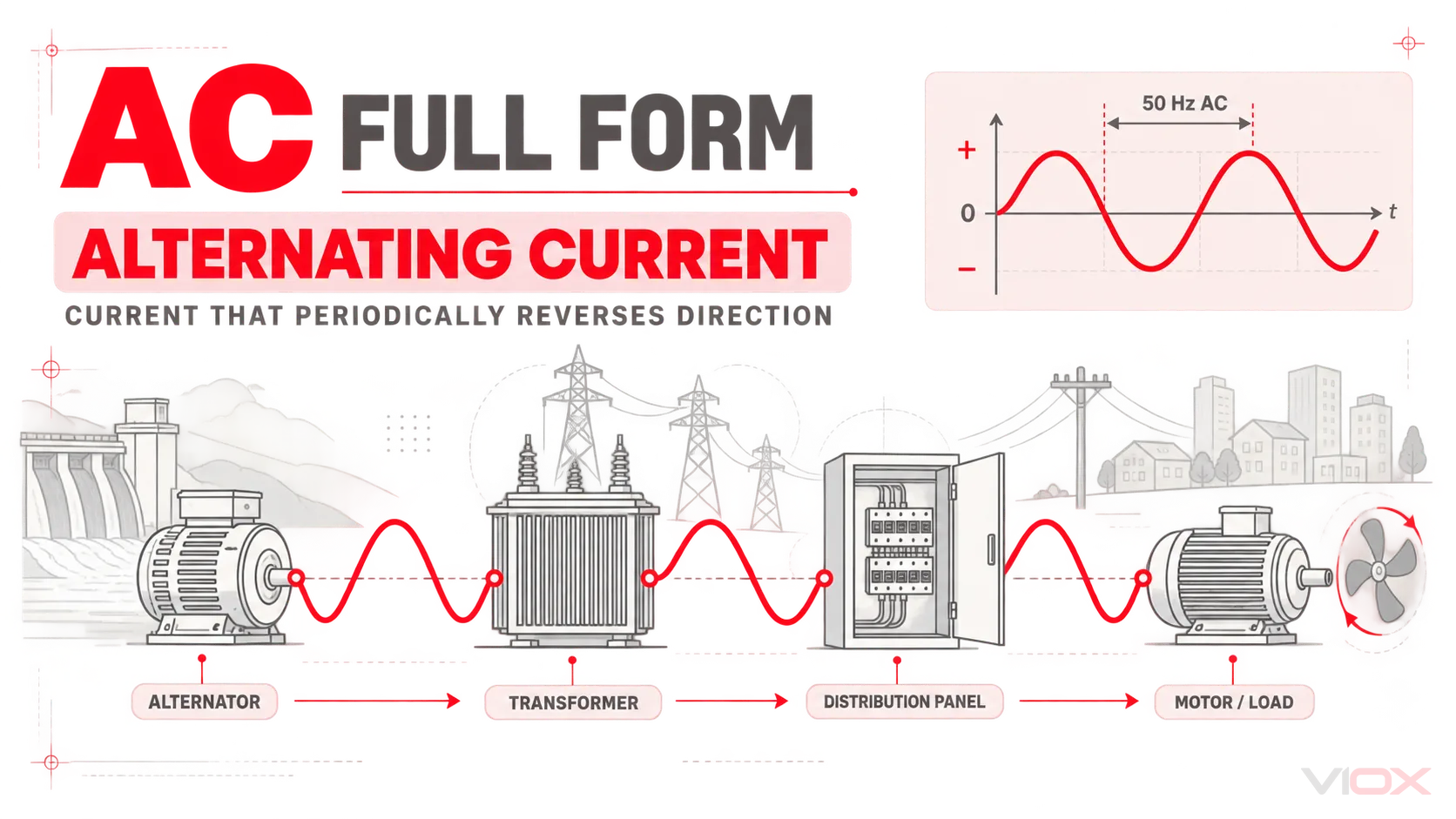
A Az AC teljes jelentése az elektromtechnikában: váltakozó áram (Alternating Current). Olyan elektromos áramot jelöl, amely periodikusan változtatja az irányát. A legtöbb energiaellátó rendszerben a hozzá tartozó feszültség polaritása is ismétlődő hullámformában változik.
A mindennapi nyelvhasználatban az AC jelentheti még a következőket: légkondicionáló vagy légkondicionálás. A környező szövegkörnyezet határozza meg a jelentést. Kapcsolási rajzon, adattáblán, multiméteren, kapcsolón, mágneskapcsolón, motoron vagy tápegység címkéjén az AC általában a következőket jelenti: Váltakozó áram.
| Fogalom | Teljes forma vagy jelentés | Gyakorlati értelmezés |
|---|---|---|
| AC | Váltakozó áram | Az áram iránya periodikusan változik |
| DC | Egyenáram | Az áram iránya állandó |
| VAC | AC Volt | Váltakozó feszültség, amelyet általában effektív (RMS) értékként adnak meg |
| Hz | Hertz | A váltakozó áramú ciklusok száma másodpercenként |
| 1-fázisú váltakozó áram | Egyfázisú váltakozó áram | Egy váltakozó feszültségű hullámforma |
| 3-fázisú váltakozó áram | Háromfázisú váltakozó áram | Három, egymáshoz képest 120 elektromos fokkal eltolt hullámforma |
Ha egyéb elektromos rövidítéseket keres, a VIOX szintén fenntart egy elektromos teljes kifejezésekre vonatkozó referenciát.
Mit jelent az AC az elektromos rendszerekben?
A váltakozó áram idővel irányt vált. Egy egyszerű szinuszos váltakozó áramú hullámforma nulláról indulva eléri a pozitív csúcsot, visszatér nullára, eléri a negatív csúcsot, majd visszatér nullára. Ez a sorozat egy teljes ciklus.
Egy ideális szinuszos feszültség a következőképpen ábrázolható:
v(t)=V_{peak}\sin(2\pi ft+\phi)Hol:
v(t)a pillanatnyi feszültség;V_{peak}a maximális feszültségérték;fa frekvencia hertzben;taz idő;\phia fázisszög.
Ez az egyenlet azért hasznos, mert négy olyan fogalmat különít el, amelyeket gyakran összekevernek: pillanatnyi feszültség, csúcsfeszültség, frekvencia és fázis.
Az energiaellátó rendszerek váltakozó áramát általában szinuszos hullámformára tervezik, de nem minden váltakozó áramú hullámforma tökéletes szinuszhullám. Az elektronikus terhelések, egyenirányítók, frekvenciaváltók és kapcsolóüzemű tápegységek torzíthatják az áram hullámformáját és felharmonikusokat kelthetnek. Az áram akkor is lehet váltakozó, ha az alakja nem ideális szinuszhullám.
Hogyan működik a váltakozó áram frekvenciája
A frekvencia megmutatja, hogy másodpercenként hány teljes váltakozó áramú ciklus megy végbe. Mértékegysége a hertz, rövidítve Hz.
T=\frac{1}{f}Ahol T az egy ciklus időtartama másodpercben, és f a frekvencia hertzben.
50 Hz-en:
- Másodpercenként 50 teljes ciklus megy végbe;
- egy ciklus 20 milliszekundumig tart;
- a polaritás minden félciklusban, azaz ideális periodikus hullámforma esetén 10 milliszekundumonként változik.
60 Hz-en egy teljes ciklus körülbelül 16,67 milliszekundumig tart.
India az 50 Hz-et használja szabványos hálózati frekvenciaként. Az Indiai Szabványügyi Hivatal IS 12360 kiadványa tartalmazza az előnyben részesített feszültség- és frekvenciaértékeket, és az 50 Hz-et határozza meg az általános elektromos berendezések számára. Más országok 60 Hz-et használhatnak, ezért a terméket nem szabad kizárólag a feszültség alapján kiválasztani.
Működhetnek-e az 50 Hz-es berendezések 60 Hz-en?
Néha igen, de nem automatikusan. Számos elektronikai termék és vezérlőeszköz jelöléssel van ellátva 50/60 Hz, ami azt jelzi, hogy a gyártó mindkét frekvenciára tervezte őket. Egy eszköz, amely csak a következő jelöléssel rendelkezik 50 Hz vagy csak 60 Hz alaposabb ellenőrzést igényel.
A frekvencia befolyásolhatja:
- a motor fordulatszámát;
- a transzformátor fluxusát és melegedését;
- az induktív reaktanciát;
- a mágneskapcsolók és relétekercsek viselkedését;
- az időzítő és mérőáramköröket;
- ventilátor, szivattyú és kompresszor teljesítménye.
A kompatibilitást az adattábla és a gyártói dokumentáció alapján kell meghatározni, nem általános feltételezésekre alapozva.
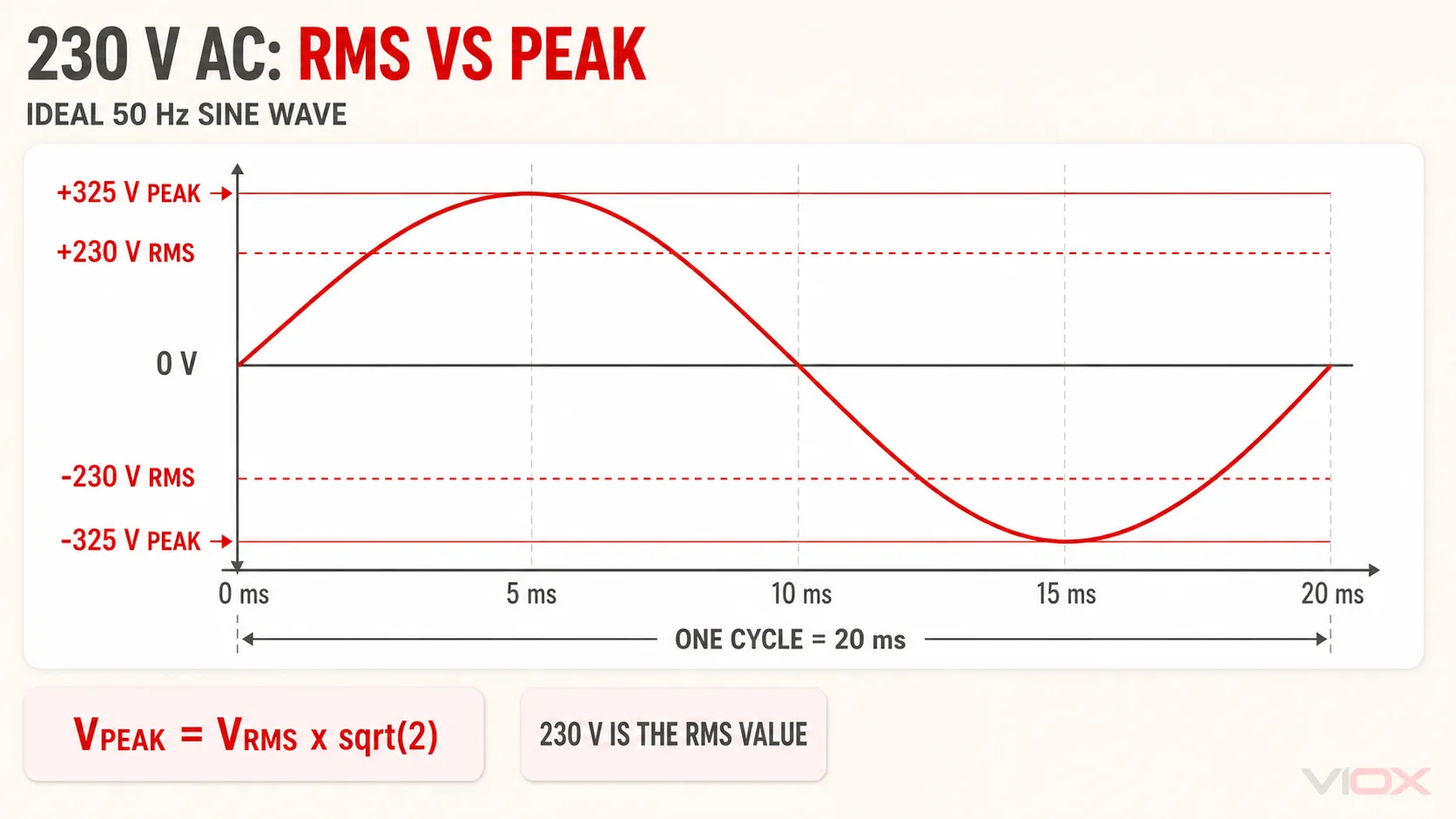
RMS feszültség: Miért nem a 230 V AC a csúcsfeszültség
A váltakozó feszültség folyamatosan változik, ezért a mérnököknek egy gyakorlati értékre van szükségük ahhoz, hogy összehasonlíthassák annak teljesítményhatását az egyenáraméval. Ez az érték a négyzetes középérték, vagyis az RMS érték.
Ideális szinuszos hullám esetén:
V_{RMS}=\frac{V_{peak}}{\sqrt{2}}Ezért:
V_{peak}=V_{RMS}\sqrt{2}Egy névleges 230 V-os váltakozó áramú szinuszos hullám csúcsértéke körülbelül:
230\times\sqrt{2}\approx325\text{ V}A hullámforma ezért az idealizált számítás szerint körülbelül +325 V és -325 V között mozog. A 230 V berendezéseken feltüntetett érték általában az RMS (effektív) érték, nem a csúcsérték.
Ez a megkülönböztetés fontos a szigeteléstervezés, az egyenirányító kiválasztása, a kondenzátor feszültsége, a túlfeszültség-elemzés és a vizsgálóberendezések szempontjából. Ez magyarázza azt is, hogy az azonos számszerű AC és DC feszültségjelölések miért nem jelentenek feltétlenül azonos igénybevételt egy alkatrész számára.
A gyakorlati teljesítmény- és áramkapcsolatokról bővebben a VIOX útmutatójában olvashat: Elektromos képletek kisfeszültségű elosztóberendezések tervezéséhez és karbantartásához.
Egyfázisú és háromfázisú váltakozó áram
A váltakozó áramú rendszerek egy vagy több fáziseltolásos feszültséghullámformát használhatnak.
| Jellemző | Egyfázisú váltakozó áram (AC) | Háromfázisú váltakozó áram |
|---|---|---|
| Hullámformák | Egy | Három, általában 120 fokkal eltolva |
| Általános szerepkör | Lakossági és kisebb kereskedelmi terhelések | Motorok, ipari gépek, nagyobb elosztói terhelések |
| Tipikus vezetők | Fázis és nulla, valamint védőföldelés, ahol szükséges | Három fázis, nullavezetővel vagy anélkül, valamint védőföldelés, ahol szükséges |
| Energiaellátás | Pulzáló pillanatnyi teljesítmény egy egyszerű egyfázisú terhelésnél | Egyenletesebb összteljesítmény kiegyensúlyozott rendszerben |
| Kulcsfontosságú kiválasztási szempontok | Fázis-nulla feszültség és vezető megszakítása | Fázis-fázis feszültség, fázis-nulla feszültség, fázissorrend és póluskiosztás |
A háromfázisú feszültséget körültekintően kell leolvasni. Az adattábla utalhat fázis-fázis feszültségre, míg a vezérlőáramkör eltérő fázis-nulla vagy transzformált feszültséget használhat. Soha ne következtessen a szükséges pólusszámra vagy a huzalozási elrendezésre pusztán a megnevezés alapján AC önmagában.
A teljes megkülönböztetést külön tárgyaljuk itt: Egyfázisú vs. Háromfázisú: Mi a különbség?.
AC vs DC: Az alapvető különbség
A DC teljes formája: Egyenáram. Meghatározó jellemzője az egyirányú áramlás. Az AC időszakosan irányt vált.
| Összehasonlítási pont | AC | DC |
|---|---|---|
| Teljes név | Váltakozó áram | Egyenáram |
| Áramirány | Időszakosan irányt vált | Egy irányban marad |
| Polaritás | Váltakozik | Normál állandósult körülmények között rögzített |
| Frekvencia | Általában hertzben kifejezve | Nulla frekvencia állandó egyenáram (DC) esetén |
| Gyakori források | Közüzemi hálózat, generátor, inverter kimenet | Akkumulátor, napelem modul, egyenirányító, DC tápegység |
| Feszültség átalakítás | A transzformátort széles körben használják | Elektronikus átalakítást vagy speciális DC átalakító berendezést igényel |
| Kapcsolási viselkedés | Az áram áthalad a természetes nullátmeneteken | Állandó egyenáramnál nincs periodikus természetes áramnullátmenet |
| Alkatrész kiválasztás | Váltakozó áramú feszültség, frekvencia, terhelési kategória és zárlati megszakítóképesség ellenőrzése szükséges | Egyenáramú feszültség, polaritás, póluskiosztás és egyenáramú megszakítási ellenőrzés szükséges |
A váltakozó áramot széles körben használják energiatermelésre és elosztásra, mivel a transzformátorok hatékonyan képesek megváltoztatni a váltakozó feszültséget. A feszültség növelése csökkenti az áramerősséget azonos átvitt teljesítmény mellett, ami csökkenti a vezetékveszteséget. Ez nem jelenti azt, hogy a váltakozó áram minden esetben jobb. Az akkumulátorok, az elektronika, a napelemek, az adatrendszerek és számos energiatárolási alkalmazás egyenáramot igényel, míg a nagyfeszültségű egyenáramot bizonyos átviteli projekteknél használják.
Mélyebb összehasonlításhoz olvassa el AC vs. DC áram: Különbség, jelentés és miért használják az otthonok az AC-t.
Hogyan értelmezzük az elektromos berendezéseken található váltakozó áramú jelöléseket
A váltakozó áram (AC) jelentésének ismerete csak az első lépés. A mérnököknek és a beszerzőknek a körülötte lévő teljes jelölést értelmezniük kell.
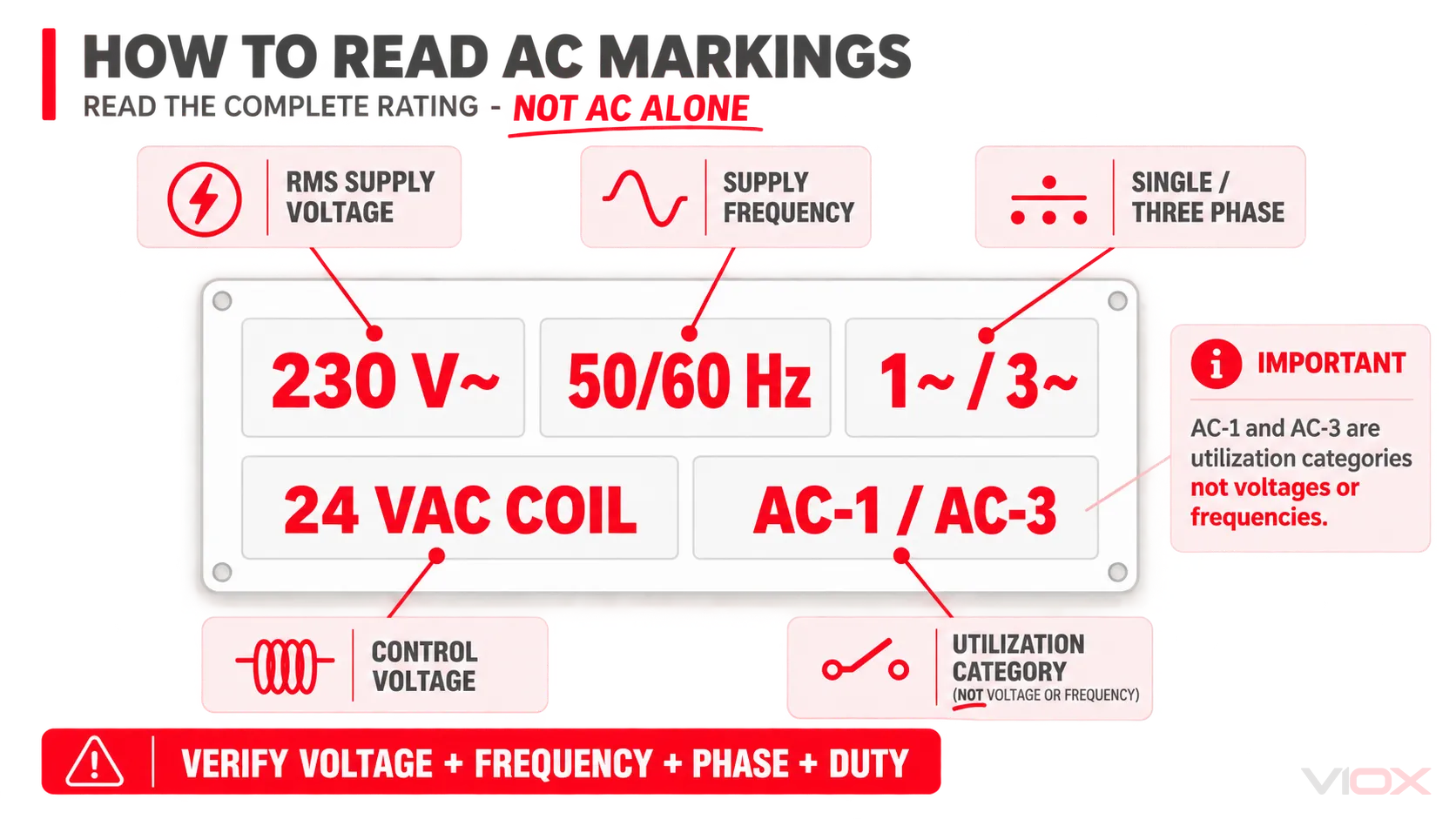
| Jelölési példa | Jelentése | Mit nem igazol |
|---|---|---|
230 V~ vagy 230 VAC |
Meghatározott 230 V AC üzemi feszültségre méretezve | Alkalmasság minden frekvenciához vagy terheléstípushoz |
50/60 Hz |
Mindkét megadott frekvenciára tervezve, a dokumentált feltételek mellett | Kompatibilitás változtatható frekvenciájú kimenettel |
24 V AC tekercs |
A tekercs tápellátásának 24 V AC-nek kell lennie | A főérintkezők csak 24 V-ra vannak méretezve |
400 V AC, 3~ |
Háromfázisú váltakozó áramú alkalmazás a megadott feszültségen | Helyes fázissorrend, pólusok, áramerősség vagy felhasználási kategória |
AC-1 |
Nem induktív vagy enyhén induktív terhelésekhez kapcsolódó IEC felhasználási kategória | Motor kapcsolási képesség |
AC-3 |
Kalickás forgórészű motorok indítási és leállítási feladataihoz kapcsolódó IEC felhasználási kategória | Alkalmasság minden léptető, irányváltó vagy ellenáramú fékezési feladathoz |
6 kA |
Rövidzárlati teljesítmény meghatározott termékszabvány és vizsgálati körülmények szerint | Univerzális megfelelőség minden rendszerhiba-szinten |
A váltakozó feszültség (AC) nem azonos a tekercsfeszültséggel
Egy mágneskapcsoló képes nagy váltakozó áramú terhelési feszültséget kapcsolni, miközben a tekercséhez sokkal alacsonyabb vezérlőfeszültséget használ. Például egy eszköz kapcsolhat egy 400 V-os AC motoráramkört, de 24 V-os AC vagy 24 V-os DC tekercset használhat.
Ezen értékek összekeverése megakadályozhatja a működést vagy károsíthatja a tekercset. A különbséget az alábbi részletezi Miért szerepel a mágneskapcsolómon 24 V és 600 V is?.
Az AC-1, AC-3 és AC-15 nem feszültségtípusok
A felhasználási kategóriákban szereplő betűk és számok a meghatározott termékszabványok szerinti kapcsolási igénybevételt írják le. Nem a váltakozó áram különböző formáit jelentik.
Például:
AC-1nem induktív vagy enyhén induktív terhelésekhez kapcsolódik a vonatkozó kapcsolóberendezésekben;AC-3a kalickás forgórészű motorok normál indításával és leállításával kapcsolatos kontaktoros alkalmazásokban;AC-15a váltakozó áramú elektromágneses terhelések vezérlésével kapcsolatos vezérlőáramköri eszközökben.
Az egyik kategóriában megadott áramérték nem vihető át automatikusan egy másikba. A helyes kategória az eszköz szabványától és a tényleges terhelési ciklustól függ.
Hol használják a váltakozó áramot (AC)
A váltakozó áram a kisfeszültségű elektromos rendszerek minden részében jelen van:
- közüzemi ellátás otthonokban, irodákban, kereskedelmi épületekben és gyárakban;
- egyfázisú dugaszolóaljzatok, világítási és készülékáramkörök;
- háromfázisú motorok, szivattyúk, ventilátorok, kompresszorok és gépek;
- transzformátorok és elosztórendszerek;
- AC mágneskapcsolók, relék, motorindítók és vezérlőszekrények;
- szünetmentes tápegységek és inverteres AC kimenetek;
- védelmi berendezések, mint például kismegszakítók (MCB), kompakt megszakítók (MCCB), áram-védőkapcsolók (RCCB), túláramvédelemmel ellátott áram-védőkapcsolók (RCBO), biztosítók és túlfeszültség-levezetők (SPD), amennyiben kifejezetten az adott AC rendszerre vannak méretezve.
Az AC tápellátás megléte nem teszi az összes AC jelölésű alkatrészt felcserélhetővé. A védelmi eszköznek meg kell felelnie a feszültségnek, az áramerősségnek, a zárlati szintnek, a pólusszámnak, a földelési elrendezésnek, a terhelési viselkedésnek és az alkalmazandó szerelési szabályoknak.
Ellenőrzőlista AC alkatrészek kiválasztásához
Mielőtt meghatározna egy alkatrészt egy AC áramkörhöz, erősítse meg a következőket:
- Névleges üzemi feszültség: Illessze a tényleges fázis-fázis vagy fázis-nulla rendszerszintű feszültséghez.
- Gyakoriság: Ellenőrizze az 50 Hz-es, 60 Hz-es vagy a kifejezetten megadott frekvenciatartományt.
- Fázisok száma: Erősítse meg az egyfázisú vagy háromfázisú működést.
- Névleges áram: Használja a valós terhelésnek és üzemi körülményeknek megfelelő névleges értéket.
- Használati kategória: Ellenőrizze a motor, ohmos, induktív, kondenzátoros vagy vezérlési terhelés jellegét, ahol alkalmazható.
- Póluskiosztás: Határozza meg, mely feszültség alatt álló vezetőket és szükség esetén a nullavezetőt kell kapcsolni vagy védeni.
- Rövidzárlati szilárdság: Ellenőrizze a várható hibaáramot és a névleges értéket az alkalmazandó termékszabvány szerint.
- Vezérlőtápellátás: A tekercs vagy az elektronikus vezérlőfeszültség legyen elkülönítve a főáramkör névleges értékeitől.
- Környezeti feltételek: Ellenőrizze a hőmérsékletre, tengerszint feletti magasságra, tokozásra, szennyezettségre és teljesítménycsökkentésre vonatkozó követelményeket.
- Piaci követelmények: Ellenőrizze a célpiacon előírt szabványokat, tanúsítványokat és telepítési szabályokat.
Ez az ellenőrzőlista hasznosabb, mint csupán azt kérdezni, hogy egy termék “váltakozó áramra (AC) méretezett-e”. Az AC-kompatibilitás feltételek összessége, nem egyetlen univerzális címke.
Gyakori tévhitek a váltakozó árammal (AC) kapcsolatban
Az AC írásmódja “Alternate Current”-ként”
A helyes elektromos szakmai elnevezés Váltakozó áram, nem pedig “Alternate Current”. A váltakozó (alternating) jelző az áramirány folyamatos változására utal.
Annak feltételezése, hogy az AC mindig légkondicionálót jelent
Épületgépészeti beszélgetésekben az AC gyakran légkondicionálót jelent. Elektromos kapcsolási rajzon vagy eszközjelölésen általában váltakozó áramot (Alternating Current) jelöl. Vegye figyelembe a környező mértékegységeket, szimbólumokat és a berendezés kontextusát.
Az RMS (effektív) és a csúcsfeszültség azonos értékként való kezelése
A 230 V AC jelölés általában az RMS feszültséget fejezi ki. Ideális szinuszos hullámforma esetén a csúcsérték körülbelül 325 V. A kettő összekeverése hibás szigetelés- vagy alkatrészválasztáshoz vezethet.
Frekvencia figyelmen kívül hagyása
Két tápellátásnak lehet azonos az RMS feszültsége, de eltérő a frekvenciája. A motorok, transzformátorok, relék, időzítők és elektromágneses tekercsek eltérően reagálhatnak 50 Hz-en és 60 Hz-en.
AC eszköz használata DC hálózaton, mivel a feszültségérték megegyezik
Az AC és DC kapcsolás eltérő ívoltási feltételeket követel meg. A 230 V AC jelölésű eszköz nem automatikusan alkalmas 230 V DC feszültségre. Kizárólag a gyártó által a vonatkozó termékszabvány szerint kifejezetten megadott névleges értékeket használja. A tervezési következményeket a VIOX összehasonlítás szemlélteti AC vs DC mágneskapcsolók.
Gyakran Ismételt Kérdések
Mi az AC teljes neve?
Az AC teljes neve az elektrotechnikában Váltakozó áram.
Mi az AC teljes neve a fizikában?
A fizikában az AC jelentése szintén Váltakozó áram, ami olyan áramot jelent, amely periodikusan változtatja az irányát.
Mi az AC és a DC teljes megnevezése?
Az AC jelentése: Váltakozó áram, míg a DC jelentése: Egyenáram.
Az AC feszültség vagy áram?
Szigorú értelemben a betűszó az Alternating Current (váltakozó áram) kifejezést takarja. A mérnöki gyakorlatban, AC melléknévként is használatos olyan kifejezésekben, mint AC feszültség, AC teljesítmény, AC táplálás és AC áramkör.
A háztartási villamos energia AC vagy DC?
A háztartásokba érkező közüzemi villamos energia általában váltakozó áram (AC). Számos elektronikai eszköz ezt a váltakozó áramot belsőleg egy vagy több egyenfeszültségre (DC) alakítja át.
Mit jelent a 230 V AC 50 Hz?
Ez általában egy névleges 230 V effektív (RMS) váltakozó feszültségű tápellátást jelent, amely másodpercenként 50 ciklust tesz meg. Önmagában nem határozza meg az áramerősséget, a fázisrendszert, a zárlati szintet vagy az adott eszközhöz való alkalmasságot.
Miért mérik a váltakozó áramot hertzben?
A váltakozó áram ciklusokban ismétlődik. A hertz azt fejezi ki, hogy másodpercenként hány teljes ciklus megy végbe.
Egyenlő a 230 V AC a 230 V DC-vel?
Bár a feszültség számszerű értéke megegyezik, nem azonos a hullámformájuk, a csúcsfeszültségük, valamint a szigetelési, kapcsolási és ívoltási jellemzőik. A berendezéseknek rendelkezniük kell az adott AC vagy DC alkalmazásra vonatkozó minősítéssel.
Következtetés
A Az AC rövidítés feloldása: Alternating Current (váltakozó áram).. Meghatározó jellemzője az áramirány periodikus váltakozása, de a gyakorlati váltakozó áramú (AC) mérnöki munka többet jelent az akroním kiterjesztésénél. A frekvencia, az RMS feszültség, a hullámforma, a fáziselrendezés, a felhasználási kategória és a berendezés-specifikus névleges értékek mind befolyásolják, hogy egy eszköz alkalmas-e egy váltakozó áramú rendszerhez.
Az adattábla olvasásakor ne álljon meg a AC. Olvassa el a teljes specifikációt: feszültség, frekvencia, fázis, áramerősség, pólusszám, terhelési kategória, zárlati szilárdság, vezérlőfeszültség, termékszabvány és környezeti határértékek.
Források és műszaki hivatkozások
- Központi Villamosenergia-hatóság, Hálózati Szabványok
- Indiai Szabványügyi Hivatal, IS 12360 előzetes: Feszültségsávok elektromos berendezésekhez, beleértve az előnyben részesített feszültséget és frekvenciát
- Egyesült Államok Energiaügyi Minisztériuma: Az áramok háborúja – AC vs DC teljesítmény
- Európai Bizottság szójegyzéke: Váltakozó áram és egyenáram