شما محاسبات را انجام دادهاید. بازگشت سرمایه (ROI) برای آن سیستم خورشیدی 8 کیلوواتی فوقالعاده به نظر میرسد. پنلها انتخاب شدهاند، اینورتر مشخص شده است و نصاب آماده شروع کار است.
سپس درخواست مجوز رد میشود.
دلیل؟ پنل برق قدیمی و مورد اعتماد 125 آمپری شما “نمیتواند” فیدبک خورشیدی را "مدیریت کند". نصاب یک قیمت جدید به شما میدهد: 10,000 دلار اضافی برای حفر یک کانال در حیاط جلویی خود، کندن لوله و ارتقاء سرویس خود به 200 آمپر.
ناگهان، بازگشت سرمایه خورشیدی شما از بین میرود.
قبل از اینکه آن چک را امضا کنید یا پروژه را لغو کنید، بیل را زمین بگذارید. NEC (کد ملی برق) قصد ورشکست کردن شما را ندارد. بلکه میخواهد از ذوب شدن شینههای شما جلوگیری کند. و اگر فیزیک پشت این کد را درک کنید، سه “راه فرار” قانونی و مطابق با کد وجود دارد که میتواند 10,000 دلار شما را نجات دهد.
بیایید پنل را باز کنیم و به دنبال پول بگردیم.
شرور: قانون NEC 120% چیست؟
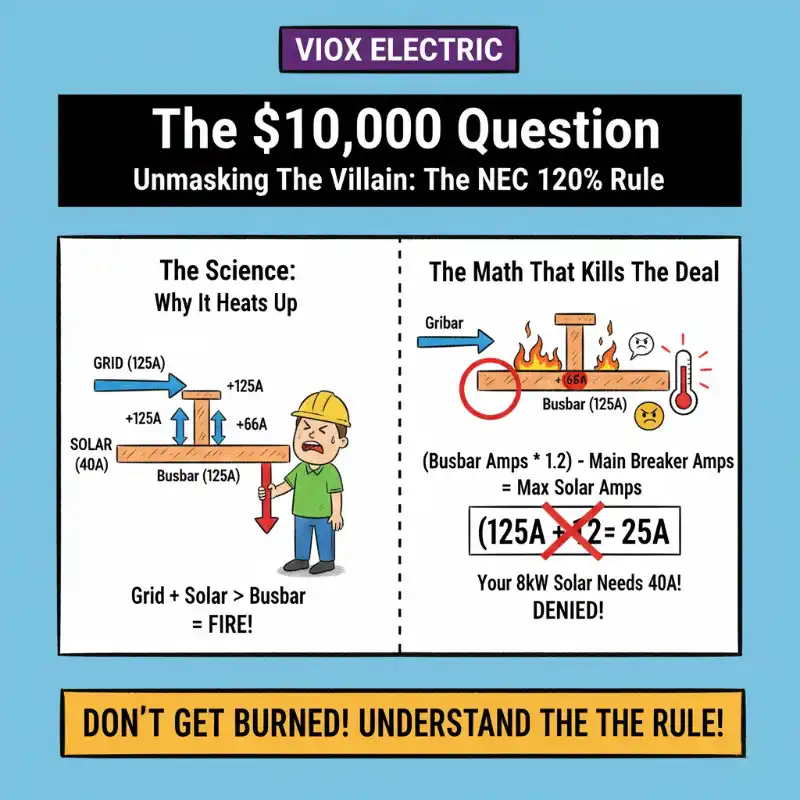
برای یک مهندس، یک باسبار فقط یک بزرگراه مسی برای الکترونها است. اما برای بازرس NEC، این یک خطر بالقوه آتشسوزی است.
The قانون NEC 120% (که در NEC 705.12 یافت میشود) وجود دارد تا از اینکه شینه پنل شما جریان بیشتری از آنچه برای آن طراحی شده است را تحمل کند، جلوگیری کند.
در یک خانه استاندارد، برق در یک جهت جریان دارد: از شبکه (قطعکننده اصلی) به بارهای شما. اما با انرژی خورشیدی، شما در حال هل دادن برق به از پایین به داخل پنل هستید. اگر شبکه 125 آمپر از بالا فشار وارد کند و انرژی خورشیدی شما 40 آمپر از پایین فشار وارد کند، شینه در وسط میتواند به طور تئوری 165 آمپر را حمل کند. اگر آن شینه فقط برای 125 آمپر رتبهبندی شده باشد، گرم میشود. میدرخشد. در نهایت، از کار میافتد.
ریاضیاتی که معامله را از بین میبرد
این کد به شما یک بافر میدهد. به شما اجازه میدهد مجموع قطعکنندههای منبع تغذیه شما برابر باشد با 120% 120% رتبهبندی شینه.
فرمول:
(رتبهبندی شینه × 1.2) - اندازه قطعکننده اصلی = حداکثر فیدبک خورشیدی
بیایید به سناریوی “قتل مرموز خورشیدی” که پنلهای 125 آمپری را آزار میدهد، نگاهی بیندازیم:
- رتبهبندی شینه: ۱۲۵A
- قطع کننده اصلی: ۱۲۵A
- محاسبه: (125 × 1.2) - 125 = 25A
مشکل: شما از نظر قانونی مجاز به نصب 25 آمپر انرژی خورشیدی (حدود 4-5 کیلووات) هستید. اما برای آن سیستم 8 کیلوواتی به 40 آمپر نیاز دارید. شما 15 آمپر کم دارید.
نصاب میگوید “سرویس را ارتقا دهید.” ما میگوییم: “بیایید به گزینه 1 نگاه کنیم.”
راه حل 1: “تعمیر فقیرانه” (کاهش رتبه قطعکننده اصلی)

اگر فرمول ریاضی مشکل است، متغیرها را تغییر دهید.
شما نمیتوانید به راحتی رتبهبندی شینه را تغییر دهید (این فلز فیزیکی داخل جعبه است). اما شما میتوانید مدار آشپزخانه تغییر دهید اندازه قطعکننده اصلی.
با تعویض قطعکننده اصلی 125 آمپری خود با یک قطعکننده 100 آمپری، شما به طور مصنوعی سهم شبکه را کاهش میدهید و ظرفیت را برای انرژی خورشیدی آزاد میکنید. به این میگویند کاهش رتبه.
ریاضیات جدید:
- شینه: ۱۲۵A
- قطع کننده اصلی: ۱۰۰ آمپر (کوچک شده)
- محاسبه: (125 × 1.2) - 100 = 50A
نتیجه: بوم. اکنون 50 آمپر ظرفیت خورشیدی دارید. سیستم 40 آمپری شما با فضای اضافی جا میشود. هزینه؟ حدود 200 دلار برای یک شکن تعویض در مقابل 10,000 دلار برای یک کانال.
⚠️ هشدار “تله خودروی برقی”
صبر کنید. قبل از اینکه با برقکار خود دست بدهید، یک سوال از خود بپرسید: آیا خانه شما واقعاً میتواند با 100 آمپر کار کند؟
این “تله خودروی برقی” است. در عصر اجاق گاز و گرمایش گازی، 100 آمپر کافی بود. اما اگر شما دارید:
- شارژر خودروی برقی (بار 40A-60A)
- اجاق القایی برقی
- تهویه مطبوع مرکزی
ممکن است در یک شب گرم تابستانی، زمانی که تسلا را به برق میزنید و فر را روشن میکنید، آن قطعکننده اصلی 100 آمپری جدید را قطع کنید. شما مشکل خورشیدی را حل کردید اما یک مشکل سبک زندگی ایجاد کردید.
اگر محاسبه بار (ماده 220 NEC) نشان میدهد که حداکثر تقاضای شما زیر 100 آمپر است، این یک راه حل عالی است. اگر نه؟ به راه حل 2 بروید.
راه حل 2: “شینه شبح” (جایزه بزرگ)
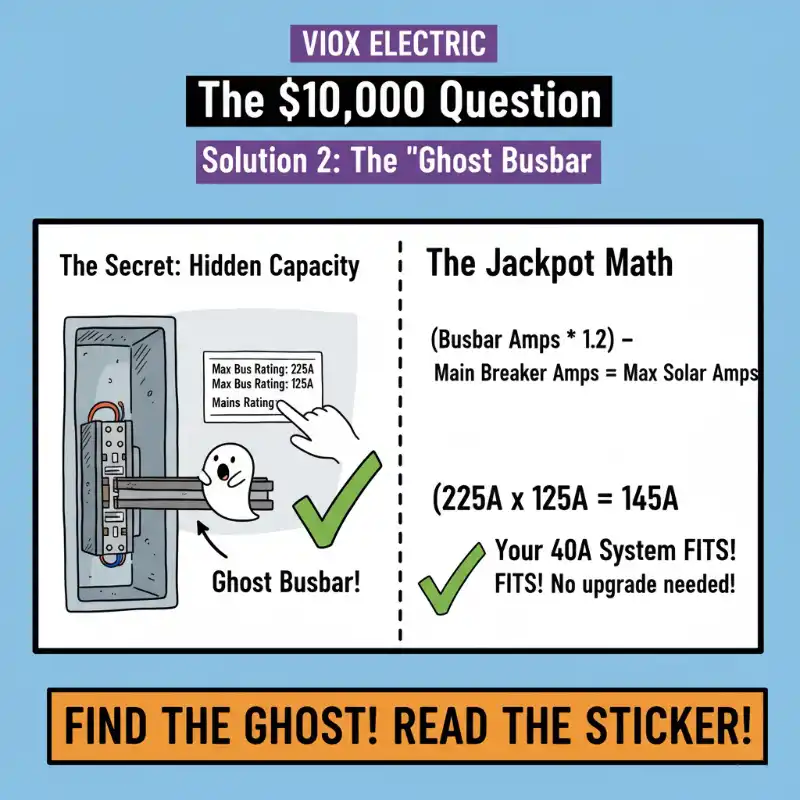
این رازی است که نصابهای تازهکار را از حرفهایها جدا میکند.
تدارکات تولید عجیب و غریب است. اغلب، برای یک تولید کننده (مانند زیمنس، اسکوئر دی یا VIOX) ارزانتر است که فقط یک یک نوع فضای داخلی پنل سنگین بسازد و آن را در جعبههای مختلف قرار دهد.
احتمال زیادی وجود دارد که “پنل 125 آمپری” شما در واقع دارای یک شینه با رتبه 200A یا ۲۲۵آ, 200 آمپر باشد، اما با یک قطعکننده اصلی 125 آمپری فروخته شده است. ما این را “شینه شبح” ظرفیت مینامیم.
چگونه شبح را پیدا کنیم
درب پنل خود را باز کنید (ایمنی اول: به قطعات برقدار دست نزنید). به دنبال برچسب فنی روی دیوار داخلی باشید. شما به دنبال خطی هستید که میگوید:
“حداکثر رتبهبندی شینه” یا “رتبهبندی اصلی”
اگر آن برچسب میگوید 200A یا ۲۲۵آ, 200 آمپر، حتی اگر قطعکننده اصلی شما 125 آمپر باشد، شما برنده جایزه بزرگ شدهاید.
ریاضیات شبح:
- رتبهبندی شینه: 225 آمپر (مشخصات پنهان)
- قطع کننده اصلی: 125 آمپر (آنچه نصب کردهاید)
- محاسبه: (225 × 1.2) – 125 = 145 آمپر
نتیجه: شما می توانید تقریبا هر سیستم خورشیدی مسکونی را که می خواهید نصب کنید. بدون تعویض بریکر، بدون کاهش جریان نامی، بدون حفاری. فقط باید برچسب را می خواندید.
راه حل 3: “روزنه” (انشعاب سمت خط)
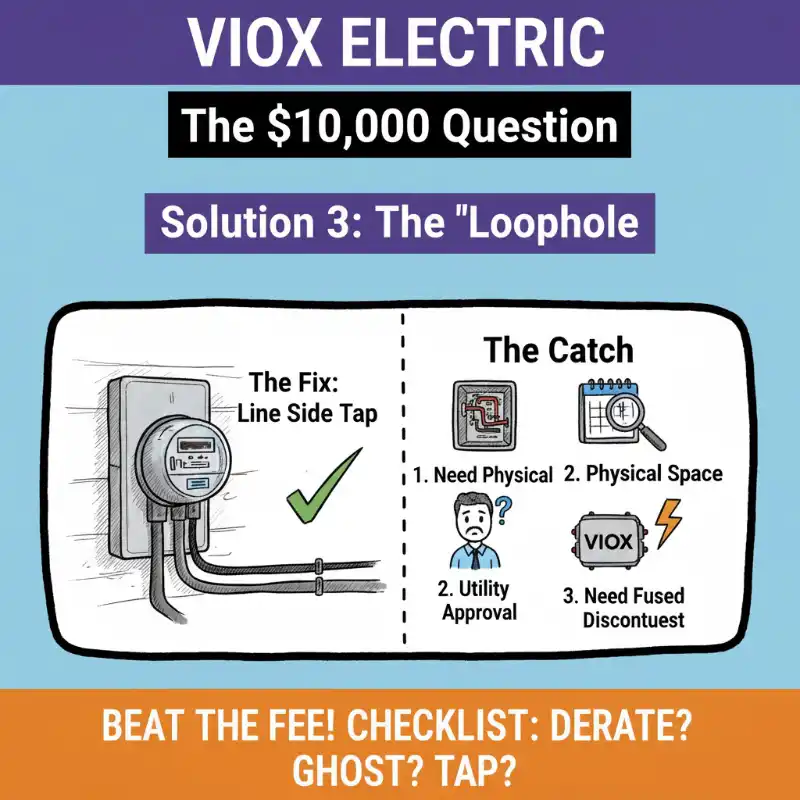
اگر نمی توانید جریان نامی را کاهش دهید (بارها خیلی زیاد هستند) و Ghost Busbar ندارید، یک حرکت نهایی وجود دارد: انشعاب سمت خط.
قانون 120% در مورد سمت بار از قطع کننده اصلی—باسبارهایی که مدارهای شاخه شما در آن قرار دارند. اما اگر خورشیدی را به 抵达 بریکر اصلی وصل کنید چه؟
انشعاب سمت خط شامل اتصال مستقیم خروجی خورشیدی به هادی های ورودی سرویس بین کنتور برق و بریکر اصلی شما است.
چرا کار می کند
با اتصال قبل از بریکر اصلی، جریان خورشیدی هرگز با باسبار محدود پنل شما تماس پیدا نمی کند. قانون 120% به سادگی ناپدید می شود. تنها محدودیت، اندازه سیم های سرویس ورودی از خیابان است.
نکته مهم
- فضای فیزیکی: شما به فضای کافی در جعبه نیاز دارید تا به طور ایمن به سیم ها متصل شوید.
- تاییدیه شرکت برق: برخی از شرکت های برق (مانند PG&E در مناطق خاص) این کار را ممنوع می کنند یا به جعبه های خاتمه خاصی نیاز دارند.
- مشخصات محفظه: شما اغلب به یک سوئیچ قطع کننده فیوزدار جداگانه در کنار پنل نیاز دارید.
نکته حرفه ای: هنگام انجام انشعاب سمت خط، از یک قطع کننده فیوزدار با کیفیت بالا (مانند سری سوئیچ ایمنی VIOX) استفاده کنید تا اطمینان حاصل کنید که یک نقطه اتصال تمیز و ایزوله دارید که الزامات قطع کننده شرکت برق را برآورده می کند.
خلاصه: بیل را زمین بگذارید
نقل قول “ارتقاء سرویس” اغلب یک راه حل تنبلانه است. این مشکل را با زور (و پول شما) حل می کند. قبل از اینکه مجوز حفاری را صادر کنید، این چک لیست را اجرا کنید:
- Ghostها را بررسی کنید: به برچسب پنل نگاه کنید. آیا باسبار بالاتر از بریکر رتبه بندی شده است؟
- محاسبات کاهش جریان نامی را اجرا کنید: آیا خانه شما می تواند با یک بریکر اصلی کوچکتر زنده بماند؟ (یک محاسبه بار مناسب NEC 220 انجام دهید).
- انشعاب را بررسی کنید: آیا می توانید با انشعاب سمت خط، پنل را به طور کامل دور بزنید؟
فقط در صورتی که هر سه مورد با شکست مواجه شوند، باید با حفار تماس بگیرید.
مهندسی فقط در مورد پیروی از قوانین نیست. بلکه در مورد درک این است که چرا قوانین وجود دارند تا بتوانید کارآمدترین مسیر را از طریق آنها پیدا کنید.
یادداشت دقت فنی
参考标准和来源
- NEC 705.12(B): اتصالات منبع سمت بار و روش محاسبه قانون 120% را اداره می کند.
- NEC 220: محاسبات بار مدار شاخه، فیدر و سرویس مورد نیاز برای تعیین اینکه آیا کاهش جریان نامی بریکر اصلی ایمن است را اداره می کند.
- NEC 230.82: اتصالات سمت منبع (سمت خط) را اداره می کند.
时效性声明
محاسبات و تفسیرهای موجود در این مقاله بر اساس کد ملی برق (NEC) است. در حالی که سال های تصویب خاص (2017، 2020، 2023) بر اساس ایالت و شهرداری متفاوت است، قانون 120% به عنوان یک استاندارد اساسی برای اتصال متقابل خورشیدی مسکونی تا نوامبر 2025 باقی می ماند. همیشه قبل از نصب، الزامات محلی شرکت برق و اصلاحیه های کد شهرداری را بررسی کنید.