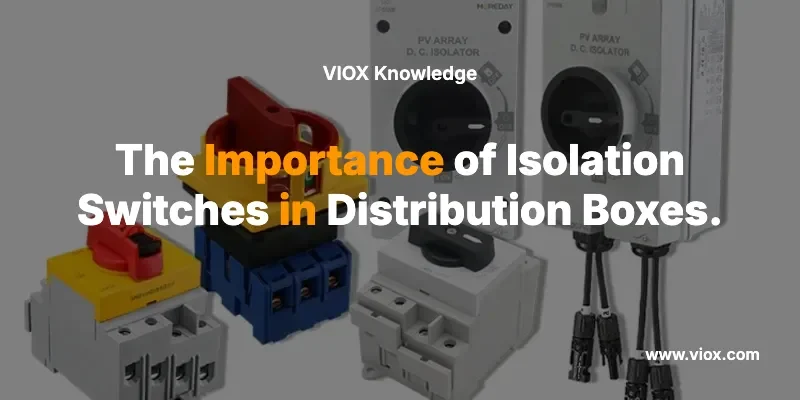

Trennschalter, auch bekannt als Lasttrennschalter oder Isolatoren, sind mechanische Schaltgeräte, die sicherstellen sollen, dass ein Stromkreis vollständig spannungsfrei geschaltet werden kann, um sichere Wartungs-, Inspektions- oder Reparaturarbeiten durchführen zu können. Im Gegensatz zu Leistungsschalter die vor Überlastungen und Kurzschlüssen schützen, dienen Trennschalter einem grundlegend anderen Zweck: Sie bieten eine sichtbare Unterbrechung im Stromkreis und garantieren, dass kein Strom durch den isolierten Abschnitt fließen kann.
In Verteilerkästen fungieren diese Schalter als erste Verteidigungslinie für das Wartungspersonal, indem sie eine physische Lücke im Strompfad schaffen, die oft visuell überprüft werden kann. Diese sichtbare Trennung bietet die entscheidende Gewissheit, dass die nachgeschalteten Geräte wirklich von der Stromquelle isoliert sind.
Kritische Sicherheitsfunktionen

Personenschutz
Die primäre Bedeutung von Trennschaltern liegt im Schutz des menschlichen Lebens. Wenn Wartungsarbeiten an elektrischen Geräten erforderlich sind, stellen Trennschalter sicher, dass Techniker sicher und ohne Stromschlaggefahr arbeiten können. Durch die vollständige Unterbrechung des Stromkreises eliminieren sie die Möglichkeit einer versehentlichen Aktivierung während der Wartungsarbeiten.
Dieser Schutz geht über den unmittelbaren Wartungsbereich hinaus. In komplexen Verteilungssystemen verhindern Trennschalter Rückspeisesituationen, in denen Strom unerwartet von alternativen Quellen, Solaranlagen oder Generatoren in vermeintlich spannungsfreie Stromkreise fließen könnte.
Lock-Out/Tag-Out-Konformität
Moderne Trennschalter verfügen typischerweise über Vorkehrungen für Lockout/Tagout (LOTO)-Verfahren, die in den meisten Rechtsordnungen gemäß den Arbeitsschutzbestimmungen vorgeschrieben sind. Diese Funktionen ermöglichen es dem Wartungspersonal, den Schalter physisch in der offenen Position zu verriegeln und Warnschilder anzubringen, um sicherzustellen, dass niemand den Stromkreis während der Wartungsarbeiten versehentlich wieder einschalten kann.
Diese mechanische Verriegelungsfunktion bietet ein Maß an Sicherheit, das elektronische oder ferngesteuerte Schalter nicht erreichen können, was Trennschalter für die Einhaltung von Arbeitsschutzstandards unverzichtbar macht.
Schutz von elektrischen Systemen
Erhaltung der Ausrüstung
Trennschalter spielen eine wichtige Rolle beim Schutz teurer elektrischer Geräte innerhalb von Verteilungssystemen. Indem sie eine vollständige Isolierung bestimmter Stromkreise oder Geräte ermöglichen, ermöglichen sie eine gezielte Wartung, ohne die gesamte elektrische Anlage zu unterbrechen. Diese selektive Isolierung minimiert den Verschleiß der Geräte und reduziert das Risiko von Schäden während der Wartungsarbeiten.
Fehlerbegrenzung
Wenn elektrische Fehler auftreten, helfen Trennschalter, Probleme auf bestimmte Abschnitte des Verteilungssystems zu beschränken. Durch die schnelle Isolierung fehlerhafter Geräte oder Stromkreise verhindern sie kaskadierende Ausfälle, die die gesamte elektrische Infrastruktur beeinträchtigen könnten. Diese Kompartimentierung ist besonders wichtig in kritischen Einrichtungen, in denen eine kontinuierliche Stromversorgung bestimmter Systeme unerlässlich ist.
Lichtbogengefahrenminderung
Obwohl sie nicht dazu bestimmt sind, den Laststrom zu unterbrechen, tragen ordnungsgemäß dimensionierte Trennschalter zu Programmen zur Lichtbogensicherheit bei. Indem sie ein zuverlässiges Mittel zur Schaffung eines spannungsfreien elektrischen Arbeitszustands bieten, eliminieren sie die Lichtbogengefahr für die isolierten Geräte vollständig, sodass das Wartungspersonal unter wesentlich sichereren Bedingungen arbeiten kann.
Rolle bei Wartung und Fehlersuche
Erleichterung der routinemäßigen Wartung
Trennschalter machen die vorbeugende Wartung praktikabel und sicher. Elektrische Systeme erfordern regelmäßige Inspektion, Prüfung und Wartung, um Zuverlässigkeit und Leistung aufrechtzuerhalten. Ohne Trennschalter würde die Durchführung dieser Routineaufgaben die Abschaltung großer Teile des elektrischen Systems erfordern, was unnötige Unterbrechungen und Produktivitätsverluste verursachen würde.
Die Möglichkeit, einzelne Abzweige, Transformatoren oder Verteiler zu isolieren, ermöglicht es den Wartungsteams, nach einem geplanten Zeitplan zu arbeiten und Geräte in Zeiten geringer Nachfrage zu warten, ohne kritische Abläufe zu beeinträchtigen.
Diagnosefähigkeiten
Bei der Fehlersuche ermöglichen Trennschalter die systematische Isolierung von Stromkreisabschnitten, um Fehlerstellen zu identifizieren. Elektriker können verschiedene Teile des Verteilungssystems schrittweise isolieren, um die Ursache von Problemen wie Erdschlüssen, Isolationsfehlern oder Gerätefehlfunktionen einzugrenzen.
Diese Diagnosefähigkeit reduziert Ausfallzeiten erheblich, da sie eine schnellere Fehleridentifizierung und -behebung ermöglicht. Ohne Trennschalter wäre die Fehlersuche zeitaufwändiger, gefährlicher und ungenauer.
Notfallmaßnahmen
In Notfallsituationen wie Bränden, Überschwemmungen oder anderen Katastrophen bieten Trennschalter ein schnelles und zuverlässiges Mittel zur Abschaltung elektrischer Systeme. Ihr manueller Betrieb stellt sicher, dass sie auch dann funktionsfähig bleiben, wenn elektronische Steuerungssysteme ausfallen oder die Stromversorgung unterbrochen ist.
Einhaltung von Elektrovorschriften und -normen
Regulatorische Anforderungen
Elektrovorschriften weltweit, einschließlich des National Electrical Code (NEC) in den Vereinigten Staaten, der Normen der International Electrotechnical Commission (IEC) und verschiedener nationaler Vorschriften, schreiben die Installation von Trennschaltern in Verteilungssystemen vor. Diese Anforderungen spiegeln jahrzehntelange Sicherheitsexpertise und Forschung zur Unfallverhütung wider.
Zu den wichtigsten regulatorischen Anforderungen gehören typischerweise:
- Sichtbare Unterbrechungsanforderung: Der Trennschalter muss eine sichtbare Anzeige dafür liefern, dass der Stromkreis offen ist
- Laststromverbot: Trennschalter dürfen nicht unter Last betrieben werden
- Erreichbarkeit: Schalter müssen für autorisiertes Personal leicht zugänglich sein
- Bewertung der Konformität: Schalter müssen für die Spannung und den Strom des Stromkreises, den sie schützen, ausgelegt sein
- Ordnungsgemäße Kennzeichnung: Deutliche Kennzeichnung, die den gesteuerten Stromkreis oder das gesteuerte Gerät angibt
Industriestandards
Über die grundlegende Einhaltung der Vorschriften hinaus legen Industriestandards wie IEC 60947-3 für Niederspannungsschaltgeräte und Steuergeräte detaillierte Anforderungen an Design, Prüfung und Leistung von Trennschaltern fest. Diese Normen stellen sicher, dass Trennschalter Mindestsicherheits- und Zuverlässigkeitskriterien erfüllen und einen konsistenten Schutz über verschiedene Hersteller und Anwendungen hinweg bieten.
Installationen von Verteilerkästen in gewerblichen und industriellen Umgebungen müssen häufig zusätzliche Normen einhalten, die sich auf bestimmte Branchen beziehen, wie z. B. Gesundheitseinrichtungen, Rechenzentren oder explosionsgefährdete Bereiche, die jeweils einzigartige Isolationsanforderungen haben.
Arten von Trennschaltern in Verteilerkästen

Messertrennschalter
Traditionelle Messertrennschalter verfügen über sichtbare Metallmesser, die sich beim Öffnen physisch von ihren Kontakten trennen. Diese Schalter bieten eine ausgezeichnete visuelle Bestätigung der Isolation und werden häufig in älteren Installationen und Anwendungen eingesetzt, bei denen eine einfache, zuverlässige Isolation von größter Bedeutung ist.
Zu den Vorteilen gehören ihre robuste Konstruktion, die klare visuelle Anzeige und die Fähigkeit, hohen Fehlerströmen standzuhalten, wenn sie ordnungsgemäß dimensioniert sind. Sie erfordern jedoch ausreichend Freiraum und können gefährlich sein, wenn sie unter Last falsch bedient werden.
Drehbare Trennschalter
Drehbare Trennschalter verwenden einen Drehmechanismus, um den Stromkreis zu unterbrechen, der oft in einem Schutzgehäuse eingeschlossen ist. Diese Schalter sind aufgrund ihrer kompakten Bauweise und einfachen Bedienung in modernen Verteilerkästen beliebt. Viele verfügen über Türverriegelungsmechanismen, die den Zugang zu spannungsführenden Teilen verhindern, wenn der Schalter geschlossen ist.
Diese Schalter verfügen oft über Vorkehrungen zum Abschließen in der Aus-Position, was sie ideal für Lockout/Tagout-Anwendungen macht. Ihre geschlossene Bauweise bietet auch einen besseren Schutz vor Umwelteinflüssen und versehentlichem Kontakt.
Sicherungs-Schalter-Kombinationen
Sicherungs-Lasttrennschalter kombinieren die Funktionalität eines Trennschalters mit dem Überstromschutz durch integrierte Sicherungen. Diese Geräte sind in europäischen Installationen üblich und bieten sowohl Isolationsfähigkeit als auch Stromkreisschutz in einer einzigen kompakten Einheit.
Dieser Kombinationsansatz spart Platz in Verteilerkästen und vereinfacht die Installation, erfordert jedoch den Austausch der Sicherung, wenn der Überstromschutz anspricht, was die Wartungsüberlegungen erhöht.
Motorisierte und ferngesteuerte Trennschalter
In modernen automatisierten Verteilungssystemen ermöglichen motorisierte Trennschalter die Fernbedienung von Kontrollräumen oder Gebäudeleitsystemen aus. Obwohl diese Schalter Komfort bieten und in automatisierte Sicherheitssysteme integriert werden können, müssen sie dennoch die grundlegenden Anforderungen an eine sichtbare Isolation erfüllen, wenn Personal an Geräten arbeiten muss.
Diese Schalter verfügen typischerweise über Vorkehrungen für den manuellen Betrieb als Backup und verfügen über Positionsanzeigen, die den Schaltzustand sowohl lokal als auch aus der Ferne deutlich anzeigen.
Installation Best Practices

Richtige Dimensionierung und Bewertung
Die Auswahl von Trennschaltern mit geeigneten Spannungs-, Strom- und Kurzschlussfestigkeitswerten ist grundlegend für eine sichere Installation. Der Schalter muss ausgelegt sein für:
- Systemspannung: Einschließlich potenzieller Überspannungszustände
- Maximaler Laststrom: Mit entsprechenden Reduktionsfaktoren für die Umgebungstemperatur
- Kurzschlussfestigkeit: Um Fehlerbedingungen ohne Beschädigung zu überstehen
- Umweltbedingungen: Unter Berücksichtigung von Faktoren wie Luftfeuchtigkeit, extremen Temperaturen und korrosiven Atmosphären
Unterdimensionierte Trennschalter stellen ernsthafte Sicherheitsrisiken dar, einschließlich Überhitzung, Kontaktschweißen und dem Versagen, eine zuverlässige Isolation zu gewährleisten.
Strategische Platzierung
Trennschalter sollten so positioniert werden, dass sie eine effektive Stromkreisunterteilung ermöglichen und gleichzeitig für Bedienung und Wartung zugänglich bleiben. Zu den wichtigsten Überlegungen bei der Platzierung gehören:
- Upstream-Position: Installation auf der Versorgungsseite des Geräts, um eine vollständige Trennung zu gewährleisten
- Erreichbarkeit: Sicherstellen, dass die Schalter sicher erreicht werden können, ohne dass Leitern oder spezielle Zugangsausrüstung erforderlich sind
- Sichtbarkeit: Schalter so positionieren, dass ihr Status leicht beobachtet werden kann
- Schutz vor Umwelteinflüssen: Schalter vor Feuchtigkeit, Staub und physischen Schäden schützen
- Klare Kennzeichnung: Jeder Schalter muss eindeutig gekennzeichnet sein, um anzugeben, was er steuert
Ordnungsgemäße Montage und Gehäuse
Trennschalter müssen sicher in geeigneten Gehäusen montiert werden, die Schutz vor versehentlichem Kontakt, Eindringen von Umwelteinflüssen und physischen Schäden bieten. Die Schutzart des Gehäuses (IP- oder NEMA-Schutzart) sollte der Installationsumgebung entsprechen, wobei für Außenbereiche, feuchte oder staubige Umgebungen höhere Schutzarten erforderlich sind.
Verteilerkästen, die Trennschalter enthalten, sollten so konstruiert sein, dass ein sicherer Betrieb möglich ist, ohne dass Bediener mit spannungsführenden Teilen in Berührung kommen. Häufig werden Verriegelungsmechanismen eingebaut, die das Öffnen der Tür bei geschlossenen Schaltern verhindern.
Draht- und Klemmenbemessung
Leiter, die an Trennschalter angeschlossen sind, müssen für den Stromkreisstrom richtig dimensioniert sein und geeignete Anschlussmethoden verwenden. Schlechte Verbindungen können zu Überhitzung, Lichtbögen und schließlich zum Ausfall führen. Die Installation sollte den Drehmomentvorgaben entsprechen, geeignete Aderendhülsen oder Kabelschuhe verwenden und saubere, oxidfreie Kontaktflächen gewährleisten.
Bewährte Betriebspraktiken
Sichere Betriebsverfahren
Der sichere Betrieb von Trennschaltern erfordert die Einhaltung festgelegter Verfahren:
- Überprüfen Sie, ob kein Laststrom fließt: Stellen Sie sicher, dass der Stromkreis mit geeigneten Schutzschaltern spannungsfrei geschaltet ist, bevor Sie den Trennschalter betätigen
- Verwenden Sie die richtige PSA: Tragen Sie geeignete persönliche Schutzausrüstung, auch wenn Sie Trennschalter unter Nulllastbedingungen betätigen
- Befolgen Sie die Schaltreihenfolge: Befolgen Sie bei Installationen mit mehreren Schaltern die korrekte Reihenfolge zum Öffnen und Schließen der Schalter
- Isolierung überprüfen: Verwenden Sie nach dem Öffnen geeignete Spannungsprüfgeräte, um zu bestätigen, dass der Stromkreis spannungsfrei ist
- LOTO-Vorrichtungen anbringen: Bringen Sie vor Beginn von Wartungsarbeiten Schlösser und Schilder an
Verifikationsprüfung
Nach dem Trennen eines Stromkreises ist eine ordnungsgemäße Überprüfung unerlässlich:
- Visuelle Kontrolle: Vergewissern Sie sich, dass der Schalter vollständig geöffnet ist und die Kontakte sichtbar getrennt sind
- Spannungsprüfung: Verwenden Sie ein geprüftes Spannungsprüfgerät, um die Spannungsfreiheit der getrennten Stromkreise zu überprüfen
- Testen Sie die Funktionalität der Geräte: Vergewissern Sie sich vor und nach der Prüfung, dass die Prüfgeräte funktionieren
- Mehrpunktprüfung: Führen Sie an mehreren Stellen der getrennten Geräte Prüfungen durch, um die vollständige Trennung zu bestätigen
Wartung und Inspektion
Regelmäßige Wartung von Trennschaltern stellt sicher, dass sie zuverlässig und sicher bleiben:
- Regelmäßige Kontrolle: Untersuchen Sie die Schalter auf Anzeichen von Überhitzung, Korrosion oder mechanischem Verschleiß
- Kontaktreinigung: Reinigen Sie die Kontakte gemäß den Empfehlungen des Herstellers, um einen zuverlässigen Betrieb zu gewährleisten
- Mechanische Funktionsprüfung: Betätigen Sie die Schalter regelmäßig, um ein Festfressen zu verhindern
- Dichtheitsprüfungen: Vergewissern Sie sich, dass alle Klemmenverbindungen fest sitzen, und ziehen Sie sie gegebenenfalls nach
- Dokumentation: Führen Sie Aufzeichnungen über alle Inspektions- und Wartungsaktivitäten
Schulungsanforderungen
Alle Personen, die Trennschalter bedienen, sollten eine umfassende Schulung erhalten, die Folgendes umfasst:
- Zweck und Einschränkungen von Trennschaltern
- Sichere Betriebsverfahren, die speziell auf die installierten Geräte zugeschnitten sind
- Lockout/Tagout-Verfahren und -Anforderungen
- Notfallbetriebsverfahren
- Erkennung von Schalterfehlern oder anormalen Zuständen
Häufige Fehler zu Vermeiden
Betrieb unter Last
Der gefährlichste Fehler ist die Betätigung eines Trennschalters, während Strom fließt. Trennschalter sind nicht dafür ausgelegt, Lastströme zu unterbrechen, und der Versuch, dies zu tun, kann zu starker Lichtbogenbildung, Geräteschäden und schweren Verletzungen führen. Öffnen Sie immer den Schutzschalter oder eine andere Lastschalteinrichtung, bevor Sie Trennschalter betätigen.
Unzureichende Überprüfung
Davon auszugehen, dass ein Stromkreis tot ist, weil ein Trennschalter geöffnet ist, ist ein potenziell tödlicher Fehler. Überprüfen Sie immer die Spannungsfreiheit mit geeigneten Prüfgeräten. Sich ausschließlich auf die visuelle Bestätigung der Schalterstellung ohne elektrische Prüfung zu verlassen, hat zu zahlreichen Unfällen geführt.
Unzureichende Kennzeichnung
Schlechte oder fehlende Beschriftungen an Trennschaltern können dazu führen, dass der falsche Schalter betätigt wird, was zu unerwarteten Ausfällen oder gefährlichen Situationen führen kann. Jeder Trennschalter muss eindeutig und dauerhaft gekennzeichnet sein, um genau anzugeben, was er steuert.
Vernachlässigung der Wartung
Trennschalter, die unzureichend gewartet werden, können im Bedarfsfall keine zuverlässige Trennung gewährleisten. Korrodierte Kontakte, festgefressene Mechanismen oder beschädigte Komponenten können die Sicherheit beeinträchtigen. Regelmäßige Inspektions- und Wartungsprogramme sind unerlässlich.
Zukünftige Entwicklungen
Intelligente Trenntechnik
Moderne Verteilungssysteme integrieren zunehmend intelligente Trennschalter mit integrierten Sensoren und Kommunikationsfunktionen. Diese Geräte können die Schalterstellung, die Kontakttemperatur und die Betriebsbedingungen überwachen und so frühzeitig vor potenziellen Problemen warnen. Die Integration in Gebäudeleitsysteme ermöglicht ausgefeilte Überwachungs- und Steuerungsstrategien unter Beibehaltung der grundlegenden Sicherheitsfunktion der physischen Trennung.
Verbesserte Sicherheitsmerkmale
Neuere Trennschalterkonstruktionen verfügen über fortschrittliche Sicherheitsmerkmale wie z. B. Schlüsselverriegelungssysteme, die ordnungsgemäße Bedienungsabläufe gewährleisten, integrierte Störlichtbogensensoren und ausfallsichere Mechanismen, die eine falsche Bedienung verhindern. Diese Verbesserungen schaffen zusätzliche Sicherheitsebenen unter Beibehaltung der zuverlässigen Trennung, die die Hauptfunktion bleibt.
Fazit
Trennschalter sind unverzichtbare Komponenten von elektrischen Verteilerkästen und erfüllen wichtige Sicherheitsfunktionen, die sowohl Personal als auch Geräte schützen. Ihre Fähigkeit, eine zuverlässige, überprüfbare elektrische Trennung zu gewährleisten, macht sie zu einer grundlegenden Voraussetzung für sichere Wartungspraktiken, die Einhaltung von Vorschriften und eine effektive Fehlersuche. Auch wenn sie wie einfache Geräte erscheinen mögen, sind ihre sachgerechte Auswahl, Installation, Bedienung und Wartung für die elektrische Sicherheit unerlässlich.
Da elektrische Systeme immer komplexer und integrierter werden, nimmt die Bedeutung von Trennschaltern nur zu. Das Verständnis ihrer Rolle, die Beachtung ihrer Grenzen und die Einhaltung der korrekten Verfahren für ihre Verwendung stellen sicher, dass diese wichtigen Sicherheitsvorrichtungen weiterhin Arbeiter und Geräte effektiv schützen. Ob in gewerblichen, industriellen oder privaten Anwendungen, Trennschalter bleiben ein Eckpfeiler der elektrischen Sicherheit, der sorgfältige Aufmerksamkeit und Respekt von allen verdient, die mit elektrischen Systemen arbeiten.