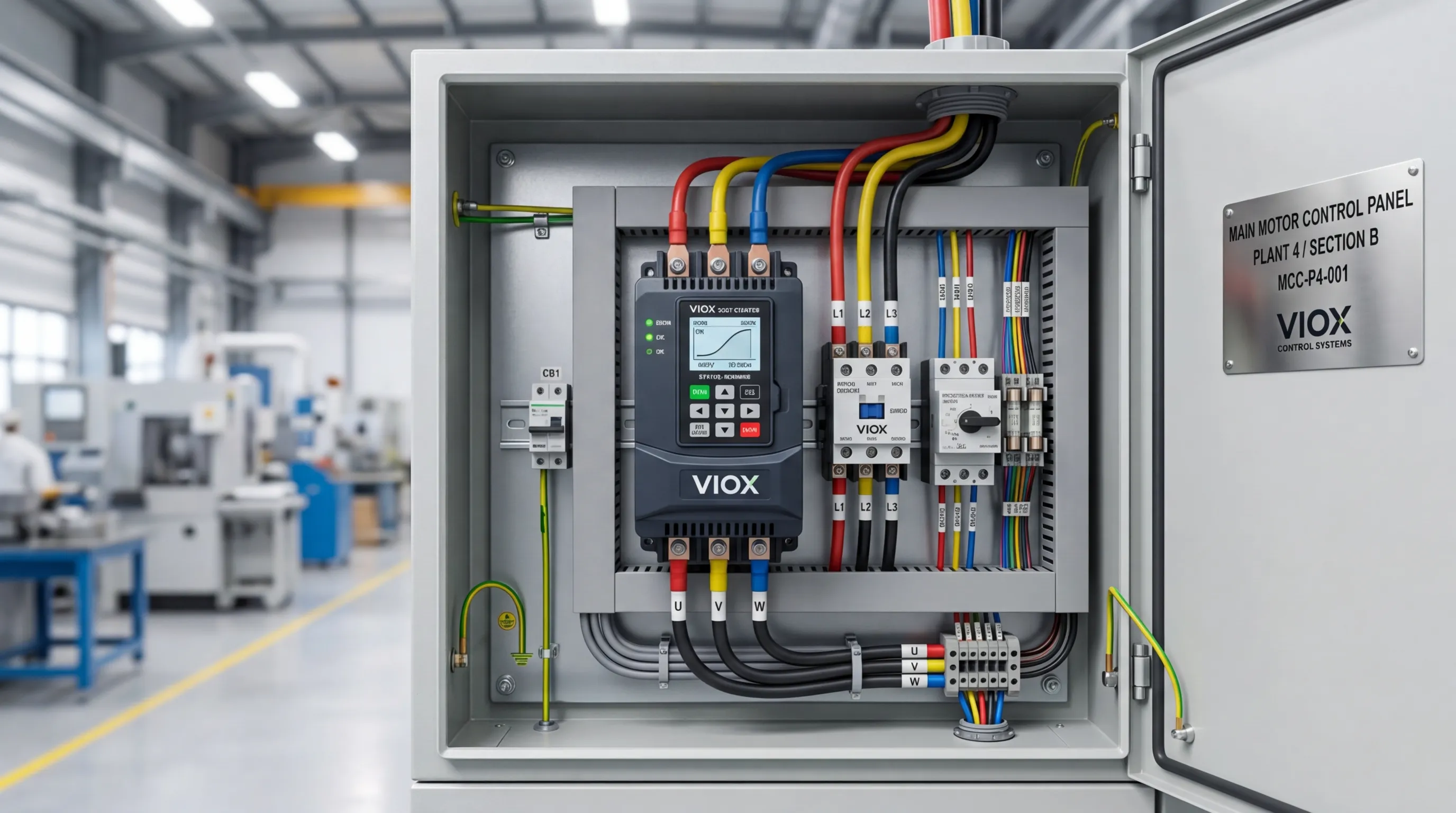
اے سافٹ سٹارٹر is a motor control device that reduces electrical and mechanical stress during motor startup by gradually increasing the voltage applied to the motor. Instead of applying full line voltage instantly, the soft starter ramps voltage in a controlled way, which reduces inrush current, limits torque shock, and helps the motor-driven system accelerate more smoothly.
In practical terms, a soft starter is used when a motor needs a gentler start but does not need full variable-speed control during normal operation. That is why soft starters are common in industrial pumps, fans, compressors, conveyors, and similar applications where the main challenge is startup stress rather than continuous speed regulation.
What a Soft Starter Is
A soft starter is part of the motor starting and control system, not a replacement for every other motor control component. Its main job is to reduce the sudden current surge and mechanical shock that occur when a motor starts directly across the line.
Compared with direct-on-line starting, a soft starter helps:
- reduce inrush current
- reduce mechanical stress on couplings, belts, shafts, and gearboxes
- reduce voltage dip effects on the supply system
- improve controlled acceleration and, in some models, controlled stopping
This makes it especially useful in systems where abrupt starting can damage equipment, disturb upstream power quality, or create unstable process conditions.
A soft starter is often used alongside other motor control devices such as contactors, overload protection, and circuit breakers. If you want the broader motor-control context, رابطہ کنندہ کیا ہے؟ اور کنٹیکٹر بمقابلہ موٹر اسٹارٹر are natural companion reads.
How a Soft Starter Works
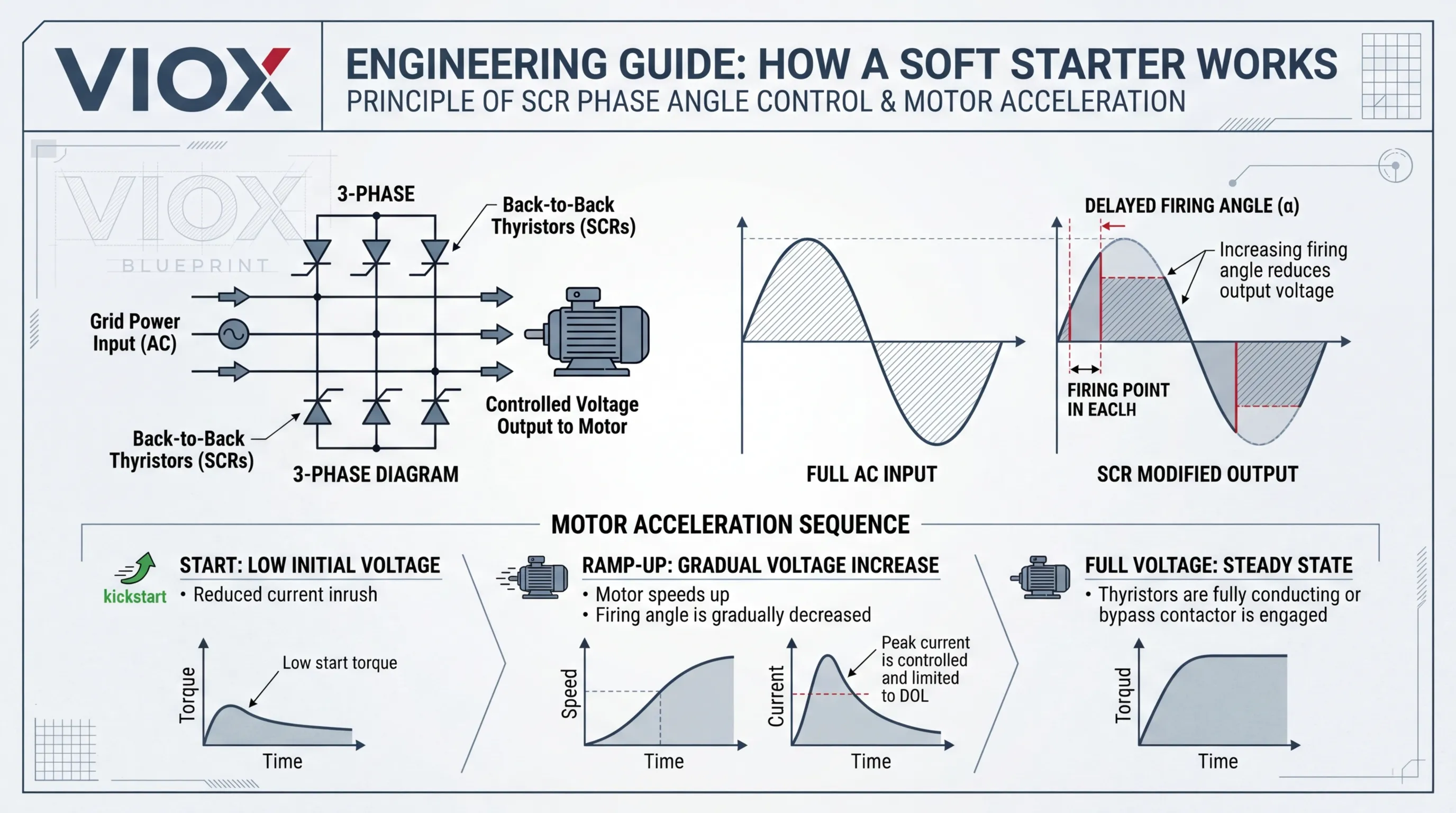
Most industrial soft starters use SCRs, ، جسے thyristors, to control the voltage applied to the motor during startup.
In practical electrical terms, the SCRs do this through phase angle control. By delaying the point in each AC half-cycle at which the SCR turns on, the soft starter allows only part of the sinusoidal waveform to reach the motor at first. As the firing angle is adjusted over the ramp period, more of each waveform is passed through, the effective motor voltage rises, and the motor accelerates toward full speed.
The basic operating sequence is:
- the motor receives a reduced voltage at startup
- the soft starter gradually increases that voltage over a programmed ramp time
- the motor accelerates more smoothly to full speed
- in many designs, a bypass contactor then carries the motor at full voltage to reduce heat losses in the starter
Because torque in an induction motor is related to voltage, reducing startup voltage also reduces starting torque. That is why soft starters work well where reduced starting shock is needed, but are not always the best choice for very high starting torque applications.
From a system perspective, the soft starter is not changing motor frequency during normal operation. It is managing startup and sometimes stopping behavior. That is the critical distinction between a soft starter and a VFD.
Main Types of Soft Starters
Not all soft starters are built the same. The main categories are usually defined by how many phases are controlled and how much functionality is included.
Two-phase controlled soft starters
These are common in many standard industrial applications. The starter controls two phases while the third phase is connected directly. This arrangement balances cost and performance for many motors.
Typical fit:
- general industrial pumps
- fans
- compressors
- conveyors
Three-phase controlled soft starters
These provide more balanced voltage control across all three phases and are often preferred where smoother and more symmetrical starting performance is important.
Typical fit:
- higher-performance motor starting
- more demanding process equipment
- applications where phase balance and ramp quality matter more
Soft starters with bypass contactor
Many soft starters include an internal bypass arrangement or are paired with an external bypass contactor. Once the motor reaches full speed, the starter bypasses the SCR path to reduce heat loss and improve operating efficiency.
This is one reason the soft starter is often part of a larger control assembly rather than a standalone device.
Soft starters with soft stop function
Some applications need controlled deceleration as well as controlled acceleration. A soft stop function can be useful where sudden stopping would cause hydraulic shock, belt stress, or unstable product handling.
Typical fit:
- pumps to reduce water hammer
- conveyors carrying unstable materials
- process systems that benefit from gentler stop behavior
Typical Industrial Applications
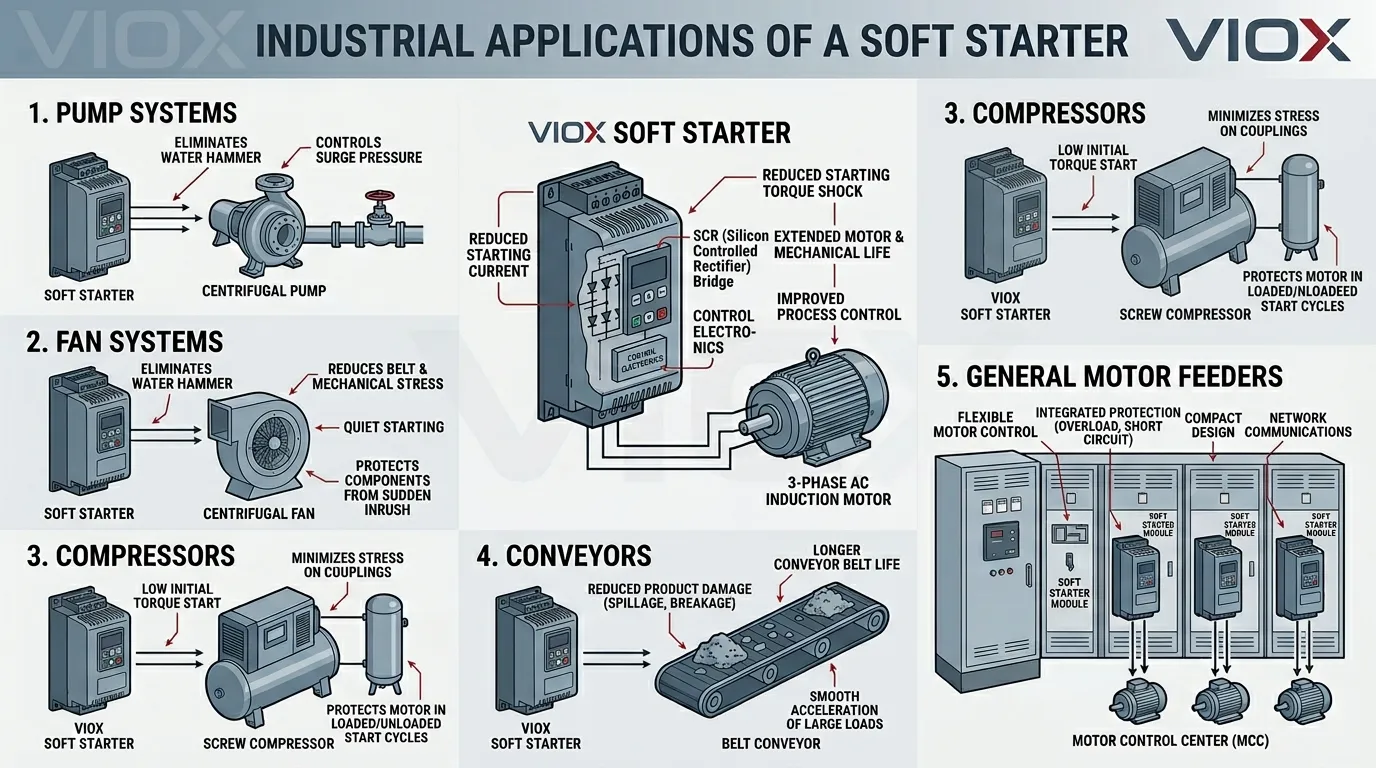
Soft starters are not universal motor controllers. They are best used where startup management is the main priority.
پمپس
Pumps are one of the most common soft starter applications because gradual acceleration helps reduce water hammer and mechanical shock. In pumping systems, this can improve both piping reliability and process stability.
In real projects, pump applications are often where soft starters make the fastest practical sense. When the process does not need continuous speed control, many teams prefer a soft starter because it solves the startup problem without introducing the added complexity of a VFD-based control strategy.
Fans and blowers
Fans often do not need continuous speed control in every installation, but they do benefit from reduced startup stress. A soft starter can limit the current surge and mechanical impact at startup without adding the full complexity of a VFD where speed variation is not essential.
کمپریسرز
Compressors can place a heavy burden on the power system during startup. A soft starter helps reduce line disturbance and ease mechanical loading during acceleration.
کنویئرز
Conveyors benefit from smoother startup because abrupt acceleration can damage the drive train or destabilize the product being moved. In these systems, a soft starter can reduce both electrical stress and mechanical wear.
General industrial motor feeders
Where the main requirement is reduced inrush current rather than speed control, soft starters remain a practical solution in industrial motor control panels.
From an application perspective, this is the pattern seen most often in the field: if the motor will start, ramp up, and then spend most of its life running near full speed, a soft starter is frequently the cleaner and more economical answer than a full variable-speed drive.
Soft Starter vs VFD
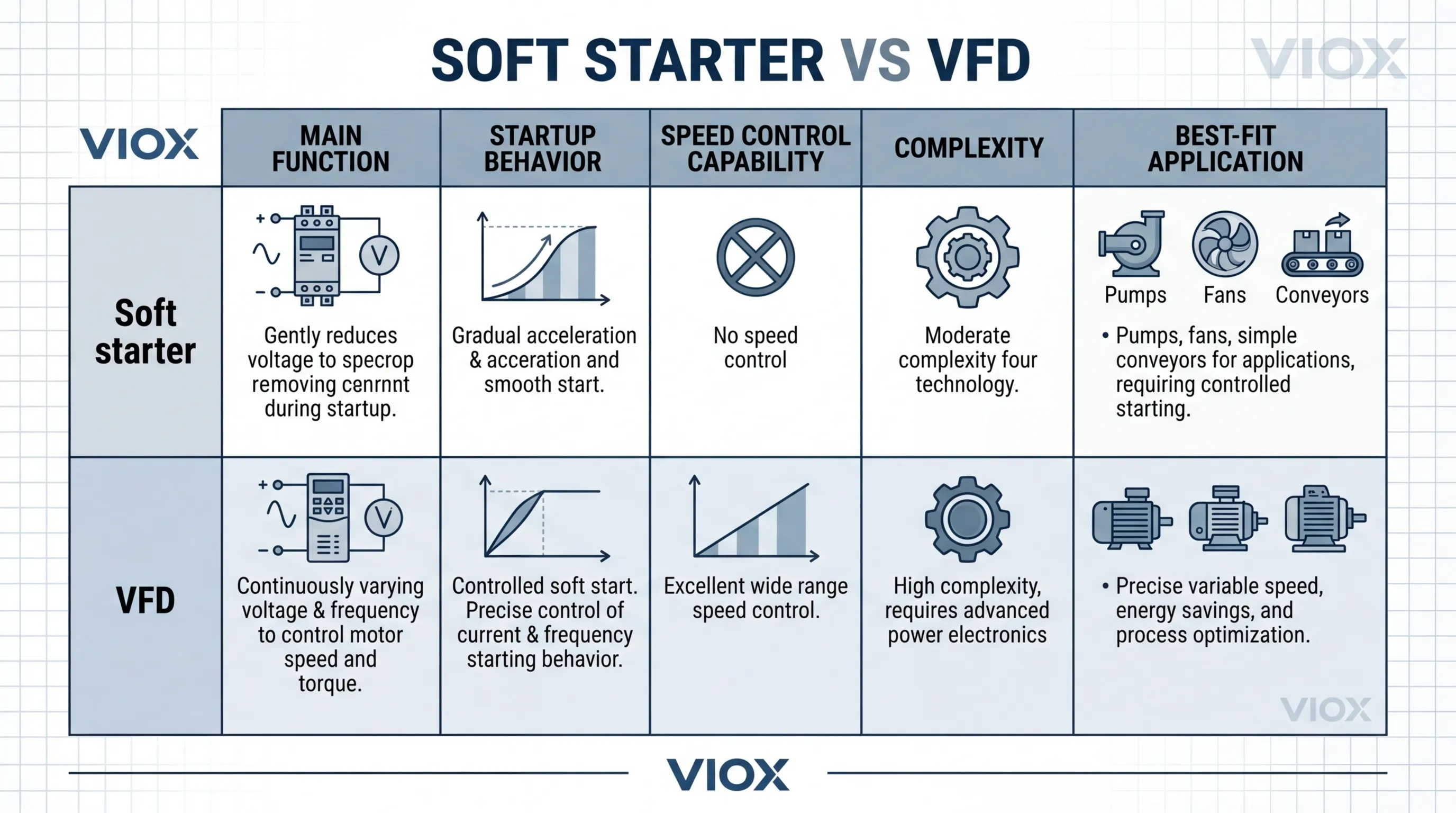
This is one of the most important comparisons because many users treat the two devices as interchangeable when they are not.
| عامل | سافٹ سٹارٹر | VFD |
|---|---|---|
| اہم فنکشن | Reduce startup and stopping stress | Control motor speed and frequency throughout operation |
| Startup current reduction | جی ہاں | جی ہاں |
| Continuous speed control | کوئی | جی ہاں |
| Energy-saving potential on variable-torque loads | محدود | Often much higher |
| System complexity | زیریں | اعلی |
| لاگت | عام طور پر کم | Usually higher |
| بہترین فٹ | Smooth start/stop without speed control | Full speed control and process optimization |
A soft starter reduces starting current and mechanical shock. A VFD does that too, but also controls motor speed continuously by changing voltage and frequency.
That means the practical decision is usually:
- choose a soft starter when the main issue is starting stress
- choose a VFD when the application needs variable speed, tighter process control, or broader operating flexibility
If this comparison is central to your project, VFD بمقابلہ سافٹ اسٹارٹر گائیڈ is the direct next step.
سافٹ سٹارٹر کب منتخب کریں
A soft starter is usually the better fit when:
- the motor runs mainly at full speed after startup
- startup current reduction is needed
- mechanical shock must be reduced
- budget or panel simplicity matters
- the application does not require continuous speed control
A soft starter is usually ضروری نہیں the best fit when:
- the process needs continuous speed adjustment
- energy optimization depends on variable-speed operation
- torque needs must be controlled over a wide speed range
- advanced motion or process control is required
In system design, motor control selection should never be isolated from protection selection. If the project also includes device coordination, موٹر پاور کی بنیاد پر رابطہ کار اور سرکٹ بریکر کا انتخاب کیسے کریں۔ is a useful companion reference.
Common Selection Questions
Before choosing a soft starter, engineers usually ask:
- How much starting current reduction is needed?
- Does the load require high starting torque?
- Is controlled stopping important?
- Will the motor run mostly at full speed?
- Would a VFD create more value than a simpler starter?
- How will the starter coordinate with contactors, overload devices, and breakers?
Those questions usually matter more than the product label alone.
اکثر پوچھے گئے سوالات
What is a soft starter?
A soft starter is a motor control device that reduces startup current and mechanical shock by gradually increasing the voltage applied to the motor during startup.
How does a soft starter work?
Most soft starters use SCRs or thyristors to ramp motor voltage from a reduced level up to full voltage over a programmed time period.
What is the difference between a soft starter and a VFD?
A soft starter manages startup and sometimes stopping. A VFD controls motor speed continuously by adjusting voltage and frequency throughout operation.
Where are soft starters used?
They are commonly used on pumps, fans, compressors, conveyors, and other industrial motors where reduced starting stress is important.
Does a soft starter save energy?
Usually not in the same way a VFD can. A soft starter mainly improves startup behavior. If energy savings depend on varying motor speed during operation, a VFD is often the more effective solution.
Is a soft starter a motor starter?
It is part of the motor starting system, but not always the whole starter assembly by itself. In many industrial panels it works together with contactors, overload protection, and short-circuit protection devices.
Meta Description: Learn what a soft starter is, how it works, the main soft starter types, typical industrial applications, and when to choose a soft starter instead of a VFD.