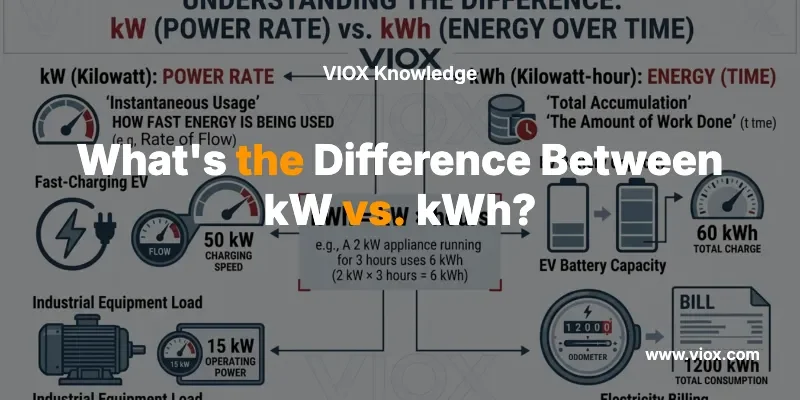
The difference between kW and kWh is simple:
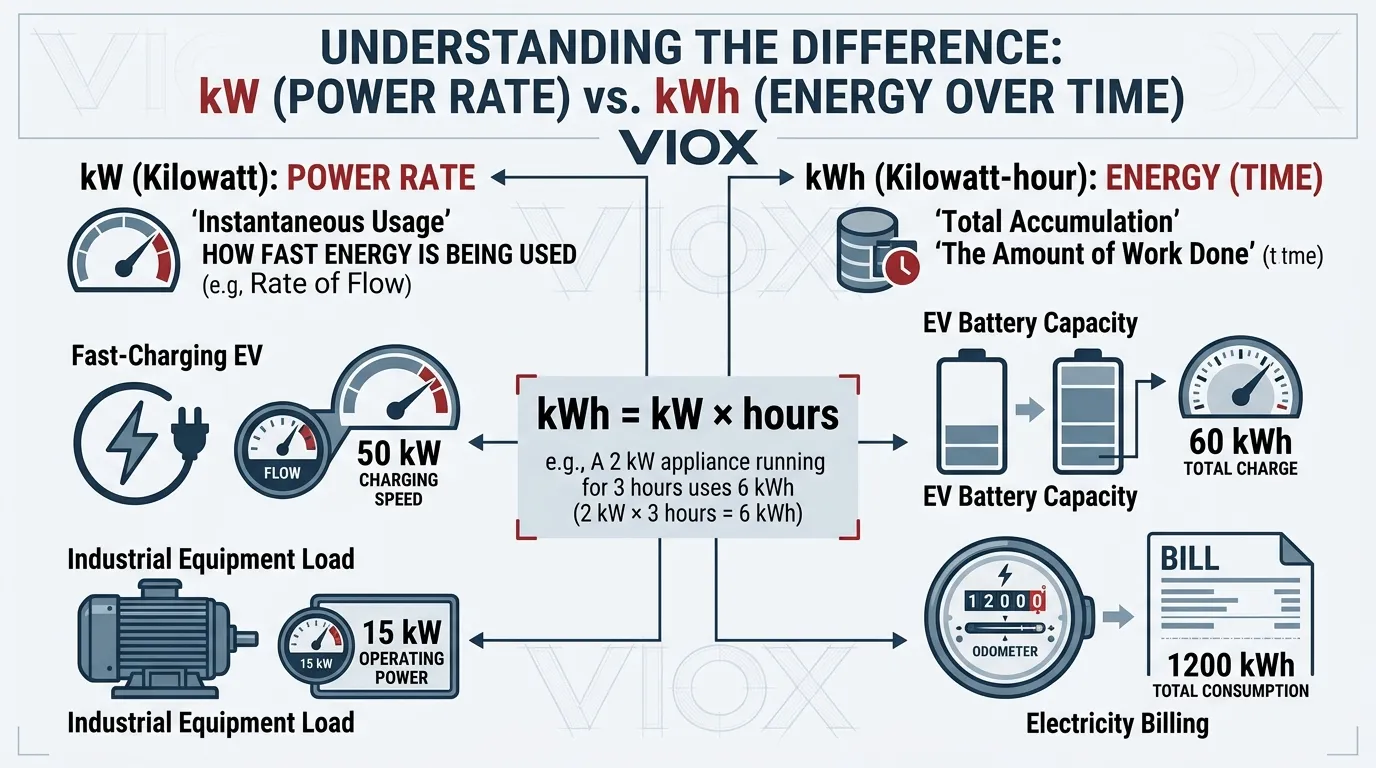
- kW tells you the rate of power
- kWh tells you the amount of energy used over time
In other words, kW describes how fast electricity is being consumed, generated, or delivered at a given moment. kWh describes how much electricity is actually used during a period of time.
The easiest way to remember it is this:
kWh = kW × hours
So if a device runs at 2 kW for 3 hours, it uses 6 kWh of energy.
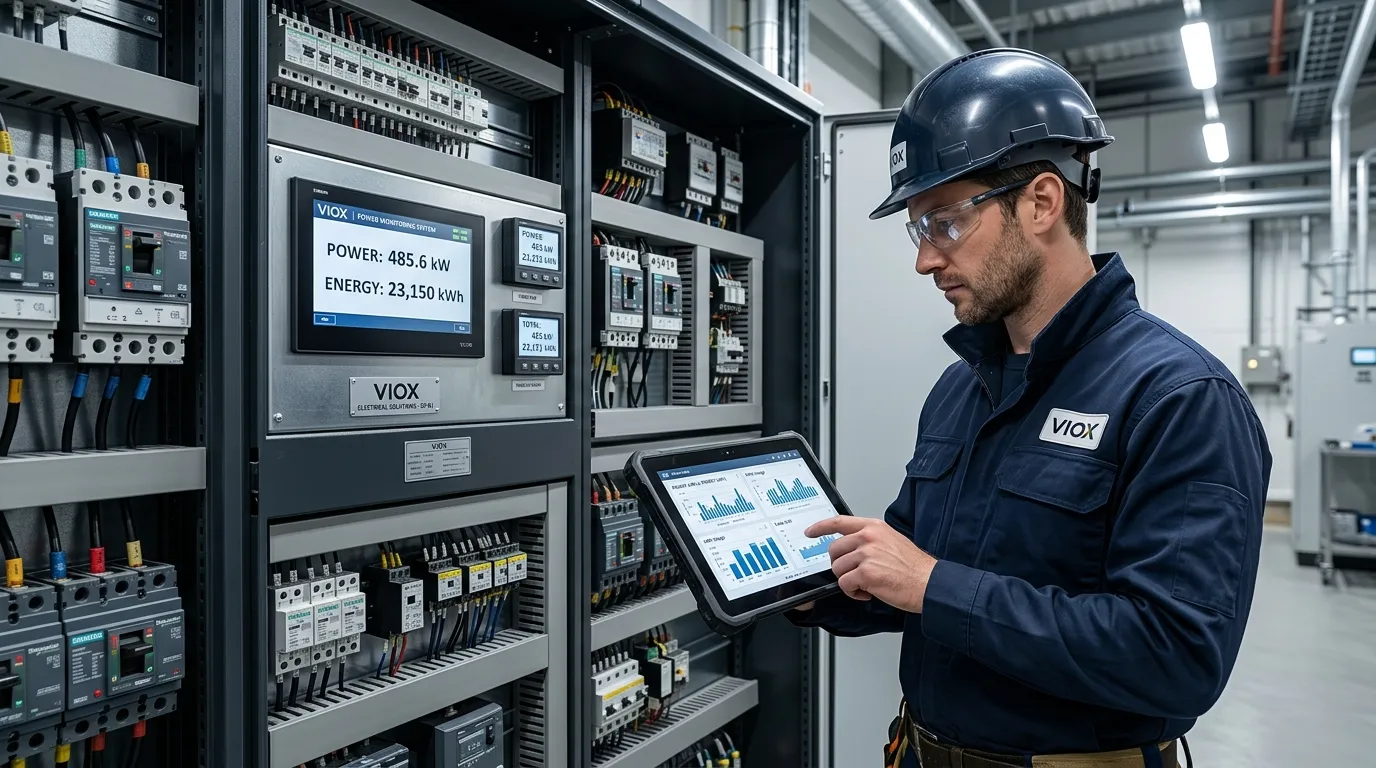
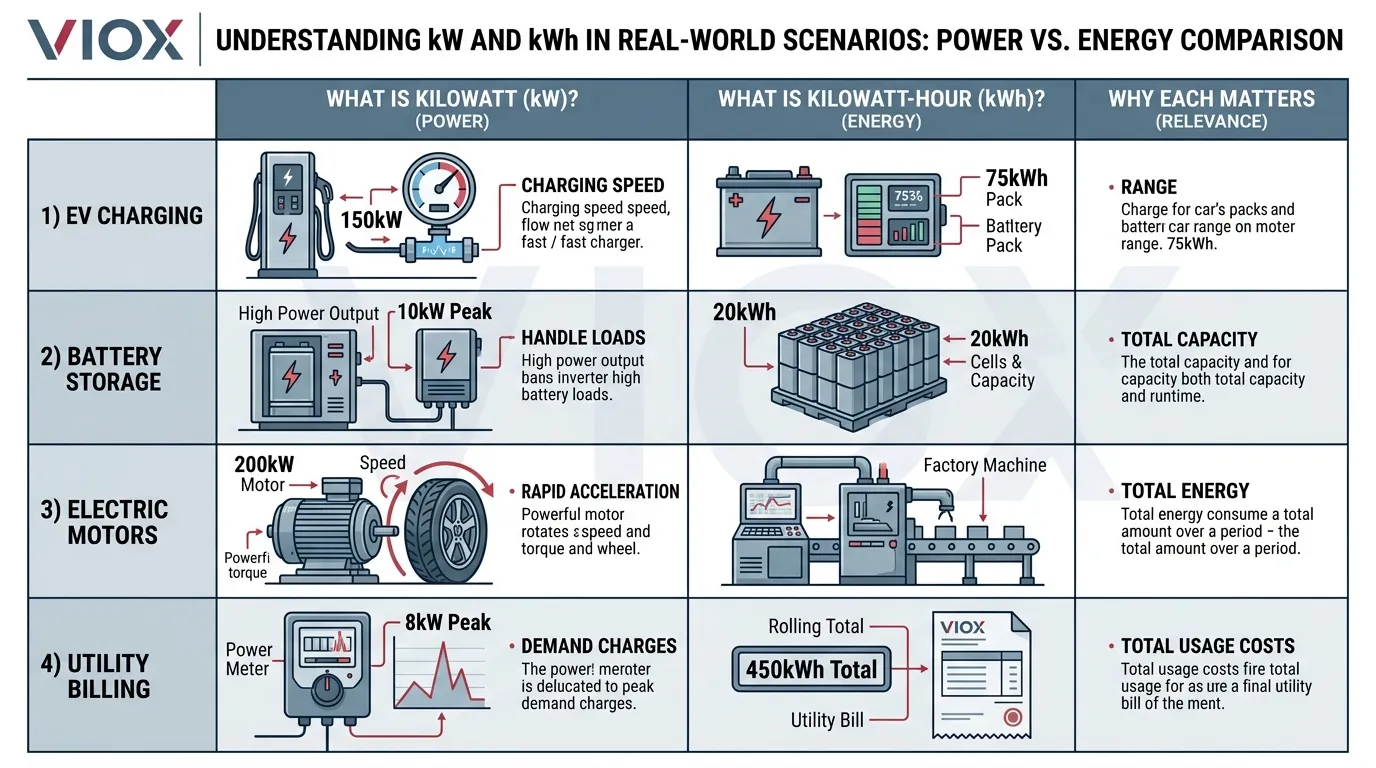
This distinction matters in real projects. Equipment nameplates, chargers, motors, and power systems are often discussed in kW, while electricity bills, battery storage, and energy usage are typically discussed in kWh.
What kW Means
kW stands for kilowatt, which is a unit of power.
Power is the rate at which energy is being used or transferred. When someone says a heater is rated at 3 kW, they mean the heater can draw electricity at a rate of 3 kilowatts while operating.
Think of kW as the speed of electrical use.
مثالیں:
- a 7 kW EV charger delivers power at a 7-kilowatt rate
- a 22 kW charger delivers power faster
- a motor rated at 15 kW has a higher power requirement than a motor rated at 5.5 kW
This is why equipment selection documents often use kW. If you are working on EV charging circuits, EV Charger Circuit Breaker Sizing Guide: 7kW to 22kW is a good example of where kW directly affects electrical design decisions.
What kWh Means
kWh stands for kilowatt-hour, which is a unit of energy.
Energy is not the same as power. Energy tells you how much electricity has actually been consumed, stored, or delivered over time.
If kW is the speed, kWh is the total distance traveled.
مثالیں:
- if a 1 kW load runs for 5 hours, it uses 5 kWh
- if a 2 kW load runs for 5 hours, it uses 10 kWh
- a battery rated at 50 kWh stores much more energy than a battery rated at 5 kWh
This is why electricity bills are usually measured in kWh, not kW.
The Simplest Formula
The basic relationship is:
Energy (kWh) = Power (kW) × Time (hours)
This one formula explains most of the confusion.
Once readers understand this formula, the terms become much easier to apply in real equipment, energy bills, and system planning.
Real-World Examples and Load Profile Logic
ای وی چارجنگ
This is one of the easiest examples.
A charger may be labeled:
- 7 kW
- 11 kW
- 22 kW
Those are power ratings, not energy usage totals.
If a car charges at 7 kW for 5 hours, the delivered energy is:
7 × 5 = 35 kWh
That is why EV charger design discussions usually start in kW, while charging session results or battery fill amounts are often discussed in kWh.
Electricity bills
Your bill normally charges for energy used over a billing period, which is why utility usage is listed in kWh.
A home may have a high temporary kW demand when large appliances start, but the bill is based on the total kWh consumed over time.
In commercial and industrial facilities, the picture is often more complicated because many electricity tariffs also include a demand charge. That means the bill may depend on two different things:
- total energy used over time, measured in kWh
- the highest power demand reached during the billing period, measured in kW
This is why two facilities with similar kWh consumption can still receive very different electricity bills. One site may have a smoother load profile, while another may create short but expensive demand peaks when multiple large loads start at the same time.
Load profile: where kW and kWh meet
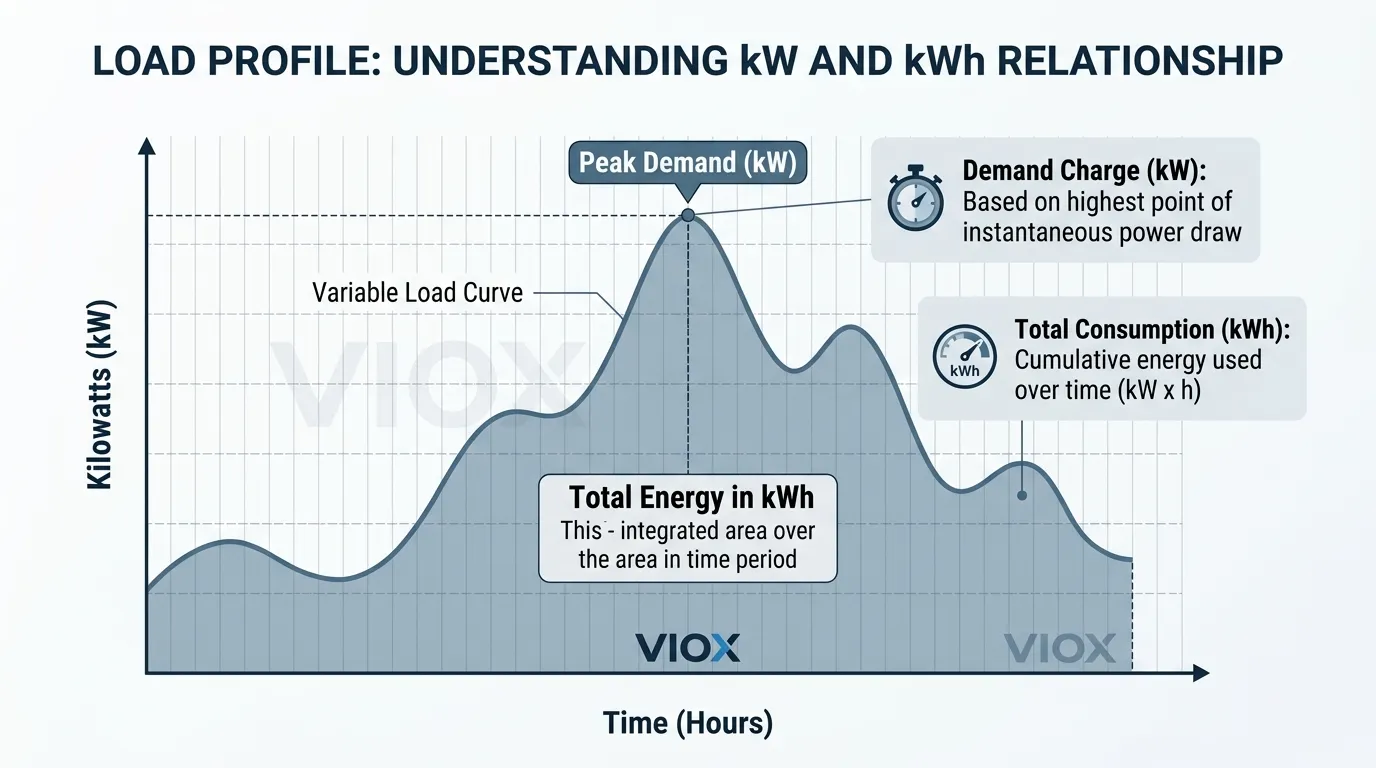
The most practical way to visualize the difference is with a load profile.
- the vertical axis shows kW
- the horizontal axis shows time
- the curve height at any moment represents instantaneous power demand
- the area under that curve represents total energy used, or kWh
For example, a facility may average 20 kW over 10 hours, which gives 200 kWh in simple arithmetic. But in real life, industrial and commercial loads rarely stay flat. The load may rise to 45 kW during equipment startup, drop to 12 kW during lighter operation, and climb again later in the shift. The total kWh still comes from the area under the curve, but the highest kW point may also affect the bill through peak demand charges.
That is why engineers, facility managers, and energy buyers care about both numbers:
- kW matters for demand peaks, equipment sizing, and utility demand charges
- kWh matters for total energy consumption, operating cost, and usage planning
Motors and industrial loads
Motors are often discussed in kW because engineers need to know the power level required for sizing feeders, breakers, contactors, and control equipment. That is why موٹر پاور کی بنیاد پر رابطہ کار اور سرکٹ بریکر کا انتخاب کیسے کریں۔ naturally uses kW as a practical design input.
Battery storage
Battery systems are a useful way to separate the two ideas:
- kW tells you how fast the battery can deliver or accept power
- kWh tells you how much energy the battery stores
That distinction is central in storage system discussions, which is why بیٹری انرجی سٹوریج سسٹم کے لیے مکمل گائیڈ becomes easier to understand once kW and kWh are clear.
Common Mistakes People Make
Mistaking kW for total electricity use
Many people assume a 10 kW device automatically means a high energy bill. But kW only tells you the rate. If the device runs briefly, the total kWh may still be moderate.
Mistaking kWh for equipment output rate
kWh does not tell you how fast power is delivered. It tells you how much total energy was used or stored.
Ignoring peak demand
In commercial and industrial billing, this is a costly mistake. A site may manage kWh reasonably well and still face expensive charges if its peak kW demand is too high.
Ignoring time
Time is the missing piece in most confusion.
- kW without time is just power
- kWh includes time by definition
Using the two terms interchangeably
This is common in casual conversation, but it creates real confusion in electrical design, EV charging, energy storage, and billing analysis.
Why the Difference Matters in Electrical Work
For electricians, engineers, and buyers, the difference is not only academic.
System sizing
Power ratings in kW affect how circuits, protective devices, and supply systems are selected.
Energy planning
Energy figures in kWh affect usage forecasting, battery capacity planning, and operating cost analysis.
Demand charge management
In many commercial and industrial tariffs, reducing peak kW is just as important as reducing total kWh. This is one reason load scheduling, staged motor starting, and power system coordination matter financially, not just electrically.
Single-phase vs three-phase discussions
Power system conversations often shift quickly into kW because load capacity and delivery rate matter when comparing supply types. If you are working through those differences, سنگل فیز بمقابلہ تھری فیز پینل بورڈز گائیڈ is a useful next step.
واضح ٹیکنیکل کمیونیکیشن
A surprising number of project misunderstandings come from mixing up power and energy. Once teams separate kW from kWh, equipment discussions become much more precise.
kW vs kWh in One Sentence
If you need the shortest possible explanation:
kW is how fast electricity is used.
kWh is how much electricity is used over time.
اکثر پوچھے گئے سوالات
What is the difference between kW and kWh?
kW measures power. kWh measures energy over time. A device rated in kW tells you how fast it uses electricity. The kWh figure tells you how much electricity is used across a period.
Is kW the same as kWh?
No. kW and kWh are related, but they do not mean the same thing. kWh includes a time element, while kW does not.
How do you convert kW to kWh?
Multiply kW by the number of hours:
kWh = kW × hours
Why is my electricity bill in kWh instead of kW?
Because utilities typically bill for total energy used over time, not just the instantaneous rate of power. In commercial and industrial tariffs, however, a separate demand charge may also be based on peak kW.
Why does peak kW matter on commercial electricity bills?
Because many commercial and industrial tariffs include demand charges. That means a short period of high kW demand can affect the bill even if total kWh consumption is not unusually high.
Is a battery rated in kW or kWh?
Usually both, but they describe different things. kW describes power output or charging rate. kWh describes stored energy capacity.
Why do EV chargers use kW?
Because charger labels usually describe the rate at which power can be delivered. The total energy transferred during a session is better described in kWh.