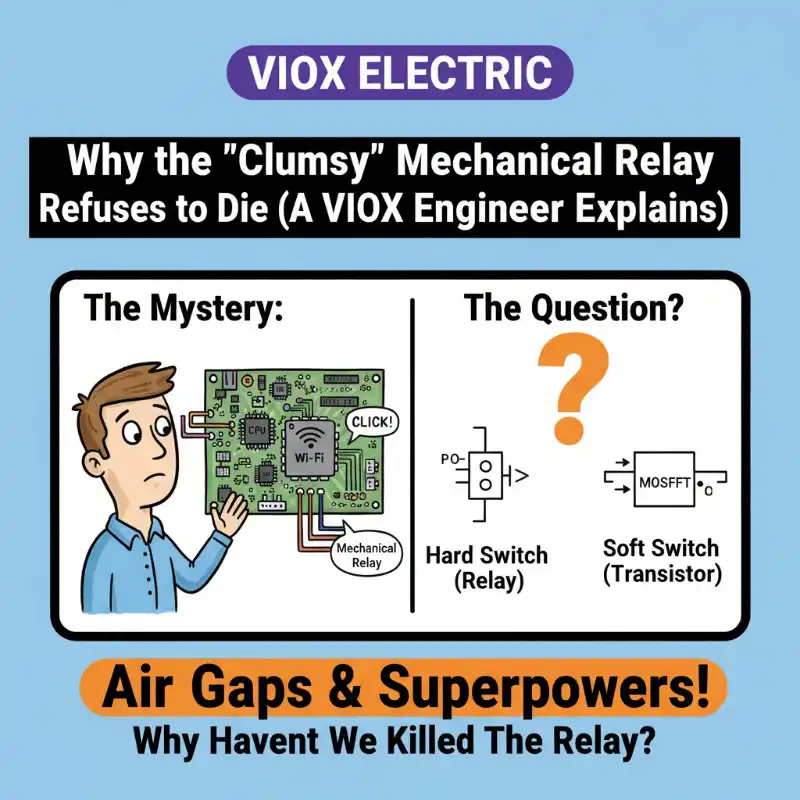
คุณเปิดตัวควบคุมบ้านอัจฉริยะไฮเทคล้ำสมัย ภายในอัดแน่นไปด้วยส่วนประกอบแบบ Surface-Mount ขนาดเล็กจิ๋ว, ไมโครโปรเซสเซอร์ทรงพลัง และชิป Wi-Fi.
และจากนั้น ตรงกลางของซิลิคอนทั้งหมดนั้น มีลูกบาศก์พลาสติกขนาดใหญ่ เมื่อมันทำงาน มันจะส่งเสียงดัง คลิก.
มันคือรีเลย์เชิงกล เทคโนโลยีจากยุค 1830.
นี่ทำให้เกิดคำถาม “ค้นหาจิตวิญญาณ” สำหรับวิศวกรทุกคน: ในโลกที่ MOSFET และ IGBT ราคาถูก ขนาดเล็กจิ๋ว และเงียบ ทำไมเราถึงยังไม่กำจัดรีเลย์ทิ้งไป?
ทำไมต้องพึ่งพาแขนโลหะที่เคลื่อนที่ได้ซึ่งยึดด้วยสปริง ในเมื่อเรามีฟิสิกส์สถานะของแข็ง?
คำตอบไม่ใช่ความคิดถึง—แต่มันคือความเป็นจริงทางวิศวกรรมที่เย็นชาและแข็งกระด้าง ปรากฎว่ารีเลย์ที่ “งุ่มง่าม” มีพลังพิเศษที่ซิลิคอนไม่สามารถทำซ้ำได้.
มาแยกย่อยการต่อสู้ระหว่าง สวิตช์แบบแข็ง (รีเลย์) และ สวิตช์แบบอ่อน (ทรานซิสเตอร์).
1. ความปลอดภัย “ช่องว่างอากาศ”: ทำไมรีเลย์ถึงเป็นไฟร์วอลล์ขั้นสุดยอด
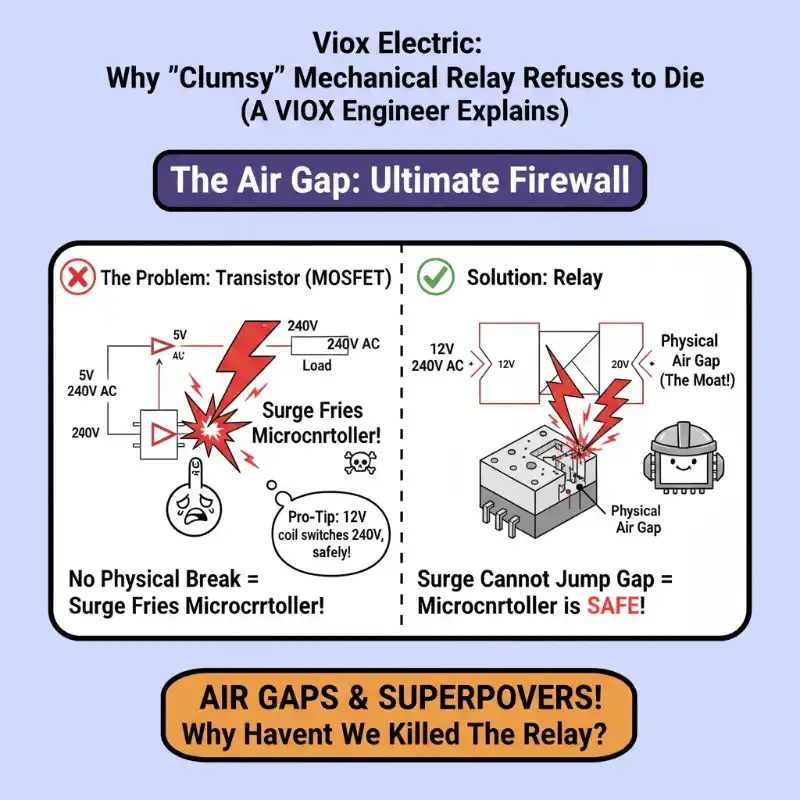
เหตุผลที่ #1 ที่รีเลย์ยังคงเป็นราชาคือแนวคิดที่เรียกว่า การแยกกัลวานิก.
ลองนึกถึง MOSFET (ทรานซิสเตอร์) แม้ในขณะที่มัน “ปิด” ก็ยังมีการเชื่อมต่อทางกายภาพและทางเคมีระหว่างโหลดไฟฟ้าแรงสูงและไมโครคอนโทรลเลอร์ที่ละเอียดอ่อนของคุณ พวกมันใช้ซิลิคอนชิ้นเดียวกันร่วมกัน บ่อยครั้งที่พวกมันต้องใช้การอ้างอิง “กราวด์” ร่วมกัน.
หาก MOSFET นั้นล้มเหลวอย่างร้ายแรง (เช่น แรงดันไฟกระชากทะลุผ่านเกตออกไซด์) ไฟฟ้ากระแสสลับ 240V นั้นไม่ได้อยู่แค่ด้านโหลดเท่านั้น แต่มันเดินทาง ย้อนกลับ, ตรงไปยัง Arduino หรือ Raspberry Pi 5V ของคุณ.
ผลลัพธ์? ไมโครโปรเซสเซอร์ของคุณจะไหม้ในทันที.
ข้อดีของรีเลย์
รีเลย์ไม่มีการเชื่อมต่อทางไฟฟ้าระหว่างคอยล์ (ด้านควบคุม) และหน้าสัมผัส (ด้านโหลด) พวกมันเชื่อมต่อกันด้วย สนามแม่เหล็ก. ภายในกล่อง มี ช่องว่างอากาศ.
- สถานการณ์: มอเตอร์ 240V ของคุณลัดวงจรและส่งไฟกระชากขนาดใหญ่กลับขึ้นไปตามสาย.
- รีเลย์: หน้าสัมผัสอาจเชื่อมติดกัน เคสพลาสติกอาจละลาย แต่ไมโครคอนโทรลเลอร์ของคุณ? ปลอดภัย ไฟกระชากไม่สามารถกระโดดข้ามช่องว่างอากาศไปยังคอยล์ได้.
มืออาชีพ-เคล็ดลับ: เราเรียกสิ่งนี้ว่า “คูน้ำ” หากคุณกำลังออกแบบวงจรที่ตรรกะการควบคุมต้องอยู่รอดได้แม้ว่าด้านโหลดจะระเบิด คุณต้องมีรีเลย์ มันคือชั้นเสียสละขั้นสุดยอด.
มีหลักการทางวิศวกรรมคลาสสิก: “คุณสามารถใช้คอยล์ 12V เพื่อสลับสายไฟ 240V และไม่ต้องกังวลเกี่ยวกับความแตกต่างของแรงดันไฟฟ้า” นี่คือพลังของ หน้าสัมผัสแห้ง.
2. สวิตช์ “ไร้สมอง”: AC, DC, มันไม่สนใจ
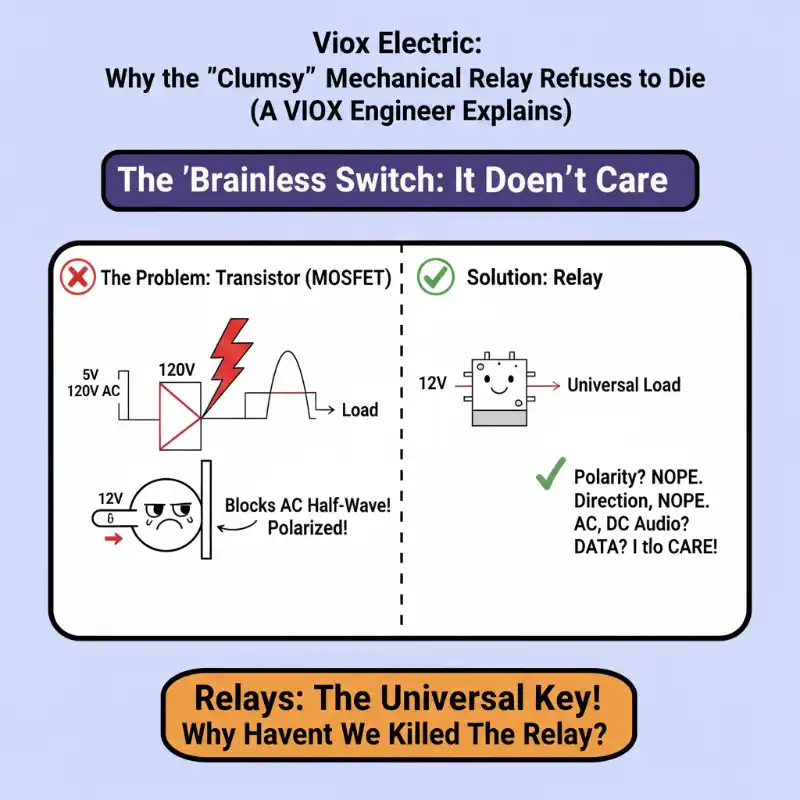
ทรานซิสเตอร์จู้จี้จุกจิก พวกมันเป็นอุปกรณ์เซมิคอนดักเตอร์ ซึ่งหมายความว่าพวกมันมีกฎ.
- BJT/MOSFET โดยเนื้อแท้แล้วเป็น กระแสตรง (DC) อุปกรณ์ พวกมันยอมให้กระแสไหลในทิศทางเดียว (เดรนไปยังซอร์ส).
- ปัญหา: หากคุณต้องการสลับไฟ AC 120V (กระแสสลับ) ด้วย MOSFET คุณจะต้องปวดหัว กระแสจะเปลี่ยนทิศทาง 60 ครั้งต่อวินาที MOSFET ตัวเดียวจะบล็อกครึ่งหนึ่งของคลื่นและทำหน้าที่เหมือนไดโอดในอีกครึ่งหนึ่ง คุณต้องมี MOSFET สองตัวแบบ Back-to-Back หรือ Triac พร้อมวงจรขับที่ซับซ้อน.
ข้อดีของรีเลย์
รีเลย์เป็นเพียงโลหะสองชิ้นที่สัมผัสกัน.
- ขั้ว: มันไม่สนใจ.
- ทิศทาง: มันไม่สนใจ.
- ประเภทแรงดันไฟฟ้า: AC? DC? สัญญาณเสียง? ข้อมูล? มันไม่สนใจ.
เมื่อคุณให้เอาต์พุตรีเลย์แก่ลูกค้า คุณกำลังให้กุญแจสากลแก่พวกเขา พวกเขาสามารถต่อโซลินอยด์ DC 24V, พัดลม AC 120V หรือสัญญาณเสียงระดับมิลลิโวลต์ รีเลย์จัดการทั้งหมดโดยไม่มีแรงดันไฟฟ้าตกและไม่มีกระแส “รั่วไหล”.
มืออาชีพ-เคล็ดลับ: หากคุณไม่รู้ อะไร ผู้ใช้จะเชื่อมต่ออะไรกับเอาต์พุตของคุณ ให้ใช้รีเลย์ เอาต์พุตทรานซิสเตอร์กำหนดให้ผู้ใช้ต้องจับคู่แรงดันไฟฟ้าและขั้วอย่างสมบูรณ์แบบ รีเลย์เพียงแค่บอกว่า “ฉันเชื่อมต่อ A กับ B”
3. ที่ที่ทรานซิสเตอร์ “ต่อต้านการฆ่า” รีเลย์
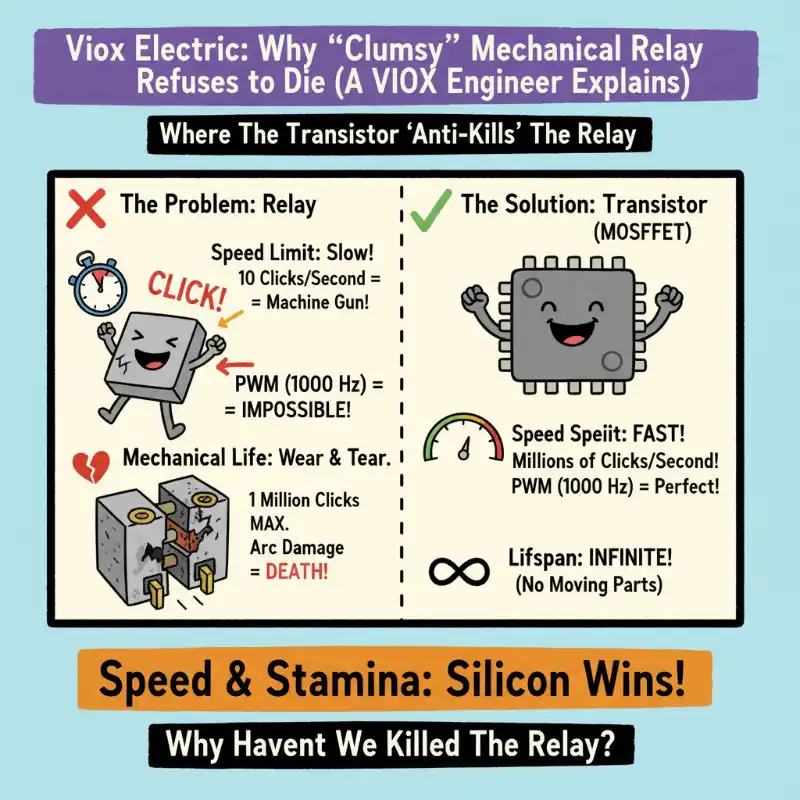
ดังนั้น ถ้ารีเลย์ดีขนาดนั้น ทำไมเราไม่ใช้มันในโทรศัพท์หรือคอมพิวเตอร์ของเรา?
เพราะรีเลย์มีข้อบกพร่องร้ายแรงสองประการ: ความเร็ว แล้ว การสึกหรอ.
ขีดจำกัดความเร็ว
รีเลย์คือแขนกลที่เคลื่อนที่ผ่านพื้นที่.
- ความเร็วรีเลย์: ~50 ถึง 100 มิลลิวินาที ความถี่ในการสลับสูงสุด: อาจ 10 ครั้งต่อวินาที (10 Hz).
- ความเร็วทรานซิสเตอร์: นาโนวินาที ความถี่ในการสลับสูงสุด: ล้านครั้งต่อวินาที (MHz).
หากคุณต้องการหรี่ไฟ LED โดยใช้ PWM (Pulse Width Modulation) โดยที่คุณสลับเปิดและปิดเครื่อง 1,000 ครั้งต่อวินาที รีเลย์จะไร้ประโยชน์ มันจะฟังดูเหมือนปืนกลประมาณ 10 นาทีก่อนที่มันจะสลายตัว.
จำนวนการเสียชีวิต
รีเลย์มีอายุการใช้งานที่จำกัด.
- อายุการใช้งานเครื่องจักร: ทุกครั้งที่มันคลิก สปริงจะล้าและจุดหมุนจะสึกหรอ รีเลย์ที่ดีอาจใช้งานได้ 1 ล้านรอบ.
- อายุการใช้งานไฟฟ้า: ทุกครั้งที่มันเปิดภายใต้โหลด ส่วนโค้งเล็กๆ จะทำให้หน้าสัมผัสเป็นหลุมเป็นบ่อ ที่โหลดเต็มที่ มันอาจใช้งานได้เพียง 100,000 รอบ.
MOSFET หากเก็บไว้ในที่เย็นและอยู่ในสเปค มี อายุการใช้งานที่ไม่มีที่สิ้นสุดตามทฤษฎี. มันไม่สึกหรอ.
4. จุดกึ่งกลาง: โซลิดสเตตรีเลย์ (SSR)

“เดี๋ยวก่อน” คุณอาจจะพูด “แล้วโซลิดสเตตรีเลย์ล่ะ?”
SSR เป็น “ลูกผสม” มันใช้ LED ภายในเพื่อกระตุ้นสารกึ่งตัวนำไวแสง.
- มันมีการแยกส่วน: ใช่ (การแยกด้วยแสง).
- มันมีความเร็ว: ใช่ (เร็วกว่าแบบกลไก ช้ากว่า MOSFET เปลือย).
- มันมีความเงียบ: ใช่.
ข้อเสีย: ความร้อน.
รีเลย์แบบกลไกมีความต้านทานใกล้ศูนย์ (มิลลิโอห์ม) SSR มีแรงดันตก (โดยปกติ 0.7V ถึง 1.5V) ที่เอาต์พุต.
จ่ายกระแส 10 แอมป์ผ่านรีเลย์แบบกลไก? มันยังเย็นอยู่.
จ่ายกระแส 10 แอมป์ผ่าน SSR? มันสร้าง 15 วัตต์ของความร้อน. คุณต้องใช้แผ่นระบายความร้อนขนาดใหญ่เพื่อป้องกันไม่ให้มันละลาย.
สรุป: ตารางการตัดสินใจของวิศวกร
ดังนั้น เสียง “งุ่มง่าม” จะไม่หายไป มันคือตัวเลือกทางวิศวกรรมโดยเจตนา นี่คือแผ่นโกงของคุณสำหรับเมื่อต้องยึดติดกับเทคโนโลยีเก่า:
| สถานการณ์ (Scenario) | ใช้รีเลย์ | ใช้ทรานซิสเตอร์/MOSFET |
|---|---|---|
| ลำดับความสำคัญด้านความปลอดภัย | สูง (ต้องการการแยกแบบกัลวานิก) | ต่ำ (กราวด์ร่วมกันใช้ได้) |
| เรียกประเภท | AC หรือ ไม่ทราบ (สากล) | DC เท่านั้น (โหลดที่ทราบ) |
| ความเร็วในการสลับ | ช้า (เปิด/ปิด เป็นครั้งคราว) | เร็ว (PWM / ความถี่สูง) |
| อายุการใช้งานที่ต้องการ | จำกัด (<100k รอบ) | ไม่จำกัด (หลายล้านรอบ) |
| เสียง/สัญญาณรบกวน | เสียงคลิกใช้ได้ | ต้องเงียบ |
ในทางวิศวกรรม “ใหม่กว่า” ไม่ได้ “ดีกว่า” เสมอไป บางครั้ง ทางออกที่ดีที่สุดยังคงเป็นขดลวดทองแดง สปริงเหล็ก และความพึงพอใจ เสียงคลิก.
ทางเทคนิคข้อความถูกต้อ
ความต้านทานการสัมผัส: โดยทั่วไปรีเลย์แบบกลไกมีความต้านทานหน้าสัมผัสอยู่ในช่วง 50mΩ ถึง 100mΩ, ซึ่งน้อยมากสำหรับการสูญเสียพลังงาน แต่สามารถเป็นปัญหาสำหรับสัญญาณแรงดันต่ำมาก (ต้องใช้กระแสเปียก).
การรั่วไหล: ทรานซิสเตอร์/SSR จะมีกระแสไฟรั่วไหลเล็กน้อยเสมอเมื่อปิด รีเลย์มี เป็นศูนย์ การรั่วไหล (ความต้านทานอนันต์) เมื่อเปิด.
Timeliness: หลักการของการสลับแบบอิเล็กทรอนิกส์เชิงกลเทียบกับโซลิดสเตตเป็นฟิสิกส์พื้นฐานและยังคงเป็นปัจจุบัน ณ เดือนพฤศจิกายน 2025.