
တိုက်ရိုက်အဖြေ
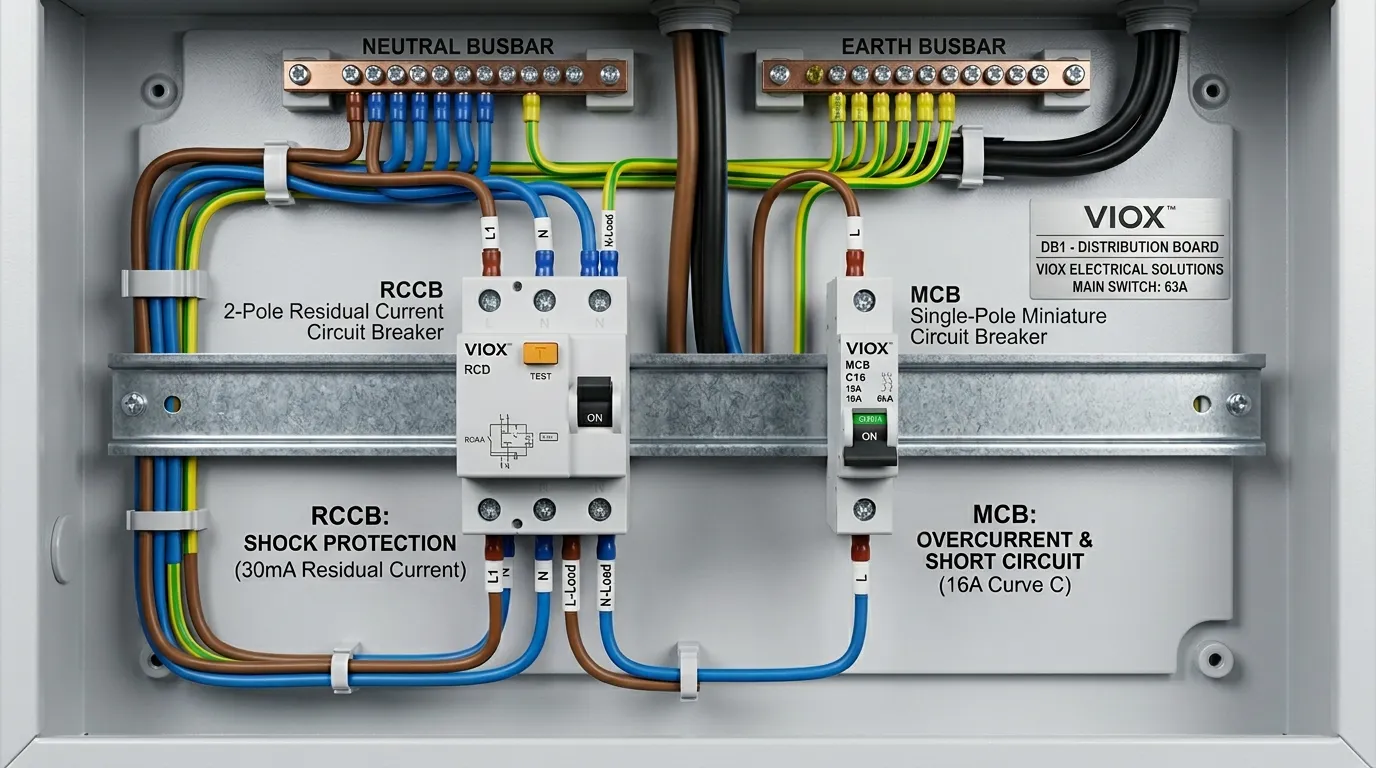
သင်သည် ရည်ရွယ်ချက်တိုင်းအတွက် MCB အစား RCCB ကို အသုံးမပြုပါ။ သင်သည် RCCB လိုအပ်သည့်အခါ လျှပ်စစ်ရှော့ခ်နှင့် မြေပြင်ယိုစိမ့်မှုမှ ကာကွယ်ရန်, ကိုအသုံးပြုပြီး၊ သင်သည် တက္ကို လိုအပ်သည့်အခါ ဗို့အားပိုခြင်းနှင့် ဝါယာရှော့ဖြစ်ခြင်းမှ ကာကွယ်ရန်. ကိုအသုံးပြုသည်။ အများစုသော တကယ့် တပ်ဆင်မှုများတွင် မှန်ကန်သောအဖြေမှာ RCCB သို့မဟုတ် MCB မဟုတ်ဘဲ RCCB + MCB အတူတကွ, သို့မဟုတ် တစ်ခုတည်းသော RCBO လုပ်ဆောင်ချက်နှစ်ခုလုံးကို ပေါင်းစပ်ထားသော ကိရိယာဖြစ်သည်။.
ထိုခြားနားချက်သည် အရေးကြီးသည်၊ အဘယ်ကြောင့်ဆိုသော် တက္ကို သည် ကေဘယ်များနှင့် စက်ပစ္စည်းများကို ဗို့အားပိုခြင်းမှ ကာကွယ်နိုင်သော်လည်း လူ့ခန္ဓာကိုယ်မှ ဖြတ်သန်းနိုင်သော သေးငယ်သော ယိုစိမ့်ဗို့အားများကို မရှာဖွေနိုင်ပါ။ RCCB သည် ထိုမညီမျှမှုကို ရှာဖွေရန်နှင့် ရှော့ခ်ဖြစ်နိုင်ခြေကို လျှော့ချရန်အတွက် လုံလောက်သော မြန်နှုန်းဖြင့် ဆားကစ်ကို ဖြတ်တောက်ရန် အထူးဒီဇိုင်းထုတ်ထားသည်။.
သင်၏အမှန်တကယ်မေးခွန်းမှာ “မည်သည့်ကိရိယာက လူများကိုကာကွယ်ပေးသနည်း” ဆိုလျှင် အဖြေသည် ရိုးရှင်းပါသည်- RCCB သည် လူများကို မြေပြင်ယိုစိမ့်မှုအမှားများမှ ကာကွယ်ပေးပြီး MCB သည် ဝါယာကြိုးများကို ဗို့အားလွန်ကဲမှုအမှားများမှ ကာကွယ်ပေးသည်။. လက်တွေ့ဒီဇိုင်းတွင် ဆိုလိုသည်မှာ ပုံမှန်အားဖြင့် ကျန်ရှိသောဗို့အားကာကွယ်မှုကို သီးခြားအစားထိုးအဖြစ် သဘောထားမည့်အစား သင့်လျော်စွာ ညှိနှိုင်းထားသော ဗို့အားလွန်ကဲမှုကာကွယ်မှုနှင့် ပေါင်းစပ်ရမည်ဖြစ်သည်။.
သော့ထုတ်ယူမှုများ
- RCCB နှင့် MCB တို့သည် အစားထိုးပစ္စည်းများ မဟုတ်ပါ။ ၎င်းတို့သည် မတူညီသော ချို့ယွင်းမှုအမျိုးအစားများကို ကာကွယ်ပေးသည်။.
- RCCB ၏ အဓိကအလုပ်မှာ လျှပ်စီးကြောင်းနှင့် ကြားနေလျှပ်ကူးပစ္စည်းများကြားရှိ ဗို့အားမညီမျှမှုကို ရှာဖွေခြင်းဖြစ်သည်။.
- တစ်ခု
တက္ကိုဘူး မ သည် ကိုယ်ရေးကိုယ်တာ ရှော့ခ်ကာကွယ်မှုကို ပေးသည်။. - လူနေအိမ်နှင့် ကုန်သွယ်လုပ်ငန်းသုံးစနစ်အများစုတွင် မှန်ကန်သော ကာကွယ်ရေးနည်းဗျူဟာမှာ MCB + RCCB သို့မဟုတ် RCBO.
- စျေးကွက်အများအပြားတွင်,
RCBကို ကျန်ရှိသောဗို့အားကိရိယာများအတွက် လျော့ရဲစွာအသုံးပြုကြပြီးRCCBသည် ပိုမိုတိကျသော အသုံးအနှုန်းဖြစ်သည်။.
RCCB နှင့် MCB: အဓိက ခြားနားချက်
၎င်းတို့ကို နှိုင်းယှဉ်ရန် အရှင်းလင်းဆုံးနည်းလမ်းမှာ ကိရိယာတစ်ခုစီကို ရှာဖွေတွေ့ရှိရန် တည်ဆောက်ထားသည့် ချို့ယွင်းချက်ကို ကြည့်ရှုခြင်းဖြစ်သည်။.
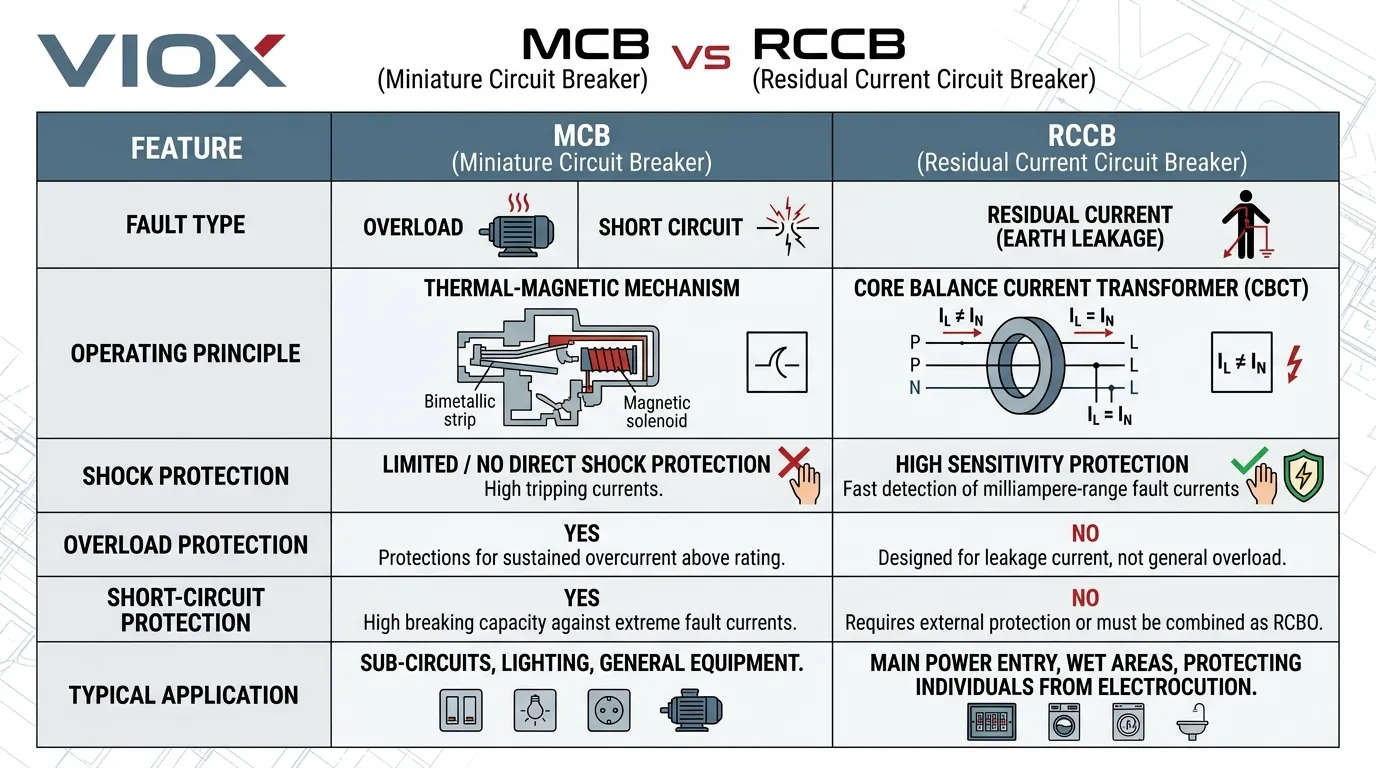
| ကာကွယ်ရေးကိရိယာ | Form အပြည့်အစုံ | အဓိကအလုပ် | ထောက်လှမ်းသည်။ | လျှပ်စစ်ရှော့ခ်မှ ကာကွယ်ပေးပါသလား။ | ပုံမှန်အခန်းကဏ္ဍ |
|---|---|---|---|---|---|
| RCCB | Residual Current Circuit Breaker | ယိုစိမ့်ဗို့အားသည် မြေပြင်သို့ စီးဆင်းသောအခါ ဆားကစ်ကို ဖြတ်တောက်သည်။ | မြေပြင်ယိုစိမ့်မှု / ကျန်ရှိသောဗို့အားမညီမျှမှု | ဟုတ်ကဲ့၊ မြေပြင်အမှားရှော့ခ်ဖြစ်နိုင်ခြေအတွက် | ကိုယ်ရေးကိုယ်တာကာကွယ်မှုနှင့် ယိုစိမ့်မှုကာကွယ်မှု |
| တက္ကို | Miniature Circuit Breaker | ဗို့အားသည် သတ်မှတ်ထားသော ကန့်သတ်ချက်ထက် ကျော်လွန်သောအခါ ဆားကစ်ကို ဖြတ်တောက်သည်။ | Overload နှင့် short circuit များ | အမွတ္ | Branch-circuit overcurrent ကာကွယ်မှု |
| RCBO | လျှပ်စီးကြောင်းပိုလျှံခြင်းကို ကာကွယ်ပေးသည့် ကျန်ရှိသော လျှပ်စီးကြောင်း ဘရိတ်ကာ | လုပ်ဆောင်ချက်နှစ်ခုလုံးကို ကိရိယာတစ်ခုတည်းတွင် ပေါင်းစပ်ထားသည်။ | မြေပြင်ယိုစိမ့်မှု + ဗို့အားပိုခြင်း + ဝါယာရှော့ဖြစ်ခြင်း | ဟုတ်ကဲ့ | နေရာ သို့မဟုတ် ရွေးချယ်မှု အရေးကြီးသည့် ပေါင်းစပ်ကာကွယ်မှု |
ထို့ကြောင့် နှိုင်းယှဉ်ခြင်းသည် RCCB နှင့် တက္ကို အပြန်အလှန်ပြောင်းလဲနိုင်သကဲ့သို့ လမ်းလွဲစေသည်။ ၎င်းတို့သည် လုပ်ဆောင်ချက်တွင် အပြန်အလှန်ပြောင်းလဲ၍မရပါ။ ၎င်းတို့သည် ဖြည့်စွက်ပစ္စည်းများဖြစ်သည်။.
သင်သည် ကျယ်ပြန့်သော ဝေါဟာရမြေပုံကို လိုချင်ပါက ကြည့်ရှုပါ။ MCB၊ MCCB၊ RCB၊ RCD၊ RCCB နှင့် RCBO အကြား ကွာခြားချက်ကား အဘယ်နည်း။.
RCCB ၏ လုပ်ဆောင်ချက်ကဘာလဲ။
RCCB သည် လျှပ်စီးကြောင်းပေါ်မှ ထွက်ခွာသွားသော ဗို့အားကို ကြားနေလျှပ်ကူးပစ္စည်းပေါ်မှ ပြန်လာသော ဗို့အားနှင့် နှိုင်းယှဉ်သည်။.
ပုံမှန်အခြေအနေများတွင်-
- ဗို့အားထွက် = ဗို့အားပြန်
- ကိရိယာအတွင်းရှိ သံလိုက်ချိန်ခွင်လျှာသည် တည်ငြိမ်နေသည်။
- RCCB သည် ပိတ်ထားသည်။
မြေပြင်အမှားအခြေအနေအောက်တွင်-
- ပျက်စီးနေသော လျှပ်ကာ၊ သတ္တုအကာများ၊ အစိုဓာတ် သို့မဟုတ် လူ့ခန္ဓာကိုယ်မှတစ်ဆင့် ဗို့အားအချို့သည် မြေပြင်သို့ ယိုစိမ့်သည်။
- ဗို့အားထွက်သည် ဗို့အားပြန်နှင့် မညီမျှတော့ပါ။
- RCCB သည် မညီမျှမှုကို ရှာဖွေတွေ့ရှိသည်။
- ကိရိယာသည် ခရီးထွက်ပြီး ဆားကစ်ကို ဖြတ်တောက်သည်။
ဤအချက်သည် RCCB ကို စံဗို့အားလွန်ကဲသော ဘရိတ်ကာနှင့် ကွဲပြားစေသည်။ ၎င်းသည် ရိုးရာသဘောအရ “ဗို့အားအလွန်အကျွံ” ကို ရှာဖွေနေခြင်းမဟုတ်ပါ။ ၎င်းသည် ပျောက်ဆုံးနေသော ဗို့အား ကို ရှာဖွေနေခြင်းဖြစ်ပြီး ရည်ရွယ်မထားသော လမ်းကြောင်းကို လိုက်လျှောက်ခဲ့သည်။.
ကိရိယာသည် အချိန်ကြာလာသည်နှင့်အမျှ စက်ပိုင်းဆိုင်ရာ သို့မဟုတ် လျှပ်စစ်ပိုင်းဆိုင်ရာ ချို့ယွင်းနိုင်သောကြောင့် ပုံမှန်စစ်ဆေးခြင်းသည် အရေးကြီးပါသည်။ တပ်ဆင်ထားသော T သို့မဟုတ် စမ်း ခလုတ်သည် ပုံမှန်ပြုပြင်ထိန်းသိမ်းမှု၏ အစိတ်အပိုင်းတစ်ခု ဖြစ်သင့်သည်။ ၎င်းကို နှိပ်ခြင်းဖြင့် ကိရိယာသည် ခရီးထွက်နိုင်သေးကြောင်း အတည်ပြုသော်လည်း ပရော်ဖက်ရှင်နယ် စစ်ဆေးနေစဉ်အတွင်း တူရိယာစမ်းသပ်ခြင်းကို အစားထိုးခြင်း မပြုလုပ်ပါ။.
ယိုစိမ့်ဗို့အားအန္တရာယ်များအကြောင်း ပိုမိုနက်ရှိုင်းစွာ ရှင်းပြချက်အတွက် ကြည့်ရှုပါ။ Ground Fault Protection ကို နားလည်ခြင်း။.
အဘယ်ကြောင့် MCB သည် လူများကို လျှပ်စစ်ရှော့ခ်မှ မကာကွယ်နိုင်သနည်း။
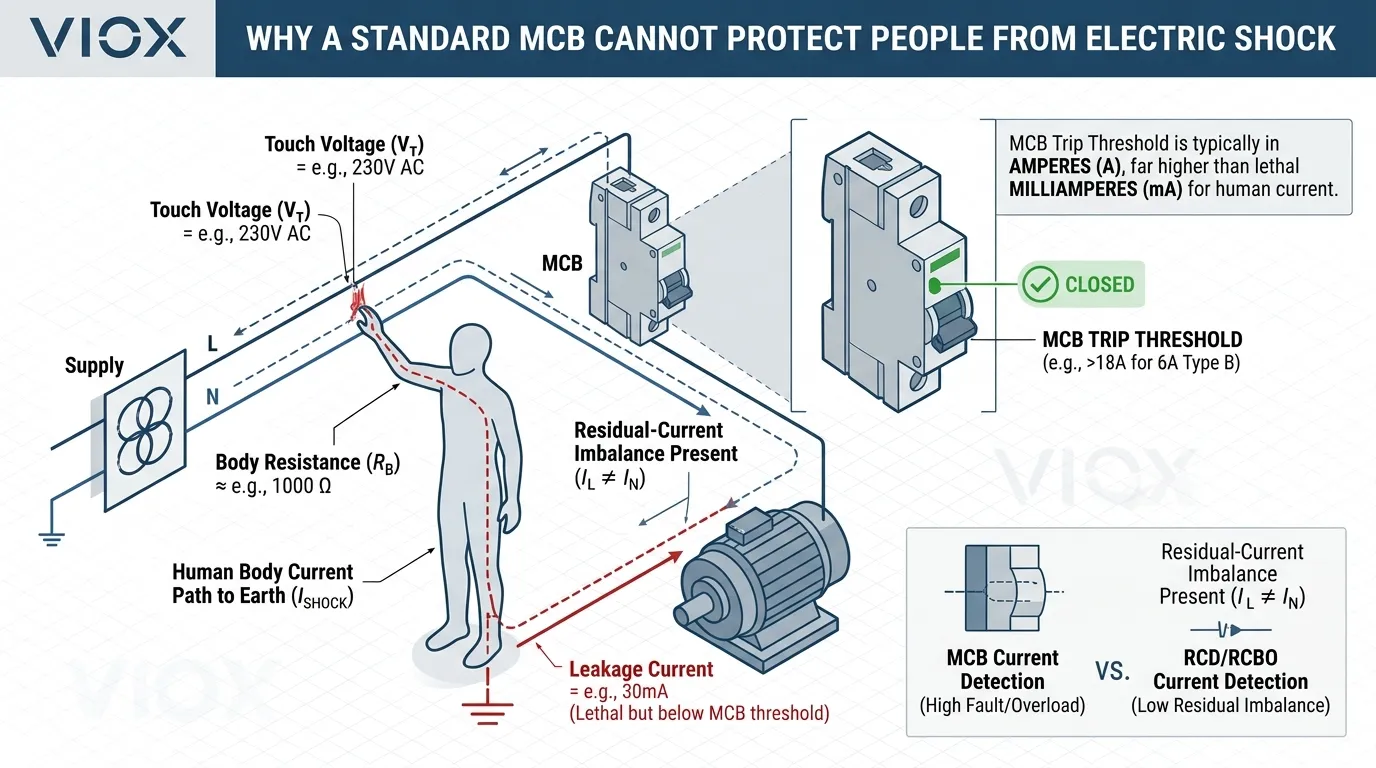
MCB သည် ဆားကစ်ဗို့အားသည် ၎င်း၏ ဒီဇိုင်းထုတ်ထားသော သတ်မှတ်ချက်ထက် ကျော်လွန်သောအခါ ခရီးထွက်သည်။ လူတစ်ဦးသည် ပုံမှန် MCB ကို ခရီးထွက်ရန် လိုအပ်သော ဗို့အားအောက်တွင် အန္တရာယ်ရှိသော သို့မဟုတ် သေစေနိုင်သော လျှပ်စစ်ရှော့ခ်ကို ယိုစိမ့်မှုအဆင့်တွင် ရရှိနိုင်သည်။ ဆိုလိုသည်မှာ-
- 6 A, 10 A, 16 A သို့မဟုတ် 32 A MCB သည် ပိတ်ထားနိုင်သည်။
- အမှားဗို့အားသည် လူတစ်ဦးကို ထိခိုက်ဒဏ်ရာရစေရန် သို့မဟုတ် သေစေရန်အတွက် လုံလောက်စွာ မြင့်မားနေနိုင်သည်။
- MCB သည် ၎င်းကို ဒီဇိုင်းထုတ်ထားသည့်အတိုင်း အတိအကျ လုပ်ဆောင်နေသော်လည်း အမှားအမျိုးအစားသည် ၎င်း၏အလုပ်ပြင်ပတွင် ရှိနေသည်။
This becomes easier to understand when you compare human-body current levels with breaker ratings. In low-voltage safety practice, 50 V AC is commonly treated as an important conventional touch-voltage threshold under normal dry conditions, but the real shock outcome still depends on body resistance, contact conditions, skin moisture, and the current path through the body. Once current rises into the tens of milliamps, the risk becomes serious even though it is still tiny compared with the rated current of a branch MCB.
That is the protection gap:
- a human may be exposed to dangerous leakage current measured in milliamps
- a standard MCB is waiting for fault current measured in amps
- the shock can be severe long before the MCB sees anything abnormal
This is also why a panel can appear “fully protected” and still be unsafe from a personal-protection perspective if it contains only MCBs.
If you want the broader homeowner-safety version of this topic, see Why Circuit Breakers Don’t Protect People.
When Should You Use RCCB Instead of MCB?
The wording why use RCCB instead of MCB needs one technical correction: in most installations, you should not replace the MCB function entirely. You should add the missing residual-current protection function.
In practice, choose RCCB where the main design concern is shock risk or earth leakage, especially in:
- bathrooms
- kitchens
- laundry rooms
- outdoor sockets and lighting
- garages and workshops
- circuits serving portable tools
- damp or conductive environments
ရွေးပါ။ တက္ကို where the main design concern is:
- ဝန်ပိုကာကွယ်မှု
- ဝါယာရှော့ကာကွယ်မှု
- branch-circuit cable protection
- protecting downstream conductors and connected loads from excessive current
ရွေးပါ။ RCCB + MCB အတူတကွ when you need both:
- personal protection
- cable and equipment overcurrent protection
ရွေးပါ။ RCBO when you want both functions in one device and need:
- individual circuit protection
- less shared-tripping impact
- simpler single-circuit residual-current protection
If RCBO is part of your design path, see မှန်ကန်သော RCBO ကိုဘယ်လိုရွေးချယ်မလဲ။.
RCCB vs MCB in Real Installations
In most practical boards, the protection hierarchy looks like this:
- ဟိ တက္ကို protects the circuit against overload and short circuit.
- ဟိ RCCB monitors for leakage to earth.
- The combination protects both the installation and the user.
This is why professional panel design rarely frames the decision as pure substitution. In field installations, the more useful questions are:
- Does this circuit need personal leakage protection?
- Is overcurrent protection already present?
- Would a shared RCCB be acceptable, or is per-circuit RCBO better?
- What residual-current sensitivity is appropriate?
That is the level where the choice becomes a design decision instead of a glossary question.
RCCB + MCB vs RCBO: Breaking Capacity and Backup Protection
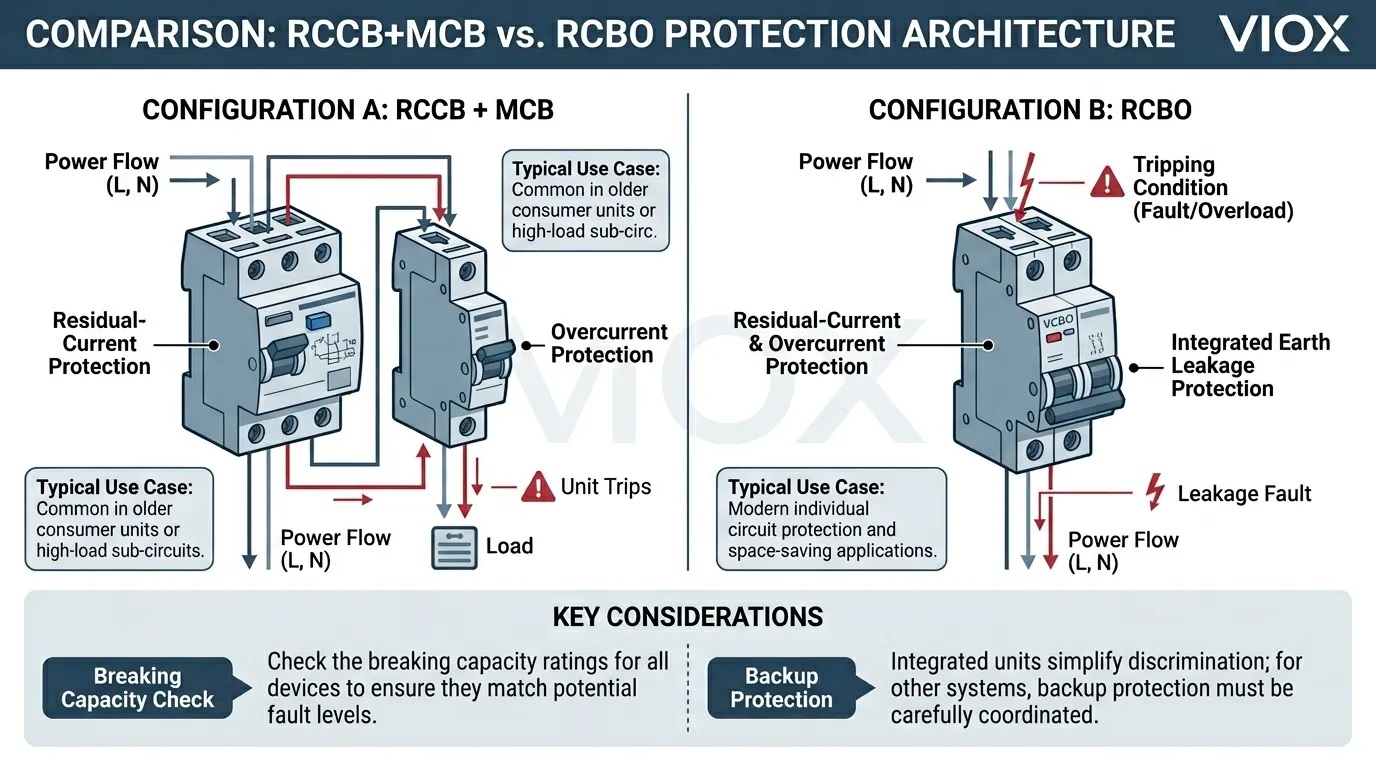
This is one of the most important design checks in the whole discussion.
An RCCB is primarily a residual-current protection device. It is not selected the same way as an overcurrent protective device, and in practical switchboard design it normally relies on correctly coordinated upstream or companion short-circuit protection. That is why a panel designer cannot stop at leakage sensitivity alone.
When evaluating an RCCB + MCB arrangement, engineers should verify:
- the prospective short-circuit current at the installation point
- the breaking capacity of the တက္ကို or upstream protective device
- any backup-protection or coordination requirements stated by the RCCB manufacturer
- whether the full protective assembly is suitable for the available fault level
When evaluating an RCBO, the same principle still applies: the residual-current function may be integrated with overcurrent protection, but the device’s short-circuit breaking capability still has to match the system fault level.
This is why experienced engineers do not stop at asking whether a device is 30 mA Type A သို့မဟုတ် 30 mA Type B. They also ask whether the protective combination is correct for the fault level at that board.
RCCB Selection Basics: Sensitivity, Type, and Pole Count
RCCB Sensitivity
အသုံးများသော sensitivity အဆင့်သတ်မှတ်ချက်များတွင် ပါဝင်သည်-
30 mAလူကိုယ်တိုင်ကာကွယ်မှုအတွက်100 mAစနစ်ဒီဇိုင်းပေါ်မူတည်၍ upstream သို့မဟုတ် မီးအန္တရာယ်ဦးတည်သော application များအတွက်300 mAပိုမိုမြင့်မားသောအဆင့် မီးဘေးကာကွယ်မှုအတွက်၊ လူကိုယ်တိုင် လျှပ်စစ်ရှော့ခ်ကာကွယ်မှုမဟုတ်ပါ
အသက်အန္တရာယ်ကာကွယ်ရေး ဆွေးနွေးမှုအများစုအတွက်၊, 30 mA အဓိကတန်ဖိုးဖြစ်သည်။ အသေးစိတ်အရွယ်အစား သတ်မှတ်ခြင်းဆိုင်ရာ အကြောင်းပြချက်ကို သိလိုပါက၊ How to Choose the Right RCCB Sensitivity.
RCCB အမျိုးအစား
Residual-current device အမျိုးအစားသည် အရေးကြီးသည်၊ အဘယ်ကြောင့်ဆိုသော် ခေတ်မီဝန်များသည် မတူညီသော leakage-current waveform များကို ထုတ်ပေးနိုင်သောကြောင့်ဖြစ်သည်။.
AC ရိုက်ပါ။sinusoidal AC residual current ကို ရှာဖွေတွေ့ရှိသည်အမျိုးအစား AAC နှင့် pulsating DC residual current ကို ရှာဖွေတွေ့ရှိသည်B အမျိုးအစားsmooth DC residual current များ ဖြစ်ပေါ်နိုင်သည့်နေရာတွင် အသုံးပြုသည်
ခေတ်မီလူနေအိမ်နှင့် ကုန်သွယ်လုပ်ငန်းသုံး ဝန်များအတွက်၊ Type A သည် Type AC ထက် ပိုမိုသက်ဆိုင်သော အခြေခံဆွေးနွေးမှုတစ်ခုဖြစ်သည်။.
လက်တွေ့ကျသော အမျိုးအစားရွေးချယ်မှု ဥပမာ
ဤသည်မှာ ရွေးချယ်မှုသည် သီအိုရီနည်းပါးလာသည့်နေရာဖြစ်သည်။ အမှန်တကယ်စီမံကိန်းများတွင်၊ မှန်ကန်သော residual-current device အမျိုးအစားသည် ချိတ်ဆက်ထားသောဝန်ပေါ်တွင် များစွာမူတည်ပါသည်။.
- ပုံမှန်လူနေအိမ်သုံး နောက်ဆုံးဆားကစ်သည် ပလပ်ပေါက်များ၊ မီးချောင်းများ၊ အဝတ်လျှော်စက်များနှင့် inverter-based လေအေးပေးစက်များကို ထောက်ပံ့ပေးသောအခါ၊,
အမျိုးအစား Aများသောအားဖြင့် ပိုမိုလက်တွေ့ကျသော အစမှတ်တစ်ခုဖြစ်သည်၊ အဘယ်ကြောင့်ဆိုသော် ခေတ်မီပစ္စည်းအများအပြားတွင် အီလက်ထရွန်းနစ်ထိန်းချုပ်မှုနှင့် ပြုပြင်ပြောင်းလဲရေးအဆင့်များ ပါဝင်သောကြောင့်ဖြစ်သည်။. - EV charger၊ PV inverter interface သို့မဟုတ် frequency converters နှင့် ပိုမိုရှုပ်ထွေးသော power electronics ပါရှိသော စက်မှုပစ္စည်းများအတွက်၊ residual-current waveform မေးခွန်းသည် ပိုမိုလိုအပ်လာပါသည်။ charger သို့မဟုတ် drive ဒီဇိုင်းပေါ်မူတည်၍၊
B အမျိုးအစားdevice သို့မဟုတ် စက်ပစ္စည်းတွင် တပ်ဆင်ထားသော နောက်ထပ် DC residual-current ကာကွယ်မှုပါရှိသော Type-A-based စီစဉ်မှုတစ်ခုကို application ဒီဇိုင်းနှင့် သက်ဆိုင်ရာစံနှုန်းများက လိုအပ်နိုင်ပါသည်။.
၎င်းသည် EV အားသွင်းရာတွင် အထူးအရေးကြီးပါသည်။ IEC 60364-7-722 မူဘောင်အောက်တွင်၊ EVSE သည် အမျိုးအစား A IEC 62955 နှင့်ကိုက်ညီသော RDC-DD လုပ်ဆောင်ချက်မှတဆင့် residual-current detection ကို ပေးထားပြီးဖြစ်ပါက အားသွင်းအမှတ်တစ်ခုကို upstream မှ 6 mA DC device ဖြင့် ကာကွယ်နိုင်သည်။ ၎င်းသည် Type B ကို နေရာတိုင်းတွင် သတ်မှတ်ခြင်းနှင့် နှိုင်းယှဉ်ပါက အဓိပ္ပာယ်ရှိသော ကုန်ကျစရိတ် သက်သာစေနိုင်သည်။ သို့သော် ထို built-in 6 mA DC detection မရှိပါက သို့မဟုတ် စက်ပစ္စည်းစာရွက်စာတမ်းက မတူညီသော အကာအကွယ်စီစဉ်မှုကို လိုအပ်ပါက၊ upstream device မဟာဗျူဟာသည် လိုက်လျောညီထွေစွာ ပြောင်းလဲရပါမည်။.
လက်တွေ့တွင်၊ ဤအကြောင်းကြောင့် အင်ဂျင်နီယာများသည် RCCB အမျိုးအစားကို ဈေးနှုန်းတစ်ခုတည်းဖြင့် မရွေးချယ်သင့်ပါ။ အခြေခံ Type AC device သည် စာရွက်ပေါ်တွင် လက်ခံနိုင်ဖွယ်ရှိပုံပေါ်နိုင်သော်လည်း ခေတ်မီအီလက်ထရွန်းနစ်ဝန်ဆောင်မှုပေးသော ဆားကစ်အတွက် မှားယွင်းသောရွေးချယ်မှုတစ်ခု ဖြစ်နိုင်သည်။ ဆားကစ်တွင် EV အားသွင်းခြင်း၊ ဆိုလာပြောင်းခြင်း သို့မဟုတ် အဆင့်မြင့်မော်တာထိန်းချုပ်မှုတို့ ပါဝင်ပါက၊ စက်ပစ္စည်းထုတ်လုပ်သူ၏ လမ်းညွှန်မှုနှင့် သက်ဆိုင်ရာ တပ်ဆင်မှုစံနှုန်းများနှင့်အညီ device လိုအပ်ချက်ကို အမြဲစစ်ဆေးပါ။.
ဝင်ရိုးစွန်းပုံစံဖွဲ့စည်းမှု
2-pole RCCBsingle-phase စနစ်များတွင် အများအားဖြင့် အသုံးပြုသည်4-pole RCCBတပ်ဆင်မှုဒီဇိုင်းအရ လိုအပ်သလို neutral monitoring ပါရှိသော three-phase စနစ်များတွင် အသုံးပြုသည်
မှန်ကန်သော pole အရေအတွက်ကို ရွေးချယ်ခြင်းသည် အရေးကြီးသည်၊ အဘယ်ကြောင့်ဆိုသော် စောင့်ကြည့်ထားသော current-carrying conductors အားလုံးသည် residual-current sensing လမ်းကြောင်းကို ဖြတ်သန်းရမည်ဖြစ်သည်။.
MCB နှင့် RCB အကြား ကွာခြားချက်
စျေးကွက်အများအပြားတွင်, RCB residual-current protective device အတွက် လျော့ရဲသော အတိုကောက်အဖြစ် အသုံးပြုသည်။ သို့သော် နည်းပညာအရ၊ အဆိုပါအသုံးအနှုန်းသည် RCCB.
ထက် ပိုမိုကျယ်ပြန့်ပြီး တိကျမှုနည်းနိုင်သည်။ လက်တွေ့ဝယ်ယူခြင်းနှင့် ရွေးချယ်ခြင်းအတွက်-
တက္ကို= overcurrent ကာကွယ်မှုသာRCBသို့မဟုတ်RCD= residual-current ကာကွယ်မှု မိသားစုRCCB= integral overcurrent ကာကွယ်မှုမပါသော residual-current deviceRCBO= residual-current + overcurrent ကာကွယ်မှု တစ်ယူနစ်တည်းတွင်
ထို့ကြောင့် တစ်စုံတစ်ယောက်က MCB နှင့် RCB အကြား ကွာခြားချက်ကို မေးပါက, လက်တွေ့အဖြေမှာ-
MCB သည် overload နှင့် short circuit မှ ကာကွယ်ပေးသည်။ RCB-မိသားစု devices များသည် leakage-current ချို့ယွင်းချက်များနှင့် ရှော့ခ်အန္တရာယ်မှ ကာကွယ်ပေးသည်။.
အသုံးအနှုန်းအဆင့် ခွဲခြမ်းစိတ်ဖြာမှုအတွက်၊ RCB Full Form in Electrical: Residual Current Breaker ကို ကြည့်ပါ နှင့် RCCB ဖောင်အပြည့်အစုံ- ကျန်ရှိသော လက်ရှိပတ်လမ်းအား နားလည်ခြင်း.
RCCB vs MCB vs RCBO
စီမံကိန်းတစ်ခုသည် အခြေခံအသိပညာကို ကျော်လွန်သွားသည်နှင့် တပြိုင်နက် အင်ဂျင်နီယာများနှင့် ဝယ်သူအများအပြားသည် RCCB နှင့် MCB ကို မေးမြန်းခြင်းကို ရပ်တန့်ပြီး RCBO သည် ပိုမိုကောင်းမွန်သော ဗိသုကာလက်ရာ ဟုတ်မဟုတ်ကို မေးမြန်းလာကြသည်။.
| ကိရိယာ | Overload Protection | Short-Circuit ကာကွယ်မှု | Earth-Leakage ကာကွယ်မှု | ပုံမှန်အသုံးပြုမှု |
|---|---|---|---|---|
| တက္ကို | ဟုတ်ကဲ့ | ဟုတ်ကဲ့ | အမွတ္ | စံ branch-circuit overcurrent ကာကွယ်မှု |
| RCCB | အမွတ္ | အမွတ္ | ဟုတ်ကဲ့ | သီးခြား MCB များပါရှိသော Shared leakage ကာကွယ်မှု |
| RCBO | ဟုတ်ကဲ့ | ဟုတ်ကဲ့ | ဟုတ်ကဲ့ | ပေါင်းစပ်လုပ်ဆောင်နိုင်စွမ်းပါရှိသော တစ်ဦးချင်းဆားကစ်ကာကွယ်မှု |
panel နေရာ၊ nuisance-trip isolation နှင့် per-circuit selectivity တို့သည် အရေးကြီးပါက၊, RCBO များသောအားဖြင့် ပိုမိုကောင်းမွန်သော အင်ဂျင်နီယာအဖြေတစ်ခု ဖြစ်လာသည်။.
ပိုမိုနက်ရှိုင်းသော ဗိသုကာနှိုင်းယှဉ်မှုအတွက်၊ RCBO vs RCCB + MCB: Space, Cost, and Selectivity နှိုင်းယှဉ်ချက်ကို ကြည့်ပါ.
RCCB နှင့် MCB အကြား ရွေးချယ်ရာတွင် အဖြစ်များသော အမှားများ
1. ရှော့ခ်ကာကွယ်မှု လိုအပ်သည့်နေရာတွင် MCB ကို တစ်ခုတည်းအသုံးပြုခြင်း
ဤသည်မှာ အဖြစ်အများဆုံး သဘောတရားဆိုင်ရာ အမှားဖြစ်သည်။ MCB သီးသန့်ကာကွယ်မှုသည် စိုစွတ်သော၊ အပြင်ဘက် သို့မဟုတ် residual-current ကာကွယ်မှုကို မျှော်လင့်ထားသည့် high-touch ဆားကစ်များတွင် မပြည့်စုံပါ။.
2. RCCB သည် overcurrent ကာကွယ်မှုကို အစားထိုးသည်ဟု ယူဆခြင်း
RCCB သည် MCB ၏ overcurrent လုပ်ဆောင်ချက်ကို အစားမထိုးပါ။ သင့်လျော်သော upstream သို့မဟုတ် ညှိနှိုင်းထားသော overcurrent ကာကွယ်မှုမရှိဘဲ RCCB ကို တစ်ခုတည်းတပ်ဆင်ပါက တပ်ဆင်မှုသည် မပြည့်စုံပါ။.
3. မှားယွင်းသော RCCB sensitivity ကို ရွေးချယ်ခြင်း
residual-current threshold မြင့်လွန်းပါက ရည်ရွယ်ထားသော လူကိုယ်တိုင်ကာကွယ်မှုကို ပေးစွမ်းနိုင်မည်မဟုတ်ပါ။ လျှောက်လွှာသည် မသင့်လျော်ပါက နိမ့်လွန်းခြင်းသည် nuisance tripping ကို ဖြစ်စေနိုင်သည်။.
4. device အမျိုးအစားကို လျစ်လျူရှုခြင်း
အီလက်ထရွန်းနစ်ပါဝါပြောင်းလဲခြင်းပါရှိသော ဝန်များသည် လိုအပ်သော residual-current device အမျိုးအစားကို ပြောင်းလဲနိုင်သည်။ ဤသည်မှာ အကြောင်းပြချက်တစ်ခုဖြစ်သည်။ AC ရိုက်ပါ။ အဟောင်း၏ ယူဆချက်များသည် ခေတ်မီဝန်တိုင်းနှင့် မကိုက်ညီတော့ပါ။.
5. short-circuit ညှိနှိုင်းမှုနှင့် backup ကာကွယ်မှုကို လျစ်လျူရှုခြင်း
မှန်ကန်သော leakage လုပ်ဆောင်ချက်ကို ရွေးချယ်ရန် မလုံလောက်ပါ။ အကာအကွယ်စီစဉ်မှုသည် စနစ်အတွင်းရှိ ထိုအမှတ်တွင် ရရှိနိုင်သော fault current အတွက်လည်း သင့်လျော်ရပါမည်။.
6. Mixing terminology without clarifying the device function
Users often say RCB, RCDနှင့် RCCB interchangeably. That is common in conversation, but for specification and procurement, the exact device type matters.
Recommended Protection Strategy
If you want the shortest technically sound recommendation, it is this:
- use တက္ကို for overload and short-circuit protection
- use RCCB where earth-leakage and personal protection are required
- use RCBO where you want both in one device
That is the practical answer behind most field-selection discussions on this topic.
မကြာခဏမေးမေးခွန်းများ
What is the main difference between RCCB and MCB?
The main difference is the fault type they detect. RCCB detects earth-leakage current imbalance, while MCB detects overload and short-circuit current.
What is the function of RCCB?
The core job of an RCCB is to detect current leaking from the intended circuit path to earth and disconnect the circuit before that leakage becomes a severe shock or fire hazard.
Can RCCB replace MCB?
Not by itself. RCCB does not provide standard overcurrent protection. In most installations, RCCB must work with MCB, or you should use an RCBO.
Is RCCB better than MCB?
Not in a general sense. RCCB is better for leakage and shock protection. MCB is better for overload and short-circuit protection. They solve different problems.
What is the difference between MCB and RCB?
MCB protects against overcurrent faults. RCB-type devices protect against residual-current or leakage faults. In practice, many users mean RCCB when they say RCB.
Why does my RCCB trip but the MCB does not?
That usually means the fault is leakage to earth rather than overload or short circuit. The RCCB is detecting imbalance, while the MCB does not see enough overcurrent to trip.
Should I use RCCB or RCBO for a final circuit?
If you want combined overcurrent and leakage protection on a single circuit, RCBO is often the cleaner solution. If the design uses shared residual-current protection with separate branch overcurrent devices, RCCB + MCB may still be appropriate.
နိဂုံး
If your question is why use RCCB instead of MCB, the technically correct answer is:
Use RCCB where you need protection against electric shock and earth leakage. Use MCB where you need protection against overload and short circuit. In most practical systems, use both together, or use RCBO when you want both functions in one device.
That is also the cleanest way to understand:
rccb vs mcbrccb and mcb differencerccb functionrccb circuit breakerdifference between mcb and rcb
Those distinctions are what matter in real selection work, because leakage protection, overcurrent protection, and fault-level coordination all have to be correct at the same time.