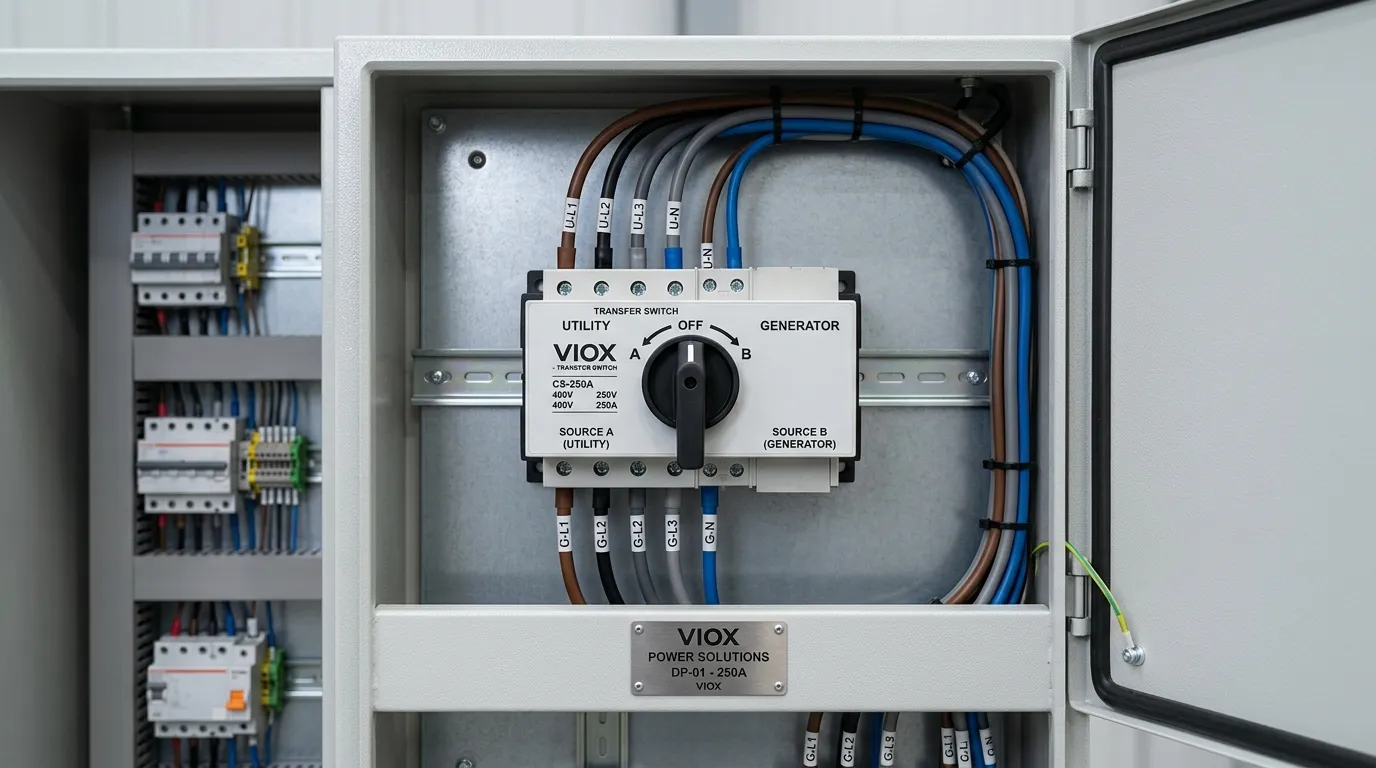
တဲ့ changeover switch is an electrical switching device that transfers a load from one power source to another while keeping both sources safely isolated from each other. In generator backup systems, dual-feed distribution boards, and essential-load panels, it is the component that governs how and when source transfer occurs — and, critically, prevents the two sources from ever meeting on the load side.
This guide covers everything you need to know: how a changeover switch works, the differences between manual and automatic types, how to choose the right one for your project, and the installation and maintenance practices that keep the system safe over time.
The sections below cover working principle, type selection between manual and automatic variants, pole configuration, standards compliance (IEC 60947-6-1, UL 1008), and the practical selection and installation decisions that determine whether a changeover switch performs reliably over a 20-year service life.
Changeover Switch at a Glance
| ကုသိုလ်ကံ | အသေးစိတ် |
|---|---|
| Core function | Transfer an electrical load from one source to another |
| Common source pairs | Utility ↔ generator, primary feeder ↔ backup feeder, grid ↔ inverter/solar |
| Key safety role | Prevent simultaneous connection of two independent sources (backfeed prevention) |
| Main product types | Manual changeover switch, automatic changeover switch (ATS) |
| Typical installation points | Main distribution board, generator panel, essential-load panel, transfer assembly |
| Available configurations | 2-pole, 3-pole, 4-pole — single-phase and three-phase |
| Key international standards | IEC 60947-6-1 (ATSE), UL 1008 (transfer switch equipment), IEC 61439 (assemblies) |
What Is a Changeover Switch?
A changeover switch — also called a transfer switch in North American practice — connects a load to one of two available power sources at any given time. Its internal mechanism ensures that when one source is connected, the other is physically disconnected. That mutual exclusion is what separates a changeover switch from an ordinary switch or contactor arrangement: the device is purpose-built to prevent two live sources from meeting on the load side.
Consider a 400 V three-phase commercial building supplied by the utility grid and backed up by a 250 kVA standby diesel generator. The changeover switch sits between both sources and the distribution board. During normal operation, current flows from the grid through the switch to the load. When the grid drops below the undervoltage threshold — typically set around 85 % of nominal — the switch transfers the load to the generator. When the grid recovers and holds steady above pickup voltage for the programmed delay period, the load transfers back. At no point during this sequence are both sources connected simultaneously.
That isolation matters more than many specifiers realize. Paralleling two unsynchronized sources — even for a few cycles — can produce fault currents well above the prospective short-circuit level at the installation point, trip upstream protective devices, and push generator power back onto the utility network. A properly rated changeover switch eliminates that risk by design, which is exactly why IEC 60947-6-1 and UL 1008 treat the interlock mechanism as a primary safety function rather than an optional feature.
Changeover Switch သည် မည်သို့အလုပ်လုပ်သနည်း။
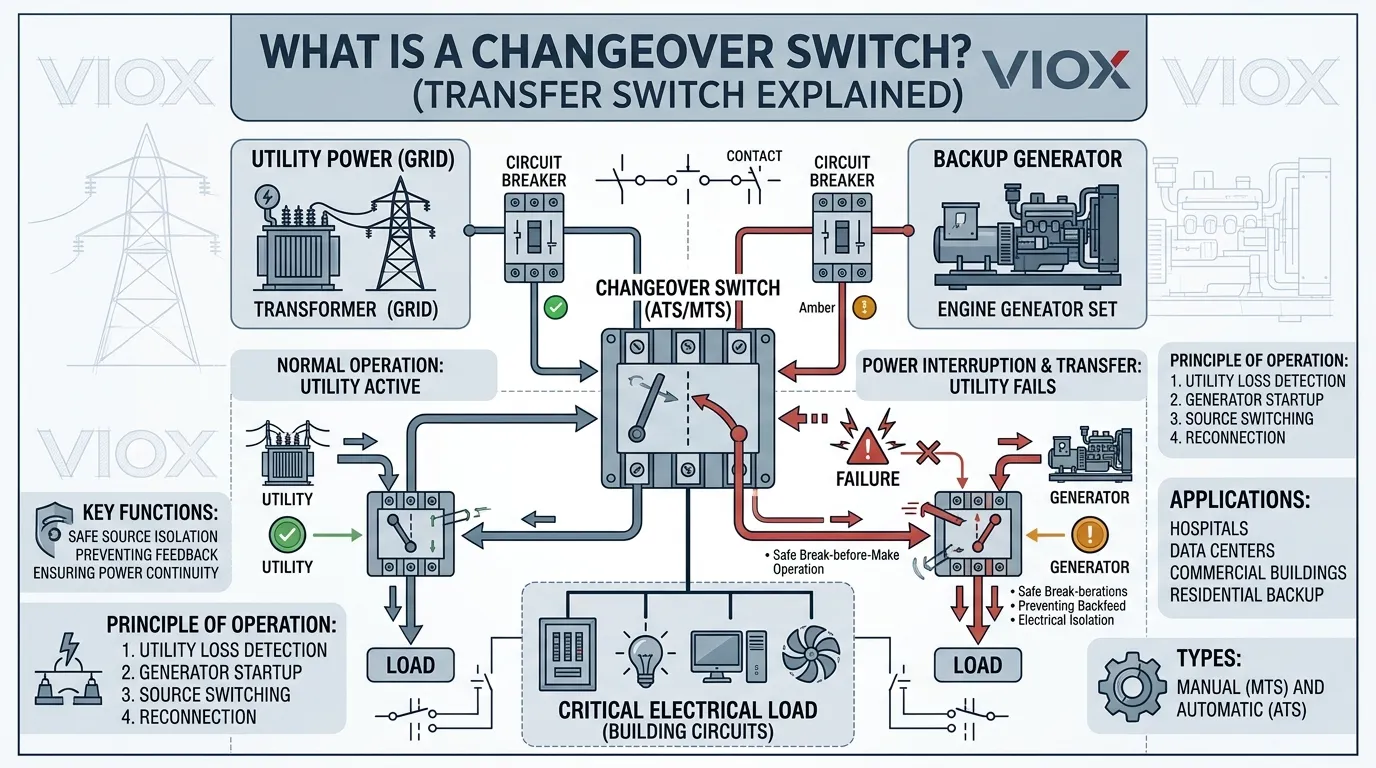
The working principle of a changeover switch is built around a mutually exclusive contact arrangement. Three sets of terminals — source A (main supply), source B (backup), and load — connect through internal contacts that move between two stable positions. The mechanical or electrical design enforces a rule that only one source feeds the load at any instant.
ပုံမှန်လည်ပတ်မှု
Under normal conditions the changeover switch rests in its preferred position. The load draws power from the primary source — usually the utility grid. The backup source terminals sit open, and the generator may be off entirely or running on standby at idle.
Detection of a Transfer Condition
A transfer condition arises when the preferred source falls outside acceptable parameters. In a manual changeover switch, the operator notices lights out (or gets a call) and walks to the panel. In an automatic changeover switch, the controller monitors source voltage and frequency continuously. Most controllers trip on sustained undervoltage — a setting between 80% and 90% of nominal is common — or complete loss of phase. IEC 60947-6-1 defines specific test sequences for verifying that the sensing function responds correctly under both gradual voltage decay and instantaneous loss conditions.
The Transfer Sequence
During transfer, the switch breaks the connection to the failed source before making the connection to the backup. This break-before-make action is the fundamental operating requirement. In most designs there is an intentional dead time between disconnecting one source and connecting the other — typically 50–100 ms for automatic units using motorized mechanisms, and effectively instantaneous (within one mechanical stroke) for rotary manual switches, though the total outage for manual transfer includes generator startup time.
IEC 60947-6-1 classifies automatic transfer switching equipment (ATSE) by transfer time: Class A for equipment that does not limit the interruption duration, Class B for medium-interruption (≤ 150 ms), and Class C for short-interruption (≤ 20 ms with stored-energy mechanisms). UL 1008, which governs the North American market, specifies comparable transfer and withstand tests but uses a different classification framework centered on total system transfer time including engine-generator start.
Once the backup source is connected and stable, the load resumes operation on the alternative supply.
Return Transfer (Retransfer)
When the original source recovers, the switch performs the same sequence in reverse. Automatic changeover switches typically include a programmable retransfer delay — 5 to 30 minutes is standard practice — to confirm the returning source is stable and avoid transferring back into a utility reclose cycle or unstable recovery. Manual units rely on the operator to confirm source health and initiate the return.
Interlock Mechanisms
In manual changeover switches, a mechanical interlock physically prevents the switch handle from engaging both positions — usually a sliding bar or cam arrangement that locks one contact set open when the other is closed. In automatic units, electrical interlocking through the controller logic is the primary barrier, often supplemented by a mechanical interlock on the contactor or switch mechanism. Some designs include a third center-off position where neither source connects, which IEC 60947-6-1 recognizes as an additional isolation state useful for maintenance procedures.
Changeover Switch အမျိုးအစားများ
The most consequential distinction in the changeover switch market is between manual and automatic operation. Getting this decision wrong means either spending on automation the project does not need, or leaving a critical load unprotected when nobody is around to flip a handle.
Manual Changeover Switch
A manual changeover switch requires an operator to physically move the switching mechanism from one position to the other. There is no controller, no voltage-sensing circuit, and no automatic start signal to the generator. The operator detects the outage, starts the backup source, confirms stable output, and turns the handle.
Typical products range from 63 A rotary switches for single-phase residential panels to 3200 A enclosed manual transfer switches for industrial distribution boards. Construction standards vary by market — IEC 60947-3 covers manual switches in international markets, while UL 1008 covers them in North America when the device is specifically listed as transfer switch equipment.
Where manual changeover switches earn their place:
- Residential generator backup where someone is normally home.
- Small commercial installations — a 30 kVA genset backing up a retail shop — where staff can respond within a few minutes.
- Basic standby systems where the load tolerates an interruption measured in minutes rather than seconds.
- Projects where the owner wants direct, visible control over the source-transfer decision.
Advantages. Fewer parts. Lower purchase price — a quality 100 A 4-pole manual changeover switch typically costs 30–50% less than an equivalent automatic unit. No control-circuit power dependency. Extremely long mechanical life, often exceeding 10,000 operations.
Limitations. Dead in the water without a person present. An outage at 2 AM on a public holiday means the load stays dark until someone arrives. For refrigeration, life-safety, server rooms, or process loads with narrow interruption tolerance, that gap is unacceptable.
Automatic Changeover Switch
An automatic changeover switch monitors both power sources continuously and executes the transfer without human intervention. When the controller detects that the preferred source has dropped below threshold, it sends a start signal to the generator, waits for the engine to reach stable voltage and frequency (typically 10–15 seconds for a properly maintained diesel set), and then transfers the load. When the preferred source returns and holds within tolerance for the retransfer delay, the switch moves the load back and shuts down the generator.
In project specifications, product catalogs, and most international standards documentation, the automatic changeover switch is designated as automatic transfer switching equipment (ATSE) under IEC 60947-6-1, or as an အလိုအလျောက် လွှဲပြောင်းပေးသည့် ခလုတ် (ATS) under UL 1008. The terms overlap almost completely in practice.
Where automatic changeover switches are the baseline requirement:
- Hospitals and healthcare facilities — most building codes mandate automatic transfer for life-safety and critical branch loads.
- Data centers operating at Tier II or above.
- Commercial buildings where outage cost exceeds several hundred dollars per minute.
- Industrial operations running continuous processes — a kiln, an extrusion line, a batch reactor.
- Telecom sites and infrastructure installations that may sit unattended for weeks.
- Any site where the insurance policy, the SLA, or the building code says transfer must happen without a phone call.
Advantages. Fast, unattended transfer — total outage typically under 15 seconds from utility loss to generator on load, depending on engine start time and ATSE class. Removes operator error from the transfer sequence. Integrates with generator auto-start systems, BMS, and SCADA platforms. Provides event logging for compliance and maintenance records.
Limitations. Higher unit cost, more complex control wiring, and a commissioning process that requires coordinated testing with the generator and upstream protection. The controller, voltage-sensing circuits, and motorized mechanism all require periodic functional testing — quarterly at minimum for critical installations, per most facility maintenance standards.
အသေးစိတ်ဘေးချင်းယှဉ် နှိုင်းယှဉ်ချက်အတွက် ကြည့်ပါ။ လက်စွဲနှင့် အလိုအလျောက် လွှဲပြောင်းခလုတ်.
လက်စွဲနှင့် အလိုအလျောက် ပြောင်းလဲခြင်းခလုတ်- အသေးစိတ် နှိုင်းယှဉ်ချက်
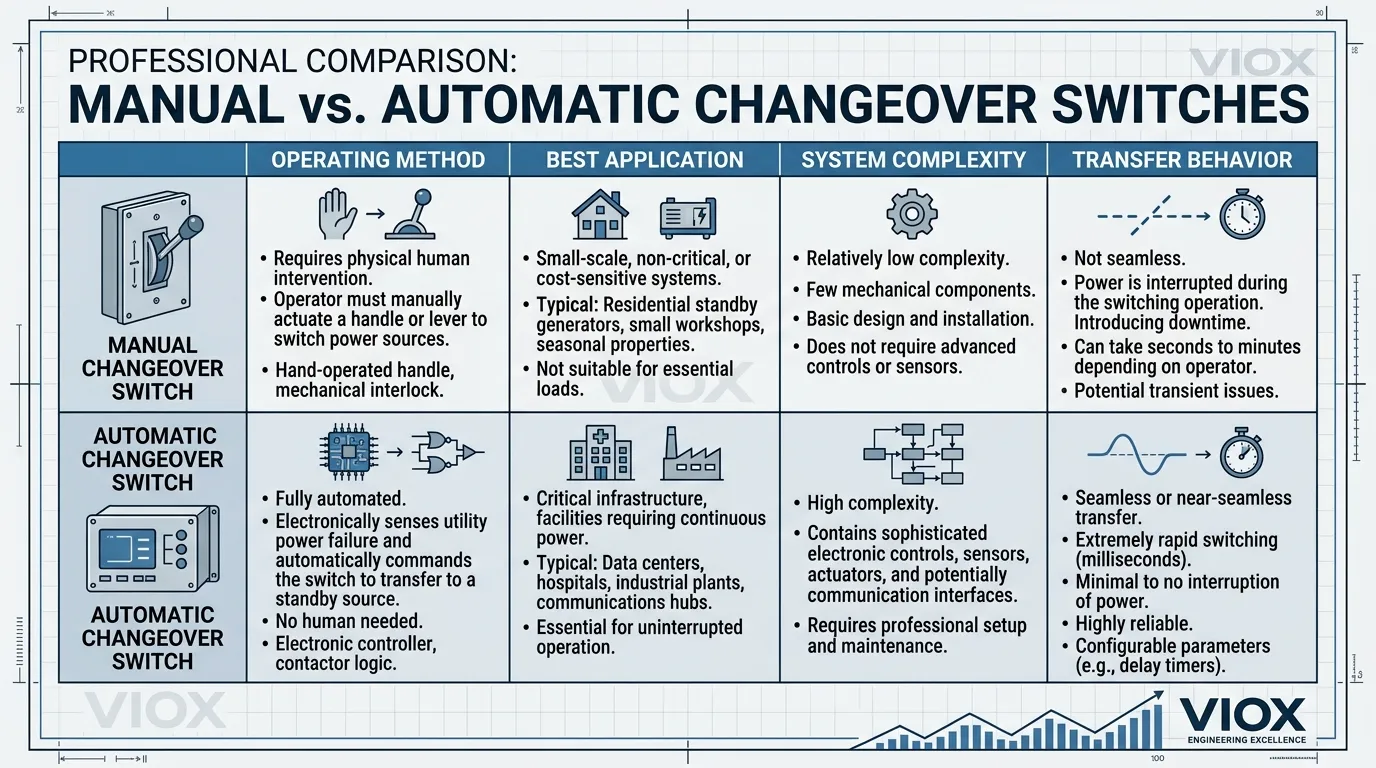
| အချက် | Manual Changeover Switch | Automatic Changeover Switch |
|---|---|---|
| လွှဲပြောင်းနည်းလမ်း | အော်ပရေတာသည် လက်ကိုင်ကို ကိုယ်တိုင်ရွှေ့သည်။ | Controller သည် ချို့ယွင်းချက်ကို ရှာဖွေပြီး အလိုအလျောက် လွှဲပြောင်းပေးသည်။ |
| ပုံမှန် လွှဲပြောင်းချိန် | ၁-၁၅ မိနစ် (panel သို့ ခရီးသွားခြင်း၊ ဂျင်နရေတာ စတင်ခြင်း၊ ပြောင်းလဲခြင်း အပါအဝင်) | ဂျင်နရေတာသည် တည်ငြိမ်သော output သို့ရောက်ပြီးနောက် ၅-၁၅ စက္ကန့် |
| အော်ပရေတာ လိုအပ်ပါသလား။ | ဟုတ်ကဲ့၊ အမြဲတမ်း | မလိုအပ်ပါ - ၂၄/၇ အချိန်မရွေး လုပ်ဆောင်သည်။ |
| ပုံမှန် စက်ပစ္စည်း ကုန်ကျစရိတ် | နည်းပါးသည် (အစိတ်အပိုင်း နည်းပါးခြင်း) | မြင့်မားသည် (controller၊ မော်တာယန္တရား၊ အာရုံခံဆားကစ်များ) |
| တပ်ဆင်မှု ရှုပ်ထွေးမှု | ပါဝါဝါယာကြိုးသာ | ပါဝါဝါယာကြိုးအပြင် ထိန်းချုပ်ဝါယာကြိုး၊ အာရုံခံဆားကစ်များနှင့် ပရိုဂရမ်ရေးဆွဲခြင်း |
| ပြုပြင်ထိန်းသိမ်းမှု | နှစ်စဉ် အမြင်အာရုံ စစ်ဆေးခြင်း၊ ချောဆီထည့်ခြင်း၊ လေ့ကျင့်ခန်းလုပ်ခြင်း | သုံးလတစ်ကြိမ် လုပ်ဆောင်မှု စမ်းသပ်ခြင်း၊ ချိန်ညှိခြင်း၊ နှစ်စဉ် ဝန်ဆောင်မှုပေးခြင်း |
| အကောင်းဆုံးအံဝင်ခွင်ကျ | အရေးမကြီးသော ဝန်များ၊ လူအမြဲရှိသော နေရာများ၊ ဘတ်ဂျက် အကန့်အသတ်ရှိသော ပရောဂျက်များ | အရေးကြီးသော ဝန်များ၊ လူမရှိသော နေရာများ၊ လျင်မြန်စွာ ပြန်လည်ကောင်းမွန်ရန် လိုအပ်သော အဆောက်အဦများ |
| စက်ပိုင်းဆိုင်ရာဘဝ | အလွန်ရှည်လျားသည် (ရိုးရှင်းသော ယန္တရား၊ ပွန်းစားမှု အစိတ်အပိုင်း နည်းပါးခြင်း) | ရှည်လျားသည်၊ သို့သော် controller နှင့် မော်တာ အစိတ်အပိုင်းများသည် ပြုပြင်ထိန်းသိမ်းမှုနယ်ပယ်ကို တိုးစေသည် |
| BMS/SCADA နှင့် ပေါင်းစည်းခြင်း | မသက်ဆိုင် | ခေတ်မီယူနစ်အများစုတွင် စံလုပ်ဆောင်ချက် |
| အုပ်ချုပ်သည့် စံနှုန်းများ | IEC 60947-3, UL 1008 (လက်စွဲအတန်း) | IEC 60947-6-1 (ATSE), UL 1008 (အလိုအလျောက်အတန်း) |
ဆုံးဖြတ်ချက် မူဘောင်
ရွေးချယ်ပါ လက်စွဲ ပြောင်းလဲခြင်းခလုတ် ဝန်သည် မိနစ်အတော်ကြာ ပြတ်တောက်မှုကို ခံနိုင်ရည်ရှိသောအခါ၊ လေ့ကျင့်သင်ကြားထားသူတစ်ဦးသည် အမြဲတမ်းရှိနေမည်၊ ပရောဂျက်ဘတ်ဂျက်သည် ရိုးရှင်းမှုကို နှစ်သက်သည်၊ သို့မဟုတ် တပ်ဆင်မှုသည် 100 kVA အောက် ဂျင်နရေတာပါရှိသော လူနေအိမ် သို့မဟုတ် စီးပွားရေးလုပ်ငန်းငယ်တစ်ခုဖြစ်သည်။.
တစ်ခုကို ရွေးချယ်ပါ။ အလိုအလျောက် ပြောင်းလဲခြင်းခလုတ် ဝန်သည် မရှိမဖြစ် သို့မဟုတ် အသက်အန္တရာယ် ကာကွယ်ရန် သတ်မှတ်ထားသောအခါ၊ အဆောက်အဦသည် လျှပ်စစ်မီးပြတ်တောက်နေစဉ် လူမရှိနိုင်ပါ၊ သတ်မှတ်ချက် သို့မဟုတ် ကုဒ်သည် သတ်မှတ်ထားသော အချိန်ကာလအတွင်း (များသောအားဖြင့် ≤ 10 စက္ကန့်) လွှဲပြောင်းရန် လိုအပ်သည်၊ သို့မဟုတ် စနစ်သည် ဗဟိုချုပ်ကိုင်မှု စောင့်ကြည့်ခြင်းသို့ အခြေအနေဒေတာကို ပေးပို့ရမည်။.
ပြောင်းလဲခြင်းခလုတ် အသုံးပြုမှုများ
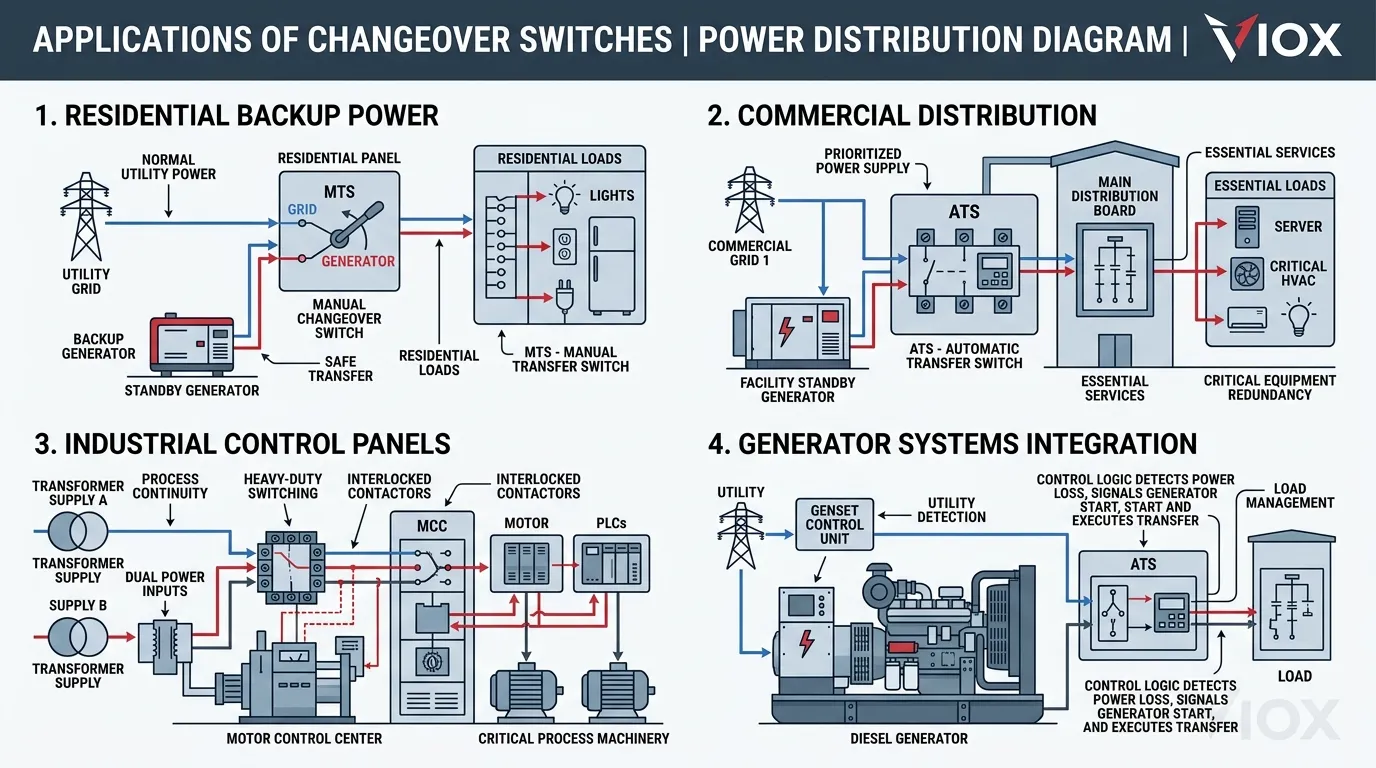
လူနေအိမ် အရန်ပါဝါ
ဂျင်နရေတာ ပြောင်းလဲခြင်းခလုတ်သည် လျှပ်စစ်မီးပြတ်တောက်မှုများသော ဒေသများတွင် အသုံးအများဆုံး လူနေအိမ် လျှပ်စစ်အဆင့်မြှင့်တင်မှုများထဲမှ တစ်ခုဖြစ်သည်။ ပုံမှန်တပ်ဆင်မှုတစ်ခုသည် အဓိကဖြန့်ဖြူးရေးဘုတ်ဘေးတွင် တပ်ဆင်ထားသော ပြောင်းလဲခြင်းခလုတ်တစ်ခုသို့ အသုံးအဆောင်ထောက်ပံ့မှုနှင့် သယ်ဆောင်ရလွယ်ကူသော သို့မဟုတ် အမြဲတမ်းတပ်ဆင်ထားသော ဂျင်နရေတာကို ချိတ်ဆက်ပေးသည်။ ရွေးချယ်ထားသော ဆားကစ်များ — သို့မဟုတ် ဂျင်နရေတာစွမ်းရည်ပေါ်မူတည်၍ အိမ်တစ်ခုလုံး — ခလုတ်မှတဆင့် ပေးပို့သောကြောင့် အိမ်ပိုင်ရှင်သည် လျှပ်စစ်ဓာတ်အားလိုင်း ပြတ်တောက်သွားသောအခါ ဂျင်နရေတာပါဝါသို့ ပြောင်းနိုင်သည်။.
လက်စွဲ ပြောင်းလဲခြင်းခလုတ်များသည် ဤအပိုင်းကို လွှမ်းမိုးထားသည်။ 63 A သို့မဟုတ် 100 A 4-pole လက်စွဲယူနစ်သည် အလိုအလျောက်စနစ်တစ်ခု၏ ကုန်ကျစရိတ်၏ အနည်းငယ်မျှသာဖြင့် တစ်ခုတည်းအဆင့် လူနေအိမ်ဝန်အများစုကို ကိုင်တွယ်နိုင်သည်။ ဆေးဘက်ဆိုင်ရာပစ္စည်းများ၊ ဝင်ငွေရှာဖွေသည့် လုပ်ငန်းများကို လုပ်ဆောင်နေသော အိမ်ရုံးများ သို့မဟုတ် အိမ်တစ်ခုလုံး အရန်ဂျင်နရေတာများပါရှိသော အိမ်များသည် အလိုအလျောက်ယူနစ်များကို တိုးမြှင့်သတ်မှတ်ပေးသည် — အထူးသဖြင့် အိမ်ပိုင်ရှင်သည် မကြာခဏ ခရီးသွားပြီး အိမ်သည် မုန်တိုင်းအတွင်း လူမရှိနိုင်သည့်နေရာများတွင်ဖြစ်သည်။.
လုပ်ငန်းသုံး အဆောက်အဦများ
ရုံးခန်းများ၊ လက်လီအရောင်းဆိုင်များ၊ ဟိုတယ်များနှင့် ရောနှောအသုံးပြုသည့် အဆောက်အဦများသည် မရှိမဖြစ်လိုအပ်သော စနစ်များသို့ ပါဝါကို ထိန်းသိမ်းရန် ပြောင်းလဲခြင်းခလုတ်များကို အသုံးပြုသည်- အရေးပေါ်မီးများ၊ မီးသတိပေး panel များ၊ ဓာတ်လှေကားများ၊ IT ဗီရိုများ၊ အရောင်းနေရာ အခြေခံအဆောက်အဦများနှင့် HVAC ထိန်းချုပ်မှုများ။ တရားစီရင်ပိုင်ခွင့်အများစုတွင် — IEC၊ NEC နှင့် ဒေသဆိုင်ရာ အဆောက်အဦကုဒ်များကဲ့သို့ပင် — အရေးပေါ်ဌာနခွဲရှိ အသက်အန္တရာယ် ကာကွယ်ရန် ဝန်များသည် အလိုအလျောက် လွှဲပြောင်းရန် လိုအပ်သည်။ မလိုအပ်သော ဝန်များသည် ဦးစားပေးနည်းသော panel ပေါ်ရှိ သီးခြားလက်စွဲယူနစ်တစ်ခုနောက်တွင် ရှိနေနိုင်သည်။.
အလယ်အလတ်တန်းစား စီးပွားရေးအဆောက်အဦတစ်ခုတွင် အရေးပေါ်မီးများနှင့် မီးစနစ်များကို ပေးပို့သည့် မရှိမဖြစ်လိုအပ်သော ဝန်ဘုတ်ပေါ်တွင် 400 A အလိုအလျောက် ပြောင်းလဲခြင်းခလုတ်တစ်ခုနှင့် HVAC နှင့် အထွေထွေပါဝါကို ဝန်ဆောင်မှုပေးသည့် အရန်ဘုတ်ပေါ်တွင် 630 A လက်စွဲယူနစ်တစ်ခု ရှိနိုင်သည်။ ထိုခွဲဝေမှုသည် အလိုအလျောက် စက်ပစ္စည်းများကို တရားဝင်လိုအပ်သည့်နေရာတွင် ထားရှိပြီး ကျန်ကုန်ကျစရိတ်ကို ထိန်းချုပ်ထားသည်။.
စက်မှုအသုံးအဆောင်များ
ထုတ်လုပ်ရေးစက်ရုံများ၊ လုပ်ငန်းဆောင်ရွက်သည့် အဆောက်အဦများနှင့် ဂိုဒေါင်များသည် မကြာခဏဆိုသလို နှစ်ထပ်အသုံးအဆောင် စီစဉ်မှုများ သို့မဟုတ် 500 kVA မှ မဂ္ဂါဗို့အား အများအပြားအထိ သတ်မှတ်ထားသော သီးသန့်အရန် ဂျင်နရေတာများနှင့် လုပ်ဆောင်သည်။ ဤပတ်ဝန်းကျင်ရှိ စက်မှု ပြောင်းလဲခြင်းခလုတ်များသည် မြင့်မားသော လက်ရှိအဆင့်သတ်မှတ်ချက်များကို ကိုင်တွယ်သည် — 800 A, 1600 A, 3200 A — နှင့် အထက်ပိုင်း ကာကွယ်ရေးကိရိယာများ၊ အောက်ပိုင်း မော်တာဝန်များနှင့် တစ်ခါတစ်ရံ ပြန်လည်အားဖြည့်ခြင်း ယာယီဖြစ်ပေါ်စေသော capacitor ဘဏ်များနှင့် ညှိနှိုင်းဆောင်ရွက်ရမည်။.
The choice between PC အတန်းနှင့် CB အတန်း တည်ဆောက်မှုသည် ဤအဆင့်သတ်မှတ်ချက်များတွင် အရေးကြီးလာသည်။ IEC 60947-6-1 အရ တည်ဆောက်ထားသော PC အတန်း (ပါဝါ ကွန်တက်တာ) ကိရိယာများသည် လွှဲပြောင်းတာဝန်အတွက် ရည်ရွယ်၍ ဒီဇိုင်းထုတ်ထားပြီး ပုံမှန်အားဖြင့် စက်ပိုင်းဆိုင်ရာ ခံနိုင်ရည် ပိုမိုမြင့်မားသည်။ CB အတန်း ကိရိယာများသည် ဆားကစ်ဘရိတ်ကာများကို ပြောင်းလဲသည့် အစိတ်အပိုင်းများအဖြစ် အသုံးပြုပြီး တည်ဆောက်ထားသော overcurrent ကာကွယ်မှုကို ထည့်သွင်းသော်လည်း မတူညီသော ထိတွေ့မှု ဝတ်ဆင်မှု လက္ခဏာများ ပါရှိသည်။.
တယ်လီကွန်းနှင့် ဒေတာ အခြေခံအဆောက်အဦ
ဆဲလ်တာဝါများ၊ ပြောင်းလဲရေးစင်တာများနှင့် ဒေတာခန်းမများသည် အမြင့်ဆုံး ပါဝါဆက်လက်တည်ရှိမှုအဆင့်များကို တောင်းဆိုသည်။ ဤတပ်ဆင်မှုများရှိ အလိုအလျောက် ပြောင်းလဲခြင်းခလုတ်များသည် မကြာခဏဆိုသလို ထပ်နေသော controller များ၊ ဝန်ပြတ်တောက်ခြင်းမရှိဘဲ ပြုပြင်ထိန်းသိမ်းမှုအတွက် ဘေးဖယ်ထားခြင်းနှင့် NOC အဆင့် အဝေးထိန်းစောင့်ကြည့်ခြင်းအတွက် Modbus/SNMP ဆက်သွယ်ရေး အင်တာဖေ့စ်များ ပါရှိသည်။ Tier III နှင့် Tier IV ဒေတာစင်တာများရှိ လွှဲပြောင်းချိန်လိုအပ်ချက်များကို စက်ဝန်းများ (50 Hz တွင် ≤ 4 စက်ဝန်း = 80 ms) ဖြင့် သတ်မှတ်နိုင်ပြီး ဒီဇိုင်းကို သိုလှောင်ထားသော စွမ်းအင် သို့မဟုတ် တည်ငြိမ်သော လွှဲပြောင်းယန္တရားများဆီသို့ တွန်းပို့နိုင်ပြီး သမားရိုးကျ မော်တာ ATSE ထက် ပိုမိုကောင်းမွန်သည်။.
ဟိုက်ဘရစ်နှင့် ဘက်ပေါင်းစုံ စနစ်များ
ဆိုလာပေါင်းသိုလှောင်မှု တပ်ဆင်မှုများ၊ မိုက်ခရိုဂရစ်များနှင့် ဂျင်နရေတာနှင့် အင်ဗာတာ အရန်နှစ်ခုလုံးပါရှိသော အဆောက်အဦများသည် အရင်းအမြစ်နှစ်ခုထက်ပို၍ စီမံခန့်ခွဲသည့် ပြောင်းလဲခြင်းခလုတ်များ လိုအပ်နိုင်သည် — သို့မဟုတ် စံဖွင့်အကူးအပြောင်းကိရိယာတစ်ခုထက် ပိုမိုတင်းကျပ်သော အကူးအပြောင်း ကန့်သတ်ချက်များဖြင့် အရင်းအမြစ်နှစ်ခုကို စီမံခန့်ခွဲနိုင်သည်။ ဤစီစဉ်မှုများတွင် ပြောင်းလဲခြင်းလုပ်ဆောင်ချက်သည် ပိုမိုကျယ်ပြန့်သော ပါဝါစီမံခန့်ခွဲမှု ဗိသုကာ၏ တစ်စိတ်တစ်ပိုင်းဖြစ်လာနိုင်ပြီး ၎င်းတွင် ပါဝင်နိုင်သည် ဖွင့်ပြီး ပိတ်ထားသော အကူးအပြောင်း အကူးအပြောင်းမုဒ်များ၊ ပိတ်ထားသော အကူးအပြောင်းသည် မူလချိတ်ဆက်မှုကို မဖြတ်တောက်မီ တစ်ပြိုင်တည်းအခြေအနေများအောက်တွင် အရင်းအမြစ်နှစ်ခုကို ခေတ္တမျှ ညီမျှစေသည်။.
Pole Configuration- ပြောင်းလဲခြင်းခလုတ်ကို စနစ်နှင့် ကိုက်ညီအောင်ပြုလုပ်ခြင်း
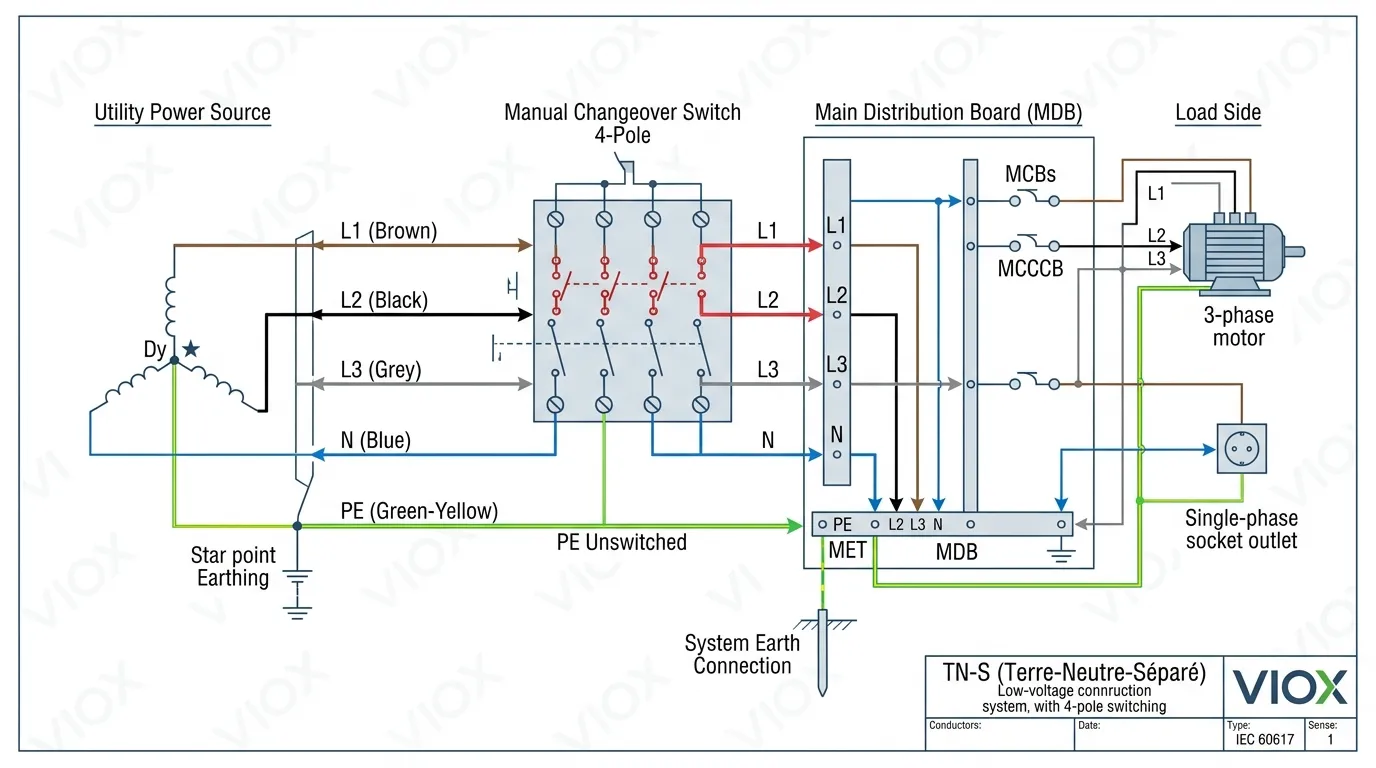
ပြောင်းလဲခြင်းခလုတ်များကို 2-pole၊ 3-pole နှင့် 4-pole ပုံစံများဖြင့် ထုတ်လုပ်ထားသည်။ မှန်ကန်သော pole အရေအတွက်သည် လျှပ်စစ်စနစ်နှင့် မြေစိုက်စီစဉ်မှုအပေါ် မူတည်သည် — အဆင့်အရေအတွက်ပေါ်တွင်သာ မူတည်ခြင်းမဟုတ်ပါ။.
| ဖွဲ့စည်းမှု | ပုံမှန်လျှောက်လွှာ |
|---|---|
| 2-ဝင်ရိုး | ကြားနေကို မပြောင်းလဲသည့် တစ်ခုတည်းအဆင့် စနစ်များ |
| 3-pole | ကြားနေသည် အများသုံးဖြစ်ပြီး မပြောင်းလဲသည့် သုံးဆင့်စနစ်များ |
| 4-pole | ကြားနေကို ပြောင်းလဲရမည့် သုံးဆင့်စနစ်များ (TN-S၊ IT နှင့် အချို့သော TT မြေစိုက်စီစဉ်မှုများတွင် စံ) |
မှားယွင်းသော pole ပုံစံကို ရွေးချယ်ခြင်းသည် အရင်းအမြစ်လွှဲပြောင်း ဒီဇိုင်းတွင် အမြဲတစေ ဖြစ်ပွားနေသော သတ်မှတ်ချက်အမှားများထဲမှ တစ်ခုဖြစ်သည်။ သုံးဆင့်စနစ်သည် 3-pole ပြောင်းလဲခြင်းခလုတ်ကို အလိုအလျောက် တောင်းဆိုခြင်းမဟုတ်ပါ။ မြေစိုက်စီစဉ်မှု၊ ဂျင်နရေတာ ကြားနေချိတ်ဆက်မှုအစီအစဉ် သို့မဟုတ် ဒေသဆိုင်ရာကုဒ်သည် ပြောင်းလဲထားသော ကြားနေကို လိုအပ်ပါက — သီးခြားရရှိသော ဂျင်နရေတာ အရင်းအမြစ်များပါရှိသော TN-S စနစ်အများစုတွင် လိုအပ်ပါက — 4-pole ယူနစ်သည် မဖြစ်မနေ လိုအပ်ပါသည်။ ဤစနစ်များတွင် ကြားနေကို ပြောင်းလဲရန် ပျက်ကွက်ခြင်းသည် အရင်းအမြစ်များကြားတွင် ညီမျှသော ကြားနေလမ်းကြောင်းကို ဖန်တီးပေးပြီး လည်ပတ်နေသော လျှပ်စီးကြောင်းများ၊ အနှောင့်အယှက်ဖြစ်စေသော RCD ခရီးစဉ်များနှင့် ယုံကြည်စိတ်ချရသော မြေပြင်ချို့ယွင်းချက် ရှာဖွေခြင်းတို့ကို ဖြစ်စေနိုင်သည်။.
အသေးစိတ် အဆင့်နှင့် pole ရွေးချယ်မှု လမ်းညွှန်အတွက် ကြည့်ပါ။ တစ်ခုတည်းအဆင့်နှင့် သုံးဆင့် ATS.
မှန်ကန်သော ပြောင်းလဲခြင်းခလုတ်ကို ရွေးချယ်နည်း
ပရောဂျက်တစ်ခုအတွက် မှန်ကန်သော ပြောင်းလဲခြင်းခလုတ်ကို ရွေးချယ်ခြင်းဆိုသည်မှာ မှန်ကန်သောအစီအစဥ်အတိုင်း နည်းပညာပိုင်းနှင့် လုပ်ငန်းပိုင်းဆိုင်ရာ ဆုံးဖြတ်ချက်များစွာကို လုပ်ဆောင်ခြင်းကို ဆိုလိုသည်။ အဆင့်တစ်ခုကို ကျော်သွားပါက ထုတ်ကုန်သည် တပ်ဆင်မှုနှင့် မကိုက်ညီနိုင် သို့မဟုတ် အမှန်တကယ် ချို့ယွင်းချက်အခြေအနေများတွင် မျှော်လင့်ထားသည့်အတိုင်း လုပ်ဆောင်နိုင်မည်မဟုတ်ပေ။.
အဆင့် ၁- အရင်းအမြစ် စီစဉ်မှုကို သတ်မှတ်ပါ
ခလုတ်သည် မည်သည့် အရင်းအမြစ်နှစ်ခုကို စီမံခန့်ခွဲရမည်ကို တိတိကျကျ ဖော်ထုတ်ပါ။ အသုံးအဆောင်နှင့် ဂျင်နရေတာသည် အဓိကအတွဲဖြစ်သော်လည်း အရင်းအမြစ်များသည် သီးခြားအသုံးအဆောင် အစာကျွေးစက်နှစ်ခု (နှစ်ထပ်ဘတ်စ် စက်မှုဓာတ်အားခွဲရုံများတွင် အသုံးများ)၊ အသုံးအဆောင် အစာကျွေးစက်နှင့် အင်ဗာတာ သို့မဟုတ် ဂျင်နရေတာနှင့် UPS ဘေးဖယ်ထားသော output ဖြစ်နိုင်သည်။ အရင်းအမြစ် လက္ခဏာများ — ပုံမှန်ဗို့အား၊ ကြိမ်နှုန်း၊ အဆင့်အရေအတွက်၊ ရရှိနိုင်သော ချို့ယွင်းချက် လျှပ်စီးကြောင်း — သည် ခလုတ်အတွက် လျှပ်စစ်နယ်နိမိတ်များကို သတ်မှတ်ပေးသည်။.
အဆင့် ၂- လက်စွဲနှင့် အလိုအလျောက် လုပ်ဆောင်မှုကြားတွင် ဆုံးဖြတ်ပါ
Almost always the first major commercial decision. Review the load’s maximum tolerable interruption time, the availability of trained operators, the building code requirements for the load classification, and the project budget. On many projects, this single decision cuts the product shortlist in half.
Step 3: Match Electrical Ratings
Confirm that the changeover switch is rated for the system voltage (e.g., 230/400 V, 277/480 V), the maximum continuous current at the point of installation, the prospective short-circuit current (Isc) with appropriate withstand rating (Icw for ATSE per IEC 60947-6-1, or short-circuit current rating per UL 1008), and the correct number of poles. Undersizing creates a safety hazard. Oversizing wastes budget and panel space — a 1600 A switch where 630 A would suffice is not conservative engineering, it is poor specification.
Step 4: Evaluate Load Characteristics
Motor-heavy loads, capacitor banks, and non-linear loads (VFDs, large UPS, LED driver arrays) impose transient inrush and harmonic demands that the changeover switch must withstand. Verify the product’s making capacity (peak closing current) and breaking capacity against the actual load profile, not just the steady-state thermal rating. IEC 60947-6-1 specifies dedicated test sequences for motor loads, and the switch datasheet should confirm rated values under these conditions.
Step 5: Consider Transition Type
Most changeover switches use open transition — break-before-make — which is the simplest and most common approach. Some applications benefit from closed transition (make-before-break), where the two sources are briefly paralleled under synchronized conditions (typically for 100 ms or less) before the original source disconnects. Closed transition requires frequency-matched sources, synchronism-check relaying, and additional protective logic. It is standard practice on large data center and healthcare campus projects where even sub-second interruptions disrupt sensitive load processes. Refer to our open vs. closed transition guide for detailed selection criteria.
Step 6: Verify Standards and Certification
For international markets, confirm the changeover switch carries IEC 60947-6-1 type-test certification from an accredited laboratory (e.g., KEMA, CESI, TÜV). For North American installations, require UL 1008 listing or CSA C22.2 No. 178 certification. The product should also comply with the relevant assembly standard — IEC 61439-1/-2 if installed in a type-tested switchboard, or UL 891 for North American switchboard applications. Do not accept manufacturer self-declarations without supporting type-test reports ; the standards exist precisely to validate performance claims under fault and endurance conditions.
Step 7: Review Installation and Environmental Conditions
Check available panel space, the enclosure IP rating required for the environment (indoor clean, outdoor, dusty, humid, washdown), cable entry positions, and service access clearances mandated by local code (IEC 61439 or NEC 110.26). A switch that satisfies every electrical parameter but cannot physically be installed, accessed, or maintained is not the right switch.
Step 8: Align With the Project’s Transfer Philosophy
Some facility owners prioritize simplicity and visible operator control — a straightforward handle they can see in the down position. Others prioritize speed, automation, and remote visibility with full BMS integration. The changeover switch should match the operating philosophy of the building and the maintenance team that will own the system for the next two decades.
Installation Essentials for Changeover Switches
Professional Installation Is Non-Negotiable
A changeover switch sits at the boundary between two live power sources. Incorrect wiring, a missing interlock, or improper grounding can create backfeed onto the utility network, arc flash hazards for maintenance personnel, and equipment damage from unsynchronized paralleling. Installation must be performed by a licensed electrician experienced with source-transfer equipment and familiar with the applicable local code — whether that is the IEC/BS wiring regulations, the NEC, the Australian AS/NZS 3000, or another national standard.
Key Installation Steps
The general sequence: de-energize both sources and apply lockout/tagout, mount the switch in the designated enclosure or panel position per manufacturer clearance requirements, terminate the utility (source A) supply cables, terminate the generator or backup (source B) supply cables, terminate the load output cables, install control wiring for automatic units (generator start/stop, voltage sensing, communication bus), establish earthing and bonding per the system earthing arrangement (TN-S, TN-C-S, TT, IT), and commission with a full transfer test in both directions — including verifying interlock operation by deliberately attempting to close both sources simultaneously.
အရေးကြီးသော ဘေးကင်းရေးအချက်များ
Backfeed prevention. The changeover switch must make it mechanically and electrically impossible for generator power to feed back onto the utility network. This is a code requirement in every major jurisdiction and a primary concern for utility companies and lineworkers. UL 1008 and IEC 60947-6-1 both include interlock verification as a mandatory type-test element.
Neutral handling. In 4-pole configurations, verify that the neutral contacts operate in the correct overlap sequence relative to the phase contacts. IEC 60947-6-1 Annex H provides guidance on neutral switching sequences. Incorrect neutral timing can create transient overvoltages or, worse, a floating neutral condition that exposes single-phase loads to line-to-line voltage.
Grounding. The equipment grounding conductor must be continuous and unbroken through the switch assembly. Do not rely on the enclosure chassis or mounting hardware as the sole ground path — use a dedicated bonding jumper or terminal.
Labeling. Mark the switch with source identification (SOURCE A: UTILITY, SOURCE B: GENERATOR), operating instructions for manual units, emergency contact information, and any interlock or lockout requirements. In an emergency, the person operating the switch may not be the person who normally manages the electrical system.
ထိန်းသိမ်းခြင်းနှင့် ပြဿနာဖြေရှင်းခြင်း။
ကြိုတင်ကာကွယ်ပြုပြင်ထိန်းသိမ်းမှုအချိန်ဇယား
| ကြားကာလ | Manual Changeover Switch | Automatic Changeover Switch |
|---|---|---|
| လစဉ် | Visual check for corrosion, loose hardware, signs of overheating | Visual check plus controller status LED/display review |
| တစ်ကြိမ် | Exercise the switch through a full transfer cycle under reduced load | Full functional test: simulate outage, verify auto-start signal, transfer, retransfer, and generator cooldown/shutdown |
| နှစ်စဉ် | Torque-check all connections per manufacturer spec, lubricate mechanism, inspect contacts for pitting or discoloration | All quarterly tasks plus controller calibration, contact resistance measurement (milliohm meter), thermographic scan of connections, and full-load transfer test |
အဖြစ်များသော ပြဿနာများနှင့် ဖြေရှင်းချက်များ
Switch handle stiff or difficult to operate (manual units). Corrosion ingress, dried lubricant, or mechanical binding from misalignment after years of thermal cycling. Strip down per the manufacturer’s service manual, clean contact pivot points, re-lubricate with the specified grease (not WD-40), and check for physical obstructions or enclosure distortion.
Automatic switch fails to transfer during a real outage. Check controller power supply — many ATSE controllers draw power from the source they are monitoring, and if that source has failed the controller may be dead. Verify voltage-sensing connections at both source terminals. Confirm the generator start signal reaches the engine controller. Review pickup/dropout voltage settings — if someone tightened the dropout threshold to 90% to solve a nuisance-transfer complaint, the controller may not recognize a brownout at 88% as a transfer condition. The most frequent root cause in field investigations is a broken sensing wire or a blown control fuse that went undetected between test cycles.
Nuisance transfers on automatic units. The switch transfers to generator during brief voltage dips that do not actually warrant a transfer — a compressor starting on a neighboring circuit, a utility reclose event, or a capacitor switching transient. Widen the dropout time delay (2–5 seconds is common for non-critical loads) or narrow the voltage dropout threshold. Confirm that the sensing input has appropriate filtering and is not picking up electrical noise from VFDs or switching power supplies sharing the same panel.
Arcing or discoloration on contacts. Indicates undersized contacts for the actual load (common when motor inrush was not accounted for), excessive make/break operations under load, or contacts at end of electrical life. Measure contact resistance with a DLRO (digital low-resistance ohmmeter) — if resistance exceeds the manufacturer’s published limit (typically 50–200 µΩ depending on rating), replace the contact assembly. On large-frame units, contact replacement is a field-serviceable operation; on smaller units, it may require factory reconditioning.
Changeover Switch vs. Transfer Switch
In everyday usage, changeover switch နှင့် transfer switch describe the same device: a switch that moves a load between two power sources with mechanical or electrical interlock preventing simultaneous connection.
The terminology splits along geographic and standards lines. Changeover switch is prevalent in IEC-standard markets — Europe, the Middle East, Africa, Asia-Pacific, and most of Latin America. Transfer switch dominates in North American practice, anchored by UL 1008 terminology and NEC Article 700/701/702 language. The IEC standards themselves use the designation automatic transfer switching equipment (ATSE) rather than either colloquial term.
What matters for specification is not the label on the nameplate but the device’s rated voltage, continuous current rating, short-circuit withstand, pole configuration, transition type (open or closed), transfer time class, and certification to the applicable standard. A UL 1008-listed transfer switch and an IEC 60947-6-1-certified changeover switch performing the same function are, for engineering purposes, equivalent devices validated through different but comparable test regimes.
ရှောင်ရန်အဖြစ်များသော ရွေးချယ်မှုအမှားများ
Treating all changeover switches as interchangeable. A manual 63 A 2-pole switch for a single-phase home and an automatic 63 A 4-pole ATSE with integrated controller serve entirely different applications. Same current number, different universe.
Selecting on current rating alone. The changeover switch must also match system voltage, phase configuration, pole count, short-circuit withstand (Icw or SCCR), and transition type. Current rating is necessary but nowhere near sufficient.
Ignoring neutral-switching requirements. In TN-S systems with a separately derived generator source, failing to switch the neutral creates a parallel path that causes circulating currents, nuisance RCD/GFCI tripping, and unreliable earth-fault detection. This is the single most common engineering error in source-transfer design, and it surfaces after commissioning when it is expensive to fix.
Specifying manual operation for an unattended site. If nobody will be on site to operate the switch — a cell tower, a pump station, a warehouse on a Sunday — the transfer will not happen. Match the operating method to actual staffing patterns, not to budget aspirations.
Overlooking maintenance access. A changeover switch installed behind a cable tray, above a false ceiling, or in a panel with 150 mm clearance to the adjacent wall will be neglected. IEC 61439 and NEC 110.26 prescribe minimum working clearances for a reason — respect them during layout, not as an afterthought during commissioning.
Accepting products without accredited type-test certification. IEC 60947-6-1 စံနှုန်းနှင့်အညီ အမျိုးအစားစမ်းသပ်ခြင်းမပြုလုပ်ထားသော သို့မဟုတ် လွတ်လပ်သောဓာတ်ခွဲခန်းတစ်ခုမှ UL 1008 စာရင်းဝင်မဟုတ်သော ပြောင်းလဲနိုင်သောခလုတ်သည် ချို့ယွင်းမှုအခြေအနေများအောက်တွင် မည်သို့အလုပ်လုပ်မည်ကို မသိနိုင်ပါ။ ပါဝါအရင်းအမြစ်နှစ်ခုကြားတွင် တပ်ဆင်ထားပြီး နောက်ပြန်စီးဆင်းမှုကို ကာကွယ်ပေးသည့် စက်ပစ္စည်းအတွက် “မသိနိုင်ခြင်း” သည် လက်ခံနိုင်သော စွန့်စားရမှုအမျိုးအစားမဟုတ်ပါ။.
နိဂုံး
တဲ့ changeover switch သည် ပါဝါအရင်းအမြစ်နှစ်ခုကြားတွင် လုံခြုံစွာရွေ့လျားနိုင်စေရန် တာဝန်ရှိသောကိရိယာဖြစ်သည်။ ၎င်းသည် ဂျင်နရေတာ အရန်စနစ်တိုင်း၊ နှစ်ထပ်ထောက်ပံ့မှု ဖြန့်ဖြူးရေးအစီအစဉ်တိုင်းနှင့် အရင်းအမြစ် ဆက်လက်တည်ရှိမှု အရေးကြီးသည့် မရှိမဖြစ်လိုအပ်သောဝန်ဆောင်မှုအဖွဲ့တိုင်း၏ အဓိကအချက်အချာဖြစ်သည်။ မှန်ကန်သောရွေးချယ်မှုကို ရရှိရန်မှာ အရင်းအမြစ်အတွဲကို နားလည်ခြင်း၊ လက်စွဲနှင့် အလိုအလျောက်လည်ပတ်မှုကြားတွင် ရွေးချယ်ခြင်း၊ လျှပ်စစ်အဆင့်သတ်မှတ်ချက်များနှင့် ဝင်ရိုးပုံစံကို စနစ်နှင့်ကိုက်ညီစေခြင်း၊ IEC 60947-6-1 သို့မဟုတ် UL 1008 နှင့်အညီ လိုက်နာမှုကို အတည်ပြုခြင်းနှင့် ထုတ်ကုန်ကို အဆောက်အဦ၏နေ့စဉ်လည်ပတ်ပုံနှင့် ချိန်ညှိခြင်းတို့ပါဝင်သည်။.
လက်စွဲပြောင်းလဲနိုင်သောခလုတ်များသည် ရိုးရှင်းမှု၊ ကုန်ကျစရိတ်သက်သာမှုနှင့် တိုက်ရိုက်အော်ပရေတာထိန်းချုပ်မှုတို့သည် ဦးစားပေးဖြစ်သည့်နေရာများတွင် နေရာရရှိကြသည်။ အလိုအလျောက်ပြောင်းလဲနိုင်သောခလုတ်များသည် ဝန်ဆောင်မှုသည် အရေးကြီးသည့်နေရာ၊ ဆိုက်ကို မည်သူမျှမရှိနိုင်သည့်နေရာ သို့မဟုတ် ကုဒ်နှင့် ဖောက်သည်နှစ်ဦးစလုံးက လျင်မြန်သော၊ လက်မပါဘဲ လွှဲပြောင်းပေးရန် တောင်းဆိုသည့်နေရာများတွင် ရှင်းလင်းပြတ်သားသော ရွေးချယ်မှုဖြစ်သည်။.
မည်သည့်ရွေးချယ်မှုဆုံးဖြတ်ချက်အတွက်မဆို မှန်ကန်သောအစမှတ်သည် လက်တွေ့ကျသောမေးခွန်းတစ်ခုဖြစ်သည်။ ဤဝန်ဆောင်မှုသည် ၎င်း၏အရင်းအမြစ်နှစ်ခုကြားတွင် မည်သို့ရွေ့လျားသင့်သနည်း၊ ထိုလွှဲပြောင်းမှုသည် မည်မျှမြန်ဆန်ရန်လိုအပ်သနည်း။
အမြဲမေးလေ့ရှိသောမေးခွန်းများ
What is a changeover switch?
A changeover switch is an electrical device that transfers a load between two power sources — typically a utility supply and a generator — while preventing both sources from being connected to the load at the same time. It provides safe, controlled source transfer during outages, maintenance, or planned switching events. The device is governed by IEC 60947-6-1 (international) and UL 1008 (North America).
How does a changeover switch work?
A changeover switch uses a mutually exclusive contact arrangement to connect the load to one source at a time. When the connected source fails or a transfer is initiated, the switch disconnects the current source and then connects the alternative. A mechanical or electrical interlock — validated as a primary safety function under both IEC 60947-6-1 and UL 1008 — prevents both sources from being connected simultaneously.
What are the main types of changeover switches?
အဓိကအမျိုးအစားနှစ်ခုမှာ လက်စွဲပြောင်းလဲနိုင်သောခလုတ်များ, ခလုတ်လက်ကိုင်ကို ရွှေ့ရန် အော်ပရေတာတစ်ဦး လိုအပ်ပြီး အလိုအလျောက်ပြောင်းလဲနိုင်သောခလုတ်များ (IEC 60947-6-1 အောက်တွင် ATSE အဖြစ် သတ်မှတ်ထားသည်) သည် အရင်းအမြစ်ပျက်ကွက်မှုကို ရှာဖွေရန်နှင့် လူသား၏ပါဝင်ပတ်သက်မှုမရှိဘဲ လွှဲပြောင်းမှုကို လုပ်ဆောင်ရန် ထိန်းချုပ်ကိရိယာကို အသုံးပြုသည်။.
What is the difference between a changeover switch and a transfer switch?
လုပ်ဆောင်ချက်အရ တူညီသည်။ “ပြောင်းလဲနိုင်သောခလုတ်” သည် ကမ္ဘာတစ်ဝှမ်းရှိ IEC စံနှုန်းဈေးကွက်များတွင် အဓိကအသုံးအနှုန်းဖြစ်ပြီး “လွှဲပြောင်းခလုတ်” သည် မြောက်အမေရိက (UL/NEC) တွင် စံသတ်မှတ်ချက်ဖြစ်သည်။ IEC စံနှုန်းများသည် “အလိုအလျောက်လွှဲပြောင်းခလုတ်ပစ္စည်း (ATSE)” ဟူသော တရားဝင်သတ်မှတ်ချက်ကို အသုံးပြုသည်။”
Where are changeover switches used?
Residential generator backup systems, commercial buildings, industrial facilities, hospitals, data centers, telecom sites, and any installation where a load must be transferred between two power sources safely and reliably.
Can a changeover switch be used in a three-phase system?
ဟုတ်ကဲ့။ ပြောင်းလဲနိုင်သောခလုတ်များကို တစ်ခုတည်းအဆင့်နှင့် သုံးဆင့်စနစ်များအတွက် 2-ဝင်ရိုး၊ 3-ဝင်ရိုးနှင့် 4-ဝင်ရိုးပုံစံများဖြင့် ရရှိနိုင်သည်။ မှန်ကန်သောဝင်ရိုးအရေအတွက်သည် အဆင့်အစီအစဉ်ပေါ်တွင်မူတည်ပြီး ကြားနေကို ပြောင်းလဲရမည်လားဆိုသည်ပေါ်တွင်မူတည်သည် — ၎င်းကို စနစ်မြေစိုက်အစီအစဉ် (TN-S, TN-C-S, TT, IT) နှင့် ဒေသဆိုင်ရာကုဒ်လိုအပ်ချက်များဖြင့် ဆုံးဖြတ်သည်။.
When should I choose an automatic changeover switch over a manual one?
When the load is critical or life-safety classified, the facility may be unoccupied during an outage, the specification requires transfer within a defined time window (often ≤ 10 seconds per IEC 60947-6-1 Class B), or the system must integrate with BMS/SCADA platforms.
How long does a changeover switch last?
သင့်လျော်သောပြုပြင်ထိန်းသိမ်းမှုရှိသော အရည်အသွေးကောင်းမွန်သောယူနစ်သည် ပုံမှန်အားဖြင့် ၁၅ နှစ်မှ ၂၅ နှစ်အထိ ယုံကြည်စိတ်ချစွာလည်ပတ်နိုင်သည်။ လက်စွဲယူနစ်များသည် အီလက်ထရွန်နစ်အစိတ်အပိုင်းများ နည်းပါးသောကြောင့် စက်ပိုင်းဆိုင်ရာသက်တမ်းပိုရှည်တတ်သည်။ အလိုအလျောက်ယူနစ်များသည် ထုတ်လုပ်သူ၏ အဆင့်သတ်မှတ်ထားသော စက်ပိုင်းဆိုင်ရာနှင့် လျှပ်စစ်ခံနိုင်ရည်နှင့် နှိုင်းယှဉ်ပါက စုဆောင်းထားသော လည်ပတ်မှုအရေအတွက်ပေါ်မူတည်၍ ၎င်းတို့၏ဝန်ဆောင်မှုသက်တမ်းအတွင်း ထိန်းချုပ်ဘုတ် သို့မဟုတ် မော်တာယန္တရားကို အစားထိုးရန် လိုအပ်နိုင်သည်။.
What size changeover switch do I need?
The switch must be rated for the system voltage and the maximum continuous load current at the installation point. It must also carry a short-circuit withstand rating (Icw per IEC 60947-6-1 or SCCR per UL 1008) appropriate for the available fault current. Have a licensed electrician perform a load analysis and verify fault levels before sizing.
Can I use a changeover switch with solar panels or battery storage?
ဟုတ်ကဲ့။ ဟိုက်ဘရစ်နှင့် အရင်းအမြစ်မျိုးစုံစနစ်များတွင် ပြောင်းလဲနိုင်သောခလုတ်များသည် အသုံးဝင်သောပါဝါ၊ အင်ဗာတာအထွက်၊ ဘက်ထရီသိုလှောင်မှု သို့မဟုတ် ဂျင်နရေတာအရန်ကြားတွင် လွှဲပြောင်းမှုကို စီမံခန့်ခွဲသည်။ ဤတပ်ဆင်မှုများသည် ထပ်ဆောင်းထိန်းချုပ်မှုယုတ္တိဗေဒနှင့် အချို့ကိစ္စများတွင် အရင်းအမြစ်လွှဲပြောင်းနေစဉ်အတွင်း အထိခိုက်မခံသောဝန်ဆောင်မှုများကို အနှောင့်အယှက်မဖြစ်စေရန်အတွက် အပိတ်အကူးအပြောင်းစွမ်းရည် လိုအပ်နိုင်သည်။.
ပြောင်းလဲနိုင်သောခလုတ်ကို ကျွန်ုပ်ကိုယ်တိုင် တပ်ဆင်ရန် လုံခြုံပါသလား။
No. A changeover switch sits between two live power sources and involves work on main distribution circuits. Incorrect installation can create lethal backfeed, arc flash hazards, and code violations. Use a licensed electrician with experience in source-transfer equipment.
ကျွန်ုပ်၏ ပြောင်းလဲခြင်းခလုတ်ကို မည်မျှကြာကြာ စမ်းသပ်သင့်သနည်း။
Manual units: exercise through a full transfer cycle at least quarterly, with an annual connection torque check, contact inspection, and lubrication. Automatic units: full functional test monthly — including simulated outage, generator start, transfer, retransfer, and shutdown sequence — with comprehensive annual servicing including contact resistance measurement, thermographic scanning, and controller calibration.
What standards apply to changeover switches?
အဓိကနိုင်ငံတကာစံနှုန်းမှာ IEC 60947-6-1, လျှပ်စစ်ခံနိုင်ရည်၊ တိုတောင်းသောဆားကစ်ခံနိုင်ရည်နှင့် လွှဲပြောင်းချိန်ခွဲခြားခြင်းအတွက် စမ်းသပ်မှုလိုအပ်ချက်များအပါအဝင် အလိုအလျောက်လွှဲပြောင်းခလုတ်ပစ္စည်း (ATSE) ကို အကျုံးဝင်သည်။ မြောက်အမေရိကတွင်, UL 1008 လွှဲပြောင်းခလုတ်ပစ္စည်းကို အကျုံးဝင်သည်။ သီးသန့်လွှဲပြောင်းခလုတ်စာရင်းအပြင်ဘက်တွင် အသုံးပြုသော လက်စွဲပြောင်းလဲနိုင်သောခလုတ်များသည်လည်း အောက်တွင်ကျရောက်နိုင်သည်။ IEC 60947-3 (ခလုတ်-အဆက်ဖြတ်ကိရိယာများ)။ ပြောင်းလဲနိုင်သောခလုတ်များပါဝင်သော တပ်ဆင်မှုများသည် နှင့်အညီ လိုက်နာသင့်သည်။ IEC 61439 (နိုင်ငံတကာ) သို့မဟုတ် အောက်ပါစံနှုန်းနဲ့ တည်ဆောက်ထားပါတယ်။ (မြောက်အမေရိက)။.