ဤစာမျက်နှာတွင်
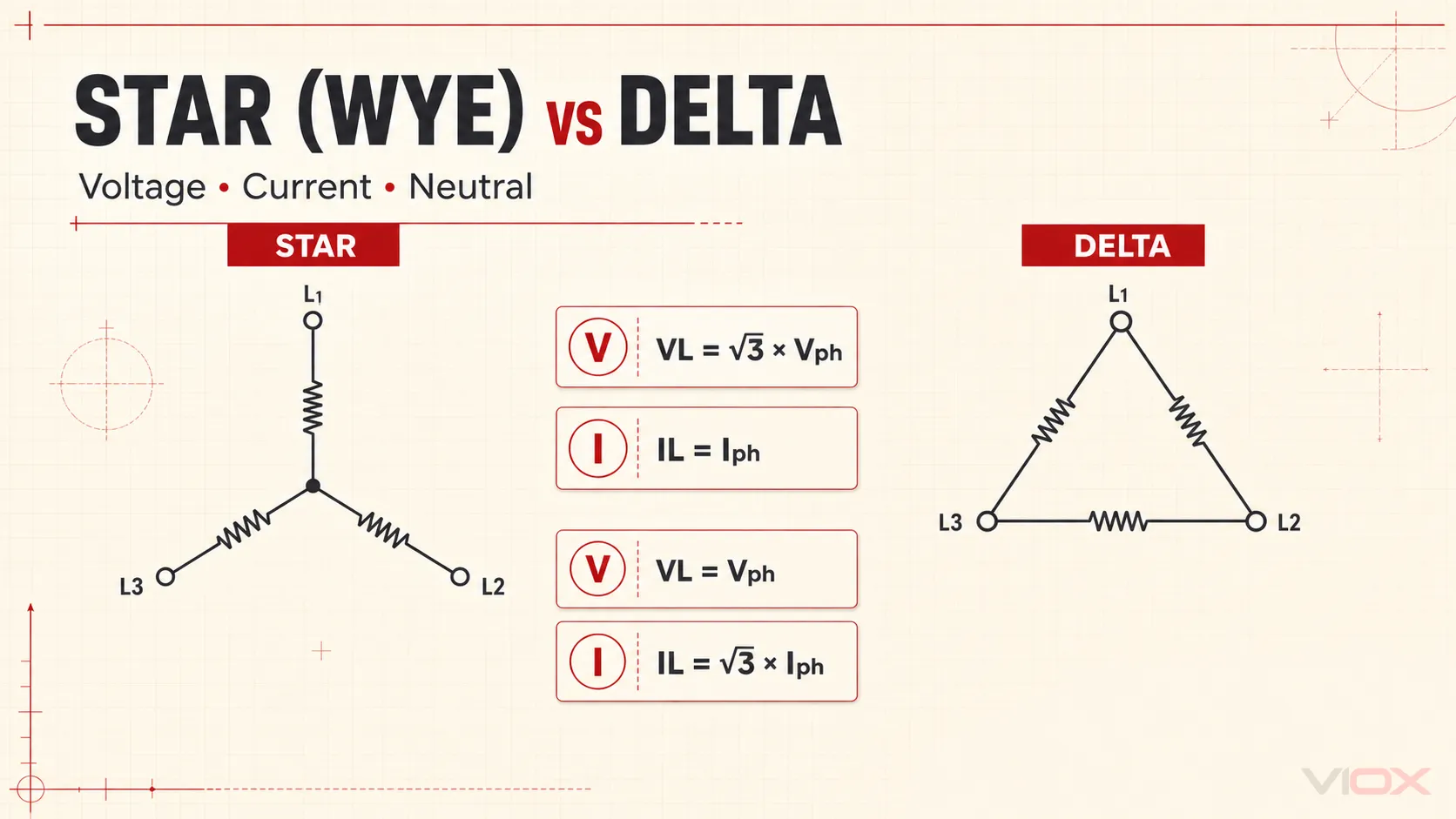
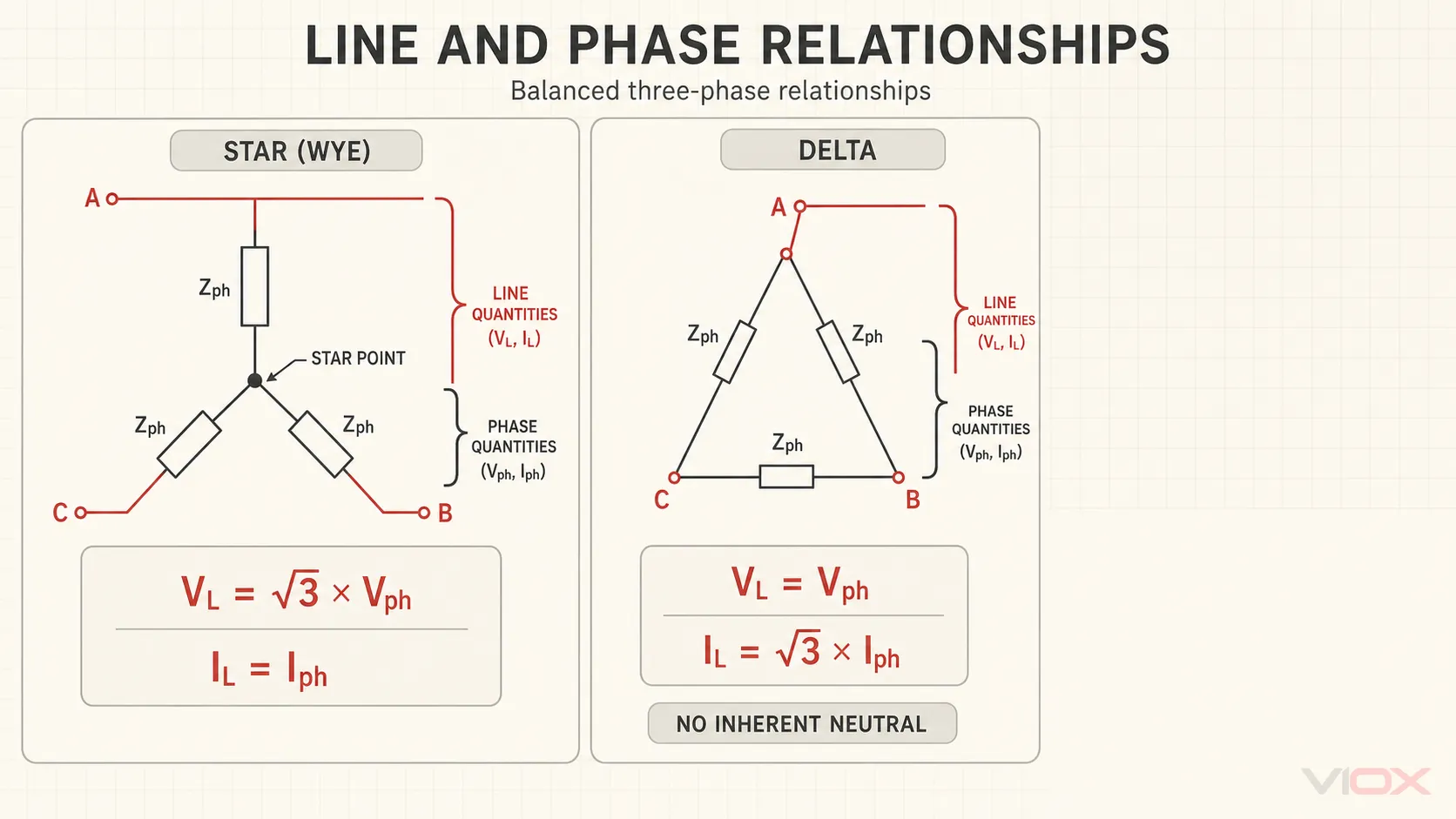
မျှခြေရှိသော သုံးဖေ့စ်စနစ်တစ်ခုတွင် Star (Wye) ချိတ်ဆက်မှု၌ ဖေ့စ်ဒြပ်စင်သုံးခုသည် ဘုံစတားအမှတ်တစ်ခုတွင် ဆုံတွေ့ကြသည်။ လိုင်းဗို့အားသည် ဖေ့စ်ဗို့အား၏ √3 ဆဖြစ်ပြီး လိုင်းလျှပ်စီးသည် ဖေ့စ်လျှပ်စီးနှင့် ညီမျှသည်။ မျှခြေရှိသော Delta ချိတ်ဆက်မှု၌ ဖေ့စ်ဒြပ်စင်သုံးခုသည် ပိတ်ထားသော ကွင်းဆက်တစ်ခုကို ဖြစ်ပေါ်စေသည်။ လိုင်းဗို့အားသည် ဖေ့စ်ဗို့အားနှင့် ညီမျှပြီး လိုင်းလျှပ်စီးသည် ဖေ့စ်လျှပ်စီး၏ √3 ဆ ဖြစ်သည်။.
ဤဆက်နွယ်မှုများသည် မည်သည့်ချိတ်ဆက်မှုပုံစံကိုမဆို အမြဲတမ်း ပိုကောင်းသည်ဟု မဆိုလိုပါ။ မှန်ကန်သော အဓိပ္ပာယ်ဖွင့်ဆိုချက်သည် ချိတ်ဆက်မှုတည်ရှိသည့်နေရာအပေါ်တွင် မူတည်သည်: ရင်းမြစ်တွင်၊ ထရန်စဖော်မာအတွင်းတွင်၊ မော်တာ သို့မဟုတ် ဝန်၏ ဝိုင်ဒင်တွင်၊ သို့မဟုတ် အောက်ပိုင်းရှိ ဖြန့်ဖြူးရေးကိရိယာများတွင် ဖြစ်သည်။ စနစ်၏ ဗို့အား၊ မြေချိတ်စနစ်နှင့် တိကျသော ကိရိယာဆိုင်ရာ စာရွက်စာတမ်းများသည် အဆုံးအဖြတ်ပေးသည့် အချက်များ ဖြစ်သည်။.
Star (Wye) နှင့် Delta: အမြန်နှိုင်းယှဉ်ချက်
| နှိုင်းယှဉ်ရန်အချက် | Star (Wye) ချိတ်ဆက်မှု | Delta ချိတ်ဆက်မှု |
|---|---|---|
| အခြေခံ တိုပိုလိုဂျီ | ဖေ့စ်ဒြပ်စင်တစ်ခုစီ၏ အဆုံးတစ်ဖက်စီသည် ဘုံစတားပွိုင့်တစ်ခုတွင် ချိတ်ဆက်ထားသည် | သုံးဖေ့စ်ဒြပ်စင်များသည် ပိတ်ထားသော ကွင်းဆက်တစ်ခုအဖြစ် အဆုံးချင်းဆက်ထားသည် |
| လိုင်းဗို့အားနှင့် ဖေ့စ်ဗို့အား | VL = √3 × Vph |
VL = Vph |
| လိုင်းနှင့် ဖေ့စ် လျှပ်စီး | IL = Iph |
IL = √3 × Iph |
| နျူထရယ်အမှတ် | စတားအမှတ်တစ်ခု ရှိသည်၊ ၎င်းကို နျူထရယ်လျှပ်ကူးပစ္စည်းအဖြစ် ထုတ်ယူနိုင်သလို မထုတ်ယူဘဲလည်း ထားနိုင်သည်။ | သဘာဝအလျောက်ပါရှိသော နျူထရယ်အမှတ် မရှိပါ |
| ဝန်တစ်ခုမှ အသုံးပြုသော လျှပ်ကူးပစ္စည်းများ | လိုင်းသုံးခု၊ ဒီဇိုင်းတွင် ပါဝင်ပြီး လိုအပ်ပါက နျူထရယ် (neutral) ပါဝင်နိုင်ပြီး၊ သက်ဆိုင်ရာ ကာကွယ်ရေး မြေချိတ် (protective earth) တို့ ပါဝင်သည် | ပုံမှန်အားဖြင့် လိုင်းသုံးခုနှင့် ကာကွယ်ရေး မြေချိတ် (protective earth) တို့ ပါဝင်သည်၊ မြေချိတ်စနစ်များမှာမူ ကွဲပြားမှုရှိနေဆဲဖြစ်သည် |
| အသုံးပြုရသည့် ပုံမှန်အကြောင်းရင်း | သတ်မှတ်ထားသော ဝိုင်ဒင်ဗို့အား သို့မဟုတ် လိုင်းနှင့် နျူထရယ်ကြား ဗို့အားကို ရယူနိုင်ခြင်း | သတ်မှတ်ထားသော ဝိုင်ဒင်ဗို့အား သို့မဟုတ် ဝါယာသုံးချောင်းပါသော ဝန်ချိတ်ဆက်မှု |
| အဓိက စစ်ဆေးအတည်ပြုချက် | စတားပွိုင့် (Star-point) ကို ကိုင်တွယ်ပုံ၊ နျူထရယ် ရရှိနိုင်မှု၊ လိုင်းဗို့အားနှင့် စက်ပစ္စည်း၏ သတ်မှတ်ချက်များ | လိုင်းဗို့အား၊ မြေချိတ်စနစ်နှင့် စက်ပစ္စည်းအဆင့်သတ်မှတ်ချက် |
ဤဇယားသည် ဟန်ချက်ညီသော ဆိုင်းနွိုက်သုံးဖေ့စ် လျှပ်စစ်စနစ်ကို အခြေခံထားသည်။ ဟန်ချက်မညီမှု၊ ဟာမိုနစ်များ၊ မြေချိတ်ခုခံမှုနှင့် စက်ပစ္စည်းတည်ဆောက်ပုံတို့သည် အခြေခံချိတ်ဆက်မှုအမည်များကို မပြောင်းလဲစေဘဲ လျှပ်စီးဖြန့်ဖြူးမှုနှင့် ကာကွယ်ရေးလုပ်ဆောင်ချက်များကို ပြောင်းလဲစေနိုင်သည်။.
ချိတ်ဆက်မှုနှစ်ခုကို မည်သို့ဖွဲ့စည်းပုံ
တူညီသော ဖေ့စ်ဒြပ်စင် သို့မဟုတ် ဝိုင်ဒင်သုံးခုဖြစ်သည့် A၊ B နှင့် C ကို ထည့်သွင်းစဉ်းစားပါ။.
၌ Star/Wye, ၊ ဝိုင်ဒင်တစ်ခုစီ၏ အဆုံးတစ်ဖက်စီသည် ဘုံအမှတ်တစ်ခုတွင် ပေါင်းစပ်ထားသည်။ အခြားအဆုံးသုံးဖက်သည် လိုင်းသုံးခုနှင့် ချိတ်ဆက်ထားသည်။ ထို့ကြောင့် ဝိုင်ဒင်တစ်ခုစီသည် လိုင်းတစ်ခုနှင့် စတားအမှတ်ကြားရှိ ဗို့အားကို ရရှိသည်။ အကယ်၍ စတားအမှတ်ကို အပြင်သို့ထုတ်ပြီး ကြားခံ (neutral) အဖြစ် ရည်ရွယ်ချက်ရှိရှိ အသုံးပြုပါက၊ လိုင်းနှင့် ကြားခံကြားရှိ ဝန်များကို စနစ်ဒီဇိုင်းအတွင်း ချိတ်ဆက်နိုင်သည်။.
၌ Delta, ၊ ဝိုင်ဒင်တစ်ခုစီ၏ အဆုံးသည် နောက်တစ်ခု၏ အစနှင့် ချိတ်ဆက်ပြီး တြိဂံပုံစံကို ဖန်တီးသည်။ လိုင်းလျှပ်ကူးပစ္စည်းသုံးခုသည် ထောင့်သုံးခုတွင် ချိတ်ဆက်ထားသည်။ ဝိုင်ဒင်တစ်ခုစီသည် လိုင်းနှစ်ခုကြားတွင် တိုက်ရိုက်တည်ရှိပြီး လိုင်းနှင့်လိုင်းကြား ဗို့အားအပြည့်ကို ရရှိသည်။.
တူညီသောပုံစံများသည် ဂျင်နရေတာဝိုင်ဒင်များ၊ ထရန်စဖော်မာဝိုင်ဒင်များ၊ မော်တာဝိုင်ဒင်များ သို့မဟုတ် သုံးဖေ့စ်ဝန်ဘဏ်ကို ဖော်ပြနိုင်သည်။ ညီမျှခြင်းများသည် အသုံးဝင်ဆဲဖြစ်သော်လည်း နေရာတစ်ခုစီတွင် ဒီဇိုင်းဆိုင်ရာ အကျိုးဆက်များမှာ ကွဲပြားခြားနားသည်။.
လိုင်းဗို့အား၊ ဖေ့စ်ဗို့အားနှင့် လျှပ်စီးကြောင်း
အောက်ပါသင်္ကေတများကို အသုံးပြုပါ -
VL- လိုင်းလျှပ်ကူးပစ္စည်းနှစ်ခုကြား တိုင်းတာရရှိသော ဗို့အား၊;Vph- ဖေ့စ်ဒြပ်စင် သို့မဟုတ် ဝိုင်ဒင်တစ်ခု၏ ဗို့အား၊;IL- လိုင်းလျှပ်ကူးပစ္စည်းတစ်ခုအတွင်းရှိ လျှပ်စီးကြောင်း၊;Iph: ဖေ့စ်ဒြပ်စင် သို့မဟုတ် ဝိုင်ဒင်တစ်ခုမှတဆင့် စီးဆင်းသော လျှပ်စီး။.
မျှတသော Star ချိတ်ဆက်မှုအတွက် -
VL = √3 × Vphနှင့်IL = Iph
မျှတသော Delta ချိတ်ဆက်မှုအတွက် -
VL = Vphနှင့်IL = √3 × Iph
400 V လိုင်းဗို့အားဖြင့် တွက်ချက်ပြထားသော နမူနာ
မျှတသော လျှပ်စစ်စနစ်တစ်ခုကို အောက်ပါအတိုင်း မှတ်ယူပါ - VL = 400 V.
- Star ချိတ်ဆက်မှုတွင် ဖေ့စ်ဒြပ်စင်တစ်ခုချင်းစီ၌ ရှိသော ဗို့အားမှာ -
400 ÷ √3 ≈ 231 V. - Delta ချိတ်ဆက်မှုတွင်၊ အဆင့်ဒြပ်စင်တစ်ခုစီသည်
400 V. - အကယ်၍ Delta ချိတ်ဆက်ထားသော ဝန်တစ်ခုသည်
30 Aလိုင်းလျှပ်စီးကြောင်းကို ဆွဲယူပါက၊ ၎င်း၏ အဆင့်ဒြပ်စင်လျှပ်စီးကြောင်းမှာ30 ÷ √3 ≈ 17.3 A. - အကယ်၍ Star ချိတ်ဆက်ထားသော ဝန်တစ်ခုသည်
30 Aလိုင်းလျှပ်စီးကြောင်းကို ဆွဲယူပါက၊ အဆင့်ဒြပ်စင်တစ်ခုစီသည်လည်း30 A.
ဤသည်တို့မှာ ဆက်နွှယ်မှုဆိုင်ရာ တွက်ချက်မှုများသာဖြစ်ပြီး စက်ပစ္စည်းများကို ပြန်လည်ချိတ်ဆက်ရန် ခွင့်ပြုချက်မဟုတ်ပါ။ တူညီသော လျှပ်စစ်ပေးသွင်းမှုတွင် ဝိုင်ယာခွေတစ်ခုတည်းကို Star မှ Delta သို့ ပြောင်းလဲခြင်းသည် ထိုဝိုင်ယာခွေသို့ သက်ရောက်သည့် ဗို့အားကို ပြောင်းလဲစေသည်။ ၎င်းကို ခွင့်ပြုမပြုဆိုသည်မှာ မော်တာ သို့မဟုတ် စက်ပစ္စည်း၏ အမည်ပြား (nameplate)၊ ချိတ်ဆက်မှုပုံစံပြဇယားနှင့် ထုတ်လုပ်သူ၏ ညွှန်ကြားချက်များအပေါ်တွင်သာ မူတည်သည်။.
သုံးဖက်မြင် လျှပ်စစ်စနစ်၏ အခြေခံသဘောတရားများ ပိုမိုကျယ်ပြန့်စွာ သိရှိရန်အတွက် VIOX ၏ နှိုင်းယှဉ်ချက်ကို ကြည့်ရှုပါ။ single-phase နှင့် three-phase ပါဝါ.
ချိတ်ဆက်မှုသည် မည်သည့်နေရာတွင် ရှိနေသည်ကို ဦးစွာဖော်ထုတ်ပါ
Star နှင့် Delta အမှားအယွင်းများစွာ ဖြစ်ပွားရခြင်းမှာ အလွှာတစ်ခုအတွက် မှန်ကန်သော စည်းမျဉ်းကို အခြားအလွှာတစ်ခုတွင် အသုံးပြုမိခြင်းကြောင့် ဖြစ်သည်။.
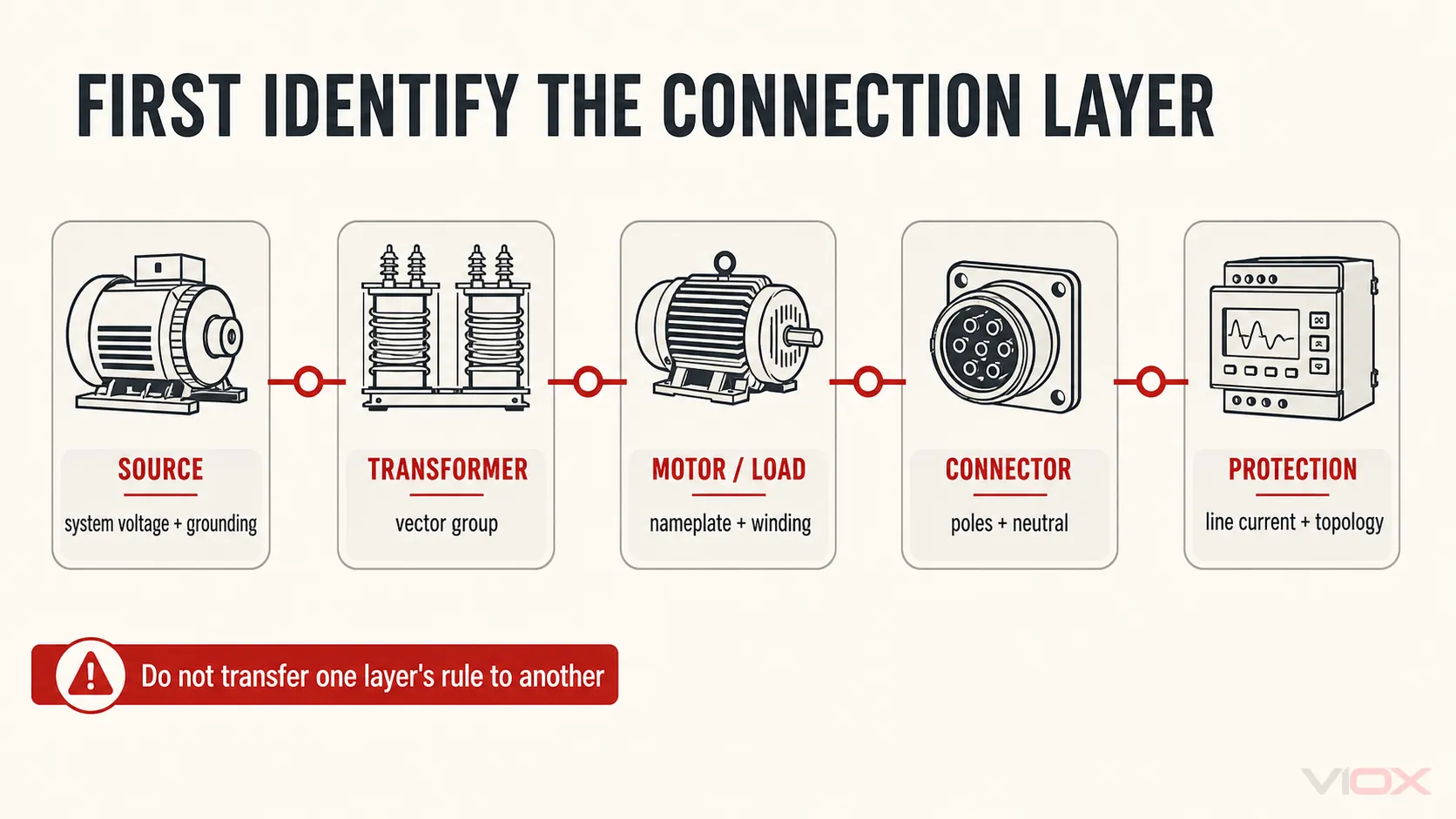
| ချိတ်ဆက်မှုအလွှာ | Star သို့မဟုတ် Delta က မည်သည်ကို ဖော်ပြသနည်း | ဘာကို အတည်ပြုရမည်နည်း |
|---|---|---|
| ရင်းမြစ် သို့မဟုတ် ဂျင်နရေတာ | ရင်းမြစ်၏ ဝိုင်ဒင်များက လိုင်းဗို့အားများနှင့် ဖြစ်နိုင်ခြေရှိသော ရည်ညွှန်းအမှတ်ကို မည်သို့သတ်မှတ်ပေးသနည်း | စနစ်၏ အမည်ခံဗို့အား၊ ကြိမ်နှုန်း၊ မြေချိတ်ခြင်းနှင့် နျူထရယ် ဆက်ဆံပုံ |
| ထရန်စဖော်မာ ဝိုင်ဒင် | ထရန်စဖော်မာ၏ ဘက်တစ်ခုချင်းစီကို မည်သို့ချိတ်ဆက်ထားပုံ | Nameplate vector group၊ ဗို့အားအချိုး၊ မြေချိတ်ခြင်း၊ အဆင့်ရွှေ့လျားမှုနှင့် စနစ်လေ့လာမှုဆိုင်ရာ လိုအပ်ချက်များ |
| မော်တာ ဝိုင်ဒင် | အသုံးပြုထားသော လိုင်းဗို့အားအတွက် စတေတာ ဝိုင်ဒင်များကို မည်သို့ချိတ်ဆက်ထားပုံ | မော်တာ nameplate၊ တာမီနယ် ပုံစံပြဇယား၊ အသုံးပြုနိုင်သော ဝိုင်ဒင်အစွန်းများနှင့် စတင်မောင်းနှင်သည့်နည်းလမ်း |
| သုံးဖေ့စ် ဝန် | တူညီသော သို့မဟုတ် မတူညီသော ဖေ့စ်ဒြပ်စင်သုံးခုကို မည်သို့ချိတ်ဆက်ထားပုံ | သတ်မှတ်ထားသော ဒြပ်စင်၏ ဗို့အား၊ လျှပ်စီး၊ ဟန်ချက်ညီမှုနှင့် နျူထရယ် လိုအပ်ချက်များ |
| ပလပ်၊ ဆိုကက် သို့မဟုတ် PDU | ချိတ်ဆက်မှုတွင် မည်သည့် လျှပ်ကူးပစ္စည်းများနှင့် ဗို့အားစနစ်ကို သယ်ဆောင်ရမည်နည်း | ဗို့အား၊ လျှပ်စီး၊ ပိုလ်များ၊ နျူထရယ်၊ ကာကွယ်ရေး မြေချိတ်၊ ကြိမ်နှုန်းနှင့် စက်မှုဆိုင်ရာ ကုဒ်သတ်မှတ်ချက် |
| ကာကွယ်ခြင်းနှင့် စောင့်ကြည့်ခြင်း | ကိရိယာသည် မည်သည့် ဗို့အားနှင့် လျှပ်စီးများကို တိုင်းတာခြင်း သို့မဟုတ် ဖြတ်တောက်ခြင်း ပြုလုပ်သည် | လက်ရှိ လိုင်းလျှပ်စီး၊ အမှားအယွင်းဖြစ်သည့် လမ်းကြောင်း၊ စနစ်၏ ပုံသဏ္ဍာန်၊ မြေချိတ်ခြင်းနှင့် ထုတ်ကုန်ဆိုင်ရာ ခွင့်ပြုချက် |
Delta-ချိတ်ဆက်ထားသော မော်တာတစ်ခုအား Wye-ချိတ်ဆက်ထားသော ထရန်စဖော်မာ၏ ဒုတိယအဆင့်မှ ပေးပို့သော လိုင်းဗို့အား၊ မြေချိတ်စနစ်နှင့် မော်တာ၏ သတ်မှတ်ချက်တို့ ကိုက်ညီပါက ပါဝါပေးနိုင်ပါသည်။ ရင်းမြစ်နှင့် ဝန်တို့သည် တူညီသော အတွင်းပိုင်း ဝိုင်ယာခွေပုံစံကို အသုံးပြုရန် မလိုအပ်ပါ။ ကိုက်ညီရမည့်အချက်မှာ ၎င်းတို့ကြားရှိ လျှပ်စစ်ဆိုင်ရာ ဆက်သွယ်မှု (interface) ဖြစ်သည်။.
Star Point၊ Neutral နှင့် Protective Earth တို့သည် မတူညီကြပါ
Star ချိတ်ဆက်မှုသည် ဘုံအမှတ်တစ်ခုကို ဖန်တီးပေးသော်လည်း သီးခြားမေးခွန်းသုံးခု ကျန်ရှိနေပါသည်-
- ထို star point သည် စက်ပစ္စည်း၏ အပြင်ဘက်တွင် ချိတ်ဆက်အသုံးပြုနိုင်ပါသလား။
- ၎င်းကို ရည်ရွယ်ချက်ရှိရှိ မြေချိတ်ထားခြင်း သို့မဟုတ် အခြားနည်းလမ်းဖြင့် ရည်ညွှန်းထားခြင်း ရှိပါသလား။
- Neutral လျှပ်ကူးကြိုးကို ဝန် (load) ထံသို့ ဖြန့်ဝေပေးထားပါသလား။
ထို့ကြောင့် Neutral ကို အပြင်သို့ ထုတ်မထားသည့်အခါ Star-connected ရင်းမြစ်သည် three-wire စနစ်ကို ထောက်ပံ့ပေးနိုင်သည်။ အပြန်အလှန်အားဖြင့် Neutral လျှပ်ကူးကြိုး ရှိနေခြင်းသည် လိုအပ်သည့်နေရာများတွင် သီးခြား protective-earth နှင့် bonding ဒီဇိုင်း လိုအပ်ချက်ကို ပယ်ဖျက်ပေးခြင်း မဟုတ်ပါ။.
Delta တွင် မူလအလျောက် ပါဝင်သော အလယ်ဗဟို Neutral အမှတ် မရှိသော်လည်း Delta စနစ်တိုင်းသည် “ungrounded” ဖြစ်သည်ဟု ဆိုလိုခြင်းမဟုတ်ပါ။ Delta စနစ်များသည် တပ်ဆင်မှုနှင့် တရားစီရင်ပိုင်ခွင့်အာဏာအပေါ် မူတည်၍ မတူညီသော မြေချိတ်ခြင်း စီစဉ်မှုများကို အသုံးပြုနိုင်သည်။ မြေချိတ်ခြင်း ဒီဇိုင်းသည် fault current၊ insulation stress၊ ကာကွယ်မှုနှင့် surge protective device ရွေးချယ်မှုတို့ကို သက်ရောက်မှုရှိသဖြင့် တြိဂံသင်္ကေတတစ်ခုတည်းကို ကြည့်၍ ကောက်ချက်ချ၍ မရပါ။.
မော်တာ Nameplate ပေါ်ရှိ Star နှင့် Delta
မော်တာချိတ်ဆက်မှုသည် ဝိုင်ဒင်တစ်ခုချင်းစီတစ်လျှောက် ရည်ရွယ်ထားသော ဗို့အားအပေါ်တွင် မူတည်သည်။ IEC ပုံစံ မော်တာအမည်ပြားတွင် သင်္ကေတများနှင့် ဗို့အားနှစ်မျိုးကို ပြသနိုင်ပြီး ဥပမာအားဖြင့် 230/400 V Δ/Y သို့မဟုတ် 400/690 V Δ/Y. ။ ဤဥပမာများတွင် ဗို့အားနိမ့်သည် Delta ချိတ်ဆက်မှုနှင့် သက်ဆိုင်ပြီး ဗို့အားမြင့်သည် Star ချိတ်ဆက်မှုနှင့် သက်ဆိုင်သည်၊ အကြောင်းမှာ Star သည် VL/√3 ကို ဝိုင်ဒင်တစ်ခုချင်းစီတစ်လျှောက်သာ အသုံးပြုသောကြောင့်ဖြစ်သည်။.
ဥပမာတစ်ခုတည်းကိုကြည့်၍ ယေဘုယျသတ်မှတ်ချက် မပြုလုပ်ပါနှင့်။ အမှတ်အသားများ၏ အစဉ်လိုက်၊ တာမီနယ်ပုံစံနှင့် သက်ဆိုင်ရာ မော်တာအတွက် ထုတ်လုပ်သူ၏ စာရွက်စာတမ်းများကို အတည်ပြုပါ။. IEC 60034-8:2026 အသုံးများသော လည်ပတ်သည့်စက်ကိရိယာများအတွက် ဝိုင်ယာခွေချိတ်ဆက်သည့်နေရာများ၊ တာမီနယ်အမှတ်အသားများ၊ လည်ပတ်သည့်ဦးတည်ချက်နှင့် ချိတ်ဆက်မှုပုံစံများကို ဖော်ပြပေးထားသည်။.
မော်တာတွင် ရည်ရွယ်ထားသည့် ချိတ်ဆက်မှုအတွက် လိုအပ်သော ဝိုင်ယာခွေအစွန်းများကိုလည်း အသုံးပြုနိုင်ရန် လိုအပ်သည်။ ဤဆောင်းပါးတွင် တာမီနယ်-ဂျမ်ပါ လုပ်ဆောင်ပုံအဆင့်ဆင့်ကို မဖော်ပြထားပါ၊ အကြောင်းမှာ ချိတ်ဆက်မှု မှားယွင်းပါက ဝိုင်ယာခွေများတွင် ဗို့အားလွန်ကဲခြင်း၊ လည်ပတ်မှုဦးတည်ချက် ပြောင်းပြန်ဖြစ်ခြင်း သို့မဟုတ် ဖေ့စ်အမှား (phase fault) ဖြစ်ပေါ်ခြင်းတို့ ဖြစ်စေနိုင်သောကြောင့်ဖြစ်သည်။.
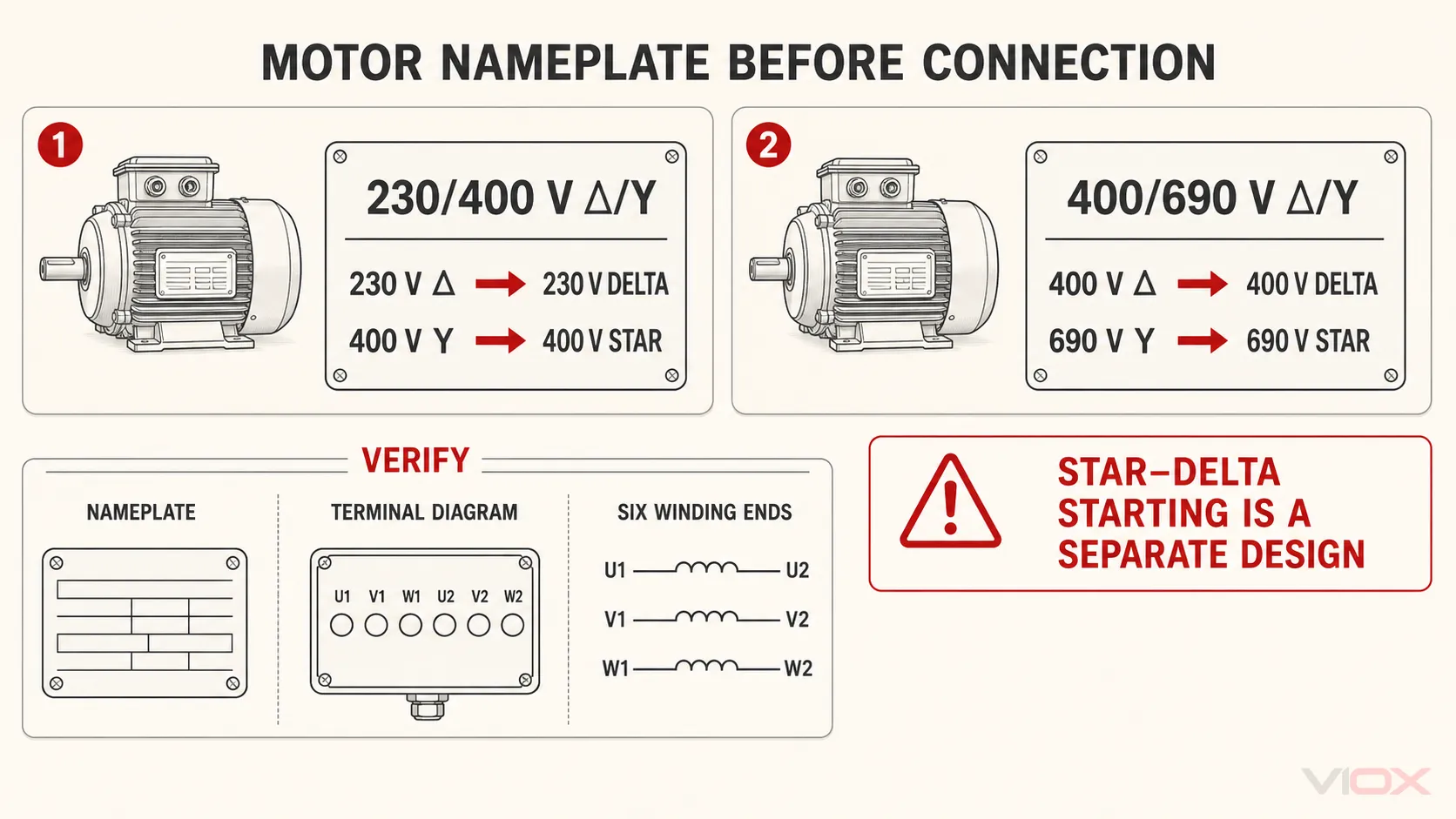
Star-Delta စတင်ခြင်းသည် သီးခြားဆုံးဖြတ်ချက်တစ်ခုဖြစ်သည်။
Star-Delta စတားတာသည် မော်တာကို အရှိန်မြှင့်တင်နေစဉ်အတွင်း Star ချိတ်ဆက်မှုဖြင့် ယာယီချိတ်ဆက်ပေးပြီး ပုံမှန်လည်ပတ်ချိန်တွင် Delta ချိတ်ဆက်မှုသို့ ပြောင်းလဲပေးသည်။ တူညီသော လိုင်းဗို့အားတွင် မော်တာတစ်ခုတည်းကို နှိုင်းယှဉ်ကြည့်ပါက၊ သီအိုရီအရ Star စတင်သည့် လိုင်းလျှပ်စီးနှင့် စတင်သည့် ရုန်းအား (starting torque) တို့သည် Delta တန်ဖိုးများ၏ သုံးပုံတစ်ပုံခန့်သာ ရှိသည်။ ရုန်းအား လျော့နည်းသွားခြင်းကြောင့် ဤနည်းလမ်းသည် ဝန်အားတိုင်းအတွက် မသင့်တော်ပါ။.
၎င်းအတွက် ထောက်ပံ့ပေးထားသော ဗို့အားဖြင့် Delta တွင် လည်ပတ်ရန် ရည်ရွယ်ထားသည့် မော်တာ၊ အသုံးပြုနိုင်သော ဝိုင်ယာခွေအစွန်းများနှင့် မှန်ကန်စွာ ဒီဇိုင်းထုတ်ထားသော အကူးအပြောင်းနှင့် ကာကွယ်ရေးစနစ်တို့ လိုအပ်သည်။ ထိန်းချုပ်မှု အစီအစဉ်နှင့် အစိတ်အပိုင်း နယ်နိမိတ်များအတွက် သီးသန့် VIOX ကို အသုံးပြုပါ။ Star-Delta စတားတာ လမ်းညွှန် အခြေခံ Star/Delta ပုံစံကို စတားတာဒီဇိုင်းအဖြစ် သတ်မှတ်ခြင်းထက် ပိုမိုကောင်းမွန်သည်။.
ထရန်စဖော်မာ ချိတ်ဆက်မှုများသည် ၎င်းတို့၏ ကိုယ်ပိုင်သတ်မှတ်ချက်များ လိုအပ်သည်။
သုံးဖေ့စ် ထရန်စဖော်မာတစ်ခုတွင် Star–Star၊ Delta–Delta၊ Delta–Star သို့မဟုတ် Star–Delta ဝိုင်ဒင်များကို အသုံးပြုနိုင်သည်။ ချိတ်ဆက်မှုပုံစံသည် ဗို့အားဆက်နွယ်မှုထက် ပိုမိုသက်ရောက်မှုရှိသည်- ထရန်စဖော်မာ၏ အသေးစိတ်သတ်မှတ်ချက်အပြည့်အစုံတွင် ကြားခံ (neutral) ရရှိနိုင်မှု၊ မြေချိတ်ခြင်း၊ ဖေ့စ်ရွှေ့လျားမှု၊ zero-sequence လုပ်ဆောင်ချက်၊ ဟာမိုနစ်များနှင့် အပြိုင်လည်ပတ်နိုင်မှုတို့ ပါဝင်နိုင်သည်။.
IEC 60076-1:2011 ပါဝါထရန်စဖော်မာများအတွက် အထွေထွေလိုအပ်ချက်များကို သတ်မှတ်ပေးထားပြီး ၎င်း၏နယ်ပယ်အတွင်း ချိတ်ဆက်မှုနှင့် အဆင့်သတ်မှတ်ချက် သင်္ကေတလိုအပ်ချက်များ ပါဝင်သည်။ စက်ပစ္စည်းရွေးချယ်ရာတွင် ထရန်စဖော်မာ၏ နာမည်ပြား (nameplate) အပြည့်အစုံနှင့် vector-group သတ်မှတ်ချက်ကို အသုံးပြုပါ။ ရိုးရှင်းသော Wye သို့မဟုတ် Delta ပုံကြမ်းတစ်ခုက လိုချင်သောဗို့အားကို ပေးစွမ်းနိုင်သည်ဟု ထင်ရရုံဖြင့် ထရန်စဖော်မာကို မရွေးချယ်ပါနှင့်။.
ချိတ်ဆက်မှုက အောက်ဘက်ရှိ စက်ပစ္စည်းများအတွက် မည်သို့ပြောင်းလဲစေသနည်း
စနစ်၏ တိုပိုလိုဂျီ (topology) သည် စက်ပစ္စည်းရွေးချယ်မှုအတွက် ထည့်သွင်းရမည့်အချက်ဖြစ်ပြီး စက်ပစ္စည်း၏ ဒေတာစာရွက်အတွက် အစားထိုးစရာမဟုတ်ပါ။.
စက်မှုသုံး ပလပ်များ၊ ဆိုကက်များနှင့် PDU များ
ကြားခံ (neutral) မလိုအပ်သော သုံးဖေ့စ် ဝန် (load) တစ်ခုသည် 3P+E ကွန်နက်တာ အစီအစဉ်ကို အသုံးပြုနိုင်ပြီး ကြားခံ (neutral) လိုအပ်သော စက်ပစ္စည်းများအတွက်မူ 3P+N+E. လိုအပ်နိုင်ပါသည်။ ထိုဆုံးဖြတ်ချက်သည် အထက်ပိုင်းရှိ ရင်းမြစ်ကို Wye သို့မဟုတ် Delta ဟု ခေါ်ဆိုခြင်းအပေါ်တွင်သာမက ဝန်၏ လျှပ်ကူးပစ္စည်းများနှင့် ဗို့အားလိုအပ်ချက်များအပေါ်တွင်လည်း မူတည်ပါသည်။.
IEC 60309 ဆက်စပ်ပစ္စည်းများကို ဗို့အား၊ လျှပ်စီး၊ ကြိမ်နှုန်း၊ ပိုလ်အစီအစဉ်၊ မြေချိတ်တာမီနယ်နှင့် အတိုင်းအတာဆိုင်ရာ ကိုက်ညီမှုတို့ဖြင့် ရွေးချယ်သည်။ VIOX IEC 60309 စက်မှုလုပ်ငန်းသုံး ပလပ်နှင့် ဆိုကက်လမ်းညွှန် သည် ပင်အစီအစဉ်များ၊ နာရီအနေအထားများ၊ လျှပ်စီးသတ်မှတ်ချက်များနှင့် အကာအကွယ်အဆင့် ရွေးချယ်မှုများကို ဤနေရာတွင် ထပ်မံဖော်ပြခြင်းမရှိဘဲ ရှင်းပြထားသည်။ လက်ရှိ အထွေထွေလိုအပ်ချက်များဆိုင်ရာ ထုတ်ဝေမှုမှာ IEC 60309-1:2021.
ဆားကစ်ကာကွယ်ရေးနှင့် မော်တာထိန်းချုပ်ရေး
ဆားကစ်ဘရိတ်ကာများ၊ မော်တာကာကွယ်ရေးကိရိယာများ၊ ကွန်တက်တာများနှင့် ဝန်ပိုရီလေးများကို လက်ရှိဆားကစ်လျှပ်စီး၊ ဗို့အား၊ ဝန်အမျိုးအစား၊ တပ်ဆင်မည့်နေရာနှင့် သက်ဆိုင်ရာ ညှိနှိုင်းဆောင်ရွက်မှု လိုအပ်ချက်များမှ ရွေးချယ်ရမည်။ ကိရိယာတစ်ခုသည် လိုင်းလျှပ်စီးကို သယ်ဆောင်နေပါက ဖေ့စ်လျှပ်စီးကို အသုံးမပြုပါနှင့်၊ သို့မဟုတ် “Delta” ဟူသော စကားလုံးသည် ပိုမိုမြင့်မားသော ခွင့်ပြုချက်အဆင့်သတ်မှတ်ချက်ကို သက်သေပြသည်ဟု မယူဆပါနှင့်။.
Star-Delta စတားတာတစ်ခုတွင် ကွန်တက်တာ သို့မဟုတ် ဝန်ပိုကိရိယာတစ်ခုစီ၏ တည်နေရာသည် ၎င်းသယ်ဆောင်သော သို့မဟုတ် တိုင်းတာသော လျှပ်စီးကို ပြောင်းလဲစေသည်။ ထို့ကြောင့် မော်တာထိန်းချုပ်ရေး ဒီဇိုင်းတွင် ဆားကစ်ပုံစံပြဇယားနှင့် ထုတ်လုပ်သူ၏ ညှိနှိုင်းဆောင်ရွက်မှုဆိုင်ရာ အချက်အလက်များ လိုအပ်သည်။ VIOX AC contactors များ ကို ချိတ်ဆက်မှုအမည်တစ်ခုတည်းဖြင့် မဟုတ်ဘဲ လက်တွေ့လုပ်ဆောင်ချက်အတွက် ကြေညာထားသော လုပ်ငန်းလည်ပတ်မှု အဆင့်သတ်မှတ်ချက်များနှင့် အသုံးပြုမှုအမျိုးအစားတို့ဖြင့် အကဲဖြတ်သင့်သည်။.
SPD များနှင့် စောင့်ကြည့်ရေး ရီလေးများ
Surge protective devices (SPD) များသည် လျှပ်စစ်စနစ်၏ ဗို့အား၊ ကာကွယ်မှုပုံစံများနှင့် မြေချိတ်ဆက်မှု တိုပိုလိုဂျီတို့နှင့် ကိုက်ညီရမည်။ grounded-Wye စနစ်အတွက် ရည်ရွယ်ထားသော ကိရိယာတစ်ခုကို Delta သို့မဟုတ် impedance-grounded စနစ်တိုင်းသို့ အလိုအလျောက် ပြောင်းလဲအသုံးပြု၍ မရပါ။ VIOX MCOV နှင့် SPD ဗို့အား လမ်းညွှန် သည် သီးခြားစိစစ်အတည်ပြုခြင်း လုပ်ငန်းစဉ်ကို ပံ့ပိုးပေးသည်။.
သုံးဖက်မြင် (Three-phase) စောင့်ကြည့်ရေး ရီလေးများသည်လည်း line-to-line ဗို့အားကိုသာ တိုင်းတာခြင်း ရှိ၊ မရှိ သို့မဟုတ် neutral reference ကို အသုံးပြုခြင်း ရှိ၊ မရှိနှင့် မည်သည့် ချို့ယွင်းချက် လုပ်ဆောင်ချက်များကို ပံ့ပိုးပေးသည်ဆိုသည့်အချက်များတွင် ကွဲပြားခြားနားသည်။ ရွေးချယ်ခြင်းမပြုမီ စောင့်ကြည့်မည့် လျှပ်ကူးပစ္စည်းများနှင့် ဗို့အားအကွာအဝေးကို အတည်ပြုပါ၊ VIOX သုံးဖက်မြင် ဗို့အားစောင့်ကြည့်ရေး ရီလေး လမ်းညွှန် သည် ထိုလုပ်ဆောင်ချက်များကို မည်သို့ခွဲခြားထားသည်ကို ပြသထားသည်။.
လက်တွေ့ကျသော စိစစ်အတည်ပြုခြင်း နည်းလမ်း
ပစ္စည်းကိရိယာများကို မရွေးချယ်မီ သို့မဟုတ် မချိတ်ဆက်မီ အောက်ပါအချက် ခြောက်ချက်ကို မှတ်တမ်းတင်ပါ -
- ချိတ်ဆက်မည့်နေရာ - ရင်းမြစ်၊ ထရန်စဖော်မာ ဝိုင်ဒင်၊ မော်တာ/ဝန်အား ဝိုင်ဒင် သို့မဟုတ် အောက်ဘက်ပိုင်းရှိ ဆက်သွယ်မှုနေရာ။.
- တိုင်းတာထားသော ဗို့အားအခြေခံ - လိုင်းနှင့်လိုင်း သို့မဟုတ် လိုင်းနှင့်နျူထရယ်။.
- လိုအပ်သော ဝိုင်ဒင် သို့မဟုတ် ဒြပ်စင်၏ ဗို့အား - တိကျသော နာမည်ပြား (nameplate) သို့မဟုတ် ဒီဇိုင်းစာရွက်စာတမ်းများမှ ရယူထားခြင်း။.
- နျူထရယ်နှင့် မြေချိတ်စနစ် အစီအစဉ် - ကြယ်ပုံစံ (star point) ချိတ်ဆက်မှုနေရာကို ရနိုင်မရနိုင်နှင့် ကြားခံ (neutral) ကို ဖြန့်ဝေထားခြင်း ရှိမရှိ အပါအဝင်ဖြစ်သည်။.
- လက်ရှိ လိုင်းလျှပ်စီးနှင့် ဝန်အမျိုးအစား- လျှပ်ကူးပစ္စည်းများ၊ ခလုတ်ဖွင့်ပိတ်ခြင်းနှင့် ကာကွယ်ခြင်းအတွက် အသုံးပြုသည်။.
- အထောက်အထား- အမည်ပြား (nameplate)၊ တာမီနယ် ပုံစံပြဇယား၊ စနစ်၏ တစ်လိုင်းတည်းပြ ပုံစံပြဇယား၊ ဒေတာစာရွက်နှင့် သက်ဆိုင်ရာ ထုတ်လုပ်သူ သို့မဟုတ် စံနှုန်းဆိုင်ရာ စာရွက်စာတမ်းများ။.
အကယ်၍ တစ်စုံတစ်ခုကို မသိရှိပါက၊ “Star” သို့မဟုတ် “Delta” ဟုသာ သိရုံဖြင့် စက်ပစ္စည်းကို ရွေးချယ်ရန် အချက်အလက် မလုံလောက်ပါ။.
အဖြစ်များသော အထင်အမြင်လွဲမှားမှုများ
- “Star ဆိုသည်မှာ ဝိုင်ယာကြိုး လေးချောင်းကို အမြဲဆိုလိုသည်။” ကြယ်ပုံစံ (star point) ရှိသော်လည်း ကြားခံ (neutral) လျှပ်ကူးပစ္စည်းကို ထုတ်ယူထားခြင်း မရှိနိုင်ပါ။.
- “Delta တွင် မြေချိတ်ခြင်း (grounding) မရှိပါ။” Delta စနစ်တွင် မူလအလျောက် ပါဝင်သော ကြားခံအမှတ် (neutral point) မရှိသော်လည်း မြေချိတ်ခြင်းဆိုင်ရာ စီစဉ်မှုပုံစံအမျိုးမျိုးကို ပြုလုပ်နိုင်ပါသည်။.
- “Delta သည် အမြဲတမ်း ပိုမိုအားကောင်းသည် သို့မဟုတ် ပိုမိုထိရောက်မှုရှိသည်။” စွမ်းအားနှင့် စွမ်းဆောင်ရည်တို့သည် ပုံစံအမည်တစ်ခုတည်းအပေါ်တွင်သာ မူတည်သည်မဟုတ်ဘဲ မှန်ကန်စွာ သတ်မှတ်ထားသော ရင်းမြစ်၊ ဝိုင်ဒင်၊ ဝန်နှင့် လည်ပတ်မှုအမှတ်တို့အပေါ်တွင် မူတည်ပါသည်။.
- “Wye ရင်းမြစ်တစ်ခုအတွက် Wye-ချိတ်ဆက်ထားသော မော်တာတစ်ခု လိုအပ်သည်။” ရင်းမြစ်နှင့် မော်တာဝိုင်ဒင် ချိတ်ဆက်မှုပုံစံများသည် သီးခြားအလွှာများဖြစ်ကြပြီး လိုင်းဗို့အား ဆက်သွယ်မှုနှင့် စက်ပစ္စည်း၏ သတ်မှတ်ချက်များမှာ ကိုက်ညီမှုရှိရမည်။.
- “Star-Delta စတင်ခြင်းသည် ဝိုင်ယာသွယ်တန်းမှုဆိုင်ရာ ရွေးချယ်မှုတစ်ခုသာ ဖြစ်သည်။” ၎င်းသည် မော်တာ၊ ဝန်၊ အကူးအပြောင်းနှင့် ကာကွယ်ရေးဆိုင်ရာ ကန့်သတ်ချက်များပါရှိသော ဗို့အားလျှော့ချ၍ စတင်သည့်နည်းလမ်းတစ်ခု ဖြစ်သည်။.
မကြာခဏမေးမေးခွန်းများ
Star သည် Wye နှင့် အတူတူပင်ဖြစ်ပါသလား။
ဟုတ်ကဲ့။ Star နှင့် Wye သည် Y ပုံသဏ္ဍာန် ချိတ်ဆက်မှုတစ်ခုတည်းကိုပင် ရည်ညွှန်းသည်။ “Wye” သည် မြောက်အမေရိက ဝေါဟာရများတွင် အထူးသဖြင့် အသုံးများသည်။.
Star နှင့် Delta တို့တွင် မည်သည်က ပိုကောင်းသနည်း။
မည်သည်က ပိုကောင်းသည်ဟု အတိအကျ မဆိုနိုင်ပါ။ Star သည် ၎င်း၏ ဝိုင်ဒင်ဗို့အား ဆက်နွှယ်မှု သို့မဟုတ် အသုံးပြုနိုင်သော star point လိုအပ်သည့်အခါတွင် အသုံးဝင်သည်။ Delta သည် ၎င်း၏ ဝိုင်ဒင်ဗို့အား ဆက်နွှယ်မှုနှင့် ဝါယာသုံးချောင်းပါသော တိုပိုလိုဂျီ (topology) သည် စက်ပစ္စည်းနှင့် ကိုက်ညီသည့်အခါတွင် အသုံးဝင်သည်။ မှန်ကန်သော ရွေးချယ်မှုမှာ စနစ်ဒီဇိုင်းနှင့် nameplate ပေါ်တွင် မူတည်သည်။.
Star ချိတ်ဆက်မှုတွင် neutral ဝါယာ လိုအပ်ပါသလား။
မလိုအပ်ပါ။ Star သည် ဘုံအမှတ်တစ်ခုကို ဖန်တီးပေးသော်လည်း၊ ထိုအမှတ်ကို အပြင်သို့ ထုတ်ယူပြီး စနစ်ဒီဇိုင်းက အသုံးပြုမှသာလျှင် neutral လျှပ်ကူးပစ္စည်း ရှိလာမည်ဖြစ်သည်။.
Delta ချိတ်ဆက်ထားသော မော်တာကို Wye ထောက်ပံ့မှုမှ မောင်းနှင်နိုင်ပါသလား။
ရပါသည်။ Wye ရင်းမြစ်သည် Delta ချိတ်ဆက်ထားသော မော်တာအတွက် လိုအပ်သည့် လိုင်းဗို့အားနှင့် မြေချိတ်ခြင်း အခြေအနေများကို ပေးစွမ်းနိုင်ပြီး ကျန်ရှိသော တပ်ဆင်မှုအပိုင်းများမှာလည်း ကိုက်ညီမှုရှိပါက ရပါသည်။ ရင်းမြစ် တိုပိုလိုဂျီနှင့် မော်တာ ဝိုင်ဒင်ချိတ်ဆက်မှုတို့သည် အမည်တူညီရန် မလိုအပ်ပါ။.
Star-Delta စတင်ခြင်း (starting) သည် Star နှင့် Delta ချိတ်ဆက်မှုနှင့် တူညီသော အကြောင်းအရာ ဖြစ်ပါသလား။
Star နှင့် Delta သည် ဝိုင်ဒင် သို့မဟုတ် ဝန်၏ တိုပိုလိုဂျီ နှစ်မျိုးကို ဖော်ပြသည်။ Star-Delta စတင်ခြင်းသည် ထိန်းချုပ်ထားသော အခြေအနေများအောက်တွင် ၎င်းတို့နှစ်ခုကြား ပြောင်းလဲပေးသည့် တိကျသော မော်တာစတင်သည့် နည်းလမ်းတစ်ခုဖြစ်သည်။.
ရင်းမြစ်များ
- IEC 60034-8:2026 — လည်ပတ်နေသော လျှပ်စစ်စက်များ- တာမီနယ် အမှတ်အသားများနှင့် လည်ပတ်သည့် ဦးတည်ချက်
- IEC 60076-1:2011 — ပါဝါ ထရန်စဖော်မာများ- အထွေထွေ လိုအပ်ချက်များ
- IEC 60309-1:2021 — စက်မှုလုပ်ငန်းသုံး ပလပ်များနှင့် ဆော့ကက်-အောက်လက်များ- အထွေထွေ လိုအပ်ချက်များ
- ABB Manual Motor Starter လမ်းညွှန် — မော်တာ ဗို့အားနှင့် Star/Delta ချိတ်ဆက်မှု ဆိုင်ရာ အကြောင်းအရာ
- ABB မော်တာ ကာကွယ်ရေးနှင့် ထိန်းချုပ်ရေး — Star-Delta စတင်ခြင်းဆိုင်ရာ အခြေခံမူများနှင့် အသုံးပြုနိုင်သည့် ကန့်သတ်ချက်များ