Why Most Installers Overpay for Rapid Shutdown Compliance
Don’t sacrifice profit margins just to meet compliance requirements. Many installers blindly choose distributed architecture for Rapid Shutdown Compliance, believing it’s the only path to NEC 690.12 approval. The reality? VIOX’s firefighter safety switch combined with centralized architecture passes inspection while reducing BOM costs by 30%. This analysis examines the true cost difference between distributed and centralized solar systems, revealing where EPCs and distributors lose money—and how to recover it.
The solar industry faces a persistent confusion between isolation and shutdown requirements. Traditional DC disconnects serve maintenance needs, while rapid shutdown addresses firefighter safety during emergencies. Understanding this distinction determines whether your next commercial project delivers acceptable margins or becomes a cost overrun.
The Confusion: DC Isolation Is Not Rapid Shutdown
What DC Disconnects Actually Do
DC disconnect switches provide manual isolation for maintenance work. Electricians flip these switches to create a physical break in the circuit, stopping current flow so technicians can safely service inverters or troubleshoot string connections. This process takes minutes and requires physical access to the equipment. DC disconnects meet requirements for routine maintenance but fail to address emergency scenarios where first responders need immediate voltage reduction across the entire array.
ဟိ fundamental difference between DC isolators and circuit breakers lies in their response speed and automation capabilities. Isolation devices require manual operation, while rapid shutdown systems must activate automatically when AC power disconnects or emergency switches engage.
NEC 690.12 Requirements Explained
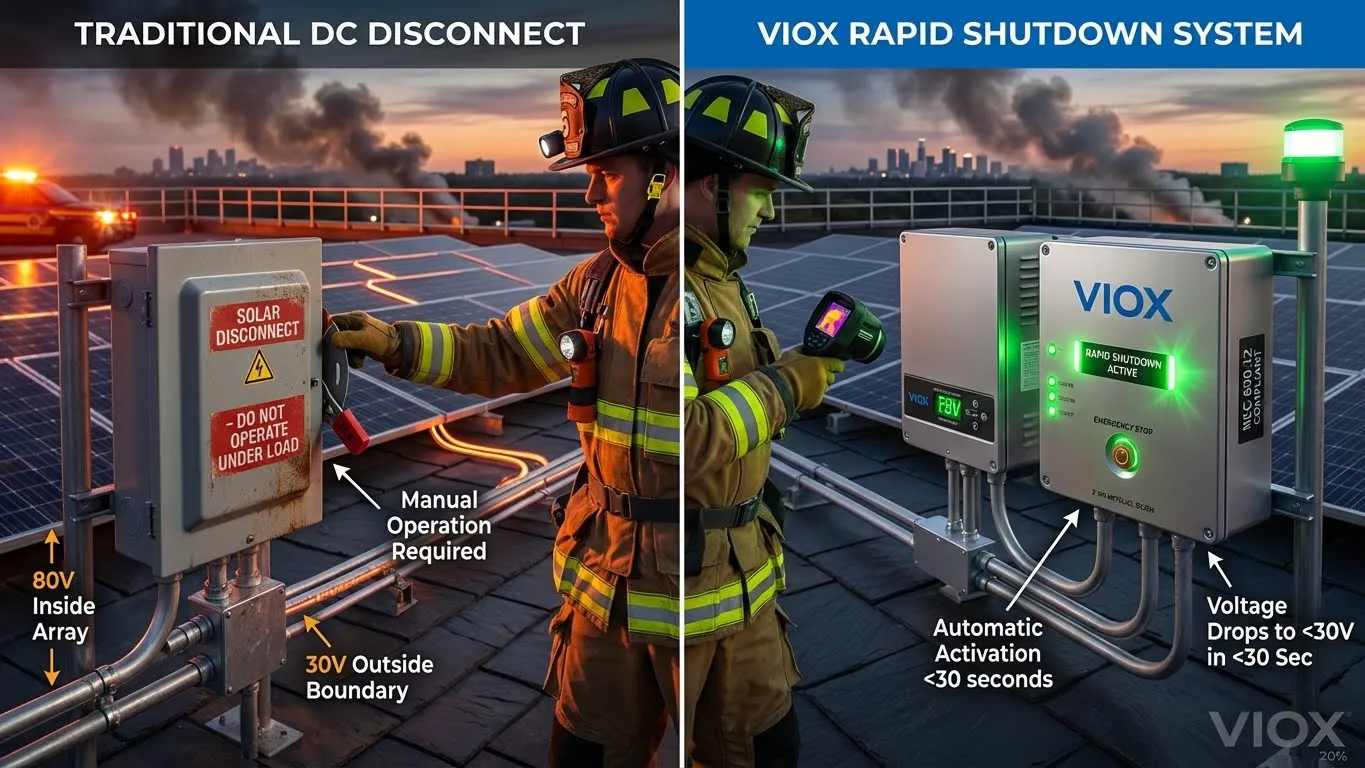
The 2017 NEC revision shifted from array-level to module-level rapid shutdown, establishing strict voltage and timing requirements:
- Inside the array boundary (within 1 foot of array perimeter): controlled conductors must drop to ≤80V within 30 seconds of shutdown initiation
- Outside the array boundary: controlled conductors must reach ≤30V within 30 seconds
- Activation methods: loss of utility power, operation of a readily accessible switch, or automatic detection by listed equipment
These specifications exist to protect firefighters conducting roof operations during structure fires. Traditional string inverter systems maintain dangerous DC voltage levels even when the AC breaker trips, creating shock hazards for emergency responders. The rapid shutdown safety requirements mandate that PV systems must de-energize quickly without manual intervention at each module.
The 2023 NEC Updates and Exceptions
The 2023 NEC cycle introduced critical clarifications that many installers overlook. Exception No. 2 under 690.12 specifically exempts PV equipment on non-enclosed detached structures including parking shade structures, carports, and solar trellises. This exception recognizes that firefighters rarely conduct roof ventilation operations on open-sided structures where heat and smoke naturally escape.
However, this exemption applies only to ground-mounted or detached structure installations. Rooftop commercial and residential systems still require full Rapid Shutdown Compliance under NEC 690.12(B). The distinction matters for cost planning: a 500kW carport installation might save $15,000-$25,000 by eliminating rapid shutdown hardware, while an equivalent rooftop system must include this expense.
The Architecture Dilemma: Distributed vs. Centralized Systems
Distributed Architecture: Microinverters and Power Optimizers
Distributed systems deploy electronics at each solar module, converting DC to AC immediately (microinverters) or optimizing power output before sending DC to a central inverter (power optimizers). Both approaches provide inherent module-level rapid shutdown because the MLPE (Module-Level Power Electronics) components stop power conversion when AC disconnects.
Advantages of distributed architecture:
- Built-in NEC 690.12 compliance without additional hardware
- Independent MPPT per module maximizes energy harvest under partial shading
- Granular performance monitoring identifies failing modules immediately
- Simplified wiring reduces high-voltage DC cable runs
- Lower voltage DC reduces shock hazard during installation
Disadvantages that impact distributor margins:
- Hardware cost premium: $0.15-$0.25 per watt higher than string inverters
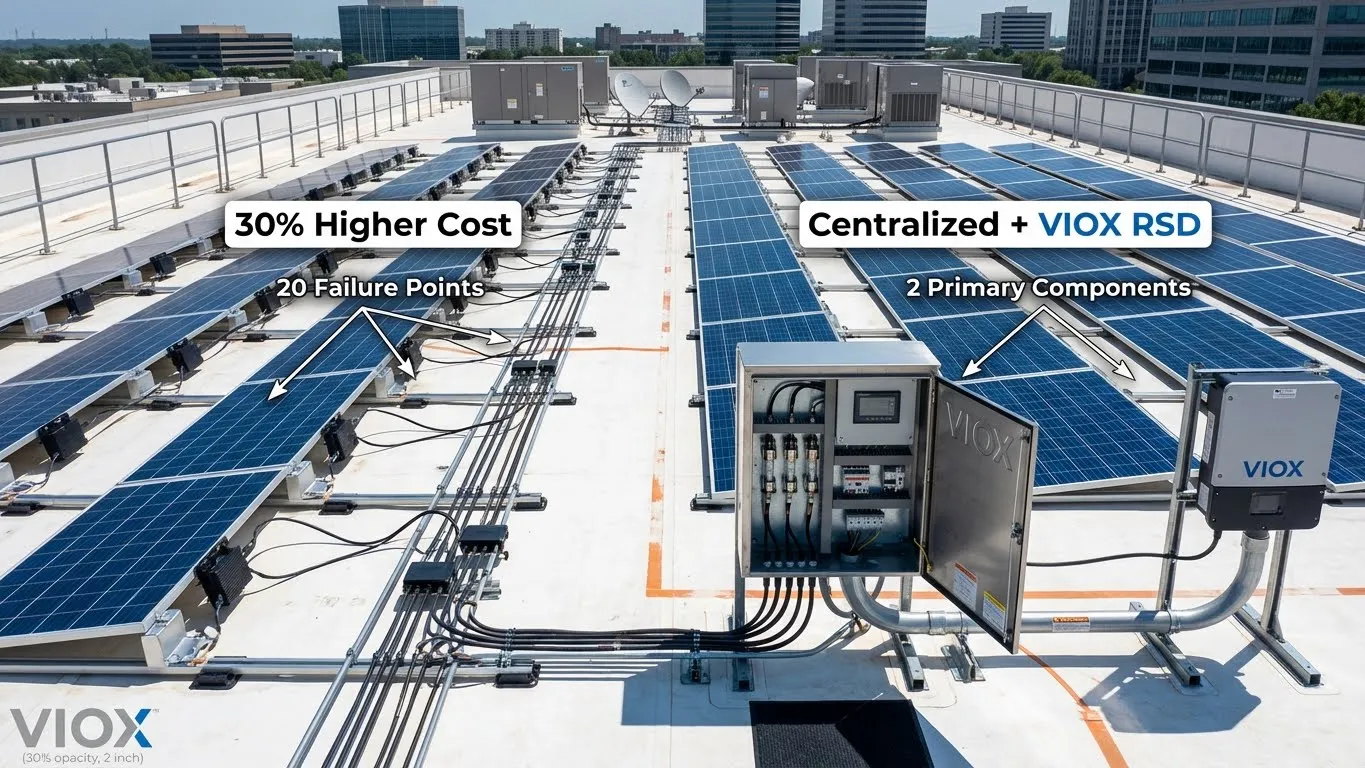
- Increased failure points: 20-module system = 20 potential failure points vs. 1 inverter
- Limited commercial scalability: Installing 400 microinverters on a 150kW system requires 6-8 additional labor hours
- Warranty complexity: tracking serial numbers and RMA processes for hundreds of MLPE units
- Thermal stress: rooftop-mounted electronics face temperature extremes that reduce lifespan
ဟိ distributed vs. centralized photovoltaic comparison reveals that MLPE systems work well for residential installations under 15kW but face diminishing returns on commercial projects above 100kW where cost per watt becomes critical.
Centralized Architecture: String Inverters Without MLPE
Traditional centralized systems connect multiple strings of modules to a single inverter location. This topology dominated commercial solar for decades due to lower hardware costs, higher efficiency ratings (98%+ vs. 96-97% for MLPE), and simplified maintenance.
The pre-2017 advantage:
String inverters cost $0.10-$0.12 per watt installed compared to $0.25-$0.30 for microinverter systems. A 200kW commercial system saved $26,000-$36,000 in hardware costs alone using centralized architecture.
The 2017 NEC challenge:
Module-level rapid shutdown requirements eliminated the viability of pure string inverter systems on rooftop installations. Without MLPE components, string systems cannot reduce voltage to safe levels within the 1-foot array boundary. The industry assumed distributed architecture became mandatory for compliance.
This assumption created a false choice. Solar combiner boxes with integrated rapid shutdown capabilities, combined with string-level shutdown devices, allow centralized architecture to meet NEC 690.12 requirements without deploying MLPE at every module.
The VIOX Solution: String-Level Rapid Shutdown Technology
How Centralized Architecture Achieves Low-Cost Compliance
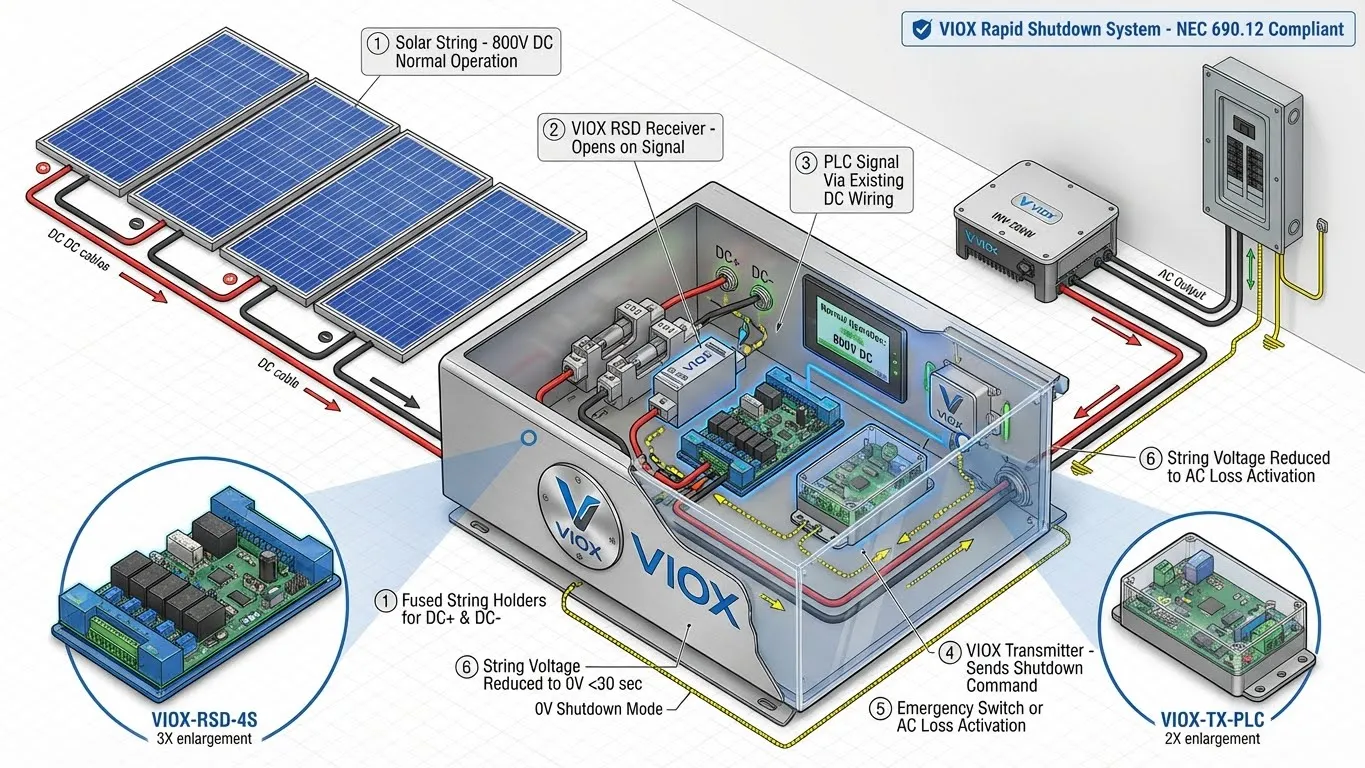
VIOX rapid shutdown devices bridge the gap between string inverter economics and NEC 690.12 requirements. The system architecture includes three components:
- Module-level or dual-module rapid shutdown receiversကြိုးကြောင်းများတစ်လျှောက်ကြားကာလများတွင်တပ်ဆင်ထားသောသေးငယ်သည့်ကိရိယာများ။ အမိုးပေါ်တပ်ဆင်ခြင်းများအတွက် (NEC 690.12 အပြည့်အဝအကျုံးဝင်သောနေရာများ)၊ array နယ်နိမိတ်အတွင်း ≤80V ရရှိရန်အတွက် လက်ခံကိရိယာများကို module-level (module တစ်ခုလျှင်တစ်ခု) သို့မဟုတ် dual/quad-module level (module ၂-၄ ခုလျှင်တစ်ခု) တွင်အသုံးပြုရမည်။ ကြိုး-အဆင့် လက်ခံကိရိယာများ (ကြိုးတစ်ချောင်းလျှင်တစ်ခု) သည် မြေပြင်တပ်ဆင်ခြင်း သို့မဟုတ် သီးခြားဖွဲ့စည်းပုံတပ်ဆင်ခြင်းများအတွက်သာ အလုပ်လုပ်ပြီး Exception No. 2 အတွက် အရည်အချင်းပြည့်မီသည်။.
- PLC-based transmitterinverter အနီးတွင်တပ်ဆင်ထားပြီး၊ ရှိပြီးသား DC ဝါယာကြိုးများမှတဆင့် powerline carrier signal မှတဆင့် shutdown commands များကိုဆက်သွယ်သည်။
- အရေးပေါ်စတင်ခလုတ်အသုံးပြုရလွယ်ကူသောနေရာတွင်ရှိသော အနီရောင်မှိုပုံစံခလုတ်သည် နှိပ်လိုက်သောအခါ သို့မဟုတ် AC ပါဝါပြတ်တောက်သွားသောအခါ transmitter ကိုအစပျိုးပေးသည်။
shutdown စတင်သောအခါ transmitter သည် DC cable များမှတဆင့် signal တစ်ခုပေးပို့သည်။ လက်ခံကိရိယာများသည် ဤ signal ကိုရှာဖွေတွေ့ရှိပြီး relay contacts များကိုဖွင့်ကာ circuit တွင် ရုပ်ပိုင်းဆိုင်ရာပြတ်တောက်မှုကိုဖန်တီးသည်။ ဤလုပ်ဆောင်ချက်သည် ကြိုးဗို့အားကို ၁၀-၃၀ စက္ကန့်အတွင်း သုညသို့လျှော့ချပေးပြီး NEC 690.12 timing လိုအပ်ချက်ထက်ကျော်လွန်သည်။.
MLPE စနစ်များထက် အရေးကြီးသောအကျိုးကျေးဇူး-
VIOX လက်ခံကိရိယာများသည် module တစ်ခုလျှင် $12-$18 ကုန်ကျပြီး power optimizers အတွက် $45-$65 သို့မဟုတ် microinverters အတွက် $85-$120 ကုန်ကျသည်။ dual-module shutdown ကိရိယာများကိုအသုံးပြုသော 100kW စနစ် (300 modules) သည် 75-150 လက်ခံကိရိယာများ (dual-module configuration အတွက် $900-$2,700) လိုအပ်ပြီး 300 MLPE ယူနစ်များ ($13,500-$36,000) လိုအပ်သည်။.
String Inverters များနှင့် စနစ်ပေါင်းစည်းခြင်း
ဟိ ဆိုလာ PV စနစ်များအတွက် DC isolation switches များလိုအပ်သည်။ ၎င်းတို့ကိုအစားထိုးမည့်အစား rapid shutdown ကိရိယာများနှင့် တွဲဖက်အသုံးပြုသည်။ စံစနစ်ဒီဇိုင်းတွင် ပါဝင်သည်-
- String combiners integrated rapid shutdown လက်ခံကိရိယာများနှင့် DC surge protection ပါဝင်သည်။
- Main DC disconnect ပြုပြင်ထိန်းသိမ်းမှုအတွင်း manual isolation အတွက် (rapid shutdown function နှင့်သီးခြား)
- String inverter (SunSpec rapid shutdown protocol နှင့် တွဲဖက်အသုံးပြုနိုင်သော မည်သည့်အမှတ်တံဆိပ်မဆို)
- AC surge protection inverter output တွင် (ဗဟိုချုပ်ကိုင်ထားသောစနစ်များသည် ရိုးရှင်းစေသည်) SPD placement နှင့် sizing)
ဤဖွဲ့စည်းပုံသည် module-level voltage လျှော့ချရေးလိုအပ်ချက်များနှင့်ကိုက်ညီနေစဉ် string inverters များ၏ကုန်ကျစရိတ်အားသာချက်များကိုထိန်းသိမ်းထားသည်။ VIOX combiner box သည် string fuses, surge protection, monitoring circuits နှင့် rapid shutdown control electronics များကို outdoor-rated enclosure တစ်ခုတည်းတွင်ထားရှိခြင်းဖြင့် ပေါင်းစည်းမှတ်အဖြစ်ဆောင်ရွက်သည်။.
အသိအမှတ်ပြုလက်မှတ်နှင့် AHJ လက်ခံမှု
VIOX rapid shutdown စနစ်များသည် UL 1741 PVRSS (Photovoltaic Rapid Shutdown System) အသိအမှတ်ပြုလက်မှတ်ကိုင်ဆောင်ထားပြီး SunSpec Alliance ဆက်သွယ်ရေး protocols များနှင့်ကိုက်ညီသည်။ ဤအသိအမှတ်ပြုလက်မှတ်သည် SMA, Fronius, SolarEdge (string models), Solis, Growatt နှင့် SunSpec rapid shutdown commands များကိုထောက်ပံ့သော အခြားအဓိက string inverter အမှတ်တံဆိပ်များနှင့် တွဲဖက်အသုံးပြုနိုင်ကြောင်းသေချာစေသည်။.
Local Authority Having Jurisdiction (AHJ) လက်ခံမှုသည် သင့်လျော်သောစာရွက်စာတမ်းများပေါ်တွင်မူတည်သည်-
- စနစ်အဆင့် UL စာရင်း string inverter + VIOX RSD ပေါင်းစပ်မှုကိုအတူတကွစမ်းသပ်ထားကြောင်းပြသခြင်း
- တပ်ဆင်ခြင်းလက်စွဲ NEC 690.12(B)(1) နှင့် (B)(2) လိုက်နာမှုကိုသရုပ်ပြခြင်း
- တံဆိပ်ကပ်ခြင်း။ rapid shutdown switch တည်နေရာနှင့် DC equipment တွင် NEC 690.12(D) လိုအပ်ချက်များအရ
- Voltage verification testing အတည်ပြုထားသောတိုင်းတာခြင်းနည်းလမ်းများကို အသုံးပြု၍ နောက်ဆုံးစစ်ဆေးစဉ်အတွင်း
ကွင်းဆင်းအတွေ့အကြုံအရ တပ်ဆင်သူများသည် စာရွက်စာတမ်းအစုံအလင်ကို ပေးသောအခါ 95%+ ပထမစစ်ဆေးမှုအောင်မြင်နှုန်းကိုပြသသည်။ ကျန် 5% သည် အခြေခံစနစ်လိုက်နာမှုမေးခွန်းများထက် labeling အမှားများ သို့မဟုတ် switch အသုံးပြုနိုင်မှုပြဿနာများနှင့် သက်ဆိုင်ပါသည်။.
ကုန်ကျစရိတ်ခွဲခြမ်းစိတ်ဖြာခြင်း- Rapid Shutdown လိုက်နာမှုနောက်ကွယ်မှ အမှန်တကယ်နံပါတ်များ
100kW စီးပွားဖြစ်စနစ်အတွက် အသေးစိတ် BOM နှိုင်းယှဉ်ချက်
| အင်္ဂါရပ်/မက်ထရစ် | ဖြန့်ဝေထားသော (Microinverters/Optimizers) | ဗဟိုချုပ်ကိုင်ထားသော (String + VIOX RSD) | ကုန်ကျစရိတ်ကွာခြားချက် |
|---|---|---|---|
| ကနဦး Hardware ကုန်ကျစရိတ် | $28,000-$32,000 (300 MLPE ယူနစ် @ $93-$107 တစ်ခုလျှင်) | $11,000-$13,500 (inverter $8,000 + combiner $1,200 + RSD $1,800-$4,300) | -60% ($16,500-$18,500 သက်သာခြင်း) |
| တပ်ဆင်ခြင်းလုပ်သားနာရီ | 68-76 နာရီ (MLPE တပ်ဆင်ခြင်း၊ AC trunk cable၊ ဆက်သွယ်မှုအမှတ်များစွာ) | 42-48 နာရီ (string wiring၊ single combiner၊ inverter commissioning) | -35% (26-28 နာရီသက်သာသည်) |
| kW တစ်ခုလျှင် BOM ကုန်ကျစရိတ် | $280-$320/kW | $110-$135/kW | -60% ($170-$185/kW သက်သာခြင်း) |
| စနစ် MTBF | 15-18 နှစ် (MLPE component သက်တမ်း) | 20-25 နှစ် (inverter/combiner သက်တမ်း) | +28% ယုံကြည်စိတ်ချရမှု |
| အာမခံစည်းမျဥ်းများ | 10-25 နှစ် (ထုတ်လုပ်သူအလိုက်ကွဲပြားသည်၊ တစ်ဦးချင်းယူနစ်ခြေရာခံရန်လိုအပ်သည်) | 10 နှစ် inverter + 10 နှစ် RSD စနစ် (အစိတ်အပိုင်းနှစ်ခု) | ရိုးရှင်းသော RMA လုပ်ငန်းစဉ် |
| ပြုပြင်ထိန်းသိမ်းမှုကုန်ကျစရိတ် (နှစ် ၅-၂၅) | $8,500-$12,000 (MLPE အစားထိုး 12-15% ပျက်ကွက်နှုန်း) | $2,800-$4,200 (inverter တစ်ကြိမ်အစားထိုးခြင်း) | -68% ($5,700-$7,800 သက်သာခြင်း) |
| Scalability အဆင့်သတ်မှတ်ချက် | >150kW အတွက် ညံ့ဖျင်းသည် (လုပ်အားအလွန်အကျွံလိုအပ်သည်) | အလွန်ကောင်းမွန်သည် (MW စကေးအထိ မျဉ်းဖြောင့်အတိုင်း တိုးချဲ့နိုင်သည်) | ကြီးမားသော ပရောဂျက်များတွင် 3-5 ဆ ပိုမိုမြန်ဆန်စွာ တပ်ဆင်နိုင်သည် |
| ချို့ယွင်းချက် ဖြစ်နိုင်သည့် အချက်အရေအတွက် | 300 မှတ် (MLPE ယူနစ်တစ်ခုစီသည် သီးခြားစီဖြစ်သည်) | 2-4 မှတ် (Inverter၊ Transmitter၊ Receiver များ) | -98% ချို့ယွင်းမှု ရှုပ်ထွေးခြင်း |
| လိုက်နာမှုအတည်ပြုခြင်း။ | MLPE ယူနစ်တစ်ခုစီကို သီးခြားစမ်းသပ်ပါ သို့မဟုတ် စောင့်ကြည့်စနစ်ကို အသုံးပြုပါ | Combiner တွင် Single-point ဗို့အားစမ်းသပ်ခြင်း + Transmitter signal အတည်ပြုခြင်း | 80% ပိုမိုမြန်ဆန်သော စစ်ဆေးခြင်း |
| အစားထိုးအစိတ်အပိုင်း ရရှိနိုင်မှု | တူညီသော မော်ဒယ်နှင့် ကိုက်ညီရန် လိုအပ်ပြီး ၁၀-၁၅ နှစ်အကြာတွင် ခေတ်မမီတော့သည့် အန္တရာယ်ရှိသည် | စံ Inverter အစားထိုးခြင်း၊ RSD Receiver များသည် မျိုးဆက်အဆက်ဆက် ဖြတ်ကျော်အသုံးပြုနိုင်သည် | ခေတ်မမီတော့သည့် အန္တရာယ်နည်းပါးသည် |
တပ်ဆင်ချိန် နှိုင်းယှဉ်ခြင်း
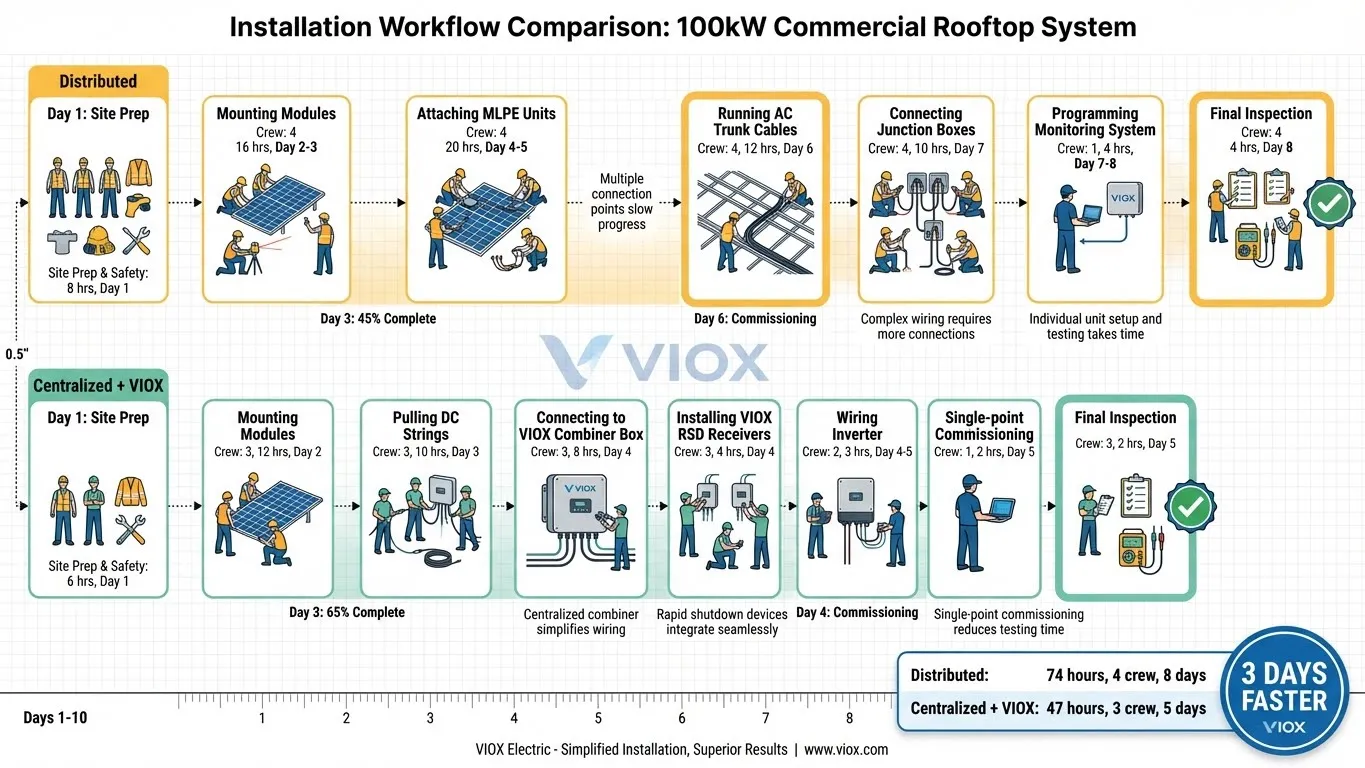
လုပ်အားသည် စီးပွားဖြစ် ပရောဂျက်များတွင် စနစ်ကုန်ကျစရိတ်၏ 40-50% ကို ကိုယ်စားပြုသည်။ ဖြန့်ဝေထားသော တပ်ဆင်ချိန်နှင့် ဗဟိုပြု တပ်ဆင်ချိန် ခွဲခြမ်းစိတ်ဖြာခြင်းသည် ကုန်ကျစရိတ်များကို ဖော်ထုတ်ပေးသည်-
ဖြန့်ဝေထားသော ဗိသုကာ (Microinverter ဥပမာ):
- Module တပ်ဆင်ခြင်း: ၂၀ နာရီ
- MLPE တပ်ဆင်ခြင်းနှင့် ဝါယာကြိုးသွယ်တန်းခြင်း: ၂၈ နာရီ
- AC Trunk Cable တပ်ဆင်ခြင်း: ၁၂ နာရီ
- ချိတ်ဆက်မှု အတည်ပြုခြင်း: ၈ နာရီ
- စနစ် စတင်လည်ပတ်ခြင်း: ၆ နာရီ
- စုစုပေါင်း: 100kW စနစ်အတွက် ၇၄ နာရီ
VIOX RSD ပါရှိသော ဗဟိုပြု ဗိသုကာ:
- Module တပ်ဆင်ခြင်း: ၂၀ နာရီ
- Combiner သို့ String ဝါယာကြိုးသွယ်တန်းခြင်း: ၁၄ နာရီ
- Combiner နှင့် Inverter တပ်ဆင်ခြင်း: ၆ နာရီ
- RSD Receiver တပ်ဆင်ခြင်း: ၃ နာရီ
- စနစ် စတင်လည်ပတ်ခြင်း: ၄ နာရီ
- စုစုပေါင်း: 100kW စနစ်အတွက် ၄၇ နာရီ
လုပ်အားတစ်နာရီလျှင် $65-$85 နှုန်းဖြင့် (Overhead အပါအဝင်) ဗဟိုပြု ဗိသုကာသည် သက်သာစေသည် တပ်ဆင်လုပ်အားတွင် $1,755-$2,295 100kW တစ်ခုလျှင်။ 500kW စီးပွားဖြစ် ပရောဂျက်တစ်ခုတွင် ၎င်းသည် တိုက်ရိုက်လုပ်အား သက်သာမှုတွင် $8,775-$11,475 အထိ ပြောင်းလဲပေးသည်—Rapid Shutdown Hardware ကုန်ကျစရိတ်တစ်ခုလုံးကို လွှမ်းခြုံရန် လုံလောက်သည်။.
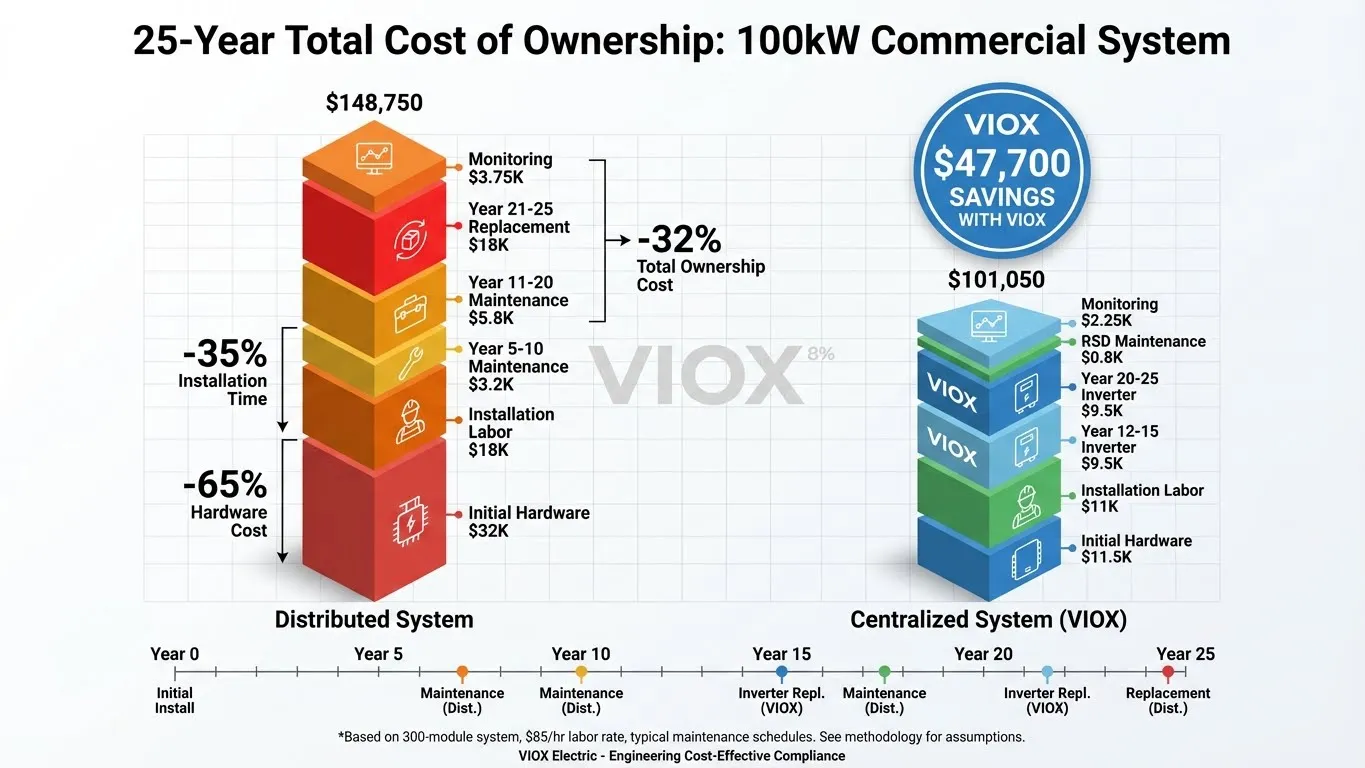
၂၅ နှစ်တာ ပိုင်ဆိုင်မှု စုစုပေါင်းကုန်ကျစရိတ်
ရေရှည် ပြုပြင်ထိန်းသိမ်းမှု ကုန်ကျစရိတ်များသည် စီးပွားရေးအရ အကျိုးအမြတ်ရှိသော ပရောဂျက်များကို ငွေဆုံးရှုံးသည့် တပ်ဆင်မှုများနှင့် ခွဲခြားထားသည်။. သင့်လျော်သော Combiner Box အရွယ်အစား အနာဂတ် တိုးချဲ့မှု ကုန်ကျစရိတ်များကို လျှော့ချပေးသော်လည်း အခြေခံ ဗိသုကာ ရွေးချယ်မှုသည် ပြုပြင်ထိန်းသိမ်းမှု ဝန်ထုပ်ဝန်ပိုးကို ဆုံးဖြတ်ပေးသည်။.
ဖြန့်ဝေထားသော စနစ် ၂၅ နှစ်တာ ကုန်ကျစရိတ် (100kW တစ်ခုလျှင်):
- မူလ တပ်ဆင်ခြင်း: $106,000-$118,000
- နှစ် ၅-၁၀ MLPE အစားထိုးခြင်း (8% ချို့ယွင်းမှု): $3,200
- နှစ် ၁၁-၂၀ MLPE အစားထိုးခြင်း (15% ချို့ယွင်းမှု): $5,800
- နှစ် ၂၁-၂၅ Inverter/MLPE သက်တမ်းကုန်ဆုံးခြင်း: $18,000
- စောင့်ကြည့်စနစ် အခကြေးငွေများ: $3,750
- ၂၅ နှစ်တာ စုစုပေါင်းကုန်ကျစရိတ်: $136,750-$148,750
ဗဟိုပြုစနစ် ၂၅ နှစ်တာ ကုန်ကျစရိတ် (100kW တစ်ခုလျှင်):
- မူလ တပ်ဆင်ခြင်း: $76,000-$82,000
- နှစ် ၁၂-၁၅ Inverter အစားထိုးခြင်း: $9,500
- နှစ် ၂၀-၂၅ ဒုတိယ Inverter အစားထိုးခြင်း: $9,500
- RSD စနစ် ပြုပြင်ထိန်းသိမ်းခြင်း: $800
- စောင့်ကြည့်စနစ် အခကြေးငွေများ: $2,250
- ၂၅ နှစ်တာ စုစုပေါင်းကုန်ကျစရိတ်: $98,050-$104,050
ဗဟိုပြု ဗိသုကာသည် ပေးစွမ်းသည် ပိုင်ဆိုင်မှု စုစုပေါင်းကုန်ကျစရိတ် $38,700-$44,700 သက်သာစေသည် စနစ်သက်တမ်းတစ်လျှောက်—ရေရှည် ကုန်ကျစရိတ်များတွင် ၂၈-၃၀၁TP3T လျှော့ချခြင်း။ စွမ်းဆောင်ရည် အာမခံချက်များဖြင့် EPC ဝန်ဆောင်မှုများကို ပေးဆောင်သော ဖြန့်ဖြူးသူများအတွက် ဤခြားနားချက်သည် ပရောဂျက်များသည် Pro Forma ဘဏ္ဍာရေး ခန့်မှန်းချက်များနှင့် ကိုက်ညီမှုရှိမရှိ ဆုံးဖြတ်ပေးသည်။.
တပ်ဆင်ခြင်းနှင့် ပြုပြင်ထိန်းသိမ်းခြင်း လက်တွေ့စစ်ဆေးခြင်း
လုပ်သားလိုအပ်ချက်များနှင့် အဖွဲ့သားများ၏ စွမ်းဆောင်ရည်
ဖြန့်ဝေထားသော စနစ်များသည် လျှပ်စစ်ကန်ထရိုက်တာများအား တစ်ဦးချင်း ချိတ်ဆက်မှု အမှတ်ရာပေါင်းများစွာကို စီမံခန့်ခွဲရန် လိုအပ်သည်။ Module ၃၀၀ တပ်ဆင်မှုတွင် အဖွဲ့သားများသည်:
- MLPE ယူနစ် ၃၀၀ ကို Racking တွင် တပ်ဆင်ရမည် (Torque သတ်မှတ်ချက်များသည် ထုတ်လုပ်သူအလိုက် ကွဲပြားသည်)
- DC ချိတ်ဆက်မှု ၆၀၀ ပြုလုပ်ရမည် (Module တစ်ခုလျှင် Positive နှင့် Negative)
- AC Trunk Cable များကို ဆွဲယူပြီး Junction Box များကို Module ၁၀-၁၅ ခုတိုင်းတွင် တပ်ဆင်ရမည်
- ထုတ်လုပ်သူအလိုက် သီးခြား စောင့်ကြည့်စနစ်များကို အသုံးပြု၍ စက်ပစ္စည်း ၃၀၀ ကို ပရိုဂရမ်ပြုလုပ်ပြီး အတည်ပြုရမည်
- Warranty ခြေရာခံရန်အတွက် MLPE ယူနစ်တစ်ခုစီကို Serial Number ဖြင့် တံဆိပ်ကပ်ရမည်
VIOX Rapid Shutdown ပါရှိသော ဗဟိုပြုစနစ်များသည် ချိတ်ဆက်မှု အမှတ်များကို ၈၅-၉၀၁TP3T လျှော့ချပေးသည်:
- Module များကို Panel ၁၀-၁၅ ခုပါ String များအဖြစ် ဝါယာကြိုးသွယ်တန်းရမည် (စုစုပေါင်း String ၂၀-၃၀)
- String များကို Combiner Box တွင် အဆုံးသတ်ရမည် (ချိတ်ဆက်မှု အမှတ် ၂၀-၃၀)
- လျင်မြန်စွာပိတ်နိုင်သော လက်ခံကိရိယာများ တပ်ဆင်ပါ (ပုံမှန်အားဖြင့် string-level အတွက် 15-20 ယူနစ် သို့မဟုတ် dual-module လက်ခံကိရိယာများအတွက် 75-150)
- single inverter နှင့် transmitter ကို စတင်အသုံးပြုခြင်း
- combiner တွင် ဗို့အားတိုင်းတာမှုများဖြင့် စနစ်လည်ပတ်မှုကို စစ်ဆေးအတည်ပြုပါ
အတွေ့အကြုံရှိသော အဖွဲ့များသည် ဗဟိုချုပ်ကိုင်မှုစနစ်များတွင် တပ်ဆင်ချိန် 40-50% ပိုမိုမြန်ဆန်ကြောင်း အစီရင်ခံတင်ပြသည်။ ဤထိရောက်မှု အားသာချက်သည် လုပ်သားအင်အား စီမံခန့်ခွဲမှုနှင့် ဆိုက်တွင်း ပို့ဆောင်ရေးသည် ကုန်ကျစရိတ်ကို မြင့်တက်စေသည့် ကြီးမားသော စီးပွားဖြစ် စီမံကိန်းများတွင် ပိုမိုအကျိုးသက်ရောက်စေသည်။.
အာမခံနှင့် အစားထိုးလဲလှယ်မှုဆိုင်ရာ ထည့်သွင်းစဉ်းစားချက်များ
MLPE ထုတ်လုပ်သူများသည် ၁၀-၂၅ နှစ် အာမခံပေးသော်လည်း အစားထိုးလဲလှယ်မှုဆိုင်ရာ ပို့ဆောင်ရေးသည် မမြင်နိုင်သော ကုန်ကျစရိတ်များကို ဖြစ်ပေါ်စေသည်။ microinverter တစ်ခုသည် ၈ နှစ်မြောက်တွင် ပျက်ကွက်ပါက-
- စောင့်ကြည့်စနစ်သည် စွမ်းဆောင်ရည်ညံ့သော module ကို ဖော်ထုတ်သည်
- ကန်ထရိုက်တာသည် ဝန်ဆောင်မှုခေါ်ယူမှုကို စီစဉ်သည် (အနည်းဆုံး ၂ နာရီ အခကြေးငွေ)
- နည်းပညာရှင်သည် အမိုးပေါ်ရှိ သီးခြား panel ကို ရှာဖွေသည်
- microinverter ကို ဝင်ရောက်ကြည့်ရှုနိုင်ရန် module ကို တစ်စိတ်တစ်ပိုင်း ဖြုတ်ရမည်
- အစားထိုးယူနစ်ကို ထုတ်လုပ်သူထံမှ တင်ပို့သည် (၂-၇ ရက် ကြာမြင့်နိုင်သည်)
- တပ်ဆင်မှုအတွက် သဟဇာတဖြစ်သော မော်ဒယ်လ် လိုအပ်သည် (ခေတ်မမီတော့သည့် အန္တရာယ်)
- စောင့်ကြည့်စနစ်ကို နံပါတ်အသစ်ဖြင့် အပ်ဒိတ်လုပ်သည်
ဤလုပ်ငန်းစဉ်သည် လုပ်အားခအပါအဝင် ယူနစ်တစ်ခု အစားထိုးလဲလှယ်မှုအတွက် $180-$320 ကုန်ကျသည်။ ၂၅ နှစ်အတွင်း ပျက်ကွက်မှုနှုန်း ၁၂-၁၅% ဖြင့် ၃၀၀-module စနစ်သည် ပျမ်းမျှအားဖြင့် ၃၆-၄၅ ကြိမ် အစားထိုးလဲလှယ်ရပြီး ဝန်ဆောင်မှုကုန်ကျစရိတ် စုစုပေါင်း $6,480-$14,400 ရှိသည်။.
ဗဟိုချုပ်ကိုင်မှုစနစ် ပျက်ကွက်မှုတွင် အစိတ်အပိုင်းများ နည်းပါးသည်။ Inverter အစားထိုးလဲလှယ်မှု (ပုံမှန်အားဖြင့် ၂၅ နှစ်တွင် တစ်ကြိမ်) သည် 100kW ယူနစ်အတွက် လုပ်အားခအပါအဝင် $2,500-$3,500 ကုန်ကျသည်။ VIOX လျင်မြန်စွာပိတ်နိုင်သော လက်ခံကိရိယာများသည် ရှားရှားပါးပါးသာ ပျက်ကွက်သည် (ပါဝါပြောင်းလဲခြင်းမှ အပူဖိအားမရှိသော relay-based ဒီဇိုင်း) သို့သော် လိုအပ်သည့်အခါ အစားထိုးလဲလှယ်ရန် ၁၅-၂၀ မိနစ် ကြာသည်။.
စီးပွားဖြစ် စီမံကိန်းများအတွက် တိုးချဲ့နိုင်မှု
စီးပွားရေးအခြေအနေသည် 250kW အထက် စီမံကိန်းများတွင် သိသိသာသာ ပြောင်းလဲသွားသည်။ ဖြန့်ဝေထားသော ဗိသုကာပညာသည် MLPE ယူနစ်များနှင့် ချိတ်ဆက်မှတ်များတွင် အချိုးကျ တိုးမြှင့်ရန် လိုအပ်သည်—500kW စနစ်တစ်ခုသည် microinverter ၁,၅၀၀ နှင့် ဆက်စပ်ဝါယာကြိုးများ လိုအပ်သည်။ တပ်ဆင်ရေးလုပ်အားသည် မျဉ်းဖြောင့်အတိုင်း တိုးလာပြီး ဗဟိုချုပ်ကိုင်မှုစနစ်များအတွက် ၈၅-၉၅ နာရီနှင့် နှိုင်းယှဉ်ပါက ၁၅၀-၁၈၀ လုပ်အားနာရီ ဖြစ်ပေါ်စေသည်။.
ကြီးမားသော စီးပွားဖြစ် စီမံကိန်းများသည် လျှပ်စစ်ပစ္စည်းများကို စုစည်းနိုင်စွမ်းရှိသော ဗဟိုချုပ်ကိုင်မှု ဗိသုကာပညာမှ အကျိုးကျေးဇူး ရရှိသည်။ VIOX လျင်မြန်စွာပိတ်နိုင်သော စနစ်ကို အသုံးပြုထားသည့် 1MW အမိုးပေါ် တပ်ဆင်မှုတွင် အောက်ပါတို့ ပါဝင်နိုင်သည်-
- 4× 250kW string inverters
- 2× ကြီးမားသော combiner boxes (တစ်ခုလျှင် strings ၄၀-၆၀)
- 2× လျင်မြန်စွာပိတ်နိုင်သော transmitters
- 200-250 string-level သို့မဟုတ် 600-750 dual-module လျင်မြန်စွာပိတ်နိုင်သော လက်ခံကိရိယာများ
ဤဖွဲ့စည်းပုံသည် အရေးကြီးသော အစိတ်အပိုင်း ၁၀ ခုအောက်သို့ ပျက်ကွက်မှတ်များကို လျှော့ချပေးပြီး NEC 690.12 နှင့်အညီ အပြည့်အဝ ထိန်းသိမ်းထားသည်။ ရိုးရှင်းသော ဒီဇိုင်းသည် ပြဿနာဖြေရှင်းခြင်းကို ပိုမိုမြန်ဆန်စေပြီး တိုးချဲ့ရန် ပိုမိုလွယ်ကူစေကာ အစိတ်အပိုင်းအရေအတွက် လျော့နည်းသောကြောင့် အာမခံကုန်ကျစရိတ် သက်သာစေသည်။.
ဗိသုကာပညာတစ်ခုစီကို ဘယ်အချိန်မှာ ရွေးချယ်သင့်လဲ- ရိုးသားသော လမ်းညွှန်မှု
ဗဟိုချုပ်ကိုင်မှု + VIOX RSD အတွက် အကောင်းဆုံး အခြေအနေများ
လျင်မြန်စွာပိတ်နိုင်သော VIOX ဗဟိုချုပ်ကိုင်မှု ဗိသုကာပညာသည် အောက်ပါလက္ခဏာများရှိသော စီမံကိန်းများတွင် အမြင့်ဆုံး ROI ကို ပေးသည်-
အကောင်းဆုံး အသုံးချနိုင်သော အရာများ-
- ပွင့်လင်းသော စီးပွားဖြစ် အမိုးများ HVAC ပစ္စည်းများ၊ parapets သို့မဟုတ် အနီးအနားရှိ အဆောက်အဦများမှ အရိပ်အနည်းငယ်သာ ရှိခြင်း
- ဆောက်လုပ်ရေးအသစ် ဒီဇိုင်းအဆင့်တွင် အမိုးပုံစံကို အကောင်းဆုံးဖြစ်အောင် ပြုလုပ်နိုင်သည့်နေရာ
- ကြီးမားသော စီမံကိန်းများ (>100kW) လုပ်သားအင်အား ထိရောက်မှုသည် စုစုပေါင်းကုန်ကျစရိတ်ကို မောင်းနှင်သည့်နေရာ
- ဘတ်ဂျက်ကို အာရုံခံစားနိုင်သော စီမံကိန်းများ ရှေ့တန်းကုန်ကျစရိတ်သည် ငွေကြေးထောက်ပံ့မှု အတည်ပြုချက်ကို အဓိက သက်ရောက်သည့်နေရာ
- Utility-scale သို့မဟုတ် မြေပြင်တွင် တပ်ဆင်ခြင်း Exception No. 2 အသုံးပြုနိုင်သည့် တပ်ဆင်မှုများ
စွမ်းဆောင်ရည် အခြေအနေများ-
- array ပေါ်တွင် <5% နှစ်စဉ် အရိပ်ရမှုရှိသော ဆိုက်များသည် string inverter ထိရောက်မှု အားသာချက်များကို အမြင့်ဆုံးဖြစ်စေသည်
- ရှုပ်ထွေးသော အမိုးပုံသဏ္ဍာန်များ (ချိုင့်ဝှမ်းများ၊ dormers များ၊ ဦးတည်ချက်အမျိုးမျိုး) မရှိသော တညီတညွတ်တည်းရှိသော အမိုးမျက်နှာပြင်များ
- array တစ်ခုလုံးတွင် တသမတ်တည်းရှိသော module ဦးတည်ချက်နှင့် စောင်းခြင်း
ဖြန့်ဝေထားသော ဗိသုကာပညာသည် အဓိပ္ပာယ်ရှိသည့်အခါ
MLPE စနစ်များ (microinverters/optimizers) သည် သီးခြားအခြေအနေများတွင် အမှန်တကယ် အားသာချက်များ ပေးစွမ်းနိုင်ကြောင်း ကျွန်ုပ်တို့ အသိအမှတ်ပြုပါသည်။
ရှုပ်ထွေးသော တပ်ဆင်မှုများတွင် MLPE အားသာချက်များ-
- အရိပ်ထူထပ်သော အခြေအနေများ: HVAC ယူနစ်များ၊ ဂြိုလ်တုပန်းကန်များ သို့မဟုတ် သစ်ပင်အရိပ်များရှိသော အမိုးများသည် module-level MPPT မှ အကျိုးကျေးဇူးရရှိပြီး string inverters ဆုံးရှုံးနိုင်သည့် 8-15% ထုတ်လုပ်မှုကို ပြန်လည်ရရှိနိုင်သည်
- အမိုးမျက်နှာပြင်များစွာ: မတူညီသော မျက်နှာပြင်များပေါ်တွင် အရှေ့/အနောက်/တောင်ဘက်သို့ မျက်နှာမူထားသော array များပါရှိသော လူနေအိမ် သို့မဟုတ် ရှုပ်ထွေးသော စီးပွားဖြစ် အဆောက်အဦများ
- အဆင့်လိုက် တိုးချဲ့ခြင်း: strings တစ်ခုလုံးကို ပြန်လည်ဝါယာကြိုးမလိုဘဲ အနာဂတ်တွင် စွမ်းဆောင်ရည်များ ထပ်တိုးရန် ဒီဇိုင်းထုတ်ထားသော စနစ်များ
- Module-level စောင့်ကြည့်ရေး လိုအပ်ချက်များ: granular ချို့ယွင်းချက်ကို ရှာဖွေတွေ့ရှိခြင်းသည် စောင့်ကြည့်ရေး ပရီမီယံကို မျှတစေသည့်အခါ
ရိုးသားသော တွက်ချက်မှု-
အရိပ်ထူထပ်သော 100kW စီးပွားဖြစ်ဆိုက်တစ်ခုတွင် (>15% အရိပ်ရမှု)၊ MLPE ထုတ်လုပ်မှု အကျိုးအမြတ် 12,000-18,000 kWh နှစ်စဉ် ($1,320-$1,980/နှစ်) သည် ၁၅-၂၀ နှစ်အတွင်း ရှေ့တန်းကုန်ကျစရိတ် မြင့်မားခြင်းကို ချေဖျက်နိုင်သည်။ ဤသီးခြားအသုံးချမှုများအတွက် ဖြန့်ဖြူးသူများသည် အနိမ့်ဆုံး BOM ကုန်ကျစရိတ်သို့ မရောက်ရှိမီ စီမံကိန်း စီးပွားရေးတစ်ခုလုံးကို အကဲဖြတ်သင့်သည်။.
VIOX အကြံပြုချက် မူဘောင်
အောက်ပါအခြေအနေများတွင် VIOX ဗဟိုချုပ်ကိုင်မှု RSD ကို ရွေးချယ်ပါ-
- နှစ်စဉ် အရိပ်ရမှု သက်ရောက်မှု <5% (ပွင့်လင်းသော အမိုး၊ အတားအဆီး အနည်းဆုံး)
- စီမံကိန်းအရွယ်အစား >100kW (လုပ်သားအင်အား ထိရောက်မှု ပေါင်းစပ်သည်)
- ဝယ်ယူသူသည် အနိမ့်ဆုံး TCO နှင့် ရိုးရှင်းသော ပြုပြင်ထိန်းသိမ်းမှုကို ဦးစားပေးသည်
အောက်ပါအခြေအနေများတွင် MLPE အခြားရွေးချယ်စရာများကို ထည့်သွင်းစဉ်းစားပါ-
- အရိပ်ခွဲခြမ်းစိတ်ဖြာမှုအရ တစ်စိတ်တစ်ပိုင်း အရိပ်ရမှုမှ နှစ်စဉ် ဆုံးရှုံးမှု >10% ကို ပြသသည်
- အမိုး ဦးတည်ချက်အမျိုးမျိုးသည် သီးခြား MPPT လိုအပ်သည်
- ဝယ်ယူသူသည် module-level စောင့်ကြည့်မှုကို အထူးတောင်းဆိုသည်
ဤရိုးသားသော အကဲဖြတ်ချက်သည် စီမံကိန်းတစ်ခုစီတွင် ဗိသုကာပညာတစ်ခုတည်းကို အတင်းအကျပ်မခိုင်းစေဘဲ အမှန်တကယ် ဆိုက်အခြေအနေများနှင့် ကိုက်ညီသော မှန်ကန်သော ဖြေရှင်းနည်းကို ရွေးချယ်ခြင်းဖြင့် ရေရှည် ဖြန့်ဖြူးသူ ဆက်ဆံရေးကို တည်ဆောက်သည်။.
မကြာခဏမေးမေးခွန်းများ
How do I verify Rapid Shutdown Compliance during final inspection?
Verification follows a three-step process: (1) Confirm all equipment holds appropriate UL certifications (UL 1741 PVRSS for shutdown devices, UL 1741 for inverters), (2) Activate the rapid shutdown initiation switch and measure voltage at controlled conductors using a qualified multimeter—readings must show ≤80V inside array boundary and ≤30V outside boundary within 30 seconds, (3) Verify proper labeling at shutdown switch location and DC disconnect indicating system complies with NEC 690.12. Inspectors typically accept manufacturer certification documentation plus voltage test results recorded during commissioning.
Can I retrofit existing string inverter systems with VIOX rapid shutdown devices?
Yes, retrofit installations work on most string inverter systems installed after 2010. VIOX rapid shutdown systems use SunSpec-compliant communication protocols compatible with major inverter brands. Retrofit process involves: (1) Install rapid shutdown receivers at module level or string level depending on configuration needed, (2) Mount transmitter near existing inverter and connect to AC output for power, (3) Install emergency initiation switch in readily accessible location, (4) Commission system and verify voltage reduction timing. Typical retrofit costs $0.08-$0.15 per watt, significantly lower than converting to MLPE systems which would require complete equipment replacement.
What happens if the VIOX transmitter fails—does the system remain energized?
No. VIOX rapid shutdown systems employ fail-safe design principles. Receivers continuously monitor for the presence of the PLC signal transmitted by the control unit. If signal stops (due to transmitter failure, AC power loss, or intentional shutdown activation), receivers automatically open relay contacts and de-energize strings. This “dead man switch” approach ensures safety even during equipment failures. Additionally, the transmitter itself includes redundant circuitry and diagnostic LEDs that alert installers to malfunctions during commissioning or routine maintenance.
Do all local AHJs accept string-level rapid shutdown or do some require module-level?
NEC 690.12 specifies voltage reduction requirements but does not mandate specific technology. String-level and module-level rapid shutdown both achieve compliance as long as they reduce voltage to safe levels (≤80V inside boundary, ≤30V outside) within required timing (30 seconds). Some AHJs initially expressed preference for MLPE due to familiarity, but as string-level solutions gained UL certification and field deployment experience, acceptance increased to near-universal levels. Key to AHJ approval: provide system-level certification documentation showing string inverter + rapid shutdown device combination tested together per UL 1741 requirements. VIOX maintains updated compatibility lists showing certified inverter combinations for common AHJ requirements.
What warranty coverage applies to rapid shutdown components vs. the inverter?
Inverter manufacturers typically offer 5-10 year standard warranties (extended to 20-25 years with paid warranty upgrades). VIOX rapid shutdown devices carry 10-year warranty coverage on transmitters and receivers. This separation means warranty claims follow two paths: inverter issues go through inverter manufacturer RMA process, rapid shutdown issues go through VIOX technical support. In practice, this dual-warranty structure causes fewer problems than MLPE warranties because failure rates on rapid shutdown devices remain below 1% over 10 years (simple relay-based design with minimal thermal stress), while inverter failures occur at predictable 10-15 year intervals. Warranty service for VIOX components typically ships replacement units within 2-3 business days versus 5-10 days for MLPE replacements due to simplified inventory requirements.
Does string-level rapid shutdown impact system energy production compared to optimizers?
String-level rapid shutdown devices introduce zero production losses during normal operation because they function as pass-through connections with <0.5% voltage drop. Power optimizers cause 2-3% conversion losses even during optimal operation due to DC-DC conversion inefficiency. On a 100kW system producing 140,000 kWh annually, optimizers lose 2,800-4,200 kWh per year ($308-$462 at $0.11/kWh) compared to string-level shutdown’s negligible losses.
However, this calculation only applies to unshaded installations. On partially shaded rooftops (common in commercial buildings with HVAC equipment), optimizers provide 5-15% harvest improvement through module-level MPPT that can offset their conversion losses. Site-specific shading analysis determines which architecture delivers better lifetime production. On open commercial rooftops without significant obstructions (approximately 70% of commercial solar installations), centralized systems with VIOX rapid shutdown deliver superior energy production and lower costs. For shaded sites, run a detailed shading study comparing architectures before recommending a solution.
How does rapid shutdown interact with battery storage systems?
Battery energy storage systems (BESS) connected to PV arrays require special consideration for rapid shutdown integration. The PV array rapid shutdown function must de-energize DC conductors leading to the inverter/charger while maintaining battery isolation separately. VIOX rapid shutdown systems integrate with hybrid inverters by: (1) Treating PV input and battery input as separate controlled circuits, (2) Ensuring PV rapid shutdown activation does not trigger battery shutdown (batteries must remain available for backup power), (3) Coordinating with battery management systems (BMS) to prevent fault conditions during rapid shutdown events. Most hybrid inverter manufacturers provide integration guides showing proper rapid shutdown wiring for PV+battery configurations. Critical point: rapid shutdown requirements under NEC 690.12 apply only to PV system conductors, not battery circuits which fall under separate code articles (706 for energy storage).
Next Steps for Distributors and EPCs:
Contact VIOX technical sales to receive project-specific BOM comparisons, AutoCAD drawings showing rapid shutdown integration with your preferred inverter brand, and sample AHJ approval documentation packages. Our engineering team provides pre-sales support including voltage drop calculations, string sizing verification, and NEC 690.12 compliance certification for your jurisdiction.
VIOX Electric manufactures rapid shutdown devices, combiner boxes, surge protection, and related BOS components at ISO 9001-certified facilities with UL/IEC testing capabilities. Distributor programs include technical training, co-marketing support, and competitive volume pricing for EPCs managing multiple commercial projects annually.