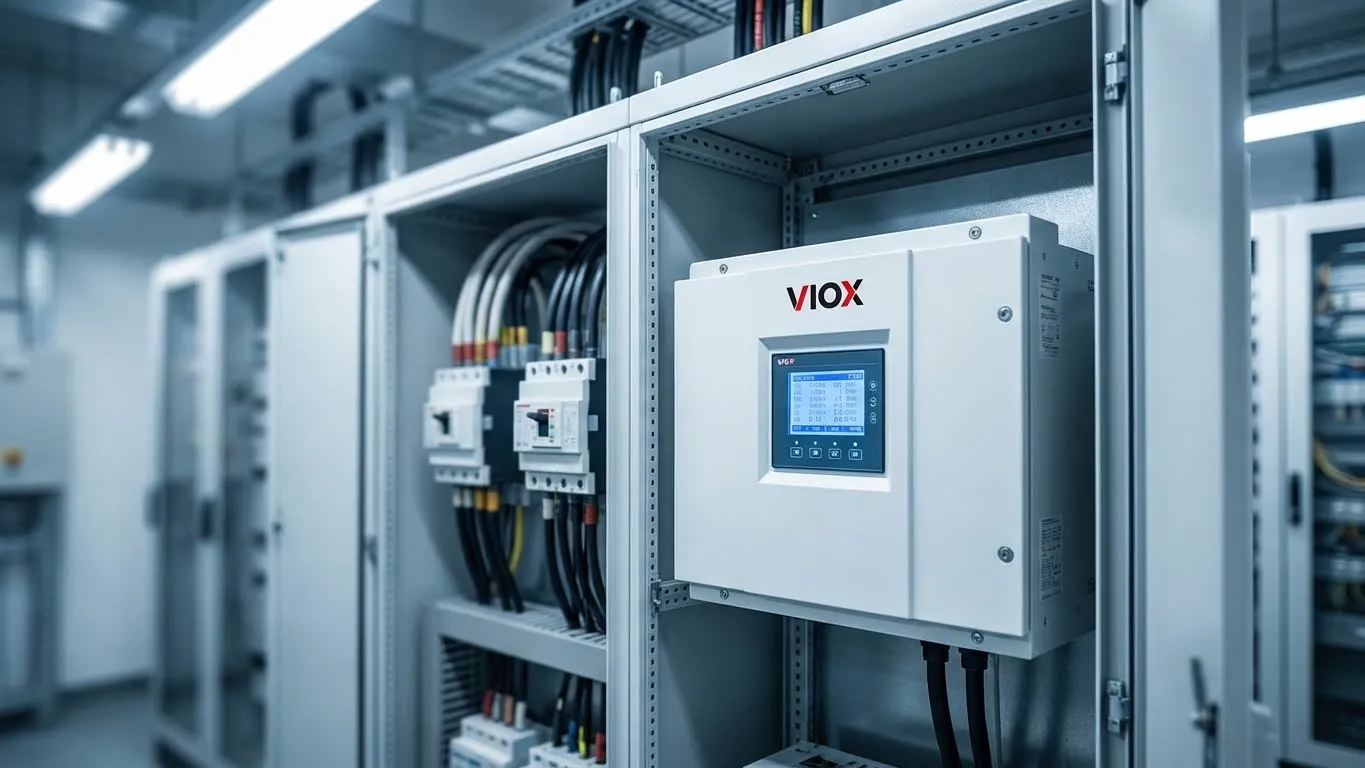
In the world of backup power, most specifiers obsess over amperage ratings or enclosure types. However, the most critical factor determining whether your facility experiences a seamless handover or a disruptive reboot lies in the switching logic: Open Transition vs. Closed Transition.
For panel builders and facility managers, understanding the distinction between “Break-Before-Make” နှင့် “Make-Before-Break” is not just about terminology—it is about preventing equipment damage, ensuring safety compliance, and optimizing project costs.
This guide analyzes the technical differences, operational risks, and ideal applications for both transition types to help you specify the right အလိုအလျောက်လွှဲပြောင်းခလုတ် (ATS) ကိုရွေးချယ်ရာတွင် ကျွန်ုပ်တို့၏အဖွဲ့သည် သင့်အားကူညီရန် အဆင်သင့်ရှိပါသည်။.
What is Open Transition Transfer? (Break-Before-Make)
Open Transition is the industry standard for over 90% of ATS applications. As the name suggests, this logic physically opens the connection to the primary power source before it closes the connection to the backup source.
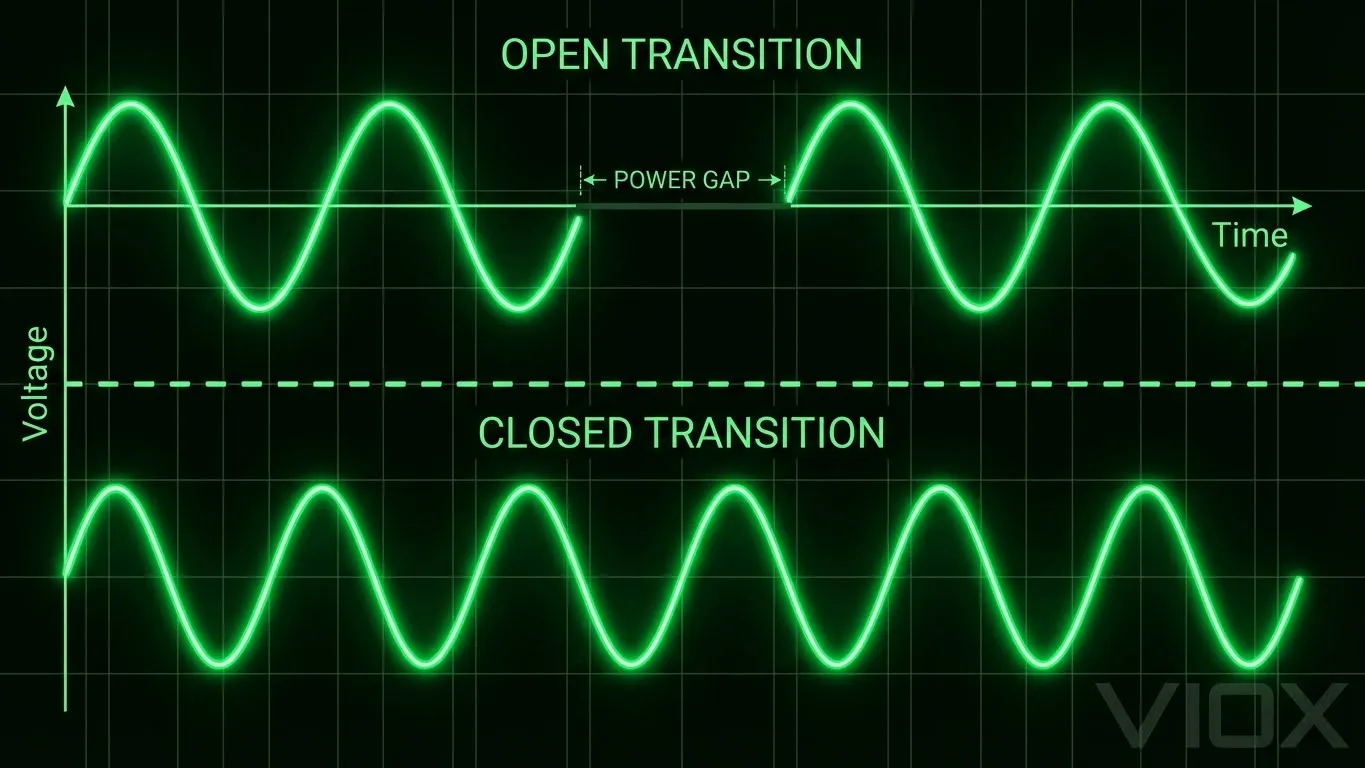
In engineering terms, this is a “Break-Before-Make” sequence. There is a specific moment in time—known as the “dead band” or “off time”—where the load is disconnected from both sources. During this interval, the load experiences a momentary loss of power.
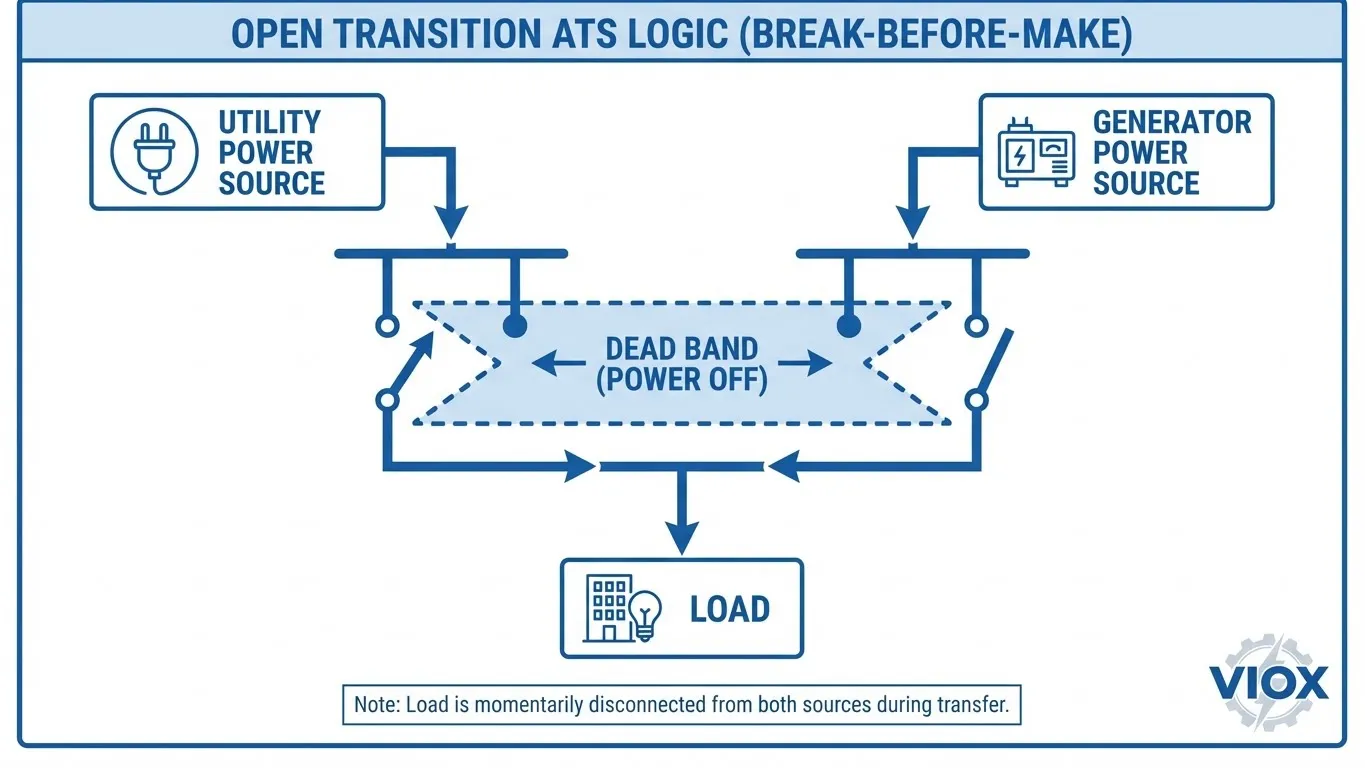
While “power loss” sounds negative, Open Transition is actually the safest and most robust method for general applications because it guarantees that the utility feed and the generator feed are never connected simultaneously. This eliminates the risk of back-feeding or short circuits without the need for complex synchronization.
Open Transition typically comes in two variations depending on your load type:
1. Standard Open Transition (In-Phase)
This is the most common configuration. The ATS controller monitors the phase angle of both sources. Once the generator is up to speed and the phases are roughly aligned, the switch flips rapidly from Source A to Source B.
- Duration: The interruption typically lasts less than 100 milliseconds (depending on the mechanical structure of the ATS like PC Class vs. CB Class).
- အတွက် အကောင်းဆုံး Resistive loads like lighting, heating, and general office circuits where a blink in the lights is acceptable.
2. Delayed Open Transition (Programmed Transition)
For industrial applications involving large motors (pumps, fans, compressors), a standard fast switch can be dangerous. When a spinning motor is disconnected, it generates residual voltage (Back EMF). If the ATS reconnects the motor to the new power source too quickly while it is out of phase, the resulting torque shock can snap drive shafts or strip gears.
Delayed Open Transition solves this by introducing a deliberate pause (usually adjustable from seconds to minutes) in the “Off” (neutral) position.
- အဆိုပါယုတ္တိ: Disconnect Source A → Wait in Neutral (allow motor field to decay) → Connect Source B.
- အတွက် အကောင်းဆုံး HVAC systems, water treatment plants, and industrial manufacturing lines.
What is Closed Transition Transfer? (Make-Before-Break)
For mission-critical facilities where even a 20-millisecond power blink is unacceptable, Closed Transition is the engineering solution of choice. Unlike Open Transition, Closed Transition logic utilizes a “Make-Before-Break” sequence.
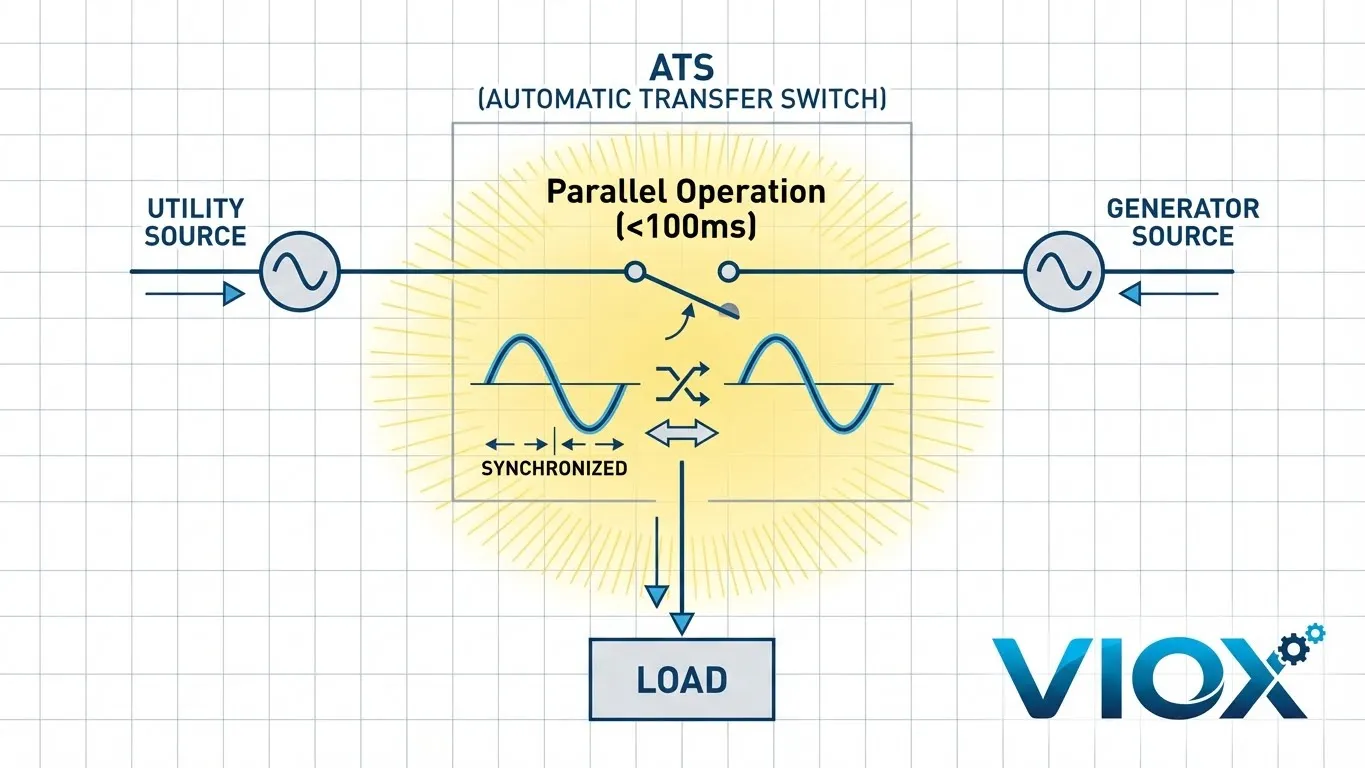
The ATS controller synchronizes the backup generator with the utility grid and momentarily connects both sources in parallel before disconnecting the primary source.
The “Zero Interruption” Mechanism
During the transfer, there is a brief overlap (typically less than 100 milliseconds) where the electrical load is supplied by both the utility and the generator simultaneously. Because the circuit is never broken, downstream loads see zero interruption. Lights do not flicker, and sensitive medical or IT equipment continues running without needing a UPS ride-through.
The Critical Role of Synchronization
Closed Transition is not as simple as just closing two switches. If you connect two unsynchronized power sources, the result can be catastrophic damage to the generator and switchgear. Before the ATS “Makes” the connection, the controller must actively monitor and match three parameters between the Utility and the Generator:
- ဗို့အားကွာခြားချက်- Must be within ±5%.
- Frequency Difference: Must be within ±0.2 Hz.
- Phase Angle: Must be within ±5 electrical degrees.
Why Fault Current Ratings Matter
During the brief moment when both sources are paralleled, the potential short-circuit current doubles (Utility current + Generator current). Therefore, the ATS and downstream protection must have a sufficient SCCR (ဝါယာရှော့ဖြစ်ပေါ်မှုကြောင့် စီးဝင်နိုင်သောလျှပ်စီးပမာဏ အဆင့်သတ်မှတ်ချက်) to handle this potential energy burst.
Side-by-Side Comparison: Open vs. Closed Transition
To help you decide which logic fits your single-line diagram, here is a direct comparison of the technical characteristics.
| အင်္ဂါ | အကူးအပြောင်းကိုဖွင့်ပါ (Break-Before-Make) | Closed Transition (မချိုးမီ ပြုလုပ်ပါ) |
|---|---|---|
| Switching Sequence | Break Source A → Wait → Make Source B | Make Source B (Parallel) → Break Source A |
| ပါဝါပြတ်တောက်ခြင်း။ | Yes (Approx. 30ms – 100ms) | No (0ms) |
| Synchronization | Not Required (In-phase monitor optional) | Mandatory (Active Sync Check) |
| Utility Approval | Generally Not Required | Strictly Required |
| စက်ပစ္စည်းကုန်ကျစရိတ် | Low / Standard | High (30% – 50% premium) |
| ရှုပ်ထွေးမှု | Low (Plug & Play) | High (Requires commissioning) |
| Safety Failure Mode | Fails to transfer | Reverts to Open Transition |
| Ideal For | Residential, Commercial, Industrial Motors | Hospitals, Data Centers, Grid-Interactive Gen |
Selection Guide: Choosing the Right Logic for Your Application
Selecting between Open and Closed transition is not just about budget; it is about matching the switch capabilities to your load’s tolerance. Here is a quick decision framework:
1. Residential & Light Commercial → Choose Open Transition
For homes, small offices, and retail stores, the cost of Closed Transition (and the headache of utility paperwork) is rarely justified. A 1-second power blink when the generator takes over is a minor inconvenience, not a critical failure.
2. Industrial Manufacturing → Choose Delayed Open Transition
If your facility runs large inductive loads like pumps, chillers, or conveyor belts, standard fast switching is dangerous. You do not necessarily need Closed Transition. Instead, specify an Open Transition ATS with a programmable center-off delay (Neutral position delay) to allow motors to coast down safely.
3. Healthcare & Data Centers → Choose Closed Transition
For Tier 3/4 data centers, operating theaters, or intensive care units, power quality is paramount. Even though UPS systems handle the gap, the ability to test generators under load without any risk of disruption makes Closed Transition the gold standard.
Engineer’s Note: Do not confuse Closed Transition with a Static Transfer Switch (STS). While Closed Transition is seamless, it is still a mechanical switching process. For ultra-sensitive IT loads that cannot tolerate even the micro-vibrations of mechanical contact movement, you should consider a Static Transfer Switch. Read our detailed comparison of ATS vs. STS here.
Mechanical Structure Matters: Logic vs. Hardware
It is important to remember that “Open” or “Closed” transition refers only to the operational sequence (the software logic). You still need to choose the right mechanical hardware to execute that sequence. An ATS can be built using two main mechanical types:
- PC Class (Solenoid/One-piece): High durability, faster switching, designed purely for transfer.
- CB Class (Circuit Breaker based): Includes overcurrent protection but acts as the switching mechanism.
If you are unsure which mechanical structure supports your required transition logic, you should review the fundamental hardware differences first: Read the Guide: PC Class vs. CB Class ATS Selection Guide.
Why VIOX ATS Solutions Ensure Reliable Switching
Whether you choose Open or Closed transition, the physical moment of transfer creates stress on the electrical contacts. At VIOX, we engineer our Automatic Transfer Switches to withstand high-stress switching categories (AC-33A/B):
- Silver Alloy Contacts: We use high-grade silver contacts to minimize contact resistance and prevent welding during high-current transfers.
- Advanced Arc Extinguishing: Our arc chutes are designed to rapidly cool and dissipate the electrical arc generated during Open Transition “breaking,” significantly extending the lifespan of the switch.
- Modular Control: VIOX controllers offer adjustable delay timers, allowing you to turn a standard ATS into a “Delayed Transition” unit for motor protection without buying custom hardware.
သော့ထုတ်ယူမှုများ
- Open Transition (Break-Before-Make): The most common and cost-effective method. It briefly disconnects the load from the utility before connecting to the generator, causing a momentary power outage.
- Closed Transition (Make-Before-Break): A seamless transfer method where both power sources operate in parallel for less than 100ms. It requires precise synchronization and is ideal for critical testing.
- Delayed Transition is Crucial for Motors: For industrial pumps and HVAC, always use Open Transition with a “programmed delay” to prevent mechanical damage from Back EMF.
- အသုံးဝင်မှု အတည်ပြုချက်: Closed Transition typically requires permission from your local utility company due to the momentary parallel connection to the grid.
FAQ: Common Questions About ATS Transition Types
Q: Can I use Open Transition for a hospital?
A: Yes, but only for non-life-safety branches or if backed up by a UPS (Uninterruptible Power Supply). However, Closed Transition is preferred for the ability to test generators without interrupting hospital operations.
Q: Does Closed Transition eliminate the need for a UPS?
A: Not entirely. Closed Transition prevents outages during planned transfers (like testing). However, during an unplanned blackout, the generator still needs time to start up (usually 10 seconds). You still need a UPS to bridge that startup gap.
Q: Is Closed Transition safer than Open Transition?
A: In terms of electrical isolation, Open Transition is safer because the two sources never touch. Closed Transition introduces the risk of fault currents if synchronization fails, which is why it requires more advanced protection relays.
Q: What happens if a Closed Transition ATS fails to synchronize?
A: High-quality ATS units, like those from VIOX, have a fail-safe mode. If they cannot sync within a specific time, they will force a standard Open Transition transfer to ensure the load still gets power, even if it means a momentary blink.
နိဂုံး
The choice between ပွင့်လင်းသော အသွင်ကူးပြောင်းမှု နှင့် ပိတ်ထားသော အသွင်ကူးပြောင်းမှု comes down to one question: Can your facility tolerate a sub-second power interruption?
- If ဟုတ်သည်။ (and you want to save cost and complexity): Stick with ပွင့်လင်းသော အသွင်ကူးပြောင်းမှု. For motor loads, ensure you program a delay.
- If မဟုတ်ဘူး (and you need to test generators seamlessly): Invest in ပိတ်ထားသော အသွင်ကူးပြောင်းမှု, but be prepared for utility approvals and higher upfront costs.
Still unsure which transition logic fits your project specs? Contact VIOX’s technical support team today. We can review your Single Line Diagram (SLD) and recommend the most cost-effective ATS solution that guarantees safety and compliance.