သော့ထုတ်ယူမှုများ
- စံအကွာအဝေး: 20-amp breaker ပေါ်ရှိ 12/2 ဝါယာကြိုးသည် လုံခြုံစွာ လည်ပတ်နိုင်သည် 50-60 ပေ NEC မှ အကြံပြုထားသော 3% ဗို့အားကျဆင်းမှုကို ထိန်းသိမ်းထားစဉ်တွင် ဝန်အပြည့်ဖြင့်
- အများဆုံးလုံခြုံသောအကွာအဝေး: အထိ 93 ပေ 240V တွင် 3% ဗို့အားကျဆင်းမှုနှင့် ဖြစ်နိုင်သော်လည်း 50-57 ပေ 120V တွင်
- ဝန်သည်အရေးကြီးသည်: အမှန်တကယ်အသုံးပြုနိုင်သောအကွာအဝေးသည် ချိတ်ဆက်ထားသောဝန်ပေါ်တွင် များစွာမူတည်သည်—အမ်ပီယာနည်းလေလေ အကွာအဝေးပိုရှည်လေလေဖြစ်သည်။
- ဘေးကင်းရေးအရေးကြီးသည်: အကြံပြုထားသောအကွာအဝေးထက်ကျော်လွန်ပါက၊ fault loop impedance တိုးလာပြီး short circuit များအတွင်း circuit breaker များ ခရီးထွက်ခြင်းမှ ကာကွယ်နိုင်သည်
- အဆင့်မြှင့်တင်ရေးစည်းမျဉ်း: 20 amps တွင် ပေ 60 ထက်ကျော်လွန်သော အပြေးများအတွက် 10 AWG သို့ အဆင့်မြှင့်တင်ပါ။ ပေ 100+ အတွက် 8 AWG ဝါယာကြိုးကို ထည့်သွင်းစဉ်းစားပါ။
ကန့်သတ်ချက်နှစ်ခုကို နားလည်ခြင်း- Ampacity vs. Voltage Drop
လျှပ်စစ်ပညာရှင်များနှင့် အင်ဂျင်နီယာများသည် 20-amp breaker တွင် 12/2 ဝါယာကြိုးကို မည်မျှအထိ အသုံးပြုနိုင်သည်ကို ဆွေးနွေးသောအခါ၊ ၎င်းတို့သည် အမှန်တကယ်ကိုင်တွယ်ဖြေရှင်းနေကြသည်။ လုံးဝကွဲပြားခြားနားသောကန့်သတ်ချက်နှစ်ခု:
အပူကန့်သတ်ချက် (Ampacity)
NEC ဇယား 310.16 အရ၊, 12 AWG ကြေးနီဝါယာကြိုးသည် 20 amperes အတွက် အဆင့်သတ်မှတ်ထားသည်။ 60°C တွင်နှင့် 90°C တွင် 25 amperes (THHN/THWN-2 insulation အတွက်)။ ဤအဆင့်သတ်မှတ်ချက်သည် ဝါယာကြိုးသည် အပူလွန်ကဲပြီး ၎င်း၏လျှပ်ကာကို အရည်ပျော်ခြင်းမှ ကာကွယ်ပေးသည်—အရှည်မည်မျှပင်ရှိစေကာမူ။.
စွမ်းဆောင်ရည်ကန့်သတ်ချက် (ဗို့အားကျဆင်းခြင်း)
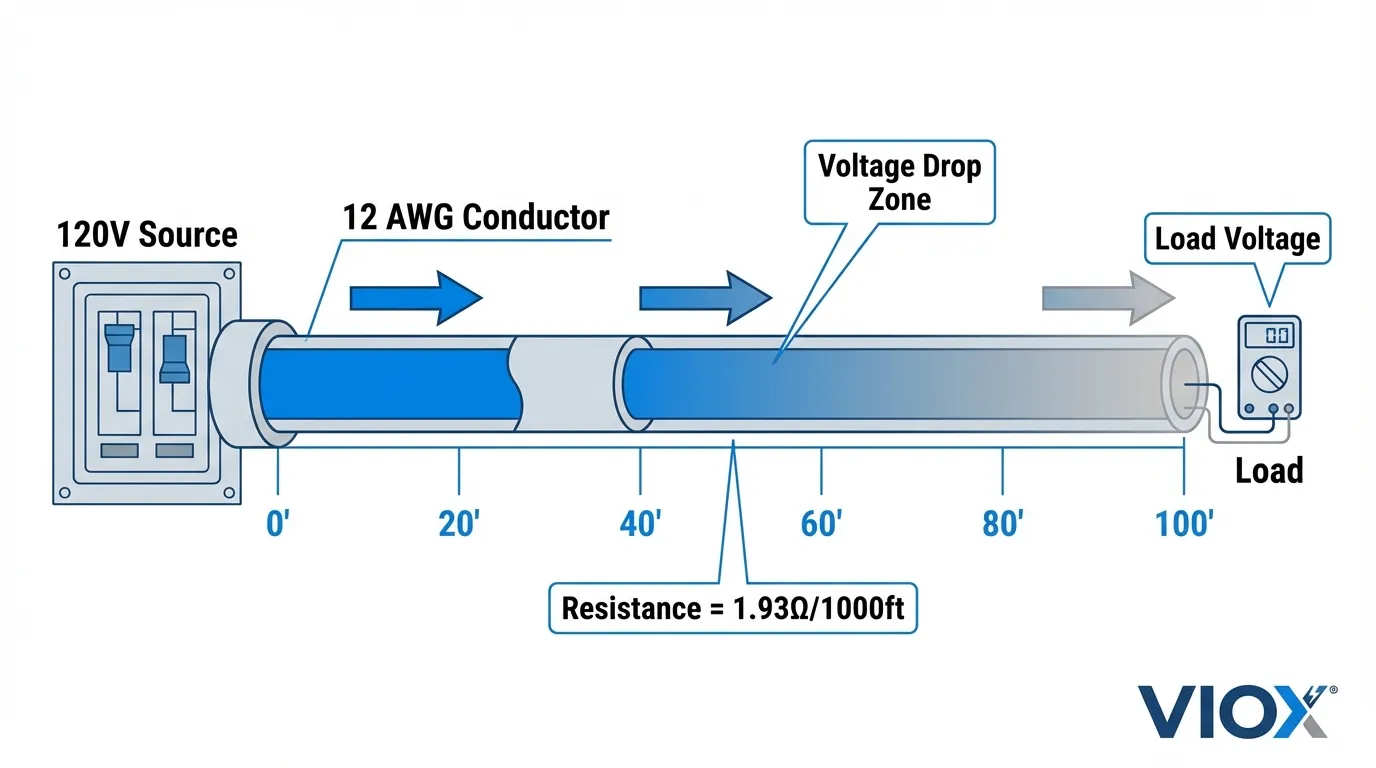
ဗို့အားကျဆင်းခြင်းသည် လျှပ်စစ်စွမ်းဆောင်ရည်၏ တိတ်တဆိတ်လူသတ်သမားဖြစ်သည်။. ဝါယာကြိုးမှတဆင့် လျှပ်စီးကြောင်း စီးဆင်းသည်နှင့်အမျှ ခုခံမှုသည် ဗို့အားကို လျော့နည်းစေသည်။ NEC သည် ဗို့အားကျဆင်းမှုကို ကန့်သတ်ရန် အကြံပြုထားသည်-
- 3% အများဆုံး branch circuit များအတွက် (NEC 210.19(A)(1) FPN No. 4)
- 5% အများဆုံး feeders နှင့် branch circuit များအတွက် ပေါင်းစပ်ထားသည်
- 2% အများဆုံး အာရုံခံနိုင်သော အီလက်ထရွန်နစ်ပစ္စည်းများအတွက် (NEC 647.4(D))
ဤဗို့အားကျဆင်းမှုကန့်သတ်ချက်—ampacity မဟုတ်—သည် 12/2 ဝါယာကြိုးအတွက် လက်တွေ့အများဆုံးအကွာအဝေးကို ဆုံးဖြတ်သည်။.
အများဆုံးဝါယာကြိုးအကွာအဝေးနောက်ကွယ်မှ သင်္ချာ
ဗို့အားကျဆင်းမှု တွက်ချက်ခြင်းဖော်မြူလာ
နှစ်ဝါယာကြိုး circuit တစ်ခုတွင် ဗို့အားကျဆင်းမှုကို တွက်ချက်ရန်အတွက် အခြေခံဖော်မြူလာမှာ-
VD = (2 × R × I × L) / 1000
Where:
- VD = ဗို့အားကျဆင်းခြင်း (ဗို့)
- R = ၁၀၀၀ ပေလျှင် ခုခံမှု (အုမ်း)
- I = လက်ရှိ (အမ်ပီယာ)
- L = တစ်လမ်းသွားအကွာအဝေး (ပေ)
- 2 = hot နှင့် neutral conductor နှစ်ခုလုံးအတွက် ထည့်တွက်သည်
12 AWG ကြေးနီဝါယာကြိုးအတွက်- R = ၁၀၀၀ ပေလျှင် 1.93 ohms (NEC အခန်း ၉၊ ဇယား ၈)
အများဆုံးအကွာအဝေးဖော်မြူလာ
အများဆုံးအကွာအဝေးကို ဖြေရှင်းရန်အတွက် ဖော်မြူလာကို ပြန်လည်စီစဉ်ခြင်း-
အများဆုံးအကွာအဝေး (ပေ) = (အများဆုံး VD × 1000) / (2 × R × I)
အများဆုံးအကွာအဝေးဇယား- 20-Amp Breaker ပေါ်ရှိ 12/2 ဝါယာကြိုး
| စနစ်ဗို့ | Load Current | အများဆုံးအကွာအဝေး (3% VD) | အများဆုံးအကွာအဝေး (5% VD) | ဝန်တွင် အမှန်တကယ်ဗို့အား (3%) |
|---|---|---|---|---|
| ၁၂၀V | 20A (100%) | 51 ပေ | 85 ပေ | 116.4V |
| ၁၂၀V | 16A (80%) | 64 ပေ | 106 ပေ | 116.4V |
| ၁၂၀V | 12A (60%) | 85 ပေ | 142 ပေ | 116.4V |
| ၁၂၀V | 8A (40%) | 128 ပေ | ၂၁၃ ပေ | 116.4V |
| 240V | 20A (100%) | 93 ပေ | ၁၅၅ ပေ | ၂၃၂.၈ ဗို့ |
| 240V | 16A (80%) | ၁၁၆ ပေ | ၁၉၄ ပေ | ၂၃၂.၈ ဗို့ |
မှတ်ချက်- အကွာအဝေးများသည် panel မှ load သို့ တစ်လမ်းသွား တိုင်းတာမှုများဖြစ်သည်။
80% စည်းမျဉ်းသည် အဘယ်ကြောင့် အရေးပါသနည်း။
NEC သည် စဉ်ဆက်မပြတ် load များ (၃ နာရီနှင့်အထက် လည်ပတ်နေသော) ကို တွက်ချက်ရန် လိုအပ်သည်။ အမှန်တကယ် load ၏ 125%, ဆိုလိုသည်မှာ 20-amp circuit သည် သယ်ဆောင်သင့်သည်။ ၁၆ amps စဉ်ဆက်မပြတ် (rated capacity ၏ 80%)။ ၎င်းသည် ဘေးကင်းရေး အနားသတ်ကို ပေးစွမ်းပြီး လက်တွေ့ အများဆုံး အကွာအဝေးကို တိုးချဲ့ပေးသည်။.
လက်တွေ့ကမ္ဘာ အကွာအဝေး အခြေအနေများ
အခြေအနေ ၁- ပြင်ပ အလုပ်ရုံ (Full 20A Load)
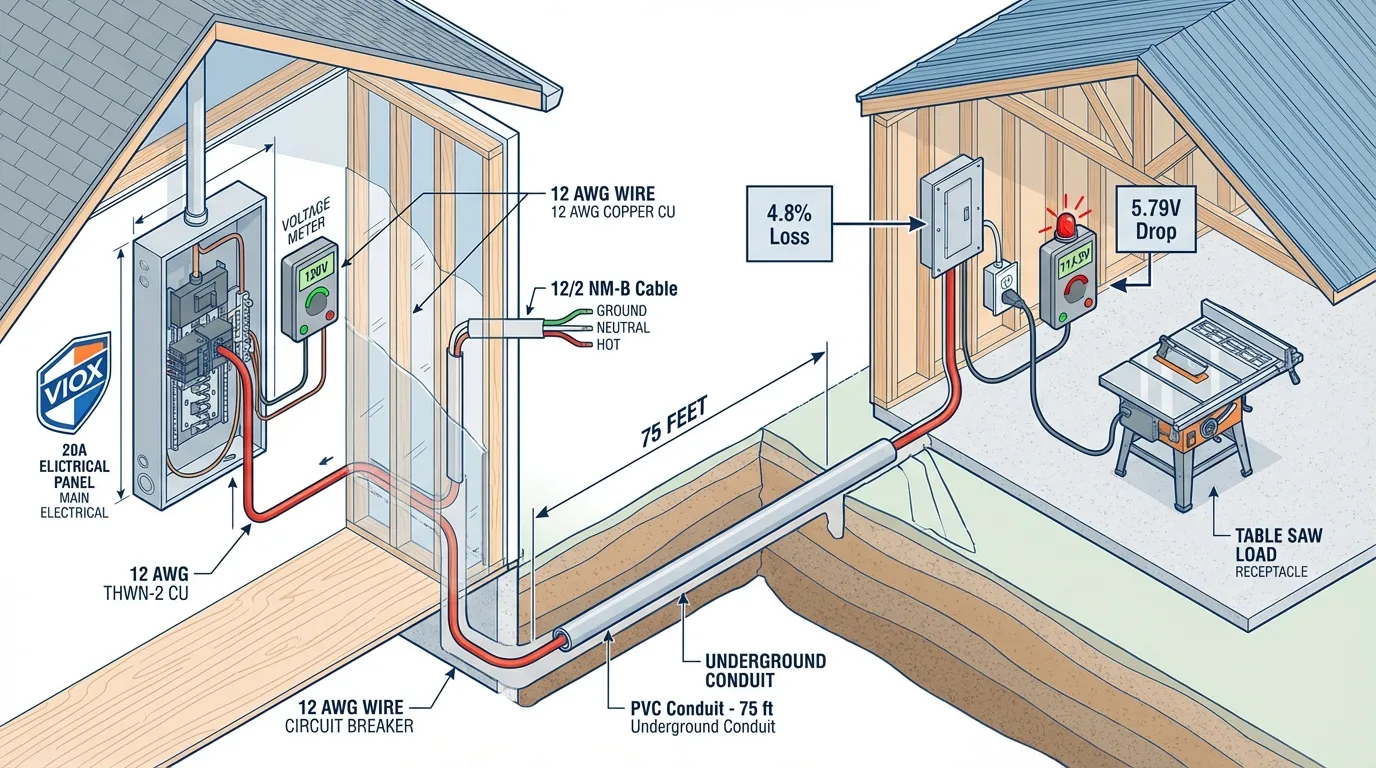
တပ်ဆင်ခြင်း: main panel မှ power tools (table saw, air compressor) 18-20 amps ဆွဲယူနေသော ပြင်ပ အလုပ်ရုံသို့ 12/2 wire ကို သွယ်တန်းခြင်း။.
အကွာအဝေး: ၇၅ ပေ
တွက်ချက်မှု:
- VD = (2 × 1.93 × 20 × 75) / 1000 = ၅.၇၉ ဗို့
- Voltage drop percentage = 5.79V / 120V = 4.8%
ရလဒ်: ❌ 3% အကြံပြုချက်ထက် ကျော်လွန်သည်။ (သို့သော် 5% အများဆုံးအတွင်း)
ထောက်ခံချက်: အဆင့်မြှင့်တင်ရန် 10 AWG wire voltage drop ကို 2.9% (3.6V) သို့ လျှော့ချရန်
အခြေအနေ ၂- Landscape Lighting (Low Amperage)
တပ်ဆင်ခြင်း: LED landscape lighting သည် 3 amps သာ ဆွဲယူပြီး panel မှ ၁၅၀ ပေ အကွာအဝေးတွင် ရှိသည်။.
တွက်ချက်မှု:
- VD = (2 × 1.93 × 3 × 150) / 1000 = ၁.၇၄ ဗို့
- Voltage drop percentage = 1.74V / 120V = 1.45%
ရလဒ်: ✅ 3% ကန့်သတ်ချက်အတွင်း ကောင်းစွာရှိသည်။
အဓိက ထိုးထွင်းသိမြင်မှု: Load current သည် wire rating ထက် ပိုအရေးကြီးသည်။. 12/2 wire သည် 20 amps အတွက် rated ဖြစ်သော်လည်း low-amperage load များသည် ပိုမိုဝေးကွာသော အကွာအဝေးသို့ သွားနိုင်သည်။.
အခြေအနေ ၃- EV Charger တပ်ဆင်ခြင်း
တပ်ဆင်ခြင်း: Level 2 EV charger (16A စဉ်ဆက်မပြတ်) သည် panel မှ ၈၅ ပေ အကွာအဝေးတွင် ရှိသည်။.
တွက်ချက်မှု:
- VD = (2 × 1.93 × 16 × 85) / 1000 = ၅.၂၅ ဗို့
- Voltage drop percentage = 5.25V / 120V = 4.4%
ရလဒ်: ❌ 3% အကြံပြုချက်ထက် ကျော်လွန်သည်။
ပရော်ဖက်ရှင်နယ်ဖြေရှင်းချက်: အသုံးပြုပါ 10 AWG wire သို့မဟုတ် လည်ပတ်ပါ။ 240V (percentage voltage drop ကို တစ်ဝက်လျှော့ချပေးသည်) ကိုးကားချက်
ဝှက်ထားသော အန္တရာယ်- Fault Loop Impedance
voltage drop အပြင်၊ အရေးကြီးသော ဘေးကင်းရေး ပြဿနာ DIYers အများစု လျစ်လျူရှုထားသော အရာမှာ- fault loop impedance.
Fault Loop Impedance ဆိုတာ ဘာလဲ။
short circuit ဖြစ်ပေါ်သောအခါ circuit breaker သည် ကြီးမားသော current surge ကို ရှာဖွေတွေ့ရှိရမည် (ပုံမှန်အားဖြင့် rated current ၏ 5-10 ဆ) ၎င်း၏ magnetic trip mechanism ကို ချက်ချင်း trigger လုပ်ရန်။ 20-amp breaker အတွက် ဆိုလိုသည်မှာ 100-200 amps fault current ၏။.
ပြဿနာ: wire အရှည် တိုးလာသည်နှင့်အမျှ circuit resistance စုစုပေါင်း တိုးလာပြီး၊ short-circuit current ကို လျှော့ချပေးသည်။.
ဤသည် အဘယ်ကြောင့် အန္တရာယ်ရှိသနည်း။
Scenario: အဝေးထိန်း အဆောက်အအုံသို့ 12/2 wire 500 ပေ သွယ်တန်းပါ။.
- Circuit resistance စုစုပေါင်း = (2 × 1.93 × 500) / 1000 = ၁.၉၃ ohms
- Short circuit current = 120V / 1.93Ω = ၆၂ amps
အရေးကြီးသော ပြဿနာ: ၆၂ amps သည် magnetic trip ကို trigger လုပ်ရန် လုံလောက်မည် မဟုတ်ပါ။ Breaker သည် ၎င်း၏ နှေးကွေးသော အပူလွန်ကဲပြီး ခရီးစဉ်စတင်သည့် ယန္တရား, ၊ ကြာနိုင်သည့် 30-60 စက္ကန့် အသက်သွင်းရန်။.
Consequence: ထို 30-60 စက္ကန့်အတွင်း ဝါယာကြိုးသည် ဧရာမ အပူပေးစက်, ၊ breaker ခရီးမစတင်မီ ပတ်ဝန်းကျင်ရှိ ပစ္စည်းများကို မီးလောင်စေနိုင်သည်။.
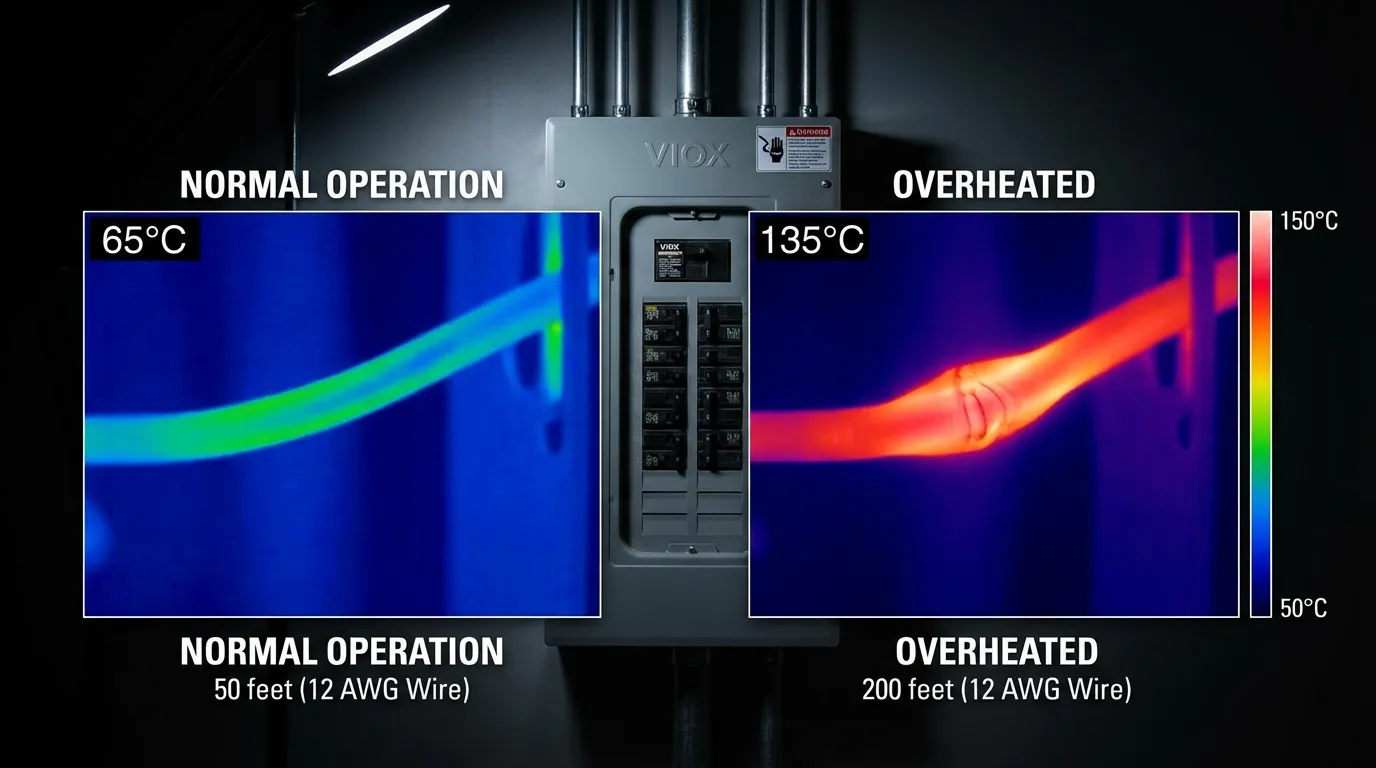
ပရော်ဖက်ရှင်နယ်ဖြေရှင်းချက်
အကွာအဝေးရှည်ကြာစွာ ပြေးဆွဲရန်အတွက် အမြဲတမ်းစစ်ဆေးပါ။ prospective short-circuit current breaker ၏ ချက်ချင်းခရီးစဉ် စတင်သည့် အကန့်အသတ်ထက် ကျော်လွန်သည်။ ဤသည်မှာ အောက်ပါတို့ကို မကြာခဏ လိုအပ်သည်-
- စပယ်ယာများကို အရွယ်အစားကြီးအောင် ပြုလုပ်ခြင်း ဗို့အားကျဆင်းမှု လိုအပ်ချက်ထက် ကျော်လွန်၍
- ခွဲထွက်ဘောင်များ တပ်ဆင်ခြင်း ဝန်များနှင့် ပိုမိုနီးကပ်စွာ
- ဗို့အားပိုမြင့်စွာ အသုံးပြုခြင်း (120V အစား 240V)
ဝါယာကြိုးအရွယ်အစား အဆင့်မြှင့်တင်မှု နှိုင်းယှဉ်ဇယား
| အကွာအဝေး | 120V @ 20A | 120V @ 16A | 240V @ 20A | အကြံပြုထားသော ဝါယာကြိုးအရွယ်အစား |
|---|---|---|---|---|
| 0-50 ပေ | 2.6% VD | 2.1% VD | 1.3% VD | 12 AWG ✅ |
| 51-75 ပေ | 3.9% VD | 3.1% VD | 1.9% VD | 10 AWG ⚠️ |
| 76-100 ပေ | 5.2% VD | 4.1% VD | 2.6% VD | 10 AWG ⚠️ |
| 101-150 ပေ | 7.7% VD | 6.2% VD | 3.9% VD | 8 AWG ⚠️ |
| 151-200 ပေ | 10.3% VD | 8.3% VD | 5.2% VD | 6 AWG ⚠️ |
ဒဏ္ဍာရီ: ✅ လက်ခံနိုင်သည် | ⚠️ အဆင့်မြှင့်တင်ရန် လိုအပ်သည်
လက်တွေ့ တပ်ဆင်ခြင်းဆိုင်ရာ လမ်းညွှန်ချက်များ
12/2 ဝါယာကြိုးကို လက်ခံနိုင်သည့်အခါ
- ✅ လူနေအိမ်ခွဲထွက်ဆားကစ်များ ပေ 50 အောက်
- ✅ အလင်းဝန်များ (အလင်းရောင်၊ ပလပ်ပေါက်များ) 10 amps အောက်
- ✅ အတိုပြေးခြင်းများ ခွဲထွက်ဘောင်များမှ အနီးအနားရှိ ပလပ်ပေါက်များသို့
- ✅ 240V ဆားကစ်များ ဗို့အားကျဆင်းမှု တစ်ဝက်ဖြစ်သည့်နေရာ
12/2 မှ အဆင့်မြှင့်တင်ရမည့်အခါ
- ⚠️ ပေ 60 ကျော်လွန်သည့် အကွာအဝေးများ 20A ဝန်အပြည့်ဖြင့်
- ⚠️ မော်တာဝန်များ (လေဖိအားပေးစက်များ၊ ပါဝါကိရိယာများ) မြင့်မားသော စတင်ရေစီးကြောင်း လိုအပ်ခြင်း
- ⚠️ EV အားသွင်းစက်များ 16A+ တွင် အဆက်မပြတ် လည်ပတ်ခြင်း
- ⚠️ ထိလွယ်ရှလွယ် အီလက်ထရွန်းနစ်ပစ္စည်းများ တည်ငြိမ်သော ဗို့အား လိုအပ်ခြင်း
- ⚠️ အပြင်ဘက် အဆောက်အအုံများ ပင်မဘောင်မှ ပေ 100+
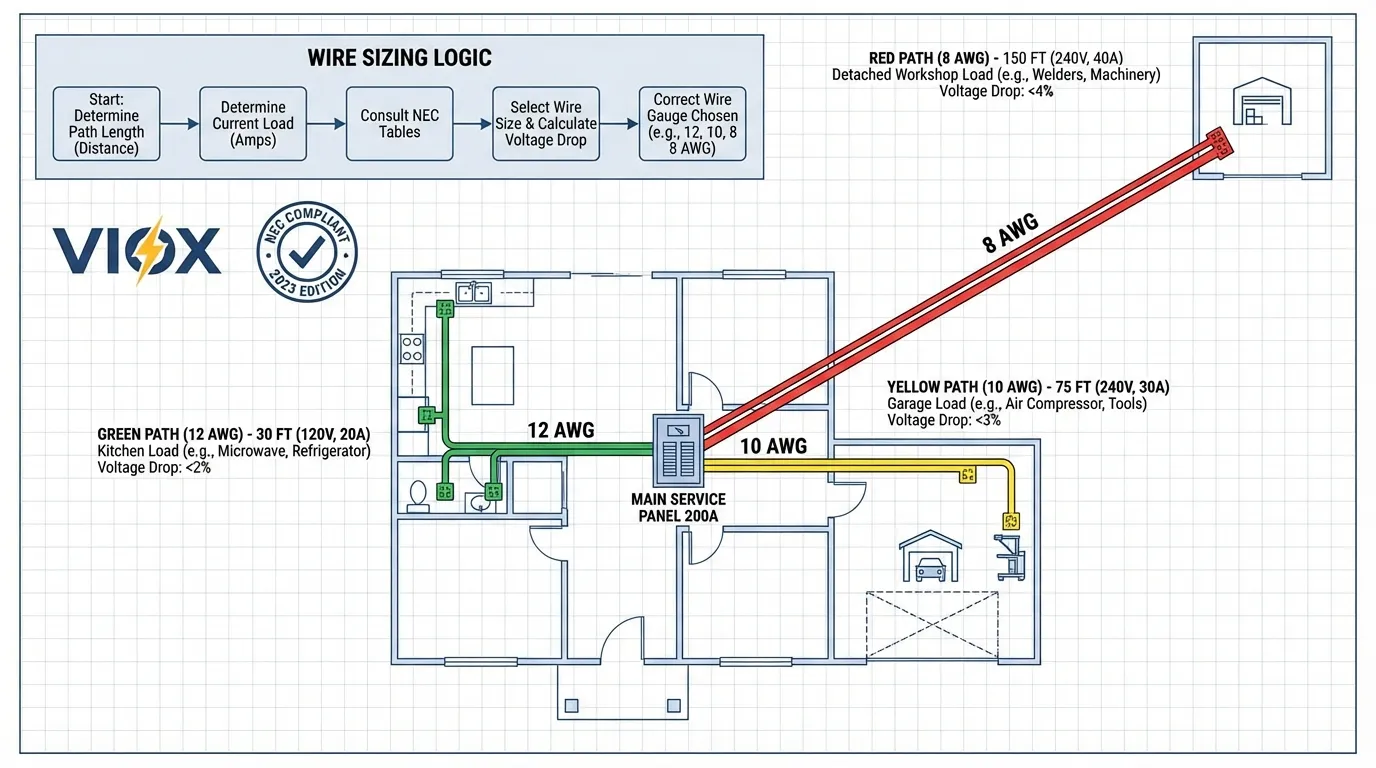
NEC ကုဒ် လိုက်နာမှု စစ်ဆေးစာရင်း
သင်၏ 12/2 ဝါယာကြိုး တပ်ဆင်မှုကို စီစဉ်သည့်အခါ ဤ NEC လိုအပ်ချက်များနှင့် လိုက်နာမှုကို စစ်ဆေးပါ-
| ကုဒ်အပိုင်း | လိုအပ်ချက် | လိုက်နာမှု စစ်ဆေးခြင်း |
|---|---|---|
| NEC 210.19(A)(1) | ဌာနခွဲ ဆားကစ် ဗို့အားကျဆင်းမှု ≤ 3% အကြံပြုထားသည် | အမြင့်ဆုံးဝန်တွင် VD ကို တွက်ချက်ပါ |
| NEC 240.4(D) | 12 AWG ကို အများဆုံး 20A overcurrent device ဖြင့် ကာကွယ်ထားသည်။ | 20A breaker ကိုသုံးပါ (25A သို့မဟုတ် 30A မဟုတ်ပါ) |
| NEC 310.16 | Conductor ampacity သည် load အတွက် လုံလောက်ပါသည်။ | 12 AWG = 60°C တွင် 20A၊ 90°C တွင် 25A |
| NEC 110.14(C) | Termination temperature ratings | စက်ပစ္စည်းအများစုကို 60°C သို့မဟုတ် 75°C ဖြင့် အဆင့်သတ်မှတ်ထားသည်။ |
| NEC 334.80 | NM cable ကို 4.5 ပေတိုင်း ထောက်ထားပါ။ | Romex ကို သေချာစွာ လုံခြုံအောင်ထားပါ။ |
Cost-Benefit Analysis: Wire ကို ဘယ်အချိန်မှာ Upsize လုပ်မလဲ
Material Cost Comparison (100 ပေလျှင်)
| ကြိုးအရွယ်အစား | ခန့်မှန်းကုန်ကျစရိတ် | Voltage Drop @ 20A/100ft | Long-Term Energy Loss |
|---|---|---|---|
| 12 AWG | $45-65 | 5.2% | $15-25/တစ်နှစ်* |
| 10 AWG | $75-95 | 3.3% | $10-15/တစ်နှစ်* |
| 8 AWG | $125-165 | 2.1% | $6-10/တစ်နှစ်* |
*$0.12/kWh တွင် 16A load ကို အဆက်မပြတ် အခြေခံထားသည်။
ROI တွက်ချက်ခြင်း: 16A ကို အဆက်မပြတ် သယ်ဆောင်သည့် ပေ 100 အကွာအဝေးအတွက်-
- 12 AWG မှ 10 AWG သို့ အဆင့်မြှင့်တင်ခြင်းသည် ကုန်ကျသည်။ $30 ပိုများသည်။
- နှစ်စဉ် စွမ်းအင်ချွေတာမှု- $10-15
- Payback period: ၂-၃ နှစ်
- Equipment သက်တမ်း တိုးတက်မှု: Motors နှင့် electronics များသည် တည်ငြိမ်သော voltage ဖြင့် သက်တမ်းပိုရှည်သည်။
ပညာရှင်ထောက်ခံချက်: ပေ 75 ကျော်လွန်သော မည်သည့် အမြဲတမ်း တပ်ဆင်မှုအတွက်မဆို၊, wire ကို တစ် gauge upsize လုပ်ပါ။. The marginal cost သည် ရေရှည်စွမ်းဆောင်ရည်နှင့် ဘေးကင်းရေး အကျိုးကျေးဇူးများနှင့် နှိုင်းယှဉ်လျှင် အနည်းငယ်သာဖြစ်သည်။.
Special Considerations for Different Applications
HVAC နှင့် Heat Pump Circuits
လျှပ်စစ်အပူပေးစက်နှင့် အအေးခံစက်များသည် voltage drop ကို အထူးထိခိုက်လွယ်သည်-
- Compressor motors high starting current (LRA = Locked Rotor Amps) ကို ဆွဲယူပါ။
- Reduced voltage motors များ အပူလွန်ကဲပြီး သက်တမ်းမတိုင်မီ ပျက်ကွက်စေသည်။
- ထောက်ခံချက်: Voltage drop ကို ကန့်သတ်ရန် 2% အများဆုံး HVAC circuits များအတွက်
EV အားသွင်းစခန်းများ
Level 2 EV chargers များသည် ထူးခြားသော စိန်ခေါ်မှုများကို တင်ပြသည်-
- စဉ်ဆက်မပြတ်ဝန်: Breaker rating ၏ 80% တွင် နာရီပေါင်းများစွာ လည်ပတ်သည်။
- အကွာအဝေး: Panel မှ အဝေးကြီးရှိ ကားဂိုဒေါင်များ သို့မဟုတ် ကားလမ်းများတွင် မကြာခဏ တည်ရှိသည်။
- ဖြေရှင်းနည်း: အသုံးပြုပါ 240V ဆားကစ်များ voltage drop percentage ကို တစ်ဝက်လျှော့ချရန် သို့မဟုတ် တပ်ဆင်ရန် dedicated sub-panel
Solar PV နှင့် Battery Systems
DC circuits များတွင် မတူညီသော ထည့်သွင်းစဉ်းစားမှုများ ရှိသည်-
- No reactive impedance: Resistance သာ အရေးကြီးသည်။
- ပိုမြင့်သောဗို့အား: 48V systems များသည် voltage drop ကို ပို၍ သည်းခံနိုင်သည်။
- ထောက်ခံချက်: PV source circuits များအတွက် NEC 690.8 လိုအပ်ချက်များကို လိုက်နာပါ။
Troubleshooting Voltage Drop Issues
Symptoms of Excessive Voltage Drop
- 🔴 မီးများ မှိန်သွားခြင်း appliances များ စတင်သောအခါ
- 🔴 Motors များ ပူလာခြင်း သို့မဟုတ် စတင်ရန် ပျက်ကွက်ခြင်း
- 🔴 Electronics များ ပြန်လည်စတင်ခြင်း သို့မဟုတ် ချို့ယွင်းခြင်း
- 🔴 GFCI nuisance tripping အကွာအဝေးရှည်များတွင်
- 🔴 Appliances များ စွမ်းဆောင်ရည် မပြည့်မီခြင်း (အပူပေးနှေးခြင်း၊ အအေးခံအားနည်းခြင်း)
ရောဂါရှာဖွေရေးအဆင့်များ
- Panel တွင် voltage ကို တိုင်းတာပါ။: 118-122V (nominal 120V) ဖြစ်သင့်သည်။
- Measure voltage at load under operation: Should be within 3% of panel voltage
- Calculate actual voltage drop: Panel voltage – Load voltage
- Compare to NEC recommendations: 3% = 3.6V for 120V circuits
Remediation Options
Option 1: Upsize conductors (most permanent solution)
Option 2: Install sub-panel ဝန်များနှင့် ပိုမိုနီးကပ်စွာ
Option 3: ပြန်လည်ဖြန့်ဝေပေးပါသည်။ to shorter circuits
Option 4: Convert to 240V (for compatible equipment)
VIOX Solutions for Long-Distance Wiring
When upgrading wire size to overcome voltage drop, you’ll encounter a common problem: larger wires don’t fit standard device terminals.
VIOX Product Applications
1. Terminal Blocks and Distribution Strips
When transitioning from 8 AWG or 10 AWG feeder wire to 12 AWG branch circuits, VIOX terminal blocks provide:
- Secure connections for mixed wire gauges
- Code-compliant wire-to-wire transitions
- Easy troubleshooting with accessible connection points
2. Heavy-Duty Junction Boxes
For outdoor long-distance runs, VIOX weatherproof junction boxes offer:
- IP65/IP67 ratings ကြမ်းတမ်းသော ပတ်ဝန်းကျင်များအတွက်
- Large wire capacity for upsized conductors
- ပင်ပန်းနွမ်းနယ်မှုကို သက်သာစေပါတယ်။ for underground conduit transitions
3. Sub-Panel Solutions
Installing a sub-panel reduces branch circuit distances:
- Main panel → Sub-panel: Use 6 AWG or larger
- Sub-panel → Loads: Standard 12 AWG for short runs
- ရလဒ်: Optimal voltage drop on all circuits
မကြာခဏမေးမေးခွန်းများ
Can I run 12/2 wire 100 feet on a 20-amp breaker?
Yes, but with limitations. At full 20A load, voltage drop will be approximately 5.2%, exceeding the NEC’s 3% recommendation. This is acceptable for:
- Infrequent use loads
- Circuits drawing less than 12 amps
- 240V circuits (voltage drop percentage is halved)
For continuous 20A loads, upgrade to 10 AWG wire.
Does wire length affect circuit breaker tripping?
ဟုတ်တယ်၊ သိသိသာသာ။ Longer wire runs increase circuit resistance, which reduces short-circuit current. In extreme cases (200+ feet), fault current may be too low to trigger the breaker’s instantaneous magnetic trip, creating a fire hazard. Always verify that prospective short-circuit current exceeds 5× the breaker rating.
What’s the difference between 12/2 and 12/3 wire for distance?
Wire distance capacity is identical. The numbers refer to conductor count (2 or 3 insulated conductors), not wire gauge. Both use 12 AWG conductors with the same resistance. Use 12/3 when you need:
- Three-way switch circuits
- Multi-wire branch circuits
- Separate hot conductors for 240V + neutral
Can I use aluminum wire instead to save money on long runs?
Yes, but upsize by one gauge. Aluminum has higher resistance than copper:
- သုံးပါ။ 10 AWG aluminum instead of 12 AWG copper
- လိုအပ်သည်။ anti-oxidant compound on connections
- Must use AL အဆင့်သတ်မှတ်ထားသော စက်ပစ္စည်းများ (CO/ALR အမှတ်အသား)
- ကုန်ကျစရိတ်သက်သာခြင်း: ကြီးမားသော ဝါယာအရွယ်အစားများအတွက် 30-40% စျေးသက်သာသည်။
How do I calculate voltage drop for multiple outlets on one circuit?
အသုံးပြုပါ အဝေးဆုံး ပလပ်ပေါက် နှင့် တစ်ပြိုင်နက်တည်း အများဆုံးဝန်. ဥပမာ:
- ဆားကစ်သည် ပေ ၁၂၀ ကျော်တွင် ပလပ်ပေါက် ၈ ခုရှိသည်။
- ယူဆပါ ဘရိတ်ကာအဆင့်သတ်မှတ်ချက်၏ 80% (20A ဆားကစ်အတွက် 16A)
- ဗို့အားကျဆင်းမှုကို တွက်ချက်ပါ နောက်ဆုံးပလပ်ပေါက် 16A တွင်
- ဤသည်မှာ အဆိုးဆုံးအခြေအနေကို ပံ့ပိုးပေးသည်။
Does wire type (THHN vs. Romex) affect maximum distance?
မရှိ ဗို့အားကျဆင်းမှုသည် အောက်ပါအချက်များပေါ်တွင်သာ မူတည်သည်-
- ဝါယာကြိုး gauge (AWG)
- လျှပ်ကူးပစ္စည်း (ကြေးနီနှင့် အလူမီနီယမ်)
- လျှပ်စီးကြောင်း (ampere)
- အကွာအဝေး (ပေ)
လျှပ်ကာအမျိုးအစား (THHN, THWN, NM-B) သည် သက်ရောက်မှုရှိသည်။ ampacity နှင့် တပ်ဆင်နည်းလမ်း, သို့သော် ခုခံမှု သို့မဟုတ် ဗို့အားကျဆင်းမှုကို မထိခိုက်ပါ။.
နိဂုံး: ဝါယာကြိုးအရွယ်အစားအတွက် အင်ဂျင်နီယာဆိုင်ရာချဉ်းကပ်မှု
“20-amp ဘရိတ်ကာတွင် 12/2 ဝါယာကြိုးကို မည်မျှအထိ ဆွဲနိုင်သနည်း” ဟူသောမေးခွန်းတွင် အဖြေတစ်ခုတည်းမရှိပါ။ အောက်ပါအချက်များပေါ်တွင် မူတည်သည်-
- စနစ်ဗို့အား (120V နှင့် 240V)
- အမှန်တကယ်ဝန်လျှပ်စီးကြောင်း (ဘရိတ်ကာအဆင့်သတ်မှတ်ချက်သာမဟုတ်)
- လက်ခံနိုင်သော ဗို့အားကျဆင်းမှု (3% အကြံပြုထားသည်၊ 5% အများဆုံး)
- အသုံးချမှု အာရုံခံနိုင်စွမ်း (မော်တာများနှင့် အီလက်ထရွန်းနစ်ပစ္စည်းများသည် တင်းကျပ်သော ခံနိုင်ရည်များ လိုအပ်သည်)
- ဘေးကင်းရေး ထည့်သွင်းစဉ်းစားပါ။ (သင့်လျော်သော ဘရိတ်ကာလည်ပတ်မှုအတွက် ချို့ယွင်းချက်ကွင်းပတ် impedance)
အထွေထွေ လမ်းညွှန်ချက်များ:
- ပေ ၅၀ အောက်: 12 AWG သည် 20A ဆားကစ်များအတွက် သင့်လျော်သည်။
- 50-75 ပေ: ဝန်အပြည့်အသုံးချမှုများအတွက် 10 AWG ကို စဉ်းစားပါ။
- 75-100 ပေ: 20A ဝန်များအတွက် 10 AWG ကို အသုံးပြုပါ။
- ပေ ၁၀၀ ကျော်: 8 AWG ကို အသုံးပြုပါ သို့မဟုတ် ခွဲထွက်ဘောင်ကို တပ်ဆင်ပါ။
ကျွမ်းကျင်သော အကောင်းဆုံးအလေ့အကျင့်: သံသယရှိလျှင်, gauge တစ်ခုဖြင့် အရွယ်အစားကို မြှင့်တင်ပါ။. အနားသတ်ကုန်ကျစရိတ်သည် ရေရှည်အကျိုးကျေးဇူးများနှင့် နှိုင်းယှဉ်ပါက အနည်းငယ်သာရှိသည်-
- စွမ်းအင်ဖြုန်းတီးမှု လျှော့ချခြင်း
- စက်ပစ္စည်း သက်တမ်း တိုးမြှင့်ခြင်း
- ဘေးကင်းလုံခြုံမှု အနားသတ်များ တိုးတက်ကောင်းမွန်ခြင်း
- အနာဂတ်အတွက် သေချာသော စွမ်းဆောင်ရည်
ရှုပ်ထွေးသော တပ်ဆင်မှုများ သို့မဟုတ် စီးပွားဖြစ်အသုံးချမှုများအတွက် လိုင်စင်ရ လျှပ်စစ်ပညာရှင်နှင့် တိုင်ပင်ပြီး အသုံးပြုရန် စဉ်းစားပါ။ VIOX လျှပ်စစ်အစိတ်အပိုင်းများ ယုံကြည်စိတ်ချရသော အကွာအဝေးရှည် ပါဝါဖြန့်ဖြူးမှုအတွက် ဒီဇိုင်းထုတ်ထားသည်။.
အတွင်းပိုင်းလင့်ခ်များ
ဆက်စပ်နည်းပညာဆိုင်ရာ လမ်းညွှန်မှုအတွက်၊ ဤ VIOX အရင်းအမြစ်များကို ကြည့်ပါ-
- 50 Amp Wire အရွယ်အစား ရွေးချယ်မှု လမ်းညွှန် – မြင့်မားသော amperage ဆားကစ်များအတွက် ပြည့်စုံသော ဝါယာကြိုးအရွယ်အစား
- လျှပ်စစ် Derating: အပူချိန်၊ အမြင့်နှင့် အုပ်စုဖွဲ့ခြင်းဆိုင်ရာ အချက်များ – ပတ်ဝန်းကျင်အခြေအနေများသည် ဝါယာကြိုးစွမ်းရည်ကို မည်သို့အကျိုးသက်ရောက်စေသနည်း။
- Circuit Breaker Altitude Derating Guide – မြင့်မားသော တပ်ဆင်မှုများအတွက် အရေးကြီးသော ထည့်သွင်းစဉ်းစားမှုများ
- Cable Size အမျိုးအစားများ: mm² vs AWG vs BS ပြောင်းလဲခြင်း လမ်းညွှန် – နိုင်ငံတကာ ဝါယာကြိုးအရွယ်အစား စံနှုန်းများ
- MCB Ambient Temperature Ratings and Derating Factors – ဆားကစ်ကာကွယ်ရေးအပေါ် အပူချိန်အကျိုးသက်ရောက်မှုများ
- တွက်ချက်ပုံကိုအတိုချုပ်တိုက်နယ်လက်ရှိအတက္ကို – Understanding fault current calculations
- Standard Breaker Sizes – Complete guide to circuit breaker ratings
- Circuit Breaker အရွယ်အစားနှင့် Load Calculation အတွက် အိမ်ပိုင်ရှင်၏ လမ်းညွှန် – Practical residential wiring guidance
VIOX Electric အကြောင်း: VIOX Electric is a leading B2B manufacturer of electrical equipment, specializing in circuit protection devices, terminal blocks, junction boxes, and distribution solutions for residential, commercial, and industrial applications. Our products meet or exceed NEC, UL, and IEC standards for safety and performance.