မှားယွင်းသောအစိတ်အပိုင်းတစ်ခုကိုရွေးချယ်မှုသည် သင့်အား ထောင်ပေါင်းများစွာကုန်ကျစေသောအခါ

သင်သည် 50kW စီးပွားဖြစ်အမိုးခုံးဆိုလာတပ်ဆင်ခြင်းကို ဒီဇိုင်းဆွဲပြီးစီးခဲ့သည်။ စွမ်းဆောင်ရည်မြင့်မားသောဆိုလာပြား ၁၂ ကြိုး။ ကြိုး Inverter သုံးခု။ အပြင်အဆင်ကို အကောင်းဆုံးဖြစ်အောင်ပြုလုပ်ထားပြီး၊ ဖွဲ့စည်းတည်ဆောက်ပုံဆိုင်ရာတွက်ချက်မှုများကို စစ်ဆေးပြီး သင့်ဖောက်သည်သည် ခန့်မှန်းထားသော ROI ကို အလွန်စိတ်လှုပ်ရှားနေပါသည်။ သင်၏ကုန်ပစ္စည်းစာရင်းကို အပြီးသတ်နေစဉ် သင့်ကုန်ပစ္စည်းပေးသွင်းသူက ရိုးရှင်းသောမေးခွန်းတစ်ခုဖြင့် ဖုန်းခေါ်လာသည်-
“AC ပေါင်းစပ်သေတ္တာ (AC combiner box) သို့မဟုတ် DC ပေါင်းစပ်သေတ္တာ (DC combiner box) လိုအပ်ပါသလား။”
သင်ခဏရပ်လိုက်သည်။ ပေါင်းစပ်သေတ္တာတစ်ခု လိုအပ်ကြောင်း သင်သိသည်—စနစ်တွင် ပေါင်းစည်းရန်လိုအပ်သည့် အထွက်များစွာရှိသည်။ သို့သော် ရုတ်တရက်ဆိုသလိုပင် ကွဲပြားခြားနားမှုသည် အရေးကြီးသည်ဟု ခံစားရသည်။ သင်သည် ကြောက်မက်ဖွယ်ကောင်းသော ဇာတ်လမ်းများကို ကြားဖူးသည်- ဖီးနစ်ရှိ တပ်ဆင်သူတစ်ဦးသည် အမျိုးအစားနှစ်ခုကို ရောနှောပြီး စစ်ဆေးမှုမအောင်မြင်သောကြောင့် လျှပ်စစ်ပိုင်းဆိုင်ရာ ပြန်လည်ပြုပြင်မှုတစ်ခုလုံးကို လုပ်ဆောင်ခဲ့ရသည်။ နောက်ထပ်ကန်ထရိုက်တာတစ်ဦးသည် DC ဘက်တွင် AC အဆင့်သတ်မှတ်ထားသော အစိတ်အပိုင်းများကို အသုံးပြုခဲ့ပြီး ကမောက်ကမဖြစ်သော arc fault သည် စတင်လည်ပတ်ပြီး ခြောက်လအကြာတွင် 200kW စနစ်ကို ပိတ်ပစ်ခဲ့သည်။.
အန္တရာယ်သည် အမှန်တကယ်ဖြစ်သည်- မှားယွင်းသော ပေါင်းစပ်သေတ္တာအမျိုးအစားကို ရွေးချယ်ပါက၊ သင်သည် ငြင်းပယ်ခံရသော စစ်ဆေးမှုများ၊ မလုံခြုံသောလည်ပတ်မှု၊ ဈေးကြီးသော ပြန်လည်တပ်ဆင်မှုနှင့် ပျက်စီးသွားသော ပရော်ဖက်ရှင်နယ်ဂုဏ်သတင်းကို ကြုံတွေ့ရနိုင်သည်။ ဒါကြောင့် ဆိုလာပရော်ဖက်ရှင်နယ်တိုင်း ရင်ဆိုင်ရတဲ့ မေးခွန်းက ဒီမှာရှိပါတယ်- AC နှင့် DC ပေါင်းစပ်သေတ္တာများကြား အမှန်တကယ်ကွာခြားချက်ကဘာလဲ၊ မှန်ကန်သောရွေးချယ်မှုကို သင်မည်သို့ပြုလုပ်နိုင်သနည်း—အချိန်တိုင်းလား။
ဤရှုပ်ထွေးမှုသည် အဘယ်ကြောင့်တည်ရှိသနည်း (နှင့် အဘယ်ကြောင့်အရေးပါသနည်း)
ပြဿနာသည် အမည်နှင့်စတင်သည်။ ထုတ်ကုန်နှစ်ခုလုံးကို “ပေါင်းစပ်သေတ္တာများ” ဟုခေါ်ဆိုကြသည်၊ အကြောင်းမှာ ၎င်းတို့နှစ်ခုလုံးသည် လျှပ်စစ်အထွက်များစွာကို ပေါင်းစည်းထားသော feed တစ်ခုအဖြစ်သို့ ပေါင်းစည်းသောကြောင့်ဖြစ်သည်။ အပေါ်ယံအားဖြင့် ၎င်းတို့သည် အပြန်အလှန်ပြောင်းလဲနိုင်ပုံရသည်—ထည့်သွင်းမှုများနှင့် အထွက်များပါသော သေတ္တာများသာဖြစ်သည် မဟုတ်ပါလား။
မှားတယ်။ အန္တရာယ်ရှိလောက်အောင် မှားတယ်။.
အင်ဂျင်နီယာအများစု လွဲချော်နေသည့်အရာမှာ ဤတွင်ရှိသည်- AC နှင့် DC ပေါင်းစပ်သေတ္တာများသည် ဆိုလာစွမ်းအင်ပြောင်းလဲခြင်းလုပ်ငန်းစဉ်တွင် အခြေခံအားဖြင့် ကွဲပြားခြားနားသောအချက်များတွင် လည်ပတ်ကြသည်။ DC ပေါင်းစပ်သေတ္တာသည် သင့်ဆိုလာပြားများမှ တိုက်ရိုက်လာသော ဗို့အားမြင့် တိုက်ရိုက်လျှပ်စီးကြောင်းကို ကိုင်တွယ်သည်—ကျွန်ုပ်တို့သည် ခေတ်မီစနစ်များတွင် 600V မှ 1,500V DC အထိ ပြောနေကြသည်။ အခြားတစ်ဖက်တွင် AC ပေါင်းစပ်သေတ္တာသည် Inverter မှတဆင့် ဖြတ်သန်းပြီးနောက် ပြောင်းလဲထားသော လျှပ်စီးကြောင်းကို စီမံခန့်ခွဲသည်၊ ပုံမှန်အားဖြင့် 120V မှ 480V AC ရှိသော စံ grid ဗို့အားများတွင်ဖြစ်သည်။.
သို့သော် ဗို့အားသည် တစ်ခုတည်းသော ကွာခြားချက်မဟုတ်ပါ။. DC နှင့် AC လျှပ်စစ်ဓာတ်သည် ချို့ယွင်းသောအခြေအနေများတွင် အခြေခံအားဖြင့် ကွဲပြားစွာပြုမူသည်။. AC arcs (တစ်စက္ကန့်လျှင် 120 ကြိမ် သုညဖြတ်မှတ်များတွင် သဘာဝအတိုင်း ငြိမ်းသတ်သွားသည်) နှင့် နှိုင်းယှဉ်ပါက DC arcs များကို ငြိမ်းသတ်ရန် ခက်ခဲသည်ဟု လူသိများသည်။ ဆိုလိုသည်မှာ DC application တွင် AC အဆင့်သတ်မှတ်ထားသော circuit breaker များကို အသုံးပြုခြင်းသည် ထိရောက်မှုမရှိရုံသာမက မီးဘေးအန္တရာယ်ကို စောင့်ဆိုင်းနေခြင်းဖြစ်သည်။ အစိတ်အပိုင်းများသည် ဆင်တူပုံရသော်လည်း လျှပ်စစ်ဆိုင်ရာ အပြုအမူများအတွက် လုံးဝကွဲပြားခြားနားစွာ အင်ဂျင်နီယာလုပ်ထားသည်။.
အဓိကအချက်- ဤထုတ်ကုန်နှစ်ခုကို ရောထွေးခြင်းသည် တူညီသောအစိတ်အပိုင်း၏ အမှတ်တံဆိပ်နှစ်ခုကြား ရွေးချယ်ခြင်းနှင့် မတူပါ။ လေကိုရွှေ့ရန် ရေစုပ်စက်ကို အသုံးပြုရန် ကြိုးစားခြင်းနှင့်တူသည်—ကိရိယာသည် အလုပ်နှင့်မကိုက်ညီဘဲ အကျိုးဆက်များသည် ပြင်းထန်နိုင်သည်။.
“Aha!” အခိုက်အတန့်- စနစ်အနေအထားအရ စဉ်းစားပါ
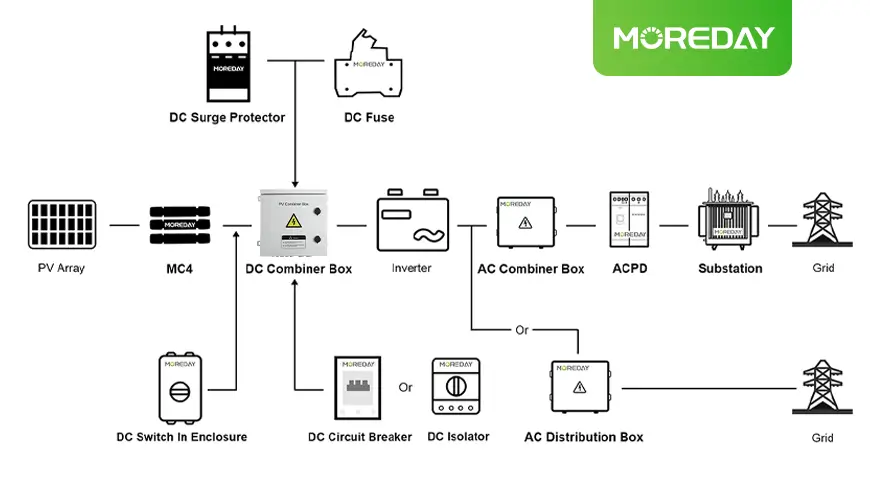
ဤတွင် ရှုပ်ထွေးမှုမှ ကြည်လင်ပြတ်သားမှုအထိ ပြောင်းလဲပေးသည့် ထိုးထွင်းသိမြင်မှုမှာ ဤတွင်ရှိသည်- ပေါင်းစပ်သေတ္တာများကို အပြန်အလှန်ပြောင်းလဲနိုင်သော ထုတ်ကုန်များအဖြစ် စဉ်းစားခြင်းကို ရပ်လိုက်ပါ။ သင့်ဆိုလာစနစ်တွင် ကွဲပြားခြားနားသော လျှပ်စစ် “ဘက်” နှစ်ခုရှိသည်ဟု စဉ်းစားပါ။”
DC ဘက်- ဆိုလာပြားများ → DC ပေါင်းစပ်သေတ္တာ → Inverter (ထည့်သွင်းဘက်)
AC ဘက်- Inverter (အထွက်ဘက်) → AC ပေါင်းစပ်သေတ္တာ → Grid ချိတ်ဆက်မှု
သင့်ဆိုလာပြားများသည် တိုက်ရိုက်လျှပ်စီးကြောင်းကို ထုတ်ပေးသည်။ ပြားများစွာ၏ကြိုးများသည် DC အထွက်များစွာကို ထုတ်လုပ်သည်။ သင့်တွင် ကြိုးများလုံလောက်ပါက (ပုံမှန်အားဖြင့် 4 ခု သို့မဟုတ် ထို့ထက်ပိုသည်)၊ သင်လိုအပ်သည်မှာ DC ပေါင်းစပ်သေတ္တာ Inverter ၏ ထည့်သွင်း terminal များသို့ မပို့မီ ဤအထွက်များကို ပေါင်းစည်းရန်။ ဤသေတ္တာသည် “DC နယ်မြေ” တွင် တည်ရှိသည်—၎င်းသည် မည်သည့်ပြောင်းလဲမှုမဖြစ်ပေါ်မီ အစိမ်းသက်သက် ဆိုလာစွမ်းအင်ကို ကိုင်တွယ်နေသည်။.
Inverter သည် ထို DC ပါဝါကို AC သို့ ပြောင်းပြီးသည်နှင့် သင်သည် မတူညီသောနယ်မြေတွင် ရှိနေသည်။ သင့်တွင် Inverter များစွာရှိပါက (ကြီးမားသော တပ်ဆင်မှုများတွင် အဖြစ်များသည်) သို့မဟုတ် သင်သည် microinverter များကို အသုံးပြုနေပါက (ပြားတစ်ခုစီတွင် ၎င်း၏ကိုယ်ပိုင်သေးငယ်သော Inverter ပါရှိသည်)၊ ယခု သင့်တွင် သင်၏အဓိက လျှပ်စစ် panel သို့မဟုတ် grid သို့ ချိတ်ဆက်ခြင်းမပြုမီ ပေါင်းစည်းရန်လိုအပ်သော AC အထွက်များစွာရှိသည်။ အဲဒီမှာ AC ပေါင်းစပ်သေတ္တာ ပါဝင်လာသည်။.
အရေးကြီးသော ကွဲပြားခြားနားချက်- ဤသေတ္တာများသည် ယှဉ်ပြိုင်နေသော ထုတ်ကုန်များမဟုတ်ပါ—၎င်းတို့သည် ပါဝါပြောင်းလဲခြင်းလုပ်ငန်းစဉ်၏ ဆန့်ကျင်ဘက်ဘက်များကို ဆောင်ရွက်ပေးသည်။ ဤအယူအဆတစ်ခုတည်းကို နားလည်ခြင်းသည် ရှုပ်ထွေးမှု၏ 90% ကို ဖယ်ရှားပေးသည်။.
အင်ဂျင်နီယာ၏ သုံးဆင့်ရွေးချယ်မှုမူဘောင်
ယခု သင်သည် အခြေခံကွာခြားချက်ကို နားလည်ပြီဖြစ်သောကြောင့် မှန်ကန်စွာရွေးချယ်ရန်အတွက် စနစ်တကျလုပ်ဆောင်ခြင်းလုပ်ငန်းစဉ်ကို လေ့လာကြည့်ကြပါစို့။ ဤအဆင့်သုံးဆင့်ကို လိုက်နာပါက မှားယွင်းသော ပေါင်းစပ်သေတ္တာကို ထပ်မံရွေးချယ်မည်မဟုတ်ပါ။.
အဆင့် 1- သင့်စနစ်ဗိသုကာနှင့် ပါဝါစီးဆင်းမှုကို မြေပုံဆွဲပါ
ပထမအဆင့်မှာ သင့်စနစ်တွင် ပါဝါကို ပေါင်းစည်းရန် လိုအပ်သည့်နေရာကို တိကျစွာဖော်ထုတ်ရန်ဖြစ်သည်။ ပြားများမှ grid သို့ သင့်ပါဝါစီးဆင်းမှုကို ဆွဲထုတ်ပြီး အထွက်များစွာ ပေါင်းစည်းသည့်နေရာတိုင်းကို မှတ်သားပါ။.
ကြိုး Inverter စနစ်များအတွက် (စီးပွားဖြစ် တပ်ဆင်မှုအများစု)၊ သင်၏ပြားကြိုးများစွာသည် DC အထွက်များစွာကို ဖန်တီးသည်။ ၎င်းတို့ကို Inverter သို့မရောက်ရှိမီ ပေါင်းစပ်ရန်လိုအပ်သည်။ သင်သည် DC ဘက်ကို ကြည့်နေသောကြောင့် သင်လိုအပ်သည်မှာ DC ပေါင်းစပ်သေတ္တာ. ။ ပုံမှန် setup သည် ဤကဲ့သို့ဖြစ်သည်-
- ပြားကြိုး ၁၂ ကြိုး (တစ်ခုစီသည် 600-1,000V DC တွင် 30-40A ထုတ်လုပ်သည်)
- ကြိုးအားလုံးသည် DC ပေါင်းစပ်သေတ္တာတစ်ခုထဲသို့ ထည့်သွင်းသည်
- ပေါင်းစပ်သေတ္တာမှ ကြိုး Inverter ထည့်သွင်းမှုသို့ single high-capacity cable (250-400A) ကို ဆက်သွယ်သည်
ဤဖွဲ့စည်းပုံသည် ကေဘယ်ကြိုးရှည် ၁၁ ကြိုးကို ဖယ်ရှားခြင်းဖြင့် တပ်ဆင်စရိတ်များကို လျှော့ချပေးပြီး ပြဿနာဖြေရှင်းခြင်းကို အလွန်ရိုးရှင်းစေသည်။.
Microinverter စနစ်များအတွက် (လူနေအိမ်တပ်ဆင်မှုများတွင် ရေပန်းစားသည်)၊ ပြားတစ်ခုစီ သို့မဟုတ် ပြားအုပ်စုငယ်တစ်ခုစီတွင် ၎င်း၏ကိုယ်ပိုင် Inverter ကို rack တွင် တပ်ဆင်ထားသည်။ ၎င်းတို့သည် သင်၏အဓိက panel သို့ ချိတ်ဆက်ခြင်းမပြုမီ ပေါင်းစည်းရန်လိုအပ်သော AC အထွက်များစွာကို ဖန်တီးသည်—ဖြစ်နိုင်သည်မှာ ဒါဇင်ပေါင်းများစွာဖြစ်သည်။ သင်သည် ယခု AC ဘက်တွင် ရှိနေသောကြောင့် သင်လိုအပ်သည်မှာ AC ပေါင်းစပ်သေတ္တာ. ။ တည်ဆောက်ပုံ-
- Microinverter ၂၀ (တစ်ခုစီသည် 240V AC ထုတ်ပေးသည်)
- AC အထွက်အားလုံးသည် AC ပေါင်းစပ်သေတ္တာတစ်ခုထဲသို့ ထည့်သွင်းသည်
- ပေါင်းစပ်သေတ္တာမှ အဓိကဝန်ဆောင်မှု panel သို့ single AC feed ကို ဆက်သွယ်သည်
-အစွန်အဖျား: ကြိုး Inverter များနှင့် ဘက်ထရီသိုလှောင်မှု နှစ်ခုလုံးပါရှိသော hybrid စနစ်များတွင်၊ သင်သည် ပေါင်းစပ်သေတ္တာ အမျိုးအစားနှစ်ခုလုံး လိုအပ်နိုင်သည်—Inverter ထဲသို့ဝင်ရောက်သည့် ပြားကြိုးများအတွက် DC သေတ္တာနှင့် သင့်တွင် အဆောက်အအုံ သို့မဟုတ် grid သို့ ထည့်သွင်းသည့် Inverter များစွာရှိပါက AC သေတ္တာတစ်ခု လိုအပ်နိုင်သည်။ အဓိကအချက်မှာ ပါဝါစီးဆင်းမှုကို ခြေရာခံပြီး လျှပ်စီးကြောင်းအမျိုးအစားတစ်ခုစီကို မည်သည့်နေရာတွင် ပေါင်းစည်းရန်လိုအပ်သည်ကို ဖော်ထုတ်ရန်ဖြစ်သည်။.
အဆင့် 2- ဗို့အား၊ လျှပ်စီးကြောင်းနှင့် အစိတ်အပိုင်းအဆင့်သတ်မှတ်ချက်များနှင့် ကိုက်ညီပါ

သင်သည် Inverter ၏ဘယ်ဘက်တွင် အလုပ်လုပ်နေသည်ကို သင်သိသည်နှင့်တစ်ပြိုင်နက် သင့်ပေါင်းစပ်သေတ္တာသည် ထိုနေရာ၏ လျှပ်စစ်ဆိုင်ရာလက္ခဏာများကို ကိုင်တွယ်နိုင်ကြောင်း သေချာစေရန်လိုအပ်သည်။ ဤသည်မှာ အစိတ်အပိုင်းအဆင့်သတ်မှတ်ချက်များ အရေးပါလာသည့်နေရာဖြစ်သည်။.
DC ပေါင်းစပ်သေတ္တာ လိုအပ်ချက်များ-
ခေတ်မီဆိုလာစနစ်များသည် လျှပ်စီးကြောင်း (ထို့ကြောင့် ဝါယာကြိုးအရွယ်အစားနှင့် ဆုံးရှုံးမှု) ကို လျှော့ချရန်အတွက် ဗို့အားကန့်သတ်ချက်များကို မြှင့်တင်ပေးသည်။ Utility-scale တပ်ဆင်မှုများသည် 1,500V DC စနစ်များကို တိုးမြှင့်အသုံးပြုလာကြသည်။ သင့် DC ပေါင်းစပ်သေတ္တာသည် ဤဗို့အားမြင့်များအတွက် အဆင့်သတ်မှတ်ထားရမည်ဖြစ်ပြီး၊ ပုံမှန်အားဖြင့် သင့်ကြိုးဖွဲ့စည်းပုံပေါ်မူတည်၍ 600V မှ 1,500V DC အထိရှိသည်။.
သို့သော် ဤတွင် အရေးကြီးသော ဘေးကင်းလုံခြုံရေးအချက်မှာ- DC ပေါင်းစပ်သေတ္တာအတွင်းရှိ အစိတ်အပိုင်းတိုင်းကို DC အဆင့်သတ်မှတ်ထားရမည်။. ၎င်းတွင်-
- DC အဆင့်သတ်မှတ်ထားသော fuses သို့မဟုတ် circuit breaker များ (ပုံမှန်အားဖြင့် ပြားသတ်မှတ်ချက်များပေါ်မူတည်၍ ကြိုးတစ်ခုလျှင် 10-20A)
- ဘေးကင်းလုံခြုံသော ပြုပြင်ထိန်းသိမ်းမှုအတွက် DC အဆင့်သတ်မှတ်ထားသော disconnect switches များ (ပြုပြင်ထိန်းသိမ်းမှုအတွက်)
- Type 2 သို့မဟုတ် Type 1+2 surge protection devices များ (DC application များအတွက် အဆင့်သတ်မှတ်ထားသော SPDs များ၊ မိုးကြိုးပစ်ခြင်းမှ 20-40kA discharge currents များကို ကိုင်တွယ်နိုင်သည်)
- လျှပ်စီးကြောင်း ပေါင်းစည်းရန်အတွက် DC အဆင့်သတ်မှတ်ထားသော busbars များ for current consolidation
Why does this matter? Because a standard AC circuit breaker might look identical to a DC-rated one, but it won’t reliably interrupt a DC arc. Using AC components in DC applications is one of the leading causes of solar system fires.
AC Combiner Box Requirements:
AC combiner boxes handle much more familiar voltage levels—typically 120V, 208V, 240V, or 480V AC, depending on whether you’re in a residential, commercial, or industrial setting. The components are different:
- AC-rated circuit breakers for each inverter output (sized according to inverter output capacity, typically 15-60A)
- AC surge arrestors to protect against grid voltage spikes
- Current transformers (CTs) for production monitoring
- Grid synchronization components in larger systems
The Four-String Rule: Here’s a practical guideline that saves unnecessary costs: systems with fewer than four solar strings can typically connect directly to the inverter without a DC combiner box. Once you hit four or more strings, the cost savings in reduced wiring and improved safety from centralized protection justify adding a combiner box. For AC systems, if you have more than three microinverters or multiple string inverters, a combiner box simplifies your installation significantly.
Step 3: Verify Safety Features and Certifications
The final step—and the one that ensures long-term reliability—is confirming that your combiner box has the proper safety features and certifications for your jurisdiction.
Essential DC Combiner Box Safety Features:
- Arc အမှားကာကွယ်မှု Advanced DC combiner boxes include arc fault circuit interrupters (AFCIs) that detect the unique signature of dangerous DC arcs and disconnect the circuit before fire can start. Given that DC arcs can reach temperatures exceeding 3,000°C, this isn’t optional for large systems.
- String-level monitoring: While not strictly a safety feature, string-level voltage and current monitoring allows you to identify underperforming or failed strings immediately, preventing cascade failures and catching problems before they become dangerous.
- Integrated disconnect switches: National Electrical Code (NEC) requires accessible disconnect points for DC circuits. Your DC combiner box should provide this functionality, allowing safe de-energization during maintenance.
- IP65 or NEMA 3R rating: Solar equipment lives outdoors for 25+ years. Your combiner box enclosure must resist moisture, dust, and UV degradation.
Essential AC Combiner Box Safety Features:
- Overcurrent protection with proper interrupt ratings: Your AC circuit breakers must have sufficient interrupt capacity (AIC rating) for your specific grid connection. A typical utility grid might require 10kA or higher AIC ratings.
- မြေပြင်အမှားကာကွယ်မှု Essential for preventing shock hazards and meeting code requirements. Many jurisdictions require ground fault detection on the AC side of solar installations.
- Surge protection rated for AC applications: Lightning and grid transients can destroy expensive inverters. Proper AC surge protection devices (SPDs) guard your investment.
လက်မှတ်လိုအပ်ချက်များ
Before you finalize your purchase, verify these certifications:
- အဆိုပါ ၁၇၄၁ (North America): Required for grid-connected PV equipment
- NEC compliance: Your combiner box must meet current National Electrical Code requirements (2023 edition as of this writing)
- IEEE 1547: For grid interconnection standards
- IEC 61439 (international): For low-voltage switchgear and controlgear assemblies
-အစွန်အဖျား: Don’t assume a combiner box has all necessary certifications just because it’s being sold. Verify the certification labels, and confirm they’re valid for your jurisdiction. Using uncertified equipment can void your insurance, fail inspection, and put you in legal jeopardy if something goes wrong.
Your Decision Framework in Action
Let’s bring this all together with real-world application examples:
Scenario 1 – 50kW Commercial Rooftop (Your Original Question)
- System: 12 strings of panels feeding 3 string inverters
- ဆုံးဖြတ်ချက်- DC combiner box (consolidates the 12 DC strings before inverters)
- Specs needed: 1,000V DC rating, 12 input circuits, 250A+ output capacity, DC-rated fuses and SPDs
- Result: Clean installation with one combiner location and three cables to inverters
Scenario 2 – 15kW Residential with Microinverters
- System: 40 solar panels, each with its own microinverter outputting 240V AC
- ဆုံးဖြတ်ချက်- AC combiner box (consolidates 40 AC outputs from microinverters)
- Specs needed: 240V AC rating, 40 input breakers (typically 15A each), production metering CTs
- Result: Organized AC collection point with single feed to main service panel
Scenario 3 – Hybrid Commercial System with Battery Storage
- System: 8 strings to 2 string inverters, plus AC-coupled battery system
- ဆုံးဖြတ်ချက်- One DC combiner box AND one AC combiner box
- DC box: Consolidates 8 panel strings before the 2 string inverters
- AC box: Consolidates outputs from the 2 inverters plus battery inverter before grid connection
- Result: Clean power flow management on both DC and AC sides
The Bottom Line: Safety, Efficiency, and Professional Excellence
By following this three-step framework, you ensure:
- Proper component selection based on system position and current type
- လျှပ်စစ်အန္တရာယ်ကင်းရေး through correct voltage/current ratings and DC-specific components
- ကုဒ်လိုက်နာ with proper certifications and safety features
- Long-term reliability with purpose-built equipment for each application
- Professional credibility by getting it right the first time
The question “AC or DC combiner box?” isn’t a trivial detail—it’s a fundamental system design decision that affects safety, performance, and code compliance. The good news? Once you understand that these products serve opposite sides of the inverter (DC before, AC after), the choice becomes straightforward.
Remember the core principle: Trace your power flow from panels to grid. Where you need to consolidate multiple DC sources before the inverter, specify a DC combiner box with DC-rated components. Where you need to consolidate multiple AC sources after the inverter, specify an AC combiner box with AC-rated components. Match your component ratings to your voltage and current requirements. Verify certifications for your jurisdiction.
Get this right, and you’ll deliver safe, efficient, code-compliant solar installations that perform flawlessly for decades. Get it wrong, and you’re looking at failed inspections, dangerous operation, and expensive rework.
The choice is yours—but now you have the knowledge to choose correctly every time.
Need help specifying the right combiner box for your specific project? Consult with your electrical distributor or a solar design engineer to verify your component selections match your system requirements and local code. When in doubt, always prioritize safety and code compliance over cost savings.