Jika anda memilih pengikat kabel untuk kerja-kerja elektrik, industri, atau pengurusan kabel am, soalan yang paling penting bukan sahaja “Berapa panjang pengikat itu?” Tetapi juga sama ada lebar, kekuatan tegangan, dan diameter berkas yang boleh digunakan benar-benar sepadan dengan kerja tersebut.
Itulah sebabnya carta saiz pengikat kabel penting. Pengikat yang terlalu pendek tidak akan muat pada berkas. Pengikat yang terlalu sempit mungkin tidak memberikan kekuatan pegangan yang mencukupi. Pengikat dengan bahan yang salah boleh gagal dalam haba, pendedahan UV, atau keadaan yang menghakis walaupun saiznya kelihatan betul.
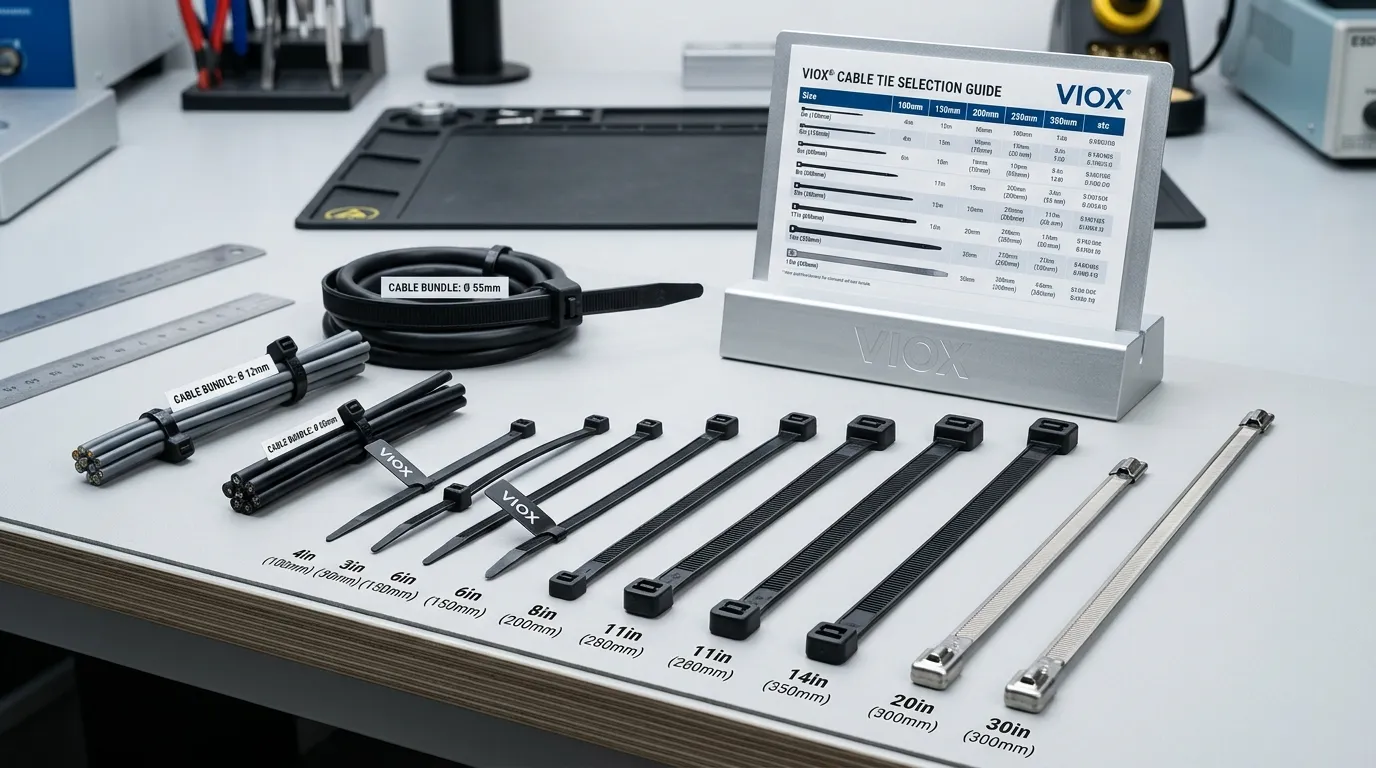
Panduan ini membahagikan saiz pengikat kabel kepada empat dimensi yang sebenarnya diperlukan oleh pembeli dan pemasang:
- panjang
- lebar
- kekuatan tegangan
- diameter berkas
Ia juga menerangkan cara memilih saiz yang betul untuk pendawaian panel, penghalaan kabel luar, penyelenggaraan industri, dan pengikatan tugas berat.
Apa yang Sebenarnya Diberitahu oleh Carta Saiz Pengikat Kabel
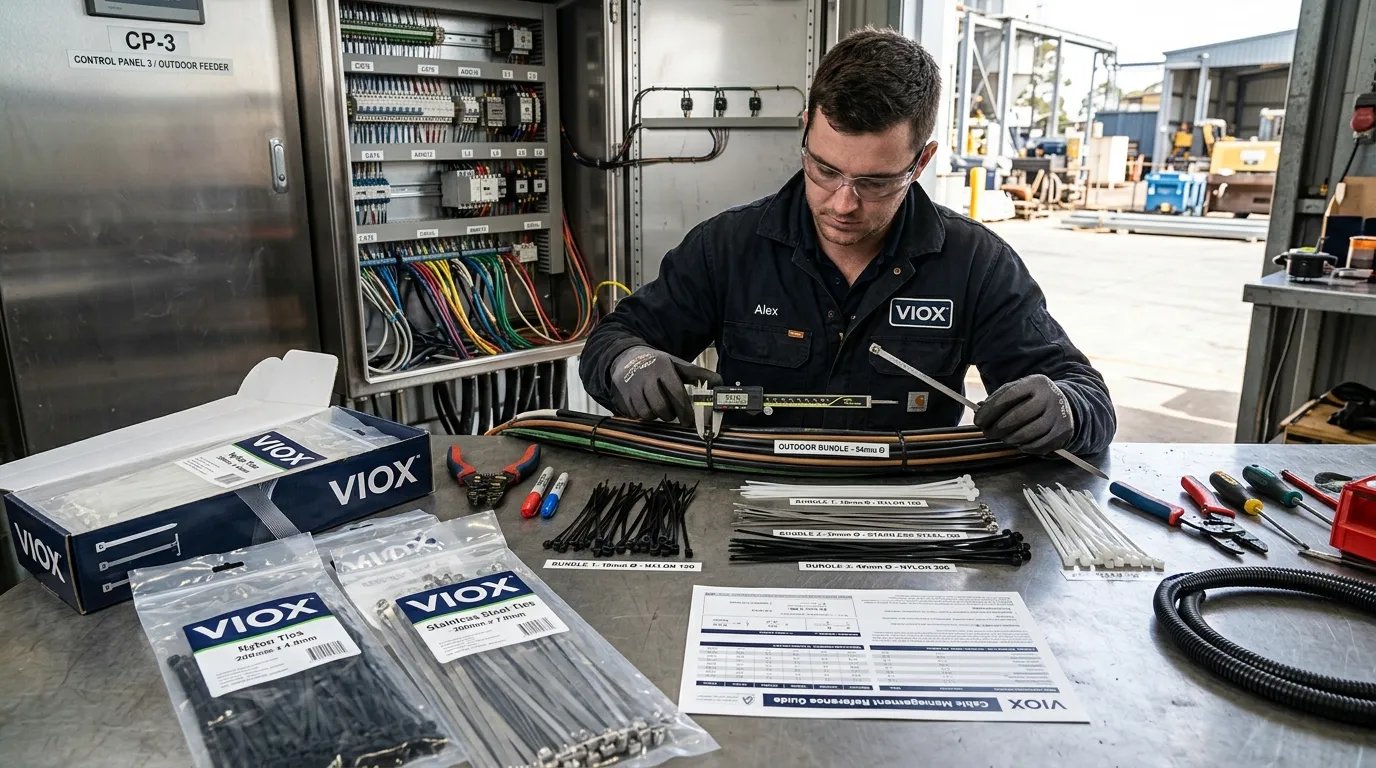
Carta saiz pengikat kabel bukan sekadar senarai dimensi produk. Ia membantu anda memadankan pengikat dengan keadaan penggunaan sebenar.
Dalam praktiknya, carta ini membantu menjawab soalan seperti:
- Adakah pengikat ini akan melilit diameter berkas dengan selamat?
- Adakah kekuatan tegangan mencukupi untuk beban kabel?
- Adakah pengikat terlalu sempit untuk persekitaran atau kaedah pemasangan?
- Patutkah saya beralih daripada pengikat nilon standard kepada pilihan tugas berat atau keluli tahan karat?
Jika anda mendapatkan pengikat untuk kegunaan elektrik atau industri yang berulang dan bukannya kegunaan runcit sekali sahaja, soalan-soalan ini lebih penting daripada panjang nominal sahaja.
Bagi pasukan yang membandingkan pilihan bahan terlebih dahulu, VIOX sudah mempunyai artikel sokongan yang berguna tentang bahan terbaik untuk pengikat kabel.
Carta Saiz Pengikat Kabel Standard
Julat yang tepat berbeza mengikut pengeluar, tetapi jadual berikut memberikan rujukan praktikal untuk saiz pengikat kabel biasa yang digunakan dalam aplikasi elektrik dan industri.
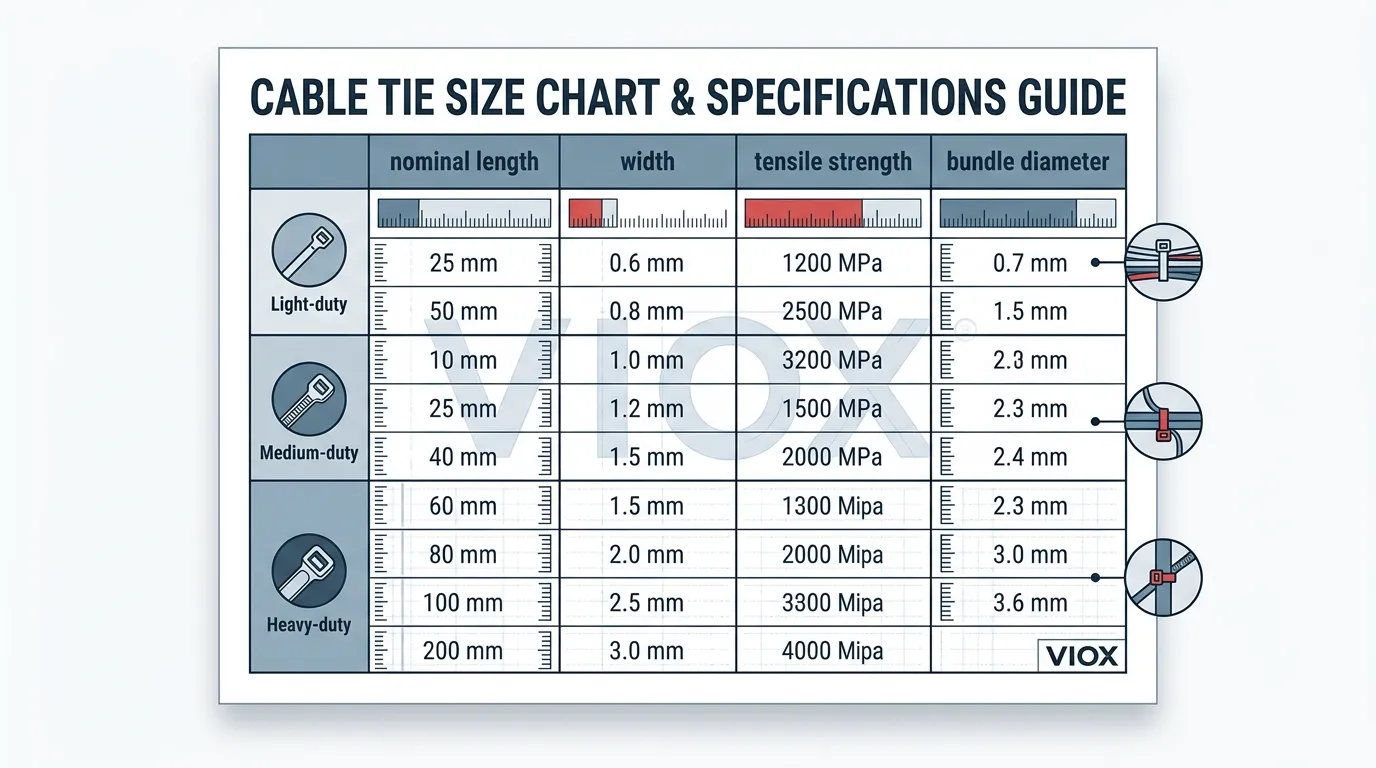
Carta Saiz Pengikat Kabel
| Panjang nominal | Lebar tipikal | Anggaran julat kekuatan tegangan | Julat diameter berkas maks tipikal | Kecenderungan penggunaan biasa |
|---|---|---|---|---|
| 100 mm | 2.5 mm | Tugas ringan | Berkas kecil | Pendawaian dalaman kecil dan sokongan pelabelan |
| 150 mm | 3.6 mm | Tugas ringan hingga sederhana | Berkas kecil hingga sederhana | Pengikatan elektrik ringan |
| 200 mm | 4.8 mm | Tugas sederhana | Berkas sederhana | Kerja panel kawalan am dan penghalaan kabel |
| 250 mm | 4.8 mm | Tugas sederhana | Berkas sederhana | Kerja elektrik dan pemasangan tujuan umum |
| 300 mm | 4.8 hingga 7.6 mm | Tugas sederhana hingga berat | Berkas sederhana hingga lebih besar | Penghalaan luar dan kabel berkumpulan yang lebih berat |
| 370 mm | 7.6 mm | Tugas berat | Berkas yang lebih besar | Pengikatan industri dan beban yang lebih tinggi |
| 450 mm dan ke atas | 7.6 mm dan ke atas | Tugas berat hingga sangat berat | Berkas besar | Penggunaan sokongan industri, luar, dan beban tinggi |
Jadual ini harus dianggap sebagai rujukan praktikal, bukan standard universal. Sentiasa sahkan spesifikasi produk sebenar untuk:
- kekuatan tegangan yang tepat
- julat diameter berkas sebenar
- jenis bahan
- suhu operasi
- kesesuaian UV atau kakisan
Jika anda mencari pilihan sedia produk dan bukannya rujukan pendidikan sahaja, VIOX’s halaman pendaratan pengikat kabel adalah tempat yang sesuai untuk membandingkan konfigurasi produk yang tersedia.
Bagaimana Panjang, Lebar, Kekuatan Tegangan, dan Diameter Berkas Bekerja Bersama
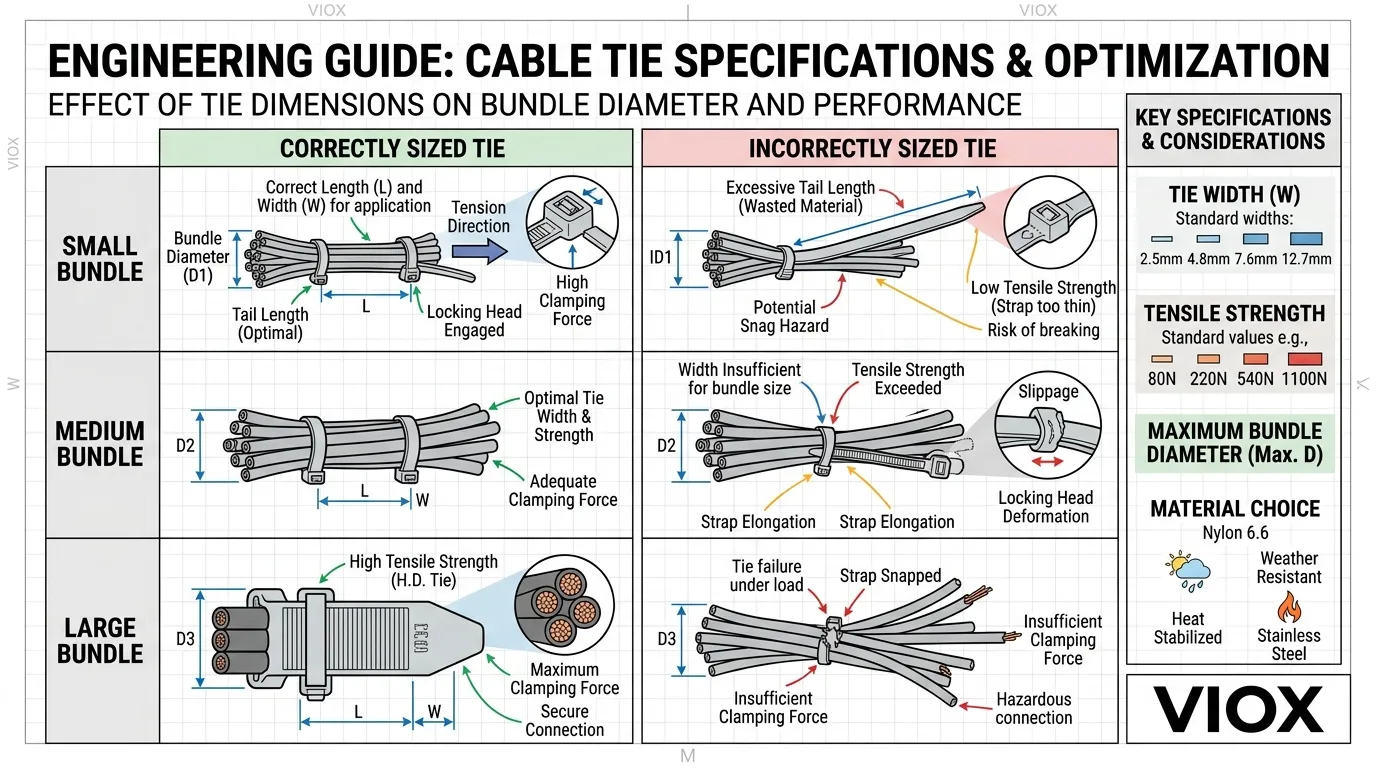
Ramai pembeli melakukan kesilapan dengan memilih pengikat kabel berdasarkan panjang sahaja. Sebenarnya, empat pemboleh ubah saiz utama mesti berfungsi bersama.
1. Panjang
Panjang menentukan sama ada pengikat boleh melilit berkas dan masih meninggalkan ekor yang cukup untuk melibatkan kepala pengunci dengan betul.
Jika pengikat terlalu pendek:
- pemasangan menjadi sukar
- penguncian mungkin tidak lengkap
- pemasang mungkin mengetatkan atau menyalahgunakan pengikat
Walau bagaimanapun, lebih panjang tidak semestinya lebih baik. Panjang yang berlebihan boleh menyebabkan pembaziran, pemasangan yang lebih perlahan, dan penampilan yang buruk dalam pemasangan yang telah siap.
2. Lebar
Lebar mempengaruhi profil kekuatan umum pengikat dan kesesuaian untuk aplikasi.
Sebagai peraturan:
- pengikat yang lebih sempit lebih baik untuk berkas yang lebih ringan dan ruang yang lebih sempit
- pengikat yang lebih lebar lebih sesuai untuk beban yang lebih berat dan persekitaran yang lebih mencabar
Dalam kerja panel, ini penting kerana pengikat yang mudah secara fizikal mungkin masih terlalu sempit untuk permintaan mekanikal yang dijangkakan.
3. Kekuatan Tegangan
Kekuatan tegangan adalah salah satu kriteria saiz yang paling penting kerana ia menunjukkan berapa banyak daya tahan yang boleh ditahan oleh pengikat sebelum gagal.
Tetapi ini mesti ditafsirkan dengan teliti. Beban aplikasi bukan hanya berat statik kabel. Anda juga perlu mempertimbangkan:
- getaran
- pergerakan semasa perkhidmatan
- kitaran terma
- pendedahan luar
- ketegangan berlebihan oleh pemasang
Untuk aplikasi yang lebih berat, ini adalah salah satu sebab mengapa ramai pembeli membandingkan produk nilon standard dengan pengikat logam atau pengikat khusus. Jika perbandingan itu relevan, VIOX sudah mempunyai Berapa Banyak Berat Yang Boleh Ditampung Oleh Pengikat Zip Tugas Berat dan Alternatif yang lebih kuat kepada Ikatan Zip.
4. Diameter Berkas
Diameter berkas ialah saiz luar sebenar berkas kabel atau objek berkumpulan yang mesti dililit oleh pengikat.
Di sinilah banyak kesilapan saiz bermula. Pembeli sering menganggarkan saiz berkas secara visual dan bukannya mengukurnya.
Semakan diameter berkas yang betul harus mengambil kira:
- bilangan konduktor atau tiub
- ketebalan penebat
- ketidakteraturan jaket
- penambahan masa hadapan jika berkas mungkin bertambah kemudian
Jadual Logik Saiz Pantas
| Jika keutamaan anda ialah… | Fokus pertama pada… | Kemudian sahkan… |
|---|---|---|
| Pendawaian panel bersih kecil | Panjang dan lebar yang mudah diurus | Kesesuaian berkas dan kelajuan pemasangan |
| Berkas kabel berat | Kekuatan tegangan dan lebar | Diameter berkas sebenar dan persekitaran |
| Penggunaan luar | Bahan dan rintangan UV/cuaca | Panjang yang betul dan penarafan beban |
| Persekitaran suhu tinggi | Bahan tahan suhu | Kekuatan dan tekanan penghalaan |
| Penggunaan industri yang menghakis atau keras | Kesesuaian bahan | Kaedah pemasangan dan jangka hayat perkhidmatan |
Cara Memilih Saiz Pengikat Kabel Yang Betul Mengikut Aplikasi
Saiz pengikat kabel terbaik bergantung pada apa yang anda ikat dan di mana ia akan digunakan.
Pendawaian panel elektrik
Untuk panel kawalan, kotak pengedaran, dan organisasi pendawaian umum, pemasang biasanya mahu:
- panjang yang mudah diurus
- trim yang bersih selepas pemasangan
- kekuatan yang mencukupi untuk pengumpulan kabel tanpa terlebih saiz
Dalam kes ini, pengikat nilon bersaiz sederhana selalunya lebih praktikal daripada produk tugas berat yang sangat besar. Tetapi pilihan sebenar masih bergantung pada saiz berkas sebenar dan keadaan perkhidmatan.
Pengurusan kabel luaran
Penggunaan luaran memberi lebih tekanan pada bahan dan ketahanan persekitaran berbanding penggunaan dalaman.
Semasa menentukan saiz pengikat kabel luaran, semak:
- rintangan UV
- julat suhu
- pendedahan cuaca
- risiko kerapuhan jangka panjang
Atas sebab ini, pilihan bahan menjadi sama penting dengan saiz. Pengikat bersaiz betul yang diperbuat daripada bahan yang salah masih boleh gagal di luar rumah. Artikel VIOX mengenai Sains Pengikat Kabel Tahan UV: Karbon Hitam vs Putih amat relevan di sini.
Pengikatan industri tugas berat
Apabila berkas besar atau tertakluk kepada tekanan mekanikal, pembeli harus melangkaui logik saiz peringkat permulaan.
Semak:
- lebar
- kekuatan tegangan
- kesesuaian bahan
- sama ada keluli tahan karat lebih sesuai
Untuk persekitaran yang keras, pembeli mungkin perlu membandingkan pengikat nilon dengan alternatif logam. VIOX mempunyai artikel berkaitan tentang Panduan Pengikat Kabel Keluli Tahan Karat.
Aplikasi pemasangan dan penghalaan tetap
Jika pengikat kabel adalah sebahagian daripada sistem pengurusan kabel yang dipasang, saiz sahaja tidak mencukupi. Kaedah pemasangan juga penting.
Dalam kes ini, adalah wajar untuk menilai:
- saiz pengikat
- gaya pelekap
- permukaan pemasangan
- keadaan persekitaran
Sumber berkaitan yang berguna termasuk:
- Panduan Memilih Pelekap Pengikat Kabel Pelekat
- Panduan Penuh untuk Memasang Ikatan Kabel
- Faedah Ikatan Kabel dengan Lubang Skru
Bahan dan Persekitaran Sama Penting dengan Saiz
Carta saiz pengikat kabel hanyalah sebahagian daripada keputusan. Bahan boleh mengubah sepenuhnya sama ada pengikat sesuai untuk kerja tersebut.
Jadual kesesuaian bahan
| Arah bahan | Profil kekuatan/persekitaran tipikal | Kecenderungan penggunaan yang paling sesuai |
|---|---|---|
| Nilon standard | Penggunaan tujuan umum yang baik | Pengikatan elektrik dalaman dan umum |
| Nilon tahan UV | Prestasi luluhawa luaran yang lebih baik | Pengurusan kabel luaran |
| Bahan pengikat suhu tinggi | Rintangan haba yang lebih baik | Persekitaran perindustrian atau peralatan yang lebih panas |
| Keluli tahan karat | Ketahanan persekitaran keras yang lebih kuat | Haba tinggi, menghakis atau penggunaan perindustrian yang mencabar |
Inilah sebabnya mengapa pembeli tidak boleh berkata “Saya memerlukan pengikat 300 mm” dan berhenti di situ. Soalan yang lebih baik ialah:
Adakah saya memerlukan pengikat nilon 300 mm, pengikat tahan UV, pengikat tugas berat atau pengikat keluli tahan karat?
Jika anda mahukan skrin kualiti yang lebih luas sebelum membeli, VIOX juga mempunyai:
- Cara Mengenali Pengikat Kabel Berkualiti Tinggi di Pasaran Hari Ini
- Cara Membezakan Pengikat Kabel Keluli Tahan Karat Berkualiti Tinggi
Kesilapan Saiz Pengikat Kabel Biasa
Kesilapan saiz biasanya berlaku kerana pembeli terlalu memudahkan keputusan.
Jadual kesilapan biasa
| Kesilapan | Mengapa ia berlaku | Hasil |
|---|---|---|
| Memilih mengikut panjang sahaja | Panjang ialah spesifikasi yang paling mudah dilihat | Pengikat mungkin terlalu lemah atau salah untuk persekitaran |
| Menganggarkan diameter berkas dengan mata kasar | Tiada ukuran sebenar | Pengikat mungkin tidak tertutup dengan betul atau mungkin terlalu ketat |
| Mengabaikan bahan | Tumpuan kekal pada dimensi sahaja | Kegagalan awal dalam keadaan UV, haba atau menghakis |
| Terlalu menspesifikasikan setiap pengikat | Takut kurang saiz | Kos tambahan, pemasangan lebih perlahan, pembaziran |
| Menggunakan nilon standard di mana keluli tahan karat diperlukan | Memandang rendah keadaan perkhidmatan | Kegagalan pramatang dalam persekitaran yang keras |
Satu lagi kesilapan biasa ialah terlupa alat pemasangan. Dalam kerja volum tinggi, penegangan dan pemotongan yang betul boleh mempengaruhi ketekalan dan penampilan. VIOX’s Panduan Penuh Pemotong Tali Kabel boleh menyokong bahagian keputusan itu.
Senarai Semak Pemilihan Saiz Pengikat Kabel Praktikal
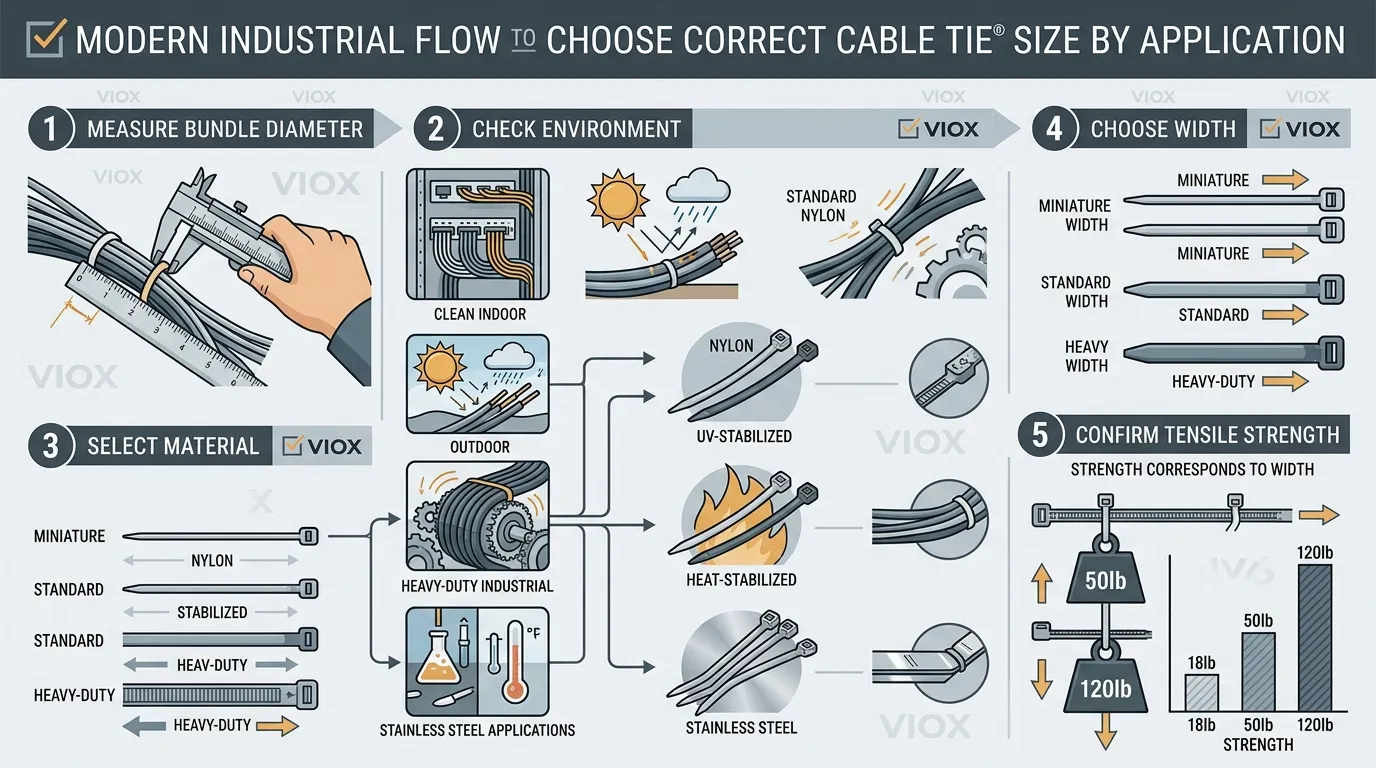
Sebelum membuat pesanan, semak lima perkara ini:
- Ukur diameter berkas sebenar.
- Sahkan sama ada persekitaran dalaman, luaran, suhu tinggi atau menghakis.
- Padankan lebar pengikat dan kekuatan tegangan dengan beban sebenar dan keadaan pemasangan.
- Sahkan sama ada pengikat nilon standard mencukupi atau sama ada bahan khusus diperlukan.
- Jika pengikat adalah untuk perolehan berulang, bandingkan spesifikasi produk pada halaman pembekal seperti Pengikat Kabel VIOX daripada membeli hanya dengan label pasaran umum.
Bilakah Anda Perlu Melangkaui Pengikat Kabel Standard?
Pengikat kabel standard sesuai untuk banyak kerja elektrik rutin, tetapi beberapa keadaan memerlukan pilihan yang lebih khusus.
Anda harus menilai semula jenis produk apabila:
- berkas itu luar biasa besar
- persekitaran panas atau di luar rumah
- kabel terdedah kepada getaran
- ketahanan kimia adalah relevan
- pengikat adalah sebahagian daripada pemasangan tetap jangka panjang dan bukannya organisasi sementara
Pada ketika itu, soalannya bukan lagi hanya “Apakah saiz pengikat kabel yang saya perlukan?” Ia menjadi “Apakah gabungan saiz dan bahan yang betul?”
Soalan Lazim
Apakah faktor terpenting dalam carta saiz pengikat kabel?
Tiada faktor tunggal. Panjang, lebar, kekuatan tegangan, dan diameter berkas hendaklah dipertimbangkan bersama.
Bagaimana cara memilih panjang pengikat kabel yang sesuai?
Pilih panjang yang melilit diameter berkas yang diukur dan masih membolehkan penguncian kepala pengunci yang selamat tanpa memaksa pengikat.
Adakah pengikat kabel yang lebih lebar sentiasa bermaksud ia lebih baik?
Tidak semestinya. Pengikat yang lebih lebar mungkin memberikan lebih kekuatan, tetapi ia juga mungkin tidak diperlukan untuk berkas yang lebih kecil dan ruang pemasangan yang lebih sempit.
Apakah yang dimaksudkan dengan diameter berkas untuk pengikat kabel?
Diameter berkas ialah saiz luar kabel atau objek yang dikumpulkan yang perlu dililit oleh pengikat. Ia harus diukur, bukan dianggarkan.
Patutkah saya memilih pengikat kabel nilon atau keluli tahan karat?
Itu bergantung pada persekitaran, beban, dan aplikasi. Pengikat dalaman standard biasanya menggunakan nilon, manakala persekitaran yang lebih keras mungkin memerlukan bahan yang lebih khusus, termasuk keluli tahan karat.