Kiszámoltad. Az a 8 kW-os napelemes rendszer megtérülése fantasztikusnak tűnik. A panelek ki vannak választva, az inverter specifikálva van, és a szerelő készen áll a munkára.
Aztán az engedélykérelem elutasítva érkezik vissza.
Az ok? A megbízható régi 125A-es elektromos panel “nem bírja” a napelemes visszatáplálást. A szerelő átad egy új árajánlatot: plusz 10 000 dollár hogy árkot ásson az udvarodon keresztül, kiszedje a csövet, és 200A-re bővítse a szolgáltatást.
Hirtelen a napelemes megtérülésed elpárolgott.
Mielőtt aláírná azt a csekket, vagy lemondaná a projektet, tegye le az ásót. Az NEC (National Electrical Code - Országos Elektromos Szabályzat) nem akar csődbe juttatni; meg akarja akadályozni a gyűjtősínjeid megolvadását. És ha megérted a kód mögötti fizikát, van három legitim, a kódnak megfelelő “hátsó ajtó”, amely megmentheti azt a 10 000 dollárt.
Tárjuk fel a panelt, és keressük meg a pénzt.
A gonosztevő: Mi az NEC 120%-os szabálya?
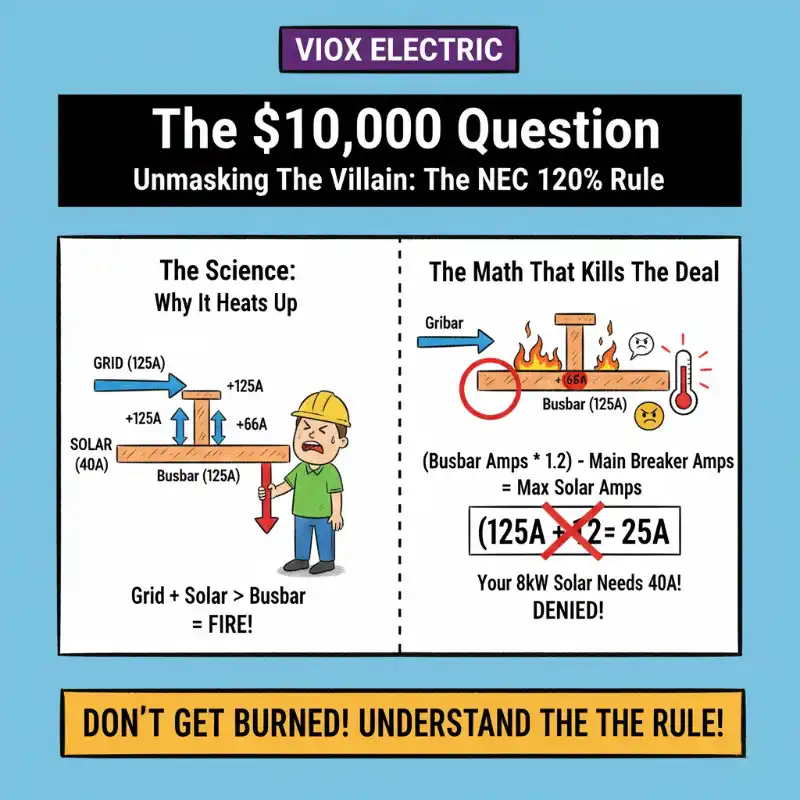
Egy mérnök számára a gyűjtősín csak egy réz autópálya az elektronok számára. De az NEC ellenőrének potenciális tűzveszély.
A NEC 120%-os szabály (az NEC 705.12-ben található) azért létezik, hogy megakadályozza, hogy a panel gyűjtősínje több áramot kezeljen, mint amire tervezték.
Egy szokásos otthonban az áram egy irányba folyik: a hálózatról (főmegszakító) a fogyasztók felé. De a napelemekkel áramot nyomsz vissza a panelbe alulról. Ha a hálózat 125A-t nyom felülről, és a napelem 40A-t nyom alulról, akkor a gyűjtősín középen elméletileg 165A-t szállíthat. Ha ez a gyűjtősín csak 125A-re van méretezve, akkor felmelegszik. Izzik. Végül meghibásodik.
A matek, ami tönkreteszi az üzletet
A kód pufferet ad. Lehetővé teszi, hogy a betápláló megszakítók összege egyenlő legyen a 120% a gyűjtősín névleges értékének 120%-ával.
A képlet:
(Gyűjtősín névleges értéke × 1,2) – Főmegszakító mérete = Maximális napelemes visszatáplálás
Nézzük meg a “Napelemes gyilkossági rejtély” forgatókönyvet, amely a 125A-es paneleket sújtja:
- Gyűjtősín névleges értéke: 125A
- Fő megszakító: 125A
- Számítás: (125 × 1,2) – 125 = 25A
A probléma: Jogilag 25A napelem telepítésére van lehetőséged (kb. 4-5kW). De 40A-re van szükséged ahhoz a 8kW-os rendszerhez. 15A-val kevesebb van.
A szerelő azt mondja: “Bővítsd a szolgáltatást.” Mi azt mondjuk: “Nézzük meg az 1. opciót.”
1. megoldás: A “szegény ember megoldása” (főmegszakító csökkentése)

Ha a matematikai képlet a probléma, változtasd meg a változókat.
Nem tudod könnyen megváltoztatni a gyűjtősín névleges értékét (ez a doboz belsejében lévő fizikai fém). De tudod megváltoztatni a Főmegszakító méretét.
Ha a 125A-es főmegszakítót egy 100A-es megszakítóra cseréled, mesterségesen csökkented a hálózat hozzájárulását, felszabadítva a kapacitást a napelemek számára. Ezt hívják Csökkentésnek.
Az új matek:
- Gyűjtősín: 125A
- Fő megszakító: 100A (Lecserélve)
- Számítás: (125 × 1,2) – 100 = 50A
Az eredmény: Bumm. Most 50A napelemes kapacitásod van. A 40A-es rendszered belefér, és még marad hely. Költség? Körülbelül 200 dollár a megszakító csere vs. 10 000 dollár az árokásásért.
⚠️ Az “EV csapda” figyelmeztetés
Várj. Mielőtt pacsiznál a villanyszerelőddel, tedd fel magadnak a következő kérdést: Valóban el tud működni a házad 100A-rel?
Ez az “EV csapda”. A gáztűzhelyek és gázfűtés korában a 100A bőven elég volt. De ha van:
- Elektromos jármű (EV) töltő (40A-60A terhelés)
- Elektromos indukciós tűzhely
- Központi légkondicionáló
Lehet, hogy le fogja oldani azt az új 100A-es főmegszakítót egy forró nyári estén, amikor bedugja a Teslát, és bekapcsolja a sütőt. Megoldottad a napelemes problémát, de létrehoztál egy életmódbeli problémát.
Ha egy terhelésszámítás (NEC 220. cikk) azt mutatja, hogy a csúcsterhelésed 100A alatt van, ez a tökéletes megoldás. Ha nem? Folytasd a 2. megoldással.
2. megoldás: A “szellem gyűjtősín” (A főnyeremény)
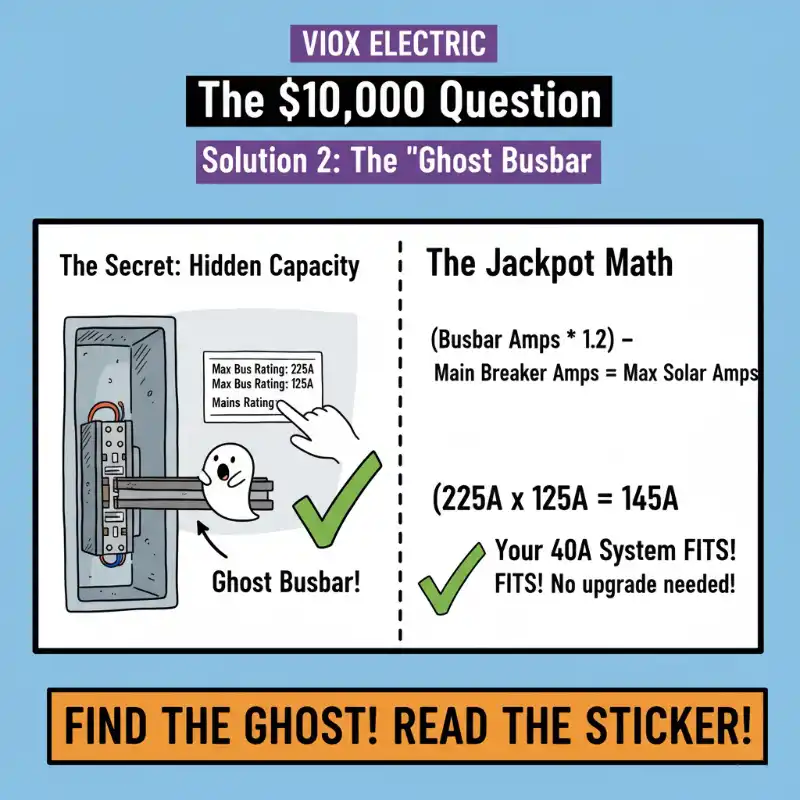
Ez az a titok, ami elválasztja a kezdő szerelőket a profiktól.
A gyártási logisztika furcsa. Gyakran olcsóbb egy gyártó számára (mint például a Siemens, a Square D vagy a VIOX), hogy csak egyet egyfajta nagy teherbírású panel belsejét építse meg, és különböző dobozokba helyezze.
Jó esély van arra, hogy a “125A-es paneled” valójában egy 200A vagy 225A, -re méretezett gyűjtősínnel rendelkezik, de 125A-es főmegszakítóval adták el. Ezt hívjuk “Szellem gyűjtősín” kapacitásnak.
Hogyan találjuk meg a szellemet
Nyisd ki a panel ajtaját (a biztonság az első: ne érj élő alkatrészekhez). Keresd meg a műszaki matricát a belső falon. Egy olyan sort keresel, amely a következőket mondja:
“Max. gyűjtősín névleges értéke” vagy “Hálózati névleges érték”
Ha az a matrica azt mondja 200A vagy 225A, még akkor is, ha a fő megszakítója 125A-es, telitalálatot ért el.
A Szellem Matematika:
- Gyűjtősín névleges értéke: 225A (A rejtett specifikáció)
- Fő megszakító: 125A (Ami be van szerelve)
- Számítás: (225 × 1,2) – 125 = 145A
Az eredmény: Gyakorlatilag bármilyen lakossági napelemes rendszert telepíthet, amit csak akar. Nincs megszakító csere, nincs teljesítménycsökkentés, nincs ásás. Csak el kellett olvasnia a matricát.
3. megoldás: A “kiskapu” (Vezetéki oldali leágazás)
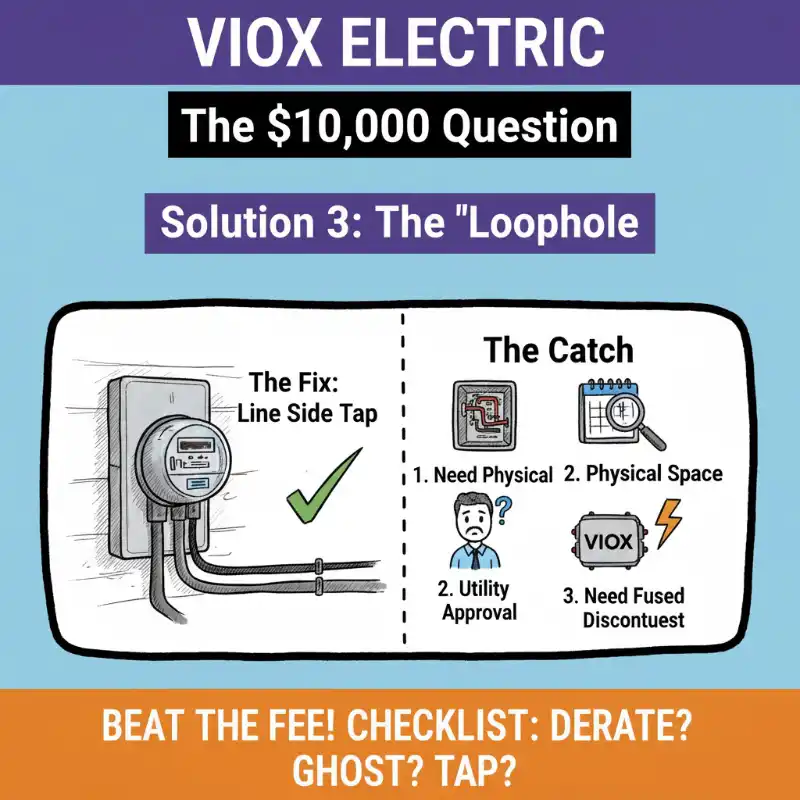
Ha nem tudja csökkenteni a teljesítményt (a terhelések túl magasak), és nincs Szellem Gyűjtősínje, van egy utolsó lépés: A Vezetéki oldali leágazás.
Az 120% szabály vonatkozik a terhelési oldalra a fő megszakító—a gyűjtősínekre, ahol az áramkörei találhatók. De mi lenne, ha a napelemet mielőtt a fő megszakítóhoz csatlakoztatná?
A Vezetéki oldali leágazás magában foglalja a napelem kimenetének közvetlen beillesztését a szolgáltatói bevezető vezetékekbe a közműmérő és a fő megszakító között.
Miért működik
Azzal, hogy a fő megszakító előtt csatlakozik, a napelem árama soha nem érinti a panel korlátozott gyűjtősínjét. Az 120% szabály egyszerűen eltűnik. Az egyetlen korlát az utcáról érkező szolgáltatói vezetékek mérete.
A Fogás
- Fizikai Tér: Szüksége van helyre a dobozban, hogy fizikailag biztonságosan rögzítse a vezetékekre.
- Közmű Jóváhagyás: Egyes közművek (például a PG&E bizonyos területeken) tiltják ezt, vagy meghatározott lezáró dobozokat követelnek meg.
- Burkolat Specifikációk: Gyakran szükség van egy külön biztosítékkal ellátott leválasztó kapcsolóra a panel mellett.
Pro-Tipp: Vezetéki oldali leágazás végrehajtásakor használjon kiváló minőségű, biztosítékkal ellátott leválasztót (például a VIOX biztonsági kapcsoló sorozatát), hogy biztosítsa a tiszta, elkülönített csatlakozási pontot, amely megfelel a közmű leválasztási követelményeinek.
Összefoglalás: Tegye Le a Lapátot
A “Szolgáltatás Fejlesztése” árajánlat gyakran egy lusta megoldás. Nyers erővel (és az Ön pénzével) oldja meg a problémát. Mielőtt engedélyezné az ásást, futtassa le ezt az ellenőrzőlistát:
- Ellenőrizze a Szellemeket: Nézze meg a panel matricáját. A gyűjtősín névleges értéke magasabb, mint a megszakítóé?
- Futtassa le a Teljesítménycsökkentési Matematikát: Túléli az otthona egy kisebb fő megszakítóval? (Végezzen egy megfelelő NEC 220 terhelésszámítást).
- Ellenőrizze a Leágazást: Megkerülheti a panelt teljesen egy Vezetéki oldali leágazással?
Csak akkor hívja a földmunkagépet, ha mindhárom megbukik.
A mérnöki munka nem csak a szabályok betartásáról szól; hanem annak megértéséről is miért a szabályok léteznek, hogy megtalálja a leghatékonyabb utat rajtuk keresztül.
Műszaki pontossági megjegyzés
Hivatkozott szabványok és források
- NEC 705.12(B): Szabályozza a terhelési oldali forrás csatlakozásokat és az 120% szabály számítási módszertanát.
- NEC 220: Szabályozza az áramkörök, a betáplálók és a szolgáltatások terhelési számításait, amelyek szükségesek annak megállapításához, hogy a fő megszakító teljesítménycsökkentése biztonságos-e.
- NEC 230.82: Szabályozza a tápellátási oldali (Vezetéki oldali) csatlakozásokat.
Időszerűségi nyilatkozat
A cikkben szereplő számítások és értelmezések a National Electrical Code (NEC) alapján készültek. Bár a konkrét elfogadási évek (2017, 2020, 2023) államonként és településenként eltérőek, az 120% szabály továbbra is alapvető szabvány a lakossági napelemes összekapcsoláshoz 2025 novemberétől. Telepítés előtt mindig ellenőrizze a helyi közmű követelményeit és a helyi építési szabályzat módosításait.