Understanding Joule Ratings in Surge Protection Context
ক Joule rating indicates the cumulative energy absorption capacity of a surge protection device before it fails or degrades significantly. Measured in Joules (watt-seconds), this rating theoretically represents how much surge energy the device can absorb over its entire service life. However, this seemingly straightforward metric masks several critical limitations that affect its utility in determining এসপিডি effectiveness.

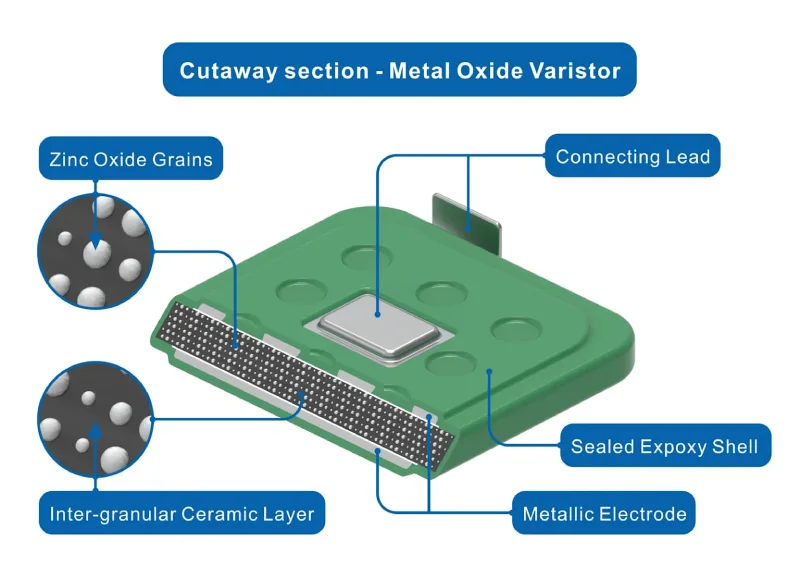
The energy absorption capability depends primarily on the মেটাল অক্সাইড ভ্যারিস্টর (MOV) within the SPD, which are the key components responsible for clamping surge voltages. The Joule rating is determined by the quantity, size, and quality of these MOVs working in parallel configurations.
The Fundamental Limitation: Joule Ratings vs. Protection Quality
Industry Position on Joule Ratings
Major manufacturers and industry standards organizations explicitly reject Joule ratings as reliable indicators of SPD effectiveness. Schneider Electric, a leading SPD manufacturer, states unequivocally that “Joule ratings are not a recognized or reliable metric for determining the effectiveness or performance of a Surge Protective Device”. Similarly, NEMA’s Surge Protection Institute acknowledges that “more reputable manufacturers no longer provide energy ratings” due to their misleading nature.
The IEEE Standard C62.62 specifically states that response time specifications, often conflated with energy ratings, “should not be used as a specification” for SPDs. This industry-wide consensus reflects decades of experience demonstrating that Joule ratings fail to predict actual protection performance.
The Misleading Nature of Energy Ratings
Joule ratings can be artificially inflated through testing methodologies that don’t reflect real-world surge conditions. There is no standardized method for measuring SPD energy ratings, allowing manufacturers to use extended pulse durations or favorable test conditions to generate impressive but meaningless numbers. Some manufacturers have been known to use “long tail pulses to provide larger results, misleading the end users”.
SPD Specifications vs Effectiveness Analysis
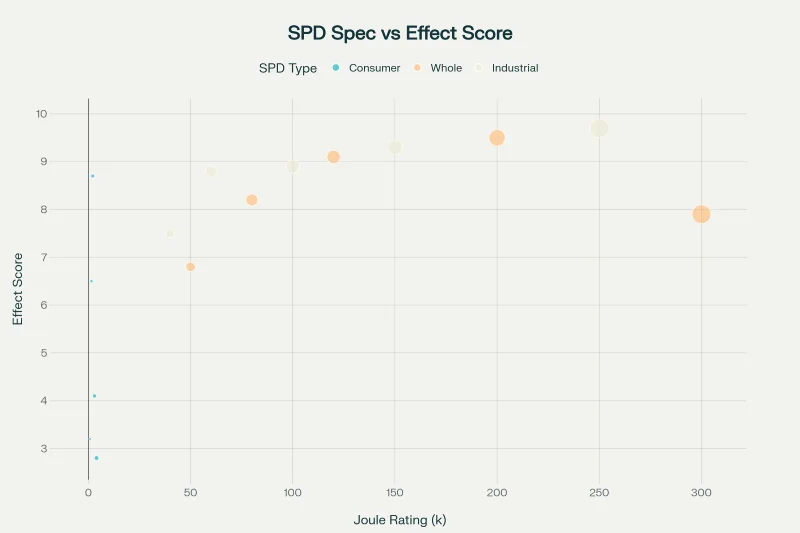
The analysis reveals that higher Joule ratings do not consistently correlate with better protection effectiveness. Consumer surge protectors with ratings of 800-4000 Joules show varied effectiveness scores that don’t align with their energy ratings, while professional-grade SPDs focus on entirely different specifications.
Primary Factors Determining SPD Effectiveness
Clamping Voltage (Voltage Protection Rating)
The most critical factor in SPD effectiveness is the clamping voltage, now standardized as the Voltage Protection Rating (VPR). This specification, measured using UL 1449 testing with a 6kV, 3kA combination wave, directly determines the voltage level that reaches protected equipment during a surge event.
VPR ratings are standardized at specific levels (330V, 400V, 500V, 600V, 700V, 800V, 1000V, 1200V, 1500V, 2000V), providing a consistent basis for comparing SPD performance. Lower VPR values provide superior protection because they limit the surge voltage reaching sensitive equipment to safer levels.
The relationship between VPR and equipment protection is based on the Information Technology Industry Council (ITIC) voltage tolerance curve, which indicates that electronic equipment can typically withstand voltages up to 500% of nominal for very brief durations. Therefore, SPDs with VPR ratings significantly below this threshold provide the most effective protection.
Surge Current Rating (kA Rating)
The surge current rating, measured in kiloamperes (kA), indicates the maximum surge current the SPD can safely handle. This rating, verified through UL 1449 testing, directly relates to the SPD’s ability to survive large surge events without failure.
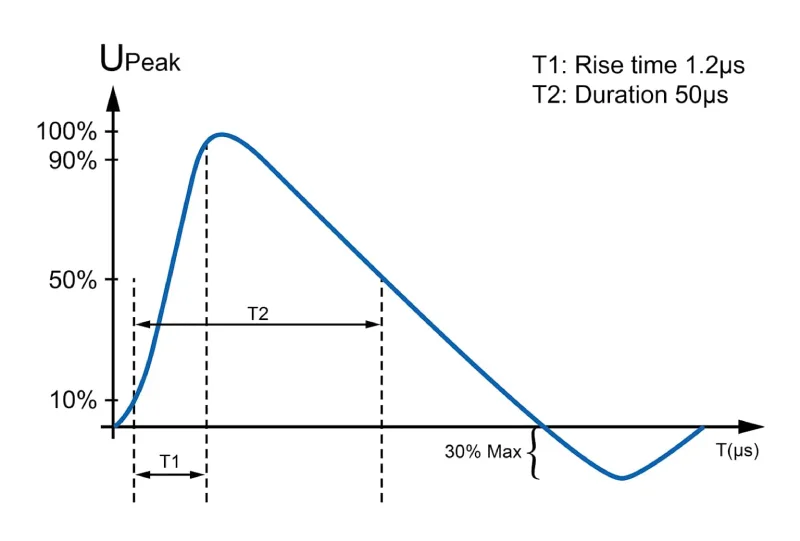
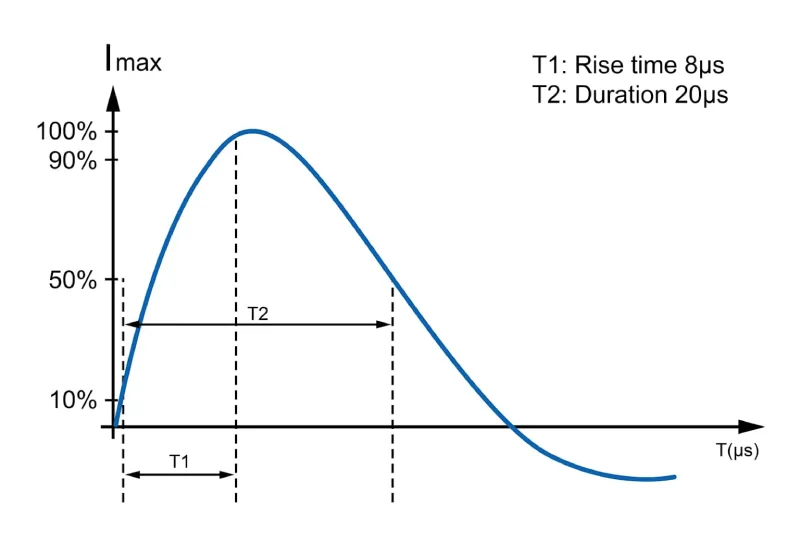 Current Surge waveform showing rise time and duration relevant to SPD performance and Joule rating considerations
Professional SPDs typically offer surge current ratings from 50kA to 200kA or higher, while consumer devices may range from 4kA to 15kA. Higher kA ratings provide better protection against large surge events and extend SPD service life by preventing premature failure during significant lightning-induced surges.
The surge current rating also relates to the SPD’s ability to coordinate with other protective devices in a cascaded protection scheme, where multiple SPDs work together to provide comprehensive protection.
সর্বোচ্চ ক্রমাগত অপারেটিং ভোল্টেজ (MCOV)
MCOV represents the highest steady-state voltage the SPD can withstand without activating or becoming a safety hazard. This specification is crucial for preventing premature SPD degradation due to normal voltage variations and temporary overvoltages.
Professional guidelines recommend selecting SPDs with MCOV ratings at least 115% of the nominal system voltage to ensure reliable operation under normal conditions. SPDs with insufficient MCOV ratings may activate repeatedly during normal voltage fluctuations, leading to premature wear and potential safety hazards.
Industry Standards and Testing Methodologies
UL 1449 Standard Requirements
UL 1449, the definitive safety and performance standard for SPDs, focuses entirely on VPR, surge current ratings, and MCOV – not Joule ratings. The standard’s testing methodology subjects SPDs to rigorous evaluation including:
- Voltage Protection Rating (VPR) Testing: Using 6kV, 3kA combination waves to determine let-through voltage
- Nominal Discharge Current Testing: Applying 15 surges at rated current levels to verify continued functionality
- Temporary Overvoltage Testing: Ensuring safe operation during sustained overvoltage conditions
The standard’s emphasis on these parameters reflects their direct relationship to protection effectiveness, while the absence of Joule rating requirements underscores their limited relevance to actual performance.
IEEE C62.41 Testing Environment
IEEE C62.41 defines the surge environment and recommended test waveforms for evaluating SPD performance. This standard establishes three location categories (A, B, C) based on proximity to the service entrance, with corresponding surge exposure levels and appropriate test waveforms.
The standard’s recommended waveforms (combination wave, ring wave, and others) are designed to simulate realistic surge conditions rather than optimize for energy absorption measurements. This approach emphasizes the importance of protection effectiveness over cumulative energy handling capacity.
Professional SPD Selection Criteria
Whole-House and Industrial Applications
Professional SPD installations prioritize surge current ratings and VPR specifications over Joule ratings. Service entrance SPDs typically feature:
- সার্জ কারেন্ট রেটিং: 50kA to 200kA or higher
- VPR ratings: 330V to 600V depending on system voltage
- MCOV ratings: Properly matched to system voltage with adequate margin
- ইউএল 1449 টাইপ 1 অথবা টাইপ 2 সার্টিফিকেশন: সুরক্ষা মানগুলির সাথে সম্মতি নিশ্চিত করা
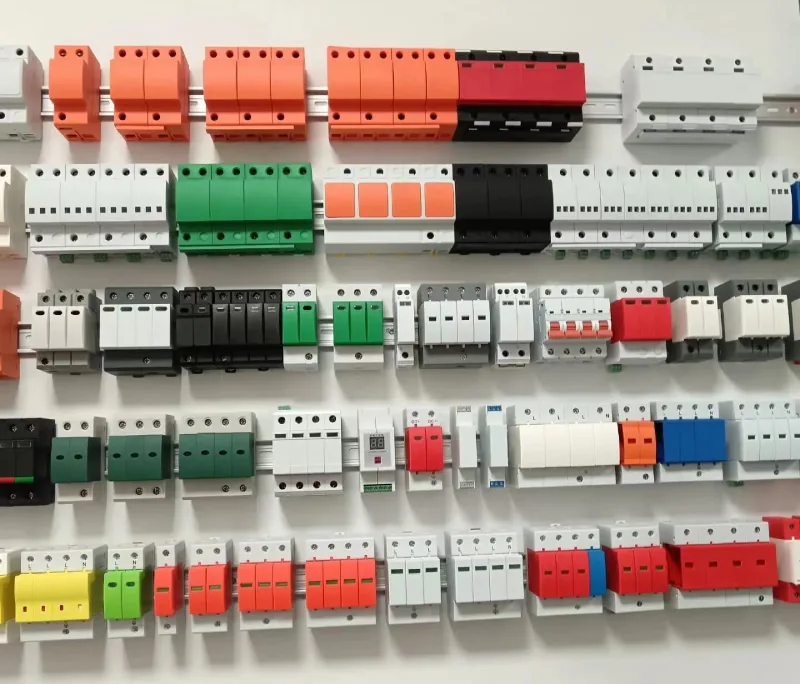
এই প্যারামিটারগুলির উপর মনোযোগ সুরক্ষা কার্যকারিতা এবং সিস্টেম সুরক্ষার উপর তাদের সরাসরি প্রভাবকে প্রতিফলিত করে, যেখানে জুলের রেটিংগুলিকে সুরক্ষার গুণমানের পরিবর্তে ডিভাইসের দীর্ঘায়ুর গৌণ সূচক হিসাবে বিবেচনা করা হয়।.
ক্যাস্কেডেড সুরক্ষা সিস্টেম
পেশাদার ইনস্টলেশনগুলিতে ক্যাস্কেডেড সুরক্ষা স্কিম ব্যবহার করা হয় যেখানে একাধিক এসপিডি একসাথে ব্যাপক সার্জ সুরক্ষা প্রদান করে. এই সিস্টেমগুলিতে:
- পরিষেবা প্রবেশদ্বার SPDs: উচ্চ kA রেটিং সহ বৃহত্তম সার্জ কারেন্টগুলি পরিচালনা করুন
- প্যানেল-মাউন্ট করা এসপিডি: মাঝারি kA রেটিং সহ মাধ্যমিক সুরক্ষা প্রদান করুন
- ব্যবহারের জন্য উপযুক্ত SPD গুলি: নিম্ন kA রেটিং কিন্তু উচ্চতর VPR কর্মক্ষমতা সহ চূড়ান্ত সুরক্ষা প্রদান করুন
এই পদ্ধতিটি স্বীকার করে যে কার্যকর সার্জ সুরক্ষা ক্রমবর্ধমান শক্তি শোষণের চেয়ে সমন্বিত ভোল্টেজ ক্ল্যাম্পিংয়ের উপর নির্ভর করে, যা পেশাদার অ্যাপ্লিকেশনগুলিতে জুলের রেটিংয়ের প্রাসঙ্গিকতা আরও হ্রাস করে।.
এসপিডি লাইফস্প্যানে জুলের রেটিংয়ের ভূমিকা
শক্তি শোষণ এবং ডিভাইস ডিগ্রেডেশন
যদিও জুলের রেটিং সুরক্ষার কার্যকারিতা নির্ধারণ করে না, তবে তারা এসপিডি পরিষেবা জীবনকে প্রভাবিত করে. উচ্চ জুলের রেটিং সাধারণত বৃহত্তর ক্রমবর্ধমান শক্তি শোষণ ক্ষমতা নির্দেশ করে, যা পুনরাবৃত্ত সার্জ এক্সপোজারের অধীনে ডিভাইসের আয়ু বাড়িয়ে তুলতে পারে।.
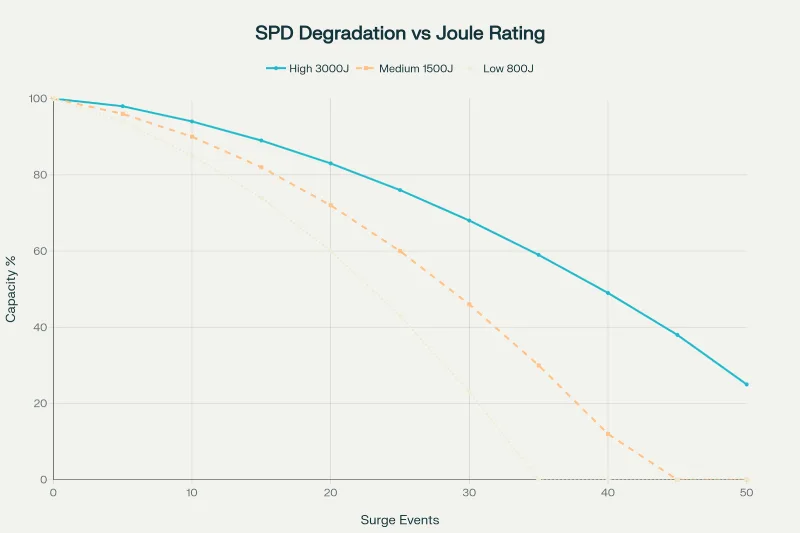
ডিগ্রেডেশন বিশ্লেষণ প্রমাণ করে যে উচ্চ জুলের রেটিংযুক্ত এসপিডিগুলি পুনরাবৃত্ত সার্জ ইভেন্টের অধীনে দীর্ঘকাল ধরে কার্যকারিতা বজায় রাখে, তবে কর্মক্ষম থাকাকালীন সমস্ত সমতুল্য সুরক্ষা গুণমান সরবরাহ করে। এই সম্পর্কটি ব্যাখ্যা করে যে কেন জুলের রেটিং প্রতিস্থাপন সময়সূচী এবং রক্ষণাবেক্ষণ পরিকল্পনার জন্য প্রাসঙ্গিক থাকে, এমনকি তারা সুরক্ষার কার্যকারিতাকে প্রভাবিত না করলেও।.
এমওভি ডিগ্রেডেশন মেকানিজম
পুনরাবৃত্ত সার্জ ইভেন্ট থেকে এমওভিগুলির ক্রমবর্ধমান ক্ষতির মাধ্যমে এসপিডি ডিগ্রেডেশন ঘটে. প্রতিটি সার্জ ইভেন্ট এমওভিগুলির মধ্যে জিঙ্ক অক্সাইড গ্রেইন বাউন্ডারির ক্রমবর্ধমান ক্ষতি করে, ধীরে ধীরে তাদের কার্যকারিতা হ্রাস করে। উচ্চ জুলের রেটিং সাধারণত বৃহত্তর বা আরও বেশি সংখ্যক এমওভি নির্দেশ করে, যা উল্লেখযোগ্য ডিগ্রেডেশন হওয়ার আগে বৃহত্তর রিজার্ভ ক্ষমতা সরবরাহ করে।.
যাইহোক, এই ডিগ্রেডেশন প্রক্রিয়া সুরক্ষার কার্যকারিতার চেয়ে ডিভাইসের আয়ুকে প্রভাবিত করে, যেহেতু সমস্ত এসপিডি সঠিকভাবে আকারের এবং তাদের রেটিংয়ের মধ্যে কাজ করার সময় সমতুল্য ভোল্টেজ ক্ল্যাম্পিং সরবরাহ করে।.
সাধারণ ভুল ধারণা এবং বিপণন অনুশীলন
ভোক্তা বাজারে বিভ্রান্তি
ভোক্তা সার্জ প্রোটেক্টর মার্কেট সুরক্ষার কার্যকারিতার সাথে তাদের সীমিত প্রাসঙ্গিকতা সত্ত্বেও জুলের রেটিংয়ের উপর বেশি জোর দেয়. এই বিপণন পদ্ধতি বেশ কয়েকটি ভুল ধারণা তৈরি করে:
- উচ্চ জুলের রেটিং মানে আরও ভাল সুরক্ষা: মিথ্যা - সুরক্ষা কার্যকারিতা VPR এবং প্রতিক্রিয়া বৈশিষ্ট্যের উপর নির্ভর করে
- জুলের রেটিং সার্জ হ্যান্ডলিং ক্ষমতা নির্দেশ করে: বিভ্রান্তিকর - সার্জ কারেন্ট রেটিং (kA) প্রকৃত সার্জ হ্যান্ডলিং ক্ষমতা নির্ধারণ করে
- শক্তি শোষণ সুরক্ষা গুণমানের সমান: ভুল - ভোল্টেজ ক্ল্যাম্পিং সুরক্ষা কার্যকারিতা নির্ধারণ করে
পেশাদার বনাম ভোক্তা স্পেসিফিকেশন
পেশাদার এসপিডিগুলি সাধারণত জুলের রেটিংকে কম গুরুত্ব দেয় বা সম্পূর্ণরূপে বাদ দেয়, পরিবর্তে কর্মক্ষমতা স্পেসিফিকেশনের উপর দৃষ্টি নিবদ্ধ করে. এই পদ্ধতিটি শিল্পের বোঝাপড়াকে প্রতিফলিত করে যে:
- VPR সরাসরি সুরক্ষা কার্যকারিতা নির্ধারণ করে
- সার্জ কারেন্ট রেটিং ডিভাইস দৃঢ়তা নির্দেশ করে
- MCOV নিরাপদ অবিচ্ছিন্ন অপারেশন নিশ্চিত করে
- জুলের রেটিং প্রাথমিকভাবে প্রতিস্থাপন ব্যবধানকে প্রভাবিত করে
পেশাদার এবং ভোক্তা স্পেসিফিকেশনের মধ্যে পার্থক্য বিপণন-চালিত শক্তি রেটিং এবং প্রকৃত সুরক্ষা কর্মক্ষমতার মধ্যে সংযোগ বিচ্ছিন্নতাকে তুলে ধরে।.
প্রযুক্তিগত বিশ্লেষণ এবং কর্মক্ষমতা সম্পর্ক
জুলের রেটিং এবং কার্যকারিতার মধ্যে দুর্বল সম্পর্ক
ব্যাপক বিশ্লেষণে জুলের রেটিং এবং প্রকৃত এসপিডি কার্যকারিতার মধ্যে নগণ্য সম্পর্ক প্রকাশ পায়.
ডেটা দেখায় যে:
- ভোক্তা এসপিডি: অনুরূপ জুলের রেটিং থাকা সত্ত্বেও কার্যকারিতা স্কোর উল্লেখযোগ্যভাবে পরিবর্তিত হয়
- পেশাদার এসপিডি: উচ্চ কার্যকারিতা নিম্ন VPR এবং উচ্চ kA রেটিংয়ের সাথে সম্পর্কযুক্ত, জুলের রেটিংয়ের সাথে নয়
- শিল্প এসপিডি: উন্নত কর্মক্ষমতা শক্তি ক্ষমতার চেয়ে উন্নত এমওভি প্রযুক্তি এবং সার্কিট ডিজাইনকে প্রতিফলিত করে
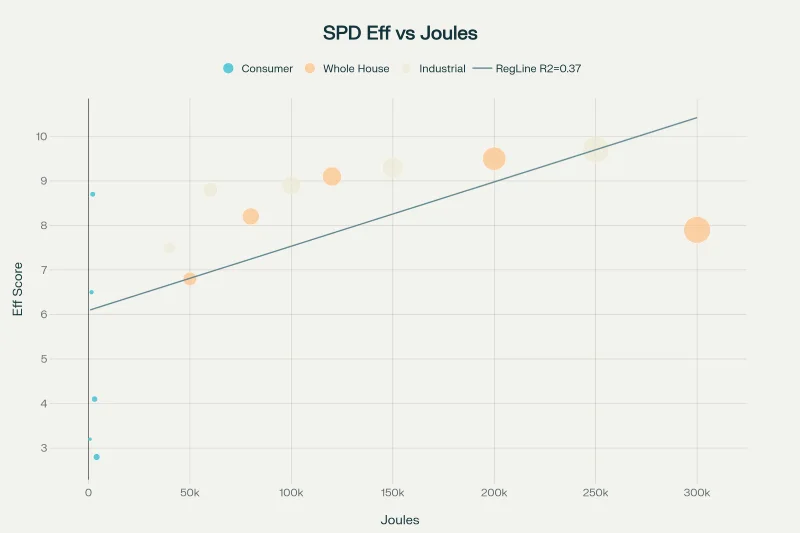 এসপিডি কার্যকারিতা বিশ্লেষণ: জুলের রেটিং এবং প্রকৃত এসপিডি কার্যকারিতার মধ্যে দুর্বল সম্পর্ক প্রদর্শন করা, কেন অন্যান্য কারণগুলি বেশি গুরুত্বপূর্ণ তা ব্যাখ্যা করে টীকা সহ
এই বিশ্লেষণ নিশ্চিত করে যে জুলের রেটিং সুরক্ষার কার্যকারিতার দুর্বল ভবিষ্যদ্বাণীকারী, যেখানে VPR এবং সার্জ কারেন্ট রেটিং প্রকৃত কর্মক্ষমতার সাথে দৃঢ় সম্পর্ক দেখায়।.
মাল্টি-ফ্যাক্টর কর্মক্ষমতা বিশ্লেষণ
কার্যকর এসপিডি নির্বাচনের জন্য একক স্পেসিফিকেশনের উপর নির্ভর করার চেয়ে একাধিক আন্তঃসম্পর্কিত বিষয় বিবেচনা করা প্রয়োজন.
ব্যাপক মূল্যায়ন কাঠামোতে অন্তর্ভুক্ত রয়েছে:
- প্রাথমিক বিষয়: VPR, সার্জ কারেন্ট রেটিং, MCOV
- গৌণ বিষয়: প্রতিক্রিয়া সময়, জুলের রেটিং, শারীরিক নকশা
- সুরক্ষা বিষয়: UL 1449 সম্মতি, এন্ড-অফ-লাইফ সুরক্ষা, ইনস্টলেশন প্রয়োজনীয়তা
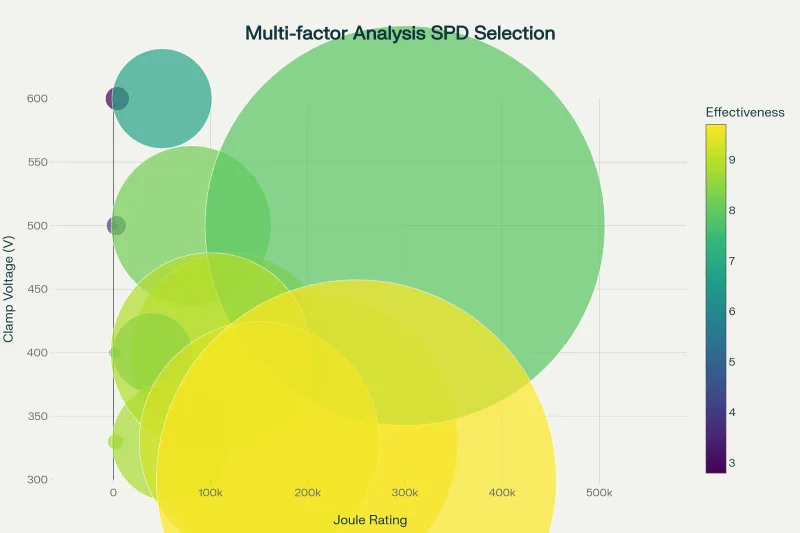
এই মাল্টি-ফ্যাক্টর পদ্ধতি জুলের রেটিংয়ের উপর ভিত্তি করে একক-প্যারামিটার নির্বাচনের সীমাবদ্ধতা এড়িয়ে কার্যকর সুরক্ষা নিশ্চিত করে।.
এসপিডি নির্বাচনের জন্য প্রস্তাবনা
পেশাদার নির্বাচন নির্দেশিকা
সঠিক এসপিডি (SPD) নির্বাচনে বিপণন-চালিত স্পেসিফিকেশনের চেয়ে প্রমাণিত কর্মক্ষমতা সূচকগুলিকে অগ্রাধিকার দেওয়া উচিত:
- প্রাথমিক বিবেচনা: সুরক্ষিত সরঞ্জামের দুর্বলতার জন্য উপযুক্ত VPR রেটিং সহ এসপিডি নির্বাচন করুন
- সার্জ ক্ষমতা: ইনস্টলেশন অবস্থান এবং এক্সপোজার স্তরের উপর ভিত্তি করে সার্জ কারেন্ট রেটিং নির্বাচন করুন
- অপারেটিং প্যারামিটার: নিশ্চিত করুন যে MCOV রেটিং সিস্টেম ভোল্টেজের উপরে পর্যাপ্ত মার্জিন সরবরাহ করে
- মান সম্মতি: সুরক্ষা এবং কর্মক্ষমতা যাচাইয়ের জন্য UL 1449 সার্টিফিকেশন যাচাই করুন
- দ্বিতীয় বিবেচনা: রক্ষণাবেক্ষণ সময়সূচী এবং প্রতিস্থাপন পরিকল্পনার জন্য জোল রেটিং বিবেচনা করুন
অ্যাপ্লিকেশন-নির্দিষ্ট সুপারিশ
বিভিন্ন অ্যাপ্লিকেশনের জন্য এসপিডি নির্বাচনে উপযোগী পদ্ধতির প্রয়োজন:
- আবাসিক অ্যাপ্লিকেশন: সার্ভিস প্রবেশের জন্য VPR ≤ 400V এবং সার্জ কারেন্ট রেটিং ≥ 40kA এর উপর মনোযোগ দিন
- বাণিজ্যিক স্থাপনা: প্রধান প্যানেলের জন্য VPR ≤ 330V এবং সার্জ কারেন্ট রেটিং ≥ 80kA কে অগ্রাধিকার দিন
- শিল্প সুবিধা: গুরুত্বপূর্ণ সরঞ্জাম সুরক্ষার জন্য VPR ≤ 300V এবং সার্জ কারেন্ট রেটিং ≥ 100kA এর উপর জোর দিন
- ডেটা সেন্টার: দ্রুত প্রতিক্রিয়া সময় এবং উচ্চ সার্জ কারেন্ট রেটিং সহ VPR ≤ 330V প্রয়োজন
উপসংহার
জোল রেটিং এসপিডি কার্যকারিতার উপর সামান্য প্রভাব ফেলে, প্রাথমিকভাবে সুরক্ষা মানের পরিবর্তে ডিভাইসের দীর্ঘায়ু নির্দেশক হিসাবে কাজ করে. বিস্তৃত বিশ্লেষণে দেখা যায় যে জোল রেটিং ক্রমবর্ধমান শক্তি শোষণের ক্ষমতা প্রতিফলিত করলেও, এটি সংযুক্ত সরঞ্জামকে সার্জের ক্ষতি থেকে রক্ষা করার জন্য এসপিডি-র ক্ষমতা নির্ধারণ করে না।.
এসপিডি কার্যকারিতাকে প্রভাবিত করে এমন সবচেয়ে গুরুত্বপূর্ণ বিষয়গুলি হল ক্ল্যাম্পিং ভোল্টেজ (VPR), সার্জ কারেন্ট রেটিং এবং সর্বোচ্চ ক্রমাগত অপারেটিং ভোল্টেজ (MCOV). এই প্যারামিটারগুলি, UL 1449 পরীক্ষার মাধ্যমে মানসম্মত, সরাসরি সুরক্ষা কর্মক্ষমতা এবং নিরাপত্তাকে প্রভাবিত করে। পেশাদার এসপিডি প্রস্তুতকারক এবং শিল্প মান সংস্থাগুলি সুরক্ষার কার্যকারিতা মূল্যায়নের সময় ধারাবাহিকভাবে জোল রেটিংয়ের চেয়ে এই স্পেসিফিকেশনগুলিকে অগ্রাধিকার দেয়।.
সর্বোত্তম সার্জ সুরক্ষার জন্য, স্বীকৃত পরীক্ষার মান দ্বারা যাচাইকৃত প্রমাণিত কর্মক্ষমতা সূচকগুলির উপর ভিত্তি করে নির্বাচন সিদ্ধান্ত নেওয়া উচিত. যদিও জোল রেটিং রক্ষণাবেক্ষণ সময়সূচী এবং প্রতিস্থাপন পরিকল্পনা জানাতে পারে, তবে এসপিডি কার্যকারিতা নির্ধারণের ক্ষেত্রে এটি প্রাথমিক কারণ হওয়া উচিত নয়। এই পার্থক্যটি বোঝা কার্যকর সার্জ সুরক্ষা কৌশল বাস্তবায়নের জন্য অত্যন্ত গুরুত্বপূর্ণ যা সত্যিই সংবেদনশীল ইলেকট্রনিক সরঞ্জামকে সার্জের ক্ষতি থেকে রক্ষা করে।.
প্রমাণ স্পষ্টভাবে প্রদর্শন করে যে কার্যকর সার্জ সুরক্ষা ভোল্টেজ ক্ল্যাম্পিং কর্মক্ষমতা এবং সার্জ কারেন্ট হ্যান্ডলিং ক্ষমতার উপর নির্ভর করে, ক্রমবর্ধমান শক্তি শোষণের উপর নয়. এই ধারণাটি সমস্ত এসপিডি নির্বাচন সিদ্ধান্তকে পরিচালিত করা উচিত, এটি নিশ্চিত করে যে সুরক্ষার কার্যকারিতা বিপণন-চালিত স্পেসিফিকেশনগুলির চেয়ে অগ্রাধিকার পায় যা প্রকৃত কর্মক্ষমতা ক্ষমতা প্রতিফলিত নাও করতে পারে।.
সংশ্লিষ্ট
সার্জ প্রোটেক্টিভ ডিভাইস (SPD) কীভাবে অন্যান্য বৈদ্যুতিক সার্জ প্রোটেকশন পদ্ধতি থেকে আলাদা?
সার্জ প্রোটেকশন ডিভাইস (SPD) কী?
ঢেউ সুরক্ষা ডিভাইস: সুবিধা এবং অসুবিধা