

اس صفحے پر
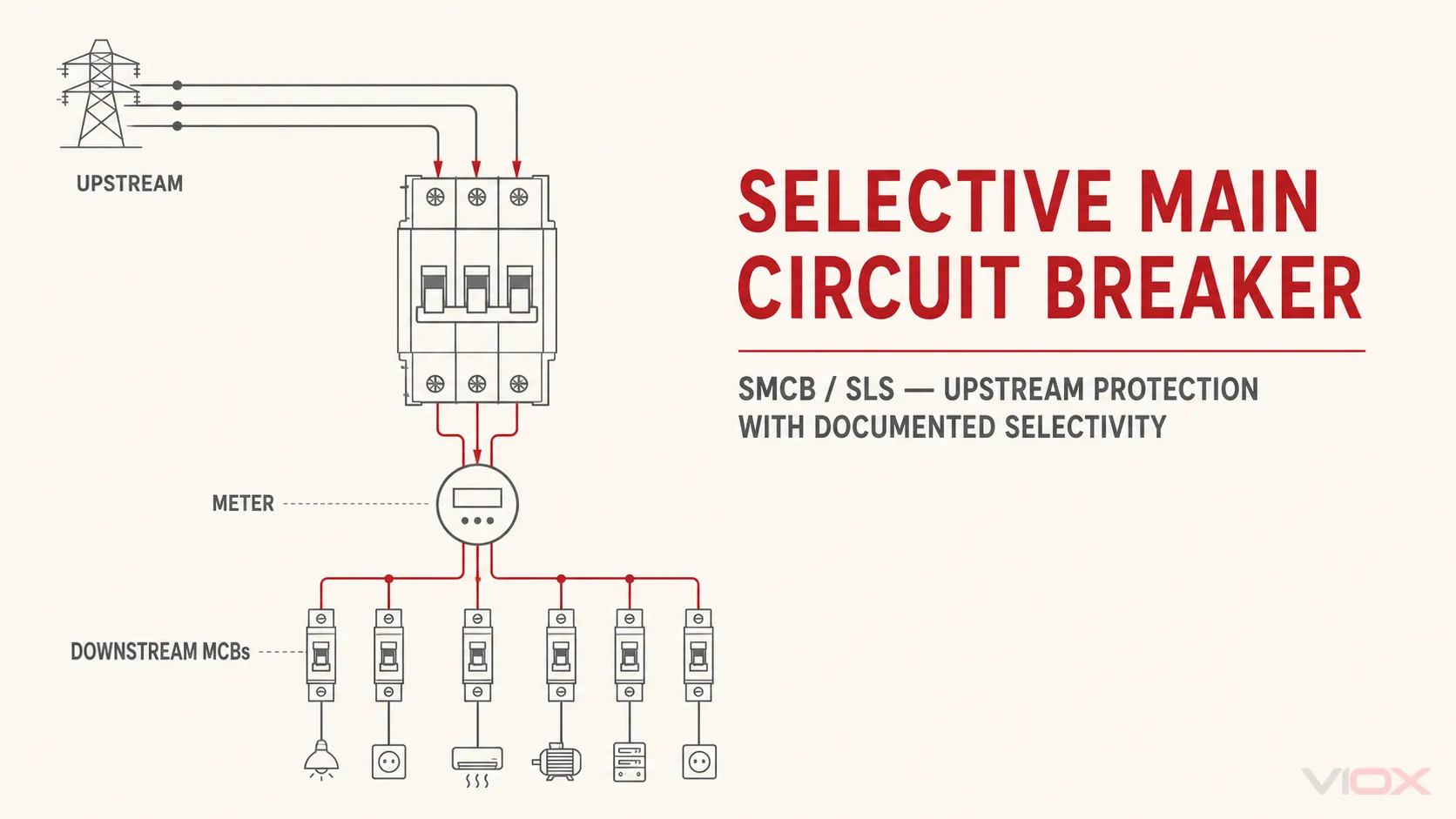
اے سلیکٹو مین سرکٹ بریکر (SMCB) ایک اپ اسٹریم اوور کرنٹ پروٹیکٹو ڈیوائس ہے جسے ڈاؤن اسٹریم پروٹیکٹو ڈیوائسز کے ساتھ منتخب طور پر مربوط کرنے کے لیے ڈیزائن اور تصدیق شدہ کیا گیا ہے۔ جب کسی فائنل سرکٹ میں دستاویزی سلیکٹیوٹی رینج کے اندر کوئی فالٹ واقع ہوتا ہے، تو SMCB کے پوری تنصیب کو منقطع کرنے سے پہلے ڈاؤن اسٹریم MCB کو عام طور پر اسے کلیئر کر دینا چاہیے۔ جرمن پریکٹس میں، اس ڈیوائس کو عام طور پر SLS سوئچ یا SH سوئچ.
ایک SMCB محض ان کمنگ سپلائی پر نصب ایک عام بریکر نہیں ہے۔ لفظ سلیکٹیو ڈیوائس کے امتزاج اور فالٹ کرنٹ کی حدود کے اندر ایک آزمودہ یا دستاویزی کوآرڈینیشن رویے کو بیان کرتا ہے۔ صرف ایک بڑی ایمپیئر ریٹنگ، تاخیر سے ٹرپ ہونا، یا میٹر سے پہلے کی پوزیشن بذات خود یہ ثابت نہیں کرتی کہ کوئی ڈیوائس SMCB ہے۔.
یہ مضمون پروڈکٹ کی کیٹیگری اور اس کی آپریٹنگ حدود کی وضاحت کرتا ہے۔ کسی بھی اپ اسٹریم اور ڈاؤن اسٹریم حفاظتی آلات کو مربوط کرنے کے لیے استعمال ہونے والے وسیع تر اصولوں کے لیے، VIOX کی سرکٹ بریکر سلیکٹیوٹی اور کوآرڈینیشن گائیڈ ملاحظہ کریں.
SMCB، SLS، اور SH سوئچ: اصطلاحات کا نقشہ
یہ اصطلاحات علاقائی ہیں، اور بعض اوقات مختلف آلات کے لیے ملتے جلتے الفاظ استعمال کیے جاتے ہیں۔.
| اصطلاح | عملی مفہوم | اہم حد |
|---|---|---|
| سلیکٹیو مین سرکٹ بریکر (SMCB) | ایک مین اوور کرنٹ سرکٹ بریکر کا انگریزی نام جسے سلیکٹیو کوآرڈینیشن کے لیے ڈیزائن کیا گیا ہے | اسے پروڈکٹ کے ایک تسلیم شدہ معیار اور مینوفیکچرر کے کوآرڈینیشن ڈیٹا کی تائید حاصل ہونی چاہیے |
| SLS سوئچ | کے لیے عام جرمن مخفف سلیکٹو مین لائن سرکٹ بریکر (Selektiver Hauptleitungsschutzschalter) | جرمن میٹر پینل اور گرڈ کنکشن کے طریقہ کار سے گہرا تعلق رکھتا ہے |
| SH سوئچ / SH-Schalter | سلیکٹو مین لائن پروٹیکشن سرکٹ بریکر کے لیے مختصر جرمن اصطلاح | مصنوعات کی اصطلاحات مینوفیکچرر اور جنریشن کے لحاظ سے مختلف ہو سکتی ہیں |
| مین سرکٹ بریکر | کوئی بھی بریکر جو انسٹالیشن یا بورڈ کے مرکزی حفاظتی آلے کے طور پر کام کرتا ہو | یہ ضروری نہیں کہ سلیکٹو ہو یا DIN VDE 0641-21 کے مطابق ہو |
| مین آئسولیٹر | ایک آلہ جو تنصیب کو الگ کرنے کے لیے استعمال ہوتا ہے | اس میں اوور کرنٹ سے تحفظ نہیں ہو سکتا جب تک کہ اس فنکشن کا خاص طور پر اعلان نہ کیا گیا ہو |
موجودہ جرمن پروڈکٹ اسٹینڈرڈ ہے DIN VDE 0641-21:2018-09, ، جس کا عنوان ہے گھریلو اور اسی طرح کی تنصیبات کے لیے اوور کرنٹ سے تحفظ کے سرکٹ بریکرز—حصہ 21: سلیکٹیو مین سرکٹ بریکرز. ۔ اسٹینڈرڈ کا صفحہ SMCBs کی شناخت ایک مخصوص سرکٹ بریکر زمرے کے طور پر کرتا ہے؛ اسے ہر روایتی کے لیے دوسرا نام نہیں سمجھا جانا چاہیے چھوٹے سرکٹ بریکر.
تقسیمی نظام میں SMCB کہاں واقع ہوتا ہے
ایک نمائندہ جرمن میٹر تنصیب میں، حفاظتی درجہ بندی کا تصور اس طرح کیا جا سکتا ہے:
عوامی لو-وولٹیج سپلائی
        ↓
سروس کنکشن / اپ اسٹریم یوٹیلیٹی پروٹیکشن
        ↓
سلیکٹو مین سرکٹ بریکر (SMCB / SLS)
        ↓
بجلی کا میٹر
        ↓
مین ڈسٹری بیوشن بورڈ
        ↓
ڈاؤن اسٹریم MCBs یا RCBOs
        ↓
حتمی سرکٹس اور لوڈز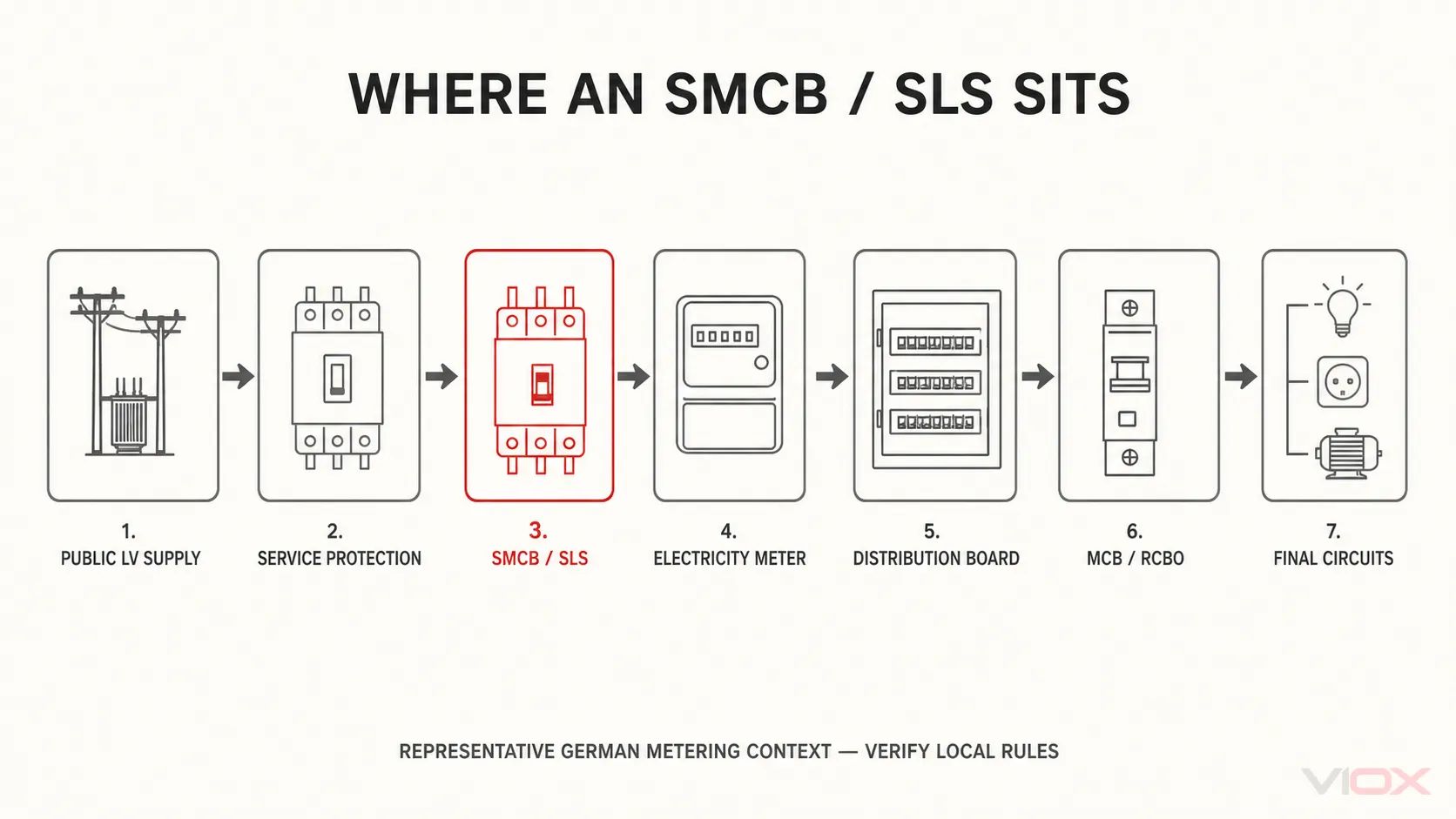
درست ترتیب کا انحصار قابل اطلاق کنکشن کے قواعد، میٹر پینل کے ڈیزائن، نیٹ ورک آپریٹر کی ضروریات، اور پروڈکٹ کی ہدایات پر ہوتا ہے۔ Hager، SLS کو عمارت کی مین لائن میں ایک مرکزی حفاظتی ڈیوائس کے طور پر بیان کرتا ہے اور اسے اپنے جرمن سسٹم کے تناظر میں میٹر سے پہلے گرڈ سائیڈ کنکشن کمپارٹمنٹ میں رکھتا ہے۔ ABB بھی میٹر ماؤنٹنگ بورڈز اور مین ڈسٹری بیوشن بورڈز کو SMCB کی ایپلی کیشنز کے طور پر شناخت کرتا ہے۔.
یہ پوزیشن ڈیوائس کو اس کی اعلان کردہ ریٹنگز کے تعاون سے کئی ممکنہ فرائض تفویض کرتی ہے:
- مین لائن کو اوورلوڈ اور شارٹ سرکٹ سے محفوظ رکھنا؛;
- ڈاؤن اسٹریم سرکٹ بریکرز کے لیے اپ اسٹریم سلیکٹو ڈیوائس کے طور پر کام کرنا؛;
- مین سوئچنگ یا آئسولیشن کا فنکشن فراہم کرنا جب پروڈکٹ کو اس کے لیے موزوں قرار دیا گیا ہو؛;
- ڈاؤن اسٹریم حفاظتی ڈیوائس کو پہلے مقامی فالٹ کو کلیئر کرنے کی اجازت دے کر آؤٹیج کی حد کو محدود کرنا۔.
ان فرائض کا اندازہ صرف مقام سے نہیں لگایا جانا چاہیے۔ میٹر سے پہلے نصب شدہ بریکر خود بخود اس پوزیشن کے لیے موزوں نہیں ہوتا، اور ہر ملک میں SMCB کی خود بخود ضرورت نہیں ہوتی۔.
فالٹ کے دوران “سلیکٹیو” (Selective) کا کیا مطلب ہے
سلیکٹیوٹی حفاظتی ڈیوائسز کے درمیان ایک آپریٹنگ نتیجہ ہے، نہ کہ کوئی الگ تھلگ نیم پلیٹ ویلیو۔ مطلوبہ ترتیب یہ ہے:
ایک فائنل سرکٹ میں فالٹ
        ↓
فالٹ کرنٹ ڈاؤن اسٹریم اور اپ اسٹریم دونوں ڈیوائسز سے گزرتا ہے
        ↓
ڈاؤن اسٹریم MCB فالٹ کا پتہ لگاتا ہے اور اسے کلیئر کرتا ہے
        ↓
SMCB تصدیق شدہ کوآرڈینیشن رینج کے اندر بند رہتا ہے
        ↓
غیر متاثرہ سرکٹس میں بجلی بحال رہتی ہے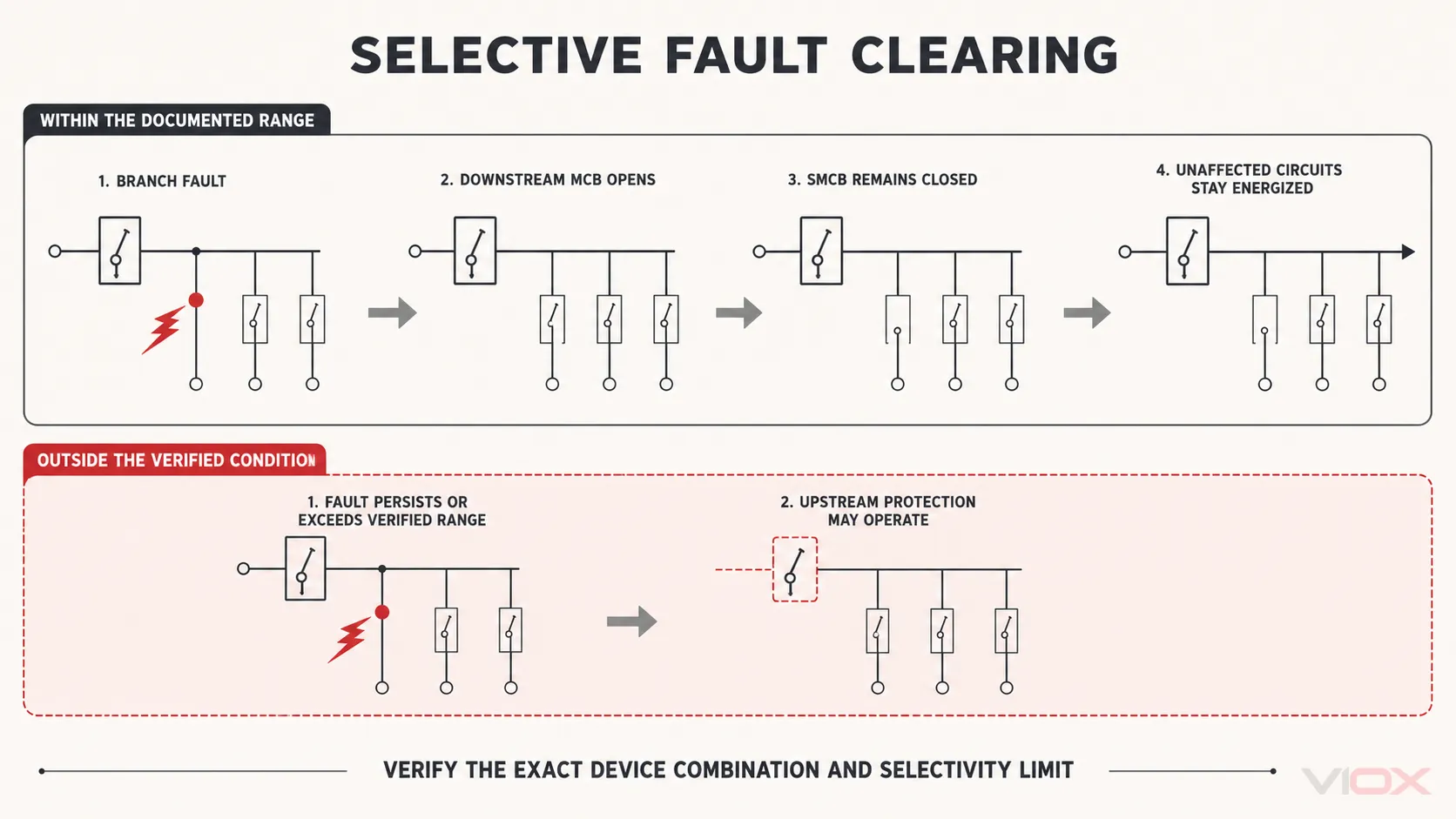
اگر اپ اسٹریم ڈیوائس غیر ضروری طور پر کھل جائے، تو مقامی برانچ کا فالٹ عمارت کی سطح پر تعطل بن جاتا ہے۔ اگر کوئی بھی ڈیوائس دستیاب فالٹ کرنٹ کو محفوظ طریقے سے منقطع نہیں کر سکتی، تو تنصیب میں زیادہ بنیادی ریٹنگ اور کوآرڈینیشن کا مسئلہ موجود ہے۔.
اس لیے تین الگ الگ سوالات کے جوابات دیے جانے چاہئیں:
- کیا ہر ڈیوائس اپنے تنصیب کے مقام پر فالٹ ڈیوٹی کو منقطع کر سکتی ہے؟ یہ بریکنگ کیپیسٹی کا سوال ہے۔.
- متوقع کرنٹ اور وقت کے دورانیے کے لیے کون سا آلہ پہلے کام کرتا ہے؟ یہ سلیکٹیوٹی کا سوال ہے۔.
- کیا کنڈکٹرز اور ڈاؤن اسٹریم آلات فالٹ کلیئر ہونے تک لیٹ-تھرو انرجی کو برداشت کر سکتے ہیں؟ یہ انرجی اور پروٹیکشن کوآرڈینیشن کا سوال ہے۔.
انہیں صرف ریٹیڈ کرنٹ کے موازنہ تک محدود نہ رکھیں۔ ایک 63 A کا اپ اسٹریم آلہ اور 16 A کا ڈاؤن اسٹریم آلہ صرف اس لیے خود بخود سلیکٹیو نہیں ہو جاتے کہ 63، 16 سے بڑا ہے۔ نتیجہ ٹرپ کی خصوصیات، کرنٹ کو محدود کرنے کے رویے، دستیاب فالٹ کرنٹ، اپ اسٹریم پروٹیکشن، اور آلات کے ٹیسٹ شدہ یا حسابی امتزاج پر منحصر ہوتا ہے۔.
ایک SMCB سلیکٹیو آپریشن کیسے حاصل کرتا ہے
ایک SMCB کو مسلسل اوورلوڈز اور شدید شارٹ سرکٹ پر ردعمل ظاہر کرنا چاہیے، جبکہ اس بات کو یقینی بنانا چاہیے کہ جب کوئی مناسب ڈاؤن اسٹریم آلہ ایونٹ کو کلیئر کر سکے تو غیر ضروری منقطع ہونے سے بچا جا سکے۔ دونوں اہداف کے حصول کے لیے صرف اپ اسٹریم بریکر کو سست کرنے سے زیادہ کام کی ضرورت ہوتی ہے۔.
اوورلوڈ ریجن
اوورلوڈ ریجن میں، کوآرڈینیشن کا انحصار اپ اسٹریم اور ڈاؤن اسٹریم ڈیوائسز کی نسبتی ٹائم-کرنٹ خصوصیات پر ہوتا ہے۔ جہاں ڈکلیئرڈ کوآرڈینیشن اجازت دے، وہاں اوورلوڈ سرکٹ کو سنبھالنے والی ڈاؤن اسٹریم ڈیوائس کو مین ڈیوائس سے پہلے آپریٹ ہونا چاہیے۔ مین لائن کنڈکٹر کو اجازت شدہ آپریٹنگ رینج کے دوران بہرحال محفوظ رہنا چاہیے۔.
شارٹ سرکٹ ریجن
ہائی فالٹ کرنٹ پر، دونوں ڈیوائسز اپنے ریپڈ آپریٹنگ ریجنز میں داخل ہو سکتی ہیں۔ تب سلیکٹیوٹی کا انحصار پروڈکٹ ڈیزائن اور تصدیق شدہ تعامل پر ہوتا ہے، جس میں درج ذیل عوامل شامل ہیں:
- برقی مقناطیسی پک اپ کا رویہ؛;
- کانٹیکٹ اوپننگ ڈائنامکس؛;
- آرک وولٹیج اور کرنٹ لمیٹیشن؛;
- لیٹ-تھرو پیک کرنٹ اور I²t؛;
- اپ اسٹریم فیوز کا رویہ؛;
- زیادہ سے زیادہ فالٹ کرنٹ جس کے لیے مینوفیکچرر سلیکٹیوٹی کا اعلان کرتا ہے۔.
کچھ SMCB ڈیزائن سادہ فکسڈ ٹائم ڈیلے کے بجائے ایک خصوصی کرنٹ کو محدود کرنے والا میکانزم استعمال کرتے ہیں۔ مثال کے طور پر،, ABB کا S750DR تکنیکی مواد ایک پروڈکٹ کے مخصوص میکانزم کو بیان کرتا ہے جس میں ایک ہائی اسپیڈ شارٹ سرکٹ سسٹم مین کانٹیکٹس کو تیزی سے الگ کر دیتا ہے؛ جب ڈاؤن اسٹریم حفاظتی ڈیوائس فالٹ کو کلیئر کر دیتی ہے، تو SMCB کے کانٹیکٹس اپنے اندرونی میکانزم کے ذریعے دوبارہ بند ہو سکتے ہیں۔ اگر فالٹ برقرار رہتا ہے، تو SMCB اپنا انٹرپشن کا عمل مکمل کر لیتا ہے۔ یہ ایک مفید انجینئرنگ مثال ہے، لیکن اسے ہر SMCB کی اندرونی ساخت کے طور پر پیش نہیں کیا جانا چاہیے۔.
اس لیے انتخاب کا اصول سیدھا ہے: مخصوص مینوفیکچرر کی سلیکٹیوٹی ٹیبلز، کروز، ڈیوائس پیئرنگز، اور محدود کرنے والی شرائط کا استعمال کریں۔. ایک عام بیان کہ کوئی بریکر “سست” ہے، کافی ثبوت نہیں ہے۔.
SMCB بمقابلہ عام MCB، مین بریکر، اور آئسولیٹر
| کسوٹی | SMCB / SLS | عام MCB | عام مین MCCB یا بریکر | مین آئسولیٹر |
|---|---|---|---|---|
| بنیادی کردار | اعلان کردہ سلیکٹیو رویے کے ساتھ اپ اسٹریم اوور کرنٹ پروٹیکشن | فائنل یا برانچ سرکٹ اوور کرنٹ پروٹیکشن | مین یا فیڈر اوور کرنٹ پروٹیکشن | دستی آئسولیشن اور سوئچنگ |
| ڈاؤن اسٹریم MCBs کے لیے سلیکٹیوٹی | مرکزی پروڈکٹ/ایپلیکیشن کی ضرورت | منتخب کردہ امتزاج کے لیے جانچ کی جانی چاہیے | سیٹنگز، کروز، ٹیبلز، یا اسٹڈیز سے قائم کی جانی چاہیے | قابل اطلاق نہیں جب تک کہ اوور کرنٹ پروٹیکشن شامل نہ ہو |
| عام برقی نظام کی پوزیشن | مین لائن، میٹر پینل، یا اپ اسٹریم ڈسٹری بیوشن پوزیشن | ڈسٹری بیوشن بورڈ فائنل سرکٹس | مین سوئچ بورڈ یا فیڈر | ان کمنگ یا مقامی آئسولیشن پوائنٹ |
| عام پروڈکٹ فریم ورک | جرمن SLS ایپلی کیشنز میں DIN VDE 0641-21؛ کچھ پروڈکٹ رینجز دیگر ویریئنٹس کے لیے IEC/EN 60947-2 استعمال کر سکتی ہیں | گھریلو اور اسی طرح کی AC ایپلی کیشنز کے لیے عام طور پر IEC 60898-1 | صنعتی ایپلی کیشنز میں عام طور پر IEC 60947-2 | سوئچ/ڈس کنیکٹر پروڈکٹ اسٹینڈرڈ پر منحصر ہے |
| توڑنے کی صلاحیت | پروڈکٹ سے مخصوص اور اسے قابل اطلاق فالٹ ڈیوٹی کا احاطہ کرنا چاہیے | پروڈکٹ سے متعلق | پروڈکٹ سے متعلق | سوئچنگ ریٹنگ خود بخود فالٹ انٹرپشن ریٹنگ نہیں ہوتی |
| تنہائی کی تقریب | جب اعلان کیا جائے تو فراہم کیا جا سکتا ہے | تصدیق ہونا ضروری ہے | تصدیق ہونا ضروری ہے | مناسب ریٹنگ ہونے پر بنیادی فعل |
| تبادلہ قابلیت | صرف مطلوبہ SMCB کردار کے ثبوت کے ساتھ | خودکار متبادل نہیں | خودکار متبادل نہیں | یہ اکیلے اوور کرنٹ سے تحفظ کی جگہ نہیں لے سکتا |
ایک عام MCB کسی دوسری حفاظتی ڈیوائس کے ساتھ ایک مخصوص کرنٹ رینج میں منتخب طور پر ہم آہنگ ہو سکتا ہے، لیکن یہ خود بخود اسے SMCB میں تبدیل نہیں کرتا ہے۔ اس کے برعکس، SMCB کی اصطلاح بریکنگ کی صلاحیت، کنڈکٹر کے تحفظ، پول کی ترتیب، اور تنصیب کی ضروریات کی تصدیق کی ضرورت کو ختم نہیں کرتی ہے۔.
روایتی MCB کے اندرونی تھرمل، مقناطیسی، کانٹیکٹ، اور آرک کے عمل کے لیے، ملاحظہ کریں MCB کیسے کام کرتا ہے؟. ۔ عام MCB سیریز اور ریٹنگز کے لیے، استعمال کریں VIOX MCB پروڈکٹ ہب; ؛ روایتی MCB پروڈکٹ کی فہرست کو SMCB کی موزونیت کے ثبوت کے طور پر نہیں لیا جانا چاہیے۔.
معیارات اور علاقائی حدود
قابل اطلاق دستاویز کا انحصار پروڈکٹ، تنصیب، ملک، اور آپریٹر کی ضروریات پر ہوتا ہے۔.
| دستاویز | اس تناظر میں یہ کن چیزوں کا احاطہ کرتا ہے | یہ اکیلے کیا ثابت نہیں کرتا |
|---|---|---|
| DIN VDE 0641-21:2018-09 | گھریلو اور اسی طرح کی تنصیبات کے لیے سلیکٹو مین سرکٹ بریکر جو اس کے بیان کردہ دائرہ کار میں ہوں | کہ ہر بریکر جو بطور مین ڈیوائس استعمال ہوتا ہے وہ ایک SMCB ہے |
| VDE-AR-N 4100:2026-04 | عوامی لو-وولٹیج نیٹ ورک پر کسٹمر کی تنصیبات کو جوڑنے اور چلانے کے لیے موجودہ جرمن تکنیکی کنکشن کے قواعد | متعلقہ پروڈکٹ کے ثبوت کے بغیر پروڈکٹ کی مطابقت |
| IEC 60898-1:2015+A1:2019 | گھریلو اور اسی طرح کی تنصیبات کے لیے AC سرکٹ بریکر، اپنی بیان کردہ حدود کے اندر | SMCB کی درجہ بندی یا کسی بھی ڈاؤن اسٹریم MCB کے ساتھ سلیکٹیو کوآرڈینیشن |
| IEC 60947-2:2024 | صنعتی سرکٹ بریکر جو اپنی بیان کردہ وولٹیج کی حد کے اندر ہدایت یافتہ یا ماہر افراد کے لیے بنائے گئے ہیں | جرمن SLS میٹر پینل کی ضروریات کی تعمیل، جب تک کہ الگ سے طے نہ کیا گیا ہو |
| مقامی نیٹ ورک آپریٹر TAB اور میٹر پینل کے قواعد | منصوبے کے مطابق کنکشن اور ترتیب کے تقاضے | ان قواعد میں مذکور شواہد سے ہٹ کر پروڈکٹ کی کارکردگی |
دی DIN/VDE معیار کی فہرست DIN VDE 0641-21 کا دائرہ کار 50/60 Hz آپریشن کے لیے SMCBs، فیزز کے درمیان 440 V سے زیادہ نہ ہونے والی ریٹیڈ وولٹیج، 125 A سے زیادہ نہ ہونے والی ریٹیڈ کرنٹ، اور 50 kA سے زیادہ نہ ہونے والی ریٹیڈ شارٹ سرکٹ صلاحیت کے طور پر بیان کرتا ہے۔ یہ معیار کے بیان کردہ دائرہ کار کی بیرونی حدود ہیں، نہ کہ ہر پروڈکٹ کی ڈیفالٹ ریٹنگز۔.
جرمن گرڈ کنکشن کا فریم ورک بھی تبدیل ہو چکا ہے۔ VDE FNN شناخت کرتا ہے VDE-AR-N 4100:2026-04 مارچ 2026 تک موجودہ ایڈیشن کے طور پر۔ لہذا ڈیزائنرز کو موجودہ اصول، ترامیم، نیٹ ورک آپریٹر کی تکنیکی کنکشن کی شرائط (TAB)، اور منصوبے کے درست دائرہ کار کو چیک کیے بغیر 2019 کے پرانے حوالے پر انحصار کرنے سے گریز کرنا چاہیے۔.
بین الاقوامی سطح پر، یہ فرض نہ کریں کہ جرمن SLS ترتیب لازمی ہے یا براہ راست قابلِ منتقلی ہے۔ کوئی مارکیٹ اس کے بجائے سروس فیوز، پینل مین سرکٹ بریکر، MCCB، یا سروس منقطع کرنے اور اوور کرنٹ سے تحفظ کے کسی اور منظور شدہ انتظام کا استعمال کر سکتی ہے۔ درست حل مقامی انسٹالیشن کوڈ، یوٹیلیٹی کے قواعد، سسٹم فالٹ لیول، اور اعلان کردہ پروڈکٹ کے معیارات کی پیروی کرتا ہے۔.
SMCB کی وضاحت کرنے سے پہلے کیا تصدیق کرنی چاہیے
مندرجہ ذیل شواہد کی درجہ بندی کا استعمال کریں۔ صرف ایک مارکیٹنگ لیبل کافی نہیں ہے۔.
| تصدیقی آئٹم | درخواست کرنے کے لیے ثبوت | اس کی اہمیت |
|---|---|---|
| پروڈکٹ کیٹیگری اور معیار | ڈیٹا شیٹ، اعلامیہ، یا سرٹیفیکیشن جو DIN VDE 0641-21 یا قابل اطلاق اعلان کردہ معیار کی نشاندہی کرتی ہو | تصدیق کرتا ہے کہ “SMCB/SLS” ایک وضاحتی سیلز اصطلاح سے بڑھ کر کچھ ہے۔ |
| ریٹیڈ وولٹیج اور فریکوئنسی | عین آرڈر کوڈ کے لیے پروڈکٹ ڈیٹا شیٹ | سسٹم سے مماثل ہونا ضروری ہے |
| شرح شدہ کرنٹ | پروڈکٹ ڈیٹا کے ساتھ مین لائن کنڈکٹر اور لوڈ ڈیزائن | کنڈکٹر کو غیر ضروری حدود کے بغیر محفوظ کرتا ہے |
| پول کی ترتیب اور نیوٹرل کا ٹریٹمنٹ | وائرنگ ڈایاگرام اور پروڈکٹ کی دستاویزات | سوئچڈ اور محفوظ پولز کے بارے میں غلط مفروضوں کو روکتا ہے |
| توڑنے کی صلاحیت | قابل اطلاق معیار اور انسٹالیشن وولٹیج کے تحت اعلان کردہ قدر | دستیاب فالٹ کرنٹ کے لیے کافی ہونا چاہیے |
| ڈاؤن اسٹریم سلیکٹیوٹی | مینوفیکچرر کی سلیکٹیوٹی ٹیبل یا کوآرڈینیشن ڈیٹا جس میں دونوں ڈیوائس فیملیز کے نام درج ہوں | یہ امتزاج اور سلیکٹیوٹی کی حد کا تعین کرتا ہے |
| اپ اسٹریم فیوز کوآرڈینیشن | مینوفیکچرر ٹیبل یا منظور شدہ کوآرڈینیشن ڈیٹا | سروس پروٹیکشن کے حوالے سے رویے کی تصدیق کرتا ہے |
| توانائی کے ذریعے دو | جہاں ضرورت ہو وہاں مینوفیکچرر کا I²t یا انرجی لمیٹنگ ڈیٹا | کیبل اور ڈاؤن اسٹریم ڈیوائس کے ود اسٹینڈ چیکس میں معاونت کرتا ہے |
| Mounting system (ماؤنٹنگ سسٹم) | DIN ریل، بس بار سسٹم، میٹر پینل انٹرفیس، اور جہتی ڈیٹا | مکینیکل اور برقی مطابقت کو یقینی بناتا ہے |
| آئسولیشن اور صارف کا آپریشن | آئسولیشن کی اعلان کردہ موزونیت، انڈیکیشن، لاکنگ، اور سیلنگ کی دفعات | غیر تصدیق شدہ سوئچنگ فنکشن کو آئسولیشن کے طور پر استعمال کرنے سے روکتا ہے |
| علاقائی قبولیت | موجودہ VDE-AR-N 4100، نیٹ ورک آپریٹر TAB، اور میٹر پینل کی ضروریات | اس بات کی تصدیق کرتا ہے کہ یہ انتظام پروجیکٹ کے مقام کے لیے قابل قبول ہے |
حتمی تفصیلات میں صرف “63 A SLS” یا “مین بریکر” کے بجائے درست پروڈکٹ کی نشاندہی ہونی چاہیے۔ کم از کم، معیار، آرڈر کوڈ، وولٹیج، کرنٹ، پولز، خصوصیات، بریکنگ کیپیسٹی، ماؤنٹنگ سسٹم، ڈاؤن اسٹریم ڈیوائس فیملی، سلیکٹیوٹی کی حد، اور اپ اسٹریم پروٹیکشن کی حالت کو ریکارڈ کریں۔.
ایک عملی ثبوت کا ٹیسٹ
کسی مجوزہ ڈیوائس کو SMCB کے طور پر قبول کرنے سے پہلے، چار سوالات پوچھیں:
- اس مخصوص ماڈل کے لیے کون سا پروڈکٹ اسٹینڈرڈ ظاہر کیا گیا ہے؟
- مینوفیکچرر کا وہ ٹیبل کہاں ہے جو مجوزہ ڈاؤن اسٹریم MCB کے ساتھ سلیکٹیوٹی (selectivity) کو ظاہر کرتا ہو؟
- یہ سلیکٹیوٹی (selectivity) کس ممکنہ شارٹ سرکٹ کرنٹ تک ظاہر کی گئی ہے؟
- کیا موجودہ یوٹیلیٹی، میٹر پینل، اور مقامی تنصیب کے قواعد اس انتظام کو قبول کرتے ہیں؟
اگر ان میں سے کوئی ایک جواب غائب ہو، تو ڈیزائن کو تصدیق شدہ سلیکٹیو مین پروٹیکشن انتظام قرار دینے کے لیے تیار نہیں سمجھا جا سکتا۔ غائب ثبوت حاصل کیا جا سکتا ہے، لیکن اسے برانڈ، جسمانی سائز، ٹرپ-کرو لیٹر، یا ایمپیئر ریٹنگ کی بنیاد پر مفروضے سے تبدیل نہیں کیا جانا چاہیے۔.
اکثر پوچھے گئے سوالات
کیا SMCB اور MCB ایک ہی ہیں؟
نہیں۔ دونوں اوورلوڈ سے تحفظ فراہم کرتے ہیں، لیکن SMCB کا مقصد اپ اسٹریم مین-لائن کا کردار ادا کرنا ہے جس میں دیگر حفاظتی ڈیوائسز کے مقابلے میں سلیکٹیو رویہ ظاہر کیا گیا ہو۔ ایک عام MCB عام طور پر فائنل یا برانچ سرکٹس کے لیے استعمال ہوتا ہے۔ ایک MCB ایک سلیکٹیو سسٹم کا حصہ ہو سکتا ہے، لیکن یہ خود بخود SMCB نہیں ہوتا۔.
SLS کا کیا مطلب ہے؟
SLS جرمن زبان کا عام طور پر استعمال ہونے والا مخفف ہے جس کا مطلب ہے سلیکٹو مین لائن سرکٹ بریکر (Selektiver Hauptleitungsschutzschalter). ۔ انگریزی تکنیکی مواد میں، اس سے متعلقہ اصطلاح selective main circuit breaker یا SMCB ہے۔.
کیا SLS سوئچ ہمیشہ بجلی کے میٹر سے پہلے نصب کیا جاتا ہے؟
یہ عام طور پر جرمن میٹر کی تنصیبات میں گرڈ کی جانب، میٹر سے پہلے والے حصے میں استعمال ہوتا ہے، لیکن اس کی درست ترتیب موجودہ کنکشن کے قواعد، نیٹ ورک آپریٹر TAB، میٹر پینل سسٹم، اور پروجیکٹ پر منحصر ہوتی ہے۔ اس پوزیشن کو ہر ملک کے لیے عام نہ سمجھیں۔.
کیا اوپر کی جانب (upstream) لگا ہوا بڑا سرکٹ بریکر سلیکٹیوٹی (selectivity) کی ضمانت دیتا ہے؟
نہیں۔ مختلف ریٹیڈ کرنٹ ٹائم-کرنٹ خصوصیات کو الگ کرنے میں مدد کر سکتے ہیں، لیکن سلیکٹیوٹی کی ضمانت ڈیوائس کے درست امتزاج، فالٹ کرنٹ کی رینج، ٹرپ ہونے کے رویے، اور مینوفیکچرر کے کوآرڈینیشن ڈیٹا پر منحصر ہوتی ہے۔.
کیا ایک MCCB کو SMCB کی جگہ استعمال کیا جا سکتا ہے؟
خود بخود نہیں۔ ایک MCCB کسی انجینئرڈ صنعتی برقی نظام میں مناسب مرکزی تحفظ اور سلیکٹیو کوآرڈینیشن فراہم کر سکتا ہے، لیکن یہ DIN VDE 0641-21 کی تعمیل یا جرمن SLS میٹر پینل پوزیشن کے لیے قبولیت کو ثابت نہیں کرتا ہے۔ پروڈکٹ اسٹینڈرڈ اور مقامی تنصیب کے تقاضوں کی تصدیق کریں۔.
کیا جرمنی سے باہر SMCB کی ضرورت ہے؟
بطور آفاقی اصول نہیں۔ دیگر مارکیٹیں سروس پروٹیکشن، میٹرنگ، مین ڈس کنکشن، اور کوآرڈینیشن کے مختلف انتظامات استعمال کرتی ہیں۔ قابل اطلاق مقامی کوڈ، یوٹیلیٹی کے قواعد، اور منظور شدہ پروڈکٹ فریم ورک کی پیروی کریں۔.
جائزہ لیے گئے ذرائع
- DKE — DIN VDE 0641-21:2018-09
- DIN Media — DIN VDE 0641-21:2018-09
- VDE Publishing House — DIN VDE 0641-21 کا دائرہ کار
- VDE FNN — کم وولٹیج کے لیے تکنیکی کنکشن کے قواعد، VDE-AR-N 4100
- IEC — IEC 60898-1:2015
- IEC — IEC 60947-2:2024
- ABB — سلیکٹو مین سرکٹ بریکرز (SMCBs)
- ABB — S750DR آپریٹنگ اصول اور تکنیکی ڈیٹا
- Hager — عمارت کی تنصیبات کے لیے SLS سوئچز