رہائشی اور یوٹیلیٹی اسکیل کمبائنر بکس میں کیا فرق ہے؟
رہائشی PV کمبائنر بکس عام طور پر 600V DC سسٹمز کو 2-6 سٹرنگ ان پُٹس کے ساتھ ہینڈل کرتے ہیں اور سنگل فیملی تنصیبات میں کام کرتے ہیں، جبکہ یوٹیلیٹی اسکیل کمبائنر بکس 1500V DC سسٹمز کو 12-24+ سٹرنگ ان پُٹس کے ساتھ ملٹی میگاواٹ سولر فارمز میں منظم کرتے ہیں۔ بنیادی فرق وولٹیج ریٹنگز، کرنٹ کی صلاحیت، ماحولیاتی استحکام کی ضروریات، اور لاگت فی واٹ آپٹیمائزیشن حکمت عملیوں میں مضمر ہے۔ رہائشی نظام سادگی اور کوڈ کی تعمیل کو ترجیح دیتے ہیں، جبکہ یوٹیلیٹی اسکیل ڈیزائن LCOE میں کمی اور جدید مانیٹرنگ کی صلاحیتوں پر توجہ مرکوز کرتے ہیں۔.
کلیدی ٹیک ویز
- وولٹیج آرکیٹیکچر: رہائشی نظام 600V DC (NEC سٹینڈرڈ) استعمال کرتے ہیں، کمرشل تنصیبات 1000V DC پر کام کرتی ہیں، اور یوٹیلیٹی اسکیل فارمز کو بہترین اقتصادیات کے لیے 1500V DC کمبائنر بکس کی ضرورت ہوتی ہے۔
- سٹرنگ کی صلاحیت: رہائشی کمبائنر بکس 2-6 سٹرنگز کو ہینڈل کرتے ہیں (اکثر ≤3 سٹرنگز کے لیے اختیاری)، جبکہ یوٹیلیٹی اسکیل یونٹس فی باکس 12-24+ سٹرنگز کو تقسیم شدہ پلیسمنٹ حکمت عملیوں کے ساتھ منظم کرتے ہیں۔
- لاگت کی ساخت: رہائشی کمبائنر بکس کی قیمت 300-800 ڈالر فی یونٹ ہے؛ یوٹیلیٹی اسکیل سسٹمز 1500V آرکیٹیکچر کے ذریعے 100MW پر 8-12 ملین ڈالر BOS کی بچت حاصل کرتے ہیں۔
- تحفظ کے معیارات: دونوں اسکیلز کو NEC 690 کی تعمیل کی ضرورت ہے، لیکن یوٹیلیٹی اسکیل آرک-فالٹ ڈیٹیکشن، ریموٹ مانیٹرنگ، اور ریپڈ شٹ ڈاؤن انٹیگریشن کا اضافہ کرتا ہے۔
- ROI ٹائم لائن: رہائشی نظام 6-8 سال میں بریک ایون ہو جاتے ہیں؛ یوٹیلیٹی اسکیل 1500V ڈیزائن 1000V کے مساوی کے مقابلے میں LCOE کو 15-20% تک بہتر بناتے ہیں۔
PV کمبائنر باکس کی بنیادی باتوں کو سمجھنا
ایک فوٹو وولٹک کمبائنر باکس سولر پینل اریز سے متعدد DC سٹرنگز کو ایک واحد آؤٹ پُٹ سرکٹ میں ضم کرتا ہے جو انورٹر کو فیڈ کرتا ہے۔ یہ جنکشن پوائنٹ تین اہم افعال فراہم کرتا ہے: فیوز کے ذریعے انفرادی سٹرنگز کے لیے اوور کرنٹ پروٹیکشن یا سرکٹ بریکر, اضافے کی حفاظت عارضی وولٹیج سپائیکس کے خلاف، اور دیکھ بھال اور ایمرجنسی شٹ ڈاؤن کے لیے ایک مرکزی ڈس کنکشن پوائنٹ۔ کمبائنر باکس بنیادی طور پر متوازی DC سرکٹس کے ایک پیچیدہ جال کو ایک قابل انتظام، کوڈ کے مطابق پاور ڈیلیوری سسٹم میں تبدیل کرتا ہے۔.
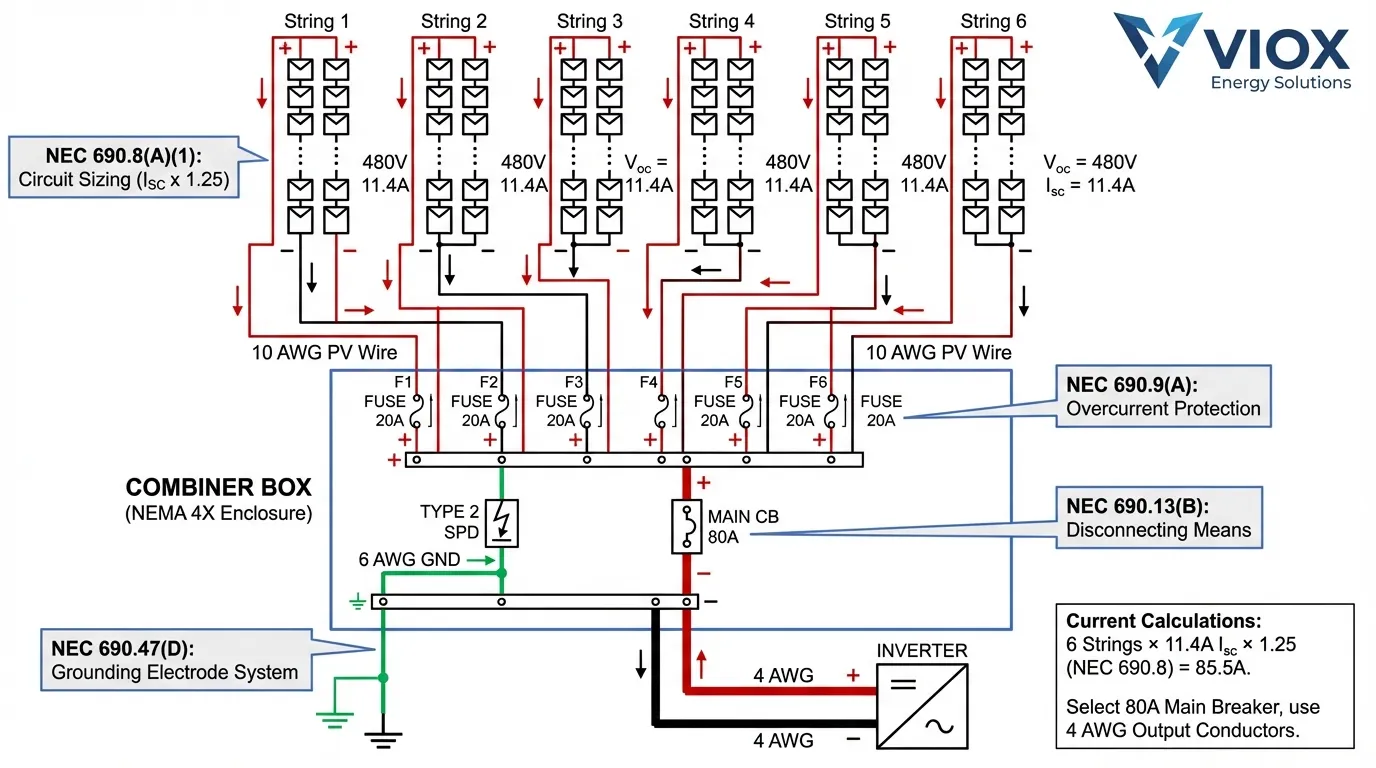
کمبائنر باکس کی ضرورت مکمل طور پر سسٹم آرکیٹیکچر پر منحصر ہے۔ تین یا اس سے کم سٹرنگز والی چھوٹی رہائشی تنصیبات کے لیے، NEC آرٹیکل 690 کے تحت انورٹر سے براہ راست کنکشن جائز ہے، جس سے 400-800 ڈالر کے آلات کی لاگت اور ایک اضافی ناکامی پوائنٹ ختم ہو جاتا ہے۔ تاہم، ایک بار جب کوئی سسٹم تین سٹرنگز سے آگے بڑھ جاتا ہے—جو کہ بڑے رہائشی چھتوں، تمام کمرشل پروجیکٹس، اور یوٹیلیٹی اسکیل فارمز میں عالمگیر ہے—تو کمبائنر باکس اختیاری آلات سے لازمی انفراسٹرکچر میں تبدیل ہو جاتا ہے۔. حوالہ
رہائشی PV کمبائنر باکس ڈیزائن کی خصوصیات
وولٹیج اور کرنٹ کی ضروریات
شمالی امریکہ میں رہائشی سولر تنصیبات بنیادی طور پر 600V DC زیادہ سے زیادہ سسٹم وولٹیج پر کام کرتی ہیں، جو کہ معیاری رہائشی انورٹر کی خصوصیات اور NEC 690.7 کی ضروریات کے مطابق ہے۔ سٹرنگ کرنٹ کیلکولیشنز بنیادی فارمولے پر عمل کرتی ہیں: ماڈیول کے شارٹ سرکٹ کرنٹ (Isc) کو 1.56 سے ضرب دیں تاکہ NEC کے مسلسل ڈیوٹی فیکٹر (1.25) اور اوور کرنٹ پروٹیکشن سائزنگ کی ضرورت (1.25) کو مدنظر رکھا جا سکے، جس سے فی سٹرنگ کم از کم فیوز ریٹنگ حاصل ہوتی ہے۔ 11.4A Isc والے 400W پینلز کا استعمال کرتے ہوئے ایک عام رہائشی سٹرنگ کے لیے، کیلکولیشن 17.78A پیدا کرتی ہے، جس کے لیے فی سٹرنگ ان پُٹ ایک معیاری 20A فیوز کی ضرورت ہوتی ہے۔.
کمبائنر باکس کے مین آؤٹ پُٹ بریکر کو تمام سٹرنگز کے مجموعی کرنٹ کو ایڈجسٹ کرنا چاہیے۔ 11.4A Isc فی سٹرنگ والا چار سٹرنگ رہائشی نظام کل 45.6A پیدا کرتا ہے، جو 1.25 مسلسل ڈیوٹی ملٹی پلائر لگانے کے بعد 57A کم از کم ریٹنگ کا تقاضا کرتا ہے—عام طور پر ایک معیاری 60A یا 80A مین بریکر کے ساتھ پورا کیا جاتا ہے جو وائر سائزنگ اور مستقبل میں توسیع کے تحفظات پر منحصر ہے۔. حوالہ
جسمانی اور ماحولیاتی خصوصیات
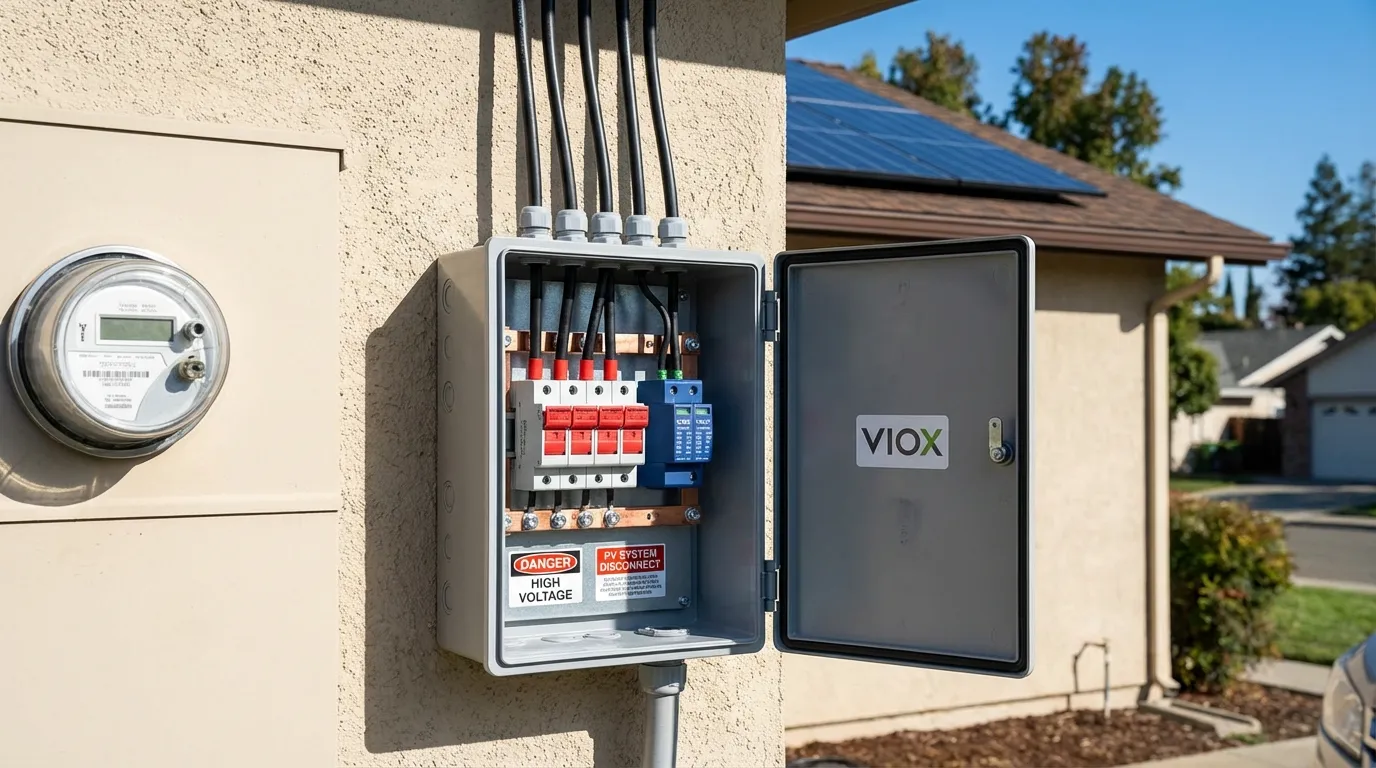
رہائشی کمبائنر بکس عام طور پر 4-6 سٹرنگ کنفیگریشنز کے لیے 12″ × 16″ × 6″ پیمائش کرتے ہیں، جو UV-اسٹیبلائزڈ پولی کاربونیٹ یا پاؤڈر کوٹڈ اسٹیل انکلوژرز سے بنائے جاتے ہیں۔ IP65 ریٹنگ بیرونی ماؤنٹنگ کے لیے کم از کم قابل قبول انگریس پروٹیکشن کی نمائندگی کرتی ہے، جو کسی بھی سمت سے پانی کے جیٹس کے خلاف ڈسٹ ٹائٹ سیلنگ اور تحفظ فراہم کرتی ہے۔ ساحلی تنصیبات یا انتہائی موسمی حالات والے علاقوں کو IP66 یا NEMA 4X ریٹنگز کی وضاحت کرنی چاہیے، جو سٹینلیس سٹیل ہارڈ ویئر اور نمک کے سپرے اور درجہ حرارت سائیکلنگ کے خلاف مزاحم گسکیٹ مواد کے ذریعے بہتر سنکنرن مزاحمت پیش کرتی ہیں۔. حوالہ
براہ راست سورج کی روشنی میں یا گہرے رنگ کی چھتوں پر نصب کمبائنر بکس کے لیے درجہ حرارت ڈیریٹنگ اہم ہو جاتی ہے۔ ان انکلوژرز کے اندر محیطی درجہ حرارت 60-70°C (140-158°F) تک پہنچ سکتا ہے، جس کے لیے کنڈکٹر ایمپیسٹی کیلکولیشنز پر NEC ٹیبل 310.15(B)(2)(a) اصلاحی عوامل کا اطلاق ضروری ہے۔ یہ تھرمل تناؤ فیوز اور بریکر ٹرپ کی خصوصیات کو بھی متاثر کرتا ہے، جس سے مناسب وینٹیلیشن کے ساتھ بڑے سائز کے انکلوژرز طویل مدتی وشوسنییتا کے لیے ایک قابل قدر سرمایہ کاری بن جاتے ہیں۔.
رہائشی ایپلی کیشنز کے لیے جزو کا انتخاب
| جزو | رہائشی تفصیلات | کلیدی انتخاب کا معیار |
|---|---|---|
| سٹرنگ فیوز | 15-20A، 1000V DC ریٹیڈ | IEC 60269-6 کے مطابق PV-مخصوص gPV فیوز؛ AC فیوز سے پرہیز کریں۔ |
| مین بریکر | 60-100A، 2-پول DC ریٹیڈ | UL 489 لسٹڈ، 10kA کم از کم انٹرپٹ ریٹنگ |
| SPD (سرج پروٹیکشن) | ٹائپ 2، 600V DC، 20-40kA | Uc ≥ 1.2× Voc(max)، ریموٹ سٹیٹس انڈیکیشن |
| Busbar | ٹن پلیٹڈ کاپر، 10-15mm² | ریٹیڈ کرنٹ پر درجہ حرارت میں اضافہ < 50K |
| انکلوژر | پولی کاربونیٹ یا اسٹیل، IP65 | UV-اسٹیبلائزڈ، -40°C سے +70°C آپریٹنگ رینج |
| مانیٹرنگ (اختیاری) | سٹرنگ لیول وولٹیج/کرنٹ | 6+ سٹرنگ سسٹمز کے لیے RS485 یا وائرلیس کنیکٹیویٹی |
پہلے سے جمع شدہ اور کسٹم کمبائنر بکس کے درمیان انتخاب رہائشی پروجیکٹ کی اقتصادیات کو نمایاں طور پر متاثر کرتا ہے۔ مینوفیکچررز سے آف دی شیلف یونٹس جیسے VIOX الیکٹرک UL-لسٹڈ، پلگ اینڈ پلے حل فراہم کرتے ہیں جن میں معیاری 4، 6، یا 8-سٹرنگ کنفیگریشنز ہوتی ہیں، جو تنصیب کے وقت کو دو گھنٹے سے کم کر دیتی ہیں اور فیلڈ وائرنگ کی غلطیوں کو ختم کر دیتی ہیں۔ کسٹم ڈیزائن صرف غیر معمولی چھت کی ترتیب کے لیے یا ریپڈ شٹ ڈاؤن فنکشنلٹی کو مربوط کرتے وقت معنی خیز ہوتے ہیں جو معیاری مصنوعات میں دستیاب نہیں ہے۔.
یوٹیلیٹی اسکیل PV کمبائنر باکس انجینئرنگ
1500V DC آرکیٹیکچر لازمی
5MW سے اوپر کے یوٹیلیٹی اسکیل سولر فارمز نے توانائی کی سطح کی لاگت (LCOE) میں زبردست بہتری کی وجہ سے عالمگیر طور پر 1500V DC سسٹم آرکیٹیکچر کو اپنایا ہے۔ زیادہ وولٹیج 1000V سسٹمز کے مقابلے میں 50% زیادہ سٹرنگ کی لمبائی کو قابل بناتا ہے، جس سے کل سٹرنگ کی تعداد تقریباً 37% کم ہو جاتی ہے اور کمبائنر بکس، DC کلیکشن کیبلز، اور تنصیب کے لیبر گھنٹوں کی تعداد متناسب طور پر کم ہو جاتی ہے۔ 1500V DC پر ڈیزائن کیا گیا 100MW سولر فارم مساوی 1000V ڈیزائن کے مقابلے میں بیلنس آف سسٹم لاگت میں 8-12 ملین ڈالر کی بچت کرتا ہے، جبکہ مساوی پاور آؤٹ پُٹ کے لیے DC کرنٹ کو 33% تک کم کرتا ہے، جس کا ترجمہ کم I²R نقصانات اور تقریباً 0.3% زیادہ سالانہ توانائی کی پیداوار میں ہوتا ہے۔. حوالہ
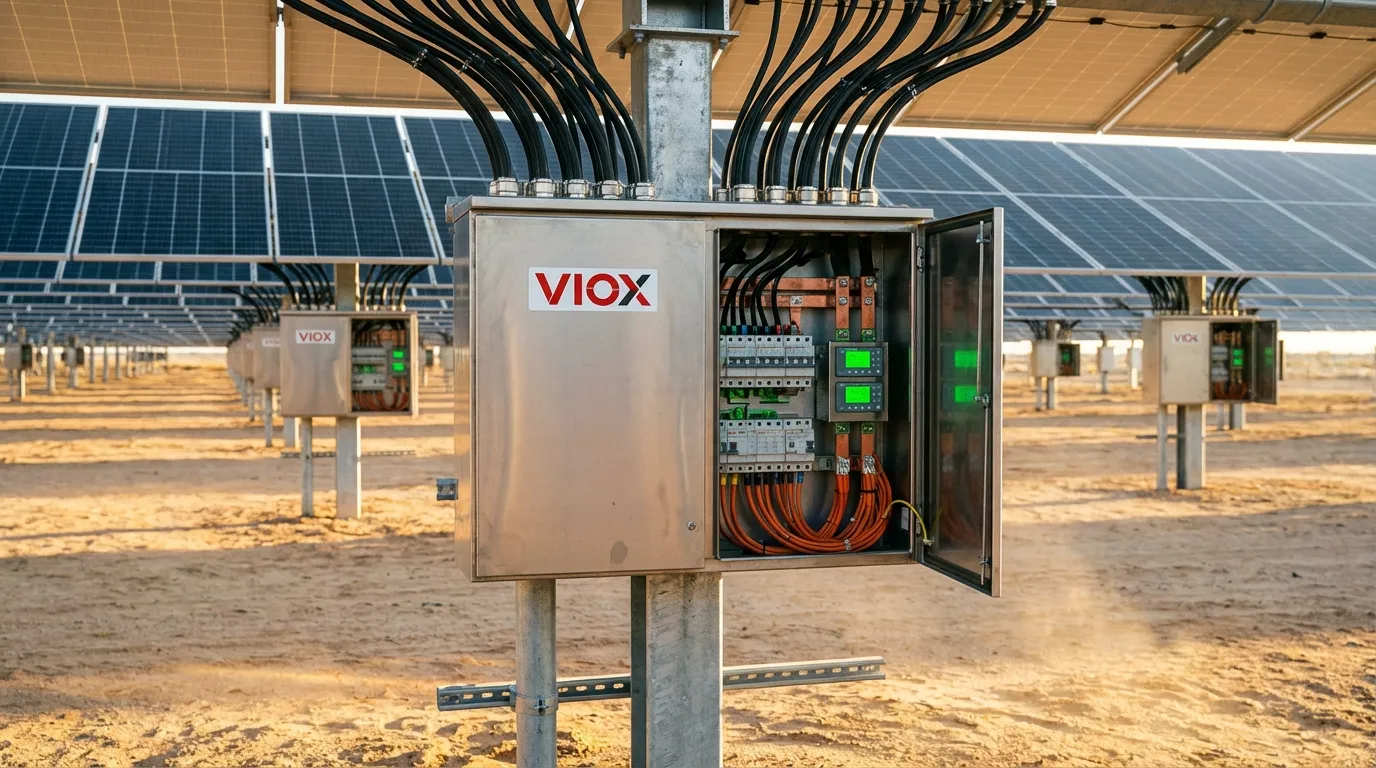
یہ وولٹیج ٹرانزیشن اہم انجینئرنگ چیلنجز متعارف کراتا ہے۔ جزو کی موصلیت کوآرڈینیشن کو عارضی اوور وولٹیجز کو مدنظر رکھنا چاہیے جو بجلی کے واقعات یا انورٹر سوئچنگ آپریشنز کے دوران 2000V تک پہنچتے ہیں۔ لائیو پارٹس اور گراؤنڈ کے درمیان کریپیج اور کلیئرنس کے فاصلے کو ٹریکنگ اور فلیش اوور کو روکنے کے لیے بڑھانا چاہیے، جس کے نتیجے میں کم سٹرنگز کو ہینڈل کرنے کے باوجود جسمانی طور پر بڑے انکلوژرز ہوتے ہیں۔ اہلکاروں کی حفاظت کے پروٹوکول زیادہ سخت ہو جاتے ہیں—1500V DC سسٹمز کم وولٹیج کے مساوی کے مقابلے میں زیادہ آسانی سے آرکس کو برقرار رکھ سکتے ہیں، جس کے لیے بہت سے دائرہ اختیار میں آرک-فالٹ سرکٹ انٹرپٹرز (AFCI) کی ضرورت ہوتی ہے۔.
سٹرنگ کی صلاحیت اور تقسیم شدہ پلیسمنٹ حکمت عملی
یوٹیلیٹی اسکیل کمبائنر بکس عام طور پر 12-24 سٹرنگ ان پُٹس کو ایڈجسٹ کرتے ہیں، جس میں بہترین کنفیگریشن انورٹر MPPT چینل کی تعداد، DC کیبل وولٹیج ڈراپ کیلکولیشنز، اور سائٹ ٹوپولوجی کے ذریعے طے کی جاتی ہے۔ ایک 5MW گراؤنڈ ماؤنٹ سولر فارم اری میں 30-40 کمبائنر بکس تعینات کر سکتا ہے، ہر ایک مرکزی انورٹرز میں فیڈ کرنے سے پہلے 16-20 سٹرنگز کو مستحکم کرتا ہے یا DC کلیکشن کیبلز کے ذریعے تقسیم شدہ سٹرنگ انورٹرز۔ یہ تقسیم شدہ پلیسمنٹ حکمت عملی DC کیبل رنز کو کم کرتی ہے، وولٹیج ڈراپ نقصانات کو کم کرتی ہے، اور EPC مرحلے کے دوران ماڈیولر تعمیراتی ترتیب کو قابل بناتی ہے۔.
سٹرنگ ٹو کمبائنر تناسب کا حساب متعدد عوامل کو متوازن کرتا ہے: فی باکس زیادہ سٹرنگ کی تعداد آلات اور تنصیب کی لاگت کو کم کرتی ہے لیکن DC کیبل گیج کی ضروریات کو بڑھاتی ہے اور دیکھ بھال تک رسائی کو پیچیدہ بناتی ہے۔ جدید یوٹیلیٹی اسکیل ڈیزائن عام طور پر اقتصادی بہترین کے طور پر فی کمبائنر باکس 15-18 سٹرنگز کو نشانہ بناتے ہیں، جو قابل انتظام انکلوژر سائز اور وائر ٹرمینیشن تک رسائی کو برقرار رکھتے ہوئے کافی استحکام فراہم کرتے ہیں۔. حوالہ
جدید تحفظ اور مانیٹرنگ سسٹمز
| فیچر | یوٹیلیٹی اسکیل پر عمل درآمد | کاروباری جواز |
|---|---|---|
| آرک-فالٹ ڈیٹیکشن | UL 1699B کے مطابق سیریز اور متوازی آرک ڈیٹیکشن | DC-سائیڈ آگ کے خطرات کا 80% روکتا ہے؛ بہت سی مارکیٹوں میں انشورنس کی ضرورت |
| سٹرنگ لیول مانیٹرنگ | وولٹیج، کرنٹ، درجہ حرارت فی سٹرنگ | کم کارکردگی والی سٹرنگز کی شناخت کرتا ہے؛ O&M کی کارکردگی کو 40% تک بہتر بناتا ہے |
| ریموٹ ڈس کنیکٹ | SCADA انٹیگریشن کے ساتھ موٹرائزڈ سوئچ | سائٹ تک رسائی کے بغیر ایمرجنسی شٹ ڈاؤن کو قابل بناتا ہے؛ فائر فائٹر کی حفاظت |
| ماحولیاتی سینسرز | محیطی درجہ حرارت، نمی، انکلوژر درجہ حرارت | پیش گوئی کرنے والی دیکھ بھال؛ تھرمل سے متعلق ناکامیوں کو روکتا ہے |
| مواصلاتی پروٹوکول | موڈبس RTU/TCP، DNP3، یا IEC 61850 | پلانٹ SCADA کے ساتھ انضمام؛ ریئل ٹائم کارکردگی کی نگرانی |
| ریپڈ شٹ ڈاؤن | ماڈیول کی سطح یا کمبائنر کی سطح فی NEC 690.12 | کوڈ کی تعمیل؛ دیکھ بھال کے دوران آرک فلیش کے خطرے کو کم کرتا ہے |
یوٹیلیٹی اسکیل کمبائنر بکس میں سٹرنگ لیول کی نگرانی دانے دار کارکردگی کا ڈیٹا فراہم کرتی ہے جو براہ راست پروجیکٹ کی بینک اہلیت کو متاثر کرتی ہے۔ سرمایہ کاروں اور قرض دہندگان کو پیداوار کی پیش گوئیوں کی توثیق کرنے اور آمدنی پر اثر انداز ہونے والے نقائص کی نشاندہی کرنے کے لیے صف کی کارکردگی میں ریئل ٹائم مرئیت کی ضرورت ہوتی ہے۔ 100 میگاواٹ فارم میں ایک واحد کم کارکردگی والی سٹرنگ سالانہ $3,000-$5,000 تک کی پیداوار کے نقصان کا سبب بن سکتی ہے—نگرانی کے نظام جو ان مسائل کو مہینوں کے بجائے دنوں میں پکڑتے ہیں، بہتر صلاحیت کے عوامل کے ذریعے قابل پیمائش ROI فراہم کرتے ہیں۔. حوالہ
یوٹیلیٹی اسکیل جزو کی خصوصیات
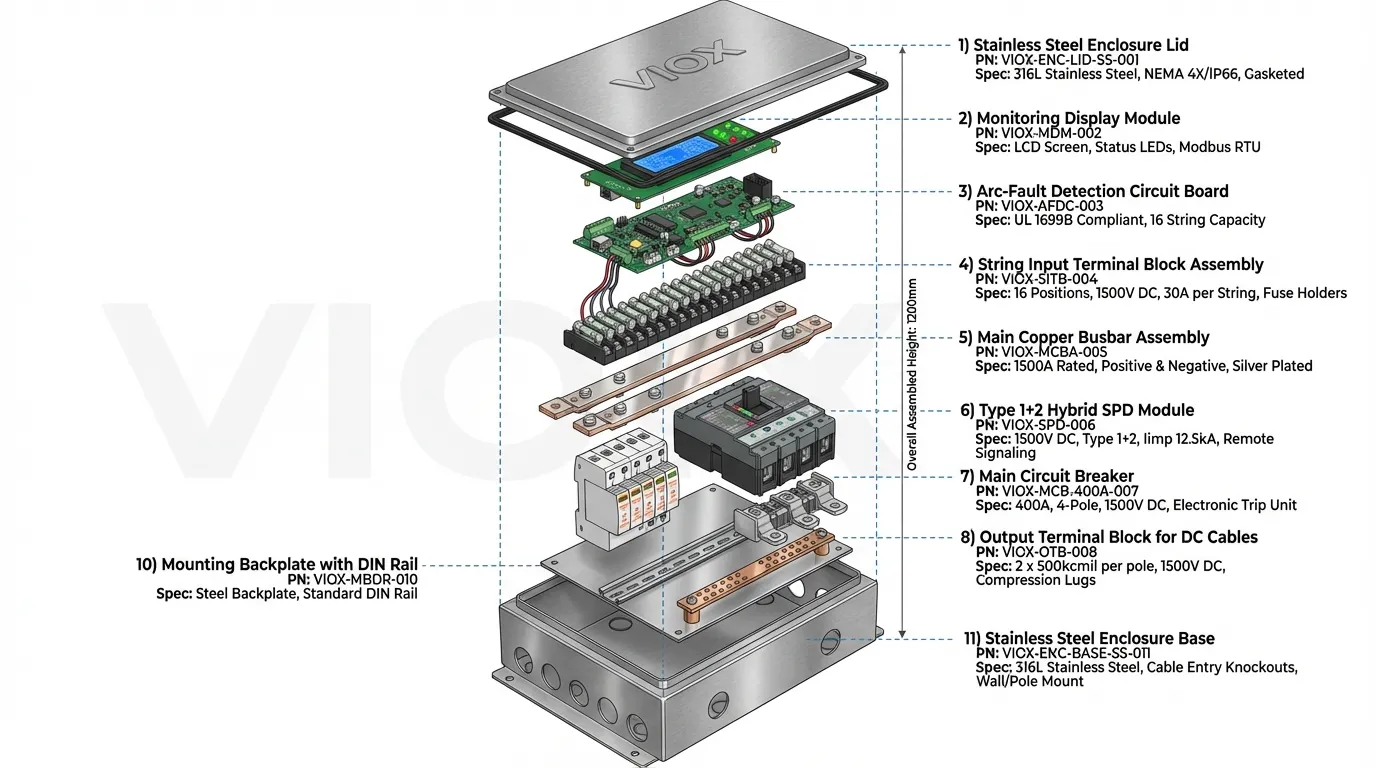
| جزو | یوٹیلیٹی اسکیل کی تفصیلات | رہائشی سے اہم اختلافات |
|---|---|---|
| سٹرنگ فیوز | 20-30A، 1500V DC ریٹیڈ | اعلی وولٹیج موصلیت؛ اکثر فیوز سوئچ ڈس کنیکٹر استعمال کرتے ہیں |
| مین بریکر | 400-630A، 4-پول DC ریٹیڈ | 65kA رکاوٹ کی درجہ بندی؛ مواصلات کے ساتھ الیکٹرانک ٹرپ یونٹس |
| ایس پی ڈی | قسم 1+2 ہائبرڈ، 1500V DC، 100kA | اعلی توانائی ہینڈلنگ؛ صف کی سطح کے SPDs کے ساتھ مربوط |
| Busbar | چاندی چڑھایا تانبا، 50-120mm² | کم رابطہ مزاحمت؛ 30+ سال کی عمر کے لیے ڈیزائن کیا گیا ہے۔ |
| انکلوژر | سٹینلیس سٹیل 316L، IP66/NEMA 4X | سنکنرن مزاحمت؛ گرمی کے سنک کے ساتھ غیر فعال کولنگ |
| کیبل گلینڈز | EMC-ریٹیڈ، IP68 | برقی مقناطیسی مطابقت؛ سیلاب والے علاقوں کے لیے آبدوز کی درجہ بندی |
یوٹیلیٹی اسکیل کمبائنر بکس کے لیے مواد کی وضاحتیں سخت آپریٹنگ ماحول اور 30+ سال کی ڈیزائن لائف کی توقع کی عکاسی کرتی ہیں۔ پاؤڈر لیپت فنش کے ساتھ سٹینلیس سٹیل 316L انکلوژرز صحرائی، ساحلی اور زرعی ترتیبات میں سنکنرن کے خلاف مزاحمت کرتے ہیں جہاں رہائشی گریڈ پولی کاربونیٹ 10-15 سال کے اندر خراب ہو جائے گا۔ اندرونی اجزاء ٹن چڑھایا متبادل کے بجائے چاندی چڑھایا تانبے کے بس بار استعمال کرتے ہیں تاکہ رابطہ مزاحمت کو کم کیا جا سکے اور -40°C سے +85°C تک درجہ حرارت سائیکلنگ میں مستحکم کارکردگی کو یقینی بنایا جا سکے۔. حوالہ
اہم ڈیزائن اختلافات: سائیڈ بہ سائیڈ موازنہ
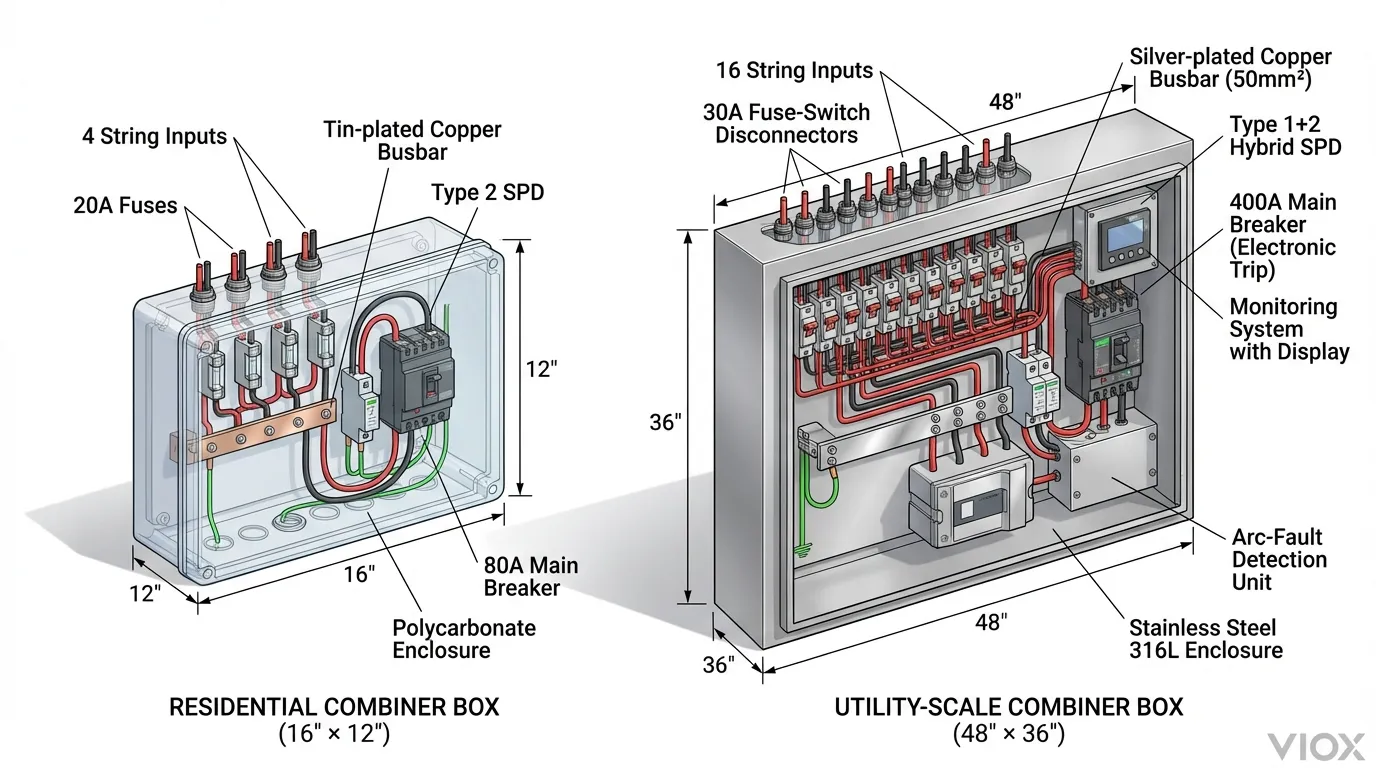
سسٹم آرکیٹیکچر کا موازنہ
| پیرامیٹر | رہائشی نظام | یوٹیلیٹی اسکیل نظام |
|---|---|---|
| سسٹم وولٹیج | 600V DC (NEC معیار) | 1500V DC (2020 کے بعد صنعت کا معیار) |
| سٹرنگ کی تعداد | 2-6 سٹرنگز (اکثر ≤3 = کمبائنر کی ضرورت نہیں) | 12-24+ سٹرنگز فی کمبائنر باکس |
| کل سسٹم کا سائز | 5-15 کلو واٹ عام | 5-500+ میگاواٹ |
| کمبائنر باکس کی مقدار | 0-1 فی تنصیب | 30-200+ فی فارم |
| سٹرنگ کی لمبائی | 8-12 پینلز فی سٹرنگ | 24-32 پینلز فی سٹرنگ |
| انورٹر ٹائپ | سٹرنگ انورٹر (سنگل یونٹ) | مرکزی یا سٹرنگ انورٹرز (متعدد یونٹس) |
لاگت اور اقتصادی تجزیہ
| لاگت کا عنصر | رہائشی | یوٹیلیٹی اسکیل |
|---|---|---|
| کمبائنر باکس یونٹ کی لاگت | $300-$800 | $2,500-$8,000 |
| فی واٹ لاگت | $0.05-$0.08/W | $0.01-$0.02/W |
| انسٹالیشن لیبر | 2-4 گھنٹے | 4-8 گھنٹے فی باکس (لیکن میگاواٹ پر تقسیم) |
| BOS لاگت کا اثر | کل سسٹم لاگت کا 3-5% | کل سسٹم لاگت کا 8-12% |
| نگرانی کی لاگت | $0-$200 (اکثر چھوڑ دیا جاتا ہے) | $500-$1,500 فی باکس (لازمی) |
| دیکھ بھال کا وقفہ | 5-10 سال | 2-3 سال (احتیاطی) |
فی واٹ لاگت کا فرق رہائشی اور یوٹیلیٹی اسکیل سولر کے درمیان بنیادی اقتصادی فرق کو ظاہر کرتا ہے۔ اگرچہ ایک رہائشی کمبائنر باکس کل سسٹم لاگت کا ایک بڑا فیصد کی نمائندگی کرتا ہے، لیکن مطلق ڈالر کی رقم معمولی رہتی ہے ($300-$800)۔ یوٹیلیٹی اسکیل پروجیکٹس حجم کی خریداری، معیاری ڈیزائن، اور سینکڑوں میگاواٹ میں انجینئرنگ لاگت کو تقسیم کرنے کی صلاحیت کے ذریعے ڈرامائی طور پر کم فی واٹ لاگت حاصل کرتے ہیں۔ تاہم، 100 میگاواٹ فارم کے لیے کمبائنر بکس پر کل سرمایہ کاری $500,000-$800,000 سے تجاوز کر سکتی ہے، جس سے جزو کا انتخاب اور سپلائر کی اہلیت اہم خریداری کی سرگرمیاں بن جاتی ہیں۔. حوالہ
کوڈ کی تعمیل اور معیارات
| ضرورت | رہائشی درخواست | یوٹیلیٹی اسکیل درخواست |
|---|---|---|
| بنیادی کوڈ | NEC آرٹیکل 690 | NEC آرٹیکل 690 + یوٹیلیٹی انٹرکنکشن معیارات |
| Overcurrent تحفظ | NEC 690.9 (1.56× Isc کم از کم) | NEC 690.9 + کوآرڈینیشن اسٹڈی درکار ہے |
| گراؤنڈنگ | NEC 690.41-690.47 | بہتر گراؤنڈنگ گرڈ؛ مٹی کی مزاحمت کی جانچ |
| لیبل لگانا | این ای سی 690.31 (بنیادی وارننگ لیبلز) | آرک فلیش لیبلز فی این ایف پی اے 70 ای؛ تفصیلی ون لائن ڈایاگرام |
| ریپڈ شٹ ڈاؤن | این ای سی 690.12 (ماڈیول لیول یا اریے لیول) | این ای سی 690.12 + یوٹیلیٹی کی مخصوص ضروریات |
| جانچ/کمیشننگ | بصری معائنہ + وولٹیج کی تصدیق | آئی ای سی 62446 کے مطابق مکمل قبولیت کی جانچ؛ آئی آر تھرموگرافی |
رہائشی اور یوٹیلیٹی اسکیل دونوں تنصیبات کو این ای سی آرٹیکل 690 کی تعمیل کرنی چاہیے، لیکن یوٹیلیٹی اسکیل پروجیکٹس کو ریگولیٹری جانچ کی اضافی تہوں کا سامنا کرنا پڑتا ہے۔ یوٹیلیٹی انٹرکنکشن معاہدوں میں اکثر این ای سی کی کم از کم ضروریات سے زیادہ تقاضے عائد کیے جاتے ہیں، بشمول مخصوص آرک فالٹ ڈیٹیکشن ٹیکنالوجیز، ریموٹ ڈس کنیکٹ کی صلاحیتیں، اور یوٹیلیٹی ایس سی اے ڈی اے انٹیگریشن کے ساتھ ریئل ٹائم مانیٹرنگ۔ یہ اضافی تقاضے کمبائنر باکس کے اخراجات میں 15-25% اضافہ کر سکتے ہیں لیکن پروجیکٹ کی منظوری اور کمرشل آپریشن ڈیٹ (سی او ڈی) کے حصول کے لیے ناقابلِ گفت و شنید ہیں۔. حوالہ
انتخاب کے معیار: صحیح کمبائنر باکس کا انتخاب
رہائشی تنصیبات کے لیے (5-15 کلو واٹ)
مرحلہ 1: تعین کریں کہ آیا کمبائنر باکس ضروری ہے یا نہیں۔. چھت کی ترتیب اور شیڈنگ تجزیہ کی بنیاد پر اپنی کل سٹرنگ کی تعداد کا حساب لگائیں۔ اگر آپ کے سسٹم میں تین یا اس سے کم سٹرنگز ہیں، تو براہ راست انورٹر سے جڑیں اور 400-800 روپے کے علاوہ تنصیب کی مزدوری بچائیں۔ یہ براہ راست کنکشن اپروچ این ای سی 690.9 کے ذریعے واضح طور پر جائز ہے اور چھوٹے رہائشی اریز کے لیے سب سے زیادہ کفایتی حل کی نمائندگی کرتا ہے۔.
مرحلہ 2: برقی خصوصیات کا حساب لگائیں۔. اپنے پینل کے Isc کو 1.56 سے ضرب دے کر فی سٹرنگ کم از کم فیوز کی درجہ بندی کا تعین کریں۔ تمام سٹرنگز سے کل کرنٹ کا خلاصہ کریں اور مین بریکر کی درجہ بندی کا تعین کرنے کے لیے اسے 1.25 سے ضرب دیں۔ تصدیق کریں کہ آپ کے منتخب کردہ کمبائنر باکس کی وولٹیج کی درجہ بندی سٹرنگ کے زیادہ سے زیادہ اوپن سرکٹ وولٹیج (Voc) سے کم از کم 20% حفاظتی مارجن سے زیادہ ہے۔.
مرحلہ 3: ماحولیاتی ضروریات کا جائزہ لیں۔. براہ راست سورج کی روشنی میں چھت پر نصب کمبائنر باکسز کو کم از کم IP65 کی ضرورت ہوتی ہے، طویل عمر کے لیے IP66 کو ترجیح دی جاتی ہے۔ سمندری پانی سے 10 میل کے اندر ساحلی تنصیبات کو میرین گریڈ گسکیٹس اور ہارڈ ویئر کے ساتھ NEMA 4X سٹینلیس سٹیل کے انکلوژرز کی وضاحت کرنی چاہیے۔ اگر محیطی درجہ حرارت باقاعدگی سے 40°C (104°F) سے زیادہ ہو تو تھرمل ڈیریٹنگ پر غور کریں۔.
مرحلہ 4: مانیٹرنگ کی ضروریات کا جائزہ لیں۔. چھ یا اس سے زیادہ سٹرنگز والے سسٹمز کے لیے، سٹرنگ لیول مانیٹرنگ قیمتی تشخیصی صلاحیت فراہم کرتی ہے جو کم کارکردگی والے پینلز یا وائرنگ کے مسائل کی نشاندہی کر سکتی ہے۔ مانیٹرنگ کے قابل کمبائنر باکسز کے لیے 200-400 روپے کا اضافی خرچہ عام طور پر بہتر سسٹم کی دستیابی اور تیز فالٹ ریزولوشن کے ذریعے 2-3 سال کے اندر خود کو ادا کر دیتا ہے۔. حوالہ
یوٹیلیٹی اسکیل پروجیکٹس کے لیے (5+ میگاواٹ)
مرحلہ 1: سسٹم وولٹیج آرکیٹیکچر کی تصدیق کریں۔. 5 میگاواٹ سے اوپر کے پروجیکٹس کے لیے، 1500V DC آرکیٹیکچر کو ڈیفالٹ ڈیزائن کی بنیاد ہونی چاہیے جب تک کہ سائٹ کی مخصوص رکاوٹیں دوسری صورت میں حکم نہ دیں۔ 1000V سسٹمز کے مقابلے میں 15-20% کی LCOE بہتری اس فیصلے کو مالیاتی ماڈلنگ کے نقطہ نظر سے سیدھا بناتی ہے۔.
مرحلہ 2: سٹرنگ ٹو کمبائنر تناسب کو بہتر بنائیں۔. کمبائنر باکس کی مقدار کو ڈی سی کیبل کے اخراجات اور وولٹیج ڈراپ نقصانات کے خلاف متوازن کرتے ہوئے ایک تفصیلی اقتصادی تجزیہ کریں۔ بہترین تناسب عام طور پر فی کمبائنر باکس 15-18 سٹرنگز کے درمیان آتا ہے، لیکن سائٹ ٹوپولوجی اور انورٹر کی خصوصیات اس ہدف کو تبدیل کر سکتی ہیں۔ ڈی سی کیبل وولٹیج ڈراپ کیلکولیشنز کا استعمال اس بات کی تصدیق کے لیے کریں کہ مشترکہ سٹرنگ کرنٹ زیادہ سے زیادہ پاور پوائنٹ پر 3% وولٹیج کے نقصان سے تجاوز نہیں کرتا ہے۔.
مرحلہ 3: تحفظ اور مانیٹرنگ سسٹمز کی وضاحت کریں۔. زیادہ تر مارکیٹوں میں بینک ایبلٹی اور انشورنس انڈر رائٹنگ کے لیے آرک فالٹ ڈیٹیکشن لازمی ہے۔ سٹرنگ لیول وولٹیج اور کرنٹ مانیٹرنگ معیاری تفصیلات ہونی چاہیے—ریونیو پروٹیکشن ویلیو کے مقابلے میں فی سٹرنگ 50-80 روپے کا اضافی خرچہ نہ ہونے کے برابر ہے۔ مرکزی مرئیت کے لیے موڈبس ٹی سی پی یا ڈی این پی 3 پروٹوکول کا استعمال کرتے ہوئے پلانٹ ایس سی اے ڈی اے کے ساتھ کمبائنر باکس مانیٹرنگ کو مربوط کریں۔.
مرحلہ 4: سپلائر کی قابلیت کا جائزہ لیں۔. یوٹیلیٹی اسکیل کمبائنر باکسز 30 سال کی ڈیزائن لائف کی توقعات کے ساتھ اہم انفراسٹرکچر کی نمائندگی کرتے ہیں۔ سپلائر کے انتخاب میں آئی ای سی 61439-2 سرٹیفیکیشن، ملٹی میگاواٹ پروجیکٹس میں ثابت شدہ ٹریک ریکارڈ، اور جامع وارنٹی کوریج (انکلوژر کے لیے کم از کم 10 سال، الیکٹرانکس کے لیے 5 سال) والے مینوفیکچررز کو ترجیح دی جانی چاہیے۔ شارٹ سرکٹ برداشت، درجہ حرارت میں اضافے، اور آئی پی ریٹنگ کی تصدیق کے لیے تھرڈ پارٹی ٹیسٹ رپورٹس کی درخواست کریں۔. حوالہ
عام ڈیزائن کی غلطیاں اور ان سے کیسے بچا جائے
رہائشی نظام کی خامیاں
غلطی #1: ڈی سی ایپلی کیشنز میں اے سی ریٹیڈ فیوز کا استعمال۔. معیاری اے سی فیوز میں ڈی سی سرکٹس کے لیے درکار آرک کو بجھانے کی صلاحیت نہیں ہوتی ہے، جہاں زیرو کراسنگ کی عدم موجودگی آرک کو بجھانے کو نمایاں طور پر زیادہ مشکل بنا دیتی ہے۔ ہمیشہ پی وی کے مخصوص جی پی وی فیوز کی وضاحت کریں جو آئی ای سی 60269-6 کے مطابق ریٹیڈ ہوں، جو ڈی سی مداخلت کے لیے ڈیزائن کیے گئے بہتر آرک کو بجھانے والے چیمبرز کو شامل کرتے ہیں۔ لاگت کا فرق نہ ہونے کے برابر ہے (فی فیوز 3-5 روپے)، لیکن حفاظتی مضمرات گہرے ہیں۔. حوالہ
غلطی #2: درجہ حرارت ڈیریٹنگ کے لیے ناکافی وائر سائزنگ۔. گہری چھت پر نصب یا براہ راست سورج کی روشنی میں کمبائنر باکسز 60-70°C کے محیطی درجہ حرارت کا تجربہ کرتے ہیں، جس کے لیے این ای سی ٹیبل 310.15(B)(2)(a) اصلاحی عوامل کے اطلاق کی ضرورت ہوتی ہے۔ 30°C محیطی پر 40A کے لیے ریٹیڈ 10 AWG کنڈکٹر کو 70°C محیطی پر ڈیریٹ کرنے پر محفوظ طریقے سے صرف 24A لے جا سکتا ہے۔ ان اصلاحی عوامل کو لاگو کرنے میں ناکامی آگ کے خطرات اور کوڈ کی خلاف ورزیوں کو جنم دیتی ہے۔.
غلطی #3: سرج پروٹیکشن کو چھوڑنا۔. اگرچہ کوڈ کے ذریعہ عالمگیر طور پر لازمی نہیں ہے، لیکن رہائشی کمبائنر باکسز میں ٹائپ 2 ایس پی ڈیز بالواسطہ بجلی گرنے اور یوٹیلیٹی سوئچنگ ٹرانزینٹس کے خلاف اہم تحفظ فراہم کرتے ہیں۔ 80-150 روپے کا اضافی خرچہ سرج ایونٹ کے بعد انورٹر کی تبدیلی کی 3,000-8,000 روپے کی لاگت کے مقابلے میں معمولی ہے۔ ناکامی سے پہلے فعال تبدیلی کو فعال کرنے کے لیے ریموٹ اسٹیٹس انڈیکیشن کے ساتھ ایس پی ڈیز کی وضاحت کریں۔.
یوٹیلیٹی اسکیل سسٹم کی خامیاں
غلطی #1: مستقبل کی توسیع کے لیے انڈر سائزنگ۔. یوٹیلیٹی اسکیل پروجیکٹس اکثر 12-24 مہینوں میں تعمیر کو مرحلہ وار کرتے ہیں، ابتدائی کمبائنر باکس کی تنصیبات حتمی اریے کی ترتیب کی تصدیق سے پہلے ہوتی ہیں۔ 20-30% اضافی گنجائش (غیر استعمال شدہ سٹرنگ ان پٹس) کے ساتھ کمبائنر باکسز کی وضاحت کرنے سے فی باکس 200-400 روپے لاگت آتی ہے لیکن بعد کے تعمیراتی مراحل کے دوران فیلڈ میں ترمیم یا اضافی کمبائنر باکس کے اضافے کی ضرورت ختم ہو جاتی ہے۔.
غلطی #2: ناکافی گراؤنڈنگ اور بانڈنگ۔. متعدد کمبائنر باکسز والے بڑے سولر فارمز کو مٹی کی مزاحمت کی جانچ اور گراؤنڈ فالٹ کوآرڈینیشن اسٹڈیز کے ساتھ جامع گراؤنڈنگ گرڈ ڈیزائن کی ضرورت ہوتی ہے۔ ہر کمبائنر باکس کو مقامی گراؤنڈ راڈ سے جوڑنے سے گراؤنڈ لوپس بنتے ہیں اور اس کے نتیجے میں گردش کرنے والے کرنٹ پیدا ہو سکتے ہیں جو پریشان کن ٹرپنگ یا آلات کو نقصان پہنچا سکتے ہیں۔ آئی ای ای ای 80 اور این ای سی 690.41-690.47 کے مطابق گراؤنڈنگ سسٹم کو ڈیزائن کرنے کے لیے ایک اہل الیکٹریکل انجینئر کو شامل کریں۔.
غلطی #3: تھرمل مینجمنٹ کو نظر انداز کرنا۔. یوٹیلیٹی اسکیل کمبائنر باکسز جو 400-600A مشترکہ کرنٹ کو ہینڈل کرتے ہیں وہ اندرونی طور پر کافی حرارت پیدا کرتے ہیں، خاص طور پر صحرائی آب و ہوا میں جہاں محیطی درجہ حرارت 45°C (113°F) سے زیادہ ہوتا ہے۔ بڑے سائز کے انکلوژرز، بس بارز پر ہیٹ سنکس، اور اسٹریٹجک وینٹیلیشن پلیسمنٹ کے ذریعے غیر فعال کولنگ معیاری ڈیزائن پریکٹس ہونی چاہیے۔ فعال کولنگ (پنکھے) دیکھ بھال کی ضروریات اور ناکامی کے پوائنٹس متعارف کراتی ہے جو طویل مدتی وشوسنییتا کو کمزور کرتے ہیں۔. حوالہ
مستقبل کے رجحانات اور ٹیکنالوجی کا ارتقاء
سولر کمبائنر باکس مارکیٹ ڈیجیٹلائزیشن، لاگت میں کمی کے دباؤ، اور تیار ہوتے حفاظتی معیارات کی وجہ سے تیزی سے جدت کا تجربہ کر رہی ہے۔ انٹیگریٹڈ سٹرنگ لیول مانیٹرنگ، پیشین گوئی کرنے والے مینٹیننس الگورتھم، اور کلاؤڈ کنیکٹیویٹی والے سمارٹ کمبائنر باکسز یوٹیلیٹی اسکیل پروجیکٹس میں پریمیم آپشنز سے معیاری تفصیلات میں تبدیل ہو رہے ہیں۔ یہ ذہین سسٹمز انحطاط کے نمونوں کی نشاندہی کرنے، اجزاء کی ناکامیوں کی پیش گوئی کرنے سے پہلے کہ وہ واقع ہوں، اور ڈاؤن ٹائم کو کم سے کم کرنے کے لیے مینٹیننس شیڈولنگ کو بہتر بنانے کے لیے مشین لرننگ کا استعمال کرتے ہیں۔.
رہائشی مارکیٹیں کمبائنر باکس کی فعالیت اور ریپڈ شٹ ڈاؤن کی ضروریات کے درمیان کنورجنس دیکھ رہی ہیں، انٹیگریٹڈ حل کے ساتھ جو ایک ہی انکلوژر میں سٹرنگ کنسولیڈیشن، اوور کرنٹ پروٹیکشن، اور ماڈیول لیول شٹ ڈاؤن کو یکجا کرتے ہیں۔ یہ انٹیگریشن تنصیب کی پیچیدگی کو کم کرتا ہے، جمالیات کو بہتر بناتا ہے، اور کوڈ کی تعمیل کو یقینی بناتا ہے کیونکہ این ای سی 690.12 کی ضروریات یکے بعد دیگرے کوڈ سائیکلز میں زیادہ سخت ہوتی جاتی ہیں۔.
یوٹیلیٹی اسکیل ایپلی کیشنز میں 1500V DC سسٹمز کی طرف صنعت کی منتقلی میں تیزی آتی رہے گی، پیشین گوئیوں سے اشارہ ملتا ہے کہ 1 میگاواٹ سے اوپر کے پروجیکٹس کے لیے 2028 تک 85% مارکیٹ میں رسائی ہوگی۔ اجزاء کے سپلائرز 1500V ریٹیڈ مصنوعات پر آر اینڈ ڈی کی سرمایہ کاری پر توجہ مرکوز کر رہے ہیں، جس سے 1000V پروڈکٹ لائنوں کو مزید اصلاح کے بغیر بالغ ہونے کی اجازت ملتی ہے۔ یہ منتقلی آج ڈیزائن کے مرحلے میں موجود پروجیکٹس کے لیے خریداری کے چیلنجز پیدا کرتی ہے—1000V آلات کی وضاحت کرنے کے نتیجے میں محدود سپلائر کے اختیارات اور زیادہ لاگت آسکتی ہے کیونکہ صنعت کی سپلائی چین 1500V کو نئے معیار کے طور پر تبدیل کرتی ہے۔. حوالہ
متعلقہ VIOX وسائل
پی وی کمبائنر باکس ڈیزائن اور انتخاب کے مخصوص پہلوؤں پر گہری تکنیکی رہنمائی کے لیے، ان جامع وسائل کو دریافت کریں:
- سولر کمبینر باکس کیا کرتا ہے؟ – کمبائنر باکس کے فنکشن اور ضرورت کا بنیادی جائزہ
- سولر کمبائنر باکس وولٹیج ریٹنگ: 600V بمقابلہ 1000V بمقابلہ 1500V گائیڈ – آر او آئی تجزیہ کے ساتھ تفصیلی وولٹیج آرکیٹیکچر کا موازنہ
- ایک گھریلو سولر سسٹم کے لیے کمبینر باکس میں کتنی سٹرنگز مثالی ہیں؟ – این ای سی کی تعمیل کی رہنمائی کے ساتھ رہائشی سائزنگ کیلکولیشنز
- سولر کمبائنر باکس سائزنگ گائیڈ: توسیع کی منصوبہ بندی – بڑھتی ہوئی تنصیبات کے لیے مستقبل کو محفوظ بنانے کی حکمت عملی
- 1000V سولر کمبائنر باکس ڈیزائن اور تعمیل گائیڈ – کمرشل اسکیل ڈیزائن کی تفصیلات
- پی وی کمبائنر باکس انکلوژر سلیکشن: تھرمل اور یو وی موازنہ – ماحولیاتی استحکام کے لیے مواد کا انتخاب
- سولر کمبائنر باکس انسپیکشن چیک لسٹ: یو ایل/آئی ای سی گائیڈ – کمیشننگ اور مینٹیننس کے طریقہ کار
- ٹربل شوٹنگ سولر کمبائنر باکس فالٹس اور فکسز – عام ناکامی کے طریقے اور تشخیصی تکنیک
- سولر کمبائنر باکس اوور ہیٹنگ: اسباب اور حل – تھرمل مینجمنٹ کے بہترین طریقے
- ڈی سی سرکٹ بریکر سائزنگ: این ای سی 690 بمقابلہ آئی ای سی 60947-2 گائیڈ – اوور کرنٹ پروٹیکشن ڈیوائس کا انتخاب
- سرج پروٹیکشن ڈیوائس (ایس پی ڈی) کیا ہے؟ – پی وی سسٹمز کے لیے سرج پروٹیکشن کی بنیادی باتیں
- ڈی سی سرکٹ بریکر بمقابلہ فیوز: کون سا بہتر ہے؟ – سولر ایپلی کیشنز کے لیے پروٹیکشن ڈیوائس کا موازنہ
- الیکٹریکل انکلوژر میٹریل سلیکشن گائیڈ – انکلوژر میٹریل کی خصوصیات اور ایپلی کیشن گائیڈنس
- جنکشن باکس سائزنگ گائیڈ – این ای سی باکس فل کیلکولیشنز اور سائزنگ میتھڈولوجی
- لو بمقابلہ میڈیم بمقابلہ ہائی وولٹیج کلاسیفیکیشن گائیڈ – وولٹیج کلاسیفیکیشن اسٹینڈرڈز اور حفاظتی مضمرات
اکثر پوچھے گئے سوالات
سوال: کیا میں ایک چھوٹے کمرشل انسٹالیشن کے لیے رہائشی کمبائنر باکس استعمال کر سکتا ہوں؟
جواب: رہائشی گریڈ کے کمبائنر باکس تکنیکی طور پر چھوٹے کمرشل سسٹمز کو تقریباً 25kW تک سرو کر سکتے ہیں اگر سٹرنگ کی تعداد اور کرنٹ ریٹنگز تصریحات کے مطابق ہوں۔ تاہم، کمرشل انسٹالیشنز کو عام طور پر انشورنس اور بلڈنگ کوڈ کی ضروریات کو پورا کرنے کے لیے بہتر مانیٹرنگ کی صلاحیتوں، طویل وارنٹی پیریڈز، اور زیادہ مضبوط انکلوژر میٹریلز کی ضرورت ہوتی ہے۔ کمرشل گریڈ کے آلات کی اضافی لاگت ($200-400) عام طور پر بہتر وشوسنییتا اور تعمیل کی یقین دہانی سے جائز ہوتی ہے۔.
سوال: میں اپنی سٹرنگز کے لیے درست فیوز سائز کا حساب کیسے لگاؤں؟
جواب: اپنے سولر پینل کے شارٹ سرکٹ کرنٹ (Isc، جو ڈیٹا شیٹ پر پایا جاتا ہے) کو 1.56 سے ضرب دیں تاکہ کم از کم فیوز ریٹنگ کا تعین کیا جا سکے۔ یہ عنصر NEC کی 125% مسلسل ڈیوٹی کی ضرورت (1.25) اور 125% اوور کرنٹ پروٹیکشن ڈیوائس سائزنگ رول (1.25) کو مدنظر رکھتا ہے، جس سے مجموعی طور پر 1.56 حاصل ہوتا ہے۔ اگلی معیاری فیوز سائز تک راؤنڈ اپ کریں۔ مثال کے طور پر، 11.4A Isc والے پینل کے لیے کم از کم 11.4 × 1.56 = 17.78A کی ضرورت ہوتی ہے، اس لیے 20A فیوز کی وضاحت کریں۔.
سوال: کیا رہائشی کمبائنر باکس میں مانیٹرنگ ضروری ہے؟
جواب: رہائشی سسٹمز کے لیے مانیٹرنگ اختیاری ہے لیکن چھ یا اس سے زیادہ سٹرنگز والے انسٹالیشنز کے لیے انتہائی تجویز کی جاتی ہے۔ سٹرنگ لیول مانیٹرنگ انڈر پرفارم کرنے والے پینلز، وائرنگ کے مسائل، یا فیوز کی ناکامیوں کی فوری شناخت کو ممکن بناتی ہے جو بصورت دیگر سالانہ پروڈکشن تجزیہ تک پتہ نہیں چل پاتیں۔ $200-400 کی اضافی لاگت عام طور پر بہتر سسٹم دستیابی اور ٹربل شوٹنگ کے کم وقت کے ذریعے 2-3 سال کے اندر خود کو ادا کر دیتی ہے۔.
سوال: کمبائنر باکس کی عام عمر کتنی ہوتی ہے؟
جواب: معیاری اجزاء کے ساتھ رہائشی کمبائنر باکس عام طور پر 15-20 سال تک چلتے ہیں، جو بنیادی طور پر انکلوژر UV ڈیگریڈیشن اور کنیکٹر آکسیڈیشن سے محدود ہوتے ہیں۔ یوٹیلیٹی اسکیل کمبائنر باکس 30+ سال کی آپریشنل لائف کے لیے ڈیزائن کیے گئے ہیں، جو سٹینلیس سٹیل کے انکلوژرز اور سلور پلیٹڈ کاپر بس بارز کا استعمال کرتے ہیں جو ماحولیاتی ڈیگریڈیشن کے خلاف مزاحمت کرتے ہیں۔ اندرونی اجزاء جیسے فیوز اور ایس پی ڈیز کو سرج ایکٹیویٹی اور آپریٹنگ حالات کے لحاظ سے ہر 5-10 سال بعد تبدیل کرنے کی ضرورت ہوتی ہے۔.
سوال: کیا میں بعد میں موجودہ کمبائنر باکس میں مزید سٹرنگز شامل کر سکتا ہوں؟
جواب: صرف اس صورت میں جب کمبائنر باکس میں غیر استعمال شدہ سٹرنگ ان پٹ ٹرمینلز ہوں اور مین آؤٹ پٹ بریکر میں اضافی کرنٹ کے لیے کافی گنجائش ہو۔ نئے کل کرنٹ کا حساب لگائیں (تمام سٹرنگ Isc ویلیوز × 1.25 کا مجموعہ) اور تصدیق کریں کہ یہ مین بریکر ریٹنگ سے زیادہ نہیں ہے۔ یہ بھی تصدیق کریں کہ آؤٹ پٹ کنڈکٹرز میں بڑھے ہوئے کرنٹ کے لیے مناسب ایمپیسٹی ہے۔ اگر ان میں سے کوئی بھی حد تجاوز کر جاتی ہے، تو آپ کو دوسرے کمبائنر باکس یا اعلیٰ ریٹیڈ آلات کے ساتھ مکمل تبدیلی کی ضرورت ہوگی۔.
سوال: یوٹیلیٹی اسکیل کمبائنر باکس اتنے مہنگے کیوں ہیں؟
جواب: یوٹیلیٹی اسکیل کمبائنر باکس کی قیمت $2,500-$8,000 ہے بمقابلہ رہائشی یونٹس کے لیے $300-$800 کئی عوامل کی وجہ سے: 1500V موصلیت کی ضروریات، زیادہ کرنٹ کی گنجائش (600-400A بمقابلہ 60-100A)، سٹینلیس سٹیل کی تعمیر، انٹیگریٹڈ مانیٹرنگ سسٹمز، آرک فالٹ ڈیٹیکشن، ریموٹ ڈس کنیکٹ کی صلاحیت، اور بہتر ماحولیاتی ریٹنگز (IP66 بمقابلہ IP65)۔ تاہم، فی واٹ کی بنیاد پر، یوٹیلیٹی اسکیل باکس درحقیقت سستے ہیں ($0.01-$0.02/W بمقابلہ $0.05-$0.08/W) بڑے سسٹم سائز کی وجہ سے۔.
سوال: کیا مجھے اپنے کمبائنر باکس میں آرک فالٹ ڈیٹیکشن کی ضرورت ہے؟
جواب: آرک فالٹ سرکٹ انٹرپٹرز (AFCI) رہائشی انسٹالیشنز میں NEC 690.11 کے مطابق 2017 کوڈ سائیکل کے بعد نصب کیے جانے والے سسٹمز کے لیے لازمی ہیں، اگرچہ یہ ضرورت کمبائنر باکس کے بجائے انورٹر لیول پر پوری کی جا سکتی ہے۔ یوٹیلیٹی اسکیل پروجیکٹس عام طور پر کمبائنر باکس میں آرک فالٹ ڈیٹیکشن کو خطرے کو کم کرنے کے اقدام اور انشورنس کی ضرورت کے طور پر نافذ کرتے ہیں، یہاں تک کہ جب مقامی کوڈ کے ذریعہ واضح طور پر لازمی نہ ہو۔.
سوال: بیرونی تنصیب کے لیے مجھے کس IP ریٹنگ کی ضرورت ہے؟
جواب: IP65 بیرونی کمبائنر باکس کے لیے کم از کم قابل قبول ریٹنگ کی نمائندگی کرتا ہے، جو ڈسٹ ٹائٹ سیلنگ اور پانی کے جیٹس سے تحفظ فراہم کرتا ہے۔ زیادہ بارش والے علاقوں میں یا جہاں دیکھ بھال کے دوران پریشر واشنگ ہو سکتی ہے، وہاں IP66 میں اپ گریڈ کریں۔ سمندری پانی سے 10 میل کے اندر ساحلی تنصیبات کو نمک کے سپرے کے سنکنرن کے خلاف مزاحمت کے لیے IP66 ریٹنگ کے ساتھ NEMA 4X سٹینلیس سٹیل کے انکلوژرز کی وضاحت کرنی چاہیے۔.
سوال: کیا میں 1500V سسٹم پر 1000V کمبائنر باکس استعمال کر سکتا ہوں؟
جواب: بالکل نہیں۔ ناکافی وولٹیج ریٹنگ کے ساتھ کمبائنر باکس کا استعمال سنگین حفاظتی خطرات پیدا کرتا ہے جن میں موصلیت کا ٹوٹنا، ٹریکنگ، اور آرک فلیش کا خطرہ شامل ہے۔ وولٹیج ریٹنگ کو تمام آپریٹنگ حالات میں سسٹم کے زیادہ سے زیادہ اوپن سرکٹ وولٹیج سے زیادہ ہونا چاہیے، بشمول سرد درجہ حرارت کے منظرنامے جہاں Voc میں 10-15% اضافہ ہوتا ہے۔ ہمیشہ تصدیق کریں کہ کمبائنر باکس وولٹیج ریٹنگ زیادہ سے زیادہ سسٹم Voc سے کم از کم 20% مارجن فراہم کرتی ہے۔.
سوال: کمبائنر باکس کا معائنہ کتنی بار کیا جانا چاہیے؟
جواب: رہائشی سسٹمز کا سالانہ بصری معائنہ کیا جانا چاہیے، اور ہر 5 سال بعد تفصیلی الیکٹریکل ٹیسٹنگ (IR تھرموگرافی، ٹارک کی تصدیق، موصلیت کی مزاحمت) کی جانی چاہیے۔ یوٹیلیٹی اسکیل انسٹالیشنز کے لیے سہ ماہی بصری معائنہ اور سالانہ جامع ٹیسٹنگ کی ضرورت ہوتی ہے جو کہ احتیاطی دیکھ بھال کے پروگراموں کا حصہ ہے۔ کوئی بھی کمبائنر باکس جس نے سرج ایونٹ یا فالٹ کنڈیشن کا تجربہ کیا ہے اسے باقاعدہ دیکھ بھال کے شیڈول سے قطع نظر، سروس میں واپس آنے سے پہلے اچھی طرح سے معائنہ اور ٹیسٹ کیا جانا چاہیے۔.