سولر پی وی تنصیبات میں غلط ڈی سی سرکٹ بریکر سائز کا انتخاب تباہ کن نظام کی ناکامیوں، آگ کے خطرات اور مہنگے آلات کو نقصان پہنچانے کا باعث بن سکتا ہے۔ چاہے آپ شمالی امریکہ کی مارکیٹوں یا بین الاقوامی منصوبوں کے لیے نظام ڈیزائن کر رہے ہوں، محفوظ، تعمیل تنصیبات کے لیے NEC 690 اور IEC 60947-2 معیارات کے درمیان اہم فرق کو سمجھنا ضروری ہے۔.
یہ جامع گائیڈ حساب کے طریقوں، حفاظتی عوامل اور دونوں معیارات کے عملی اطلاقات کو توڑتی ہے تاکہ الیکٹریکل انجینئرز، سسٹم ڈیزائنرز اور انسٹالرز کو باخبر فیصلے کرنے میں مدد مل سکے۔.
کلیدی ٹیک ویز
- NEC 690 ایک 1.56× ضرب کنندہ کا اطلاق کرتا ہے۔ (125% × 125%) پی وی سورس سرکٹس کے لیے شارٹ سرکٹ کرنٹ پر، جبکہ IEC 60947-2 مختلف مسلسل لوڈ عوامل استعمال کرتا ہے۔ درخواست کی قسم پر مبنی
- وولٹیج کی درجہ بندی نمایاں طور پر مختلف ہوتی ہے۔: NEC 690 رہائشی ڈی سی نظاموں کو 600V تک محدود کرتا ہے، جبکہ IEC 60947-2 صنعتی ایپلی کیشنز کے لیے 1,500V DC تک کا احاطہ کرتا ہے۔
- بریکنگ کی صلاحیت کے تقاضے: NEC تنصیب کے مقام پر دستیاب فالٹ کرنٹ پر توجہ مرکوز کرتا ہے، جبکہ IEC 60947-2 Icu (الٹیمیٹ) اور Ics (سروس) کی درجہ بندی کی وضاحت کرتا ہے۔
- درجہ حرارت میں کمی: دونوں معیارات کو محیطی درجہ حرارت کی اصلاح کی ضرورت ہوتی ہے، لیکن حوالہ جاتی درجہ حرارت مختلف ہوتے ہیں (NEC کے لیے 40°C، IEC ایپلیکیشن کے لحاظ سے مختلف ہوتا ہے)
- دستاویزات کے تقاضے: NEC 690 مخصوص لیبلنگ اور پلے کارڈز لازمی قرار دیتا ہے، جبکہ IEC 62446-1 جامع کمیشننگ رپورٹس کا تقاضا کرتا ہے۔
ڈی سی سرکٹ بریکر کے معیارات کو سمجھنا: ان کی اہمیت کیوں ہے
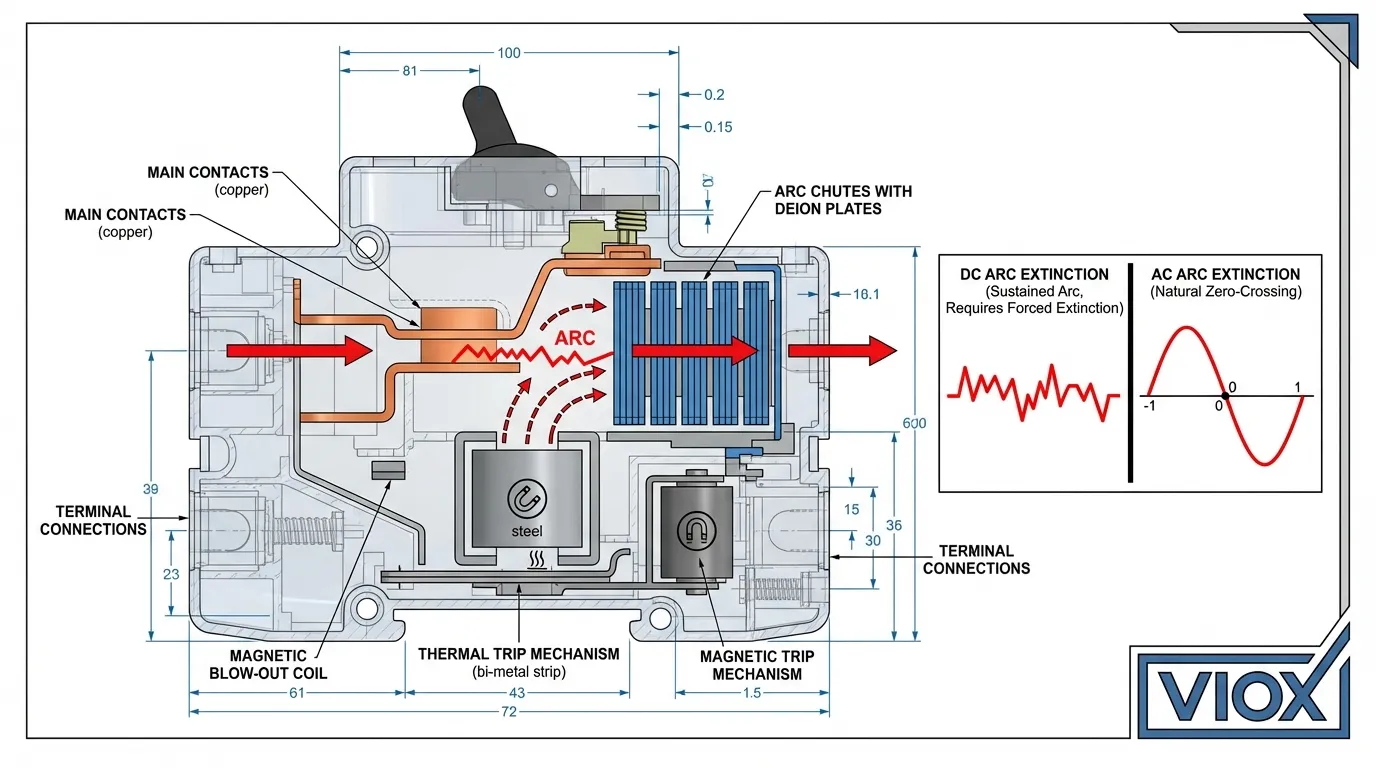
ڈی سی سرکٹ بریکرز بنیادی طور پر اپنے اے سی ہم منصبوں سے مختلف طریقے سے کام کرتے ہیں۔ اے سی کرنٹ کے برعکس جو قدرتی طور پر صفر کو 100-120 بار فی سیکنڈ عبور کرتا ہے (آرک بجھانے میں مدد کرتا ہے)، ڈی سی کرنٹ مستقل پولرٹی برقرار رکھتا ہے، جس سے آرک میں رکاوٹ نمایاں طور پر زیادہ مشکل ہو جاتی ہے۔ یہ جسمانی حقیقت خصوصی سائزنگ حسابات اور معیارات کی ضرورت کو جنم دیتی ہے۔.
نیشنل الیکٹریکل کوڈ (NEC) آرٹیکل 690 بنیادی طور پر ریاستہائے متحدہ اور NEC فریم ورک کو اپنانے والے دائرہ اختیار میں سولر فوٹو وولٹک نظاموں کو کنٹرول کرتا ہے۔ دریں اثنا، IEC 60947-2 تجارتی اور صنعتی ایپلی کیشنز میں استعمال ہونے والے کم وولٹیج سرکٹ بریکرز کے لیے بین الاقوامی معیار کے طور پر کام کرتا ہے، بشمول یورپ، ایشیا اور دیگر خطوں میں سولر تنصیبات۔.
عالمی مارکیٹوں کی خدمت کرنے والے مینوفیکچررز اور بین الاقوامی منصوبوں پر کام کرنے والے انسٹالرز کے لیے دونوں معیارات کو سمجھنا بہت ضروری ہے۔. ڈی سی سرکٹ بریکر کیا ہے؟ ڈی سی پروٹیکشن اصولوں پر بنیادی معلومات فراہم کرتا ہے۔.
NEC 690: سولر پی وی سرکٹ بریکر سائزنگ کا طریقہ
1.56× ضرب کنندہ کی وضاحت
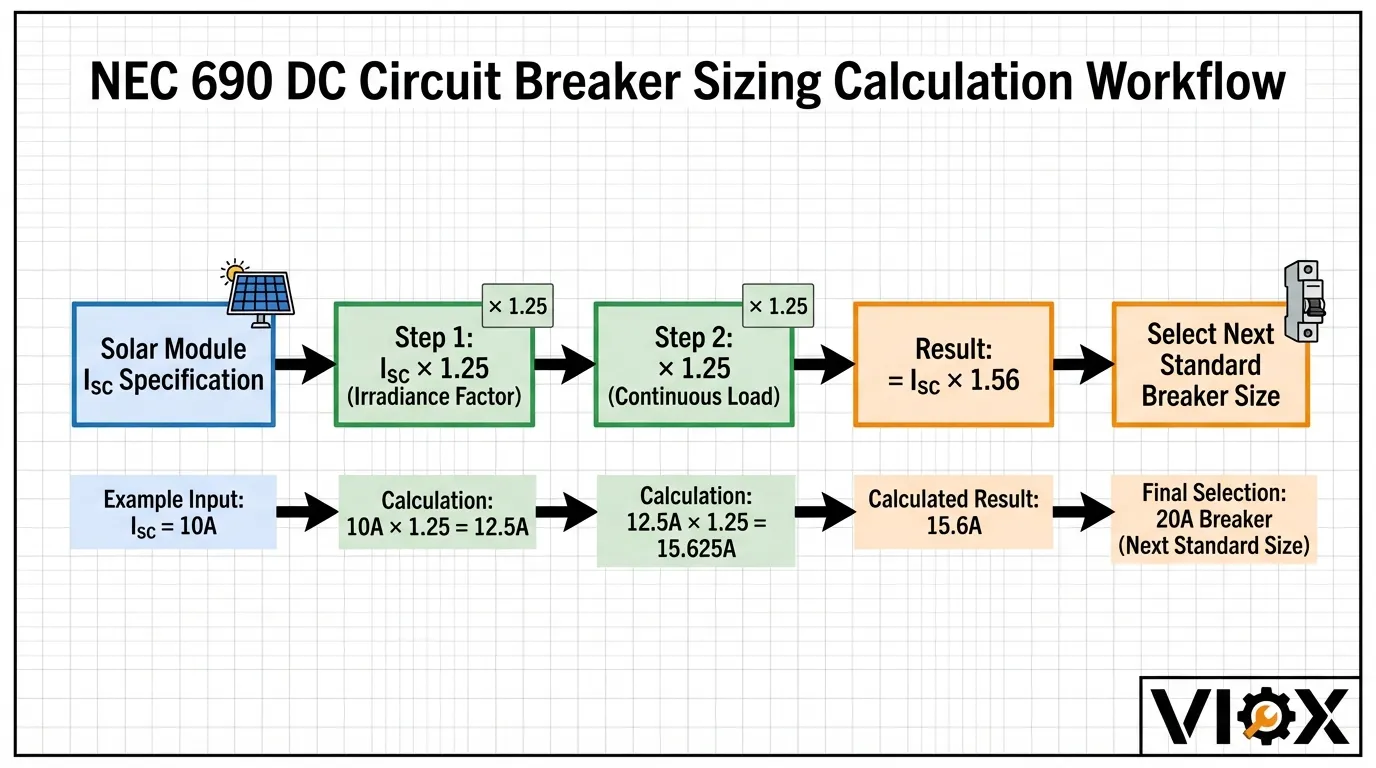
NEC 690.8(A)(1) سولر ایپلی کیشنز میں ڈی سی سرکٹ بریکر سائزنگ کی بنیاد قائم کرتا ہے۔ حساب دو مسلسل 125% حفاظتی عوامل کا اطلاق کرتا ہے:
مرحلہ 1: بہتر شعاع ریزی کا حساب لگائیں
پہلا 125% عنصر “بادل کے کنارے” اثر کو حل کرتا ہے، جہاں سولر ماڈیولز بعض ماحولیاتی حالات میں اپنی ریٹیڈ شارٹ سرکٹ کرنٹ (Isc) سے زیادہ کرنٹ پیدا کر سکتے ہیں۔.
مرحلہ 2: مسلسل لوڈ فیکٹر
دوسرا 125% عنصر مسلسل آپریشن کا حساب لگاتا ہے، کیونکہ پی وی نظام چوٹی کی دھوپ کے دوران تین یا زیادہ مسلسل گھنٹوں تک بجلی پیدا کر سکتے ہیں۔.
مشترکہ حساب:
زیادہ سے زیادہ کرنٹ = Isc × 1.25 × 1.25 = Isc × 1.56
عملی NEC 690 سائزنگ مثال
نظام کی خصوصیات:
- سولر ماڈیول Isc: 10.5A
- متوازی تاروں کی تعداد: 2
- آپریٹنگ وولٹیج: 48V DC
حساب کے مراحل:
- کل شارٹ سرکٹ کرنٹ کا حساب لگائیں:
کل Isc = 10.5A × 2 تاریں = 21A - NEC 690.8 ضرب کنندہ کا اطلاق کریں:
مطلوبہ بریکر ریٹنگ = 21A × 1.56 = 32.76A - معیاری بریکر سائز منتخب کریں:
اگلا معیاری سائز = 40A ڈی سی سرکٹ بریکر - کنڈکٹر ایمپیسٹی کی تصدیق کریں:
کنڈکٹر کو درجہ حرارت/کنڈویٹ فل اصلاحات کے بعد ≥ 32.76A کو سنبھالنا چاہیے۔
یہ طریقہ کار اس بات کو یقینی بناتا ہے کہ بریکر عام ہائی شعاع ریزی کے حالات کے دوران پریشان کن ٹرپ نہیں کرے گا جبکہ مناسب اوورلوڈ تحفظ فراہم کرے گا۔. صحیح ڈی سی سرکٹ بریکر کا انتخاب کیسے کریں۔ اضافی انتخاب کے معیار پیش کرتا ہے۔.
NEC 690 وولٹیج کے تحفظات
NEC 690.7 کو درجہ حرارت سے درست شدہ اوپن سرکٹ وولٹیج (Voc) کا استعمال کرتے ہوئے زیادہ سے زیادہ نظام وولٹیج کا حساب لگانے کی ضرورت ہے۔ رہائشی تنصیبات کے لیے، NEC ڈی سی وولٹیج کو ایک اور دو فیملی رہائش گاہوں کے لیے 600V تک محدود کرتا ہے، اگرچہ تجارتی نظام مناسب حفاظتی تدابیر کے ساتھ زیادہ وولٹیج پر کام کر سکتے ہیں۔.
درجہ حرارت کی اصلاح کا فارمولا:
Voc(max) = Voc(STC) × [1 + (Tmin – 25°C) × درجہ حرارت کا گتانک]
جہاں Tmin تنصیب کی جگہ پر سب سے کم متوقع محیطی درجہ حرارت ہے۔.
IEC 60947-2: صنعتی ڈی سی سرکٹ بریکر کے معیارات
دائرہ کار اور درخواست
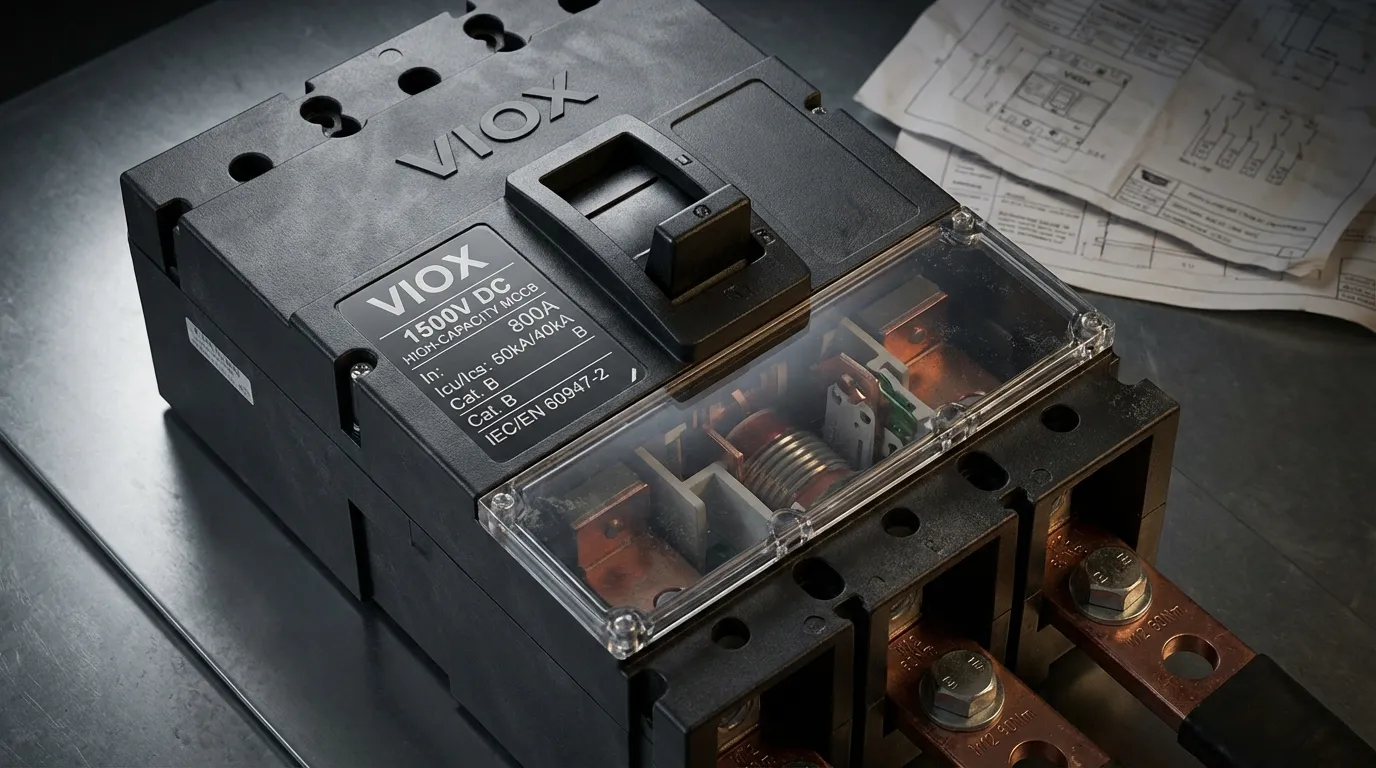
IEC 60947-2 سرکٹ بریکرز پر لاگو ہوتا ہے جن کے اہم رابطے ان سرکٹس کے لیے ہیں جو اس سے زیادہ نہیں ہیں:
- 1,000V اے سی
- 1,500V ڈی سی
یہ معیار مولڈڈ کیس سرکٹ بریکرز (MCCBs) اور دیگر صنعتی گریڈ کے تحفظاتی آلات کا احاطہ کرتا ہے، جو اسے بڑے پیمانے پر سولر تنصیبات، بیٹری انرجی سٹوریج سسٹمز (BESS)، اور ڈی سی مائیکرو گرڈز کے لیے موزوں بناتا ہے۔. IEC 60947-2 کو سمجھنا اس معیار کا رہائشی MCB تقاضوں سے موازنہ کرتا ہے۔.
IEC کرنٹ ریٹنگ زمرے
IEC 60947-2 کئی کرنٹ ریٹنگ کی وضاحت کرتا ہے جو NEC اصطلاحات سے مختلف ہیں:
ریٹیڈ آپریشنل کرنٹ (Ie):
وہ کرنٹ جو بریکر ایک مخصوص محیطی درجہ حرارت پر مسلسل لے جا سکتا ہے (عام طور پر بند تنصیبات کے لیے 40°C، کھلی ہوا کے لیے 25°C)۔.
تھرمل کرنٹ (Ith):
یہ وہ زیادہ سے زیادہ مسلسل کرنٹ ہے جو بریکر اپنے انکلوژر میں درجہ حرارت میں اضافے کی حد سے تجاوز کیے بغیر لے جا سکتا ہے۔.
کنونشنل فری ایئر تھرمل کرنٹ (Ithe):
یہ وہ مسلسل کرنٹ ریٹنگ ہے جب اسے 25 ڈگری سینٹی گریڈ پر فری ایئر میں DIN ریل پر نصب کیا جائے۔.
IEC 60947-2 سائزنگ میتھڈولوجی
NEC کے فکسڈ 1.56× ملٹی پلائر کے برعکس، IEC 60947-2 ڈیزائنرز کو درج ذیل پر غور کرنے کا تقاضا کرتا ہے:
- مسلسل لوڈ کرنٹ (عام حالات میں آپریٹنگ کرنٹ)
- محیطی درجہ حرارت ڈیریٹنگ (حوالہ درجہ حرارت تنصیب کے لحاظ سے مختلف ہوتا ہے)
- استعمال کا زمرہ (AC کے لیے AC-21A, AC-22A, AC-23A؛ DC کے لیے DC-21A, DC-22A, DC-23A)
- شارٹ سرکٹ بریکنگ کیپیسٹی (Icu اور Ics ریٹنگز)
بنیادی IEC سائزنگ فارمولا:
بریکر Ie ≥ (مسلسل لوڈ کرنٹ) / (درجہ حرارت ڈیریٹنگ فیکٹر)
IEC بریکنگ کیپیسٹی کی ضروریات
IEC 60947-2 دو اہم بریکنگ کیپیسٹی ریٹنگز کی وضاحت کرتا ہے:
Icu (الٹیمیٹ شارٹ سرکٹ بریکنگ کیپیسٹی):
یہ وہ زیادہ سے زیادہ فالٹ کرنٹ ہے جسے بریکر ایک بار منقطع کر سکتا ہے۔ اس ٹیسٹ کے بعد، بریکر مسلسل سروس کے لیے موزوں نہیں ہو سکتا۔.
Ics (سروس شارٹ سرکٹ بریکنگ کیپیسٹی):
یہ فالٹ کرنٹ کی وہ سطح ہے جسے بریکر متعدد بار منقطع کر سکتا ہے اور سروس میں رہ سکتا ہے۔ عام طور پر Icu کے فیصد کے طور پر ظاہر کیا جاتا ہے (25٪، 50٪، 75٪، یا 100٪)۔.
قابل اعتماد تحفظ کے لیے، بریکر کی Icu ریٹنگ تنصیب کے مقام پر دستیاب زیادہ سے زیادہ فالٹ کرنٹ سے زیادہ ہونی چاہیے، جبکہ Ics کو فالٹ ایونٹ کے بعد مسلسل آپریشن کے لیے متوقع فالٹ کرنٹ سے زیادہ ہونا چاہیے۔.
تقابلی تجزیہ: NEC 690 بمقابلہ IEC 60947-2
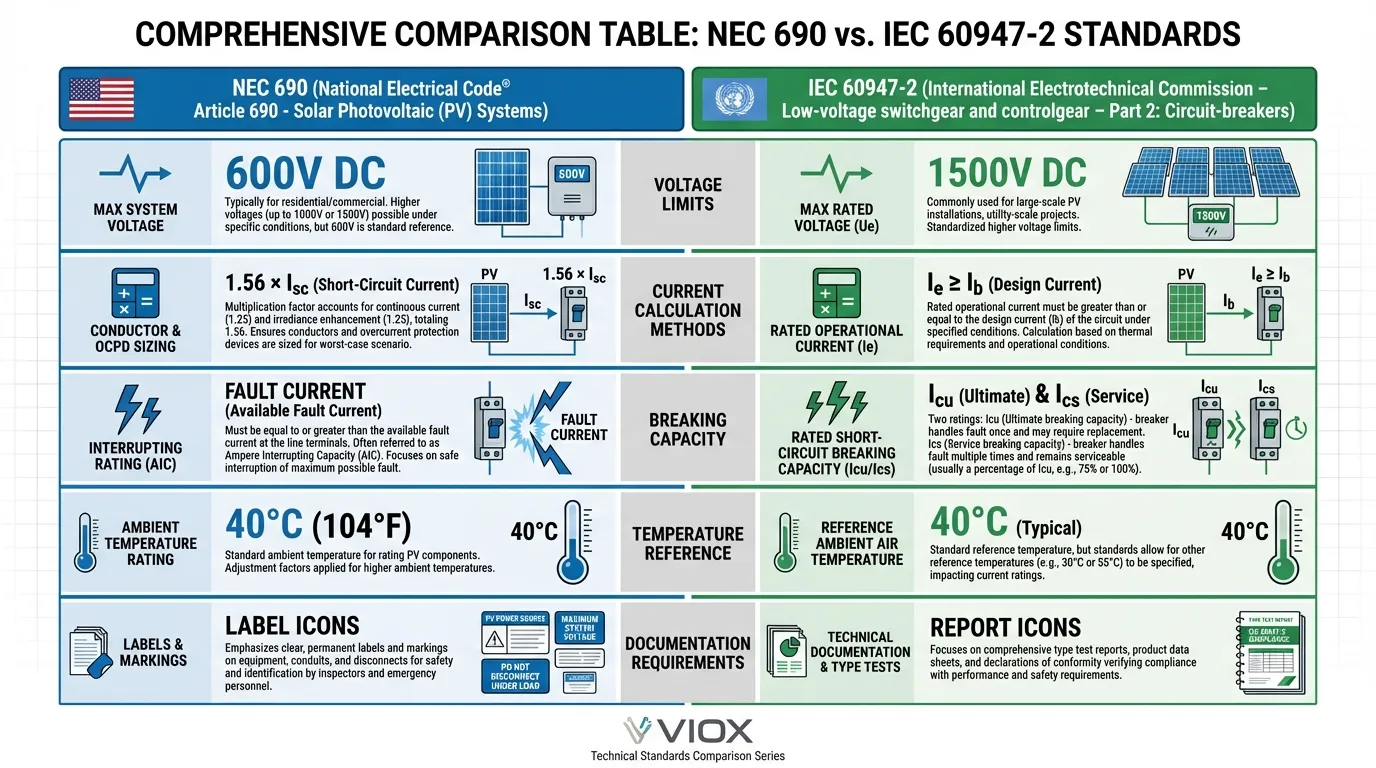
| پیرامیٹر | NEC 690 (سولر پی وی) | IEC 60947-2 (صنعتی) |
|---|---|---|
| بنیادی درخواست | سولر فوٹو وولٹک سسٹم (USA) | صنعتی/تجارتی کم وولٹیج سسٹم (بین الاقوامی) |
| زیادہ سے زیادہ DC وولٹیج | 600V (رہائشی)، 1,000V (تجارتی) | 1,500V ڈی سی |
| کرنٹ کا حساب کتاب | Isc × 1.56 (فکسڈ ملٹی پلائر) | Ie مسلسل لوڈ + ڈیریٹنگ پر مبنی |
| درجہ حرارت کا حوالہ | 40 ڈگری سینٹی گریڈ محیطی (NEC 310.15) | 40 ڈگری سینٹی گریڈ بند، 25 ڈگری سینٹی گریڈ فری ایئر |
| توڑنے کی صلاحیت | دستیاب فالٹ کرنٹ پر مبنی | Icu (الٹیمیٹ) اور Ics (سروس) ریٹنگز |
| مسلسل لوڈ فیکٹر | 125٪ 1.56× ملٹی پلائر میں بنایا گیا | ڈیوٹی سائیکل کی بنیاد پر الگ سے لاگو کیا جاتا ہے |
| استعمال کے زمرے | مخصوص نہیں (PV-مخصوص) | DC-21A, DC-22A, DC-23A متعین |
| ٹیسٹنگ کے معیارات | UL 489 (USA)، UL 1077 (اضافی) | IEC 60947-2 ٹیسٹ سیکوینس |
| دستاویزی | NEC 690.53 کے مطابق لیبلز | IEC 62446-1 کے مطابق کمیشننگ |
| رابطہ کاری | NEC 240.12 کے مطابق سلیکٹیویٹی | IEC 60947-2 Annex A کے مطابق ڈسکریمینیشن |
عملی سائزنگ مثالیں: ایک ساتھ موازنہ
مثال 1: رہائشی سولر اریے
سسٹم پیرامیٹرز:
- ماڈیول Isc: 9.5A
- متوازی میں سٹرنگز: 3
- سسٹم وولٹیج: 400V DC
- مقام: فینکس، AZ (زیادہ درجہ حرارت)
- تنصیب: چھت کا کنڈیوٹ
NEC 690 حساب کتاب:
- کل Isc = 9.5A × 3 = 28.5A
- NEC ملٹی پلائر = 28.5A × 1.56 = 44.46A
- سٹینڈرڈ بریکر = 50A DC بریکر
- کنڈکٹر: 8 AWG (90 ڈگری سینٹی گریڈ پر 50A) درجہ حرارت کی اصلاح کے ساتھ
IEC 60947-2 حساب کتاب:
- مسلسل کرنٹ = 28.5A (Isc بطور حوالہ)
- درجہ حرارت ڈیریٹنگ (50 ڈگری سینٹی گریڈ محیطی): 0.88 فیکٹر
- مطلوبہ Ie = 28.5A / 0.88 = 32.4A
- منتخب کردہ بریکر: 40A MCCB (IEC ریٹیڈ)
- تصدیق کریں Icu ≥ دستیاب فالٹ کرنٹ
کلیدی فرق: NEC کا قدامت پسند 1.56× ملٹی پلائر ایک بڑا بریکر (50A بمقابلہ 40A) فراہم کرتا ہے، جو صحرائی آب و ہوا میں عام انتہائی شعاع ریزی کے حالات کے لیے اضافی حفاظتی مارجن فراہم کرتا ہے۔.
مثال 2: کمرشل بیٹری اسٹوریج سسٹم
سسٹم پیرامیٹرز:
- بیٹری بینک: 500V DC برائے نام
- زیادہ سے زیادہ چارج کرنٹ: 100A
- زیادہ سے زیادہ ڈسچارج کرنٹ: 150A
- دستیاب فالٹ کرنٹ: 8,000A
NEC 690 اپروچ (اگر قابل اطلاق ہو):
بیٹری سرکٹس کے لیے، NEC 690 براہ راست لاگو نہیں ہوتا ہے، لیکن NEC 706 (انرجی اسٹوریج سسٹمز) حکمرانی کرے گا:
- مسلسل کرنٹ = 150A (چارج/ڈسچارج میں سے زیادہ)
- 1.25 کا فیکٹر لگائیں = 150A × 1.25 = 187.5A
- سٹینڈرڈ بریکر = 200A DC بریکر
IEC 60947-2 اپروچ:
- ریٹیڈ آپریشنل کرنٹ (Ie) = 150A
- Ie ≥ 150A کے ساتھ بریکر منتخب کریں
- تصدیق کریں Icu ≥ 8,000A (8kA)
- تصدیق کریں Ics ≥ 4,000A (Icu کا کم از کم 50٪)
- منتخب کردہ بریکر: 10kA Icu ریٹنگ کے ساتھ 160A MCCB
کلیدی فرق: IEC مقررہ 1.56× ملٹی پلائر کے بغیر اصل آپریشنل کرنٹ کی بنیاد پر زیادہ درست سائزنگ کی اجازت دیتا ہے، لیکن اس کے لیے تفصیلی فالٹ کرنٹ تجزیہ اور بریکنگ کی صلاحیت کی تصدیق درکار ہوتی ہے۔.
درجہ حرارت ڈیریٹنگ: اہم غور و فکر
دونوں معیارات درجہ حرارت کی اصلاحات کا تقاضا کرتے ہیں، لیکن طریقہ کار مختلف ہیں:
NEC 310.15 درجہ حرارت کی اصلاح
NEC جدول 310.15(B)(1) میں درجہ حرارت کی اصلاح کے عوامل فراہم کرتا ہے:
| محیطی درجہ حرارت | اصلاحی عنصر (90°C کنڈکٹر) |
|---|---|
| 30°C | 1.04 |
| 40°C | 1.00 |
| 50°C | 0.82 |
| 60°C | 0.58 |
درخواست: کنڈکٹر کی ایمپیسٹی کو اصلاحی عنصر سے ضرب دیں، پھر تصدیق کریں کہ بریکر کی ریٹنگ درست شدہ ایمپیسٹی سے زیادہ نہیں ہے۔.
IEC 60947-2 درجہ حرارت ڈیریٹنگ
IEC بریکرز کو مخصوص ریفرنس درجہ حرارت پر ریٹ کیا جاتا ہے (عام طور پر بند کے لیے 40°C، کھلی ہوا کے لیے 25°C)۔ مینوفیکچررز مختلف محیطی حالات کے لیے ڈیریٹنگ کرو فراہم کرتے ہیں۔.
عام IEC ڈیریٹنگ:
- 30°C: ریٹیڈ کرنٹ کا 1.05×
- 40°C: ریٹیڈ کرنٹ کا 1.00× (حوالہ)
- 50°C: ریٹیڈ کرنٹ کا 0.86×
- 60°C: ریٹیڈ کرنٹ کا 0.71×
گرم آب و ہوا میں شمسی تنصیبات کے لیے، درجہ حرارت ڈیریٹنگ بریکر کے انتخاب پر نمایاں اثر ڈال سکتی ہے۔. سرکٹ بریکر الٹیٹیوڈ ڈیریٹنگ گائیڈ اضافی ماحولیاتی عوامل کا احاطہ کرتا ہے۔.
بریکنگ کی صلاحیت اور فالٹ کرنٹ تجزیہ
NEC اپروچ: دستیاب فالٹ کرنٹ
NEC 110.9 کا تقاضا ہے کہ “فالٹ لیولز پر کرنٹ میں مداخلت کرنے کے ارادے سے تیار کردہ آلات میں برائے نام سرکٹ وولٹیج اور اس کرنٹ کے لیے کافی مداخلت کی درجہ بندی ہونی چاہیے جو آلات کے لائن ٹرمینلز پر دستیاب ہے۔”
حساب کتاب کا طریقہ:
- یوٹیلیٹی/ذریعہ سے زیادہ سے زیادہ دستیاب فالٹ کرنٹ کا تعین کریں۔
- سولر اریے سے فالٹ کرنٹ کی شراکت کا حساب لگائیں۔
- کل دستیاب فالٹ کرنٹ کا خلاصہ کریں۔
- کل فالٹ کرنٹ سے زیادہ یا اس کے برابر مداخلت کی درجہ بندی کے ساتھ بریکر منتخب کریں۔
سولر PV فالٹ کرنٹ:
PV سے زیادہ سے زیادہ فالٹ کرنٹ ≈ Isc × 1.25 × متوازی تاروں کی تعداد
IEC 60947-2 اپروچ: Icu اور Ics ریٹنگز
IEC کو حتمی (Icu) اور سروس (Ics) دونوں بریکنگ کی صلاحیت کی تصدیق درکار ہے:
Icu کا انتخاب:
بریکر Icu ≥ زیادہ سے زیادہ متوقع شارٹ سرکٹ کرنٹ
Ics کا انتخاب:
بریکر Ics ≥ جاری آپریشن کے لیے متوقع فالٹ کرنٹ
- Ics = Icu کا 100٪: مکمل سروس کی صلاحیت
- Ics = Icu کا 75٪: اعلی سروس کی صلاحیت
- Ics = Icu کا 50٪: معتدل سروس کی صلاحیت
- Ics = Icu کا 25٪: محدود سروس کی صلاحیت
اہم تنصیبات کے لیے، Ics = Icu کا 100٪ کے ساتھ بریکرز کا انتخاب اس بات کو یقینی بناتا ہے کہ فالٹ کرنٹ کو صاف کرنے کے بعد بریکر مکمل طور پر فعال رہے۔. سرکٹ بریکر ریٹنگز ICU ICS ICW ICM ان ریٹنگز کی تفصیلی وضاحت فراہم کرتا ہے۔.
کوآرڈینیشن اور سلیکٹیویٹی
NEC سلیکٹیویٹی کے تقاضے
NEC 240.12 ہنگامی نظاموں، قانونی طور پر مطلوبہ اسٹینڈ بائی نظاموں، اور اہم آپریشنز پاور سسٹمز کے لیے سلیکٹیو کوآرڈینیشن سے متعلق ہے۔ شمسی تنصیبات کے لیے:
- مین بریکر کو بند رہنا چاہیے جب ڈاون اسٹریم بریکر ٹرپ کرے۔
- ٹائم کرنٹ کرو (Time-current curves) کا تجزیہ کیا جانا چاہیے۔
- سیریز ریٹیڈ سسٹم (Series-rated systems) مخصوص شرائط کے تحت جائز ہیں۔
آئی ای سی ڈسکریمینیشن ریکوائرمنٹس (IEC Discrimination Requirements)
آئی ای سی 60947-2 اینیکس اے (IEC 60947-2 Annex A) تفصیلی ڈسکریمینیشن (سلیکٹیویٹی) ٹیبلز اور حساب کے طریقے فراہم کرتا ہے:
ٹوٹل ڈسکریمینیشن (Total Discrimination):
اپ اسٹریم ڈیوائس کسی بھی فالٹ کے لیے کام نہیں کرتی جو ڈاون اسٹریم ڈیوائس کے ذریعے کلیئر کیا جاتا ہے۔
پارشل ڈسکریمینیشن (Partial Discrimination):
ایک مخصوص کرنٹ لیول (ڈسکریمینیشن لیمٹ) تک ڈسکریمینیشن۔
انرجی ڈسکریمینیشن (Energy Discrimination):
لیٹ تھرو انرجی (I²t) خصوصیات پر مبنی۔
متعدد پروٹیکشن لیولز کے ساتھ بڑے سولر تنصیبات کے لیے، مناسب کوآرڈینیشن ناخوشگوار ٹرپنگ کو روکتا ہے اور سسٹم کی دستیابی کو برقرار رکھتا ہے۔. بریکر سلیکٹیویٹی کوآرڈینیشن گائیڈ کیا ہے؟ کوآرڈینیشن کے اصولوں کی تفصیل سے وضاحت کرتا ہے۔.
سولر ایپلی کیشنز کے لیے خصوصی تحفظات
پولرٹی اور ڈی سی آرک ایکسٹنکشن (Polarity and DC Arc Extinction)
سولر ایپلی کیشنز کے لیے ڈی سی سرکٹ بریکرز کو منفرد چیلنجز سے نمٹنا چاہیے:
آرک ایکسٹنکشن میں دشواری:
ڈی سی آرکس قدرتی طور پر اے سی کی طرح زیرو کراسنگ پر نہیں بجھتے۔ بریکرز استعمال کرتے ہیں:
- مقناطیسی بلو آؤٹ کوائلز
- ڈیون پلیٹوں کے ساتھ آرک چیوٹس (Arc chutes)
- رابطے کی علیحدگی میں اضافہ
پولرٹی تحفظات:
کچھ ڈی سی بریکرز پولرٹی حساس ہوتے ہیں۔. پولرٹی ڈی سی سرکٹ بریکر گائیڈ مناسب تنصیب کی سمت کا احاطہ کرتا ہے۔.
سٹرنگ بمقابلہ ایرے لیول پروٹیکشن (String vs. Array-Level Protection)
سٹرنگ لیول پروٹیکشن (این ای سی 690.9):
- ہر سٹرنگ کے لیے انفرادی بریکر
- سنگل سٹرنگ کی تنہائی کی اجازت دیتا ہے۔
- اعلی جزو شمار اور لاگت
ایرے لیول پروٹیکشن:
- متعدد متوازی سٹرنگز کے لیے سنگل بریکر
- مناسب کنڈکٹر سائزنگ کی ضرورت ہے
- کم لاگت لیکن کم گرینولر کنٹرول
ریپڈ شٹ ڈاؤن تعمیل
این ای سی 690.12 (2017 اور اس کے بعد) فوری شٹ ڈاؤن فعالیت لازمی قرار دیتا ہے:
- 30 سیکنڈ کے اندر وولٹیج کو ≤ 80V تک کم کریں۔
- کچھ ڈی سی بریکرز فوری شٹ ڈاؤن سسٹمز کے ساتھ مربوط ہوتے ہیں۔
- بریکر کی جگہ اور سسٹم ڈیزائن کو متاثر کرتا ہے۔
ریپڈ شٹ ڈاؤن بمقابلہ ڈی سی ڈس کنیکٹ سیفٹی گائیڈ مختلف تعمیل کے طریقوں کا موازنہ کرتا ہے۔.
کنڈکٹر سائزنگ انٹیگریشن
مناسب ڈی سی سرکٹ بریکر سائزنگ کو کنڈکٹر ایمپیسٹی کے ساتھ مربوط ہونا چاہیے:
این ای سی کنڈکٹر سائزنگ
- کم از کم ایمپیسٹی کا حساب لگائیں:
ایمپیسٹی ≥ Isc × 1.56 - اصلاحی عوامل کا اطلاق کریں:
- درجہ حرارت کی اصلاح (این ای سی 310.15(B)(1))
- کنڈوٹ فل ایڈجسٹمنٹ (این ای سی 310.15(B)(3)(a))
- بریکر پروٹیکشن کی تصدیق کریں:
بریکر ریٹنگ ≤ کنڈکٹر ایمپیسٹی (اصلاحات کے بعد)
آئی ای سی کنڈکٹر سائزنگ
- ڈیزائن کرنٹ (Ib) کا تعین کریں:
Ib = مسلسل آپریٹنگ کرنٹ - بریکر ریٹنگ (In) منتخب کریں:
In ≥ Ib - کنڈکٹر ایمپیسٹی (Iz) منتخب کریں:
Iz ≥ In - اصلاحی عوامل کا اطلاق کریں:
- محیطی درجہ حرارت (آئی ای سی 60364-5-52)
- گروپنگ فیکٹر
- تنصیب کا طریقہ
50 ایمپ وائر سائز سلیکشن گائیڈ عملی کنڈکٹر سائزنگ کی مثالیں فراہم کرتا ہے۔.
سائزنگ کی عام غلطیاں اور ان سے کیسے بچیں
غلطی 1: 125% فیکٹر کو دو بار شمار کرنا
غلط طریقہ:
- حساب لگائیں: Isc × 1.56 = 15.6A
- اضافی 125% لگائیں: 15.6A × 1.25 = 19.5A ❌
درست طریقہ کار:
- NEC 690 میں پہلے سے ہی مسلسل لوڈ فیکٹر شامل ہے
- استعمال کریں: Isc × 1.56 = 15.6A
- اگلا معیاری سائز منتخب کریں: 20A ✓
غلطی 2: درجہ حرارت ڈیریٹنگ کو نظر انداز کرنا
مسئلہ:
60°C محیطی درجہ حرارت میں بغیر درجہ حرارت کی اصلاح کے 20A بریکر کے لیے #12 AWG (90°C پر 25A) کا انتخاب کرنا۔.
درست کردہ ایمپیسٹی:
25A × 0.58 (60°C فیکٹر) = 14.5A (20A بریکر کے لیے ناکافی)
حل:
#10 AWG استعمال کریں (35A × 0.58 = 20.3A) ✓
غلطی 3: ناکافی بریکنگ کی صلاحیت
منظر نامہ:
6kA بریکر لگانا جہاں دستیاب فالٹ کرنٹ 8kA ہے
نتیجہ:
فالٹ کے دوران بریکر تباہ کن طور پر ناکام ہو سکتا ہے، جس سے آگ لگنے کا خطرہ ہے
حل:
تمام ذرائع سمیت زیادہ سے زیادہ فالٹ کرنٹ کا حساب لگائیں، Icu ≥ کل فالٹ کرنٹ کے ساتھ بریکر منتخب کریں
غلطی 4: AC اور DC ریٹنگز کو ملانا
اہم غلطی:
DC ایپلیکیشن کے لیے AC ریٹیڈ بریکر کا استعمال
یہ کیوں ناکام ہوتا ہے:
- AC بریکر آرک بجھانے کے لیے زیرو کراسنگ پر انحصار کرتے ہیں
- DC آرک مناسب مداخلت کے طریقہ کار کے بغیر غیر معینہ مدت تک برقرار رہتا ہے
- بریکر کی ناکامی اور آگ کا سبب بن سکتا ہے
حل:
شمسی PV اور بیٹری سسٹم کے لیے ہمیشہ DC ریٹیڈ بریکر کی وضاحت کریں۔. DC بمقابلہ AC سرکٹ بریکر ضروری اختلافات اہم امتیازات کی وضاحت کرتا ہے۔.
تعمیل اور دستاویزات کی ضروریات
NEC 690 دستاویزات
مطلوبہ لیبلز (NEC 690.53):
- زیادہ سے زیادہ سسٹم وولٹیج
- زیادہ سے زیادہ سرکٹ کرنٹ
- زیادہ سے زیادہ OCPD ریٹنگ
- شارٹ سرکٹ کرنٹ ریٹنگ
پلی کارڈ کی ضروریات:
- DC منقطع کرنے والوں کا مقام
- ریپڈ شٹ ڈاؤن بٹن کا مقام
- ایمرجنسی رابطہ کی معلومات
IEC کمیشننگ دستاویزات
IEC 62446-1 کی ضروریات:
- سسٹم ڈیزائن دستاویزات
- جزو کی وضاحتیں
- ٹیسٹ کے نتائج (انسولیشن مزاحمت، پولرٹی، زمینی تسلسل)
- I-V کریو پیمائش
- حفاظتی آلہ کی ترتیبات
- تعمیر شدہ ڈرائنگ
بین الاقوامی منصوبوں کے لیے، NEC لیبلز اور IEC کمیشننگ رپورٹس دونوں کو برقرار رکھنا دائرہ اختیار میں تعمیل کو یقینی بناتا ہے۔.
اپنے پروجیکٹ کے لیے صحیح معیار کا انتخاب کرنا
NEC 690 کب استعمال کریں:
- امریکہ، کینیڈا، یا NEC کو اپنانے والے دائرہ اختیار میں انسٹال کرنا
- رہائشی شمسی نظام ڈیزائن کرنا
- UL-لسٹڈ آلات کے ساتھ کام کرنا
- پروجیکٹ کو NEC فریم ورک کے تحت AHJ کی منظوری درکار ہے
- یوٹیلیٹی انٹرکنکشن IEEE 1547 پر عمل کرتا ہے
IEC 60947-2 کب استعمال کریں:
- یورپ، ایشیا، مشرق وسطیٰ، یا IEC کو اپنانے والے خطوں میں انسٹال کرنا
- بڑے تجارتی/صنعتی نظام ڈیزائن کرنا
- CE-مارکڈ آلات کے ساتھ کام کرنا
- پروجیکٹ کی وضاحتیں IEC تعمیل کی ضرورت ہوتی ہیں
- IEC 61727 یوٹیلیٹی انٹرفیس کے ساتھ انضمام
دوہری تعمیل کا طریقہ کار:
عالمی منڈیوں کی خدمت کرنے والے مینوفیکچررز کے لیے:
- زیادہ سخت ضرورت کے مطابق ڈیزائن کریں
- UL اور IEC دونوں سرٹیفیکیشن حاصل کریں
- دونوں معیارات کے لیے دستاویزات فراہم کریں
- قدامت پسند سائزنگ استعمال کریں جو دونوں فریم ورک کو پورا کرے۔
بہت سے جدید DC سرکٹ بریکر دوہری ریٹنگ (UL 489 اور IEC 60947-2) رکھتے ہیں، جو بین الاقوامی منصوبوں کے لیے تفصیلات کو آسان بناتے ہیں۔. چین میں ٹاپ 10 سرکٹ بریکر مینوفیکچررز دوہری تصدیق شدہ مصنوعات پیش کرنے والے سپلائرز کی فہرست دیتا ہے۔.
جدید موضوعات: بیٹری اسٹوریج اور مائیکرو گرڈز
بیٹری سرکٹ پروٹیکشن
بیٹری انرجی اسٹوریج سسٹم منفرد چیلنجز پیش کرتے ہیں:
چارج/ڈسچارج عدم توازن:
- چارج کرنٹ: عام طور پر انورٹر/چارجر کے ذریعے محدود ہوتا ہے۔
- ڈسچارج کرنٹ: نمایاں طور پر زیادہ ہو سکتا ہے۔
- چارج یا ڈسچارج کی زیادہ سے زیادہ مقدار کے لیے بریکر کا سائز منتخب کریں۔
انرش کرنٹ:
- کیپیسیٹیو لوڈز (Capacitive loads) ہائی اِن رش (high inrush) پیدا کرتے ہیں۔
- ڈی-کرو (D-curve) بریکرز یا سافٹ سٹارٹ سرکٹس (soft-start circuits) کی ضرورت پڑ سکتی ہے۔
فالٹ کرنٹ کنٹریبیوشن (Fault Current Contribution):
- بیٹریاں بہت زیادہ فالٹ کرنٹ فراہم کر سکتی ہیں۔
- بریکنگ کیپیسٹی (breaking capacity) کا محتاط تجزیہ درکار ہے۔
بی ای ایس ایس (BESS) ہائی بریکنگ کیپیسٹی میں سٹینڈرڈ ڈی سی بریکرز کیوں ناکام ہوتے ہیں؟ بیٹری سے متعلقہ حفاظتی چیلنجوں سے نمٹتا ہے۔.
ڈی سی مائیکرو گرڈ ایپلی کیشنز (DC Microgrid Applications)
ملٹی سورس ڈی سی سسٹمز (Multi-source DC systems) کو نفیس حفاظتی کوآرڈینیشن (protection coordination) کی ضرورت ہوتی ہے:
ماخذ رابطہ:
- سولر پی وی (Solar PV) کنٹریبیوشن
- بیٹری کنٹریبیوشن
- یوٹیلیٹی ٹائیڈ ریکٹیفائر (Utility-tied rectifier) کنٹریبیوشن
- جنریٹر کنٹریبیوشن
بائی ڈائریکشنل پاور فلو (Bidirectional Power Flow):
- بریکرز کو دونوں سمتوں میں کرنٹ کو منقطع کرنا چاہیے۔
- غیر متناسب بریکرز کے لیے پولرٹی (polarity) کے تحفظات۔
گراؤنڈنگ سکیمز (Grounding Schemes):
- سالڈلی گراؤنڈڈ سسٹمز (Solidly grounded systems)
- ہائی ریزسٹنس گراؤنڈڈ سسٹمز (High-resistance grounded systems)
- ان گراؤنڈڈ سسٹمز (Ungrounded systems) (آئی ای سی (IEC) کے مطابق آئی ٹی سسٹمز)
ڈی سی سرکٹ پروٹیکشن میں مستقبل کے رجحانات
سالڈ سٹیٹ سرکٹ بریکرز (Solid-State Circuit Breakers)
ابھرتی ہوئی سالڈ سٹیٹ ٹیکنالوجی پیش کرتی ہے:
- تیز رفتار انٹَرَپشن ٹائمز (interruption times) (ملی سیکنڈز کے مقابلے میں مائیکرو سیکنڈز)
- کوئی میکانی لباس نہیں۔
- درست کرنٹ لمیٹنگ (current limiting)
- سمارٹ گرڈ سسٹم کے ساتھ انضمام
سالڈ سٹیٹ سرکٹ بریکر ایس ایس سی بی (Solid State Circuit Breaker SSCB) Nvidia Tesla Switch اس ابھرتی ہوئی ٹیکنالوجی کو دریافت کرتا ہے۔.
سمارٹ بریکرز اور آئی او ٹی انٹیگریشن (IoT Integration)
اگلی نسل کے ڈی سی بریکرز میں یہ خصوصیات ہیں:
- ریئل ٹائم موجودہ نگرانی
- پیشن گوئی کی دیکھ بھال کے انتباہات
- ریموٹ ٹرپ/کلوز کیپیبلٹی (Remote trip/close capability)
- عمارت کے انتظام کے نظام کے ساتھ انضمام
سٹینڈرڈز ہارمونائزیشن (Standards Harmonization)
این ای سی (NEC) اور آئی ای سی (IEC) سٹینڈرڈز کو ہم آہنگ کرنے کی جاری کوششیں:
- آئی ای سی/یو ایل 61730 (IEC/UL 61730) سولر ماڈیول سیفٹی (solar module safety) کو ہم آہنگ کرتا ہے۔
- ڈی سی پروٹیکشن گیپس (DC protection gaps) کو دور کرنے کے لیے مشترکہ ورکنگ گروپس۔
- ٹیسٹ کے نتائج کی باہمی شناخت میں اضافہ۔
مختصر سوالات کے سیکشن
سوال: کیا میں این ای سی (NEC) اور آئی ای سی (IEC) دونوں پروجیکٹس کے لیے ایک ہی بریکر سائزنگ میتھڈ (sizing method) استعمال کر سکتا ہوں؟
جواب: نہیں۔ این ای سی 690 (NEC 690) سولر پی وی سرکٹس (solar PV circuits) کے لیے فکسڈ 1.56× ملٹی پلائر (multiplier) کا تقاضا کرتا ہے، جبکہ آئی ای سی 60947-2 (IEC 60947-2) علیحدہ ڈی ریٹنگ فیکٹرز (derating factors) کے ساتھ مسلسل لوڈ کرنٹ (load current) استعمال کرتا ہے۔ ہمیشہ اپنے دائرہ اختیار پر حکمرانی کرنے والے سٹینڈرڈ کا اطلاق کریں۔ بین الاقوامی پروجیکٹس کے لیے، دونوں طریقوں کا استعمال کرتے ہوئے حساب لگائیں اور زیادہ محتاط نتیجہ منتخب کریں۔.
سوال: آئی ای سی (IEC) بریکرز میں آئی سی یو (Icu) اور آئی سی ایس (Ics) ریٹنگز (ratings) میں کیا فرق ہے؟
جواب: آئی سی یو (Icu) (الٹیمیٹ بریکنگ کیپیسٹی (ultimate breaking capacity)) زیادہ سے زیادہ فالٹ کرنٹ (fault current) ہے جسے بریکر ایک بار منقطع کر سکتا ہے، جبکہ آئی سی ایس (Ics) (سروس بریکنگ کیپیسٹی (service breaking capacity)) وہ فالٹ لیول (fault level) ہے جسے یہ متعدد بار منقطع کر سکتا ہے اور آپریشنل (operational) رہ سکتا ہے۔ آئی سی ایس (Ics) عام طور پر آئی سی یو (Icu) کا 25-100% ہوتا ہے۔ اہم ایپلی کیشنز (applications) کے لیے، آئی سی ایس (Ics) = 100% آئی سی یو (Icu) والے بریکرز منتخب کریں۔.
سوال: کیا مجھے این ای سی (NEC) کے تحت بیٹری سرکٹس (battery circuits) پر 1.56× ملٹی پلائر (multiplier) لاگو کرنے کی ضرورت ہے؟
جواب: نہیں۔ این ای سی 690.8 (NEC 690.8) ملٹی پلائر (multiplier) خاص طور پر پی وی سورس (PV source) اور آؤٹ پٹ سرکٹس (output circuits) پر لاگو ہوتا ہے۔ بیٹری سرکٹس این ای سی 706 (NEC 706) (انرجی سٹوریج سسٹمز (Energy Storage Systems)) کے تحت آتے ہیں، جس میں مسلسل لوڈز (continuous loads) کے لیے 125% (1.25×) کی ضرورت ہوتی ہے لیکن اضافی اریڈیئنس فیکٹر (irradiance factor) کی نہیں۔ ہمیشہ اپنی مخصوص ایپلی کیشن (application) کے لیے قابل اطلاق کوڈ آرٹیکل (code article) کی تصدیق کریں۔.
سوال: کیا میں ڈی سی ایپلی کیشنز (DC applications) کے لیے اے سی ریٹیڈ بریکر (AC-rated breaker) استعمال کر سکتا ہوں اگر وولٹیج (voltage) اور کرنٹ ریٹنگز (current ratings) مناسب ہوں؟
جواب: کبھی نہیں۔ اے سی بریکرز (AC breakers) آرکس (arcs) کو بجھانے کے لیے الٹرنیٹنگ کرنٹ (alternating current) کے قدرتی زیرو کراسنگ (zero-crossing) پر انحصار کرتے ہیں۔ ڈی سی کرنٹ (DC current) مستقل پولرٹی (polarity) کو برقرار رکھتا ہے، جس کے لیے خصوصی آرک انٹَرپشن میکانزمز (arc interruption mechanisms) کی ضرورت ہوتی ہے۔ ڈی سی ایپلی کیشنز (DC applications) کے لیے اے سی بریکرز (AC breakers) کا استعمال تباہ کن ناکامی اور آگ کے خطرات کا باعث بن سکتا ہے۔ ہمیشہ مناسب وولٹیج ریٹنگز (voltage ratings) کے ساتھ ڈی سی ریٹیڈ بریکرز (DC-rated breakers) کی وضاحت کریں۔.
سوال: میں بریکر سلیکشن (breaker selection) کے لیے دستیاب فالٹ کرنٹ (fault current) کا تعین کیسے کروں؟
جواب: گرڈ ٹائیڈ سسٹمز (grid-tied systems) کے لیے، انٹرکنکشن (interconnection) کے مقام پر یوٹیلیٹی (utility) کا دستیاب فالٹ کرنٹ (fault current) حاصل کریں۔ اپنے پی وی ایرے (PV array) سے فالٹ کرنٹ کنٹریبیوشن (fault current contribution) شامل کریں (تقریباً Isc × 1.25 × متوازی سٹرنگز (parallel strings) کی تعداد)۔ بیٹری سسٹمز (battery systems) کے لیے، زیادہ سے زیادہ شارٹ سرکٹ کرنٹ (short-circuit current) کے لیے مینوفیکچرر (manufacturer) کے ڈیٹا سے مشورہ کریں۔ کل حسابی فالٹ کرنٹ (fault current) سے زیادہ آئی سی یو (Icu) (آئی ای سی (IEC)) یا انٹَرپٹنگ ریٹنگ (interrupting rating) (این ای سی (NEC)) والا بریکر منتخب کریں۔.
سوال: سولر روف ٹاپ انسٹالیشنز (solar rooftop installations) میں کنڈکٹر ڈی ریٹنگ (conductor derating) کے لیے مجھے کون سا درجہ حرارت استعمال کرنا چاہیے؟
جواب: روف ٹاپس (rooftops) پر کنڈیوٹ ماؤنٹڈ کنڈکٹرز (conduit-mounted conductors) کے لیے، براہ راست سورج کی روشنی میں محیطی درجہ حرارت (ambient temperatures) 60-70 ڈگری سینٹی گریڈ سے تجاوز کر سکتا ہے۔ روف ٹاپ ٹمپریچر ایڈر (rooftop temperature adders) (عام طور پر محیطی سے +33 ڈگری سینٹی گریڈ اوپر) کے لیے مقامی موسمیاتی ڈیٹا (climate data) اور این ای سی 310.15(B)(3)(c) (NEC 310.15(B)(3)(c)) استعمال کریں۔ قدامت پسند ڈیزائن (Conservative designs) صحرائی آب و ہوا (desert climates) یا ناقص وینٹیلیشن (poor ventilation) والے سیاہ روف ٹاپس (dark rooftops) کے لیے 70 ڈگری سینٹی گریڈ محیطی درجہ حرارت (ambient temperature) استعمال کرتے ہیں۔.
نتیجہ: محفوظ، تعمیلی ڈی سی پروٹیکشن (DC Protection) کو یقینی بنانا
محفوظ، قابل اعتماد سولر پی وی (solar PV) اور انرجی سٹوریج انسٹالیشنز (energy storage installations) کے لیے مناسب ڈی سی سرکٹ بریکر سائزنگ (DC circuit breaker sizing) بنیادی حیثیت رکھتی ہے۔ چاہے این ای سی 690 (NEC 690) یا آئی ای سی 60947-2 (IEC 60947-2) سٹینڈرڈز کے تحت کام کر رہے ہوں، حساب کتاب کے طریقہ کار، سیفٹی فیکٹرز (safety factors) اور بریکنگ کیپیسٹی ریکوائرمنٹس (breaking capacity requirements) کو سمجھنا اس بات کو یقینی بناتا ہے کہ آپ کے سسٹمز (systems) آلات اور اہلکاروں دونوں کی حفاظت کریں۔.
یاد رکھنے کے لیے اہم اصول:
- اپنے دائرہ اختیار اور ایپلی کیشن (application) کے لیے درست سٹینڈرڈ کا اطلاق کریں۔ کبھی بھی ٹمپریچر ڈی ریٹنگ (temperature derating) کو مت چھوڑیں - یہ کنڈکٹر پروٹیکشن (conductor protection) کے لیے بہت ضروری ہے۔
- زیادہ سے زیادہ دستیاب فالٹ کرنٹ (fault current) کے خلاف۔ ڈی سی ریٹیڈ بریکرز (DC-rated breakers) استعمال کریں۔
- بریکنگ صلاحیت کی تصدیق کریں - ڈی سی ایپلی کیشنز (DC applications) کے لیے کبھی بھی اے سی بریکرز (AC breakers) کو متبادل نہ بنائیں۔
- اچھی طرح سے دستاویز کریں۔ - مناسب لیبلنگ (labeling) اور کمیشننگ ریکارڈز (commissioning records) ضروری ہیں۔
- متعدد ذرائع، بیٹری سٹوریج (battery storage) یا بین الاقوامی تعمیل کی ضروریات پر مشتمل پیچیدہ انسٹالیشنز (installations) کے لیے، تجربہ کار الیکٹریکل انجینئرز (electrical engineers) سے مشورہ کرنا اور معروف مینوفیکچررز (manufacturers) سے آلات کا استعمال اس بات کو یقینی بناتا ہے کہ آپ کے پروٹیکشن سسٹمز (protection systems) ضرورت پڑنے پر ڈیزائن کے مطابق کارکردگی کا مظاہرہ کریں۔ VIOX Electric این ای سی (NEC) اور آئی ای سی (IEC) دونوں سٹینڈرڈز کے مطابق ڈی سی سرکٹ بریکرز (DC circuit breakers) کی ایک جامع رینج (range) پیش کرتا ہے، جو مناسب ایپلی کیشن (application) کے لیے سخت جانچ اور تکنیکی مدد سے تعاون یافتہ ہے۔ چاہے آپ رہائشی سولر ایرے (residential solar arrays) یا بڑے پیمانے پر بیٹری سٹوریج سسٹمز (battery storage systems) ڈیزائن کر رہے ہوں، مناسب سرکٹ پروٹیکشن (circuit protection) درست سائزنگ کیلکولیشنز (sizing calculations) اور معیاری اجزاء سے شروع ہوتی ہے۔
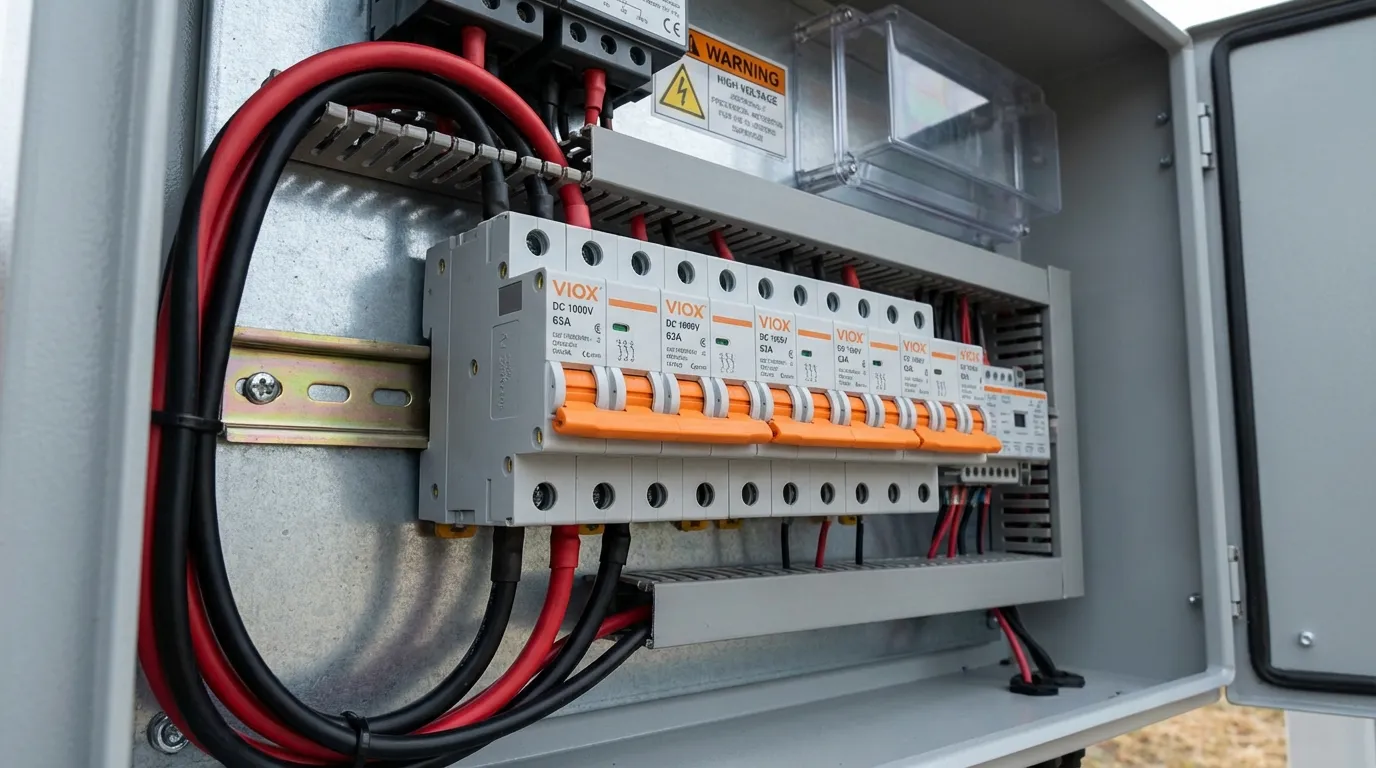
سولر پی وی الیکٹریکل پینل (solar PV electrical panel) میں ڈی آئی این ریل (DIN rail) پر نصب ڈی سی سرکٹ بریکرز (DC circuit breakers) جن پر VIOX برانڈنگ (branding) ہے۔.
VIOX Electric offers a comprehensive range of DC circuit breakers compliant with both NEC and IEC standards, backed by rigorous testing and technical support for proper application. Whether you’re designing residential solar arrays or large-scale battery storage systems, proper circuit protection starts with accurate sizing calculations and quality components.