Pagpili ng tamang MCB busbar ay hindi lamang tungkol sa paghahanap ng isang piraso ng tanso na pisikal na kasya sa loob ng isang panel. Ang pagkakatugma ng busbar ay nakasalalay sa disenyo ng terminal, konfigurasyon ng poste, pitch, kasalukuyang rating, layout ng enclosure, at ang pamilya ng circuit breaker na ginagamit.
Kaya naman, ang dalawang busbar na mukhang magkatulad ay maaaring magpakita ng ibang-iba sa tunay na mga instalasyon.
Kung sinusubukan mong itugma ang mga busbar sa iba't ibang circuit breaker, ang praktikal na layunin ay simple:
- tiyakin na ang busbar ay umaangkop nang tama sa mga terminal ng breaker
- tiyakin na ang kasalukuyang landas ay mekanikal na matatag
- tiyakin na ang pagpupulong ay maaaring dalhin ang inaasahang karga nang ligtas
- iwasan ang mga hot spot, maluwag na kontak, arcing, o paggawa muli ng instalasyon
Ipinapaliwanag ng gabay na ito kung paano suriin ang pagkakatugma bago ka bumili o magtipon ng panel.
Bakit Mahalaga ang Pagkakatugma ng MCB Busbar
Ang isang hindi tugmang MCB busbar ay maaaring lumikha ng mga problema kahit na ang panel ay mukhang tama ang pagkakabuo sa unang tingin.
Kasama sa mga karaniwang panganib ang:
- mahinang kontak sa terminal
- hindi pantay na puwersa ng paghihigpit
- lokal na sobrang pag-init
- mekanikal na stress sa mga terminal ng breaker
- mahirap na pag-install o paggawa muli
- nabawasan ang pagiging maaasahan sa paglipas ng panahon
Para sa mga tagabuo at mamimili ng panel, ang pagkakatugma ay hindi isang kosmetikong isyu. Direktang nakakaapekto ito sa kaligtasan, kahusayan sa pagpupulong, at pangmatagalang pagganap.
Kung kailangan mo muna ng mas malawak na panimula, ang VIOX ay mayroon nang artikulo ng pundasyon tungkol sa ano ang mga circuit breaker busbar.
Ano ang Nagiging Tugma sa MCB Busbar?
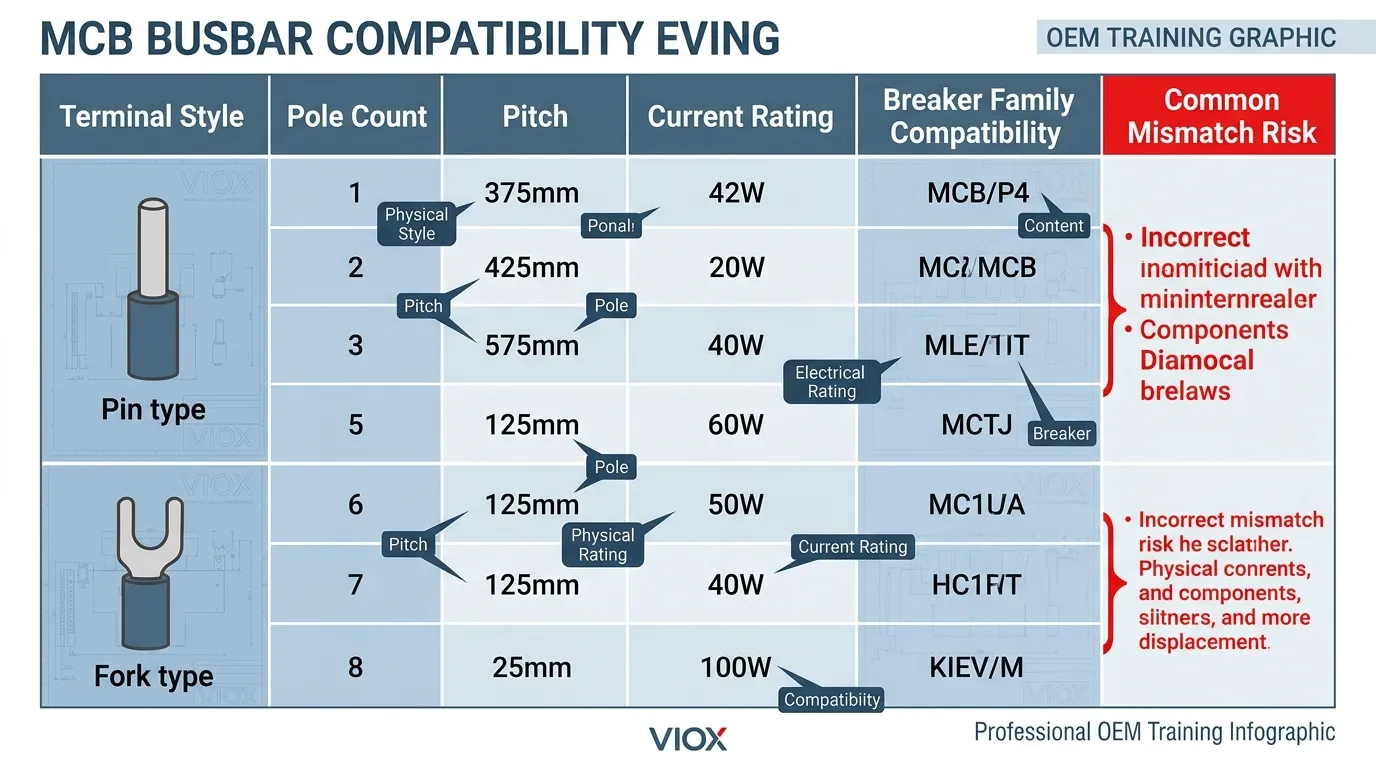
Ang isang busbar ay tugma lamang sa isang circuit breaker kapag tumutugma ang mga pangunahing kondisyon ng kuryente at mekanikal.
Mga pangunahing salik sa pagkakatugma
| Factor | Ano ang dapat suriin | Bakit ito mahalaga |
|---|---|---|
| Estilo ng terminal | Uri ng pin, uri ng fork, o iba pang anyo ng pagpasok ng terminal | Tinutukoy kung ang busbar ay maaaring umupo nang tama |
| Pole count | 1P, 2P, 3P, 4P layout | Dapat tumugma sa pag-aayos ng breaker |
| Pitch o module spacing | Pagitan sa pagitan ng mga punto ng koneksyon | Dapat ihanay sa mga posisyon ng terminal ng breaker |
| Kasalukuyang rating | Kapasidad ng amp ng busbar at pag-uugali ng init | Pinipigilan ang sobrang pag-init at maagang pagkasira |
| Pagkakatugma ng pamilya ng Breaker | Kung ang busbar ay inilaan para sa serye ng breaker na iyon | Hindi lahat ng breaker ay tumatanggap ng parehong profile ng busbar |
| Mekanikal na akma | Espasyo ng panel, lalim ng terminal, pag-aayos ng end-feed | Nakakaapekto sa kalidad ng pag-install at pag-access |
Ang isang mahusay na pagsusuri sa pagkakatugma ay dapat sumagot ng isang tanong nang malinaw: Ang busbar ba na ito ay idinisenyo para sa eksaktong layout at aplikasyon ng breaker na ito?
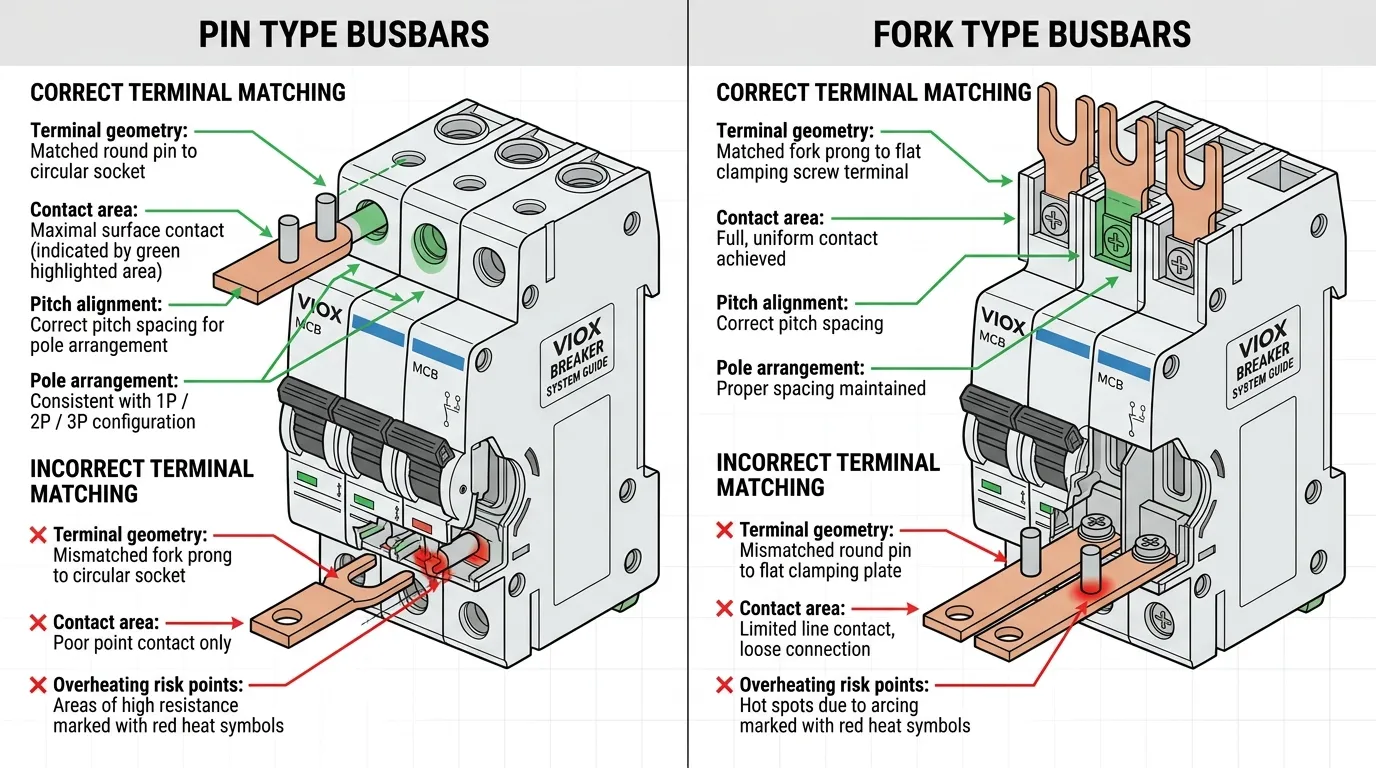
Pagkakatugma ng Uri ng Pin vs Uri ng Fork na Busbar
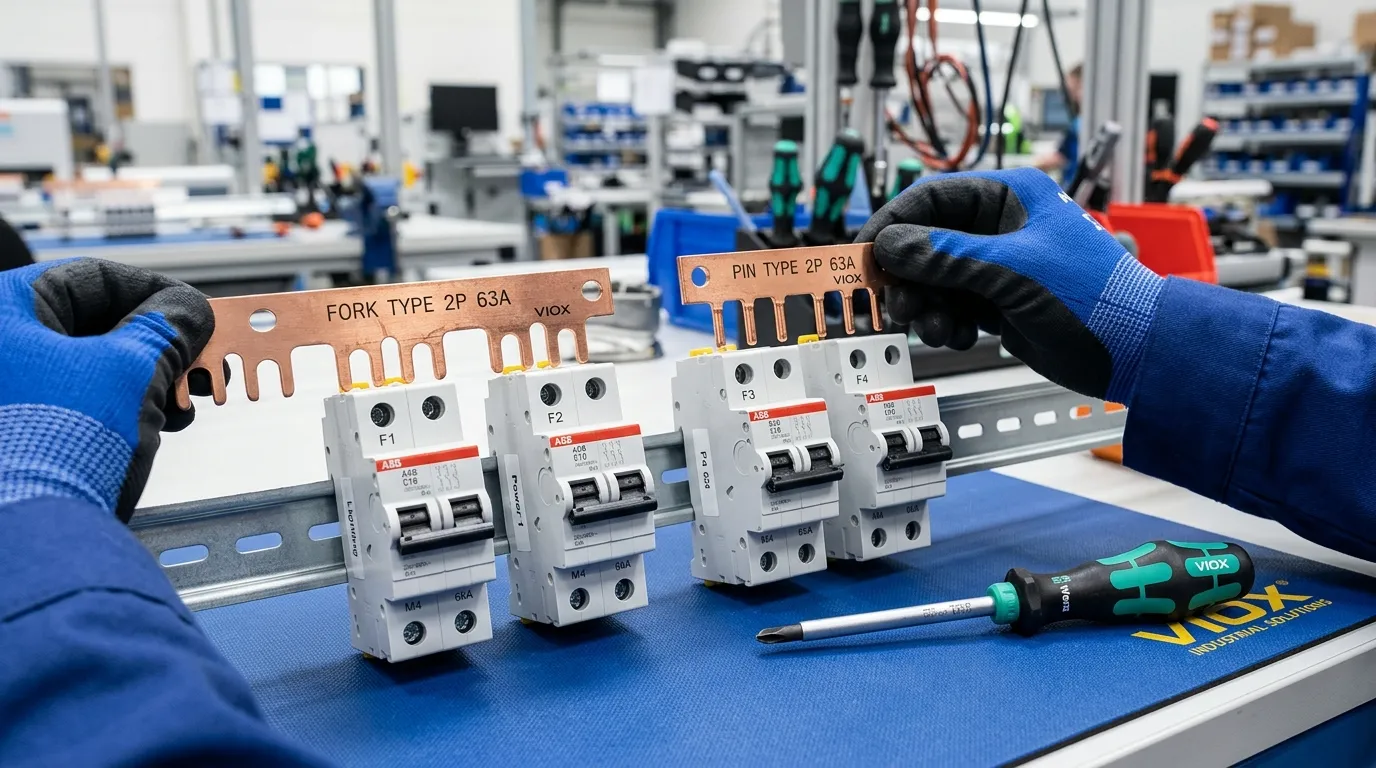
Ito ay isa sa mga pinakakaraniwang isyu sa pagkakatugma sa pagpili ng MCB busbar.
Pin type busbar
A pin type busbar gumagamit ng mga daliri ng koneksyon na hugis pin na ipinasok sa mga katugmang terminal ng breaker.
Karaniwan itong ginagamit kung saan ang istraktura ng terminal ng breaker ay idinisenyo upang tanggapin ang pagpasok ng pin nang direkta.
Fork type busbar
A fork type busbar gumagamit ng mga dulo ng koneksyon na hugis fork na ikinakabit sa ilalim o sa paligid ng punto ng koneksyon ng tornilyo ng terminal, depende sa disenyo ng breaker.
Karaniwan itong pinipili kapag ang pag-aayos ng terminal ng breaker ay mas angkop para sa fork-style na kontak.
Talaan ng paghahambing
| Uri ng busbar | Pinakamahusay na senaryo ng akma | Pangunahing panganib kung hindi tugma |
|---|---|---|
| Uri ng pin | Mga breaker na idinisenyo para sa koneksyon ng pin-entry | Maluwag na akma, mahinang pagkakaupo, hindi maaasahang kontak |
| Uri ng fork | Mga breaker na idinisenyo para sa fork o clamp-style na pagkakabit ng terminal | Hindi kumpletong pagkakakapit, hindi matatag na presyon ng contact |
Kaya naman ang “mukhang halos tama na” ay hindi isang valid na compatibility test.
Para sa mas nakatuong artikulo ng paghahambing, mayroon nang VIOX Pin Type Busbar vs Fork Type Busbar.
Bilang ng Poste, Pitch, at Pagtutugma ng Layout
Kahit na tama ang estilo ng terminal, maaaring hindi pa rin tugma ang busbar kung mali ang pisikal na layout.
Pole configuration
Dapat tumugma ang busbar sa ayos ng breaker, tulad ng:
- mga single-pole na row
- mga two-pole na kombinasyon
- mga three-phase na pagpapangkat
- mga four-pole na ayos kung saan ginagamit
Kung hindi tumutugma ang ayos ng poste sa disenyo ng panel, nagiging pilit, hindi pantay, o imposible ang pag-install.
Pitch at modular spacing
Ang pitch ay tumutukoy sa espasyo sa pagitan ng magkatabing punto ng koneksyon sa busbar. Dapat tumugma ang espasyong ito sa lapad ng module ng breaker at geometry ng terminal.
Kung mali ang pitch, maaari mong makita ang:
- misalignment sa panahon ng pagpupulong
- angled o stressed na pagpasok
- mahinang pamamahagi ng torque
- hindi kumpletong contact sa ilang terminal
Checklist ng Layout
| Item ng Layout | Ano ang dapat i-verify |
|---|---|
| Bilang ng mga poste bawat row | Dapat tumugma sa ayos ng breaker |
| Spacing ng module | Dapat tumugma sa aktwal na lapad ng breaker |
| Direksyon ng Feed | Kumpirmahin kung paano susupply-an ang busbar |
| End clearance | Suriin ang available na espasyo para sa mga takip, end cap, at mga limitasyon sa pagyuko |
| Haba ng hiwa | Dapat tumugma sa aktwal na bilang ng mga device nang hindi pinipilit ang bar |
Current Rating at Thermal Compatibility
Hindi sapat ang pisikal na fit lamang. Maaaring magkasya ang isang busbar sa mekanikal at mali pa rin sa elektrikal.
Ano ang dapat suriin
- nominal na current rating
- conductor cross-section
- materyal at plating
- mga kondisyon ng temperatura ng enclosure
- bilang ng mga nakakonektang device
- inaasahang pagkakaiba-iba ng load
Mahalaga ito dahil ang pag-init ng busbar ay apektado ng higit pa sa nameplate current. Ang mga tunay na kondisyon ng panel tulad ng bentilasyon ng enclosure, kalidad ng terminal, at konsentrasyon ng load ay maaaring magpabago sa thermal result.
Mayroon nang sumusuportang content ang VIOX sa Paano Pumili ng Tamang Busbar para sa MCB at Paano Tukuyin ang Kalidad ng Busbar para sa MCB.
Thermal-fit table
| Kundisyon | Pag-aalala sa Compatibility | Bakit ito mahalaga |
|---|---|---|
| Mataas na tuloy-tuloy na load | Undersized na busbar | Nagpapataas ng temperatura at nagpapababa ng reliability |
| Siksik na layout ng enclosure | Mahinang pagkawala ng init | Nagpapataas ng thermal stress |
| Mababang kalidad ng mga contact surface | Mas mataas na contact resistance | Lumilikha ng mga hot spot |
| Maling torque | Hindi pantay na presyon ng clamping | Maaaring humantong sa arcing o pag-init |
| Pinaghalong geometry ng terminal ng breaker | Hindi pantay na electrical interface | Nagpapababa ng pagkakapare-pareho ng koneksyon |
Maaari Mo Bang Paghaluin ang Iba't Ibang Brand ng Breaker sa Parehong Busbar?
Ito ay isa sa pinakamahalagang praktikal na tanong, at ang ligtas na sagot ay:
Huwag ipalagay ang cross-brand compatibility maliban kung ang busbar at pamilya ng breaker ay tahasang idinisenyo o na-verify para dito.
Bakit? Dahil ang iba't ibang brand ng breaker ay maaaring mag-iba sa:
- laki ng terminal opening
- geometry ng clamp
- lalim ng pasukan ng konduktor
- tolerance sa lapad ng module
- posisyon ng turnilyo at distribusyon ng presyon
Ang dalawang breaker ay maaaring magmukhang halos pareho mula sa harap at maaari pa ring lumikha ng mahinang kontak sa busbar sa ilalim ng tunay na mga kondisyon ng pagpupulong.
Iyon ang dahilan kung bakit dapat iwasan ng mga tagabuo ng panel ang “visual matching” bilang isang paraan ng pagiging tugma.
Mga Karaniwang Pagkakamali sa Pagiging Tugma ng MCB Busbar
Ang mga pagkabigo sa pagiging tugma ay karaniwang nangyayari dahil sinusuri lamang ng isang tao ang isang variable at binabalewala ang iba.
Ang mga pinakakaraniwang pagkakamali
| Pagkakamali | Bakit ito nangyayari | Resulta |
|---|---|---|
| Pagpili sa pamamagitan lamang ng hitsura | Ang mga busbar at breaker ay magkatulad ang hitsura | Mahinang kontak o hindi akma |
| Pagtutugma ng istilo ng terminal ngunit binabalewala ang pitch | Bahagyang pagsusuri sa pagiging tugma | Stress sa pagpupulong at mga isyu sa pagkakahanay |
| Hindi pinapansin ang kasalukuyang rating | Tumutok lamang sa mekanikal na akma | Sobrang pag-init sa ilalim ng karga |
| Paghahalo ng mga brand nang walang pagpapatunay | Pag-aakala na ang mga modular breaker ay unibersal | Hindi matatag o hindi pare-parehong mga koneksyon |
| Pagputol o pagbabago ng busbar nang hindi sinusuri ang mga kondisyon ng gilid | Pagsisikap na iangkop ang mga stock na bahagi sa lugar | Mekanikal na kahinaan o mahinang pagtatapos ng pagkakabukod |
Para sa mga panganib sa yugto ng pag-install, mayroon ding VIOX Nangungunang 5 Mga Pagkakamali na Dapat Iwasan Kapag Nag-i-install ng Mga MCB Busbar.
Checklist sa Pagiging Tugma ng MCB Busbar
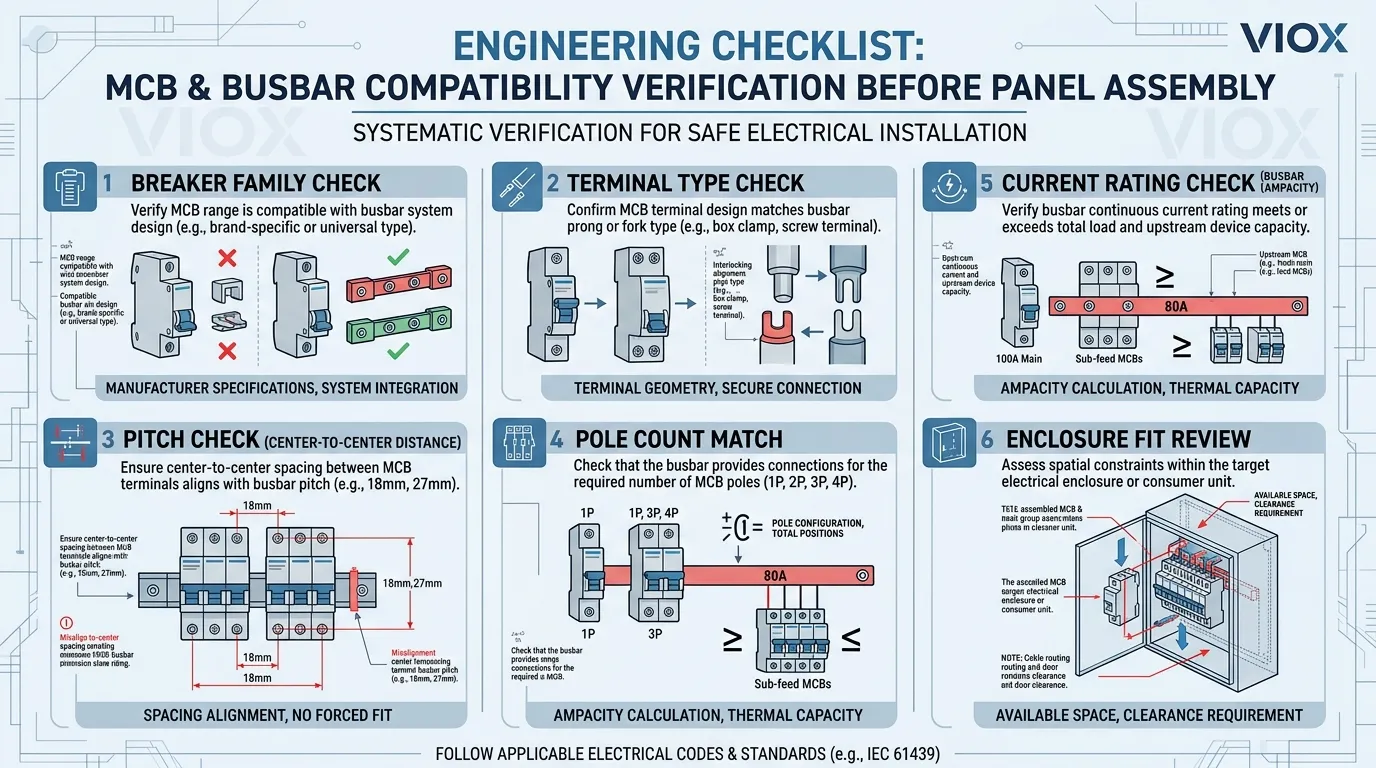
Gamitin ang mabilis na checklist na ito bago maglagay ng order o magtipon ng panel.
Checklist bago bumili
| Checkpoint | Tanong na Oo/Hindi |
|---|---|
| Nakumpirma ang pamilya ng breaker | Ang busbar ba ay inilaan para sa partikular na serye ng breaker o napatunayang katumbas? |
| Nakumpirma ang uri ng terminal | Tugma ba ang terminal ng breaker sa istilo ng koneksyon ng pin o fork? |
| Nakumpirma ang pag-aayos ng poste | Tumutugma ba ang layout ng busbar sa configuration ng poste ng panel? |
| Nakumpirma ang pitch | Tumutugma ba ang pagitan ng koneksyon sa modular spacing ng breaker? |
| Nakumpirma ang kasalukuyang rating | Ang busbar ba ay na-rate para sa inaasahang karga at mga kondisyon ng panel? |
| Nakumpirma ang akma ng enclosure | Mayroon bang sapat na espasyo para sa pag-mount, mga takip, at koneksyon ng feed? |
| Nakumpirma ang paraan ng pag-install | Ang busbar ba ay ikakabit nang walang pamimilit, pagpilipit, o improvised na pag-aangkop? |
Kung maraming sagot ang hindi tiyak, ang pinakaligtas na hakbang ay huminto at kumpirmahin ang eksaktong pagpapares ng breaker-busbar bago ang pagpupulong.
Kailan Hindi Dapat Gamitin ang Busbar
Ang busbar ay maaaring hindi ang tamang pagpipilian kapag:
- hindi sinusuportahan ng pamilya ng breaker ang istilo ng busbar na iyon
- ang layout ng panel ay hindi regular o lubos na na-customize
- ang iba't ibang geometry ng terminal ay pinaghalo sa isang hilera
- ang pag-aayos ng karga ay nangangailangan ng ibang diskarte sa pamamahagi
- hindi mapatunayan ng installer ang tamang kontak at mga kondisyon ng torque
Sa mga kasong iyon, ang ibang diskarte sa pamamahagi ay maaaring mas maaasahan kaysa sa pagpilit ng isang kaduda-dudang pagtutugma ng busbar.
FAQ
Paano ko malalaman kung ang busbar ay akma sa aking MCB?
Suriin ang estilo ng terminal, pamilya ng breaker, pitch, ayos ng poste, rating ng kuryente, at nilalayon na impormasyon ng pagkakatugma. Hindi sapat ang pisikal na pagkakahawig lamang.
Maaari ba akong gumamit ng kahit anong comb busbar sa kahit anong MCB?
Hindi. Ang mga comb busbar ay hindi palaging mapagpapalit. Ang geometry ng terminal, espasyo, at disenyo ng breaker ay dapat na magkatugma.
Ano ang pagkakaiba ng busbar na uri ng pin at busbar na uri ng fork?
Ang isang pin type busbar ay gumagamit ng mga koneksyon na hugis pin, habang ang isang fork type busbar ay gumagamit ng mga dulo ng koneksyon na hugis tinidor. Ang tamang pagpili ay depende sa disenyo ng terminal ng breaker.
Maaari ko bang paghaluin ang mga brand ng breaker sa isang busbar?
Hindi ligtas bilang default. Maaaring magkaiba ang geometry ng terminal at mga katangian ng presyon ng iba't ibang brand, kaya dapat kumpirmahin nang malinaw ang compatibility bago gamitin.
Bakit nag-iinit ang busbar ng MCB?
Kabilang sa mga karaniwang sanhi ang maling rating ng kuryente, mahinang kontak sa terminal, hindi tamang torque, hindi tugmang geometry ng terminal, at masikip na kondisyon ng enclosure.