Joe

Hi, ako si Joe, isang nakalaang mga propesyonal na may 12 taon ng karanasan sa mga de-koryenteng industriya. Sa VIOX Electric, ang aking focus ay sa paghahatid ng mataas na kalidad na mga de-koryenteng mga solusyon na iniayon upang matugunan ang mga pangangailangan ng aming mga kliyente. Ang aking kadalubhasaan ay sumasaklaw sa pang-industriya automation, tirahan ng mga kable, at komersyal na mga de-koryenteng sistema.Makipag-ugnay sa akin [email protected] kung u may anumang mga katanungan.

Manual vs. Automatic Transfer Switch

Manual kumpara sa Automatic Transfer Switch: Gabay sa Pagkukumpara sa 2026 (Gastos, Kaligtasan at Pinakamahusay na Gamit)

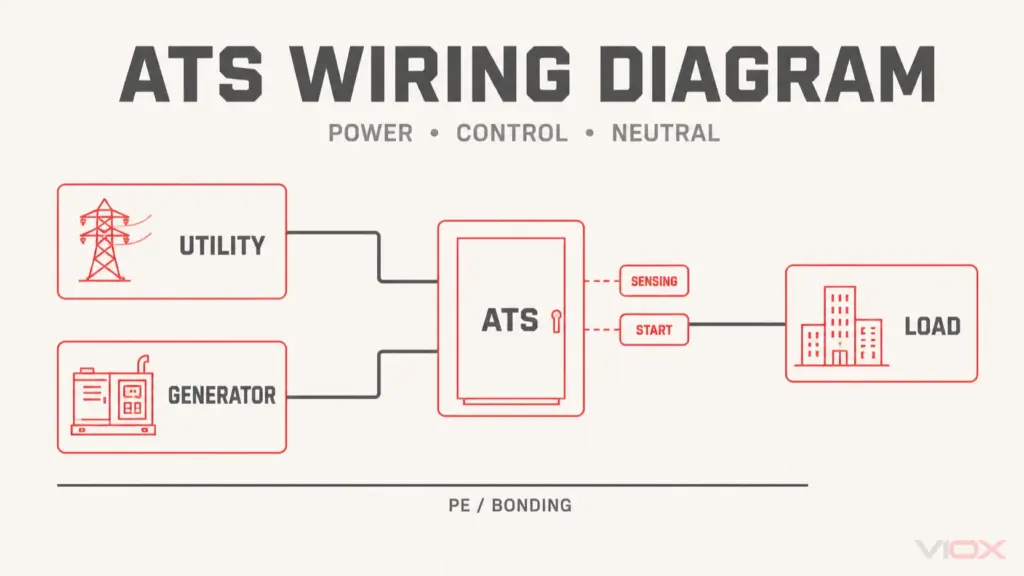
Different configurations of Viox Automatic Transfer Switches (2P, 3P, and 4P) built for various backup power requirements. If you are comparing Manual vs. Automatic Transfer Switch options, the short answer is this: neither one is universally better. The right choice depends on how critical your loads are, how quickly backup power must take over, whether […]
Manual kumpara sa Automatic Transfer Switch: Gabay sa Pagkukumpara sa 2026 (Gastos, Kaligtasan at Pinakamahusay na Gamit) Magbasa pa »

UPS Full Form in Electrical: Meaning, Function, Types, and Applications

Buong Pangalan ng UPS sa Elektrikal: Kahulugan, Gamit, Uri, at Aplikasyon

What Is the UPS Full Form? UPS Full Form: Uninterruptible Power Supply A UPS (Uninterruptible Power Supply) is an electrical backup system that provides immediate power to connected equipment when the main power source fails, drops, or becomes unstable. Unlike generators that need startup time, a UPS responds instantly—typically within 0-10 milliseconds—making it essential for

Buong Pangalan ng UPS sa Elektrikal: Kahulugan, Gamit, Uri, at Aplikasyon Magbasa pa »

Why Is Your MCB Busbar Overheating? Causes, Risks, and Fixes

Bakit Nag-iinit ang Iyong MCB Busbar? Mga Sanhi, Panganib, at Pag-aayos

What Causes MCB Busbar Overheating and How Do You Fix It? MCB busbar overheating is primarily caused by loose connections, undersized components, improper alignment, or oxidation. These create high-resistance points that generate excessive heat through I²R losses, potentially leading to fire hazards and system failure. Immediate fixes include re-torquing connections to 2.5-3.5 N·m, replacing visibly

Bakit Nag-iinit ang Iyong MCB Busbar? Mga Sanhi, Panganib, at Pag-aayos Magbasa pa »

MCB Busbar Compatibility Guide: How to Match Busbars with Different Circuit Breakers

Gabay sa Pagkakatugma ng Busbar ng MCB: Paano Itugma ang mga Busbar sa Iba't Ibang Circuit Breaker

Choosing the right MCB busbar is not just about finding a strip of copper that physically fits inside a panel. Busbar compatibility depends on terminal design, pole configuration, pitch, current rating, enclosure layout, and the circuit breaker family being used. That is why two busbars that look similar may perform very differently in real installations.

Gabay sa Pagkakatugma ng Busbar ng MCB: Paano Itugma ang mga Busbar sa Iba't Ibang Circuit Breaker Magbasa pa »

10 Electrical Panel Mistakes Panel Builders Should Catch Before Energization

10 Pagkakamali sa Electrical Panel na Dapat Makita ng mga Tagagawa ng Panel Bago Magbigay ng Enerhiya

An experienced panel builder conducting a critical pre-energization inspection on a low-voltage electrical panel to ensure compliance and safety. An electrical panel can look complete, clean, and professionally assembled while still containing errors serious enough to cause nuisance tripping, overheating, control failure, commissioning delays, or unsafe energization. That is why the final inspection before energization

10 Pagkakamali sa Electrical Panel na Dapat Makita ng mga Tagagawa ng Panel Bago Magbigay ng Enerhiya Magbasa pa »

Self-Locking vs. Reusable Cable Ties: The Engineer's Guide to Choosing the Right Type

Self-Locking vs. Muling Magagamit na Cable Ties: Gabay ng Inhinyero sa Pagpili ng Tamang Uri

A professional engineer installing durable VIOX self-locking cable ties on colored electrical cables inside an industrial control panel. Which Cable Tie Type Delivers Better Performance for Industrial Applications? Self-locking cable ties provide superior tensile strength (up to 175 lbs) and permanent security for critical installations, while reusable cable ties offer adjustable, repeatable fastening with release

Self-Locking vs. Muling Magagamit na Cable Ties: Gabay ng Inhinyero sa Pagpili ng Tamang Uri Magbasa pa »

Load Break Switch (LBS) vs. Circuit Breaker: Why a Load Switch Cannot Clear a Short Circuit

Load Break Switch (LBS) kumpara sa Circuit Breaker: Bakit Hindi Kaya ng Load Switch na Pigilan ang Short Circuit

VIOX medium-voltage load break switch installed in a metal-clad switchgear cabinet, representing a standard industrial power distribution configuration. What Is the Difference Between a Load Break Switch and a Circuit Breaker? A load break switch (LBS) is designed to make and break normal load currents, while a circuit breaker can additionally detect and interrupt fault

Load Break Switch (LBS) kumpara sa Circuit Breaker: Bakit Hindi Kaya ng Load Switch na Pigilan ang Short Circuit Magbasa pa »

Can You Reverse Feed a Circuit Breaker? NEC/IEC Rules for Incoming & Outgoing Lines

Maaari Mo Bang Baliktarin ang Pagpapakain sa isang Circuit Breaker? Mga Panuntunan ng NEC/IEC para sa Papasok at Palabas na mga Linya

Is It Safe to Reverse Feed a Circuit Breaker? Yes, most standard circuit breakers can be reverse fed—but only if they are not marked with designated “Line” and “Load” terminals. Under NEC 705.30(D) and UL 489 testing protocols, breakers without directional markings have been evaluated for overcurrent tripping in both directions. Breakers with “Line”/”Load” labels,

Maaari Mo Bang Baliktarin ang Pagpapakain sa isang Circuit Breaker? Mga Panuntunan ng NEC/IEC para sa Papasok at Palabas na mga Linya Magbasa pa »

Insulated vs Non-Insulated Terminals: The Engineer's Complete Selection Guide

Insulated kumpara sa Non-Insulated na mga Terminal: Kumpletong Gabay sa Pagpili ng Inhinyero

A side-by-side comparison of insulated and non-insulated crimp terminals, featuring standard color-coded vinyl sleeves and bare copper variants on a professional workbench. What Is the Difference Between Insulated and Non-Insulated Terminals? Insulated terminals have a protective vinyl, nylon, or heat-shrink sleeve molded around the crimp barrel, providing electrical isolation, strain relief, and environmental protection. Non-insulated

Insulated kumpara sa Non-Insulated na mga Terminal: Kumpletong Gabay sa Pagpili ng Inhinyero Magbasa pa »

Humingi ng Quote Ngayon