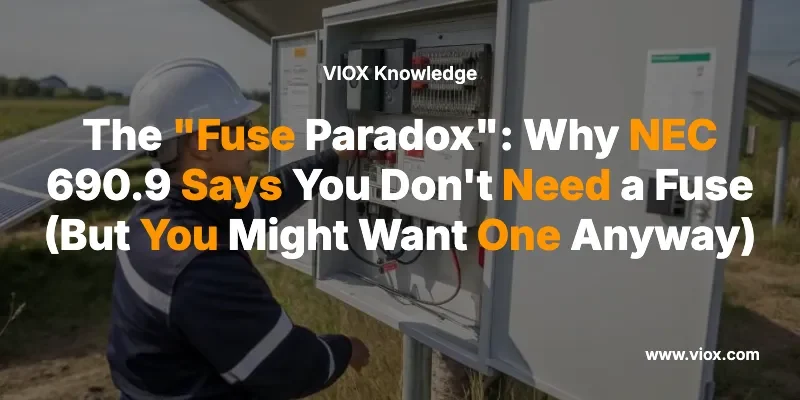
If you are designing a solar array, you know the golden rule of electrical engineering: Wires must be protected by fuses or ဖဲချပ်များ.
So, when you dig into the National Electrical Code (NEC) Section 690.9, you might run into a clause that stops you in your tracks. It suggests that if you have two strings of solar panels wired in parallel, you မလုပ်ပါ need to install fuses.
This feels wrong. It feels like a typo. How can a power source not require protection?
Welcome to the “Fuse Paradox.”
This rule exists not because the NEC is lax on safety, but because the physics of a solar panel are fundamentally different from a battery or the grid. Understanding this paradox is the key to distinguishing a “code-minimum” installer from a true solar engineer.
The Physics: “Who Is Attacking Whom?”

To understand why you don’t need a fuse, you first have to understand what a fuse is actually protecting against in a PV system.
In a standard house circuit, the fuse protects the wire from the source (the grid). If you short a wire, the grid dumps infinite current until the wire melts.
Solar panels are different. They are “Current Limited Sources.”
If you have a 10A solar panel and you short-circuit its positive and negative cables together, it won’t explode. It will just produce… about 10-11 Amps (its Short Circuit Current, or Isc). It physically cannot produce more current than the sun allows.
Therefore, a solar panel cannot burn itself out.
So, why do we fuse PV arrays at all? We aren’t protecting the panel from itself. We are protecting it from its neighbors.
The danger is Back-Feed Current. If one string fails (e.g., a short inside a module), the အခြား parallel strings will dump their power backwards into the broken string.
The Math: The “2-String” Exemption

Let’s run the math that allows the “Fuse Paradox” to exist.
The Variables:
- Panel Isc (Short Circuit Current): 10 Amps (The attack power).
- Max Series Fuse Rating: 15 Amps (The defense power). This is printed on the back of every solar panel. It tells you how much reverse current the panel can handle before it catches fire.
Scenario A: 2 Strings in Parallel (The “Stalemate”)
You have String 1 and String 2 connected in parallel.
- The Fault: String 1 develops a short circuit.
- The Attack: String 2 flows backwards into String 1.
- Current Calculation: The only source of current is String 2. So, the attack force is 10 Amps.
- The Result: The 10A attack is less than the 15A limit (Max Series Fuse Rating) of String 1.
The panel can handle the heat. The wire can handle the heat. No fire occurs.
ရင်: NEC 690.9 says No Fuse Required.
Scenario B: 3 Strings in Parallel (The “Ambush”)
Now, you add a third string.
- The Fault: String 1 develops a short circuit.
- The Attack: String 2 (10A) AND String 3 (10A) both flow backwards into String 1.
- Current Calculation: 10A + 10A = 20 Amps.
- The Result: The 20A attack is greater than the 15A limit of String 1.
String 1 is now overwhelmed. It overheats. It melts. The roof catches fire.
ရင်: NEC 690.9 says Fuses are MANDATORY on every string.
Beyond the Code: Why You Should Fuse Anyway
So, if you have a 2-string system, the code says you can save money and skip the combiner box fusing.
ဒါပေမယ့် ဝါရင့်ဝန်ဆောင်မှုပညာရှင်ကို မေးကြည့်ပါ၊ သူတို့က သင့်ကိုပြောပါလိမ့်မယ်။ “ဖျူးစ်တွေကို ဘယ်လိုပဲဖြစ်ဖြစ် တပ်ဆင်ပါ။”
ဒီမှာ “Code Minimum” က ဘာကြောင့် “အကောင်းဆုံးအလေ့အကျင့်” မဟုတ်တာလဲ။”
1. “Hot Disconnect” အိပ်မက်ဆိုး
တစ်ခုခုကို ပြင်ဆင်ရတဲ့အထိ Code လိုက်နာမှုက ကောင်းပါတယ်။.
ဖျူးစ်ကိုင်ဆောင်သူ (ပုံမှန်အားဖြင့် disconnect switch အဖြစ်ဆောင်ရွက်သည်) ကို ကျော်သွားပါက၊ သင်၏ကြိုးများသည် အတူတကွ hard-wired လုပ်ထားသည် (များသောအားဖြင့် Y-connectors နှင့်အတူ)။.
String 1 ကို ပြဿနာဖြေရှင်းဖို့ လိုအပ်ရင် MC4 connectors တွေကို ဖြုတ်ရပါမယ်။ နေရောင်ခြည်တောက်ပနေရင် အဲဒီ circuit က load အောက်မှာ ရှိနေပါတယ်။ Load အောက်မှာ MC4 connector ကို ဆွဲထုတ်ခြင်းက DC Arc—connector contacts တွေကို အရည်ပျော်စေပြီး သင့်လက်တွေကို မီးလောင်စေနိုင်တဲ့ plasma မီးတောက်တစ်ခုကို ဖန်တီးပေးပါတယ်။.
တဲ့ VIOX PV Fuse Holder သင့်ကို အလုပ်မလုပ်ခင် ကြိုးတစ်ခုကို “ပိတ်” ဖို့ လုံခြုံပြီး ထိတွေ့မှုဒဏ်ခံနိုင်တဲ့ နည်းလမ်းတစ်ခုကို ပေးပါတယ်။ သင် carrier ကိုဖွင့်လိုက်တဲ့အခါ circuit က ကွန်တိန်နာအခန်းထဲမှာ ပျက်သွားပြီး သင်လုံခြုံပါတယ်။.
2. “အနာဂတ်အတွက် ပြင်ဆင်ခြင်း” အချက်
ဆိုလာစနစ်တွေက ကြီးထွားလာပါတယ်။ ဒီနေ့မှာ ကြိုး ၂ ချောင်းနဲ့ စနိုင်ပါတယ်။ သုံးနှစ်ကြာပြီးနောက် EV အားသွင်းဖို့ တတိယကြိုးတစ်ခု ထပ်ထည့်ချင်နိုင်ပါတယ်။.
ဖျူးစ်မပါဘဲ သင့်ရဲ့ 2-string စနစ်ကို hard-wired လုပ်ထားရင် (“Code က ငါ့ကို မလိုအပ်ဘူးလို့ ပြောတယ်” လို့ဆိုလို့)၊ အဲဒီ 3rd string ကို ထပ်ထည့်လိုက်တာနဲ့ သင့်ရဲ့ရှိပြီးသား array တစ်ခုလုံးကို တရားမဝင်ပြီး အန္တရာယ်များစေပါတယ်။ ဝါယာကြိုးတွေကို ဆွဲထုတ်ပြီး ပြန်စရပါမယ်။.
သင်တပ်ဆင်ထားရင် VIOX Combiner Box ဖျူးစ်ကိုင်ဆောင်သူတွေနဲ့ ပထမနေ့ကတည်းက ကြိုးတစ်ခုထည့်တာက plug-and-play ပါ။ သင်က အကာအကွယ်ပေးပြီးသားပါ။.
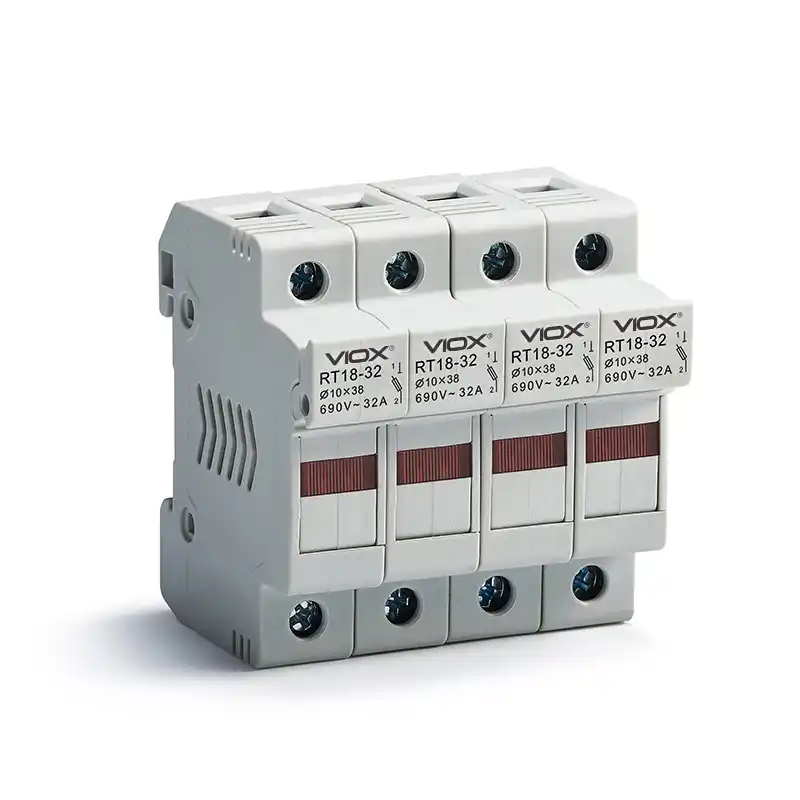
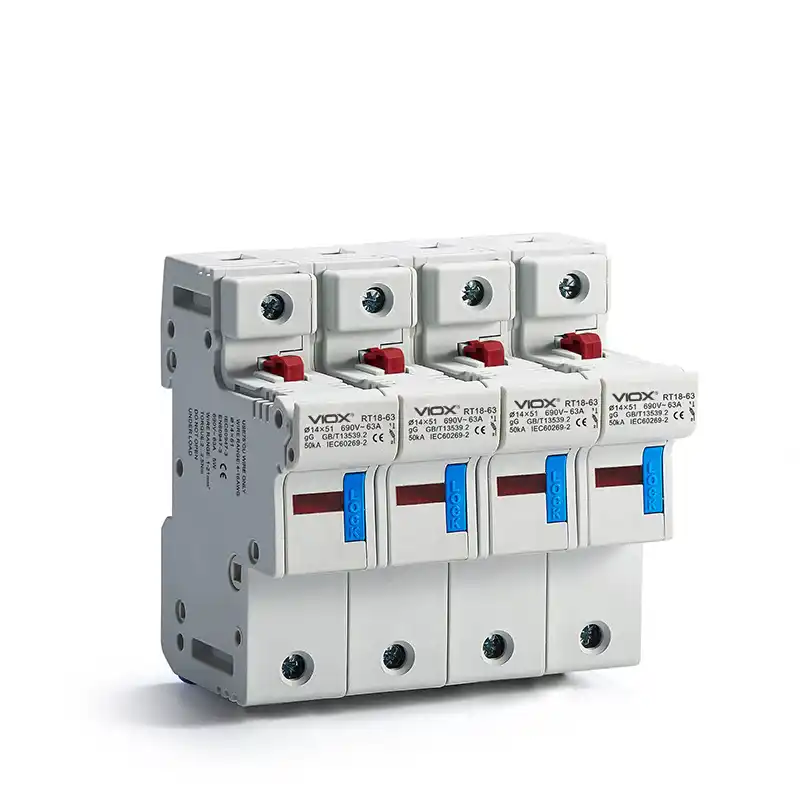
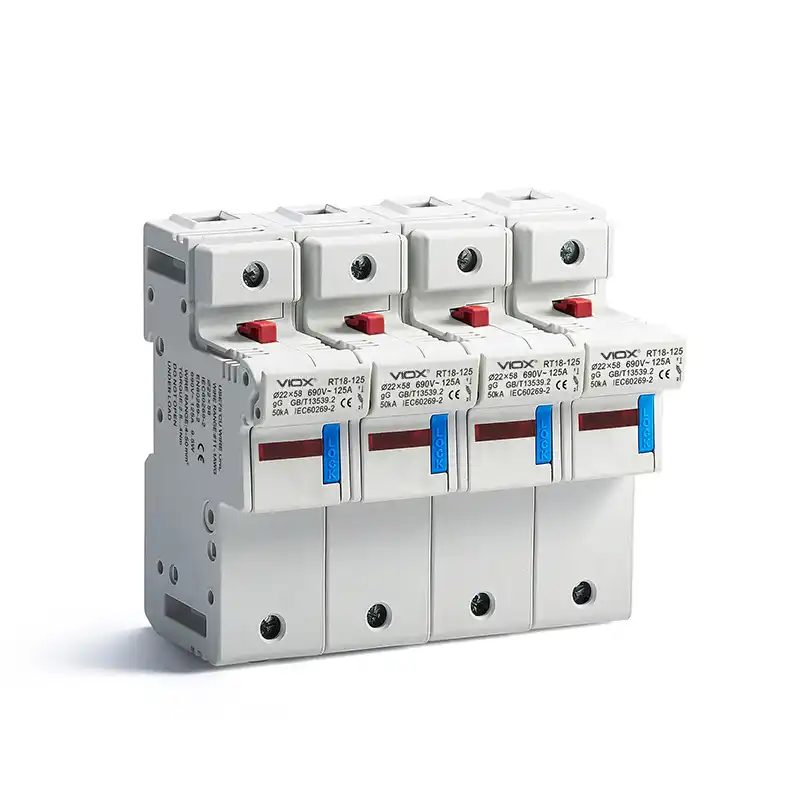
အကျဉ်းချုပ်- သင့်ရဲ့လုံခြုံရေးကို မကျော်လွန်ပါနဲ့။
“Fuse Paradox” က အင်ဂျင်နီယာဆိုင်ရာ အသေးအဖွဲလေးတစ်ခုဖြစ်ပေမယ့် မကောင်းတဲ့ ဒီဇိုင်းအတွေးအခေါ်တစ်ခုပါ။.
2-string စနစ်ရဲ့ ရူပဗေဒက မီးလောင်မှုကနေ သင့်ကို ကယ်တင်နိုင်ပေမယ့် ဖျူးစ်တွေကို ချန်ထားခဲ့တာက သင့်ကို ထိန်းချုပ်မှု၊ လုံခြုံရေးနဲ့ တိုးချဲ့နိုင်စွမ်းကို ဆုံးရှုံးစေပါတယ်။.
- N ≤ 2 Strings: ဖျူးစ်တွေက ရွေးချယ်နိုင်ပါတယ် (ဒါပေမယ့် သီးခြားခွဲထုတ်ဖို့ အကြံပြုထားပါတယ်)။.
- N ≥ 3 Strings: ဖျူးစ်တွေက မဖြစ်မနေ လိုအပ်ပါတယ် (မီးဘေးကာကွယ်ရေးအတွက်)။.
စစ်ဆေးရေးအတွက်ပဲ မဆောက်ပါနဲ့။ နောက်ဆက်တွဲလုပ်ငန်းလည်ပတ်မှု ၂၀ နှစ်အတွက် ဆောက်ပါ။.
နည်းပညာပိုင်းအရတိကျမှန်ကန်မွတ္ခ်က္
- စံနှုန်းများ-
- NEC 690.9 (Overcurrent Protection): PV source circuits တွေကို ကာကွယ်ဖို့ လိုအပ်ချက်တွေကို သတ်မှတ်ပေးပါတယ်။.
- ခြွင်းချက်- အရင်းအမြစ်အားလုံးမှ short-circuit currents များသည် အခြား conductors များ၏ ampacity သို့မဟုတ် module ၏ အမြင့်ဆုံး series fuse rating ထက် မကျော်လွန်ပါက ဖျူးစ်များ မလိုအပ်ပါ။.
- ဖော်မြူလာ- ဖျူးစ်များ လိုအပ်ခြင်းအတွက် အထွေထွေစည်းမျဉ်းမှာ-
(N - 1) x Isc > Max Series Fuse Rating.- ဘယ်မှာလဲ N parallel strings အရေအတွက်ဖြစ်သည်။.
- Isc panel ၏ Short Circuit Current (အပူချိန်/ရောင်ခြည်လုံခြုံရေးအချက်များအတွက် ချိန်ညှိထားသည်၊ များသောအားဖြင့် 1.25) ဖြစ်သည်။.
- VIOX Solutions: VIOX သည် DC ဆိုလာ array များတွင် အဖြစ်များသော low-overcurrent ချို့ယွင်းချက်များကို ဖြတ်တောက်ရန် အထူးဒီဇိုင်းထုတ်ထားသော 10x38mm gPV ဖျူးစ်များကို ထုတ်လုပ်ပြီး စံ AC ဖျူးစ်များသည် ရှင်းလင်းရန် ပျက်ကွက်နိုင်သည်။.