Understanding the $2,000 Problem: When Fuses Blow Without Faults
Your 100kW solar array just went offline. A technician drives 90 miles to the site, opens the combiner box, and finds a blown 15A fuse protecting a string that should only draw 12A. The fuse was sized correctly at 15A per NEC requirements (9.5A × 1.56 = 14.8A). Yet it blew anyway—no short circuit, no ground fault, just heat.
This is fuse nuisance tripping, costing the solar industry millions annually. The root cause? Temperature derating. While fuses are rated at 25°C, solar combiner boxes routinely reach 60-70°C internally. At 70°C, that 15A fuse effectively operates as a 12A fuse—right at the string’s actual current draw.
This guide provides calculation methods, derating factors, and design solutions that prevent nuisance tripping in solar combiner boxes.
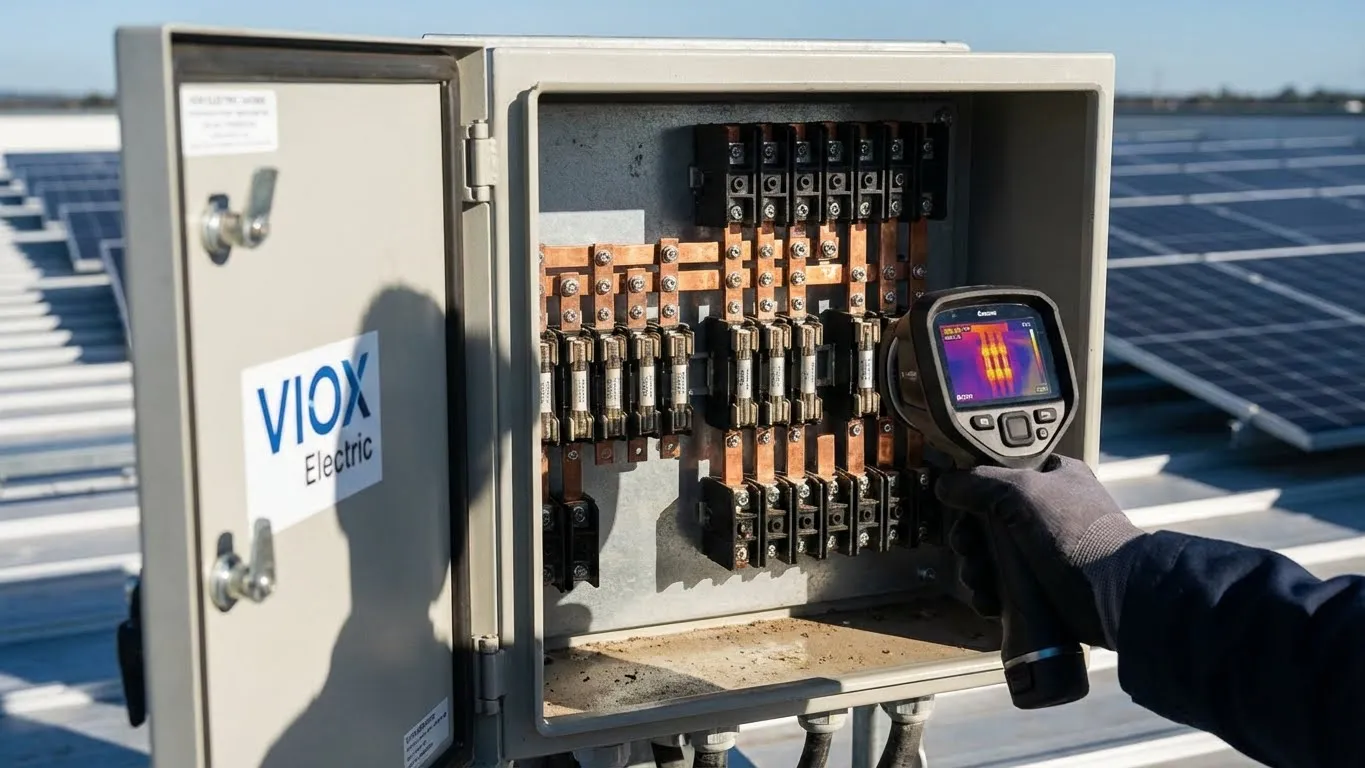
Understanding Fuse Nuisance Tripping in Solar Combiner Boxes
Nuisance tripping occurs when overcurrent protection devices open the circuit without an actual electrical fault. The protection device operates at a lower threshold than its nameplate rating due to elevated operating temperatures.
How Temperature Affects Fuse Performance
Fuses operate on thermal principle: current generates heat (I²R losses). Temperature affects this in two ways:
- Reduced thermal headroom: In a 70°C environment, the fuse element starts 45°C hotter than in a 25°C lab.
- Altered resistance: Fuse element resistance increases with temperature, generating more I²R heating.
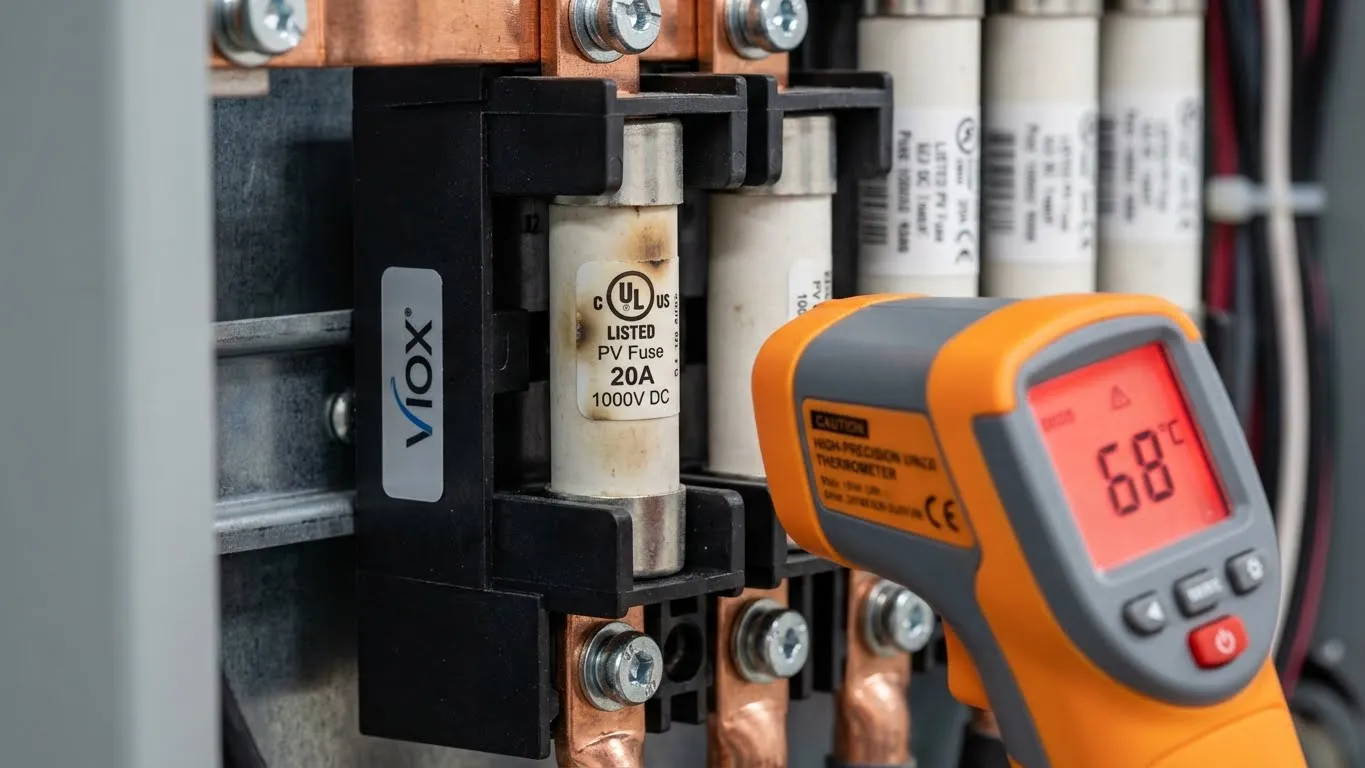
Real-World Cost Impacts
Consider a 5MW solar farm with 50 combiner boxes. If temperature-related nuisance tripping causes just 2% of boxes to require service calls annually:
- Service call: $300-500
- Fuse replacement: $75-150
- Lost production: $32-64
- Total per incident: $407-714
Studies indicate 15-25% of combiner box service calls involve nuisance tripping related to thermal issues rather than actual faults.
Temperature Derating Fundamentals
Temperature derating reduces a component’s current-carrying capacity to account for operation above the manufacturer’s specified reference conditions.
Internal Temperature vs. Ambient Temperature
The critical temperature is the internal enclosure temperature, calculated as:
T_internal = T_ambient + ΔT_solar + ΔT_component
Where:
- T_ambient = Outdoor air temperature
- ΔT_solar = Solar radiation heating (+20-35°C for metal enclosures)
- ΔT_component = Component heating (+5-15°C)
Example: 35°C + 28°C (solar) + 10°C (components) = 73°C
Fuse Temperature Derating Factors
| ပတ်ဝန်းကျင် အပူချိန် | Derating Factor | Effective Capacity (15A Fuse) |
|---|---|---|
| 25°C (77°F) | 1.00 | 15.0A |
| 40°C (104°F) | 0.95 | 14.3A |
| 50°C (122°F) | 0.90 | 13.5A |
| 60°C (140°F) | 0.84 | 12.6A |
| 70°C (158°F) | 0.80 | 12.0A |
Note: Always consult manufacturer’s specific derating curves for your exact fuse model.
Calculating Internal Combiner Box Temperatures
Temperature Rise Components
- 1. Ambient Temperature (T_ambient)
- Desert climates: 40-50°C
- Tropical: 32-38°C
- Temperate: 28-35°C
- 2. Solar Radiation Heating (ΔT_solar)
- Metal, dark colors, direct sun: +25-35°C
- Metal, light colors, direct sun: +18-28°C
- Shaded/ventilated: +8-15°C
- 3. Internal Component Heating (ΔT_component)
- Low current (<30A): +5-8°C
- Medium (30-60A): +8-12°C
- High (60-100A+): +12-18°C
Climate Zone Examples
| Climate Zone | T_ambient | ΔT_solar | ΔT_component | T_internal |
|---|---|---|---|---|
| Arizona Desert | 45°C | +30°C | +10°C | 85°C |
| ဖလော်ရီဒါကမ်းရိုးတန်း | 35°C | +25°C | +10°C | 70°C |
| ကယ်လီဖိုးနီးယားဗဟိုတောင်ကြား | 38°C | +28°C | +8°C | 74°C |
| တက္ကဆက်ပြည်နယ် မြင့်မားသောလွင်ပြင် | 40°C | +30°C | +10°C | 80°C |
ဤတွက်ချက်မှုများသည် အဘယ်ကြောင့်ဆိုသည်ကို သက်သေပြသည်။ combiner box အပူလွန်ကဲခြင်း ဖြေရှင်းရန် အရေးကြီးပါသည်။.
ဖျူးစ်အရွယ်အစားကို အပူချိန်လျှော့ချခြင်း အသုံးပြုခြင်း
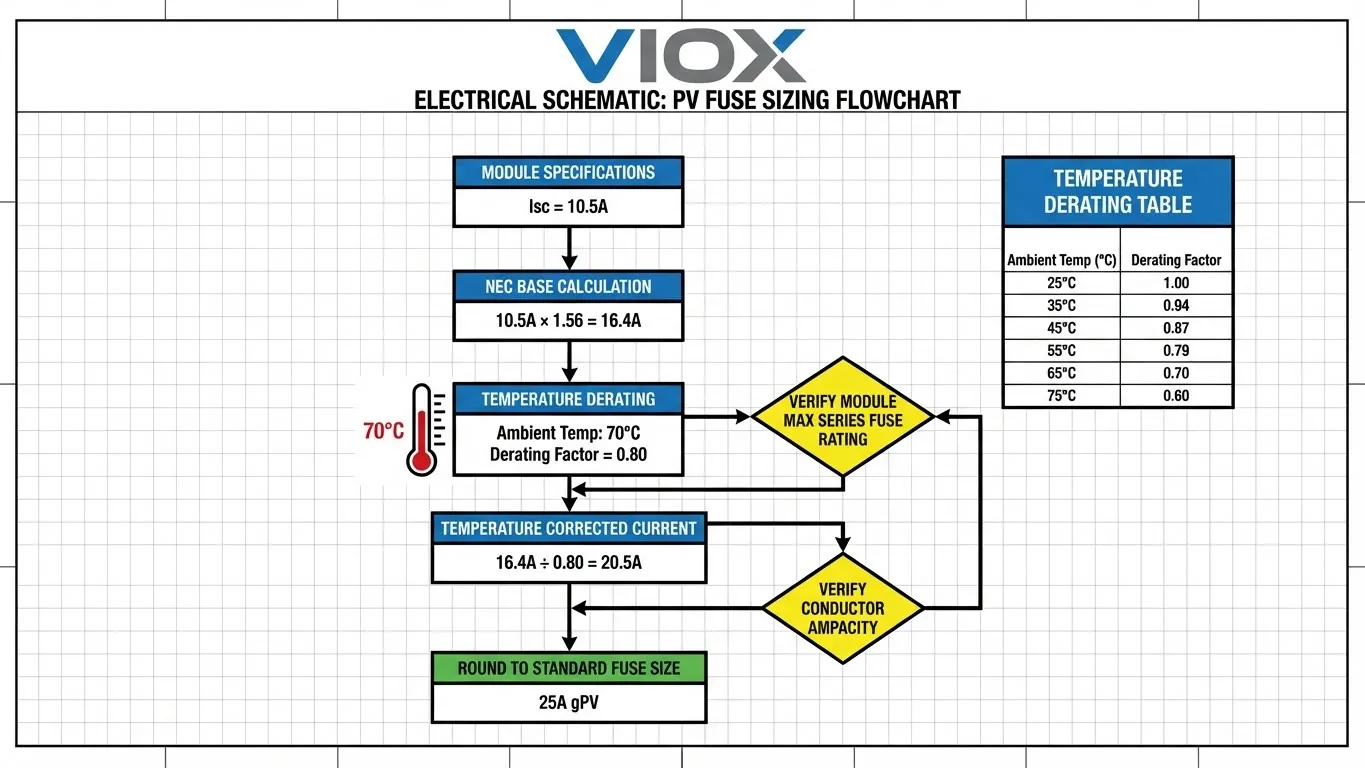
ပြီးပြည့်စုံသော အရွယ်အစားဖော်မြူလာ
- အဆင့် ၁- အများဆုံးဆားကစ်လျှပ်စီးကြောင်းကို တွက်ချက်ပါ (NEC 690.8)
NEC 690.8(A)(1) အရ အများဆုံးလျှပ်စီးကြောင်းကို တွက်ချက်ပါ (I_max = I_sc × 1.25)။ ထို့နောက် NEC 690.9(B) မှ စဉ်ဆက်မပြတ်တာဝန်အချက် (1.25) ကို အသုံးပြုပါ။.
ဖော်မြူလာ- Base_current = I_sc × 1.56 - အဆင့် ၂- အပူချိန်လျှော့ချခြင်းကို အသုံးပြုပါ
လိုအပ်သော_ဖျူးစ်အဆင့်သတ်မှတ်ချက် = Base_current ÷ Derating_factor - အဆင့် ၃- နောက်ထပ်စံဖျူးစ်အရွယ်အစားသို့ ပင့်တင်ပါ
- အဆင့် ၄- စပယ်ယာအမ်ပီယာအားကို စစ်ဆေးပါ
NEC 310.15(B) မှ ပတ်ဝန်းကျင်အပူချိန်ပြင်ဆင်မှုအချက်များ အသုံးပြုပြီးနောက် ဖျူးစ်အရွယ်အစားသည် စပယ်ယာကို ကာကွယ်ကြောင်း သေချာပါစေ။.
လုပ်ဆောင်ပြီးသော အရွယ်အစားဥပမာများ
ဥပမာ ၁- သဲကန္တာရတပ်ဆင်ခြင်း
- မော်ဂျူး I_sc: 10.5A
- အတွင်းအပူချိန်: 75°C
- လျှော့ချခြင်းအချက်: 0.78
- အခြေခံလျှပ်စီးကြောင်း = 10.5A × 1.56 = 16.4A
- အပူချိန်ညှိပြီး = 16.4A ÷ 0.78 = 21.0A
- စံဖျူးစ်: 25A gPV ဖျူးစ်
ဥပမာ ၂- သမပိုင်းရာသီဥတု
- မော်ဂျူး I_sc: 9.2A
- အတွင်းအပူချိန်: 55°C
- လျှော့ချခြင်းအချက်: 0.88
- အခြေခံလျှပ်စီးကြောင်း = 9.2A × 1.56 = 14.4A
- အပူချိန်ညှိပြီး = 14.4A ÷ 0.88 = 16.4A
- စံဖျူးစ်: 20A gPV ဖျူးစ်
ပြည့်စုံသော အရွယ်အစားဇယား
| မော်ဂျူး I_sc | NEC အခြေခံ (1.56×) | 60°C (0.84) တွင် | 70°C (0.80) တွင် | ဖျူးစ် (60°C) | ဖျူးစ် (70°C) |
|---|---|---|---|---|---|
| 8.0A | 12.5A | 14.9A | 15.6A | 15A | 20A |
| 10.0A | 15.6A | 18.6A | 19.5A | 20A | 20A |
| 12.0A | 18.7A | 22.3A | 23.4A | 25A | 25A |
| 14.0A | 21.8A | 26.0A | 27.3A | 30A | 30A |
အရေးကြီးသောသတိပေးချက်- ဖျူးစ်သည် မော်ဂျူး၏ အများဆုံးစီးရီးဖျူးစ်အဆင့်သတ်မှတ်ချက်ထက် မကျော်လွန်ကြောင်း စစ်ဆေးပါ။ အသေးစိတ်လိုအပ်ချက်များအတွက် ကျွန်ုပ်တို့၏ PV ဖျူးစ်အရွယ်အစား လမ်းညွှန်ကို ကြည့်ပါ။.
အဖြစ်များသော အပူချိန်လျှော့ချခြင်း အမှားများ
အမှား ၁- 25°C ဓာတ်ခွဲခန်းအဆင့်သတ်မှတ်ချက်များကို အသုံးပြုခြင်း
ပြဿနာ- အင်ဂျင်နီယာများသည် 25°C အခြေအနေများကို ယူဆကာ NEC 1.56 မြှောက်ကိန်းတစ်ခုတည်းကို အခြေခံ၍ ဖျူးစ်အရွယ်အစားကို သတ်မှတ်ကြသည်။.
အကျိုးဆက်- 9.6A I_sc ကြိုးကို ကာကွယ်ပေးသော 15A ဖျူးစ်သည် 70°C ပေါင်းစပ်ဘောက်စ် (15A × 0.80 = 12A) တွင် 12A စွမ်းရည်ဖြင့်သာ လည်ပတ်ပြီး အနှောင့်အယှက်ဖြစ်စေသော ခရီးစဉ်ကို ဖြစ်စေသည်။.
အမှားပြင်ခြင်း- မျှော်မှန်းထားသော အတွင်းအပူချိန်ကို တွက်ချက်ပြီး လျှော့ချခြင်းကို အသုံးပြုပါ။ လိုအပ်သော ဖျူးစ်: 15A ÷ 0.80 = 18.75A → 20A ဖျူးစ်။.
Mistake 2: Ignoring Solar Radiation Heating
ပြဿနာ- Designers account for ambient temperature but neglect the 20-35°C rise from solar radiation.
အမှားပြင်ခြင်း- For direct sun installations:
- Add +20°C minimum for light-colored enclosures
- Add +25-30°C for standard metal enclosures
- Consider sunshades or shaded locations
Design Solutions to Prevent Nuisance Tripping
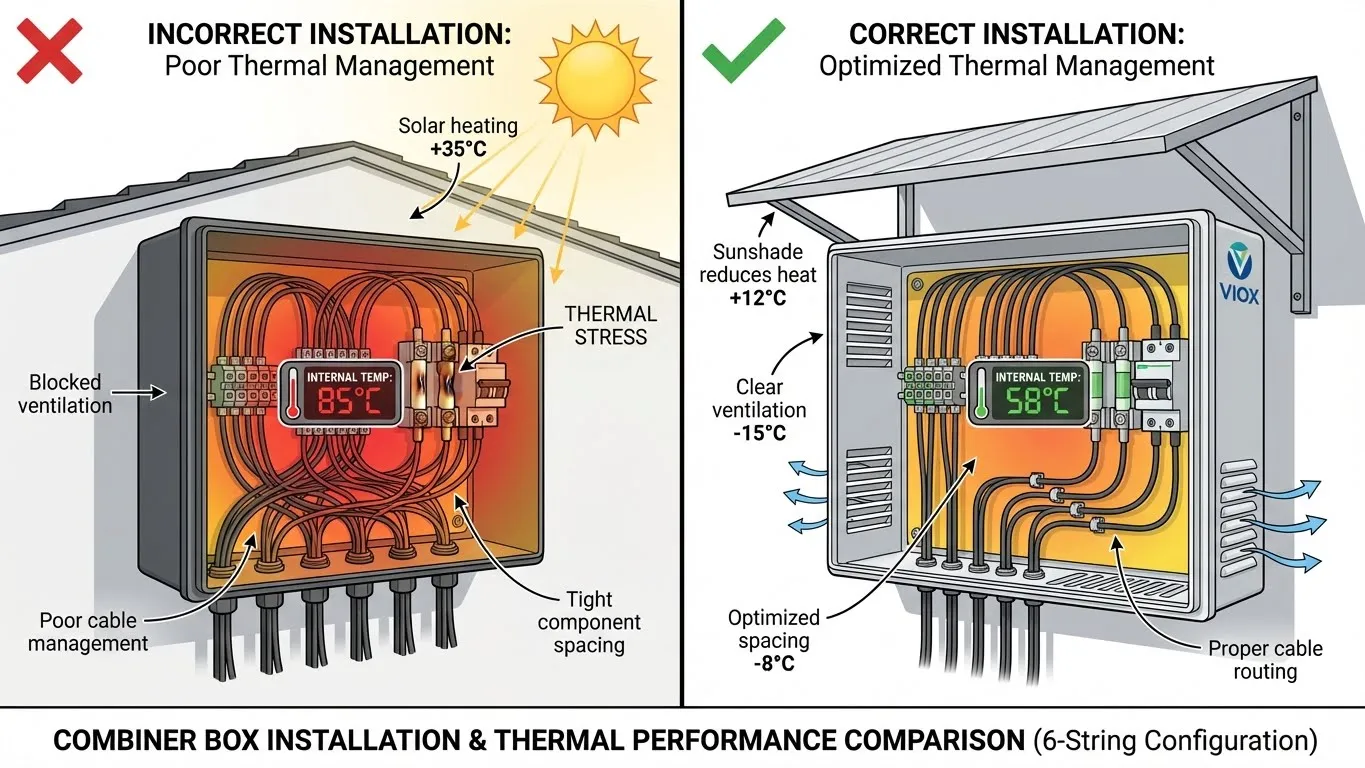
Solution 1: Proper Fuse Upsizing
အကောင်အထည်ဖော်ခြင်း-
- Calculate worst-case internal temperature
- Apply manufacturer derating curves
- Select next standard fuse size
- Add 10-15% safety margin
ကုန်ကျစရိတ်- $0-50 | Effectiveness: 80-90% reduction
Solution 2: Improved Ventilation
အကောင်အထည်ဖော်ခြင်း-
- Install ventilation louvers (top and bottom)
- Minimum 3-inch mounting clearance
- Use breathable cable entry glands
ကုန်ကျစရိတ်- $50-150 | Effectiveness: 60-75% reduction | Temp reduction: 8-15°C
Solution 3: Thermal Management
Sunshading:
- Install canopy or sunshade
- Mount on north-facing surfaces
- Use reflective coatings (white/light gray)
ကုန်ကျစရိတ်- $100-400 | Effectiveness: 70-85% reduction | Temp reduction: 10-18°C
Solution 4: Active Cooling
အကောင်အထည်ဖော်ခြင်း-
- Solar-powered ventilation fans
- Thermostatic control (activate >50°C)
ကုန်ကျစရိတ်- $200-800 | Effectiveness: 90-95% reduction | Temp reduction: 20-30°C
တပ်ဆင်ခကောင်းဆုံးအလေ့အကျင့်
တပ်ဆင်တည်နေရာ
- ရှောင်ကြဉ်ပါ:
- Direct mounting to dark surfaces
- South-facing walls (northern hemisphere)
- Enclosed areas with poor airflow
- Adjacent to inverters
- Prefer:
- Shaded areas behind panels
- North-facing walls with airflow
- Elevated mounting with clearance
- Natural wind flow patterns
ရှင်းလင်းရေးလိုအပ်ချက်များ
| Direction | အနည်းဆုံးအကွာအဝေး | ရည်ရွယ်ချက် |
|---|---|---|
| Front | 36 inches | NEC 110.26 working space |
| Rear | 3 inches | လေ၀င်လေထွက် |
| Sides | ၆ လက်မ | အပူပျံ့ခြင်း။ |
| Top | 12 inches | Hot air exhaust |
Key Installation Points
- Mount vertically (never on back or sides)
- Maintain ventilation opening access
- Use torque screwdriver (8-12 in-lbs)
- Cable entry at bottom/sides, not top
- Avoid blocking ventilation with cable bundles
For troubleshooting guidance, see diagnosing combiner box faults.
VIOX Combiner Box Thermal Management Features
VIOX Electric integrates temperature derating considerations into design from the ground up. Unlike generic enclosures that trap heat, our designs actively facilitate dissipation:
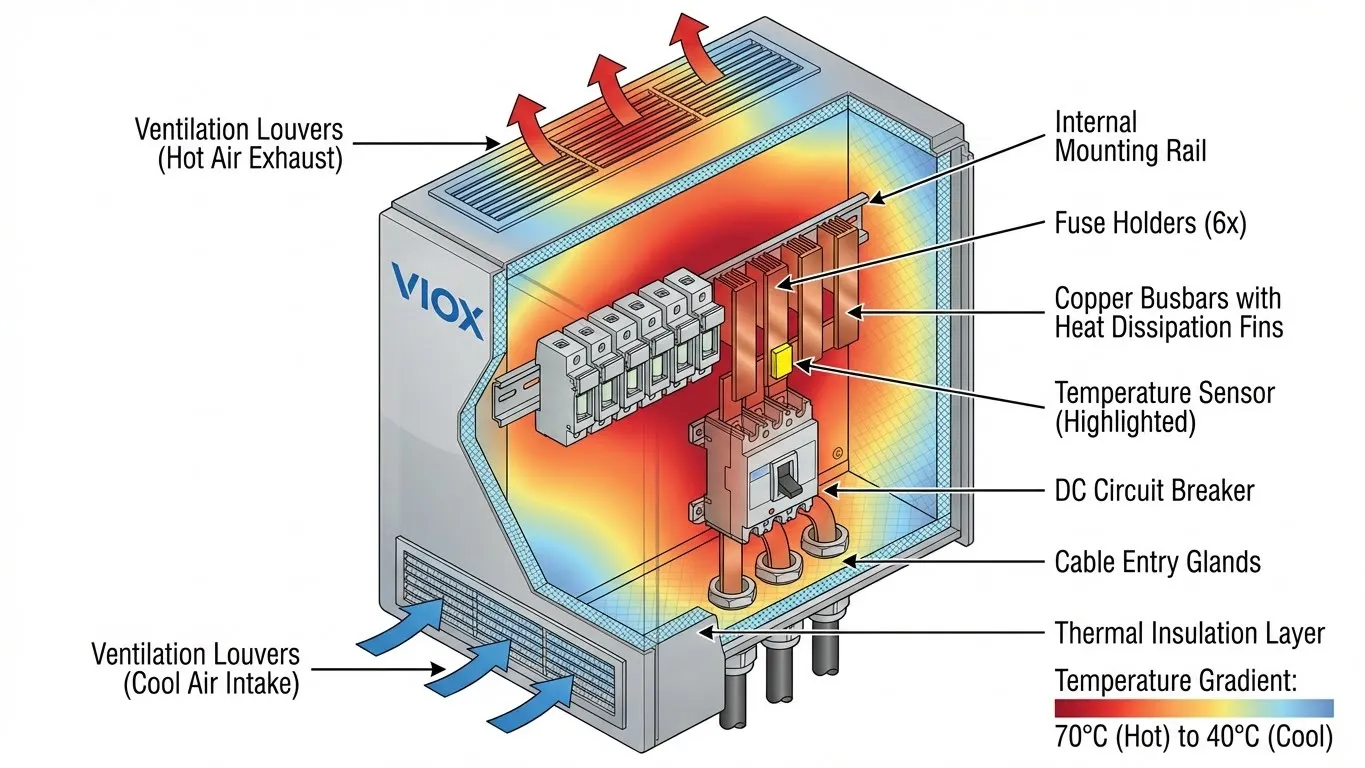
| အင်္ဂါ | Generic Polycarbonate Box | VIOX အပူချိန် အကောင်းဆုံး ထိန်းညှိပေးသော ဘူး | ထိခိုက်မှု |
|---|---|---|---|
| ပစ္စည်း အပူစီးကူးနိုင်စွမ်း | ~0.2 W/m·K (လျှပ်ကာ) | ~50 W/m·K (သံမဏိ) | VIOX သည် အပူကို ၂၅၀ ဆ ပိုမို စွန့်ထုတ်ပေးနိုင်သည် |
| မျက်နှာပြင်ကုသမှု | စံချိန်မီ မီးခိုးရောင် ပလတ်စတစ် | နေရောင်ခြည် ပြန်ဟပ်သည့် အပေါ်ယံလွှာ (SRI >70) | နေရောင်ခြည်မှ ရရှိသော အပူကို ~၁၅% လျှော့ချပေးသည် |
| လေ၀င်လေထွက် ဒီဇိုင်း | လုံအောင်ပိတ်ထားသော / လေ၀င်ပေါက်မပါသော | CFD ဖြင့် အကောင်းဆုံး ပြုပြင်ထားသော လေဝင်ပေါက်များ | သဘာဝ အပူလျှော့ချခြင်း |
အပို အပူထိန်းညှိပေးသော အင်္ဂါရပ်များ ပါဝင်သည်-
- အစိတ်အပိုင်းများ နေရာချထားခြင်း- အပူချိန် ဆက်စပ်မှုကို ကာကွယ်ရန် ဖျူးစ်ကိုင်ဆောင်သူများကြား အနည်းဆုံး 30mm ခြားထားပါ
- စမ်းသပ် အတည်ပြုခြင်း- 70°C ပတ်ဝန်းကျင် အပူချိန်တွင် အပူချိန်မြေပုံနှင့်အတူ နာရီ ၁,၀၀၀ ကြာ လည်ပတ်ခြင်း
- အပူချိန် စောင့်ကြည့်ခြင်း- SCADA နှင့် ပေါင်းစပ်ထားသော ရွေးချယ်နိုင်သည့် NTC အာရုံခံကိရိယာများ
VIOX ပေါင်းစပ်ဘူးများသည် တူညီသောအခြေအနေများတွင် အခြားရွေးချယ်စရာများထက် ပုံမှန်အားဖြင့် 12-20°C အထိ အေးသည်။.
FAQ Section
What temperature should I use for fuse derating?
Use the maximum expected internal enclosure temperature, not ambient air temperature. Calculate as T_internal = T_ambient + ΔT_solar + ΔT_component. For direct sunlight, add 25-35°C to ambient for solar heating, plus 8-12°C for component heating. Design for the hottest expected day. If field measurements are available, use actual data plus 5-10°C safety margin.
Can I use standard DC fuses instead of gPV fuses?
မသုံးပါနှင့်—ဆိုလာပေါင်းစပ်ဘူးများတွင် စံ DC ဖျူးစ်များကို ဘယ်တော့မှ မသုံးပါနှင့်။ gPV အဆင့်သတ်မှတ်ထားသော ဖျူးစ်များ (UL 248-19 သို့မဟုတ် IEC 60269-6) သည် အရေးကြီးသောအကြောင်းပြချက်များအတွက် NEC 690.9 အရ မဖြစ်မနေ လိုအပ်သည်-
- နောက်ပြန်စီးကြောင်း အဆင့်သတ်မှတ်ချက်- ဆိုလာပြားများသည် ချို့ယွင်းမှုများအတွင်း နောက်ပြန်စီးကြောင်းကို ပို့လွှတ်နိုင်သည်
- DC ဗို့အား အဆင့်သတ်မှတ်ချက်- မြင့်မားသော DC ဗို့အားများအတွက် လိုအပ်သည် (600V, 1000V, 1500V)
- ဖြတ်တောက်နိုင်စွမ်း- အပြိုင်ကြိုးများအားလုံးမှ ပေါင်းစပ်ထားသော ဝါယာရှော့ဖြစ်ပေါ်မှု စီးကြောင်းကို ကိုင်တွယ်ရမည်
- အပူချိန် လက္ခဏာများ- ပေါင်းစပ်ဘူး အပူချိန် လည်ပတ်မှုအတွက် ဒီဇိုင်းထုတ်ထားသည်
gPV မဟုတ်သော ဖျူးစ်များကို အသုံးပြုခြင်းသည် စည်းမျဉ်းများကို ချိုးဖောက်ခြင်း၊ အာမခံချက်များကို ပျက်ပြယ်စေခြင်း၊ မီးဘေးအန္တရာယ်များကို ဖန်တီးခြင်းနှင့် အာမခံကို ပျက်ပြယ်စေနိုင်သည်။.
How do I identify nuisance tripping vs. real faults?
အနှောင့်အယှက်ဖြစ်စေသော ခရီးစဉ် အညွှန်းများ-
- ပူပြင်းသောနေ့များတွင် နေရောင်ခြည် အထွတ်အထိပ်သို့ ရောက်ချိန်တွင် ပျက်ကွက်ခြင်း
- မြေပြင် ချို့ယွင်းချက် သို့မဟုတ် လျှပ်ကာ ခုခံမှု ပြဿနာများ မရှိခြင်း
- ကြိုးစီးကြောင်းသည် ဖျူးစ်အမည်ပြား အဆင့်သတ်မှတ်ချက်အောက်တွင် ရှိခြင်း
- အပူချိန်နှင့် ဆက်စပ်၍ ဖျူးစ်များစွာ ပျက်ကွက်ခြင်း
- အပူပုံရိပ်ဖော်ခြင်းသည် အခြားချို့ယွင်းချက် အထောက်အထားမရှိဘဲ ပူသောဖျူးစ်များကို ပြသခြင်း
အမှန်တကယ် ချို့ယွင်းချက် အညွှန်းများ-
- စွမ်းအင်ပေးချိန်တွင် ချက်ချင်း ပျက်ကွက်ခြင်း
- မြေပြင် ချို့ယွင်းချက် အချက်ပေးသံ သို့မဟုတ် လျှပ်ကာ ခုခံမှု နည်းပါးခြင်း
- တိုင်းတာထားသော လွန်ကဲသော စီးကြောင်း အခြေအနေ
- ရုပ်ပိုင်းဆိုင်ရာ ပျက်စီးမှု အထောက်အထား
- သီးခြားကြိုးတစ်ခုသည် ထပ်ခါထပ်ခါ ပျက်ကွက်ခြင်း
ရောဂါရှာဖွေရေး လုပ်ထုံးလုပ်နည်း- လျှပ်ကာ ခုခံမှုကို စမ်းသပ်ပါ၊ ကြိုး I_sc ကို တိုင်းတာပါ၊ အပူပုံရိပ်ဖော်ခြင်းကို လုပ်ဆောင်ပါ၊ စောင့်ကြည့်လေ့လာရေး အချက်အလက်ကို ပြန်လည်သုံးသပ်ပါ၊ အပူချိန်လျှော့ချထားသော ဖျူးစ်စွမ်းရည်ကို တွက်ချက်ပါ။.
Should I derate for both temperature AND altitude?
ဟုတ်ကဲ့။ အပူချိန်သည် အဓိကအချက်ဖြစ်သော်လည်း အမြင့်သည် အအေးခံ ရူပဗေဒကို သိသိသာသာ သက်ရောက်မှုရှိသည်။ ပိုမိုမြင့်မားသော အမြင့်များတွင် (2,000m/6,600ft အထက်) လေထုသိပ်သည်းမှု နည်းပါးခြင်းသည် လေစီးကြောင်း အအေးခံနိုင်စွမ်းကို လျှော့ချပေးသည်—ဆိုလိုသည်မှာ အပူသည် ဖျူးစ် သို့မဟုတ် ဘူးမှ လွယ်ကူစွာ မထွက်နိုင်ပါ။.
- ပေ ၆,၀၀၀ အောက်- ဖျူးစ်များအတွက် အမြင့်လျှော့ချရန် ပုံမှန်အားဖြင့် မလိုအပ်ပါ။.
- ပေ ၆,၀၀၀-၁၀,၀၀၀- လေထုသိပ်သည်းမှု လျော့နည်းခြင်းကို လျော်ကြေးပေးရန်အတွက် နောက်ထပ် 5-10% အပိုအရွယ်အစားကို ထည့်ပါ။.
- ပေ ၁၀,၀၀၀ အထက်- သီးခြားမြင့်မားသော အမြင့် အပူပုံစံအတွက် VIOX အင်ဂျင်နီယာနှင့် တိုင်ပင်ပါ။.
နိဂုံး
ဖျူးစ် အနှောင့်အယှက်ဖြစ်စေသော ခရီးစဉ်သည် ဆိုလာစက်မှုလုပ်ငန်းအတွက် မလိုအပ်သော ရပ်ဆိုင်းချိန်နှင့် ဝန်ဆောင်မှုခေါ်ဆိုမှုများတွင် သန်းပေါင်းများစွာ ကုန်ကျသည်။ ဖြေရှင်းနည်းမှာ ရိုးရှင်းသည်- ပေါင်းစပ်ဘူးအတွင်းပိုင်း အပူချိန် 60-75°C သို့ရောက်ရှိသောအခါ အပူချိန်လျှော့ချခြင်းအတွက် ထည့်သွင်းစဉ်းစားသော သင့်လျော်သော အရွယ်အစားဖြစ်သည်။.
အဓိက အခြေခံမူများ-
- T_internal = T_ambient + ΔT_solar + ΔT_component ကို အသုံးပြု၍ လက်တွေ့ကျသော အတွင်းပိုင်း အပူချိန်ကို တွက်ချက်ပါ
- အပူချိန်လျှော့ချခြင်းကို အသုံးပြုပါ- လိုအပ်သော_ဖျူးစ်_အဆင့်သတ်မှတ်ချက် = (I_sc × 1.56) ÷ လျှော့ချခြင်း_အချက်
- NEC 310.15 အရ လျှော့ချပြီးနောက် စပယ်ယာ အမ်ပီစီတီကို အတည်ပြုပါ
- လေဝင်လေထွက်၊ နေရောင်ကာကွယ်ခြင်းနှင့် သင့်လျော်သော နေရာချထားခြင်းဖြင့် အပူချိန်စီမံခန့်ခွဲမှုကို အကောင်အထည်ဖော်ပါ
- စောစီးစွာ ယိုယွင်းပျက်စီးမှုကို ဖော်ထုတ်ရန် ပုံမှန် အပူချိန်စစ်ဆေးခြင်းကို လုပ်ဆောင်ပါ
70°C ပေါင်းစပ်ဘူးရှိ ပုံမှန် 10A I_sc မော်ဂျူးအတွက် သင့်လျော်သော အပူချိန်လျှော့ချထားသော အရွယ်အစားသည် NEC အခြေခံ တွက်ချက်မှုများက အကြံပြုထားသော 15A ဖျူးစ်အစား 25A ဖျူးစ် လိုအပ်သည်—အနှောင့်အယှက်ဖြစ်စေသော ခရီးစဉ်ကို ကာကွယ်ပေးပြီး ဖြစ်ရပ်တစ်ခုလျှင် ရာနှင့်ချီ၍ သက်သာစေသည်။.
VIOX Electric ၏ ပေါင်းစပ်ဘူးများသည် လေဝင်လေထွက်ကောင်းသော အကာအရံများ၊ အကောင်းဆုံး အစိတ်အပိုင်း နေရာချထားခြင်းနှင့် ရောင်ပြန်ဟပ်သည့် အချောထည်များမှတစ်ဆင့် စံရွေးချယ်စရာများထက် 12-20°C နိမ့်သော အတွင်းပိုင်း အပူချိန်ကို ထိန်းသိမ်းထားကာ ဒီဇိုင်းအတွင်း အပူချိန်စီမံခန့်ခွဲမှု အခြေခံမူများကို ပေါင်းစပ်ထားသည်။.
သင်၏ ပရောဂျက်များမှ အနှောင့်အယှက်ဖြစ်စေသော ခရီးစဉ်ကို ဖယ်ရှားရန် အဆင်သင့်ဖြစ်ပြီလား။
အပူချိန်စွမ်းဆောင်ရည်ကို ခန့်မှန်းမနေပါနှင့်။ သင်၏ ဆိုက်အခြေအနေများ၏ အခမဲ့ အပူချိန်ခွဲခြမ်းစိတ်ဖြာမှုအတွက် ယနေ့ VIOX Electric ၏ အင်ဂျင်နီယာအဖွဲ့ထံ ဆက်သွယ်ပါ သို့မဟုတ် သင်၏ နောက်ထပ် တပ်ဆင်မှုသည် ကြာရှည်ခံနိုင်စေရန်အတွက် ကျွန်ုပ်တို့၏ ပေါင်းစပ်ဘူး ဖျူးစ် အရွယ်အစား တွက်ချက်စက်ကို ဒေါင်းလုဒ်လုပ်ပါ။.