The Silent Threat in Your Facility
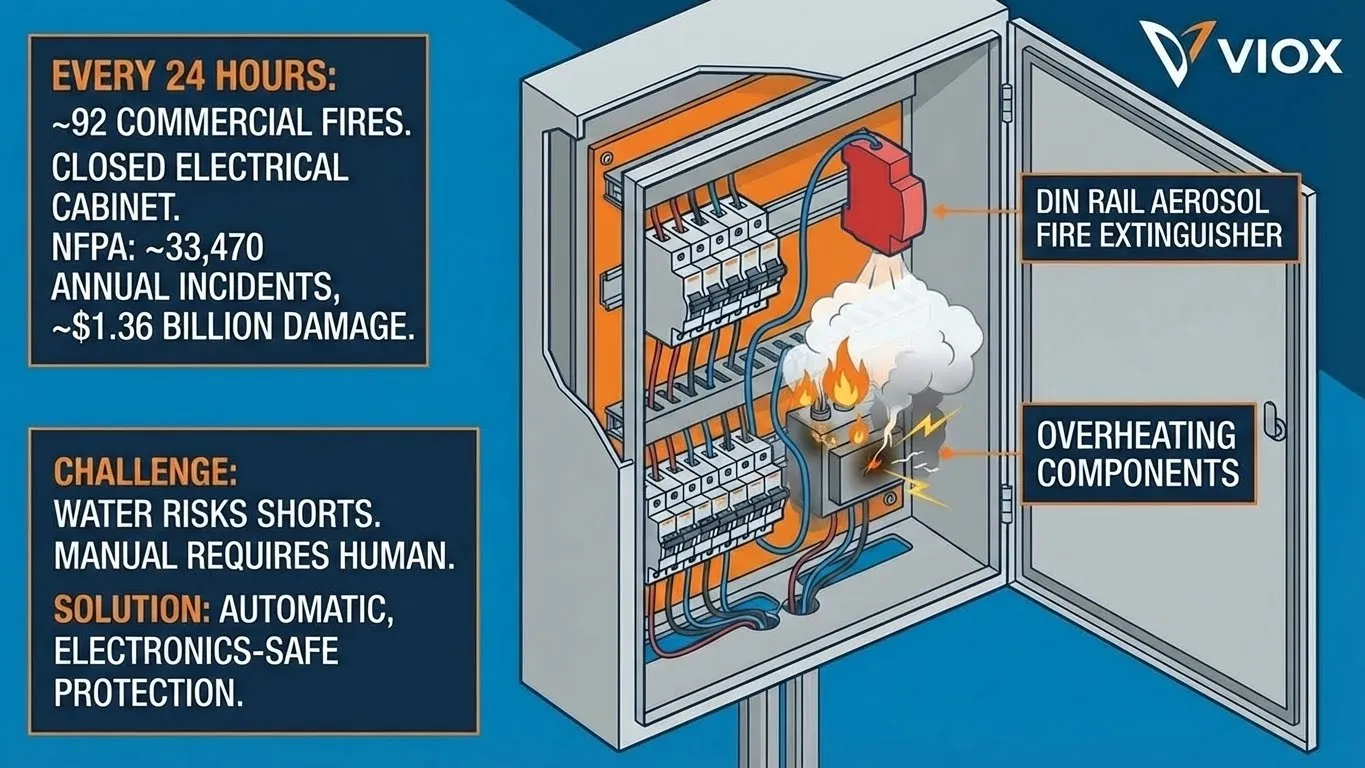
Every 24 hours, electrical systems spark approximately 92 commercial fires across the United States. These aren’t dramatic explosions that grab headlines—they’re silent threats that begin inside closed electrical cabinets, where overheating components and electrical arcs ignite insulation materials before anyone notices. By the time smoke detectors activate, the damage is already substantial.
According to the National Fire Protection Association, electrical fires account for an estimated 33,470 commercial incidents annually in the United States alone, resulting in nearly 45 fatalities, hundreds of injuries, and approximately $1.36 billion in direct property damage. For facility managers and electrical engineers, these statistics represent more than numbers—they reflect potential business interruptions, equipment losses, and safety liabilities that demand proactive solutions.
The challenge lies in the nature of electrical cabinet fires: they occur in enclosed spaces where traditional fire suppression methods prove inadequate or damaging. Water-based systems risk electrical shorts and equipment destruction. Manual extinguishers require human presence and intervention. The industry needed a solution that could detect, respond, and suppress fires automatically within seconds—without damaging sensitive electronics.
This is where modern automatic fire suppression technology becomes critical, particularly innovations like the DIN Rail Aerosol Fire Extinguisher that integrates directly into electrical infrastructure to provide autonomous, electronics-safe protection.
Why Electrical Cabinets Catch Fire: Understanding the Root Causes
Electrical cabinets house critical distribution and control systems, but this concentration of power creates inherent fire risks. Understanding these causes is the first step toward prevention.
Primary Fire Initiation Mechanisms
| အကြောင်းရင်း | ဖေါ်ပြချက် | အန္တရာယ်အဆင့် | Prevention Method |
|---|---|---|---|
| Short Circuits | Electrical current bypasses normal path due to insulation failure or wire contact | မြင့် | Regular insulation testing, proper wire management, moisture control |
| Overheating Components | Transformers, breakers, and conductors exceed thermal limits | မြင့် | Thermal imaging inspections, adequate ventilation, load balancing |
| Arc Faults | Electrical discharge between conductors creates extreme heat (>3,000°C) | ဝေဖန်ပိုင်းခြားပါ။ | Arc-fault circuit interrupters (AFCIs), connection tightening, vibration reduction |
| Dust & Debris Accumulation | Conductive particles create current paths and insulation degradation | လတ် | Scheduled cleaning, air filtration, sealed enclosures (NEMA ratings) |
| Aging Wiring & Insulation | Material degradation over 20-30 years increases resistance and brittleness | အလယ်အလတ်-အမြင့် | Infrared thermography, preventive replacement programs |
| Circuit Overloading | Exceeding designed current capacity generates excessive heat | မြင့် | Load monitoring systems, proper circuit sizing, demand analysis |
| ချိတ်ဆက်မှုများ လျော့ရဲခြင်း။ | High-resistance points create localized heating at terminals | မြင့် | Torque specifications adherence, thermal scanning, connection audits |
| အစိုဓာတ်ဝင်ခြင်း။ | Water creates current leakage paths and corrosion | လတ် | NEMA 4/IP65+ enclosures, environmental controls, condensation prevention |
The Hidden Danger: Why Cabinet Fires Spread Rapidly
Electrical enclosures create perfect conditions for rapid fire development. The confined space concentrates heat, limited ventilation reduces cooling, and combustible materials (cable insulation, phenolic panels, plastic components) provide abundant fuel. Once ignition occurs, temperatures can reach critical levels within 60-90 seconds—faster than most detection systems can alert personnel.
Research published in fire safety journals indicates that electrical cabinet fires exhibit unique characteristics: they can smolder for extended periods before flaming combustion, they often occur during off-hours when facilities are unattended, and the smoke they produce is highly toxic due to burning plastics and electrical components.
The Devastating Consequences: Beyond Property Damage
Financial Impact
The $1.36 billion annual damage figure represents only direct property losses. Total economic impact includes:
- Equipment Replacement Costs: Industrial switchgear and control systems often exceed $100,000 per cabinet
- Business Interruption: Manufacturing downtime averages $22,000 per minute in automotive sectors
- Data Loss: Server room fires can destroy irreplaceable operational data
- Regulatory Fines: Non-compliance with fire safety codes results in penalties and insurance complications
- Liability Claims: Injuries or deaths trigger legal actions and compensation demands
Operational Disruption
A single electrical cabinet fire can cascade into facility-wide shutdowns. Critical infrastructure sectors—data centers, hospitals, manufacturing plants, and utilities—face particularly severe operational risks. Recovery time extends beyond fire suppression to include equipment inspection, electrical system testing, and regulatory clearances before resuming operations.
Safety Risks
Electrical fires present unique hazards to personnel: electric shock risks during suppression attempts, toxic smoke from burning insulation containing halogens and heavy metals, and explosion risks from stored energy in capacitors or batteries. Traditional response protocols requiring manual intervention expose firefighting personnel to these dangers.
Traditional Fire Suppression: Why Conventional Methods Fall Short
Water-Based Systems: The Electrical Enemy
Sprinkler systems and water extinguishers, while effective for general fire protection, create catastrophic secondary damage in electrical environments. Water’s conductivity risks:
- Electrical shock to equipment and personnel
- Short circuits spreading fire to adjacent circuits
- Permanent damage to electronics and control systems
- Extended downtime for drying and equipment replacement
- Corrosion and ongoing reliability issues
Building codes typically prohibit water-based suppression in electrical rooms, recognizing these fundamental incompatibilities.
Manual Extinguishers: The Response Gap
Portable fire extinguishers require three critical conditions that electrical cabinet fires violate:
- Human Presence: မရှိတဲ့အချိန်တွေမှာ မီးလောင်မှုတွေ မကြာခဏ ဖြစ်တတ်ပါတယ်
- စောစီးစွာ ရှာဖွေတွေ့ရှိခြင်း: အလုံပိတ်ထားတဲ့ ဗီရိုတွေက မီးတောက်တွေကို နောက်ကျတဲ့အဆင့်အထိ ဖုံးကွယ်ထားပါတယ်
- လုံခြုံစိတ်ချရသော ဝင်ရောက်နိုင်မှု: လျှပ်စစ်ဓာတ်အားရှိနေတဲ့ စက်ပစ္စည်းတွေက အနီးကပ် ချဉ်းကပ်မှုကို တားဆီးပါတယ်
ဝန်ထမ်းတွေရှိနေရင်တောင် တုံ့ပြန်ချိန်က အကန့်အသတ်ရှိတဲ့နေရာတွေမှာ ထိရောက်တဲ့ မီးငြှိမ်းသတ်မှုအတွက် အရေးကြီးတဲ့ စက္ကန့် ၆၀ ထက် ပိုကြာတတ်ပါတယ်။.
CO₂ နဲ့ သန့်ရှင်းတဲ့ ဓာတ်ငွေ့စနစ်များ- ကုန်ကျစရိတ်နဲ့ ရှုပ်ထွေးမှု အတားအဆီးများ
ဓာတ်ငွေ့သုံး မီးငြှိမ်းသတ်စနစ်များ (CO₂, FM-200, Novec 1230) သည် အီလက်ထရွန်းနစ်ပစ္စည်းများကို ဘေးကင်းလုံခြုံစေသော်လည်း သိသာထင်ရှားသော ကန့်သတ်ချက်များကို မိတ်ဆက်ပေးသည်-
| စနစ်အမျိုးအစား | အားသာချက်များ | နည်းချက်များ |
|---|---|---|
| ရေ/အမြှုပ် | ကုန်ကျစရိတ်သက်သာပြီး အလုံအလောက်ရရှိနိုင်ခြင်း | လျှပ်ကူးနိုင်သော၊ အီလက်ထရွန်းနစ်ပစ္စည်းများကို ပျက်စီးစေနိုင်ပြီး သန့်ရှင်းရေးလုပ်ရန် ခက်ခဲခြင်း |
| CO₂ ဓာတ်ငွေ့ | လျှပ်မကူးနိုင်သော၊ လုံးဝပျံ့နှံ့သွားခြင်း | အောက်ဆီဂျင်ပြတ်လပ်မှုအန္တရာယ်၊ လုံလုံခြုံခြုံပိတ်ထားသောနေရာလိုအပ်ပြီး ဖိအားမြင့်ဆလင်ဒါများလိုအပ်ခြင်း |
| သန့်ရှင်းသော ဓာတ်ငွေ့ (FM-200/Novec) | အီလက်ထရွန်းနစ်ပစ္စည်းများကို ဘေးကင်းလုံခြုံစေပြီး လျင်မြန်စွာ အလုပ်လုပ်နိုင်ခြင်း | ဈေးကြီးခြင်း (စနစ်တစ်ခုလျှင် $3,000-8,000)၊ ပိုက်လိုင်းများ၊ ဖိအားစောင့်ကြည့်ခြင်းများ လိုအပ်ခြင်း |
| DIN ရထားလမ်း Aerosol | သေးငယ်ပြီး ပြုပြင်ထိန်းသိမ်းမှုမလို၊ ကုန်ကျစရိတ်သက်သာခြင်း | 3m³ ထက်ငယ်သော အလုံပိတ်နေရာများတွင်သာ အသုံးပြုနိုင်ခြင်း |
ရိုးရာဓာတ်ငွေ့စနစ်များသည် ပြင်ပဆလင်ဒါများ၊ ဖြန့်ဖြူးရေးပိုက်လိုင်းများ၊ ဖိအားစောင့်ကြည့်ခြင်းနှင့် ဆလင်ဒါအလေးချိန်ချိန်ခြင်းနှင့် ဓာတ်ပစ္စည်းအစားထိုးခြင်းအပါအဝင် ပုံမှန်ပြုပြင်ထိန်းသိမ်းမှုများ လိုအပ်ပါသည်။ တပ်ဆင်စရိတ်များသည် သေးငယ်သော ဗီရိုများအတွက် စက်ပစ္စည်းကာကွယ်မှုတန်ဖိုးထက် မကြာခဏ ကျော်လွန်နေသောကြောင့် တပ်ဆင်ရန်အတွက် စီးပွားရေးဆိုင်ရာ အတားအဆီးများ ဖြစ်ပေါ်စေပါသည်။.
ခေတ်မီဖြေရှင်းနည်း- DIN Rail Aerosol မီးသတ်ဆေးဘူး နည်းပညာ
Aerosol မီးငြှိမ်းသတ်ခြင်းကို ဘာက ကွဲပြားစေသလဲ
Condensed aerosol နည်းပညာသည် လျှပ်စစ်အကာအကွယ်များအတွက် မီးဘေးကာကွယ်ရေးတွင် ပုံစံပြောင်းလဲခြင်းကို ကိုယ်စားပြုပါသည်။ ဖိအားအောက်တွင် ဖိနှိပ်သည့်အရာကို သိုလှောင်ထားသည့် ဓာတ်ငွေ့စနစ်များနှင့်မတူဘဲ aerosol generator များတွင် အသက်သွင်းပြီးမှသာ မီးငြှိမ်းသတ်သည့် အမှုန်များအဖြစ် ပြောင်းလဲပေးသည့် အစိုင်အခဲဒြပ်ပေါင်းများ ပါဝင်ပါသည်။.
ဟိ DIN Rail Aerosol Fire Extinguisher လျှပ်စစ်အခြေခံအဆောက်အအုံအတွက် အထူးထုတ်လုပ်ထားသည့် ပုံစံဖြင့် ဤနည်းပညာကို အသုံးချထားပါသည်။ ဤကျစ်လစ်သိပ်သည်းသော ကိရိယာများသည် စံ 35mm ပေါ်တွင် တိုက်ရိုက်တပ်ဆင်ထားသည်။ DIN သံလမ်း—အတွက် အသုံးပြုသည့် တူညီသော တပ်ဆင်စနစ် ဆားကစ်မိျ နှင့် terminal လုပ်ကွက်များ—မီးဘေးကာကွယ်ရေးကို ဗီရို၏ လျှပ်စစ်ဗိသုကာတွင် ချောမွေ့စွာ ပေါင်းစပ်ထည့်သွင်းထားသည်။.

နည်းပညာဆိုင်ရာ လုပ်ဆောင်ချက်- Aerosol စနစ်များသည် မီးများကို မည်သို့ငြှိမ်းသတ်သနည်း
အသက်သွင်းသောအခါ aerosol generator သည် ထိန်းချုပ်ထားသော အပူစုပ်ယူမှုတုံ့ပြန်မှုကို စတင်ပြီး အစိုင်အခဲဒြပ်ပေါင်းကို အဏုကြည့်အမှုန်များ (၀.၁-၁၀ မိုက်ခရွန်) အဖြစ် ပြောင်းလဲပေးကာ အပျင်းခံဓာတ်ငွေ့များတွင် ဆိုင်းငံ့ထားသည်။ ဤ aerosol တိမ်တိုက်သည် မီးငြှိမ်းသတ်ခြင်းကို နည်းလမ်းများစွာဖြင့် လုပ်ဆောင်သည်-
ဓာတုဗေဒဆိုင်ရာ နှောင့်ယှက်မှု: ပိုတက်စီယမ်အခြေခံ aerosol အမှုန်များသည် လောင်ကျွမ်းခြင်းမှ လွတ်မြောက်သော အစွန်းရောက်များနှင့် (H·, OH·, O·) အပြန်အလှန်အကျိုးသက်ရောက်ပြီး မီးတောက်များကို ထိန်းသိမ်းပေးသည့် ကွင်းဆက်တုံ့ပြန်မှုကို အနှောင့်အယှက်ပေးသည်။ ၎င်းသည် ရိုးရှင်းသော အောက်ဆီဂျင်နေရာရွှေ့ပြောင်းခြင်းထက် များစွာပိုမိုထိရောက်သည်။.
အပူစုပ်ယူခြင်း: ဓာတ်ငွေ့ပါဝင်ပစ္စည်းသည် အပူစွမ်းအင်ကို စုပ်ယူပြီး မီးတောက်အပူချိန်ကို လောင်ကျွမ်းမှတ်အောက်သို့ လျှော့ချပေးသည်။.
စုစုပေါင်း ရေလွှမ်းမိုးခြင်း: Aerosol အမှုန်များသည် ၁၀-၂၀ မိနစ်ခန့် ဆိုင်းငံ့ထားပြီး ဗီရိုတစ်ခုလုံးကို ဖြည့်ကာ တိုက်ရိုက်အသုံးချနည်းလမ်းများ လွတ်သွားသည့် စက်ပစ္စည်းများနှင့် ကေဘယ်ကြိုးများနောက်ကွယ်တွင် ဝှက်ထားသော မီးအရင်းအမြစ်များဆီသို့ ရောက်ရှိသည်။.
လျှပ်မကူးနိုင်သော ဂုဏ်သတ္တိများ: aerosol သည် လျှပ်စစ်ဓာတ်မကူးနိုင်သောကြောင့် လျှပ်စစ်ဓာတ်အားရှိနေသော စက်ပစ္စည်းများကို ဝါယာရှော့ဖြစ်ခြင်း သို့မဟုတ် လျှပ်စစ်ရှော့ခ်ဖြစ်ခြင်းအန္တရာယ်မရှိဘဲ ငြှိမ်းသတ်နိုင်သည်။.
VIOX DIN Rail စနစ်- အင်ဂျင်နီယာဆိုင်ရာ ထူးချွန်မှု
ဟိ VIOX DIN ရထားလမ်း Aerosol မီးသတ်ဆေးဘူး လျှပ်စစ်ဗီရိုကာကွယ်ရေးအတွက် ရည်ရွယ်ချက်ရှိရှိ တည်ဆောက်ထားသော အင်ဂျင်နီယာကို သရုပ်ပြသည်-
ပုံစံအချက် ပေါင်းစည်းခြင်း: 84.5mm × 18mm × 60mm သာရှိသော ကိရိယာသည် DIN rail တစ်ခု၏နေရာကို ယူထားသည်—single-pole circuit breaker တစ်ခုနှင့် တူညီသော ခြေရာခံ—ဗီရိုကို ပြုပြင်မွမ်းမံခြင်း သို့မဟုတ် နေရာကန့်သတ်ခြင်းမရှိဘဲ တပ်ဆင်နိုင်စေပါသည်။.
ကိုယ်ပိုင်အသက်သွင်းခြင်း: အပူချိန်အာရုံခံကြိုးသည် ဗီရိုအပူချိန်ကို အဆက်မပြတ် စောင့်ကြည့်သည်။ အပူချိန် 170°C (မီးအခြေအနေကို ညွှန်ပြသည်) သို့ရောက်ရှိသောအခါ ကြိုးသည် စက်ပိုင်းဆိုင်ရာအရ အသက်သွင်းသည်—လျှပ်စစ်ဓာတ်အား မလိုအပ်ပါ။ ၎င်းသည် လျှပ်စစ်မီးလောင်မှုများနှင့်အတူ မကြာခဏဖြစ်ပွားလေ့ရှိသော လျှပ်စစ်ဓာတ်အားလုံးဝပျက်တောက်ချိန်တွင်ပင် လည်ပတ်မှုကို သေချာစေသည်။.
လျင်မြန်သော တုံ့ပြန်မှု: မီးတောက်များသည် ဘေးချင်းကပ်ရှိ စက်ပစ္စည်းများသို့ မပျံ့နှံ့မီ သို့မဟုတ် အကာအကွယ်ကို မထိုးဖောက်မီ စနစ်သည် ၆ စက္ကန့်အတွင်း ဗီရိုအတွင်းပိုင်းကို လုံးဝထုတ်လွှတ်ပေးသည်။.
အီလက်ထရွန်းနစ်ပစ္စည်းများကို ဘေးကင်းလုံခြုံစေသော ဓာတ်ပစ္စည်း: aerosol ဖော်မြူလာသည် တိုက်စားမှုမရှိသော၊ လျှပ်မကူးနိုင်သော အမှုန်များကို ထုတ်လုပ်ပေးပြီး ဆားကစ်ဘုတ်များ၊ ထိန်းချုပ်စနစ်များ သို့မဟုတ် အာရုံခံနိုင်သော အီလက်ထရွန်းနစ်ပစ္စည်းများကို ပျက်စီးစေမည်မဟုတ်ပါ။ ထုတ်လွှတ်ပြီးနောက် သန့်ရှင်းရေးလုပ်ရာတွင် ရိုးရှင်းသော ဖုန်စုပ်စက် သို့မဟုတ် ဖိအားပေးလေကို အသုံးပြုနိုင်သည်—စက်ပစ္စည်းကို အစားထိုးရန် မလိုအပ်ပါ။.

လွှမ်းခြုံနိုင်မှုနှင့် သတ်မှတ်ချက်များ
| မော်ဒယ်စီးရီး | အေးဂျင့်ပမာဏ | ကာကွယ်ထားသော ထုထည် | အရွယ်အစား (L×W×H) | အသက်သွင်းခြင်းနည်းလမ်း | ဝန်ဆောင်မှုဘဝ |
|---|---|---|---|---|---|
| QRR-0.01G Mini | 10-20g | ≤0.4-0.8m³ | 84.5×18×60mm | အပူကြိုး (170°C) | 10 years |
| QRR-0.03G စံ | 30g | ≤1.2m³ | 90×18×65mm | အပူ/လျှပ်စစ် | 10 years |
| စမတ်ကြိုးမဲ့ IoT | 50-100g | 0.5-3.0m³ | Modular (controller + generator) | အပူ/မီးခိုး/အဝေးထိန်း/4G | 10 years |
ပြုပြင်ထိန်းသိမ်းမှုမလိုသော ဒီဇိုင်းသည် ရိုးရာဓာတ်ငွေ့စနစ်များ လိုအပ်သော နှစ်စဉ်စစ်ဆေးခြင်းများ၊ ဖိအားစစ်ဆေးခြင်းများနှင့် ဓာတ်ပစ္စည်းအစားထိုးခြင်းများကို ဖယ်ရှားပေးသည်—၁၀ နှစ်သက်တမ်းတစ်လျှောက်တွင် ပိုင်ဆိုင်မှုကုန်ကျစရိတ်၏ အားသာချက်တစ်ခုဖြစ်သည်။.
တပ်ဆင်ခြင်းဆိုင်ရာ ထည့်သွင်းစဉ်းစားချက်များ- အကောင်းဆုံးအလေ့အကျင့်များ တပ်ဆင်ခြင်း
ဆိုက်အကဲဖြတ်လိုအပ်ချက်များ
မတပ်ဆင်မီ DIN Rail Aerosol Fire Extinguisher, ၊ စက်ရုံအင်ဂျင်နီယာများသည် အကဲဖြတ်သင့်သည်-
- Cabinet Volume: သင့်လျော်သောဆေးပမာဏကိုဆုံးဖြတ်ရန် အတွင်းပိုင်း ကုဗမီတာကို တိုင်းတာပါ။ စက်ပစ္စည်းနေရာရွှေ့ပြောင်းမှုကို ထည့်သွင်းစဉ်းစားပါ—အမှန်တကယ်လွတ်နေသောပမာဏသည် ပုံမှန်ကက်ဘိနက်အရွယ်အစား၏ 40-60% ဖြစ်နိုင်သည်။.
- လေဝင်လေထွက် လက္ခဏာများ: အေရိုဆောလ်များ လွတ်မြောက်နိုင်သည့် အတင်းအကျပ်လေဝင်လေထွက်၊ လေဝင်ပေါက်များ သို့မဟုတ် အပေါက်များကို ဖော်ထုတ်ပါ။ စနစ်များသည် ကက်ဘိနက်ပမာဏနှင့် နှိုင်းယှဉ်ပါက <5% ဖွင့်သည့်ဧရိယာရှိသော အကာအရံများတွင် အကောင်းဆုံးအလုပ်လုပ်သည်။.
- မီးလောင်နိုင်သောပစ္စည်း ဖြန့်ဖြူးခြင်း: အန္တရာယ်များသောနေရာများ (ထရန်စဖော်မာများ၊ လျှပ်စီးကြောင်းမြင့် တာမီနယ်များ၊ ပါဝါထောက်ပံ့မှုများ) ကို အများဆုံးလွှမ်းခြုံနိုင်ရန် ထုတ်လွှတ်သည့် နော်ဇယ်ကို နေရာချပါ။.
- ပတ်ဝန်းကျင် အခြေအနေများ: Standard VIOX ယူနစ်များသည် -50°C မှ +90°C အထိ လည်ပတ်နိုင်ပြီး အပြင်ဘက်ရှိ ဆိုလာအင်ဗာတာ ကက်ဘိနက်များနှင့် အပူမပေးထားသော လျှပ်စစ်ခန်းများအတွက် သင့်လျော်ပါသည်။.
၁၈၄။ တပ်ဆင်ခြင်းလုပ်ထုံးလုပ်နည်း
DIN ရထားလမ်း တပ်ဆင်ခြင်းစနစ်သည် တပ်ဆင်ခြင်းလုပ်ငန်းစဉ်ကို ပိုမိုလွယ်ကူစေသည်-
အဆင့် ၁- နေရာချထားခြင်း - အပူစုပုံနေသော ကက်ဘိနက်၏ အပေါ်ပိုင်းတွင် ပုံမှန်အားဖြင့် တပ်ဆင်ထားသော ကလစ်ကို အသုံးပြု၍ စက်ပစ္စည်းကို DIN ရထားလမ်းပေါ်သို့ တင်ပါ။.
အဆင့် ၂- အပူကြိုး လမ်းကြောင်းပြခြင်း - အပူခံကြိုးကို ကက်ဘိနက်မှတဆင့် မြွေလိမ်မြွေကောက်ပုံစံဖြင့် ထည့်သွင်းပါ၊ ကာကွယ်ထားသော စက်ပစ္စည်းမှ 0.3m အကွာအဝေးကို ထိန်းသိမ်းထားပြီး အရေးကြီးသော အစိတ်အပိုင်းများကို လွှမ်းခြုံထားကြောင်း သေချာပါစေ။.
အဆင့် ၃- လျှပ်စစ်ပေါင်းစပ်ခြင်း (ရွေးချယ်နိုင်သည်) - “Smart” မော်ဒယ်များအတွက်၊ RS485 ဆက်သွယ်ရေးကို ချိတ်ဆက်ပါ သို့မဟုတ် ပိုမိုကောင်းမွန်သော ထောက်လှမ်းနိုင်စွမ်းအတွက် မီးခိုးငွေ့ရှာဖွေစက်များနှင့် ချိတ်ဆက်ပါ။ စနစ်တွင် အဆောက်အဦ စီမံခန့်ခွဲမှုစနစ်များနှင့် ပေါင်းစပ်ရန်အတွက် မီးတုံ့ပြန်ချက် တာမီနယ်များ ပါဝင်သည်။.
အဆင့် ၄- အတည်ပြုခြင်း - ထုတ်လွှတ်သည့် နော်ဇယ်သည် ကက်ဘိနက်အတွင်းပိုင်းတစ်လျှောက်တွင် အတားအဆီးမရှိသော မြင်ကွင်းရှိပြီး ဝန်ထမ်းဝင်ရောက်သည့်နေရာများမှ 1.5m ဘေးကင်းလုံခြုံရေးအကွာအဝေးကို ထိန်းသိမ်းထားကြောင်း အတည်ပြုပါ။.
စည်းကမ်းလိုက်နာမှု
ခေတ်မီ အေရိုဆောလ် မီးငြှိမ်းသတ်စနစ်များသည် နိုင်ငံတကာစံနှုန်းများနှင့် ကိုက်ညီသည်-
- NFPA 2010: Fixed Aerosol Fire-Extinguishing Systems (မြောက်အမေရိက စံနှုန်း)
- UL 2775: Condensed Aerosol Extinguishing System Units
- ISO 15779: Condensed Aerosol Fire Extinguishing Systems
- EN 15276: Aerosol Fire Extinguishing Systems (ဥရောပ အသိအမှတ်ပြုလက်မှတ်)
VIOX ထုတ်ကုန်များသည် CE, ROHS နှင့် ISO 9001 အသိအမှတ်ပြုလက်မှတ်များ ပါရှိပြီး လျှပ်စစ်ပစ္စည်း ဘေးကင်းရေး ညွှန်ကြားချက်များနှင့် သဘာဝပတ်ဝန်းကျင်ဆိုင်ရာ စည်းမျဉ်းများနှင့် ကိုက်ညီကြောင်း သေချာစေသည်။.
လက်တွေ့အသုံးချမှုများ- DIN ရထားလမ်းစနစ်များ ထူးချွန်သည့်နေရာ
၏ ကျစ်လစ်သိပ်သည်းပြီး ကိုယ်ပိုင်အုပ်ချုပ်ခွင့်ရသော သဘောသဘာဝ DIN Rail Aerosol မီးသတ်ဆေးဘူးများ ၎င်းတို့ကို မတူညီသော အသုံးချမှုများအတွက် အကောင်းဆုံးဖြစ်စေသည်-
ဗို့အားနည်းသော ခလုတ်ဂီယာ: စီးပွားဖြစ်နှင့် စက်မှုလုပ်ငန်းဆိုင်ရာ အဆောက်အဦများတွင် ဖြန့်ဖြူးရေးအကန့်များ၊ မော်တာထိန်းချုပ်ရေးစင်တာများ (MCCs) နှင့် တိုင်းတာရေးကက်ဘိနက်များကို ကာကွယ်ပါ။.
ဒေတာစင်တာများနှင့် ဆာဗာခန်းများ: ရေပျက်စီးမှုအန္တရာယ် သို့မဟုတ် ဈေးကြီးသော ဓာတ်ငွေ့လွှမ်းမိုးမှုစနစ်များမရှိဘဲ ထိန်သိမ်းတပ်ဆင်ထားသော ကွန်ရက်ပစ္စည်းများနှင့် ဆာဗာများကို ကာကွယ်ပါ။.
ပြန်လည်ပြည့်ဖြိုးမြဲစွမ်းအင်အခြေခံအဆောက်အအုံ: အပူချိန်အလွန်အမင်းမြင့်မားပြီး လူမဲ့လုပ်ဆောင်မှုနှင့် ထိတွေ့နေသော ဆိုလာအင်ဗာတာ ကက်ဘိနက်များနှင့် လေတာဘိုင် ထိန်းချုပ်ရေးစနစ်များကို ကာကွယ်ပါ။.
လျှပ်စစ်ကား အားသွင်းစခန်းများ: EV အားသွင်းပုံများအတွင်းရှိ ပါဝါအီလက်ထရွန်းနစ်ပစ္စည်းများကို အပူလွန်ကဲခြင်းနှင့် လျှပ်စစ်ချို့ယွင်းမှုများမှ ကာကွယ်ပါ။.
စွမ်းအင်သိုလှောင်မှုစနစ်များ (ESS): အပူဖြစ်ရပ်များသည် လျင်မြန်စွာ ဆက်တိုက်ဖြစ်ပွားနိုင်သည့် လီသီယမ်ဘက်ထရီ ကွန်တိန်နာများအတွက် ပထမတန်းစား ကာကွယ်ရေးကို ပံ့ပိုးပေးပါ။.
သယ်ယူပို့ဆောင်ရေးစနစ်များ: 24/7 ကာကွယ်မှု အရေးကြီးသည့် ရထားကွန်ရက်များ၊ မြေအောက်ရထားဘူတာများနှင့် ယာဉ်ကြောစီမံခန့်ခွဲမှုစနစ်များရှိ ထိန်းချုပ်ရေးကက်ဘိနက်များကို လုံခြုံအောင်ထားပါ။.
စီးပွားရေးဆိုင်ရာ ခွဲခြမ်းစိတ်ဖြာခြင်း- ပိုင်ဆိုင်မှု၏ စုစုပေါင်းကုန်ကျစရိတ်
ကနဦး ရင်းနှီးမြှုပ်နှံမှု နှိုင်းယှဉ်မှု
| စနစ်အမျိုးအစား | စက်ပစ္စည်း ကုန်ကျစရိတ် (ကက်ဘိနက်တစ်ခုလျှင်) | တပ်ဆင်ခအလုပ်သမား | တွဲဖက်ပစ္စည်းများ | စုစုပေါင်း ကနဦးကုန်ကျစရိတ် |
|---|---|---|---|---|
| လက်စွဲ မီးသတ်ဆေးဘူး | $50-150 | $0 | ဆိုင်းဘုတ် (၂၀ ဒေါ်လာ) | $70-170 |
| CO₂ ဆလင်ဒါစနစ် | $800-1,500 | $500-800 | ပိုက်လိုင်း၊ ထောက်လှမ်းကိရိယာများ (၄၀၀-၆၀၀ ဒေါ်လာ) | $1,700-2,900 |
| သန့်ရှင်းသော ဓာတ်ငွေ့ | $2,000-4,000 | $800-1,200 | ပိုက်လိုင်း၊ ထိန်းချုပ်မှုများ (၆၀၀-၁,၀၀၀ ဒေါ်လာ) | $3,400-6,200 |
| DIN ရထားလမ်း Aerosol | $150-400 | $100-200 | အပူကြိုး (ပါဝင်သည်) | $250-600 |
သက်တမ်းကုန်ကျစရိတ်များ (၁၀ နှစ်ကာလ)
ရိုးရာဓာတ်ငွေ့စနစ်များသည် နှစ်စဉ်စစ်ဆေးခြင်း (၁၅၀-၃၀၀ ဒေါ်လာ)၊ ၅ နှစ်တစ်ကြိမ် ဖိအားစမ်းသပ်ခြင်း (၄၀၀-၆၀၀ ဒေါ်လာ) နှင့် ဖြစ်နိုင်ချေရှိသော ဓာတ်ငွေ့အစားထိုးခြင်း (၅၀၀-၁,၂၀၀ ဒေါ်လာ) လိုအပ်သည်။ DIN ရထားလမ်း အေရိုဆောလ်စနစ်များသည် ၎င်းတို့၏ ၁၀ နှစ်ဝန်ဆောင်မှုသက်တမ်းအတွင်း ပြန်လည်ဖြစ်ပေါ်နေသော ကုန်ကျစရိတ်များကို ဖယ်ရှားပေးပြီး ပြုပြင်ထိန်းသိမ်းမှု လုံးဝမလိုအပ်ပါ။.
လျှပ်စစ်ကက်ဘိနက် ၁၀-၅၀ ရှိသော အဆောက်အဦများအတွက်၊ ပိုင်ဆိုင်မှု၏ စုစုပေါင်းကုန်ကျစရိတ် အားသာချက် DIN Rail Aerosol မီးသတ်ဆေးဘူးများ သည် သန့်ရှင်းသော ဓာတ်ငွေ့ကာကွယ်မှုနှင့် ညီမျှသော နှိုင်းယှဉ်ပါက ဒေါ်လာ ၅၀,၀၀၀ ကျော်လွန်သည်။.
အကောင်အထည်ဖော်မှု မဟာဗျူဟာ- အဆင့်လိုက် တပ်ဆင်ခြင်းနည်းလမ်း
အန္တရာယ်အခြေခံ ဦးစားပေးခြင်း
လျှပ်စစ်ကက်ဘိနက်အားလုံးသည် တူညီသော မီးအန္တရာယ်ကို မတင်ပြပါ။ အောက်ပါတို့အတွက် တပ်ဆင်မှုကို ဦးစားပေးပါ-
- အရေးကြီးသော အခြေခံအဆောက်အဦ ကက်ဘိနက်များ: အဓိက ဖြန့်ဖြူးရေးအကန့်များ၊ အရေးပေါ် ပါဝါစနစ်များ၊ အသက်ကယ်ဘေးကင်းရေး ထိန်းချုပ်မှုများ
- တန်ဖိုးကြီးသော စက်ပစ္စည်းများ: အစားထိုးကုန်ကျစရိတ် ဒေါ်လာ ၅၀,၀၀၀ ကျော်လွန်သော ထိန်းချုပ်ရေးစနစ်များ
- လူမဲ့ အဆောက်အဦများ: အဝေးထိန်းဆိုက်များ၊ နာရီပိုင်းအကြာ လုပ်ဆောင်မှုများ၊ အလိုအလျောက် လုပ်ငန်းစဉ်များ
- သက်တမ်းရင့် လျှပ်စစ်စနစ်များ: အပူလွန်ကဲမှုဖြစ်စဉ်များ မှတ်တမ်းတင်ထားသော သက်တမ်း ၂၀ နှစ်ကျော် စက်ပစ္စည်းများ
Integration with Existing Fire Protection
DIN rail aerosol systems complement rather than replace facility-wide fire protection. They provide localized, rapid response at the ignition source, while building systems (sprinklers, alarms) address broader facility protection. Integration with building management systems via RS485 or 4G connectivity enables centralized monitoring and coordinated emergency response.
မကြာခဏမေးမေးခွန်းများ
Q: Is aerosol residue harmful to sensitive electronics after discharge?
A: No. Modern aerosol formulations produce non-corrosive, non-conductive particles. VIOX systems generate micron-sized particles that settle within 20 minutes and can be removed with compressed air or vacuuming. Unlike powder extinguishers, aerosol doesn’t cause abrasion or short circuits. Equipment typically resumes operation after simple cleaning.
Q: How does the system activate during a total power failure?
A: The thermal activation cord operates mechanically, requiring no electrical power. When temperature reaches 170°C, the cord’s internal mechanism triggers discharge automatically. “Smart” models include backup power that maintains detection capabilities for at least 10 seconds after main power loss, ensuring protection during the electrical faults that often precede fires.
Q: What maintenance is required over the 10-year service life?
A: The DIN Rail Aerosol Fire Extinguisher is maintenance-free. Unlike gas cylinders that require annual pressure checks and agent weighing, the solid-state aerosol compound remains stable for a decade. The only recommended action is visual inspection every 6 months to ensure the thermal cord remains properly routed and undamaged.
Q: Can one device protect multiple cabinets or larger rooms?
A: Each aerosol generator protects a specific volume based on agent dosage. For example, a 10g unit covers ≤0.4m³, while 30g protects ≤1.2m³. Multiple cabinets require individual units unless interconnected through a centralized control system. For electrical rooms exceeding 3m³, VIOX offers indirect systems with distributed nozzles connected to larger generators.
Q: How quickly does the system suppress a fire compared to manual response?
A: The DIN Rail Aerosol Fire Extinguisher activates within 2-3 seconds of reaching activation temperature and completes discharge in 6 seconds—total response time under 10 seconds. Manual response requires detection (30-120 seconds), personnel travel time (60-180 seconds), and suppression attempt (30+ seconds), typically exceeding 2-3 minutes. In enclosed cabinets, those extra minutes allow fire to consume critical equipment and penetrate the enclosure.
Q: Are there restrictions on where aerosol systems can be installed?
A: Aerosol fire suppression is approved for Class A (solid combustibles), Class B (flammable liquids), Class C (electrical), and Class E (electrical equipment) fires under international standards. They’re ideal for enclosed spaces but not suitable for open environments where aerosol disperses before achieving suppressant concentration. Specific restrictions include areas with explosive atmospheres (unless units are ATEX-certified) and spaces where personnel cannot evacuate (aerosol is non-toxic but reduces visibility).
Taking Action: Protecting Your Critical Infrastructure
Electrical cabinet fires represent preventable tragedies. The 33,470 annual incidents and $1.36 billion in damages cited by the National Fire Protection Association reflect failures of passive fire prevention and reactive response strategies. Modern facility management demands proactive, automatic protection systems that suppress fires at the source within seconds.
ဟိ DIN Rail Aerosol Fire Extinguisher from VIOX Electric provides this capability with unprecedented simplicity. By integrating fire suppression directly into electrical infrastructure using standard DIN rail mounting, these systems eliminate the space, cost, and complexity barriers that previously prevented comprehensive cabinet-level protection.
For facility managers, electrical engineers, and safety professionals, the decision calculus is straightforward: invest $250-600 per cabinet in maintenance-free automatic suppression, or risk six-figure equipment losses, business interruption, and potential liability from a single fire incident. The return on investment is measured not in years, but in the fire that never spreads.
လာမည့်ခြေလှမ်းများ:
- Audit Your Facility: Identify critical electrical cabinets lacking automatic fire suppression
- Assess Fire Risk: Prioritize cabinets based on equipment value, criticality, and age
- Calculate Coverage Requirements: Measure cabinet volumes to determine appropriate aerosol dosing
- Request Specifications: Contact VIOX Electric for technical specifications and application engineering support
- Pilot Deployment: Install systems in highest-risk cabinets first, then expand based on performance and budget
The technology exists. The economics favor action. The only question is whether you’ll implement protection before or after experiencing an electrical cabinet fire.
Learn more about VIOX’s complete range of DIN rail aerosol fire suppression solutions at https://viox.com/din-rail-aerosol-fire-extinguisher/ or request a free sample and technical consultation to evaluate the system’s fit for your specific application requirements.