
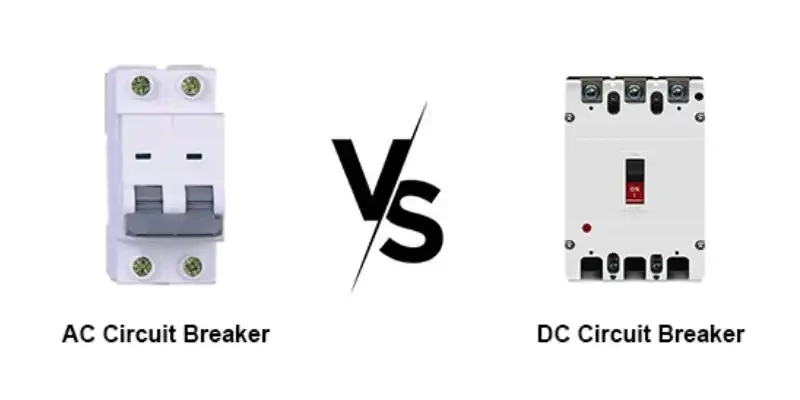
The service call came in at 2 PM on a Tuesday. Routine solar panel inspection. Nothing unusual expected.
But when the technician opened the combiner box, he found something that made his stomach drop: the DC circuit breaker’s contacts had welded together—fused into a solid mass of copper. The breaker was supposed to protect the system. Instead, it had become a permanent short circuit.
Here’s what’s terrifying: The breaker never tripped during the fault. The arc that formed when the contacts tried to separate generated enough heat—over 6,000°C—to melt the copper before the breaker could interrupt the current. The system kept running, feeding power through what was essentially a glob of molten metal, until someone physically shut it down.
Why did this happen? Someone installed an AC-rated circuit breaker in a DC system. Same voltage rating. Same current rating. Completely wrong application.
That mistake cost $40,000 in damaged equipment and a week of downtime.
The difference between DC and AC circuit breakers isn’t just technical trivia—it’s the difference between protection and disaster.
Why DC Current Is Harder to Stop: The Zero-Crossing Problem
Think about how water flows through a pipe versus how it pulses through a pressure washer. That’s the difference between DC and AC current.
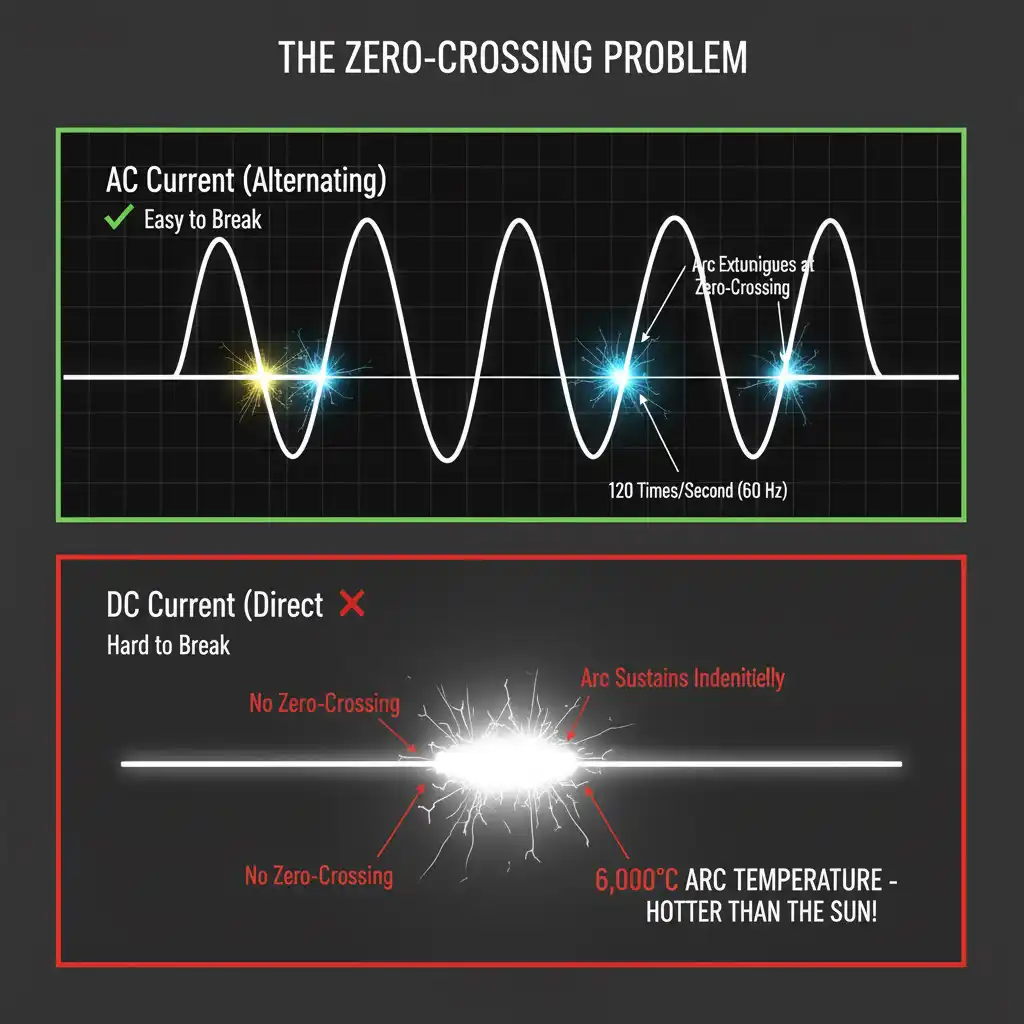
AC current alternates direction 50 or 60 times every second. In a 60 Hz system, the current crosses through zero voltage 120 times per second—twice per cycle. When a circuit breaker’s contacts separate and an arc forms, that arc extinguishes naturally at the next zero crossing. The breaker just needs to prevent the arc from re-striking. It’s working ပါသော the physics of alternating current.
DC current flows in one continuous direction with steady voltage. There are no zero crossings. Ever.
When contacts separate in a DC circuit, the arc forms and just… stays there. It doesn’t care about your breaker’s attempt to interrupt it. That arc will continue until something physically breaks it, cools it, or stretches it beyond sustainability.
The numbers make this brutally clear: A typical AC arc extinguishes within 8 milliseconds (1/120th of a second) thanks to natural zero crossings. A DC arc? It can sustain indefinitely at temperatures exceeding 6,000°C—hotter than the surface of the sun, and well above copper’s melting point of 1,085°C.
This is what I call “The Zero-Crossing Problem.” AC breakers can rely on physics to help them. DC breakers have to fight physics every step of the way.
The practical impact: DC breakers need aggressive arc-extinction mechanisms. Magnetic blowout coils that literally blow the arc apart. Special contact geometries that stretch the arc until it cools and breaks. Arc chutes filled with insulating plates that split the arc into smaller, easier-to-extinguish segments. Some advanced DC breakers even use vacuum chambers or sulfur hexafluoride gas to quench arcs faster.
All of this complexity exists to solve one problem: DC current is stubborn. It refuses to let go.
What Makes DC Breakers Different (And More Expensive)
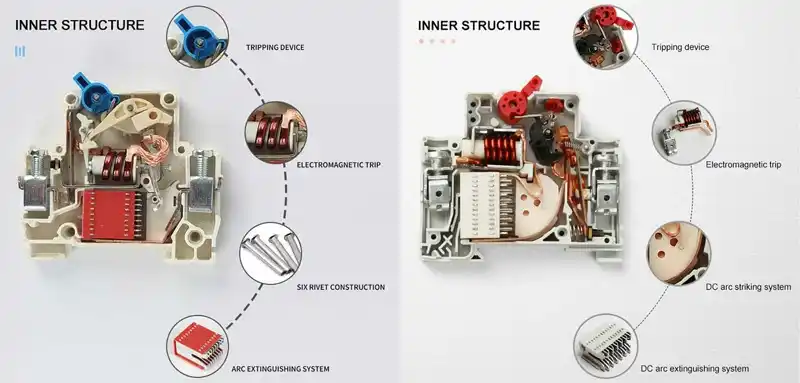
Inside of AC MCB VS DC MCB
Walk into an electrical supply house and compare prices. A standard 20A, 120V AC circuit breaker: $15. A 20A, 125V DC circuit breaker: $80-120.
Same current rating, similar voltage, but the DC breaker costs 5-8 times more.
Engineers love to complain about this price difference. “It’s just a switch!” they say. But here’s what’s inside that “just a switch”:
In an AC breaker:
- Two main contacts (line and load)
- Basic thermal-magnetic trip mechanism
- Simple arc chute with a few metal plates
- Single pole construction
In a DC breaker:
- Three or more main contacts arranged in series
- Enhanced thermal-magnetic trip mechanism with higher magnetic force
- Complex arc chute with dozens of steel plates
- Magnetic blowout coils that consume extra space
- Special contact materials (silver-tungsten alloys instead of silver-nickel)
- Precise air gap engineering (too small and the arc won’t elongate; too large and the breaker won’t fit in standard enclosures)
That price premium isn’t profit margin—it’s physics. Every component in a DC breaker has to work harder to overcome The Zero-Crossing Problem.
And here’s the kicker: You cannot substitute one for the other, even if voltage and current ratings match. An AC breaker in a DC system won’t interrupt high-energy faults. The arc will sustain, contacts will weld, and your “protection device” becomes an uncontrolled conductor.
I’ve seen this failure mode destroy $50,000 of solar equipment when an installer tried to save $60 on breakers.
The Arc Welding Effect—when breaker contacts fuse together—is frighteningly common in misapplied AC breakers on DC systems. Once contacts weld, the breaker is permanently closed. No amount of manual operation will separate them. You’re left with an always-on circuit that has no protection whatsoever.
The 600-Volt Ceiling: Why DC Ratings Are Deceiving
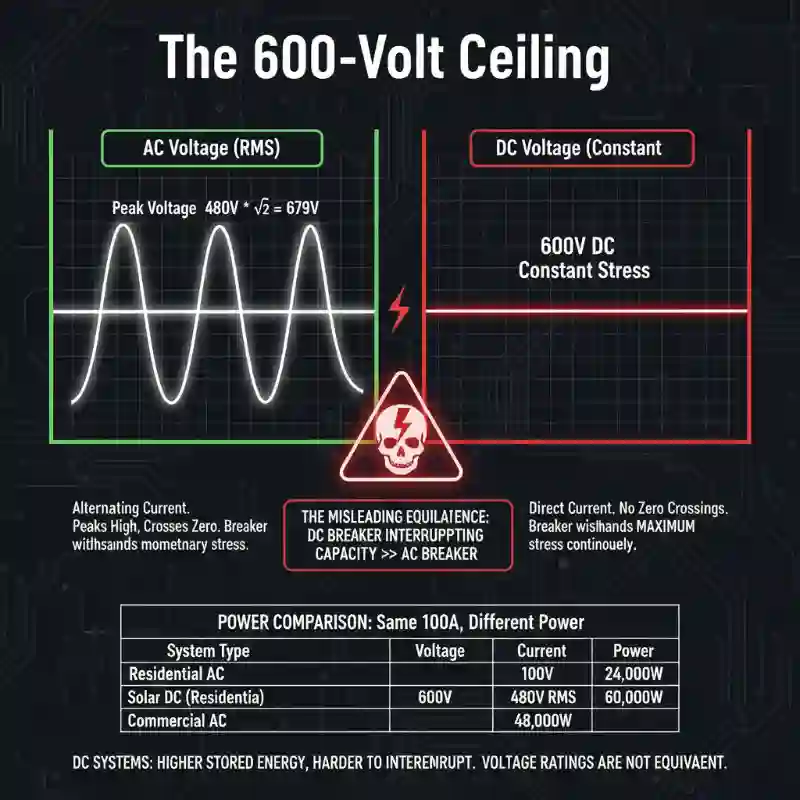
Here’s a question that trips up even experienced engineers: Why are residential DC systems limited to 600V, while AC systems commonly run at 240V or even 480V in commercial buildings?
The answer reveals something counterintuitive about electrical ratings.
Voltage ratings are not equivalent across AC and DC systems. A 600V DC circuit actually stores and can discharge more energy than a 480V AC circuit of the same current rating. Here’s why:
AC voltage is typically specified as RMS (Root Mean Square)—effectively an average value. A 480V AC system actually peaks at 679V (480V × √2) during each cycle, but only for an instant before dropping back toward zero. The breaker only needs to withstand that peak momentarily.
DC voltage is constant. A 600V DC system maintains 600V continuously—no peaks, no valleys, no zero crossings to help with interruption. The breaker faces maximum stress at all times.
This is “The 600-Volt Ceiling”: the National Electrical Code’s limit for residential DC installations. Above 600V DC, you’re in commercial/industrial territory with stricter requirements for cable routing, labeling, and qualified personnel. Meanwhile, AC systems can reach 480V in commercial buildings without triggering the same restrictions.
Let’s make this concrete with power comparison:
| စနစ်အမျိုးအစား | ဓာတ်အား | လက်ရှိ | ပါဝါ |
|---|---|---|---|
| Residential AC | 240V RMS | 100A | 24,000W |
| Solar DC (Residential) | 600V | 100A | 60,000W |
| Commercial AC | 480V RMS | 100A | 48,000W |
Same current rating (100A), but wildly different power levels. This is why DC breaker interrupting capacity specifications look so extreme. A 600V DC breaker might need a 25,000A interrupting capacity where a 240V AC breaker only needs 10,000A for the same application.
⚡ Pro Tip: When sizing DC breakers for solar systems, always account for temperature-corrected open-circuit voltage (Voc). A 48V nominal battery system might see 58V at full charge. A solar string rated for 500V might produce 580V on a cold winter morning when panel efficiency peaks. Round up generously on voltage ratings—it costs a few dollars more but prevents catastrophic failures.
How to Select the Right Circuit Breaker: 5-Step Method

Let me walk you through the systematic approach that prevents the $40,000 mistakes I mentioned earlier.
အဆင့် ၁: သင်၏ လျှပ်စီးကြောင်း အမျိုးအစားကို ခွဲခြားသတ်မှတ်ပါ
DC စနစ်များ:
- ဆိုလာလျှပ်စစ်ဓာတ်အားပြားများ (အမြဲတမ်း DC ထွက်ရှိမှု)
- ဘက်ထရီ သိုလှောင်စနစ်များ (ဘက်ထရီများသည် သဘာဝအားဖြင့် DC ဖြစ်သည်)
- လျှပ်စစ်ကား အားသွင်းစခန်းများ (ဘက်ထရီဘက်ခြမ်းသည် DC ဖြစ်သည်)
- စက်မှု DC မော်တာ မောင်းနှင်မှုများ
- ဆက်သွယ်ရေးပစ္စည်း
- ရထားလမ်း လျှပ်စစ်ဓာတ်အားပေးစနစ် (DC ဖြစ်လေ့ရှိသည်)
AC စနစ်များ:
- အသုံးအဆောင်များမှ ဓာတ်အားလိုင်း (လူနေအိမ်/စီးပွားဖြစ်)
- AC induction မော်တာများအတွက် မော်တာထိန်းချုပ်မှု
- HVAC စနစ်များ
- အဆောက်အဦ လျှပ်စစ်ဖြန့်ဖြူးမှု အထွေထွေ
- အသုံးအဆောင်ပစ္စည်းများနှင့် မီးအလင်းရောင် အများစု
ရောနှောထားသော စနစ်များ (နှစ်မျိုးလုံး လိုအပ်သည်):
- ဓာတ်အားလိုင်းချိတ်ဆက်မှုပါရှိသော ဆိုလာ + ဘက်ထရီစနစ်များ
- EV အားသွင်းခြင်း (AC ထည့်သွင်းမှု၊ ယာဉ်သို့ DC)
- အနှောင့်အယှက်မရှိ ပါဝါထောက်ပံ့မှုများ (UPS)
- ပြောင်းလဲနိုင်သော ကြိမ်နှုန်းမောင်းနှင်မှုများ (AC ထည့်သွင်းမှု၊ DC bus၊ AC ထွက်ရှိမှု)
ရောနှောထားသော စနစ်များအတွက်၊ တစ်ဖက်စီတွင် သင့်လျော်သော circuit breaker များ လိုအပ်ပါမည်။ ဆိုလာမှ ဘက်ထရီချိတ်ဆက်မှုသည် DC circuit breaker များ လိုအပ်သည်။ ဓာတ်အားလိုင်းချိတ်ဆက်မှုသည် AC circuit breaker များ လိုအပ်သည်။ ၎င်းတို့ကို ဘယ်တော့မှ မရောထွေးပါနှင့်။.
အဆင့် ၂: ဗို့အား လိုအပ်ချက် အများဆုံးကို တွက်ချက်ပါ
DC စနစ်များအတွက်:
အပူချိန်ပြင်ဆင်မှုဖြင့် open-circuit ဗို့အားကို တွက်ချက်ပါ။ ဆိုလာပြားများသည် အေးသောရာသီဥတုတွင် ဗို့အားကို တိုးစေသည်—တစ်ခါတစ်ရံ 25% သို့မဟုတ် ထို့ထက်ပို၍ တိုးစေသည်။.
ဖော်မြူလာ- Voc(အေး) = Voc(STC) × [1 + (Tcoeff × ΔT)]
ဥပမာ: 48V nominal ဆိုလာအစုအဝေး
- Voc(STC) = 60V @ 25°C
- အပူချိန်ကိန်းကဏန်း = -0.3%/°C
- အအေးဆုံး ပတ်ဝန်းကျင် = -10°C
- ΔT = 25°C – (-10°C) = 35°C
- Voc(အေး) = 60V × [1 + (-0.003 × 35)] = 60V × 1.105 = 66.3V
သင်၏ circuit breaker သည် အနည်းဆုံး 66.3V အတွက် အဆင့်သတ်မှတ်ထားရမည်—60V မဟုတ်၊ 48V nominal မဟုတ်ပါ။ စံနှုန်းသတ်မှတ်ချက်သို့ ပင့်တင်ပါ: အနည်းဆုံး 80V DC circuit breaker။.
AC စနစ်များအတွက်:
nameplate ဗို့အားကို အသုံးပြုပါ။ စံနှုန်းသတ်မှတ်ချက်များကို ပြင်ဆင်ထားသည်: 120V, 240V, 277V, 480V, 600V AC။ သင်၏ စနစ်ဗို့အားနှင့် ကိုက်ညီပါ သို့မဟုတ် ကျော်လွန်ပါ။.
အဆင့် ၃: လျှပ်စီးကြောင်း အဆင့်သတ်မှတ်ချက်ကို ဆုံးဖြတ်ပါ (သင့်လျော်သော Derating ဖြင့်)
ဆိုလာ/ဘက်ထရီအတွက် DC circuit breaker များ:
လျှပ်စီးကြောင်း အဆင့်သတ်မှတ်ချက် = Isc(max) × 1.25 (NEC 690.8 လိုအပ်ချက်)
ဥပမာ: short-circuit လျှပ်စီးကြောင်း (Isc) = 40A ပါရှိသော ဆိုလာအစုအဝေး
- လိုအပ်သော circuit breaker အဆင့်သတ်မှတ်ချက် = 40A × 1.25 = အနည်းဆုံး 50A
- စံအရွယ်အစားများ: 50A, 60A, 70A → 50A circuit breaker ကို ရွေးချယ်ပါ
စဉ်ဆက်မပြတ်ဝန်များအတွက် AC circuit breaker များ:
လျှပ်စီးကြောင်း အဆင့်သတ်မှတ်ချက် = ဝန်လျှပ်စီးကြောင်း × 1.25 (NEC 210.20 လိုအပ်ချက်)
ဥပမာ: 30A စဉ်ဆက်မပြတ် HVAC ဝန်
- လိုအပ်သော circuit breaker အဆင့်သတ်မှတ်ချက် = 30A × 1.25 = 37.5A
- စံအရွယ်အစားများ: 30A, 35A, 40A → 40A circuit breaker ကို ရွေးချယ်ပါ
အပူချိန် derating: သင်၏ circuit breaker သည် 40°C ပတ်ဝန်းကျင်ထက် မြင့်မားစွာ လည်ပတ်ပါက (ဆိုလာပေါင်းစပ်သေတ္တာများတွင် အဖြစ်များသည်)၊ နောက်ထပ် derating ကို အသုံးပြုပါ။ 40°C ထက် မြင့်သော 10°C တိုင်းအတွက်၊ ခန့်မှန်းခြေအားဖြင့် 15% ဖြင့် derate လုပ်ပါ။.
ဥပမာ: 60°C ပေါင်းစပ်သေတ္တာရှိ 50A circuit breaker
- အပူချိန်ပိုလျှံမှု = 60°C – 40°C = 20°C
- Derating အချက် = 0.85 × 0.85 = 0.72
- ထိရောက်သော စွမ်းဆောင်ရည် = 50A × 0.72 = 36A
သင်၏ တွက်ချက်ထားသော ဝန်လိုအပ်ချက်သည် 40A ဖြစ်ပါက၊ ထို “50A” circuit breaker သည် အဆင်မပြေပါ။ 43.2A ၏ ထိရောက်သော စွမ်းဆောင်ရည်ကို ရရှိရန်အတွက် သင်သည် 60A circuit breaker လိုအပ်ပါမည်။.
အဆင့် ၄: Interrupting Capacity ကို စစ်ဆေးပါ (အများဆုံး လျစ်လျူရှုထားသော သတ်မှတ်ချက်)
Interrupting capacity (breaking capacity သို့မဟုတ် short-circuit rating ဟုလည်းခေါ်သည်) သည် ပေါက်ကွဲခြင်း၊ ဂဟေဆက်သွယ်ခြင်း သို့မဟုတ် ဆက်တိုက်ပျက်ကွက်ခြင်းများ မဖြစ်စေဘဲ circuit breaker သည် ဘေးကင်းစွာ ဖြတ်တောက်နိုင်သော လျှပ်စီးကြောင်း အများဆုံးဖြစ်သည်။.
ဤသည်မှာ DC စနစ်များ ကြောက်စရာကောင်းလာသည့်နေရာဖြစ်သည်။.
ဘက်ထရီများသည် အတွင်းပိုင်း impedance သုညနီးပါးရှိသောကြောင့် ဘက်ထရီစနစ်များသည် ကြီးမားသော short-circuit လျှပ်စီးကြောင်းများကို ထုတ်ပေးနိုင်သည်။ “သေးငယ်သော” 48V, 100Ah လီသီယမ်ဘက်ထရီအစုသည် တိုက်ရိုက် short circuit အတွင်း 5,000A သို့မဟုတ် ထို့ထက်ပို၍ ပေးပို့နိုင်သည်။.
| စနစ်အမျိုးအစား | ဓာတ်အား | လိုအပ်သော ပုံမှန် Interrupting Capacity |
|---|---|---|
| 12V DC မော်တော်ကား | 12V | 5,000A @ 12V |
| 48V DC ဆိုလာ/ဘက်ထရီ | 48V | 1,500-3,000A @ 48V |
| 125V DC စက်မှု | 125V | 10,000-25,000A @ 125V |
| 600V DC ဆိုလာအစုအဝေး | 600V | 14,000-65,000A @ 600V |
| AC လူနေအိမ် | 120/240V | 10,000 AIC ပုံမှန် |
| AC စီးပွားဖြစ် | 480V | 22,000-65,000 AIC |
DC ဖြတ်တောက်နိုင်စွမ်းသည် AC ထက်ပို၍ တူညီသည် သို့မဟုတ် မြင့်မားသည်ကို သတိပြုပါ။ DC စနစ်များသည် ဗို့အားနည်းပါးသော်လည်း၊ ၎င်းသည် The Stubborn Current ကြောင့်ဖြစ်သည်။ DC ချို့ယွင်းချက်များကို ဖြတ်တောက်ရန် ခက်ခဲသောကြောင့် circuit breaker များသည် ပိုမိုကောင်းမွန်သော ဖြတ်တောက်နိုင်စွမ်း လိုအပ်ပါသည်။.
⚡ Pro Tip: ဘက်ထရီစနစ်များအတွက် ဘက်ထရီထုတ်လုပ်သူ၏ အမြင့်ဆုံးထုတ်လွှတ်မှု လက်ရှိသတ်မှတ်ချက်ကို အသုံးပြုပါ။ ပုံမှန်လက်ရှိကို မသုံးပါနှင့်။ 100A ဆက်တိုက်အသုံးပြုနိုင်သော ဘက်ထရီသည် ချို့ယွင်းမှုများအတွင်း 500A ထုတ်လွှတ်နိုင်သည်။ သင်၏ circuit breaker ၏ ဖြတ်တောက်နိုင်စွမ်းသည် ထိုချို့ယွင်းမှုထက် ကျော်လွန်ရပါမည်။.
အဆင့် ၅- စည်းမျဉ်းစည်းကမ်း လိုက်နာမှုကို စစ်ဆေးပါ (NEC လိုအပ်ချက်များ)
DC စနစ်များ (PV အတွက် NEC Article 690၊ စွမ်းအင်သိုလှောင်မှုအတွက် Article 706):
- ဗို့အားကန့်သတ်ချက်များ- လူနေအိမ်များတွင် အများဆုံး 600V DC (တစ်မိသားစုနှင့် နှစ်မိသားစုနေအိမ်များ)
- 30V သို့မဟုတ် 8A ထက်ကျော်လွန်သော conductor အားလုံးအတွက် circuit protection လိုအပ်သည်။
- 30V ကျော်လွန်သော မိုးလုံလေလုံ DC circuit များအတွက် သတ္တု raceway သို့မဟုတ် Type MC cable လိုအပ်သည်။
- အညွှန်းကပ်ရန် လိုအပ်သည်- DC enclosure အားလုံးတွင် “PHOTOVOLTAIC POWER SOURCE” သို့မဟုတ် “SOLAR PV DC CIRCUIT”
- အမိုးပေါ်တွင် တပ်ဆင်ထားသော PV စနစ်များအတွက် မြေပြင်ချို့ယွင်းမှု ကာကွယ်ရေး လိုအပ်သည်။
- အမြန်ပိတ်ခြင်းဆိုင်ရာ လိုအပ်ချက်များ (module-level သို့မဟုတ် array-level ပိတ်ခြင်းကို စက္ကန့် 30 အတွင်း)
AC စနစ်များ (branch circuit များအတွက် NEC Article 210၊ overcurrent protection အတွက် Article 240):
- 120V လူနေအိမ်ယူနစ် circuit အများစုအတွက် AFCI (Arc-Fault Circuit Interrupter) လိုအပ်သည်။
- စိုစွတ်သောနေရာများ၊ မီးဖိုချောင်များ၊ ရေချိုးခန်းများ၊ အပြင်ဘက်ထွက်ပေါက်များအတွက် GFCI (Ground-Fault Circuit Interrupter) လိုအပ်သည်။
- Tandem breaker များ (နေရာတစ်ခုတည်းတွင် double breaker များ) ကို panelboard က အသုံးပြုရန် သတ်မှတ်ထားမှသာ ခွင့်ပြုသည်။
- Breaker များကို branch circuit protection အတွက် စာရင်းသွင်းရမည် (UL 489)
UL စံနှုန်းများ ကိစ္စရပ်-
- အဆိုပါ ၄၈၉: Full branch circuit protection (အမြင့်ဆုံးအဆင့်သတ်မှတ်ချက်၊ သီးခြား circuit များအတွက် လိုအပ်သည်)
- UL 1077: ဖြည့်စွက်ကာကွယ်မှု (ပစ္စည်းကိရိယာအတွင်း၌သာ အသုံးပြုရန်၊ သီးခြားမဟုတ်ပါ)
- UL 2579: PV DC arc-fault circuit protection အတွက် သီးခြား
UL 489 branch circuit protection လိုအပ်သည့်နေရာတွင် UL 1077 ဖြည့်စွက်ကာကွယ်ရေးကိရိယာကို ဘယ်တော့မှ အစားမထိုးပါနှင့်။ ၎င်းတို့သည် တူညီခြင်းမရှိပါ။.
အမျိုးအစားတစ်ခုစီ မည်သည့်နေရာတွင် သက်ဆိုင်သနည်း (နှင့် မည်သည့်နေရာတွင် မသက်ဆိုင်သနည်း)
DC Circuit Breaker အသုံးချမှုများ
ဆိုလာ photovoltaic စနစ်များ – ဤသည်မှာ DC breaker များ လုံးဝမညှိနှိုင်းနိုင်သောနေရာဖြစ်သည်။ ကြိုးတိုင်းတွင် DC-rated breaker များ လိုအပ်သည်။ combiner box တိုင်း။ panel မှ charge controller မှ ဘက်ထရီမှ inverter (DC ဘက်တွင်) အထိ ချိတ်ဆက်မှုတိုင်း။ အမျိုးသားလျှပ်စစ်ကုဒ်က ၎င်းကိုလိုအပ်သည်။ ရူပဗေဒက တောင်းဆိုသည်။.
ကျွန်ုပ်သည် 50kW ဆိုလာ array တွင် ငွေကုန်သက်သာစေရန်အတွက် တပ်ဆင်သူသည် $80 DC breaker များအစား $15 AC breaker များကို အသုံးပြုခဲ့သည့် ပရောဂျက်တစ်ခုတွင် လုပ်ကိုင်ခဲ့သည်။ ခြောက်လအကြာတွင် မြေပြင်ချို့ယွင်းမှုတစ်ခုအတွင်း breaker တစ်ခုသည် ပိတ်သွားပြီး DC cable ၏ insulation မီးလောင်သည်အထိ ချို့ယွင်းနေသော လျှပ်စီးကြောင်းကို ဆက်တိုက်ပေးပို့ခဲ့သည်။.
ပြုပြင်စရိတ် စုစုပေါင်း- $35,000။ “ချွေတာခြင်း” သည် မှန်ကန်သော breaker များထက် အဆ 400 ပိုကုန်ကျသည်။.
လျှပ်စစ်ကားအားသွင်းစနစ် – DC ဘက် (charger မှ မော်တော်ယာဉ်ဘက်ထရီအထိ) သည် ဘက်ထရီဗို့အားအတွက် သတ်မှတ်ထားသော DC breaker များ လိုအပ်သည်။ Level 3 DC အမြန်အားသွင်းစက်များသည် 200A ကျော်လွန်သော လျှပ်စီးကြောင်းဖြင့် 400-800V DC တွင် လည်ပတ်သည်။ ဤအခြေအနေများသည် ရက်စက်ကြမ်းကြုတ်သည်။ AC ထောက်ပံ့ရေးဘက် (utility မှ charger အထိ) သည် စံ AC breaker များကို အသုံးပြုသည်။.
ဘက်ထရီစွမ်းအင် သိုလှောင်မှုစနစ်များ – လီသီယမ်ဘက်ထရီအစုအဝေးများသည် သဘာဝအားဖြင့် DC ဖြစ်သည်။ ချိတ်ဆက်မှုတိုင်းတွင် ဘက်ထရီဗို့အားအတွက် သတ်မှတ်ထားသော DC breaker များ လိုအပ်ပြီး ဘက်ထရီများ ထုတ်လွှတ်နိုင်သော ကြီးမားသော short-circuit လျှပ်စီးကြောင်းအတွက် အရေးကြီးပါသည်။ 48V, 10kWh လူနေအိမ်ဘက်ထရီအစုအဝေးသည် short circuit တစ်ခုထဲသို့ 5,000A+ ကို စွန့်ပစ်နိုင်သည်။ သင်၏ breaker သည် ထိုဖြတ်တောက်နိုင်စွမ်းကို ကိုင်တွယ်နိုင်ရမည်။.
ဆက်သွယ်ရေး – ဆဲလ်တာဝါများ၊ ဒေတာစင်တာများနှင့် တယ်လီကွန်းဆက်သွယ်ရေး အဆောက်အအုံများသည် DC ပါဝါဖြင့် လည်ပတ်သည် (ပုံမှန်အားဖြင့် 48V)၊ အဘယ်ကြောင့်ဆိုသော် DC သည် ပိုမိုယုံကြည်စိတ်ချရပြီး AC ၏ power factor ပြဿနာများ မရှိသောကြောင့်ဖြစ်သည်။ DC ဖြန့်ဖြူးရေးဘက်ရှိ ကာကွယ်မှုအားလုံးကို DC-rated ဖြစ်ရမည်။.
AC Circuit Breaker အသုံးချမှုများ
လူနေအိမ်နှင့် စီးပွားဖြစ် အဆောက်အဦ ဖြန့်ဖြူးရေး – သင်၏အိမ်၏ main panel၊ ထွက်ပေါက်များနှင့် မီးများအတွက် branch circuit အားလုံး၊ အသုံးအဆောင် circuit များ—ဤအရာအားလုံးသည် AC ဖြစ်သည်။ Grid power သည် AC ဖြစ်သောကြောင့် အဆောက်အဦ ဖြန့်ဖြူးရေးသည် AC ဖြစ်သည်။ 120V, 240V သို့မဟုတ် 277V (စီးပွားဖြစ်မီးအတွက်) အတွက် သတ်မှတ်ထားသော စံ AC breaker များကို အသုံးပြုပါ။.
AC မော်တာ ထိန်းချုပ်မှု – Induction မော်တာများ၊ HVAC compressor များ၊ pump မော်တာများ—ဤအရာများသည် AC ပါဝါဖြင့် လည်ပတ်သည်။ မော်တာ starter သို့မဟုတ် VFD သည် AC input ကို လက်ခံရရှိသောကြောင့် ထောက်ပံ့ရေးကာကွယ်မှုအတွက် AC breaker များကို အသုံးပြုပါ။.
Grid-connected inverter AC output – grid-tie inverter ပါသော ဆိုလာစနစ်များသည် utility-facing ဘက်တွင် AC output ကို ထုတ်လုပ်သည်။ သင်၏ main panel သို့ ချိတ်ဆက်မှုသည် AC breaker များကို အသုံးပြုသည်။ ဆိုလာ array ကိုယ်တိုင်က DC (DC breaker များ) ဖြစ်သော်လည်း inverter သည် AC သို့ ပြောင်းပြီးသည်နှင့် သင်သည် AC breaker နယ်မြေထဲသို့ ရောက်ရှိသွားပါပြီ။.
သင် နှစ်ခုလုံး လိုအပ်သည့်နေရာ
ဘက်ထရီ backup ပါသော Hybrid ဆိုလာစနစ်များသည် PV array ဘက်တွင် DC breaker များ၊ ဘက်ထရီချိတ်ဆက်မှုများတွင် DC breaker များ၊ grid-tie နှင့် load-side AC circuit များတွင် AC breaker များ လိုအပ်သည်။ ပုံမှန်လူနေအိမ်စနစ်တွင် ပါဝင်နိုင်သည်-
- DC breaker များ- 4-6 (PV ကြိုးများ + ဘက်ထရီအားသွင်း/ထုတ်ခြင်း)
- AC breaker များ- 2-3 (inverter AC output + grid ချိတ်ဆက်မှု + အရေးကြီးသော load backup)
အဖြစ်များသော အမှားများ (နှင့် ၎င်းတို့ မည်သို့ပျက်ကွက်သနည်း)
အမှား ၁- “လုံလောက်သော” ဗို့အား အဆင့်သတ်မှတ်ချက်များ
အင်ဂျင်နီယာ၏ အတွေးအမြင်- “ကျွန်ုပ်၏ 48V ပုံမှန်စနစ်သည် 58V တွင် အထွတ်အထိပ်သို့ ရောက်ရှိသောကြောင့် 60V DC breaker သည် အလုပ်လုပ်သင့်သည်။”
အဖြစ်မှန်: ဆိုလာ panel များသည် အမြင့်ဆုံးစွမ်းဆောင်ရည်ဖြင့် လည်ပတ်သောအခါ ထို 48V စနစ်သည် အေးသောနံနက်ခင်းတွင် 66V သို့ ရောက်ရှိနိုင်သည်။ 60V breaker သည် overvoltage အခြေအနေများကို မြင်တွေ့ရပြီး arc extinction စွမ်းဆောင်ရည် ကျဆင်းကာ breaker ကို ၎င်း၏ စမ်းသပ်ထားသော ဘေးကင်းလုံခြုံမှုအကွာအဝေးထက် ကျော်လွန်၍ တွန်းပို့နေပါသည်။.
ပြင်ဆင်ခြင်း- ဆိုလာစနစ်များအတွက် အပူချိန်ပြင်ဆင်ထားသော Voc ကို အမြဲအသုံးပြုပါ။ နောက်စံ breaker ဗို့အား အဆင့်သတ်မှတ်ချက်သို့ ပင့်တင်ပါ။ ၎င်းသည် $10-20 ပိုကုန်ကျသည်။ ထိုက်တန်ပါတယ်။.
အမှား ၁- AC Breaker များကို DC စနစ်များတွင် အသုံးပြုခြင်း
ဤသည်မှာ ကျွန်ုပ်ရည်ညွှန်းနေသည့် $40,000 အမှားဖြစ်သည်။ AC breaker သည် DC arc များကို ယုံကြည်စိတ်ချစွာ ဖြတ်တောက်နိုင်စွမ်း မရှိပါ။ သုညဖြတ်ကျော်မှု မရှိခြင်းကြောင့် arc သည် ဆက်လက်တည်ရှိနေပြီး contacts များ အပူလွန်ကဲကာ ဂဟေဆက်ခြင်း ဖြစ်ပေါ်သည်။.
ပြင်ဆင်ခြင်း- ဘယ်တော့မှ မကူးပါနှင့်။ DC စနစ်များသည် DC breaker များကို ရရှိသည်။ AC စနစ်များသည် AC breaker များကို ရရှိသည်။ သင်မသေချာပါက breaker အညွှန်းကို ကြည့်ပါ။ ၎င်းသည် “DC” သို့မဟုတ် “AC” အဆင့်သတ်မှတ်ချက်များကို ရှင်းရှင်းလင်းလင်း ဖော်ပြပါမည်။ AC အဆင့်သတ်မှတ်ချက်များကိုသာ ဖော်ပြပါက DC circuit များတွင် မသုံးပါနှင့်။.
အမှား ၁- ဖြတ်တောက်နိုင်စွမ်းကို လျစ်လျူရှုခြင်း
လက်ရှိအဆင့်သတ်မှတ်ချက် ≠ ဖြတ်တောက်နိုင်စွမ်း။ 100A breaker တွင် 5,000A ဖြတ်တောက်နိုင်စွမ်းသာ ရှိနိုင်သည်။ သင်၏ဘက်ထရီအစုအဝေးသည် short circuit တစ်ခုအတွင်း 10,000A ကို ထုတ်လွှတ်နိုင်ပါက ထို breaker သည် ချို့ယွင်းမှုကို ဘေးကင်းစွာ ဖြတ်တောက်နိုင်မည် မဟုတ်ပါ။ breaker သည် ပေါက်ကွဲနိုင်သည် (ဟုတ်သည်၊ စာသားအတိုင်း) သို့မဟုတ် အလွန်အမင်း ပျက်ကွက်နိုင်သည်။.
ပြင်ဆင်ခြင်း- သင်၏စနစ်အတွက် ရရှိနိုင်သော short-circuit လျှပ်စီးကြောင်းကို တွက်ချက်ပါ။ ဘက်ထရီစနစ်များအတွက် ထုတ်လုပ်သူ၏ အမြင့်ဆုံးထုတ်လွှတ်မှု သတ်မှတ်ချက်ကို အသုံးပြုပါ။ သင်၏ ချို့ယွင်းနေသော လျှပ်စီးကြောင်းထက် ကျော်လွန်သော ဖြတ်တောက်နိုင်စွမ်းရှိသော breaker များကို ရွေးချယ်ပါ။.
အမှား ၁- အပူချိန်လျှော့ချခြင်းကို မေ့လျော့ခြင်း
ဆိုလာ combiner box များသည် နေရောင်ခြည် တိုက်ရိုက်ထိတွေ့မှုတွင် 60-70°C သို့ ရောက်ရှိတတ်သည်။ သင်၏ “50A” breaker သည် ထိုအပူချိန်တွင် 36A ထိရောက်သော စွမ်းဆောင်ရည်အတွက်သာ သတ်မှတ်ထားနိုင်သည်။.
ပြင်ဆင်ခြင်း- အပူချိန်လျှော့ချခြင်းအတွက် သင်၏ breaker ကို အရွယ်အစားကြီးအောင် ပြုလုပ်ပါ သို့မဟုတ် သင်၏ enclosure တွင် လေဝင်လေထွက်ကောင်းမွန်အောင် ပြုလုပ်ပါ။ တပ်ဆင်သူအချို့သည် အပူချိန်ကို 40°C နှင့် ပိုမိုနီးကပ်စေရန်အတွက် အတင်းအကျပ် လေဝင်လေထွက်ပါသော အပူလျှပ်ကာ combiner box များကို အသုံးပြုကြသည်။.
အနာဂတ်- Smart DC Breaker များ
အင်ဂျင်နီယာအများစု မသိသေးသောအရာတစ်ခုမှာ- ကျွန်ုပ်တို့သည် solid-state circuit breaker များခေတ်ထဲသို့ ဝင်ရောက်နေပြီး DC စနစ်များသည် ဦးစွာအကျိုးခံစားရမည်ဖြစ်သည်။.
ရိုးရာ electromechanical breaker များသည် ရုပ်ပိုင်းဆိုင်ရာ contacts များ ခွဲထုတ်ခြင်းအပေါ် မူတည်သည်။ Solid-state breaker များသည် လျှပ်စီးကြောင်းကို အီလက်ထရွန်နစ်နည်းဖြင့် ဖြတ်တောက်ရန်အတွက် power semiconductor များ (MOSFETs သို့မဟုတ် IGBTs) ကို အသုံးပြုသည်—ရွေ့လျားနေသော အစိတ်အပိုင်းများမရှိ၊ arc များမရှိ၊ contact ဂဟေဆက်ခြင်းမရှိပါ။.
For AC systems, solid-state breakers are nice-to-have. For DC systems? They’re transformational.
A solid-state DC breaker can interrupt a 600V, 100A fault in under 1 millisecond—100 times faster than electromechanical breakers. No arc, no heat, no contact erosion. They can cycle millions of times without degradation. They can implement advanced protection algorithms, communicate status over networks, and adapt trip curves to system conditions.
The downside? Cost. A solid-state DC breaker might run $300-800 versus $80-120 for electromechanical. But for critical applications—utility-scale battery storage, data centers, military systems—that price is justified by reliability and performance.
UL 489 certification now covers solid-state circuit breakers, so we’ll see more adoption as costs decline. Within 5-10 years, I expect solid-state to become standard for DC systems above 200V.


အောက်ခြေလိုင်း
The fundamental difference between DC and AC circuit breakers comes down to one merciless fact: DC current doesn’t want to stop.
AC current naturally crosses zero 120 times per second, giving breakers an assist. DC current flows continuously, fighting every attempt to interrupt it. That resistance to interruption shapes everything—from internal breaker design to selection criteria to cost to code requirements.
When you choose the right breaker for your application, you’re not just checking a box on an electrical plan. You’re building the last line of defense between normal operation and catastrophic failure. That defense must match the physics of your current type.
Use DC breakers for DC systems. Use AC breakers for AC systems. Never cross-apply.
If you’re designing a solar photovoltaic system, battery storage installation, EV charging infrastructure, or any DC application, invest in the correct DC-rated breakers with appropriate interrupting capacity. If you’re working with standard building electrical, grid power, or AC motor control, use AC breakers designed for that purpose.
And if you’re ever tempted to substitute one for the other to save $50? Remember the welded contacts, the $40,000 repair bill, and the week of downtime.
⚡ For VIOX DC and AC circuit breakers engineered for solar, battery, and industrial applications, contact our technical team for application-specific selection guidance and UL 489-certified solutions.
မကြာခဏမေးမေးခွန်းများ
မေး- DC စနစ်တွင် AC circuit breaker ကို သုံးနိုင်ပါသလား။
A: No. Using an AC circuit breaker in a DC system is dangerous and may not effectively interrupt fault currents. AC breakers rely on the natural zero crossings in alternating current to extinguish arcs. DC current has no zero crossings, so the arc sustains, potentially welding the contacts together. Always use DC-rated breakers for DC systems.
မေး- DC circuit breakers တွေက ဘာကြောင့် AC breakers တွေထက် ပိုစျေးကြီးတာလဲ။
A: DC breakers require more complex internal mechanisms to overcome The Zero-Crossing Problem. They need magnetic blowout coils, multiple contact arrangements, specialized arc chutes with dozens of plates, and premium contact materials like silver-tungsten alloys. This additional complexity increases manufacturing costs by 5-8 times compared to AC breakers.
မေး- DC circuit breakers အတွက် ဘယ်ဗို့အား အဆင့်သတ်မှတ်မှု ရနိုင်ပါသလဲ။
A: DC circuit breakers range from 12V (automotive applications) to 1,500V DC (industrial and large-scale solar). Common ratings include 12V, 24V, 48V, 80V, 125V, 250V, 600V, and 1,000V DC. For residential solar, the maximum is typically 600V DC per NEC requirements.
မေး- DC circuit breakers တပ်ဆင်ရန် အထူးလေ့ကျင့်မှု လိုအပ်ပါသလား။
A: Yes, especially for systems above 50V DC or commercial applications. DC systems have unique safety requirements including cable routing, labeling, rapid shutdown, and ground-fault protection. High-voltage DC installations (above 600V) require qualified electrical professionals familiar with NEC Article 690 and Article 706.
မေး- ကျွန်ုပ်၏ဆိုလာစနစ်အတွက် မှန်ကန်သော DC circuit breaker အရွယ်အစားကို မည်သို့တွက်ချက်ရမည်နည်း။
A: Use the short-circuit current (Isc) from your solar panel datasheet and multiply by 1.25 per NEC 690.8. For voltage rating, calculate the temperature-corrected open-circuit voltage (Voc) at your coldest expected temperature. Always round up to the next standard breaker rating. Factor in temperature derating if your combiner box operates above 40°C.
မေး- UL 489 နှင့် UL 1077 အဆင့်သတ်မှတ်ချက်များအကြား ကွာခြားချက်မှာ အဘယ်နည်း။
A: UL 489 is the highest safety standard for branch circuit protection—these breakers can be used as standalone protective devices in your electrical system. UL 1077 covers supplementary protectors designed for use within equipment only, not for branch circuit protection. For solar, battery, and building electrical systems, always specify UL 489-rated breakers.
မေး- circuit breaker တစ်ခုသည် AC နှင့် DC အပလီကေးရှင်းနှစ်ခုလုံးအတွက် အလုပ်လုပ်နိုင်ပါသလား။
A: Some breakers are dual-rated for both AC and DC, but the voltage and current ratings differ significantly between the two applications. A breaker might be rated 240V AC / 125V DC, meaning it can handle higher AC voltage but only lower DC voltage due to the arc extinction challenges. Always verify both the AC and DC ratings if using a dual-rated breaker, and never exceed either rating.
မေး- circuit breaker အမျိုးအစားမှားသုံးရင် ဘာဖြစ်မလဲ။
A: Using the wrong breaker type can result in failure to interrupt fault currents (leading to fire hazards), Arc Welding Effect (contacts fuse together permanently), equipment damage, code violations, and potential injury. In the opening scenario of this article, using an AC breaker in a DC system caused $40,000 in damage. The correct breaker selection is absolutely crucial for safety and reliable protection.

