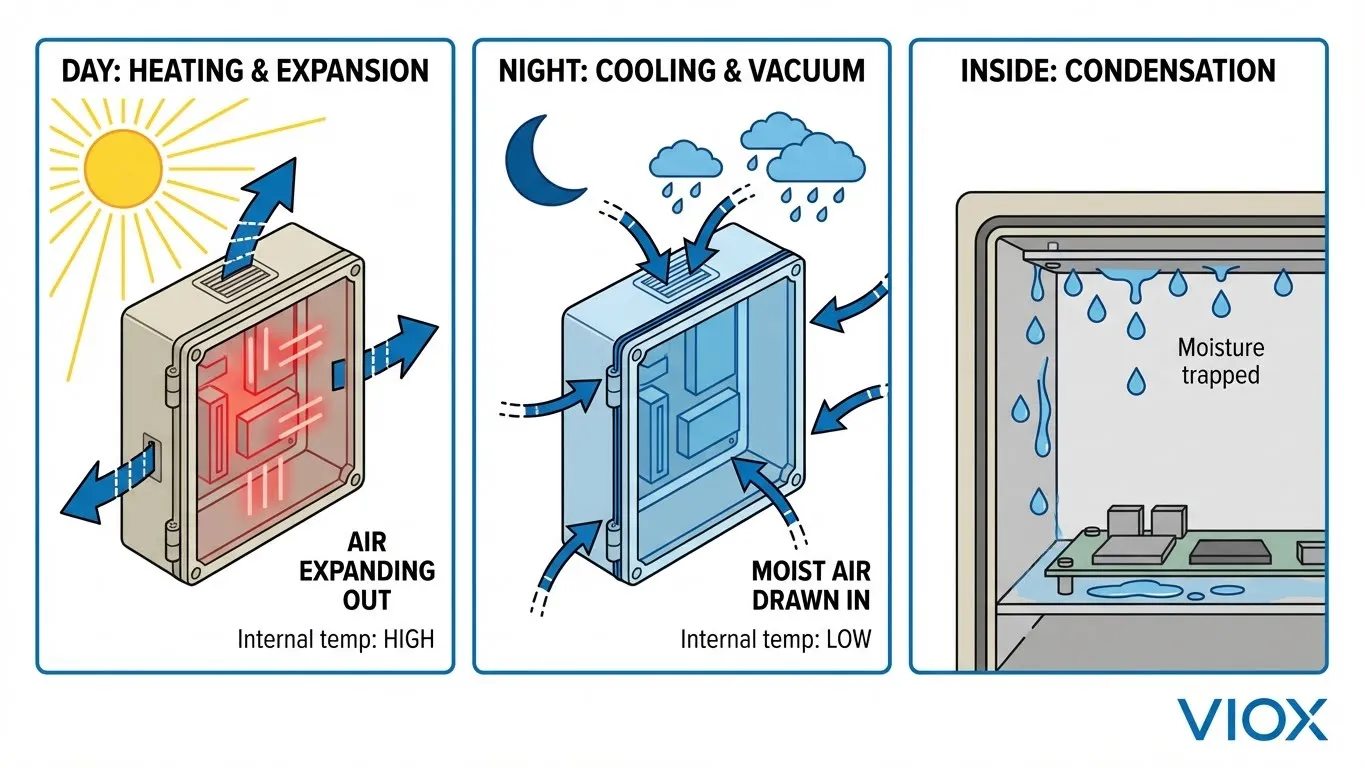
Condensation is the silent killer of outdoor electrical infrastructure. You can spec an IP68 enclosure, seal every gasket perfectly, and still find water pooling inside your panel after a cold night. Why? Because standard sealing keeps water out, but it also traps moisture in. As internal temperatures fluctuate, pressure differentials create a vacuum effect, sucking moist air through the microscopic gaps in seals—a phenomenon known as “sweating.”
To combat this, engineers typically rely on two primary solutions: Breather Vent Plugs များ နှင့် အသက်ရှူနိုင်သော ကေဘယ်ဂလင်းများ. Both utilize ePTFE membrane technology to equalize pressure and block water ingress, but they serve different design needs. This guide compares these two critical components to help you determine which is best for your specific application.
သော့ထုတ်ယူမှုများ
- လုပ်ဆောင်နိုင်စွမ်း: Breather Plugs are dedicated venting devices offering higher airflow rates, while အသက်ရှူနိုင်သော ကေဘယ်ဂလင်းများ combine cable strain relief with venting in a single unit.
- အာကာသစွမ်းဆောင်ရည်: Breathable cable glands are ideal for compact enclosures where surface area is limited, as they do not require a separate knockout hole.
- Airflow Capacity: For large enclosures (>50 liters) or high-heat generating equipment, breather plugs are superior due to larger membrane surface areas.
- ပြန်လည်ပြင်ဆင်ခြင်း။: Breather plugs are easier to retrofit into existing panels by drilling a simple hole, whereas replacing standard glands with breathable ones requires disconnecting cables.
- ကုန်ကျစရိတ်: A breathable cable gland is generally more cost-effective than buying a standard gland plus a separate vent plug.
- Best Practice: For critical infrastructure, correct sizing based on enclosure volume and temperature delta is more important than the choice of device type.
Understanding Condensation in Electrical Enclosures
Before selecting a solution, it is crucial to understand the physics of the problem. Electrical enclosures are rarely static environments. During the day, internal components (like VFDs, transformers, or solar inverters) generate heat, causing the air inside to expand and push out. At night, or during a sudden rainstorm, the enclosure cools rapidly.
This cooling creates a vacuum (negative pressure) inside the box. If the enclosure is perfectly sealed (airtight), this pressure stress can eventually compromise gaskets. More commonly, the vacuum draws external air in through the path of least resistance—often the cable seals. Once this moist air enters and hits the cold walls of the enclosure, it condenses into liquid water. Over time, this leads to corrosion, short circuits, and premature failure of sensitive electronics.
To prevent this, the enclosure must “breathe.” It needs to equalize pressure instantly to prevent the vacuum from forming, while maintaining a barrier against liquid water and dust.
Breather Vent Plug ဆိုတာဘာလဲ။
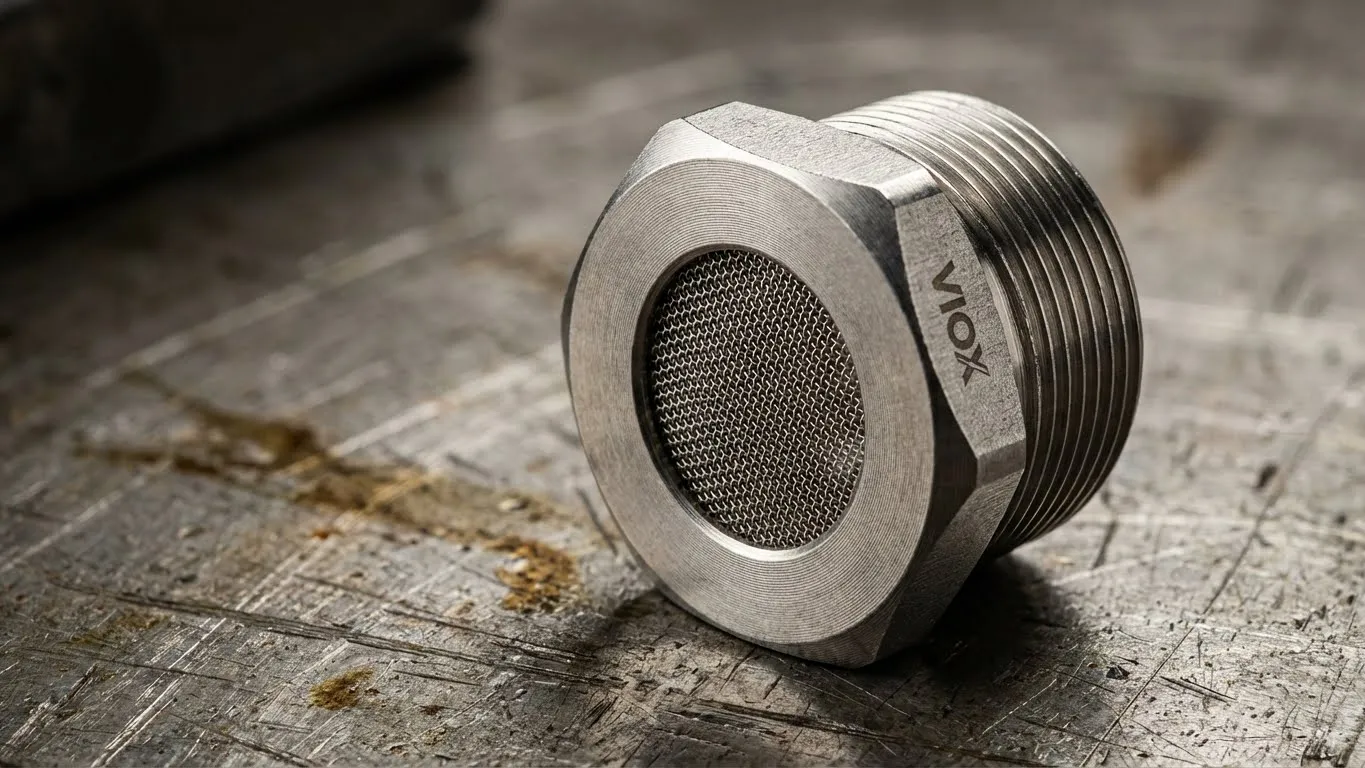
တဲ့ ထိုင္တတ္ျပေါက်အဆို့ (also known as a pressure compensation element) is a dedicated device designed solely to equalize pressure and manage moisture. It typically consists of a threaded body (metallic or nylon) housing a hydrophobic/oleophobic ePTFE membrane.
How It Works
The membrane allows gas molecules (air and water vapor) to pass through freely, ensuring the internal pressure matches the external pressure. However, the membrane’s pore size is small enough to block water droplets, dust, and salts, maintaining IP67 or IP68 ratings.
အဓိကလက္ခဏာများ
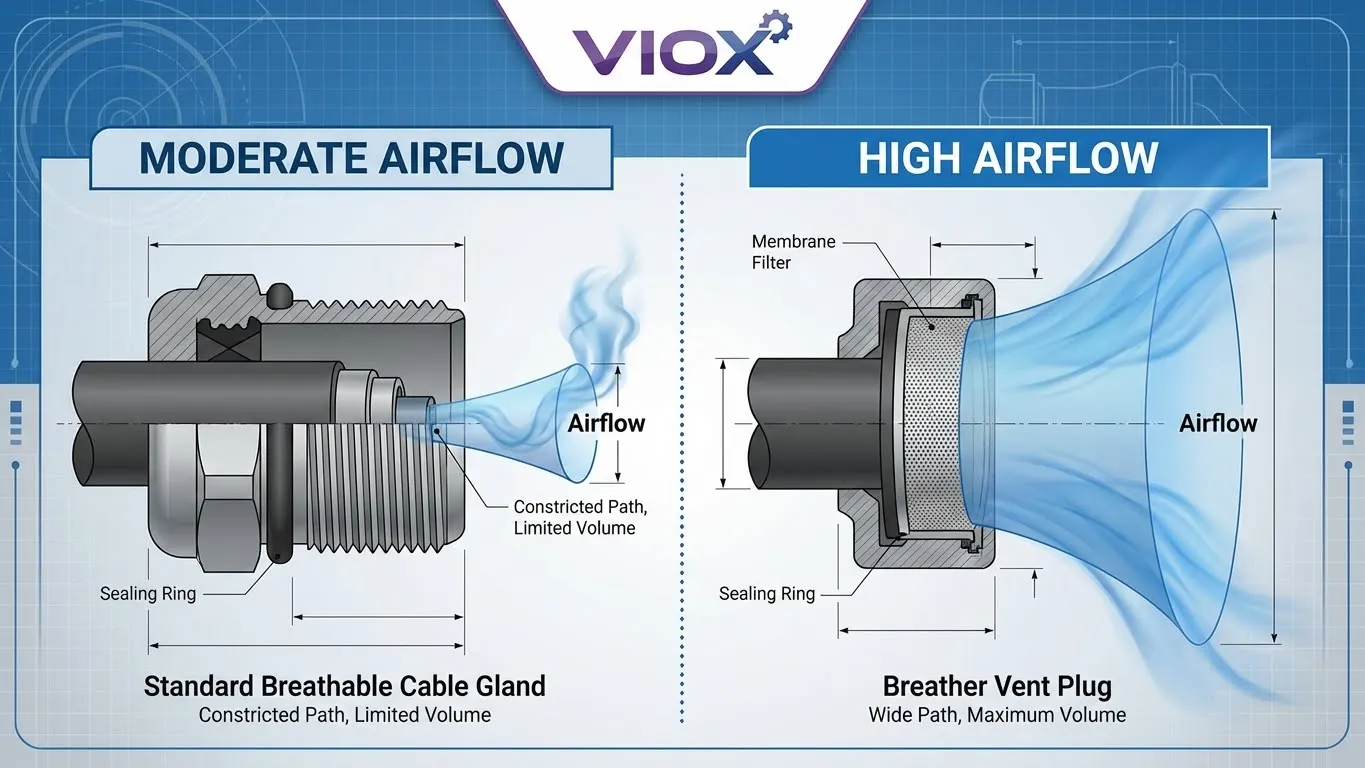
- High Airflow: Because the entire center of the plug is dedicated to the membrane, it typically offers higher airflow rates (measured in ml/min at a specific pressure differential) compared to glands.
- Versatile Mounting: Can be installed on the side or top of an enclosure, though side mounting is preferred to prevent water pooling on the membrane.
- ပစ္စည်းရွေးချယ်မှုများ: Available in Stainless Steel (304/316) for marine environments, Nickel-Plated Brass for general industrial use, and Nylon/Polyamide for cost-sensitive applications.
What is a Breathable Cable Gland?
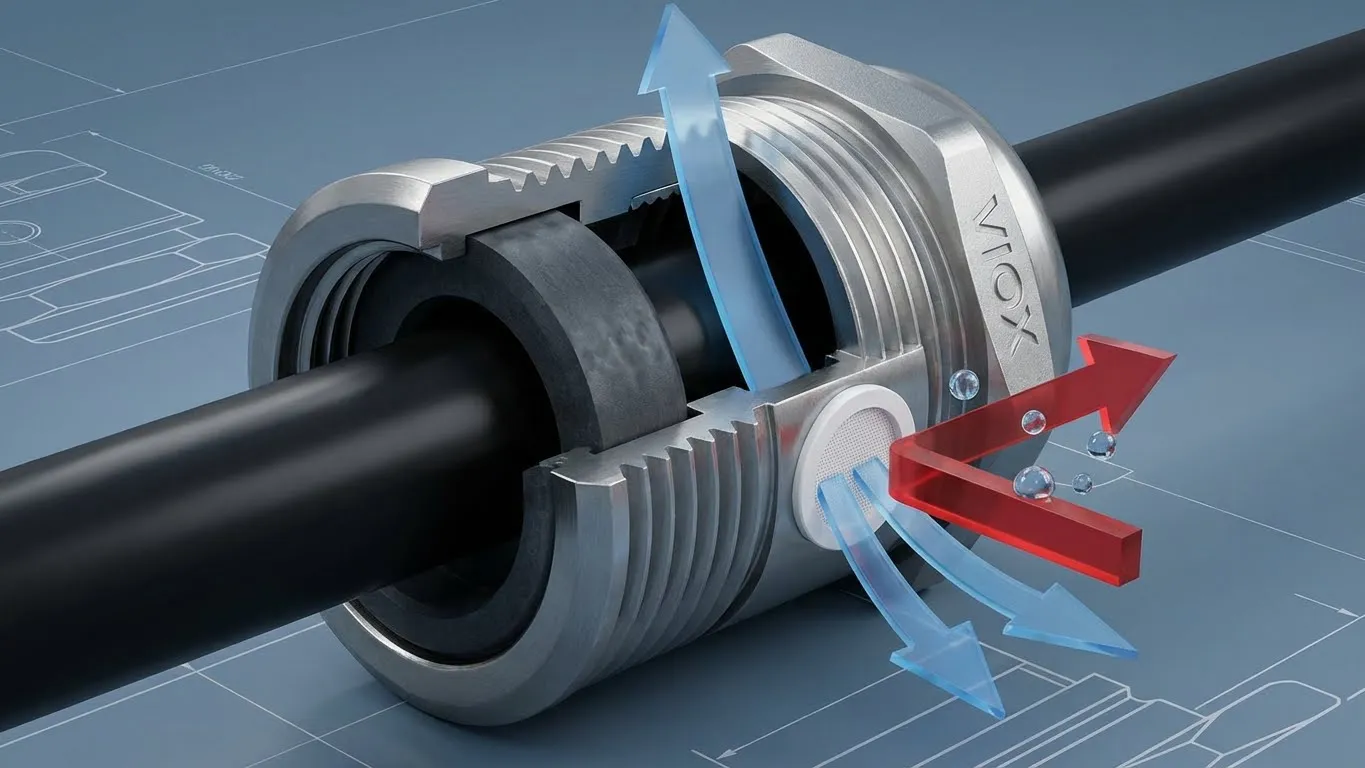
တဲ့ တြယ္ကပ္ႏိုင္ေသာတိပ္ၾကိဳးျဂလင်း is a hybrid component. It performs the standard functions of a cable gland—securing the cable (strain relief) and sealing the entry point—while incorporating a ventilation element within the gland body.
How It Works
The ventilation membrane is usually integrated into the side of the gland body or the clamping nut. This allows air to bypass the cable seal and flow in and out of the enclosure through the gland itself.
အဓိကလက္ခဏာများ
- Space Saving: Eliminates the need for a separate hole for a vent plug. This is critical in small junction boxes or LED lighting fixtures where surface area is premium.
- တပ်ဆင်ခြင်း စွမ်းဆောင်ရည်: One component to install instead of two.
- Airflow Limitations: Due to the space taken up by the cable and the sealing mechanism, the membrane area is generally smaller than that of a standalone vent plug, resulting in lower airflow rates.
Breather Plug vs. Breathable Cable Gland: Detailed Comparison
For engineers deciding between these two options, the choice often comes down to enclosure volume, available space, and airflow requirements.
| အင်္ဂါ | ထိုင္တတ္ျပေါက်အဆို့ | တြယ္ကပ္ႏိုင္ေသာတိပ္ၾကိဳးျဂလင်း |
|---|---|---|
| Primary Function | Dedicated Pressure Equalization | Cable Sealing + Pressure Equalization |
| Airflow Capacity | မြင့် (Up to 1600+ ml/min) | အလယ်အလတ် (Typically 150-450 ml/min) |
| တပ်ဆင်ခြင်း။ | Requires separate knockout/hole | Uses existing cable entry point |
| နေရာလိုအပ်ချက် | Requires dedicated surface area | Zero additional surface area needed |
| ကုန်ကျစရိတ် | Moderate (Component + Drilling labor) | အနိမ့် (Saves cost of separate plug) |
| Retrofit Ease | မြင့် (Drill a hole anywhere) | Low (Must disconnect/rewire cables) |
| စက်ပိုင်းဆိုင်ရာ ကြံ့ခိုင်မှု | High (Solid body) | High (Standard gland retention) |
| ပြုပြင်ထိန်းသိမ်းမှု | Easy to replace without disturbing wiring | Requires cable removal to replace |
ခွဲခြမ်းစိတ်ဖြာခြင်း
- For High-Volume Enclosures: If you are working with a large free-standing cabinet (e.g., a traffic control box), a Breather Plug is superior. The volume of air that needs to expand/contract is significant, requiring the higher airflow capacity that a dedicated plug provides.
- For Compact Devices: In applications like outdoor sensors, CCTV cameras, or small လမ်းဆုံသေတ္တာများ, ၊ တြယ္ကပ္ႏိုင္ေသာတိပ္ၾကိဳးျဂလင်း is the winner. These devices often lack the physical space for a second hole, and the air volume inside is small enough that the gland’s lower airflow rate is sufficient.
When to Use a Breather Plug
You should specify a Breather Vent Plug when:
- High Airflow is Required: Large enclosures (>20 liters) or enclosures with heat-generating electronics (transformers, power supplies) experience rapid pressure changes requiring fast equalization.
- No Cables are Entering: Battery boxes or wireless enclosures (solar battery storage, Wi-Fi access points) may not have cable glands, or may use conduit connections where breathable glands aren’t applicable.
- Retrofitting Existing Panels: If you are fixing a condensation issue in the field, it is much faster to drill a new hole and install a plug than to disconnect wiring to swap out a cable gland.
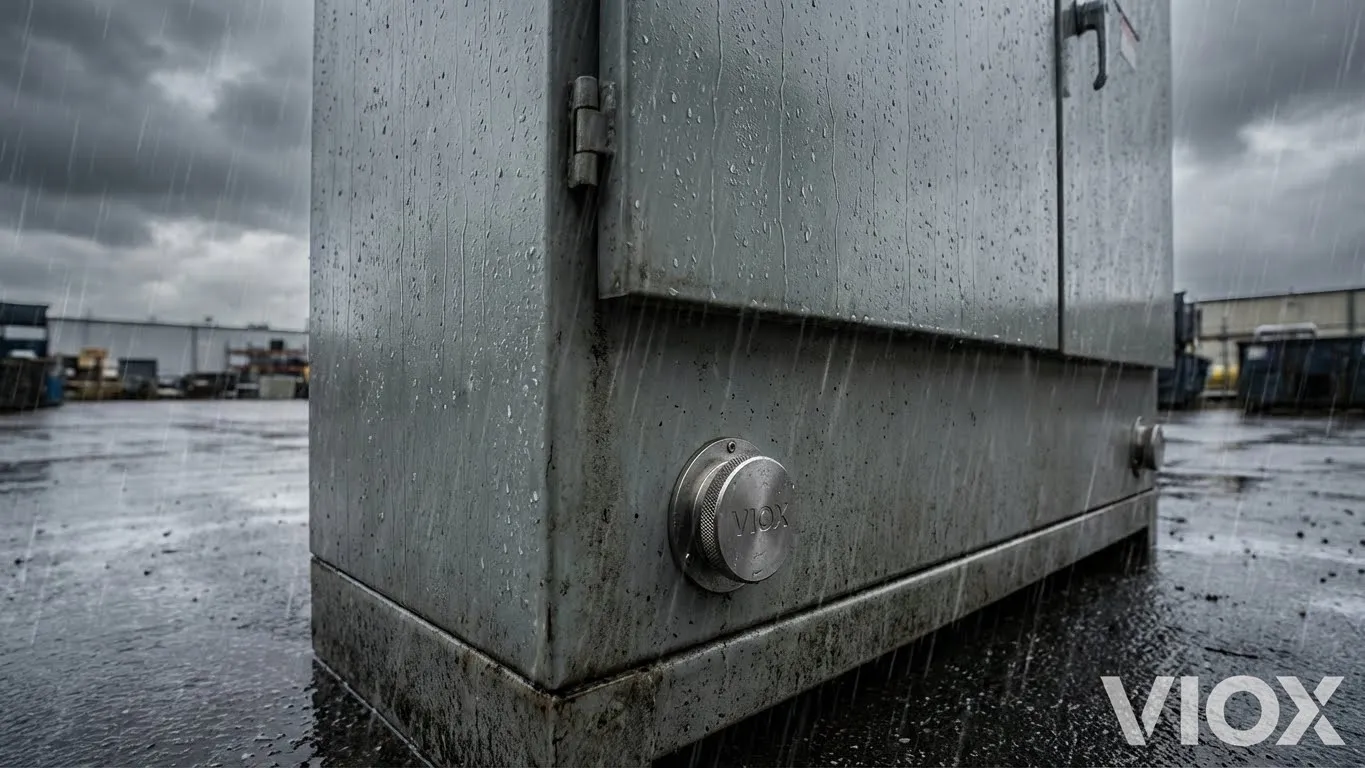
- Extreme Environments: In heavy wash-down or marine areas, having a dedicated, heavy-duty stainless steel vent plug often provides better durability and specific IP ratings (like IP69K) compared to standard breathable glands.
When to Use a Breathable Cable Gland
You should specify a Breathable Cable Gland when:
- Space is Limited: Small enclosures, LED light fixtures, and measuring instruments often have no room for an extra hole.
- Cost Efficiency is Priority: For high-volume OEM manufacturing, eliminating one part number (the plug) and one manufacturing step (drilling the extra hole) yields significant savings.
- New Designs: When designing a new product from scratch, integrating the vent into the cable entry is a cleaner, more elegant engineering solution.
- Low to Medium Air Volume: Ideal for enclosures under 10-20 liters where the pressure differential can be managed by the moderate airflow of the gland.
Can You Use Both Together?
Yes, and in some critical applications, it is recommended.
For very large enclosures or those in environments with extreme temperature swings (e.g., desert solar installations where temps go from freezing to 50°C+), a single breathable gland may not provide enough airflow to equalize pressure quickly enough. In these cases, engineers often use အသက်ရှူနိုင်သော ကေဘယ်ဂလင်းများ for all cable entries to maximize passive venting, and add a ထိုင္တတ္ျပေါက်အဆို့ (or multiple plugs) to ensure rapid equalization and cross-ventilation.
Using both can also provide a safety factor; if one vent becomes clogged with mud or debris, the other continues to function.
နည်းပညာဆိုင်ရာ သတ်မှတ်ချက်များ နှိုင်းယှဉ်မှု
| အင္တာနက္စာမ်က္ႏွာ | VIOX Breathable Gland (M20) | VIOX Breather Plug (M12) |
|---|---|---|
| ပစ္စည်း | Nickel-Plated Brass / Nylon PA66 | Stainless Steel 316 / Brass |
| Membrane Type | Hydrophobic ePTFE | Hydrophobic/Oleophobic ePTFE |
| IP အဆင့်သတ်မှတ်ချက် | IP68 (0.6 bar) | IP68 (1.5 bar) / IP69K |
| ရိုးရိုးလေစီးဆင်းမှု | > 150 ml/min @ 70mbar | > 1,600 ml/min @ 70mbar |
| အပူချိန်အကွာအဝေး | -40°C မှ +100°C | -40°C to +120°C |
| ခရမ်းလွန်ရောင်ခြည်ခုခံမှု | High (Black Nylon / Metal) | Excellent (Metal) |
| Thread Sizes | M12 – M63 | M6 – M40 |
FAQ Section
Q: Can I just drill a small hole at the bottom of the enclosure instead of using these products?
A: This is a common “hack,” but it destroys your IP rating. A drilled hole lets in dust, insects, and moisture. VIOX breather products allow air to pass while blocking contaminants, maintaining the integrity of your enclosure.
Q: Do breathable cable glands reduce the cable holding force?
A: No. High-quality VIOX breathable glands are engineered to maintain the same strain relief and cable retention force as our standard ကေဘယ်ဂလင်းများ, complying with EN 62444 standards.
Q: How do I size a breather plug for my enclosure?
A: A general rule of thumb is to provide enough airflow to equalize the pressure created by a 10°C temperature drop within a reasonable time. For most enclosures up to 100 liters, one standard M12 vent plug is sufficient. Larger cabinets may require M32 plugs or multiple units.
Q: Are these membranes resistant to chemicals?
A: Yes, the ePTFE membrane is chemically inert and resistant to most common industrial chemicals, UV radiation, and salt spray. However, for specific chemical environments, consult the VIOX technical datasheet.
Q: Can I paint over the breather plug?
A: No. Painting the plug will block the membrane pores, rendering it useless. If you paint the enclosure, mask the plug or install it after painting.
နိဂုံး
Both Breather Plugs and Breathable Cable Glands are essential tools in the fight against condensation. The choice isn’t about which technology is “better,” but which fits your application’s constraints.
- ရွေးချယ်ပါ တြယ္ကပ္ႏိုင္ေသာတိပ္ၾကိဳးျဂလင်း for compact, space-constrained devices and cost-sensitive OEM production runs where air volume is low.
- ရွေးချယ်ပါ ထိုင္တတ္ျပေါက်အဆို့ for larger industrial cabinets, high-heat applications, or when retrofitting existing equipment that needs maximum airflow.
By correctly implementing these ventilation strategies, you extend the lifespan of your electrical components and reduce costly maintenance call-outs.
For more information on enclosure protection, explore our guides on IP67 နှင့် IP68 နှင့် Electrical Enclosure Material Selection.