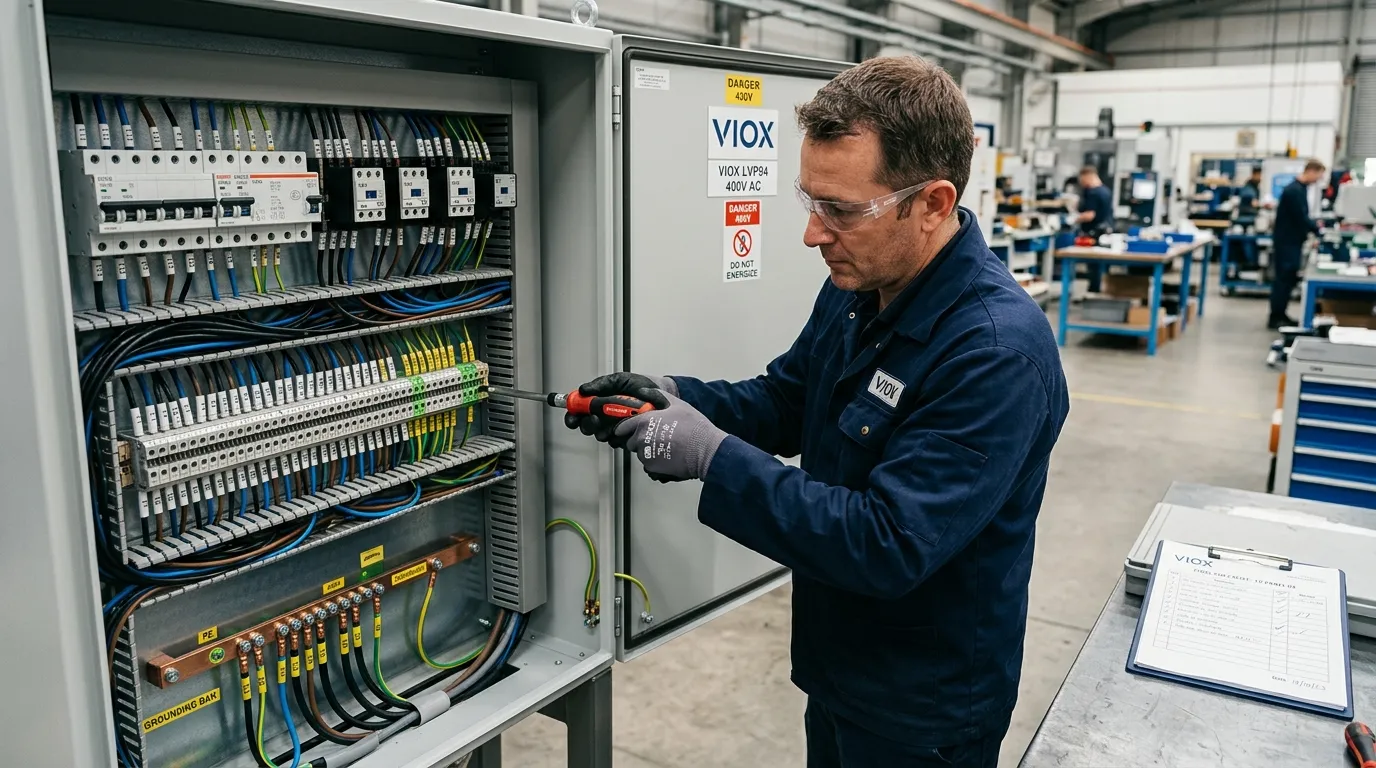
Sebuah panel listrik dapat terlihat lengkap, bersih, dan dirakit secara profesional namun tetap mengandung kesalahan yang cukup serius untuk menyebabkan tripping yang mengganggu, panas berlebih, kegagalan kontrol, penundaan commissioning, atau energisasi yang tidak aman. Itulah mengapa inspeksi akhir sebelum energisasi sangat penting. Bagi perakit panel, ini adalah titik di mana pengerjaan, dokumentasi, pemilihan komponen, dan disiplin kepatuhan bertemu.
Tujuan dari inspeksi pra-energisasi bukan hanya untuk “melihat sekali lagi.” Tujuannya adalah untuk memastikan bahwa panel yang dibuat sesuai dengan maksud proyek, bahwa kualitas pemasangan dan perakitan dapat diterima, dan bahwa risiko listrik dan mekanik yang jelas telah dihilangkan sebelum daya diterapkan.
Artikel ini mengambil pandangan global yang berorientasi pada standar. Artikel ini tidak memperlakukan kode satu negara sebagai universal. Sebaliknya, artikel ini berfokus pada kesalahan yang umumnya menimbulkan masalah di seluruh pekerjaan perakitan panel tegangan rendah dan menjelaskan bagaimana perakit panel harus mengevaluasinya terhadap spesifikasi proyek, instruksi pabrikan, persyaratan berbasis IEC yang berlaku, dan aturan lokal. Jika Anda memerlukan penyegaran tingkat komponen yang lebih luas sebelum mengerjakan kesalahan inspeksi, VIOX juga memiliki panduan komponen panel kontrol industri yang bermanfaat. panduan komponen panel kontrol industri.
Mengapa Kesalahan Pra-Energisasi Penting
Banyak kegagalan panel tidak disebabkan oleh masalah desain yang eksotis. Kegagalan tersebut berasal dari kesalahan sederhana namun berdampak tinggi yang seharusnya ditemukan sebelum energisasi:
- terminasi daya yang longgar yang terlalu panas saat diberi beban
- kabel kontrol yang mendarat di terminal yang salah
- pelabelan yang tidak sesuai dengan gambar
- kontinuitas pembumian yang tidak memadai
- segregasi yang tidak tepat antara sirkuit daya dan kontrol
- pengaturan perangkat proteksi yang tidak sesuai dengan aplikasi
Setelah panel diberi energi, kesalahan ini menjadi lebih mahal dan lebih berbahaya. Alih-alih menjadi masalah kualitas di bangku kerja, kesalahan ini dapat menjadi penundaan commissioning, kegagalan lapangan, komponen yang rusak, atau insiden keselamatan.
Itulah mengapa inspeksi pra-energisasi harus diperlakukan sebagai gerbang kualitas formal, bukan sekadar jalan-jalan santai.
Bagaimana Standar dan Spesifikasi Proyek Membentuk Inspeksi
Untuk pekerjaan panel global, adalah kesalahan untuk berasumsi bahwa satu daftar periksa cocok untuk setiap proyek. Dasar inspeksi harus berasal dari empat sumber:
- gambar dan daftar material yang disetujui
- spesifikasi proyek
- instruksi pabrikan komponen
- persyaratan lokal dan berbasis IEC yang berlaku untuk jenis dan aplikasi panel
Untuk rakitan tegangan rendah, banyak tim menggunakan IEC 61439 sebagai titik referensi latar belakang yang penting, terutama untuk konstruksi, logika verifikasi, dan disiplin perakitan. Namun bahkan kemudian, inspeksi praktis masih bergantung pada jenis panel yang tepat, persyaratan pelanggan, aturan pasar lokal, dan dokumentasi proyek yang disepakati.
Dengan kata lain, pertanyaan yang tepat bukanlah “Apa yang dikatakan satu standar secara terpisah?” Pertanyaan yang tepat adalah “Apakah panel yang dirakit ini sesuai dengan desain yang disetujui, instruksi komponen, dan persyaratan proyek dan pasar yang berlaku?”
Pola pikir itulah yang membantu perakit panel menangkap kesalahan berikut sebelum energisasi.
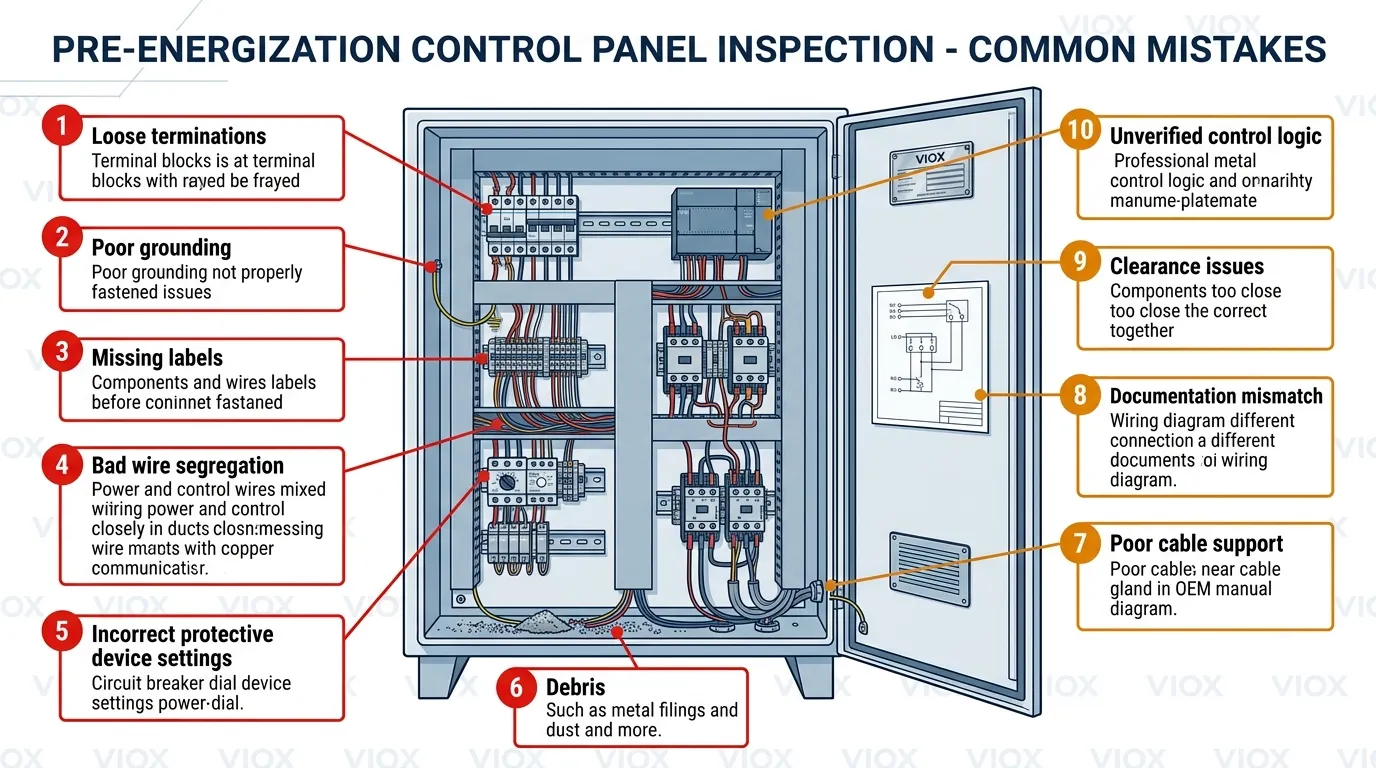
1. Dokumentasi Tidak Sesuai Dengan Pembuatan Aktual
Salah satu kesalahan panel listrik yang paling umum adalah ketidaksesuaian antara dokumentasi dan rakitan yang sudah selesai. Ini termasuk:
- nomor kabel yang tidak sesuai dengan skema
- perangkat ditempatkan berbeda dari gambar tata letak
- komponen yang diganti tidak tercermin dalam BOM
- penomoran terminal yang berbeda dari gambar
- perubahan logika kontrol yang dilakukan selama perakitan tetapi tidak pernah diperbarui dalam dokumen
Ini lebih dari sekadar masalah dokumen. Jika panel tidak sesuai dengan dokumentasi, pemecahan masalah menjadi lebih lambat, kesalahan commissioning meningkat, dan tim pemeliharaan mungkin membuat asumsi yang tidak aman di kemudian hari.
Sebelum energisasi, bandingkan pembuatan aktual dengan:
- diagram skematik
- gambar tata letak
- jadwal terminal
- daftar perangkat dan BOM
- status revisi
Tidak ada panel yang boleh beralih ke energisasi dengan perbedaan gambar-ke-pembuatan yang belum terselesaikan.
2. Terminasi Longgar Atau Tidak Dikencangkan Dengan Benar
Terminasi yang longgar tetap menjadi salah satu kesalahan perakit panel dengan risiko tertinggi karena panel dapat tampak normal hingga arus beban memperlihatkan kelemahan. Terminasi yang tidak diamankan dengan baik dapat menyebabkan:
- pemanasan lokal
- kerusakan isolasi
- Penurunan tegangan (voltage drop)
- gangguan intermiten
- kerusakan konduktor
- risiko kebakaran dalam kasus yang parah
Ini berlaku untuk:
- koneksi daya masuk dan keluar
- terminal pemutus dan kontaktor
- batang netral dan arde
- terminal kontrol
- transformator arus dan perkabelan bantu di mana kekencangan sangat penting
Inspeksi pra-energisasi yang tepat harus memastikan bahwa terminasi dikencangkan sesuai dengan instruksi yang relevan dan bahwa tidak ada konduktor yang menunjukkan tanda-tanda kerusakan untaian, penyisipan sebagian, atau tekanan mekanis.
3. Pembumian Atau Pengikatan Yang Tidak Memadai
Kesalahan pembumian dan pengikatan sering kali tersembunyi karena panel terlihat lengkap secara mekanis. Tetapi pengikatan yang tidak efektif dapat membahayakan kinerja gangguan, keselamatan enklosur, kontrol kebisingan, dan perilaku protektif.
Masalah umum meliputi:
- koneksi pengikatan yang hilang antara pintu dan enklosur
- cat atau perawatan permukaan yang mencegah pengikatan logam-ke-logam yang baik jika diperlukan
- terminasi arde pelindung yang longgar
- pendaratan konduktor pelindung yang salah
- asumsi bahwa perangkat keras pemasangan saja memberikan kontinuitas yang andal
Sebelum energisasi, perakit panel harus memverifikasi bahwa jalur arde pelindung ada, aman, dan konsisten dengan desain dan metode perangkat keras yang digunakan. Ini sangat penting dalam enklosur logam besar, rakitan multi-pintu, dan panel dengan pelat atau subrakitan yang dapat dilepas. Di mana tim masih membingungkan pengaturan arde dan netral dalam praktiknya, panduan VIOX untuk batang netral vs batang pembumian adalah referensi silang yang berguna.
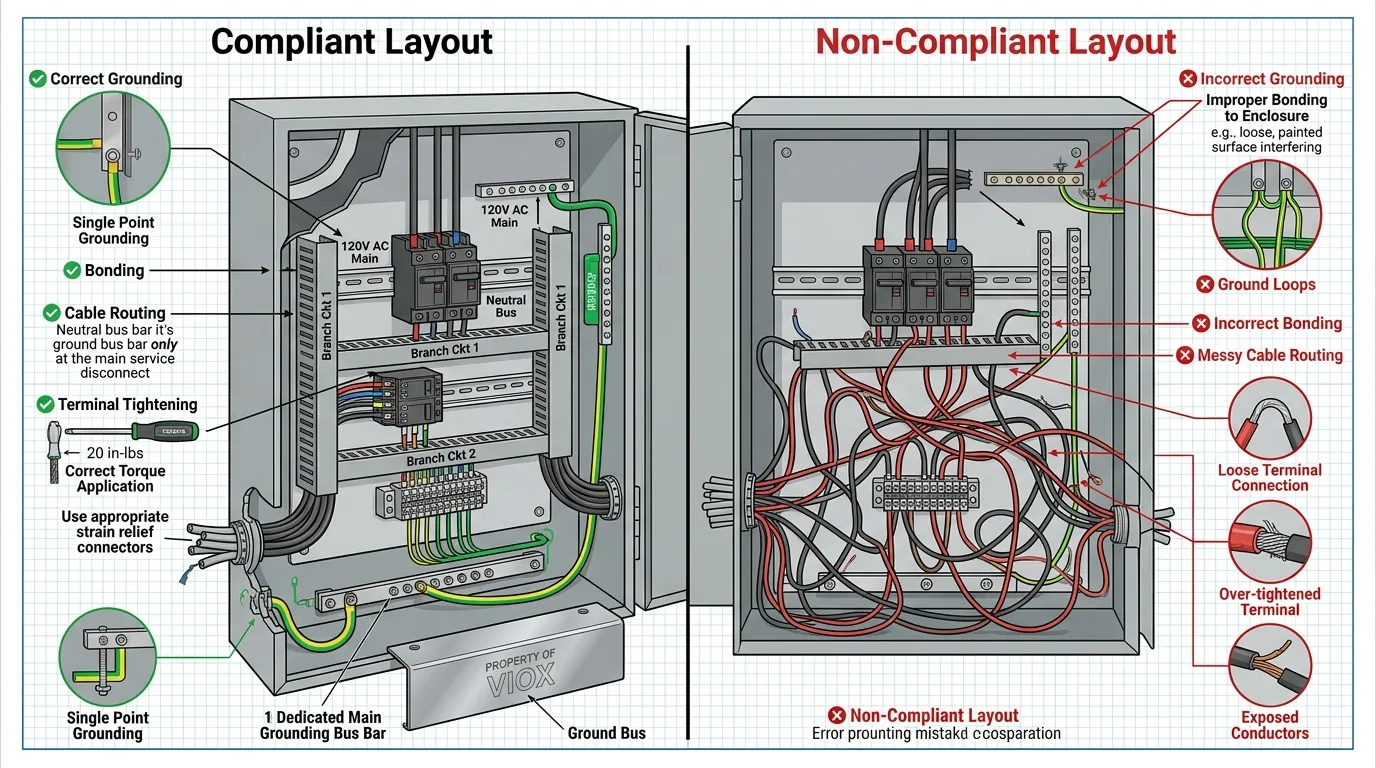
4. Pemisahan yang Buruk Antara Kabel Daya dan Kontrol
Mencampur kabel daya dan kontrol secara ceroboh adalah kegagalan inspeksi panel kontrol klasik. Hal ini dapat menciptakan kebisingan, kebingungan pemeliharaan, gangguan mekanis, dan kualitas pembuatan yang buruk yang menjadi lebih sulit untuk dipecahkan masalahnya di kemudian hari.
Masalah umum meliputi:
- konduktor kontrol yang dirutekan terlalu dekat dengan jalur daya arus tinggi tanpa pemisahan yang tepat
- kabel sinyal yang melintasi konduktor daya secara tidak perlu
- perutean campuran di dalam trunking tanpa disiplin
- pemisahan yang tidak memadai antara daya AC dan sirkuit kontrol atau komunikasi yang sensitif
- perutean yang padat yang membuat pemeliharaan di masa mendatang berisiko
Praktik pembuatan panel yang baik membutuhkan arsitektur perkabelan yang disengaja, bukan hanya membuat semuanya pas. Sebelum diberi energi, periksa apakah perutean, pemisahan, dan tata letak enklosur mendukung operasi dan pemeliharaan yang aman.
5. Pelabelan yang Hilang, Tidak Lengkap, Atau Membingungkan
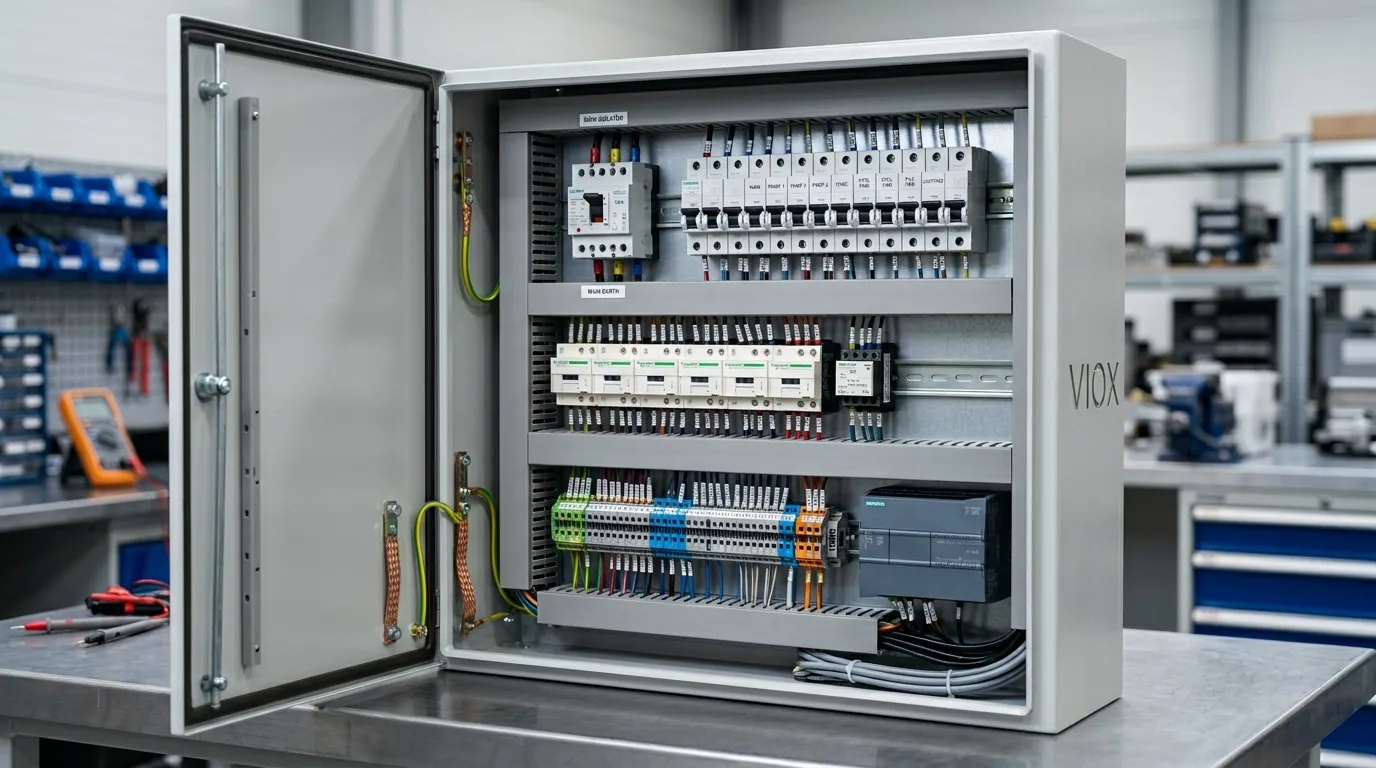
Masalah pelabelan mungkin tidak menghentikan panel dari pemberian energi, tetapi sering kali menciptakan kesalahan komisioning dan risiko pemeliharaan hampir seketika. Panel dengan pelabelan yang buruk lebih sulit untuk diperiksa, lebih sulit untuk diuji, dan jauh lebih mudah untuk salah penanganan.
Kegagalan pelabelan umum meliputi:
- tag perangkat yang hilang
- label yang tidak terbaca atau tidak tahan lama
- nomor kabel yang tidak lengkap atau tidak konsisten
- terminal lapangan tidak diidentifikasi dengan jelas
- perangkat pelindung kehilangan identifikasi sirkuit
- label peringatan dihilangkan jika diperlukan oleh proyek atau ekspektasi pasar
Sebelum diberi energi, pembuat harus memverifikasi bahwa label ada, terbaca, konsisten dengan gambar, dan cukup tahan lama untuk lingkungan instalasi. Ini menjadi lebih penting ketika pembuatan sangat bergantung pada marshalling dan titik distribusi, sehingga referensi terkait seperti panduan pemilihan blok terminal: jenis dan penggunaan dapat mendukung logika inspeksi.
6. Jarak Bebas dan Manajemen Creepage yang Tidak Memadai
Panel dapat gagal inspeksi karena jarak listrik diperlakukan sebagai renungan. Bahkan ketika komponen dipasang secara teknis, masalah jarak dapat menciptakan risiko keandalan dan keselamatan, terutama dalam pembuatan yang ringkas.
Penyebab umumnya meliputi:
- komponen dipasang terlalu rapat untuk kelas tegangan yang dimaksudkan
- bagian konduktif yang terbuka terlalu dekat dengan bagian hidup yang berdekatan
- pengaturan busbar atau terminal dengan disiplin jarak yang buruk
- perubahan desain terlambat yang mengurangi pemisahan tanpa peninjauan
- jalur kontaminasi yang membuat jarak marjinal menjadi lebih berisiko
Ini adalah salah satu alasan mengapa inspeksi berorientasi standar penting. Jarak bebas dan creepage bukanlah masalah kosmetik. Jika pengaturan fisik tidak sesuai dengan aplikasi, pemberian energi tidak boleh dilanjutkan sampai risiko diselesaikan. Untuk pembuatan dengan pengaturan busbar yang padat, artikel VIOX tentang 5 kesalahan teratas yang harus dihindari saat memasang busbar MCB adalah sumber daya tambahan yang berguna.
7. Pemilihan Atau Pengaturan Perangkat Pelindung yang Salah
Panel dapat dirakit dengan rapi dan tetap salah jika perangkat pelindung tidak sesuai dengan desain sirkuit yang sebenarnya. Contoh umum meliputi:
- peringkat pemutus yang salah untuk konduktor atau beban
- pengaturan pelindung tidak selaras dengan aplikasi
- substitusi komponen yang mengubah perilaku perlindungan
- kesalahpahaman peran perlindungan hubung singkat atau kelebihan beban
- pengaturan yang dapat disesuaikan dibiarkan pada nilai default tanpa peninjauan proyek
Ini adalah salah satu kesalahan panel listrik yang paling mahal karena mungkin tidak menjadi jelas sampai sistem trip secara tak terduga atau gagal melindungi peralatan dengan benar.
Sebelum diberi energi, tinjau baik perangkat pelindung yang dipasang maupun pengaturan yang dapat dikonfigurasi terhadap dasar desain yang disetujui. Untuk kerangka kerja pemilihan yang lebih luas, lihat VIOX kerangka kerja pemilihan perlindungan sirkuit untuk pembuat panel. Jika panel menggunakan perlindungan molded-case, artikel terkait 4 kesalahan spesifikasi MCCB kritis juga cocok secara alami di sini.
8. Puing-puing, Tepi Tajam, Atau Kontaminasi Tertinggal Di Dalam Panel
Beberapa kegagalan pra-energi tidak ada hubungannya dengan skema. Mereka berasal dari tata graha yang buruk dalam perakitan yang sudah selesai. Masalah umum meliputi:
- serbuk logam
- ikatan kabel potong longgar
- perangkat keras yang tidak digunakan tertinggal di dalam enklosur
- penumpukan debu
- insulasi yang rusak dari tepi panel yang tajam
- bahan asing di dekat busbar, terminal, atau jalur ventilasi
Ini adalah kesalahan yang dapat dihindari, tetapi masih terlalu sering muncul dalam situasi produksi atau pengerjaan ulang yang terburu-buru. Inspeksi panel yang tepat sebelum diberi energi harus mencakup kebersihan dan penyelesaian mekanis, bukan hanya pemeriksaan listrik. Pola pikir keandalan yang sama muncul dalam konten enklosur yang berdekatan seperti debu di switchgear dan keandalan listrik.
9. Perutean Kabel dan Dukungan Mekanis yang Buruk
Masalah perutean kabel sering diabaikan sebagai masalah penampilan, tetapi mereka dapat menjadi masalah keandalan dengan sangat cepat. Dukungan atau perutean yang buruk dapat menyebabkan:
- ketegangan pada terminal
- abrasi dari waktu ke waktu
- akses yang diblokir ke perangkat
- manajemen panas yang buruk
- akses pemeliharaan yang sulit
- peningkatan risiko kesalahan pemasangan kabel selama modifikasi di masa mendatang
Periksa:
- jalur konduktor yang tidak didukung
- tekanan tekuk berlebihan
- disiplin pengisian trunking yang buruk
- kabel yang dialihkan melintasi ruang servis
- titik masuk tanpa dukungan atau perlindungan mekanis yang memadai
Panel yang sulit diperiksa dan sulit diservis seringkali merupakan panel dengan risiko tersembunyi. Di mana kualitas pemasukan dan penyegelan kabel adalah bagian dari pembuatan, artikel VIOX tentang masalah umum pemasangan kelenjar kabel adalah tautan pendukung yang relevan.
10. Logika Fungsional Belum Diverifikasi Sebelum Pemberian Energi
Tidak setiap kesalahan terlihat. Beberapa masalah paling serius berasal dari logika kontrol yang belum diperiksa terhadap urutan yang dimaksudkan.
Contohnya meliputi:
- interlock yang dipasang kabel secara tidak benar
- logika kontaktor atau relai tidak sesuai dengan skema
- rantai penghenti darurat tidak diverifikasi
- titik pensinyalan terbalik
- logika permisif hilang
- asumsi urutan otomatis tidak pernah diuji terhadap pembuatan
Ini tidak selalu memerlukan komisioning bertenaga penuh di bangku, tetapi memerlukan metode verifikasi yang jelas sebelum pemberian energi penuh. Jika logika belum diperiksa, panel belum benar-benar siap.
Daftar Periksa Pra-Pemberian Energi Praktis Untuk Pembuat Panel
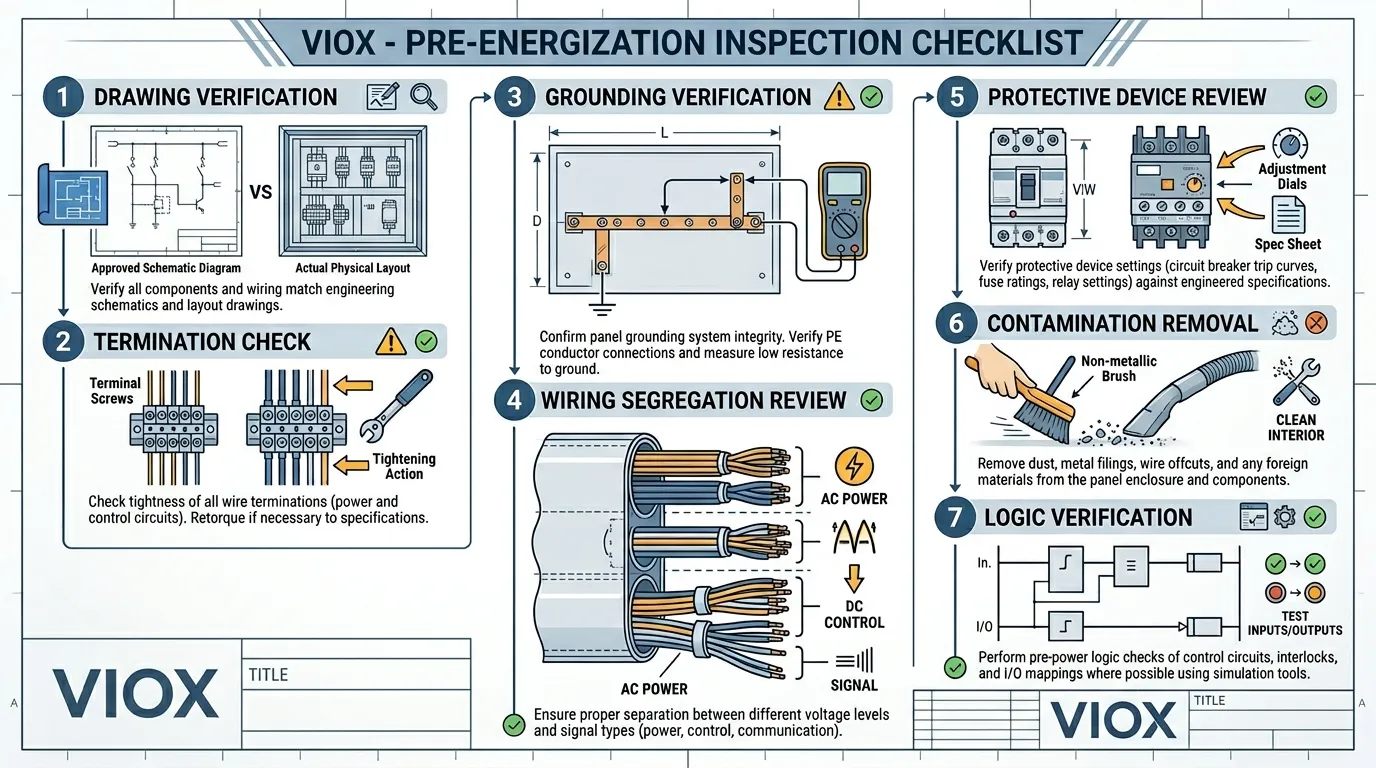
Jika Anda menginginkan ringkasan lantai toko yang dapat digunakan, ini adalah versi singkatnya:
- 1. Konfirmasikan panel sesuai dengan gambar dan BOM yang disetujui terbaru.
- 2. Verifikasi semua tag perangkat, nomor kabel, dan label terminal.
- 3. Periksa semua terminasi daya, netral, arde, dan kontrol.
- 4. Verifikasi titik kontinuitas pembumian dan pengikatan.
- 5. Periksa segregasi dan perutean kabel daya dan kontrol.
- 6. Tinjau jarak bebas, spasi, dan risiko bagian aktif yang terbuka.
- 7. Konfirmasikan pemilihan perangkat pelindung dan pengaturan yang dapat disesuaikan.
- 8. Singkirkan puing-puing, bahaya tajam, dan kontaminasi.
- 9. Periksa dukungan kabel, perlindungan masuk, dan hasil akhir mekanis.
- 10. Verifikasi logika kontrol dan interlock terhadap maksud desain.
Digunakan dengan benar, daftar periksa semacam ini mengurangi pengerjaan ulang, meningkatkan kualitas komisioning, dan membantu menciptakan budaya inspeksi yang dapat diulang di seluruh pembuatan panel.
Pemikiran Akhir
Pembuat panel terbaik bukanlah mereka yang tidak pernah membuat kesalahan. Mereka adalah orang-orang yang membangun proses disiplin untuk menemukan kesalahan sebelum pemberian energi. Dalam praktiknya, itu berarti menggabungkan pemeriksaan pengerjaan, tinjauan dokumentasi, verifikasi komponen, dan inspeksi yang sadar standar menjadi satu gerbang kualitas akhir.
Jika panel akan gagal, lebih baik gagal dalam inspeksi daripada gagal saat diberi daya.
PERTANYAAN YANG SERING DIAJUKAN
Apa kesalahan panel listrik yang paling umum sebelum diberi energi?
Ketidaksesuaian dokumentasi dan terminasi yang longgar adalah beberapa masalah yang paling umum. Yang satu menciptakan kebingungan dan risiko commissioning, sementara yang lain dapat menyebabkan panas berlebih dan masalah keandalan saat berbeban.
Haruskah inspeksi panel sebelum energisasi lebih fokus pada standar atau gambar teknis?
Keduanya harus digunakan. Gambar mendefinisikan panel seharusnya seperti apa, sementara standar dan persyaratan proyek membentuk bagaimana panel tersebut harus dibangun, diverifikasi, dan diperiksa.
Mengapa pelabelan sangat penting jika pengkabelan panel sudah benar?
Karena pemasangan kabel yang benar tanpa identifikasi yang tepat tetap menimbulkan risiko selama penyiapan, pemeliharaan, modifikasi, dan pemecahan masalah. Panel yang tidak dapat dibaca dengan jelas lebih mudah salah penanganan.
Apakah masalah jarak dan segregasi benar-benar seserius itu pada panel tegangan rendah?
Ya. Jarak yang buruk dan pemisahan yang buruk dapat memengaruhi keselamatan, kinerja kebisingan, keandalan, dan kemudahan pemeliharaan. Hal-hal ini tidak boleh dianggap sebagai masalah kosmetik.
Apakah panel boleh diberi energi jika hanya ada masalah dokumentasi kecil?
Itu tergantung pada aturan kualitas proyek dan sifat ketidaksesuaiannya. Secara umum, ketidakcocokan build-to-document yang belum terselesaikan harus ditutup sebelum energisasi karena hal itu menciptakan risiko hilir yang dapat dihindari.
Apa tujuan dari daftar periksa pra-energisasi?
Ini menciptakan proses inspeksi yang dapat diulang yang membantu perakit panel mendeteksi masalah kelistrikan, mekanis, dokumentasi, dan kepatuhan sebelum operasi aktif dimulai.