The $50,000 Cable Tie Mistake You Can’t Afford to Make
Picture this: You’re six months into commissioning a new offshore platform. Your instrumentation cables are neatly bundled with hundreds of stainless steel cable ties. Then the maintenance call comes in—half the ties have corroded through, cable bundles are sagging, and exposed wiring is shorting against metal conduit. The culprit? Those “316 stainless steel” ties you purchased at 40% below market price weren’t 316 grade at all. They were cheap knockoffs with fake grade stamps.

This scenario plays out more often than you’d think. In harsh industrial environments—petrochemical plants, wastewater treatment facilities, marine installations, or outdoor substations—cable ties are the unsung heroes holding your electrical infrastructure together. But when quality fails, the consequences cascade: equipment downtime, safety hazards, emergency repairs, and regulatory headaches.
Legfontosabb tanulság: A 50-cent cable tie can trigger a $50,000 system failure. In critical applications, the cost of poor-quality ties isn’t just replacement—it’s the catastrophic bundle collapse, damaged cables, and unplanned shutdowns that follow.
Why Cheap Stainless Steel Cable Ties Fail (And How to Spot Them)
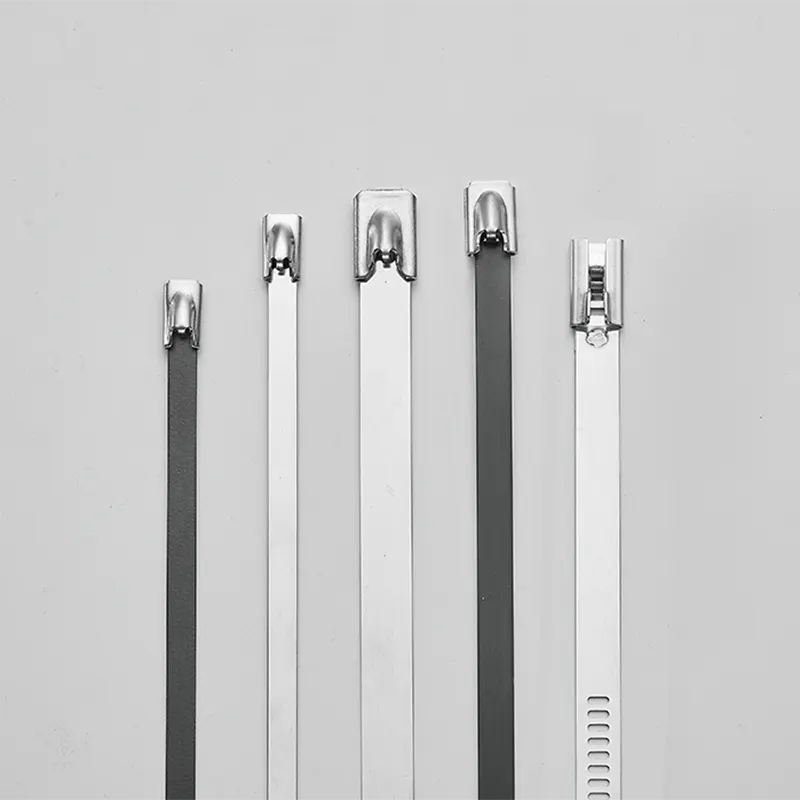
A stainless steel cable tie market is flooded with substandard products. Here’s why:
The Counterfeiting Problem: Unscrupulous manufacturers stamp “304” or “316” on low-grade steel alloys that contain insufficient chromium and nickel. Without proper metallurgical composition, these ties corrode rapidly when exposed to moisture, salt spray, or industrial chemicals. You can’t visually distinguish 201 stainless (a cheap substitute) from genuine 316—the difference only shows up months later when rust appears.
Manufacturing Shortcuts: Precision matters. Poorly manufactured ties have inconsistent thickness, rough-cut edges with burrs, and weak locking mechanisms. These defects cause three immediate problems: they damage cable insulation during installation, they slip under vibration, and they fail prematurely under load.
The Documentation Gap: The most dangerous aspect? Many suppliers provide no material traceability. Without mill test certificates or third-party verification, you’re gambling that the product matches its specification sheet.
For purchasing managers and electrical engineers, the challenge is clear: How do you separate genuine quality from convincing fakes before they’re installed across your facility?
The 5-Pillar Quality Verification Framework
High-quality stainless steel cable ties aren’t just about the grade stamp on the band—they’re the result of controlled metallurgy, precision manufacturing, and rigorous testing. Think of quality verification like inspecting a critical fastener: you wouldn’t bolt together a pressure vessel based solely on the manufacturer’s word. Cable ties deserve the same scrutiny.
Here’s your systematic approach to distinguishing premium ties from pretenders, structured into five verification checkpoints you can apply during the procurement process.
Step 1: Verify Material Grade and Demand Documentation
Before you even look at the tie itself, audit the paperwork.
Your first checkpoint isn’t physical—it’s documentary. Genuine manufacturers of 304 or 316 stainless steel ties provide mill test certificates (also called material test reports or MTRs) that trace the steel composition back to the original mill. These certificates specify the exact percentages of chromium (minimum 16-18% for 304, 16-18% for 316), nickel (8-10.5% for 304, 10-14% for 316), and molybdenum (2-3% for 316 only).
What to Request from Suppliers:
- Mill test certificates showing chemical composition analysis
- Grade markings visible on the tie body or head (not just the packaging)
- Country of origin documentation
- ISO 9001 or AS9100 certification for quality management
Legfontosabb tanulság: The material grade stamp is your first line of defense—but without mill test certificates, that ‘316’ marking could just be wishful thinking. Always request documentation before placing bulk orders.
Grade Selection by Application:
- 304 Stainless Steel: Suitable for indoor industrial environments, general manufacturing, and applications without significant chemical or marine exposure. Cost-effective for most installations.
- 316 Stainless Steel: The mandatory choice for coastal facilities, chemical plants, wastewater treatment, and any environment with chloride exposure or salt spray. The molybdenum content provides superior pitting resistance.
If the supplier hesitates to provide mill certificates or offers vague “certificates of conformance,” that’s your red flag to walk away.
Step 2: Inspect Physical Construction and Surface Finish
With documentation confirmed, now examine the tie itself—because quality shows in the details.
Hold a sample tie up to the light and run your finger along the band. Premium ties have a smooth, burr-free surface with consistent edges. The finish should be uniform, free from pitting, discoloration, or visible weld marks at the head-to-band connection.
Critical Inspection Points:
- Edge Quality: Precision-cut edges should be smooth without sharp burrs. Rough edges are like tiny razor blades—they’ll slice through cable insulation (especially PVC or polyethylene jacketing) during installation or when the bundle vibrates.
- Thickness Consistency: Use a micrometer to spot-check band thickness. High-quality 8mm × 0.5mm ties maintain dimensional tolerance within ±0.05mm. Inconsistent thickness indicates poor die maintenance and predicts slippage under load.
- Felületkezelés: Look for a bright, polished finish or a consistent matte appearance. Dull patches, rust specks, or discoloration suggest contamination during manufacturing or inadequate passivation treatment.
Legfontosabb tanulság: Smooth finish isn’t about aesthetics—burrs and rough edges will slice through cable insulation like a razor, creating short circuits months after installation. Inspect samples under magnification if possible.
Pro Inspection Tip: Bend the band gently. Quality stainless steel shows controlled elastic deformation and returns to shape. If it kinks, creases, or doesn’t spring back, the temper is wrong—indicating either poor material or improper heat treatment.
Step 3: Confirm Mechanical Strength Ratings and Test Data
Numbers on a datasheet mean nothing without third-party verification.
Tensile strength is the tie’s load-bearing capacity—its ability to hold cable bundles together under stress, vibration, and thermal expansion. For typical 8mm × 0.5mm stainless steel ties, legitimate manufacturers specify 300–500 N (30–50 kgf) minimum tensile strength. But here’s the critical question: Is this value tested or just claimed?
What to Demand:
- Third-Party Test Reports: Look for certified testing from independent labs (SGS, TÜV, UL) showing actual tensile test results. Self-certified data from the manufacturer’s in-house lab carries less weight.
- Batch Testing Records: Premium suppliers conduct regular batch testing and can provide statistical quality control data showing consistency across production runs.
- Test Standards Compliance: Verify testing follows recognized standards like IEC 62275 or UL 62275 for cable management systems.
Valós körülmények: Egy 400 N névleges kötés függőlegesen körülbelül 40 kg (88 font) súlyú kábelköteget képes rögzíteni. De ne válasszon kötegelőket maximális kapacitással – alkalmazzon 2:1 biztonsági tényezőt minimumot. Ha a kötege 20 kg, akkor legalább 400 N névleges kötéseket adjon meg, ne 200 N-t. A vibrációból, a termikus ciklusból és az ütésből származó dinamikus terhelések hatékonyan megszorozzák a statikus súlyt.
Legfontosabb tanulság: A szakítószilárdság nem csak egy szám – ez a biztosítási kötvénye a katasztrofális köteg összeomlása ellen. Mindig kérjen harmadik féltől származó vizsgálati jelentéseket, ne gyártói állításokat, és alkalmazzon megfelelő biztonsági tényezőket.
4. lépés: A reteszelő mechanizmus megbízhatóságának tesztelése
A legerősebb szalag értéktelen, ha a zár meghibásodik.
A reteszelő mechanizmus az, ahol sok olcsó kötés feltárja valódi minőségét. A prémium rozsdamentes acél kötések vagy golyós záras fejeket (egy rozsdamentes acél golyó kapcsolódik a szalagon lévő racsnis fogakhoz) vagy létraszerű reteszelő fejeket (összekapcsolódó horgok) használnak, amelyeket kifejezetten a vibráció okozta lazulás ellen terveztek.
A zár minőségének értékelése:
Szemrevételezés:
- Vizsgálja meg a rögzítőgolyót vagy a horgokat nagyítás alatt. Pontosan megmunkáltaknak kell lenniük, nem pedig durván sajtoltnak vagy öntöttnek.
- Ellenőrizze a sima működést – a szalagnak egyenletes ellenállással kell áthaladnia a fejen, nem pedig beakadnia vagy átugrania a fogakat.
Funkcionális tesztelés:
- Szerelje fel a kötegelőt egy tesztköteg köré, és szorosan húzza meg. Egy minőségi zár pozitívan “kattan” minden racsnis pozícióba.
- Gyakoroljon oldalirányú terhelést (próbálja meg elcsavarni vagy eltolni a felszerelt kötegelőt). A prémium zárak csúszás nélkül tartják a fogást.
- Ha lehetséges, tegye ki a tesztmintákat vibrációnak (egy egyszerű asztali satu és egy alternáló fűrész 5 percre szimulálja a szivattyú vagy a motor vibrációjának hónapjait). A minőségi kötések szorosan maradnak; az olcsók meglazulnak vagy eltörnek a fejnél.
Gyakori meghibásodási módok, amelyekre figyelni kell:
- Gyenge sajtolt fejek: Thin metal heads bend under torque and release the band
- Undersized or soft locking balls: They deform or pop out under sustained load
- Poor barb engagement: Ladder-style locks with shallow teeth slip during thermal expansion
Profi tipp: The locking mechanism should withstand repeated tightening cycles. Install and remove the same tie 3-4 times. If the lock becomes sloppy or the ratchet teeth show visible wear, durability is questionable.
Step 5: Validate Environmental Resistance and Compliance Certifications
The final test: Will these ties survive your actual operating environment?
Stainless steel ties aren’t universally corrosion-proof—their performance depends on the specific grade, surface treatment, and exposure conditions. Before specifying ties for outdoor, marine, or chemical environments, validate their environmental resistance credentials.
Corrosion Resistance Verification:
- Salt Spray Test Results: Request ASTM B117 salt spray test data. Quality 316 ties should endure 1,000+ hours without red rust formation. Anything less than 500 hours is unacceptable for marine or coastal use.
- Chloride Exposure Rating: If your facility handles chlorides (seawater, de-icing salts, bleach), only 316 grade offers adequate pitting resistance. 304 will fail prematurely.
Temperature and Environmental Ratings:
- Verify the rated temperature range. Quality stainless ties perform from -80°C to +538°C (-112°F to +1000°F), covering everything from cryogenic to exhaust system applications.
- For outdoor installations, confirm UV-állóság and flame ratings per UL 62275 or IEC 62275 standards.
Compliance Documentation:
- Industry Certifications: Look for third-party compliance marks:
- UL elismerés for electrical installations
- ISO 10993 biocompatibility for medical device cabling
- AS9100 certification for aerospace applications
- RoHS and REACH compliance for European installations
Legfontosabb tanulság: Third-party certifications aren’t paperwork overhead—they’re the only proof your ties will survive when salt spray, UV exposure, and temperature swings attack simultaneously. Without them, you’re trusting marketing claims, not metallurgical reality.
Environmental Selection Guide:
| Környezetvédelem | Minimum Grade | Critical Certifications |
|---|---|---|
| Indoor industrial, dry | 304 | ISO 9001, UL |
| Outdoor, non-marine | 304 | UV resistance, UL 62275 |
| Coastal/marine | 316 | Salt spray >1000 hrs, UL |
| Chemical processing | 316 | Chemical resistance data, RoHS |
| High-temperature | 316 | Temp rating verification |

The Bottom Line: Quality Pays for Itself
Distinguishing high-quality stainless steel cable ties comes down to systematic verification across five dimensions:
- ✓ Material certification: Insist on mill test certificates proving genuine 304/316 composition
- ✓ Manufacturing precision: Inspect for smooth, burr-free finish and consistent dimensions
- ✓ Mechanikai szilárdság: Demand third-party tensile test data with proper safety margins
- ✓ Lock integrity: Physically test the mechanism under load and vibration
- ✓ Környezetvédelmi megfelelés: Verify salt spray testing and industry certifications
Your Action Plan:
Before your next bulk purchase, request the following from every supplier:
- Mill test certificates with full chemical analysis
- Third-party tensile strength test reports
- Salt spray test results (for outdoor/marine use)
- Physical samples for inspection and testing
- Copies of relevant certifications (UL, ISO, etc.)
The price difference between premium and cheap stainless steel cable ties is typically 30-50%. But the cost difference between a successful installation and a catastrophic failure is 10,000%. In critical electrical infrastructure, cable ties aren’t commodity items—they’re reliability insurance.
Need help specifying the right stainless steel cable ties for your application? Contact certified suppliers who can provide complete documentation packages and technical support for your specific environment. The 15 minutes spent verifying quality now saves 15 hours of emergency troubleshooting later.