บล็อกของ

หมวดหมู่บล็อกของคุณ

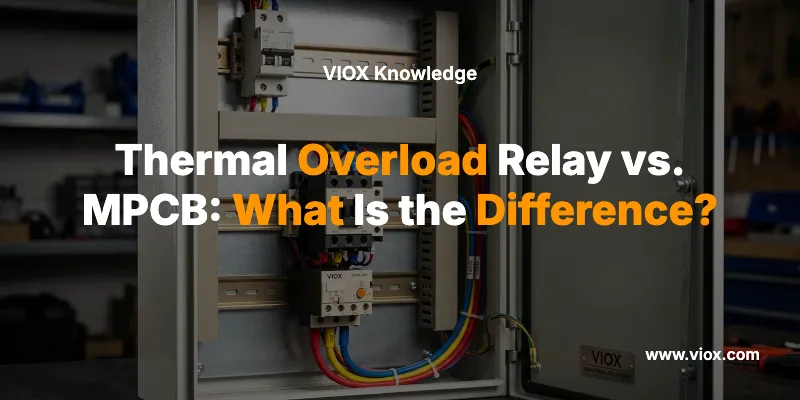
Thermal Overload Relay vs. MPCB: What Is the Difference?

โอเวอร์โหลดรีเลย์แบบใช้ความร้อนเทียบกับ MPCB: อะไรคือความแตกต่าง?

Direct Answer A thermal overload relay provides only overload protection for motors and must be paired with a separate circuit breaker for short-circuit protection, while a Motor Protection Circuit Breaker (MPCB) is an integrated device that combines overload protection, short-circuit protection, and often phase failure detection in a single compact unit. The key difference lies […]

โอเวอร์โหลดรีเลย์แบบใช้ความร้อนเทียบกับ MPCB: อะไรคือความแตกต่าง? อ่านเพิ่มเติม »
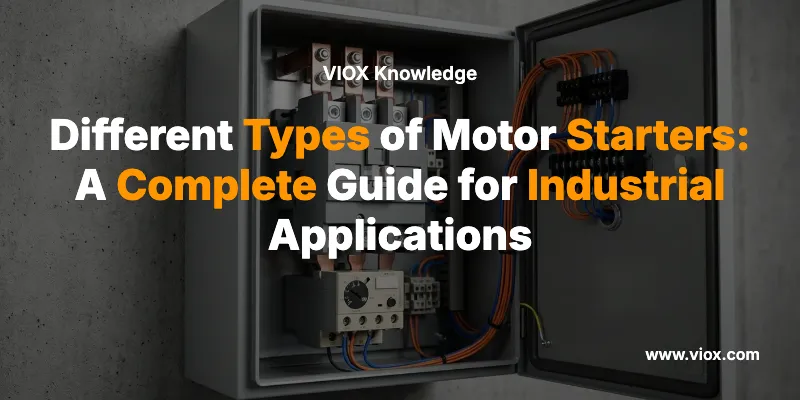
Different Types of Motor Starters: A Complete Guide for Industrial Applications

ประเภทต่างๆ ของสตาร์ทเตอร์มอเตอร์: คู่มือฉบับสมบูรณ์สำหรับการใช้งานในอุตสาหกรรม

Direct Answer: Motor starters are electrical devices that safely start, stop, and protect electric motors from damage. The five main types are Direct-On-Line (DOL) starters, Star-Delta starters, Soft Starters, Variable Frequency Drives (VFDs), and Auto-Transformer starters. Each type serves specific applications based on motor size, starting current requirements, and operational needs. DOL starters suit motors

ประเภทต่างๆ ของสตาร์ทเตอร์มอเตอร์: คู่มือฉบับสมบูรณ์สำหรับการใช้งานในอุตสาหกรรม อ่านเพิ่มเติม »

Crimping vs. Soldering: Why Solderless Connections Ensure Maximum Reliability

การย้ำหางปลาเทียบกับการบัดกรี: เหตุใดการเชื่อมต่อแบบไม่ใช้บัดกรีจึงมั่นใจได้ถึงความน่าเชื่อถือสูงสุด

Direct Answer Crimping delivers superior reliability over soldering in high-vibration, thermal cycling, and harsh-environment applications. While soldering creates a metallurgical bond through heat fusion, crimping establishes a gas-tight cold weld through mechanical compression—eliminating heat-affected zones, preventing solder embrittlement, and maintaining wire flexibility at stress points. Industry standards including SAE/USCAR-21, IEC 60352-2, and IPC/WHMA-A-620 mandate crimped

การย้ำหางปลาเทียบกับการบัดกรี: เหตุใดการเชื่อมต่อแบบไม่ใช้บัดกรีจึงมั่นใจได้ถึงความน่าเชื่อถือสูงสุด อ่านเพิ่มเติม »

MCCB Instantaneous Trip (Ii) Guide: 10In vs 12In for Motor & Distribution Protection

แนวทางการเลือกค่ากระแสตัดทันที (Ii) ของ MCCB: 10In เทียบกับ 12In สำหรับการป้องกันมอเตอร์และระบบจำหน่ายไฟฟ้า

Direct Answer For MCCB instantaneous trip settings, use 10In for distribution loads (lighting, receptacles, mixed circuits) and 12In for motor loads with direct-on-line starting. The instantaneous trip multiplier determines the current threshold at which your breaker trips immediately without delay. Setting it too low causes nuisance tripping during motor startup; setting it too high compromises

แนวทางการเลือกค่ากระแสตัดทันที (Ii) ของ MCCB: 10In เทียบกับ 12In สำหรับการป้องกันมอเตอร์และระบบจำหน่ายไฟฟ้า อ่านเพิ่มเติม »

Magnetic Blowout vs. Vacuum vs. SF6: The Physics of Arc Extinction Explained

การดับอาร์กด้วยสนามแม่เหล็กเป่า, สูญญากาศ และ SF6: หลักการทางฟิสิกส์เบื้องหลัง

Direct Answer Magnetic blowout, vacuum, and SF6 represent three fundamentally different approaches to arc extinction in circuit breakers. Magnetic blowout uses electromagnetic force to physically stretch and cool arcs in air (common in MCCBs and ACBs up to 6.3kA), vacuum technology eliminates the ionization medium entirely for rapid extinction in 3-8ms (ideal for 3-40.5kV systems),

การดับอาร์กด้วยสนามแม่เหล็กเป่า, สูญญากาศ และ SF6: หลักการทางฟิสิกส์เบื้องหลัง อ่านเพิ่มเติม »

Voltage vs. Current: Calculating Line Loss and Voltage Drop in Electrical Systems

แรงดันไฟฟ้าเทียบกับกระแสไฟฟ้า: การคำนวณค่าสูญเสียในสายและแรงดันไฟฟ้าตกในระบบไฟฟ้า

Direct Answer When you halve the distribution voltage while maintaining the same power output, the current doubles, and line losses increase by a factor of four. This occurs because power loss in conductors follows the I²R formula, where losses are proportional to the square of the current. For example, reducing voltage from 400V to 200V

แรงดันไฟฟ้าเทียบกับกระแสไฟฟ้า: การคำนวณค่าสูญเสียในสายและแรงดันไฟฟ้าตกในระบบไฟฟ้า อ่านเพิ่มเติม »

The Science of Passivation: Understanding How Chromium and Nickel Protect Stainless Steel Enclosures

วิทยาศาสตร์แห่งการสร้างชั้นปกป้อง: ทำความเข้าใจว่าโครเมียมและนิกเกิลปกป้องตู้สแตนเลสได้อย่างไร

Figure 1: A VIOX stainless steel enclosure demonstrating durability in a coastal industrial environment. Direct Answer: Why Stainless Steel Doesn’t Rust Stainless steel enclosures resist corrosion not because they are “noble” metals like gold or platinum, but through a dynamic protective mechanism called passivation. When stainless steel containing at least 12% chromium is exposed to

วิทยาศาสตร์แห่งการสร้างชั้นปกป้อง: ทำความเข้าใจว่าโครเมียมและนิกเกิลปกป้องตู้สแตนเลสได้อย่างไร อ่านเพิ่มเติม »

Understanding I²t: How to Read and Apply Circuit Breaker Permissible Energy Curves

ทำความเข้าใจ I²t: วิธีอ่านและประยุกต์ใช้กราฟพลังงานที่ยอมให้ของเซอร์กิตเบรกเกอร์

Direct Answer The I²t (permissible energy) curve of a circuit breaker shows the thermal energy that passes through during fault interruption. Reading this curve is straightforward: locate your prospective short-circuit current on the X-axis, trace upward to intersect the breaker’s curve, then read the corresponding I²t value on the Y-axis. This value must be less

ทำความเข้าใจ I²t: วิธีอ่านและประยุกต์ใช้กราฟพลังงานที่ยอมให้ของเซอร์กิตเบรกเกอร์ อ่านเพิ่มเติม »

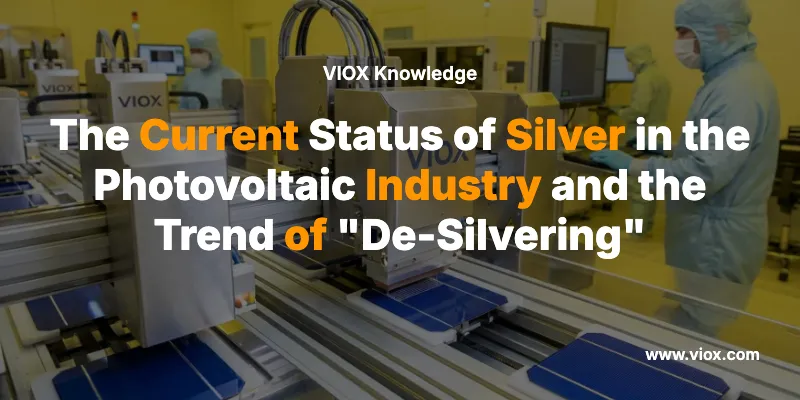
The Current Status of Silver in the Photovoltaic Industry and the Trend of "De-Silvering"

สถานะปัจจุบันของเงินในอุตสาหกรรมเซลล์แสงอาทิตย์และแนวโน้มของ “การลดการใช้เงิน”

Figure 1: Automated screen-printing equipment applying silver paste to solar cells in a modern photovoltaic manufacturing facility. Direct Answer: Silver consumption in the photovoltaic industry reached approximately 6,146 tons in 2024, accounting for 17% of global silver demand. However, soaring silver prices—which surged over 170% in 2025 to exceed $80 per ounce—are driving manufacturers toward

สถานะปัจจุบันของเงินในอุตสาหกรรมเซลล์แสงอาทิตย์และแนวโน้มของ “การลดการใช้เงิน” อ่านเพิ่มเติม »

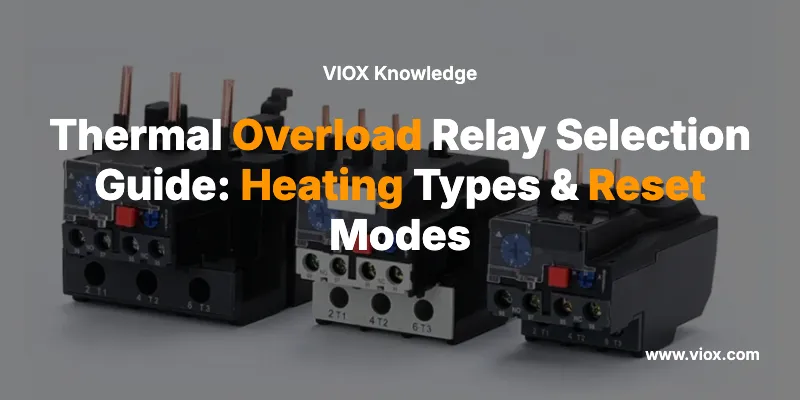
Thermal Overload Relay Selection Guide: Heating Types & Reset Modes

คู่มือการเลือกใช้โอเวอร์โหลดรีเลย์ความร้อน: ประเภทความร้อนและโหมดรีเซ็ต

Figure 1: VIOX bimetallic thermal overload relays designed for precise three-phase motor protection. Why Heating Methods Matter for Motor Protection Selecting the right thermal overload relay requires understanding two critical factors: the heating element technology and the reset mechanism. The heating method determines response accuracy and thermal memory characteristics, while the reset mode affects maintenance

คู่มือการเลือกใช้โอเวอร์โหลดรีเลย์ความร้อน: ประเภทความร้อนและโหมดรีเซ็ต อ่านเพิ่มเติม »

ขอใบเสนอราคาทันที