2025

How to Know *Why* a Breaker Tripped: An Engineer's Guide (Overload vs. Short Circuit)

Jak rozpoznać *dlaczego* wyłącznik zadziałał: Poradnik inżyniera (Przeciążenie a zwarcie)

  Your breaker trips. You go to the panel and see that “rookie” indicator: the handle is stuck in the “middle” position (neither ON nor OFF). You know that it tripped. But now you have to be a “detective.” What was the “murder weapon”? The “Slow-Cook” (Overload): A “chronic suicide.” You plugged in a 10A […]

Jak rozpoznać *dlaczego* wyłącznik zadziałał: Poradnik inżyniera (Przeciążenie a zwarcie) Dowiedz się więcej »

What If You Force a Breaker "ON"? (The "Trip-Free" Safety You Don't Know You Have)

Co się stanie, jeśli wymusisz włączenie wyłącznika “ON”? (Bezpieczeństwo “Trip-Free”, o którym nie wiesz, że masz)

It’s the “Darwin Award” of electrical “hacks”: a circuit breaker keeps tripping, so a “clever” person jams a stick, a zip-tie, or even a lock on the handle to force it to stay “ON.” This sets up a terrifying thought experiment: what wins? The “Immovable Stick” or the “Unstoppable Short Circuit“? Does the breaker explode?

Co się stanie, jeśli wymusisz włączenie wyłącznika “ON”? (Bezpieczeństwo “Trip-Free”, o którym nie wiesz, że masz) Dowiedz się więcej »

“Panel wyłączników 101” dla profesjonalistów: Inżynier odpowiada na Twoje 4 najważniejsze pytania

You just bought a house. You’re staring at that gray metal “mystery box” in the garage or basement. It might even be humming. You’re afraid to touch it. This is your breaker panel, the “heart” of your home’s electrical system. But for most new homeowners, it’s an unlabeled “black box.” You’re afraid you’ll break something,

“Panel wyłączników 101” dla profesjonalistów: Inżynier odpowiada na Twoje 4 najważniejsze pytania Dowiedz się więcej »

How to Trace a Circuit: A Pro's Guide to "Breaker Finders" vs. "Tone Generators"

Jak śledzić obwód: Przewodnik profesjonalisty po “wyszukiwarkach wyłączników” a “generatorach tonów”

You open a 20-year-old, 480V panel. It’s an “archaeology dig.” The panel schedule is a “Jackson Pollock” of faded, cryptic, or just plain wrong labels. You need to find the one breaker for “Conveyor #3” to perform LOTO (Lock-Out Tag-Out). You can’t just “start flipping them”—not unless you want to shut down the entire production

Jak śledzić obwód: Przewodnik profesjonalisty po “wyszukiwarkach wyłączników” a “generatorach tonów” Dowiedz się więcej »

What is "Selectivity"? A Pro's Guide to Breaker Coordination (and Avoiding a "Fair Fight")

Co to jest “Selektywność”? Przewodnik profesjonalisty po koordynacji wyłączników (i unikaniu “uczciwej walki”)

An apprentice engineer asks, “My utility supply is 100A. Should my factory’s main breaker also be 100A?” First, let’s gently correct the terminology, as it reveals the “Master-level” secret. A factory main isn’t an “MCB” (a Miniature Circuit Breaker, the “household” kind). It’s an “MCCB“ (a Moulded Case Circuit Breaker) or an “ACB“ (an Air

Co to jest “Selektywność”? Przewodnik profesjonalisty po koordynacji wyłączników (i unikaniu “uczciwej walki”) Dowiedz się więcej »

Switchboard vs Switchgear: The Real Difference (It's Not Just Voltage)

Rozdzielnica vs Aparatura rozdzielcza: Prawdziwa różnica (To nie tylko napięcie)

To an apprentice, “Switchboard” and “Switchgear” sound the same: just two different words for the “big metal box with all the breakers.” To a professional, this is the difference between a House Cat and a Tiger. Confusing them can be an expensive—or even fatal—mistake. The common “rookie” answer is that “Switchgear is for high voltage,

Rozdzielnica vs Aparatura rozdzielcza: Prawdziwa różnica (To nie tylko napięcie) Dowiedz się więcej »

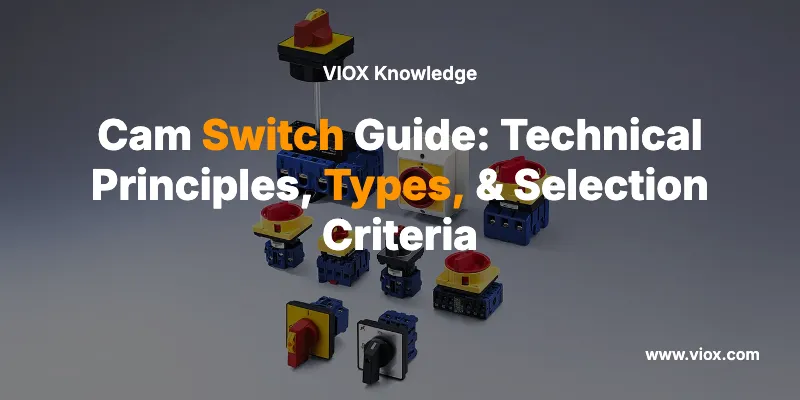
Cam Switch Guide: Technical Principles, Types, & Selection Criteria (2025)

Przewodnik po przełącznikach krzywkowych: Zasady techniczne, typy i kryteria wyboru (2025)

The plant goes down at 2 AM. Again. By the time you arrive, maintenance has already ruled out the VFD, checked the contactor, verified the relay ladder. The motor’s fine. The PLC’s fine. Everything’s fine except production has been halted for three hours and your plant manager is calculating lost revenue per minute. Then someone

Przewodnik po przełącznikach krzywkowych: Zasady techniczne, typy i kryteria wyboru (2025) Dowiedz się więcej »

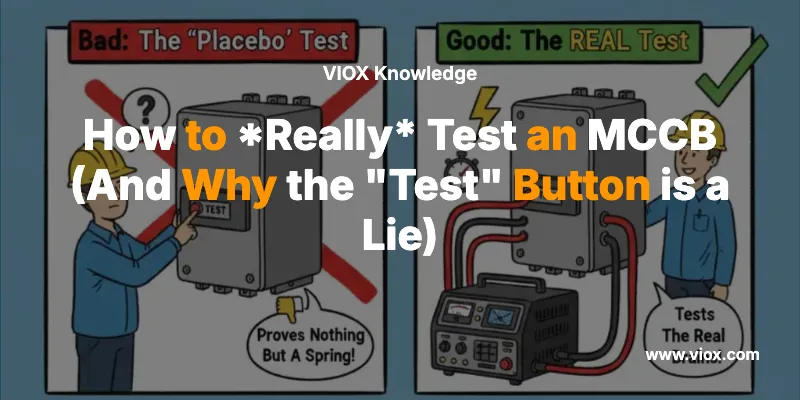
How to *Really* Test an MCCB (And Why the "Test" Button is a Lie)

Jak *Naprawdę* Testować Wyłącznik Kompaktowy (I Dlaczego Przycisk “Test” Jest Kłamstwem)

You’re on-site, in front of a giant 400A MCCB (Moulded Case Circuit Breaker) that acts as the “main gate” for a critical factory line. You need to “test” it. You see the little “Push-to-Trip” (PTT) button. You press it. CLUNK. The breaker trips. Your job is done, right? You’ve “tested” the breaker? No. You’ve done

Jak *Naprawdę* Testować Wyłącznik Kompaktowy (I Dlaczego Przycisk “Test” Jest Kłamstwem) Dowiedz się więcej »

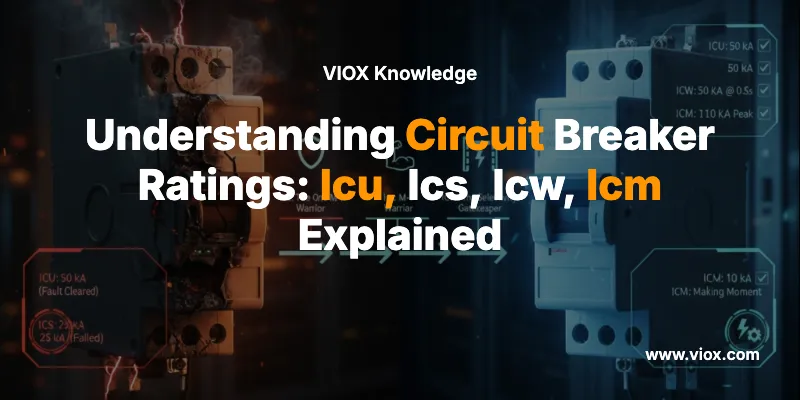
Understanding Circuit Breaker Ratings: Icu, Ics, Icw, Icm Explained

Zrozumienie parametrów znamionowych wyłączników automatycznych: Icu, Ics, Icw, Icm – objaśnienie

The spec sheet looked perfect. 50 kA Icu rating, well above your calculated 38 kA fault current. You signed off on the order, the breaker shipped, installation went smoothly. Three months later, a short circuit on the main distribution bus. The breaker cleared the fault in milliseconds—exactly as designed. But when your team powered back

Zrozumienie parametrów znamionowych wyłączników automatycznych: Icu, Ics, Icw, Icm – objaśnienie Dowiedz się więcej »

Poproś o Ofertę Już teraz