Blog

A blog kategóriád

Brownout vs. Blackout: What's the Difference and Which is More Dangerous for Your Appliances?

Feszültségcsökkenés vs. Áramszünet: Mi a különbség, és melyik veszélyesebb a készülékeidre?

Electrical engineer monitoring voltage levels during a brownout event in an industrial facility using VIOX equipment. Understanding Power Disruptions: The Critical Distinction When your lights flicker or go completely dark, you’re experiencing one of two distinct electrical phenomena: a brownout or a blackout. A brownout is a temporary voltage reduction (typically 10-25% below normal) where […]

Feszültségcsökkenés vs. Áramszünet: Mi a különbség, és melyik veszélyesebb a készülékeidre? Tovább "
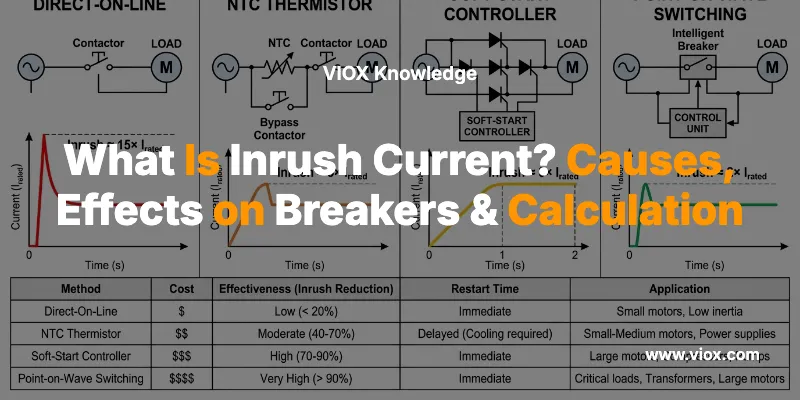

What Is Inrush Current? Causes, Effects on Breakers & Calculation

Mi az a bekapcsolási áram? Okai, hatásai a megszakítókra és számítása

Direct Answer Inrush current is the maximum instantaneous surge of electrical current drawn by an electrical device when it is first turned on. This transient current spike can reach 2 to 30 times the normal steady-state operating current, depending on the type of equipment. The phenomenon typically lasts from a few milliseconds to several seconds

Mi az a bekapcsolási áram? Okai, hatásai a megszakítókra és számítása Tovább "

When to Choose Electronic MCCB over Thermal-Magnetic?

Mikor érdemes elektronikus MCCB-t választani termikus-mágneses helyett?

Selecting between electronic and thermal-magnetic molded case circuit breakers isn’t about choosing “better” technology—it’s about matching protection capabilities to your specific application requirements. While thermal-magnetic MCCBs remain the workhorse of industrial protection due to their proven reliability and cost-effectiveness, electronic trip units deliver precision, flexibility, and intelligence that certain applications absolutely require. Understanding when that

Mikor érdemes elektronikus MCCB-t választani termikus-mágneses helyett? Tovább "

MCCB Accessories Guide: Understanding OF, SD, SDE, and SDV Contacts

MCCB Tartozékok Útmutató: Az OF, SD, SDE és SDV Érintkezők Értelmezése

VIOX MCCB with multiple auxiliary contact modules installed, showing terminal connections and modular design in industrial electrical panel What Are OF, SD, SDE, and SDV Contacts in MCCBs? OF, SD, SDE, and SDV contacts are auxiliary contact accessories for molded case circuit breakers (MCCBs) that provide remote status monitoring and control capabilities. OF contacts indicate

MCCB Tartozékok Útmutató: Az OF, SD, SDE és SDV Érintkezők Értelmezése Tovább "

Impact of EMI on Electronic MCCB Trip Units: Analysis & Mitigation

Az EMI hatása az elektronikus MCCB kioldóegységekre: Elemzés és csökkentés

Electronic trip units in molded case circuit breakers (MCCBs) can malfunction when exposed to electromagnetic interference, causing unexpected shutdowns that cost industrial facilities thousands of dollars per hour. This comprehensive guide examines how EMI affects electronic MCCB trip units, the underlying mechanisms of interference, and proven mitigation strategies to ensure reliable circuit protection in electromagnetically

Az EMI hatása az elektronikus MCCB kioldóegységekre: Elemzés és csökkentés Tovább "

Industrial Interface Relay Modules vs. Standard PCB Relays: A Selection Guide for Control Panels

Ipari interfész relémodulok vs. szabványos NYÁK relék: Választási útmutató vezérlőpanelekhez

When designing control panels for industrial automation, choosing between interface relay modules and standard PCB relays can significantly impact system reliability, maintenance costs, and long-term performance. Interface relay modules offer plug-and-play installation with built-in protection circuits and DIN-rail mounting, making them ideal for high-density panels requiring frequent maintenance. Standard PCB relays provide cost-effective solutions for

Ipari interfész relémodulok vs. szabványos NYÁK relék: Választási útmutató vezérlőpanelekhez Tovább "

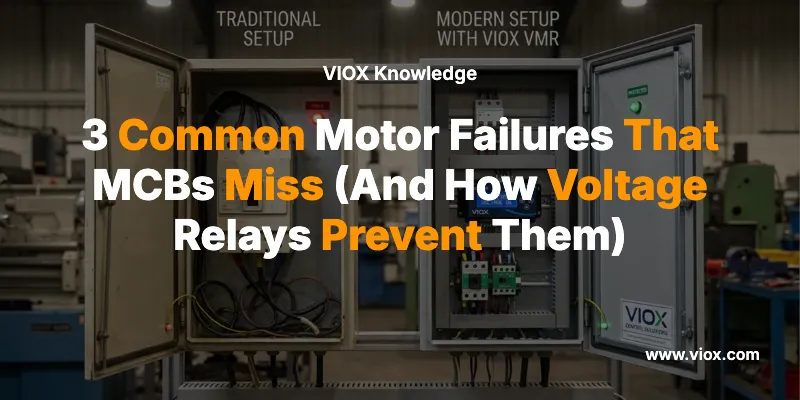
3 Common Motor Failures That MCBs Miss (And How Voltage Relays Prevent Them)

3 Gyakori motorhiba, amelyet az MCB-k nem észlelnek (és hogyan előzik meg őket a feszültségrelék)

Direct Answer Miniature Circuit Breakers (MCBs) protect against overcurrent and short circuits but miss three critical motor failures: phase loss (single phasing), phase asymmetry (voltage imbalance), and under/overvoltage conditions. These voltage-related faults cause 60-70% of industrial motor failures, yet MCBs—which monitor only current—cannot detect them until damage has already occurred. Voltage Monitoring Relays (VMRs) prevent

3 Gyakori motorhiba, amelyet az MCB-k nem észlelnek (és hogyan előzik meg őket a feszültségrelék) Tovább "

Switchgear Retrofit vs. Refurbish vs. Replace: A Cost-Benefit Analysis Guide

Kapcsolóberendezés korszerűsítése vs. felújítása vs. cseréje: Költség-haszon elemzési útmutató

Modern medium-voltage switchgear installation showing VIOX Electric equipment in industrial facility Direct Answer When facing aging switchgear, facility managers have three primary options: retrofit (upgrading internal components like circuit breakers while keeping the existing structure), refurbish (comprehensive maintenance and repair of existing equipment), or complete replacement (removing old equipment and installing new systems). The optimal

Kapcsolóberendezés korszerűsítése vs. felújítása vs. cseréje: Költség-haszon elemzési útmutató Tovább "

How to Build Your Electrical Maintenance Program

Hogyan építse fel elektromos karbantartási programját

Figure 1: Professional electrician conducting thermographic inspection on industrial electrical panel with VIOX equipment to identify thermal anomalies. Direct Answer Building an electrical maintenance program requires five essential steps: (1) conducting a comprehensive equipment inventory and condition assessment, (2) establishing maintenance schedules based on NFPA 70B standards and manufacturer guidelines, (3) assigning qualified personnel and

Hogyan építse fel elektromos karbantartási programját Tovább "

4 Critical MCCB Specification Mistakes That Risk System Failure

4 kritikus MCCB specifikációs hiba, amelyek rendszerhibát kockáztatnak

Direct Answer The four critical MCCB specification mistakes that cause system failures are: (1) Ignoring temperature derating in high-heat environments (45-70°C), leading to nuisance tripping or failure to protect, (2) Inadequate IP rating and corrosion protection in coastal/humid locations, causing insulation breakdown and terminal oxidation, (3) Insufficient dust protection in industrial facilities, resulting in trip

4 kritikus MCCB specifikációs hiba, amelyek rendszerhibát kockáztatnak Tovább "

Kérjen árajánlatot most